Basic Rhythm Recognition and !V-6V locations
 Call Kai
 Learn
Learn Practice Test
 Spaced Repetition
 Match
Match Flashcards
 Knowt Play
1/49

There's no tags or description
Looks like no tags are added yet.
Name | Mastery | Learn | Test | Matching | Spaced | Call with Kai | Chat |
|---|
No analytics yet
Send a link to your students to track their progress
50 Terms
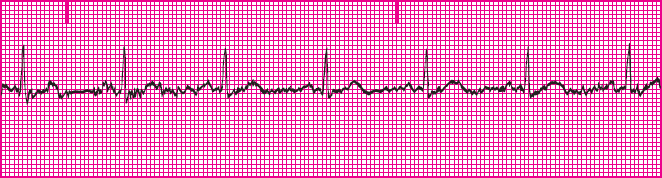
What rhythm is this?
Somatic Tremor
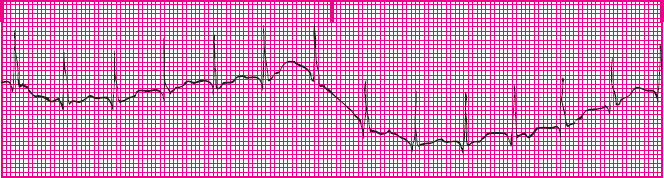
What rhythm is this?
Wandering Baseline
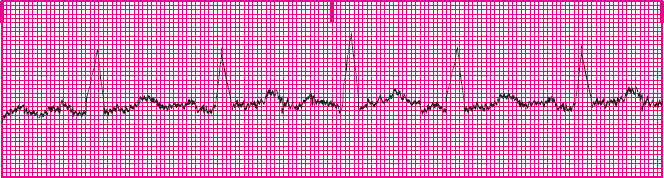
What rhythm is this?
Alternating Current (AC)
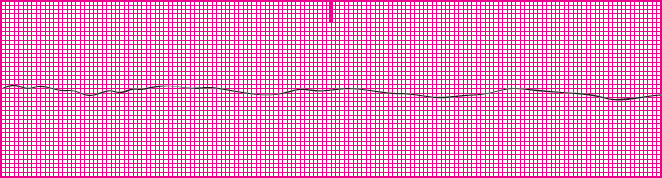
What rhythm is this?
Flat Line
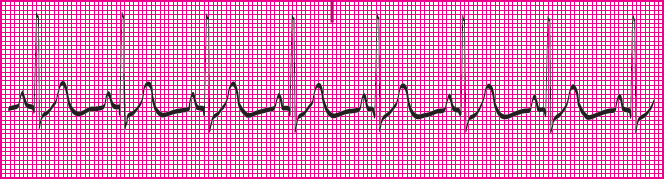
Which rhythm is this?
Normal Sinus Rhythm
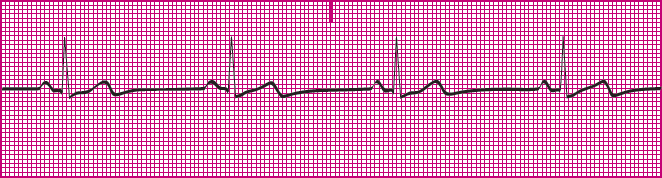
Which rhythm is this?
Sinus bradycardia.
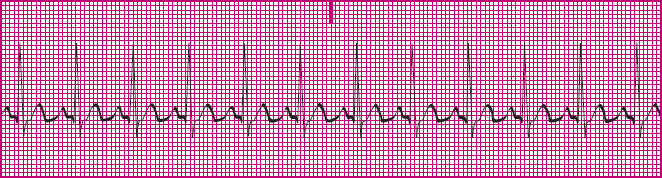
What rhythm is this?
Sinus tachycardia.
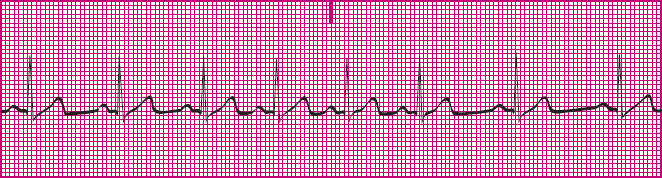
What rhythm is this?
Sinus dysrhythmia.
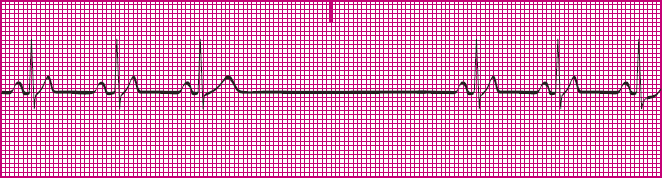
Which rhythm is this?
Sinus arrest.
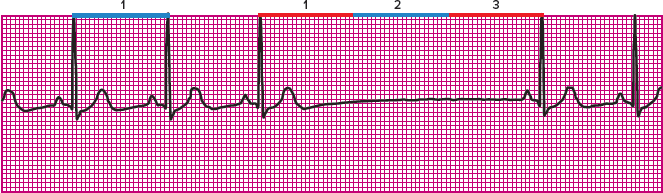
Which rhythm is this?
Sinus Exit Block
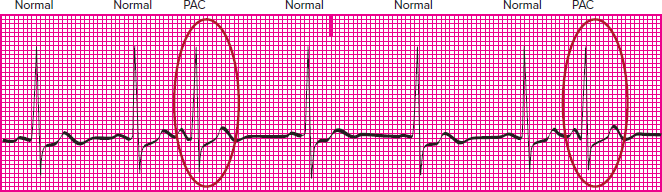
Which rhythm is this?
Premature Atrial Complexes
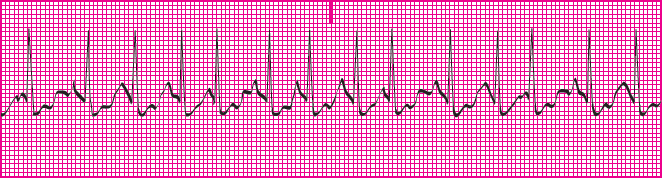
Which rhythm is this?
Multifocal Atrial Tachycardia
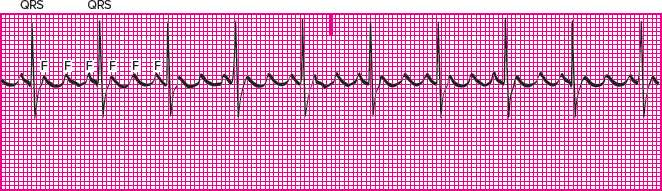
Which rhythm is this?
Atrial flutter.
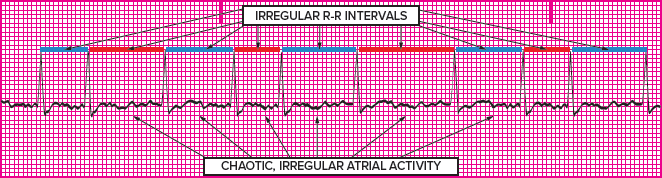
Which rhythm is this?
Atrial fibrillation.
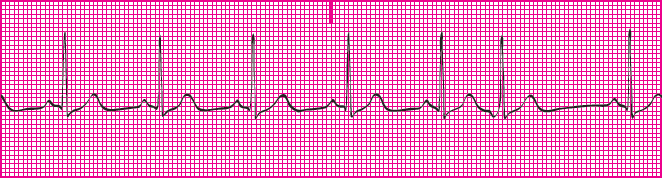
Which rhythm is this?
Premature Junctional Complex (PJC)
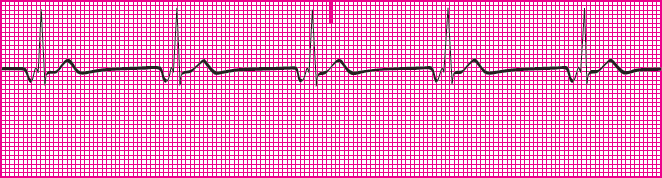
Which rhythm is this?
Junctional escape rhythm.
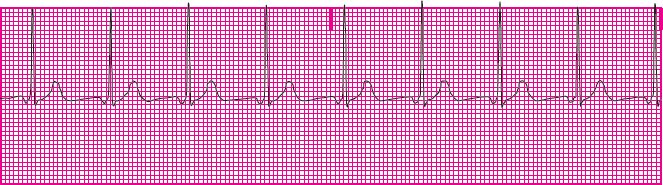
Which rhythm is this?
Accelerated junctional rhythm.
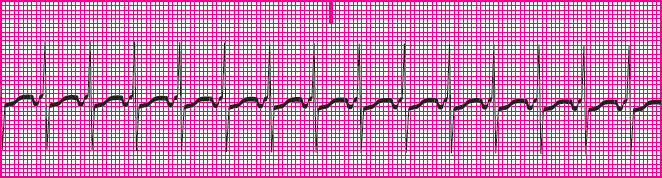
Which rhythm is this?
Junctional tachycardia rhythm.
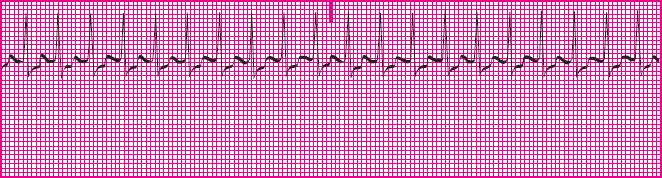
Which rhythm is this?
Supraventricular tachycardia.
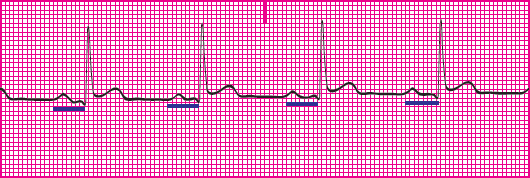
Which rhythm is this?
First-degree AV block.
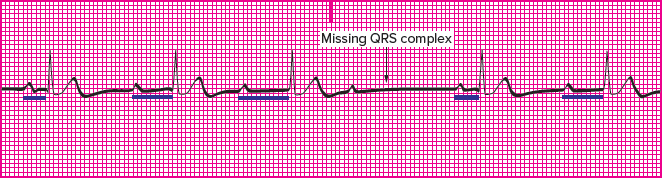
Which rhythm is this?
Second-degree AV block, Mobitz I (Wenckebach).
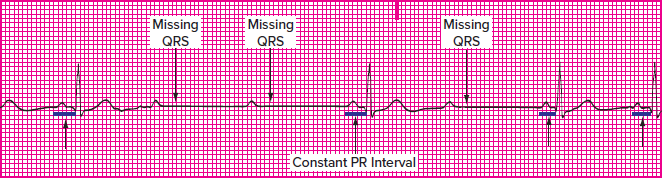
Which rhythm is this?
Second-degree AV block, type II (Mobitz II).
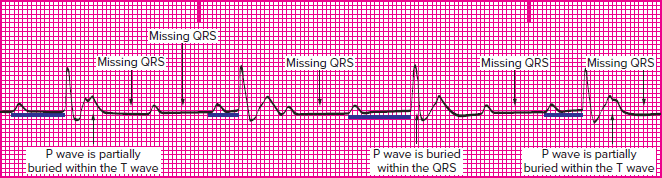
Which rhythm is this?
Third-degree AV block (complete heart block).
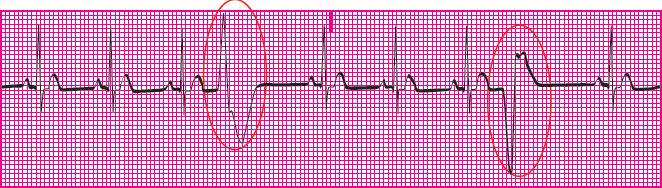
Which rhythm is this?
Premature ventricular complexes.
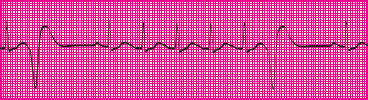
Which rhythm is this?
Unifocal PVC
All complexes have a similar shape, suggesting only one irritable focus present
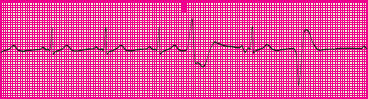
Which rhythm is this?
Multifocal PVC
PVCs have varied shapes and forms, suggesting more than one irritable focus
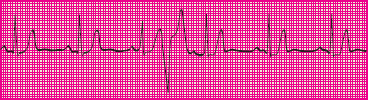
Which rhythm is this?
Interpolated PVC
PVC occurs during the normal R-R interval without interrupting the underlying rhythm
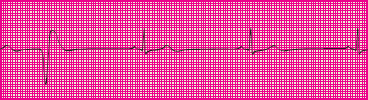
Which rhythm is this?
Occasional PVC
Less than six PVCs per minute
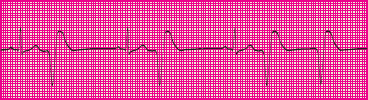
Which rhythm is this?
Frequent PVC
Six or more PVCs per minute
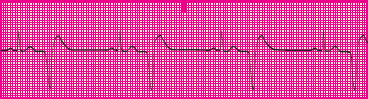
Which rhythm is this?
Bigeminy
Every other complex is a PVC
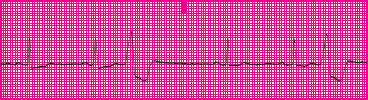
Which rhythm is this?
Trigeminy
Every third complex is a PVC
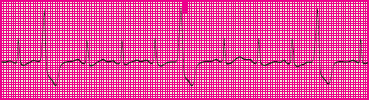
Which rhythm is this?
Quadgeminy
Every fourth complex is a PVC
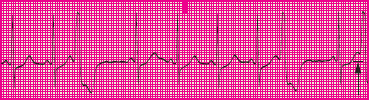
Which rhythm is this?
R-on-T PVC
PVC occurs on the downslope of the T wave, which signifies the vulnerable period or the relative ventricular refractory period
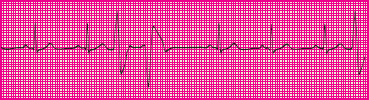
Which rhythm is this?
Coupling
Two PVCs that occur back to back (multifocal couplet pictured)
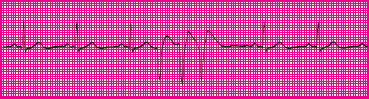
Which rhythm is this?
Run of ventricular tachycardia
Three or more PVCs in a row at a rate greater than 100 bpm. Also known as triplet PVCs or salvo
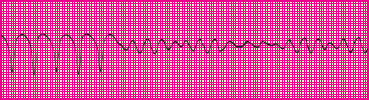
Which rhythm is this?
Paroxysmal event
Witnessed change in any cardiac rhythm, including starting, stopping, or both. A common example is a change from sinus rhythm to SVT or VT to VF. The tracing here shows a change from ventricular tachycardia to ventricular fibrillation.
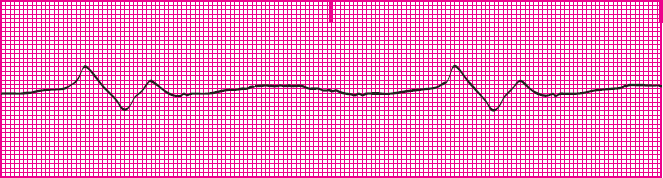
Which rhythm is this?
Agonal Rhythm
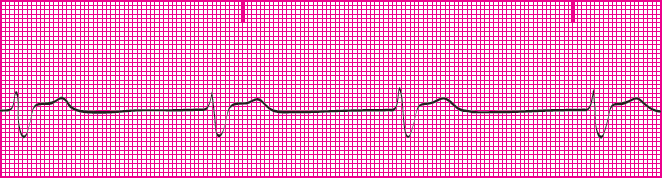
Which rhythm is this?
Idioventricular Rhythm
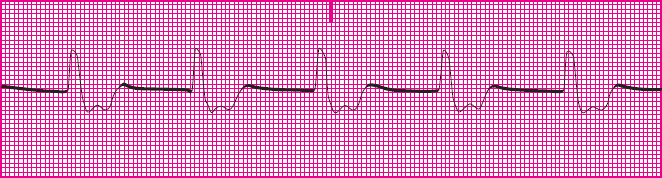
Which rhythm is this?
Accelerated idioventricular rhythm.
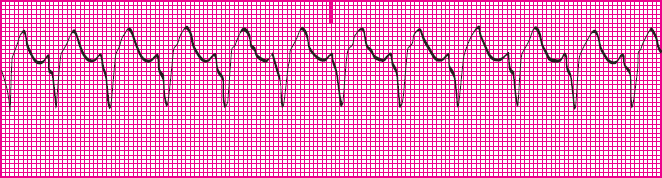
Which rhythm is this?
Ventricular tachycardia.
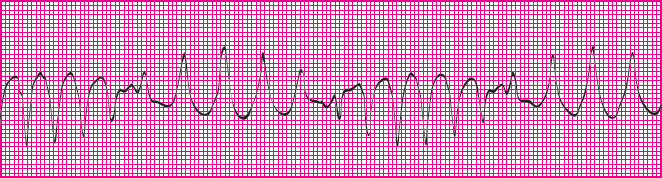
Which rhythm is this?
Torsades de Pointes.
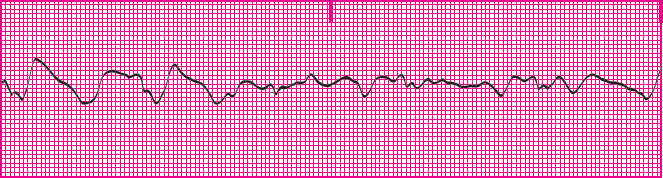
Which rhythm is this?
Ventricular fibrillation.
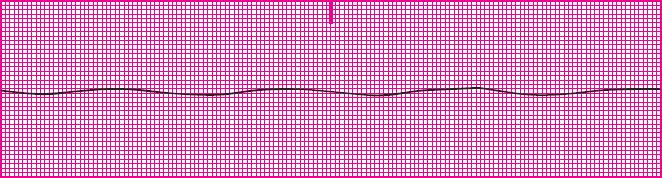
Which rhythm is this?
Asystole.
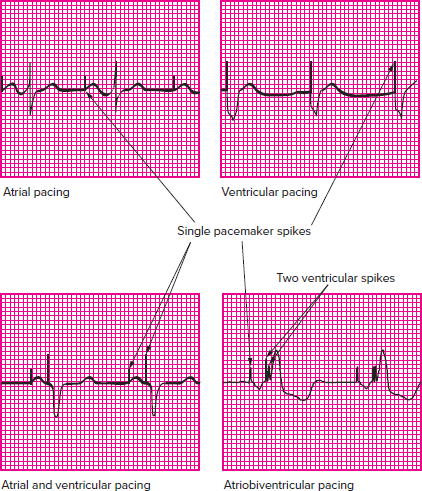
Which rhythm is this?
The pacing spike is atrial, ventricular, or both depending on the type of pacemaker.
Where is V1 placed?
Fourth intercostal space, right sternal border
Where is V2 placed?
Fourth intercostal space, left sternal border
Where is V3 placed?
Halfway between V2 and V4
Where is V4 placed?
Fifth intercostal space at the left midclavicular line
Where is V5 placed?
At the anterior axillary line on the same horizontal level as V4
Where is V6 placed?
At the midaxillary line on the same horizontal level as V4