CH 11: Micro Exam 3
 Call Kai
 Learn
Learn Practice Test
 Spaced Repetition
 Match
Match Flashcards
 Knowt Play
1/116

There's no tags or description
Looks like no tags are added yet.
Name | Mastery | Learn | Test | Matching | Spaced | Call with Kai | Chat |
|---|
No analytics yet
Send a link to your students to track their progress
117 Terms
photo litho autotroph: energy source, electron source, carbon source
energy: light
electron: inorganic compounds
carbon: carbon dioxide, CO2
** also known as photoautotrophs, primary producer
can bacteria and archaea oxidize hydrogen
yes, several do, they reduce NAD+ or donate the e- directly to ETC
nitrifying bacteria
found in soil and water
nitrification
oxidiation ammonia NH3 → nitrate NO3-
two step process from two different or one microbe
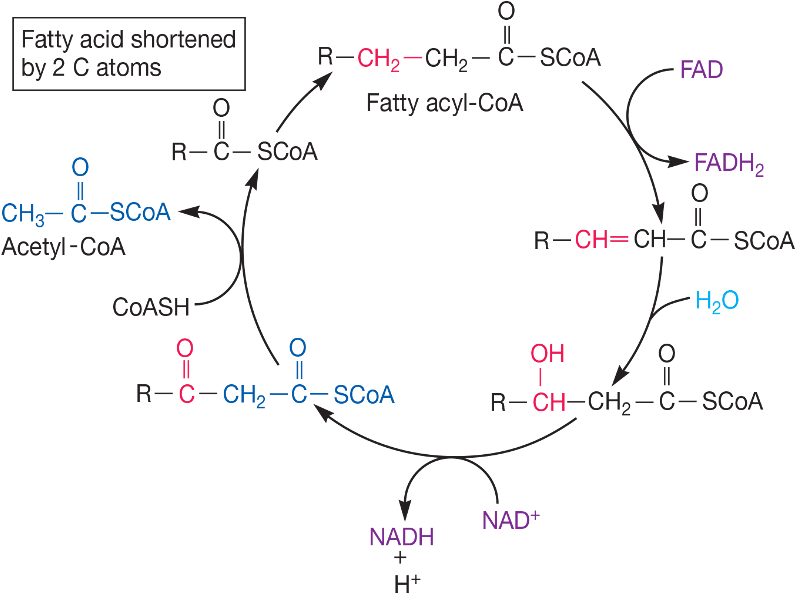
lipid catabolism
triglycerides hydrolyzed by lipases into glycerol and fatty acids
glycerol: degraded via glycolytic pathway as dihydroxyacetone phosphate → glyceraldehyde-3P
fatty acids: oxidized via β-oxidation pathway and shortened by 2 C → acetyl CoA
protein catabolism
proteases hydrolyze proteins into amino acids (proteolysis)
amino acid catabolism
deamination followed by transamination
organic acids → pyruvate, acetyl CoA, TCA cycle intermediate
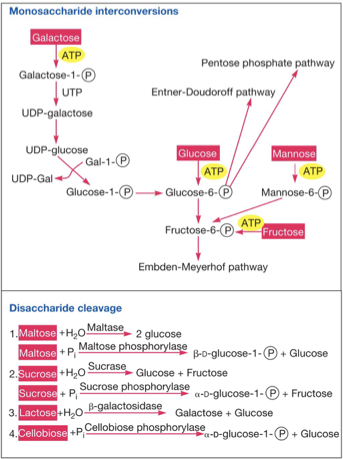
catabolism of carbohydrates
carbohydrates: can be supplied external or internal
monosaccharides
disaccharides or polysaccharides: hydrolases (outside) and phosphorylases (inside)
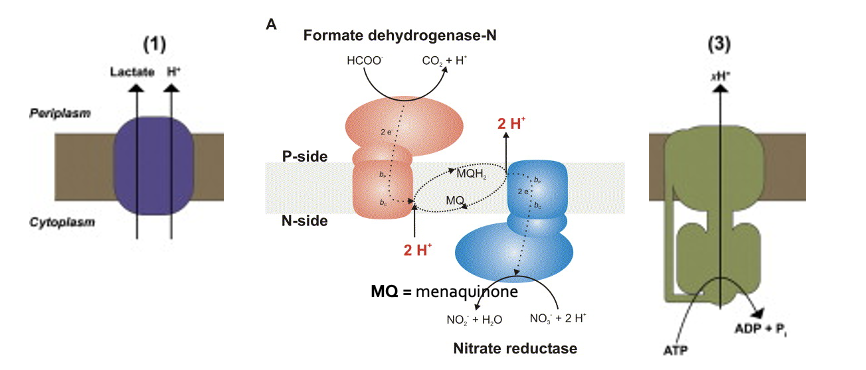
3 things that work w/o ETC
fermentation: end products efflux
facultative anaerobes: pmf redox-loop mechanisms
strictly fermentative conditions: F1F0-ATP synthase operates reversibly
dissimilatory nitrate reduction or denitrification
under anoxic conditions by P. denitrificans, Pseudomonas, Bacillus
NO3- → NO2- → NO → N2O → N2
Paracoccus denitrificans
gram neg, facultative anaerobic soil bacteria, non-fermenting
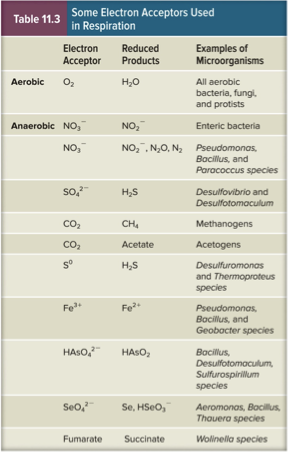
anaerobic respiration
final e- acceptor not O2
less energy yield because of acceptor and a shorter ETC
all three domains
e- acceptors oxidized but once they gain an e- they become reduced
aerobic respiration in E. coli ETC chain
e- donor →
dehydrogenase →
quinone →
cytochrome bo oxidase → high O2
or
cytochrome bd oxidase → low O2
** eggs done quick can high bo or low bd
anaerobic respiration in E. coli ETC chain
e- donor →
dehydrogenase →
quinone →
fumarate reductase → fumarate → succinate
or
nitrate reductase → NO3- → NO2- → NH4+
** eggs done quick further reduce fumes stink or not reduce
can maximum ATP yield be calculated
yes and this also includes P/O ratios of NADH (2.5) and FADH2 (1.5)
neumonic for TCA intermediate
Can- Citrate
I- Isocitrate
Keep- ⍺-Ketogluturate
Selling- succinyl CoA
Substances- succinate
For- fumurate
Money- malate
Officer- oxaloacetate
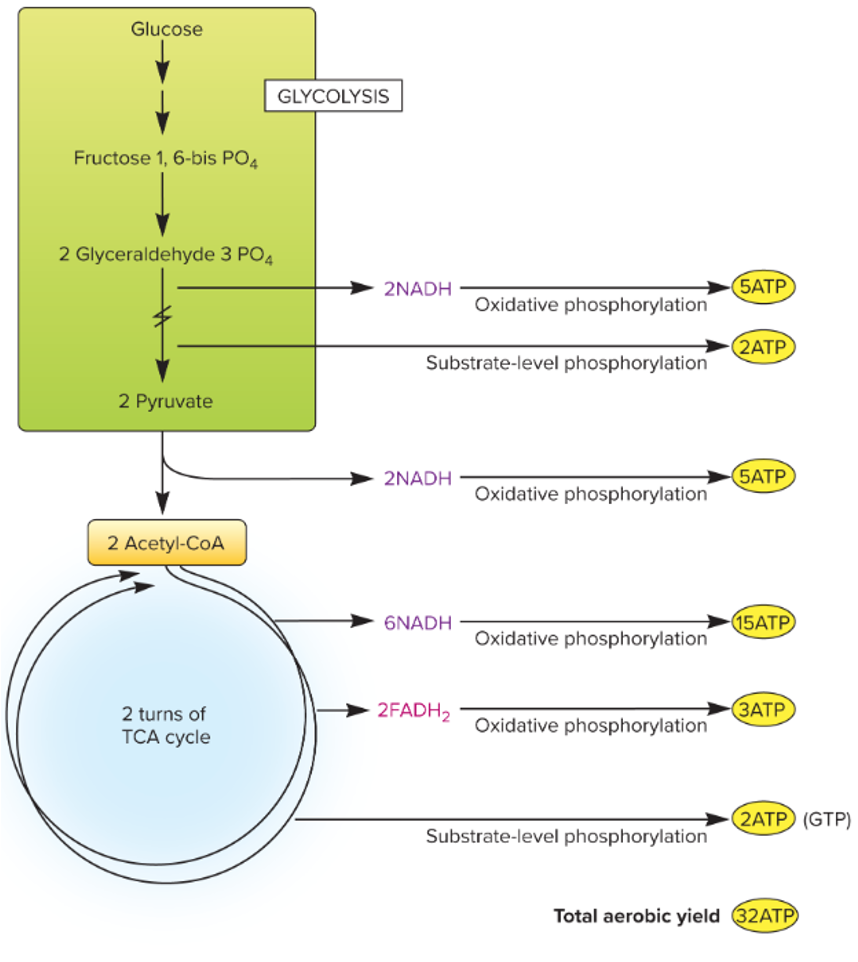
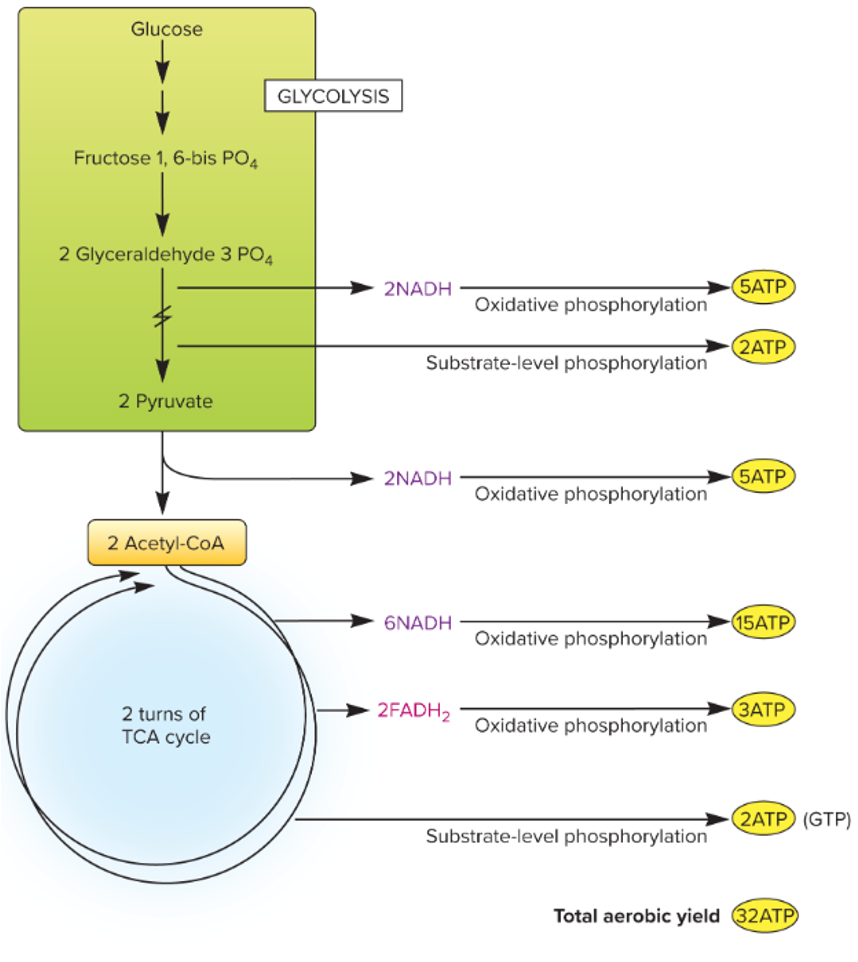
theoretical maximum total yield of ATP
aerobic: 32 ATP
max in eukaryotes: 30 ATP
there is less in prokaryotes due to a shorter ETC and lower P/O ratio
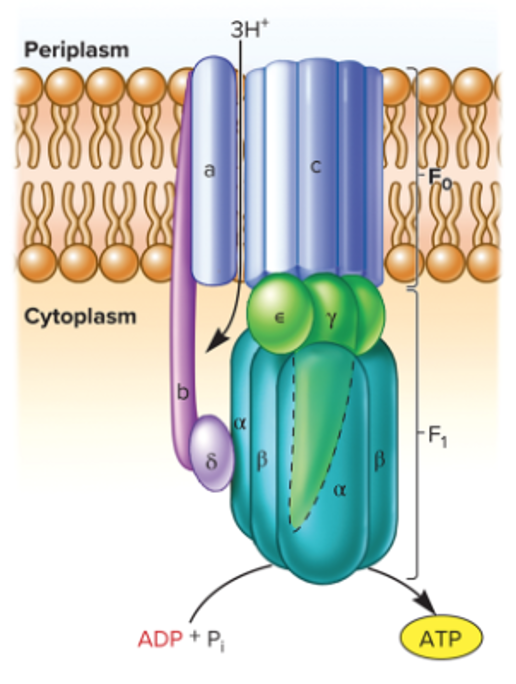
F1F0ATP synthase
mitochondria, bacteria and chloroplast
can catalyze ATP hydrolysis
pmf drives ATP synthesis using this synthase
F0: proton conducting channel
F1: complex that catalyzes ATP synthesis
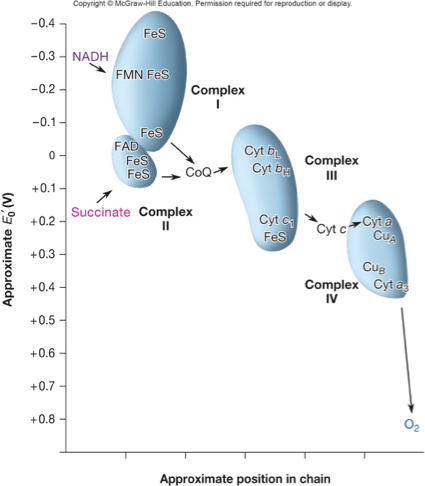
ΔE’° between NADH and O2
1.14 Volts
ETC
makes most ATP as NADH and FADH2 reoxidized
uses series of e- carriers from more neg reduction potential to more pos
tricarboxylic acid cycle, TCA
citric acid cycle, krebs cycle
common in aerobic bacteria, free-living protozoa, most algae, most fungi
source of carbon skeletons for biosynthesis
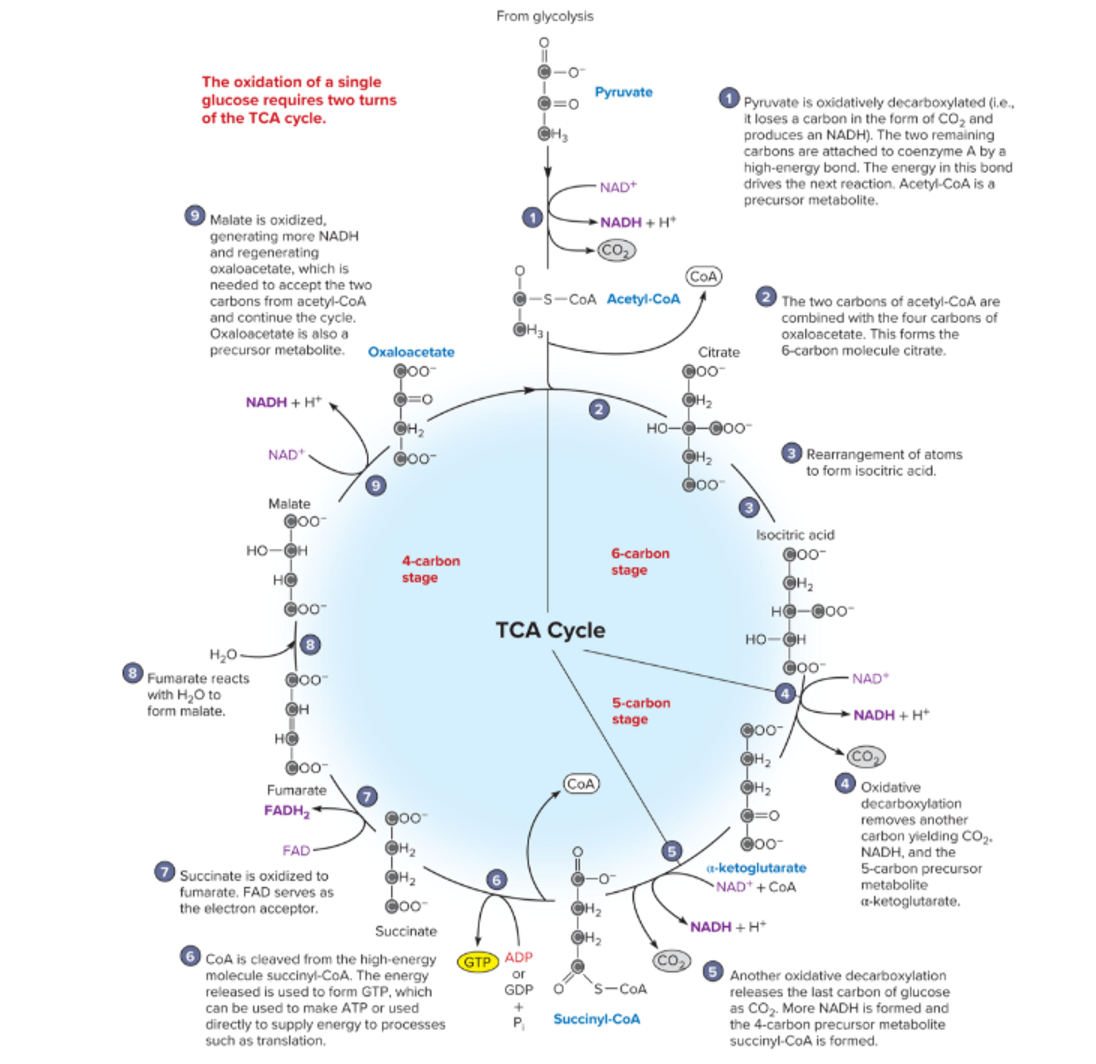
TCA cycle overview
pyruvate → CO2, NADH, Acetyl-CoA (precursor metabolite)
2 C of Acetyl-CoA combined 4 C of oxaloacetate → 6 C citrate
rearrangement to isocitric acid
oxidative decarboxylation (also step 1) removes C → CO2, NADH, ⍺-ketoglutarate (precursor metabolite)
last C released, same as 4, → CO2, NADH, succinyl-CoA (precursor metabolite)
CoA cleaved from succinyl-CoA, energy released → GTP (make ATP or translation)
succinate oxidized → fumarate
fumarate + H2O → malate
malate oxidized → NADH, regenerate oxaloacetate (precursor metabolite)
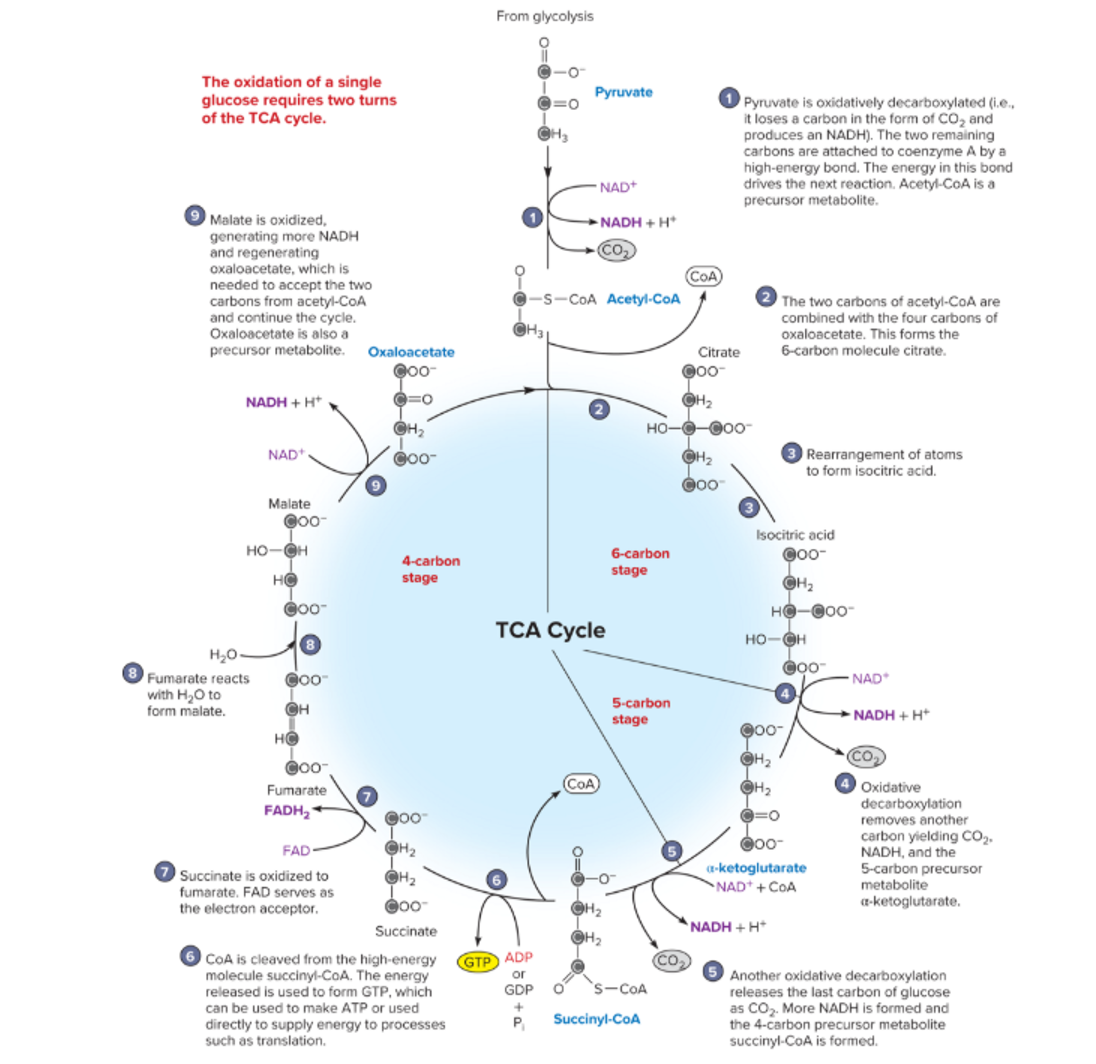
hydrolysis of thioester Acetyl-CoA bond in TCA
yields lots of energy, also same w/ succinyl-CoA
what oxidizes and cleaves pyruvate in step one of TCA
PDH- pyruvate dehydrogenase complex
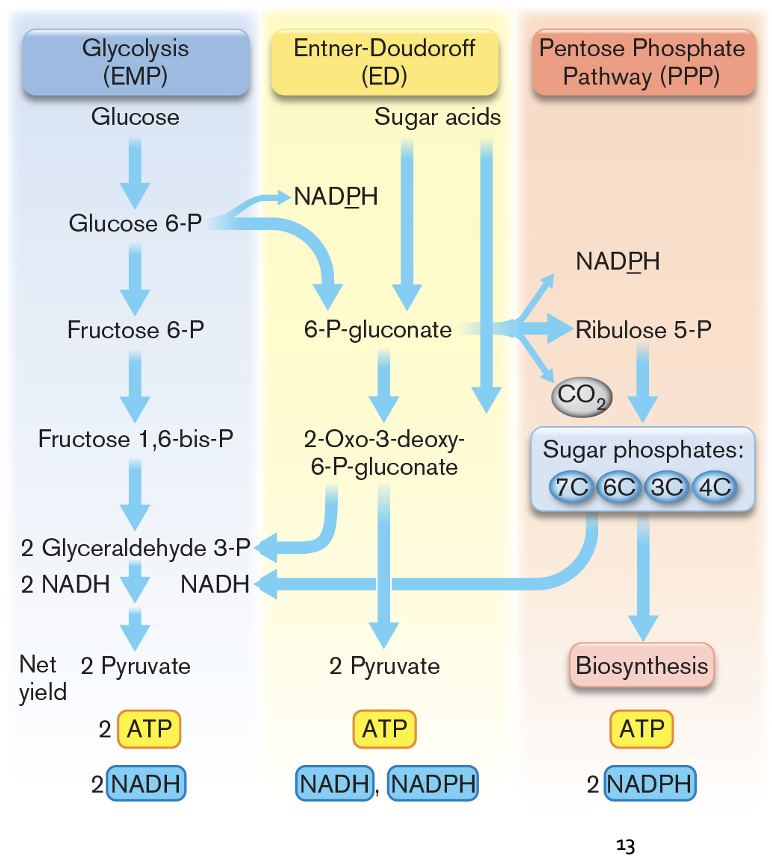
entner-doudoroff pathway, ED
gram neg soil bacteria, some gram pos
many aerobic
E. coli and Enterococcus faecalis
not used by eukaryotes
replaces 6 C phase of EMP
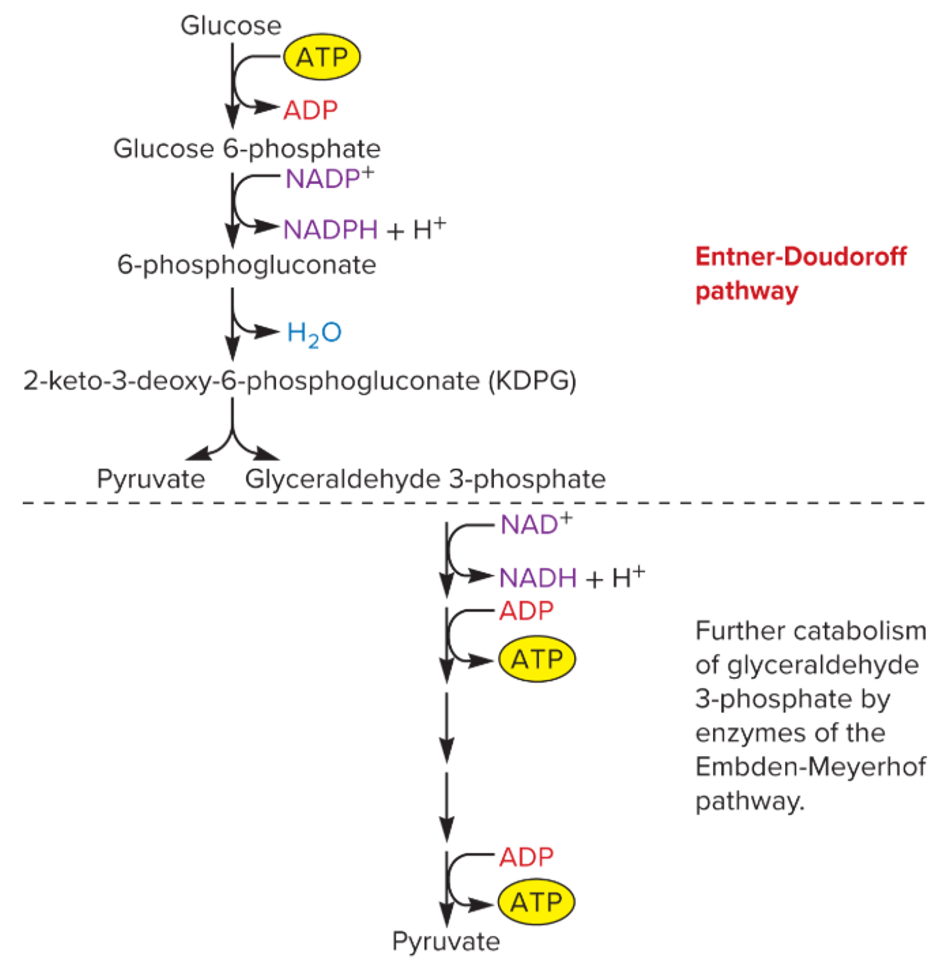
ED pathway overview
glucose → glucose 6-p → 6-phosphogluconate → KDPG (2-keto-3-deoxy-6-phosphogluconate) → pyruvate and glyceraldehyde 3-p
glyceraldehyde 3-p futher catabolised by EMP
pentose phosphate pathway, PPP
oxidizes glucose 6-p → ribulose-5p + CO2, and is major NADPH source
not O dependent
works alongside ED or EMP
not in archaea
needed biosynthesis and catabolism
produces: E4P, ribose-5-p and intermediates can be used for ATP
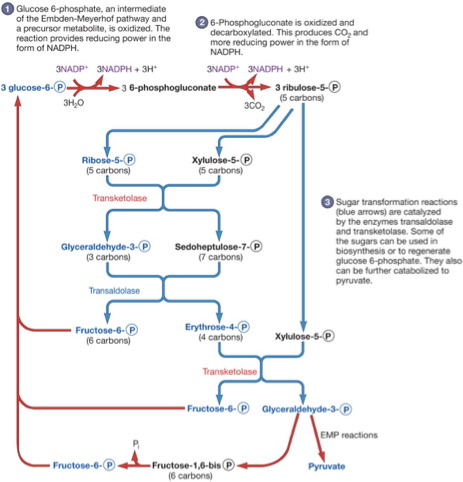
PPP overview 3 steps
glucose 6-p (from EMP) oxidized → 6-phosphogluconate + NADPH
6-phosphogluconate oxidized and decarboxylated → CO2 +NADPH
sugar transformation rxns catalyzed by enzymes transaldolase and transketolase → regeneration glucose 6-p, biosynthesis, or catabolized to pyruvate
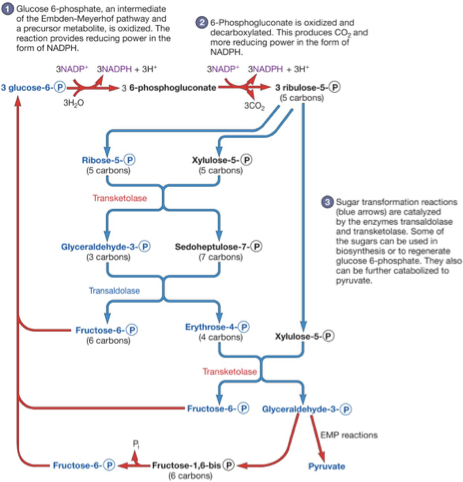
PPP overview rxn
3 glucose 6-p + 6 NADP+ + 3 H2O → 2 fructose 6-p + glyceraldehyde 3-p + 3 CO2 + 6 NADPH + 6 H+
PPP intermediates
degraded to pyruvate by EMP enzymes
regenerate glucose-6p by gluconeogenesis
PPP other name
hexose monophosphate pathway
embden-meyerhof pathway, EMP
most common pathway for glucose degradation to pyruvate
provides precursor metabolites NADH and ATP
presence or absence of O2
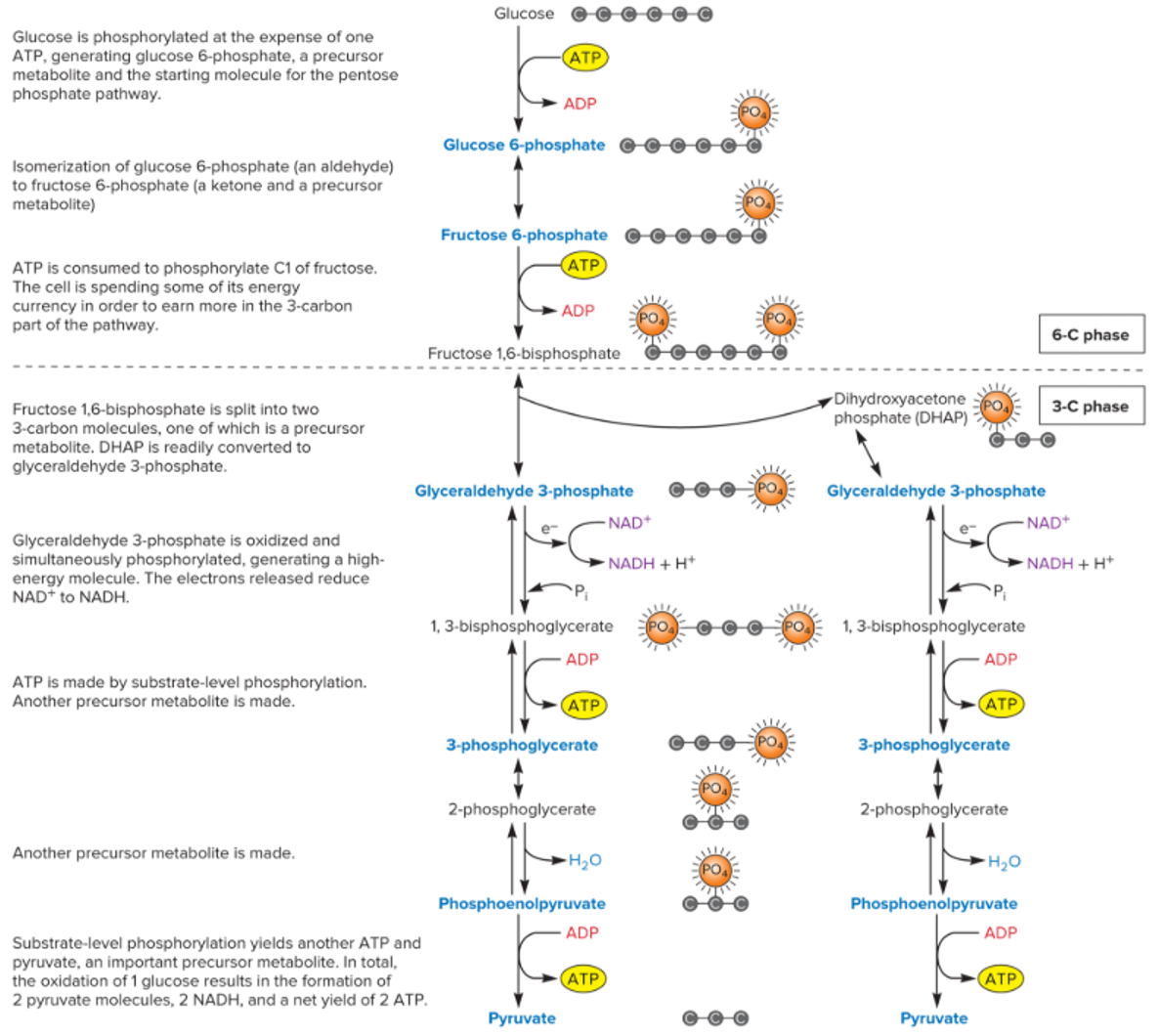
two phases: 6 C phase (uses ATP), and 3 C phase (makes ATP)
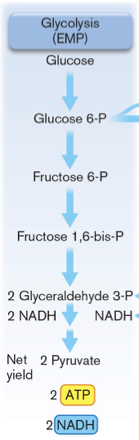
EMP pathway overview
6 C: glucose → glucose 6-p → fructose 6-p → fructose 1,6-bis-p
3 C: DHAP splits into → 2 glyceraldehyde 3-p → 1,3-bis-p-glycerate
SLP: → 3-p-glycerate → 2-p-glycerate → p-enolpyruvate → 2 pyruvate, 2 ATP, 2 NADH
EMP, ED, PPP all …
convert glucose to glyeraldehyde 3-p which is oxidized to pyruvate the same way in all 3
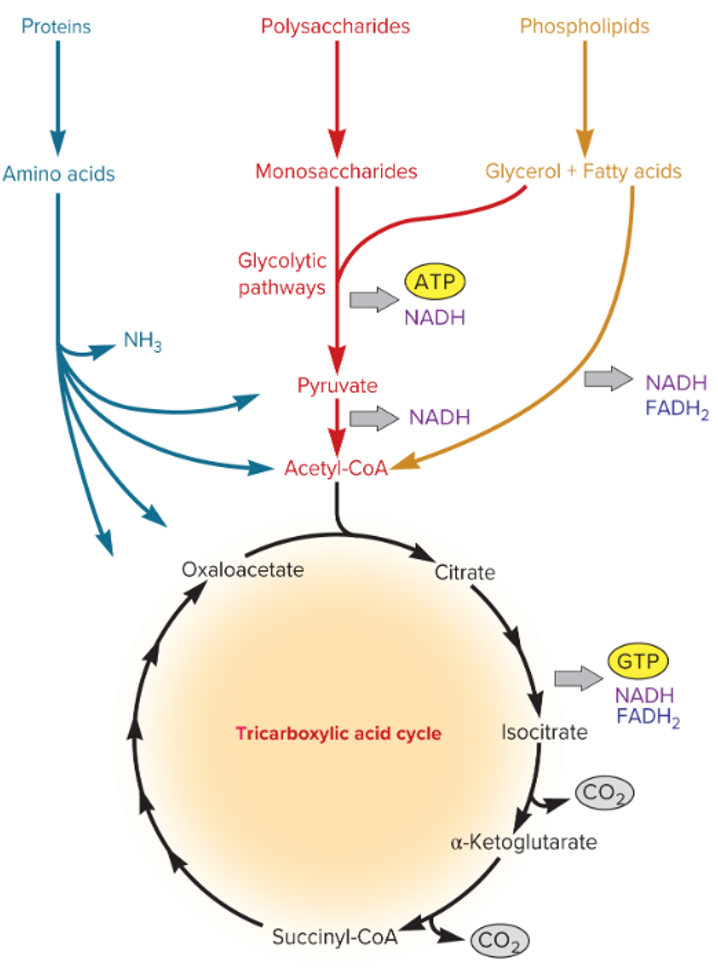
aerobic respiration CO2
completely catabolize an organic energy source to CO2 through
glycolytic pathways, produce pyruvate, NADH, FADH2
TCA cycle, pyruvate oxidized CO2, GTP, NADH, FADH2
ETC, O is final acceptor
and produce ATP and high energy e- carriers
energy sources
most pathways generate glucose or intermediates, and glycolytic intermediates must be synthesized
ex. TCA cycle
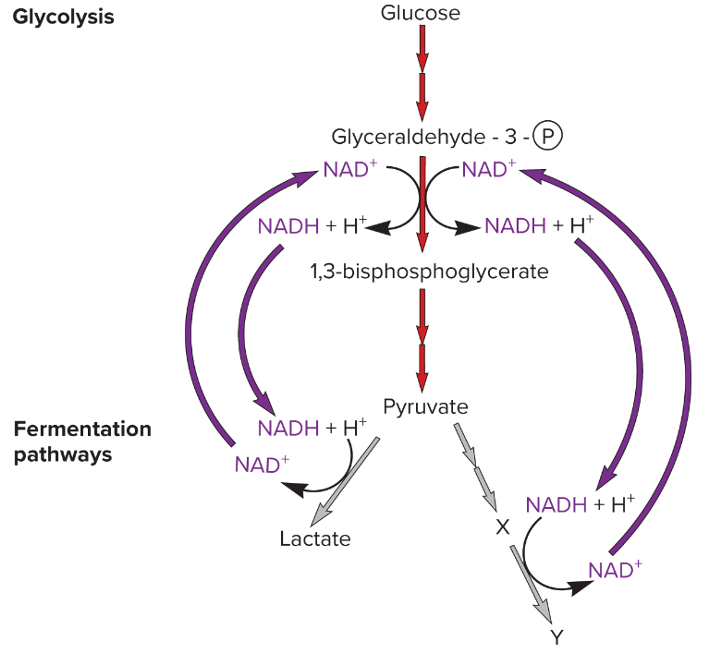
fermentation
partial oxidation organic compounds or energy source
endogenous e- acceptor like pyruvate or derivative
oxidation of NADH produced by glycolysis and NADH is converted back to NAD+
no ETC, no PMF, no OP, no need for O2
uses SLP- substrate level phosphorylation to form ATP
respiration
etc to external e- acceptor; pmf fuels oxidative phosphorylation
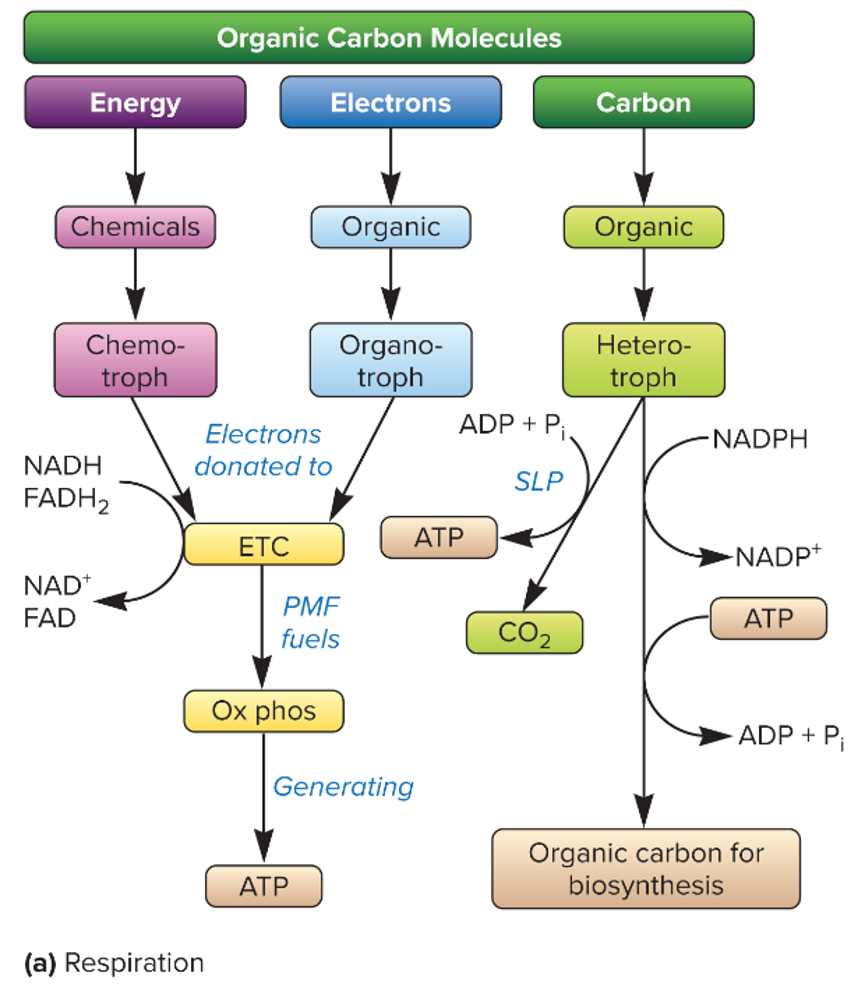
chemoorganotroph fueling process
oxidized organic energy source releases e- that are accepted by NADH/ FADH2
chemo litho troph respiration type
aerobic and anaerobic, no fermentation bc there is no organic molecule to oxidize
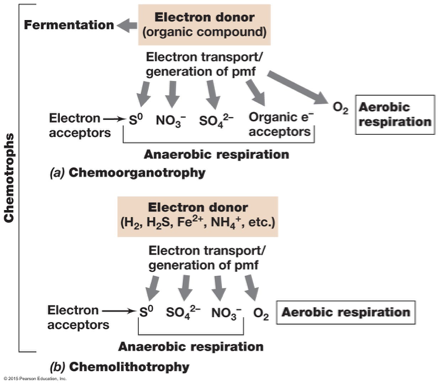
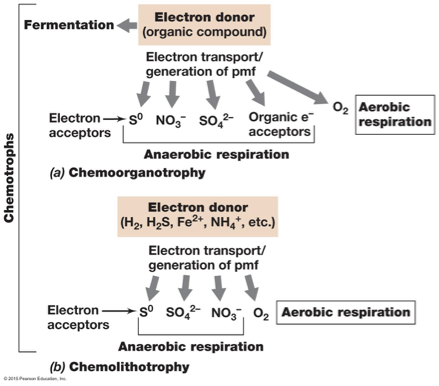
chemolithotrophy electron donors and acceptors
donors: H2, H2S, Fe2+, NH4+, etc.
acceptors: S0, SO42-, NO3-, O2
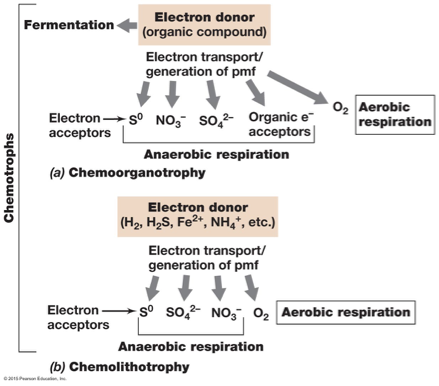
chemoorganotrophy electron donors and acceptors
donors: organics
acceptors: S0, SO42-, NO3-, O2, organics
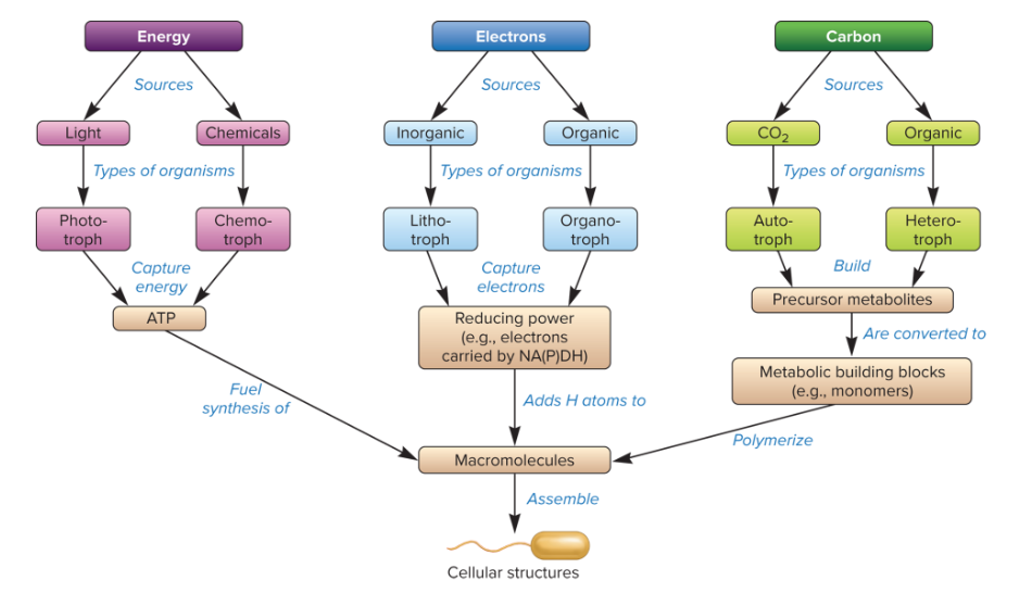
3 basic needs of organisms
ATP as energy
reducing power for e- for chem rxns
precursor metabolites for biosynthesis
can organisms change major nutritional categories
yes, depending on environment
phototrophs
use light as energy source
chemotrophs
use oxidation of chemical compounds as energy source
organotrophs
use organic compounds as electron source
lithotrophs
use reduced inorganic substances as electron source
heterotrophs
use organic molecules as carbon source and are often same as energy source
autotrophs
use CO2 molecules as carbon source
photo organo heterotroph: energy source, electron source, carbon source
energy: light
electron: organic compounds
carbon: organic compounds
chemo litho autotroph: energy source, electron source, carbon source
energy: inorganic compounds; H2, reduced N, reduced S, Fe2+ directly donated to ETC
electron: inorganic compounds; oxygen, sulfate, nitrate
carbon: carbon dioxide, CO2 fixation pathways
** oldest microbes, primary producer, also called chemo litho trophs
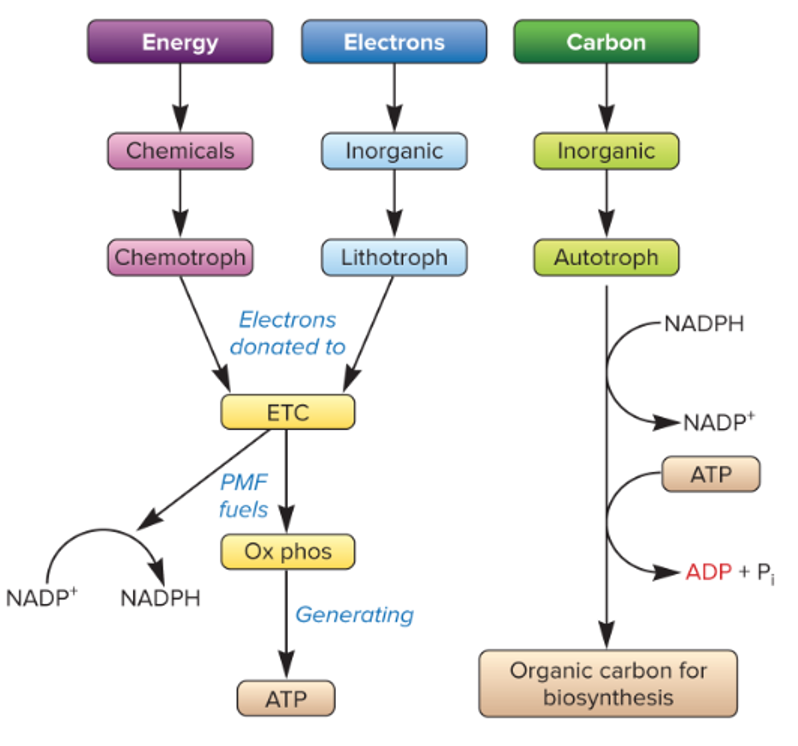
chemo litho heterotroph: energy source, electron source, carbon source
energy: inorganic compounds
electron: inorganic compounds
carbon: organic carbon
chemo organo heterotroph: energy source, electron source, carbon source
energy: organic compounds, oxidized
electron: organic compounds
carbon: organic carbon
** catabolism, anabolism
another term for chemo organo heterotrophs
chemo organo trophs, chemo heterotrophs
what includes majority of human pathogenic microbes
chemo organo trophs
for which nutritional type class can a single organic nutrient satisfy all three requirements
chemo organo heterotrophs
reducing power
molecules that serve as a supply of electrons for chemical reactions; NADPH and NADH
can chemo organo trophs perform both fermentation and respiration
yes, they also perform aerobic and anaerobic respiration
respiration: e- donated to etc
fermentation: e- donated to endogenous acceptor
can chemo organo trophs perform metabolic processes that include endogenous electron acceptors
yes
fermentation involve endogenous or exogenous electron acceptor
endogenous electron acceptor
does respiration utilizes ETC
yes
during aerobic respiration is glucose fully catabolized and oxidized
yes
products of aerobic respiration
ATP and CO2
true or false: aerobic respiration involves formation of pmf which fuels generation of ATP through OP
true
does EMP function only in the presence of O2
no, also in the absence
where is EMP found
in all domains of life
is CO2 an EMP product
no
how does the step from 1,3-bisphosphoglycerate to 3-phosphoglycerate produce ATP
via SLP
is ED pathway oxidative or reductive
oxidative
does ED pathway generate less or more ATP than EMP per one glucose
less ATP
does ED pathway synthesize both NADPH and NADH
yes
true or false: ED pathway involves a key intermediate KDPG that is cleaved into pyruvate and glyceraldehyde 3-phosphate
true
what part of ED pathway is SLP involved in
G3P’s conversion to pyruvate
products of PPP
ribose 5-P
erythrose 4-P
NADPH
CO2
do EMP, PPP, and ED all involve glucose 6-phosphate and produce precursor metabolites and reducing power
yes
do EMP or ED occur at the same time as PPP
yes
can PPP’s intermediates be fed into glycolysis
yes
amphibolic pathways
include metabolic pathways that function both catabolically and anabolically
include EMP/ gluconeogenesis, TCA, PPP
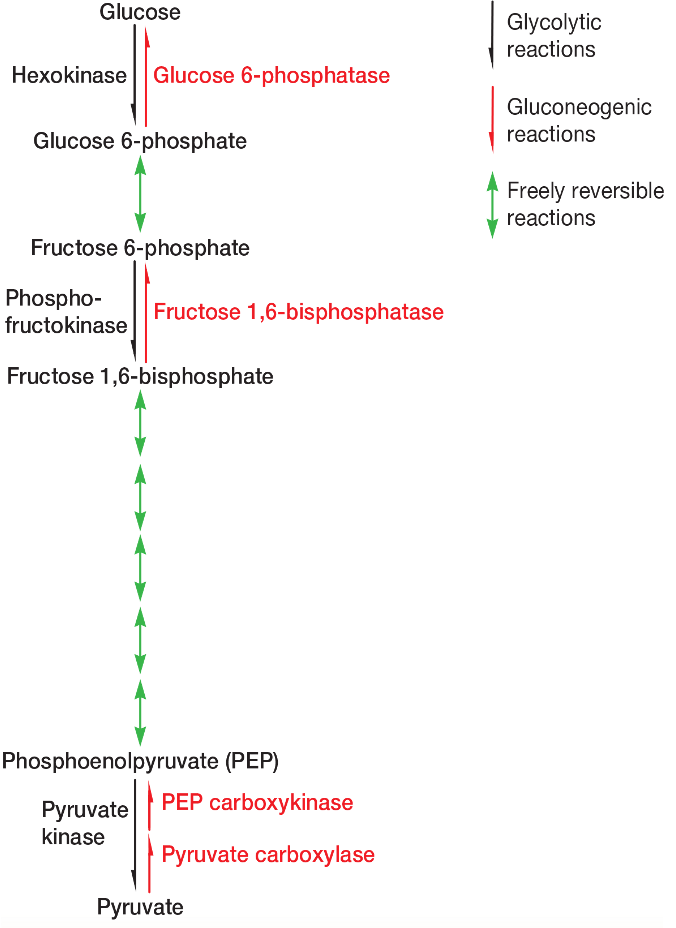
what can determine which direction the amphibolic pathway proceeds
regulation of pacemaker enzymes such as PFK glycolysis
where does the TCA cycle occur in bacteria
cytoplasm
does the TCA cycle produce NADH and precursor metabolites
yes
does TCA cycle involve hydrolysis of thioester bonds
yes
another term for TCA cycle
krebs
does the PDH complex involve oxidative decarboxylation
yes
what does the PDH complex use to generate CO2
NAD+
what does the PDH complex use to generate acetyl-CoA
pyruvate
flavoproteins
Contains prosthetic group flavin and can carry 2 electrons & 2 protons
cytochrome c
Have iron bound to heme and carries 1 electron
coupling sites
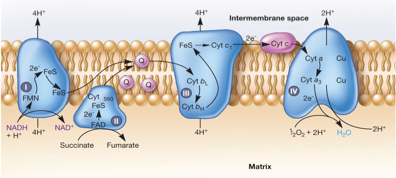
complex I, III, IV
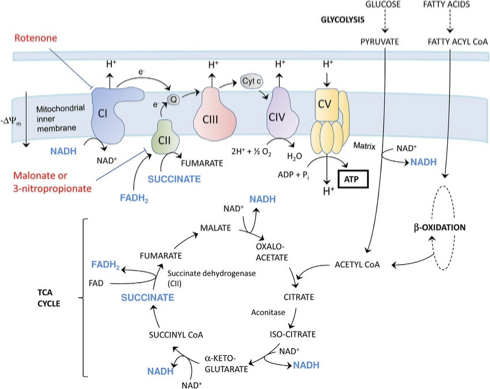
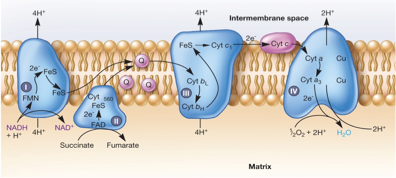
mitochondrial ETC
overview
bacterial and archaeal ETC
overview
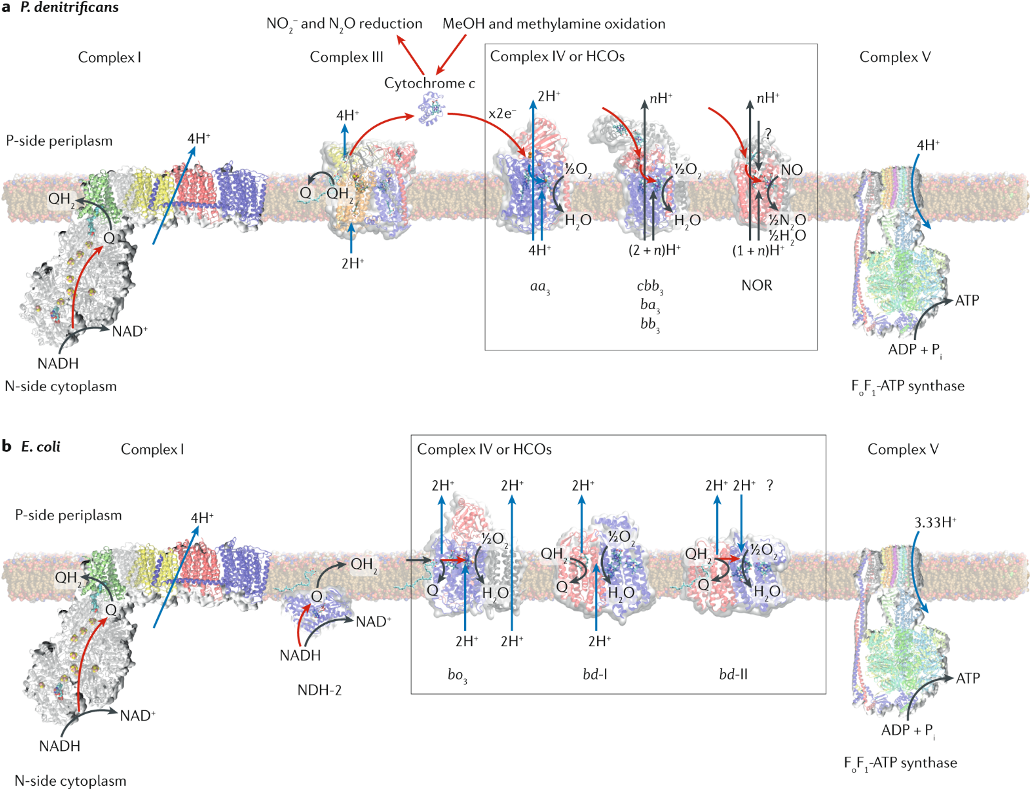
prokaryotic vs eukaryotic ETCs
differ in location, e- carriers, branching, length, P/O ratio
complex I name
NADH-ubiquinone oxidoreductase
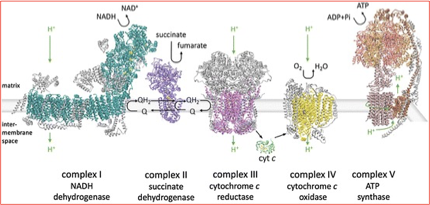
complex II name
succinate dehydrogenase
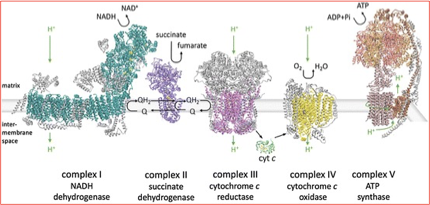
complex III name
ubiquinol-cytochrome c oxidoreductase
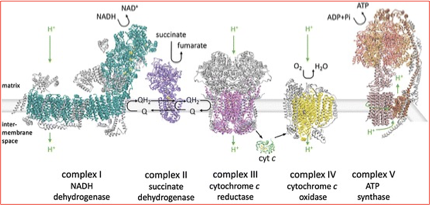
complex IV name
cytochrome c oxidase
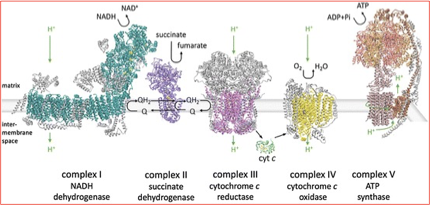
what connects complex I and III and II and III
CoQ
what connects complex III and IV
Cyt c
what does complex IV facilitate
formation of water, and transfers e- to O2
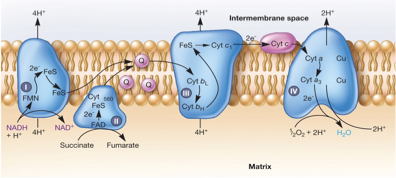
true or false: As the electrons move through the ETC, Ca2+ ions are transported across the IMM
false, H+ ions