Canada's Cultural Diversity and Immigration History
 Studied by 0 people
 Call Kai
 Learn
Learn Practice Test
 Spaced Repetition
 Match
Match Flashcards
 Knowt Play
1/84

There's no tags or description
Looks like no tags are added yet.
Name | Mastery | Learn | Test | Matching | Spaced | Call with Kai |
|---|
No analytics yet
Send a link to your students to track their progress
85 Terms
Culture
the way groups of people organize their lives
Material culture
Artifacts, Clothing, Food, Houses
Non-material culture
Language, religion, societal norms
Visible minorities
13.4% of the population belongs to visible minorities
Multiculturalism
Society with many distinct cultural groups; Different cultures interact peacefully
Integration
Preserve aspects of culture but adopt some new ones; Optional not forced
Monoculturalism
One dominant strong culture
Melting Pot
Ask immigrants to give up culture; Cultures are amalgamated into one
Assimilation
Give up own culture by joining the national culture and customs
Segregation
One group is separated from others; Little chance cultures will mix
Migration
Person changing residence intended to be permanent
Immigration
Person going to live in another country
Emigration
A person leaving a country to live in another country
In-Migration
A person going into another part of their country and living there
Out-Migration
A person leaving a place in their country to live in another part
Push Factors
Conditions cause a desire to leave a current place; Lack of work, harsh winters
Pull Factors
Conditions cause a want to move to another place; Lower taxes, climate
Aboriginal Peoples Immigration Period
30000 to 10000 BCE
French Immigration Period
1600-1760
Loyalists and the American Revolution Immigration Period
1776-1786
The Great Migration Immigration Period
1815-1850
Post Confederation Immigration Period
1867-1914
Post War and Mid 20th Century Immigration Period
1919-1969
Recent Immigration Period
1970 to Present
Bering Land Bridge
Land connected Siberia and Alaska; Most probable route of humans into the Americas

Trans-Oceanic Migrations
Some believe humans had sea travel skills for 30000 years
Aboriginals
First occupants of North America, living thousands of years before Europeans.
Population at Contact
~10 million living in Americas at the time of contact, with ~500,000 in Canada.
Iroquois Village Attack
Attack by French and Huron Allies in 1615.
New France Creation
Jacques Cartier created New France at Gaspé in 1534.
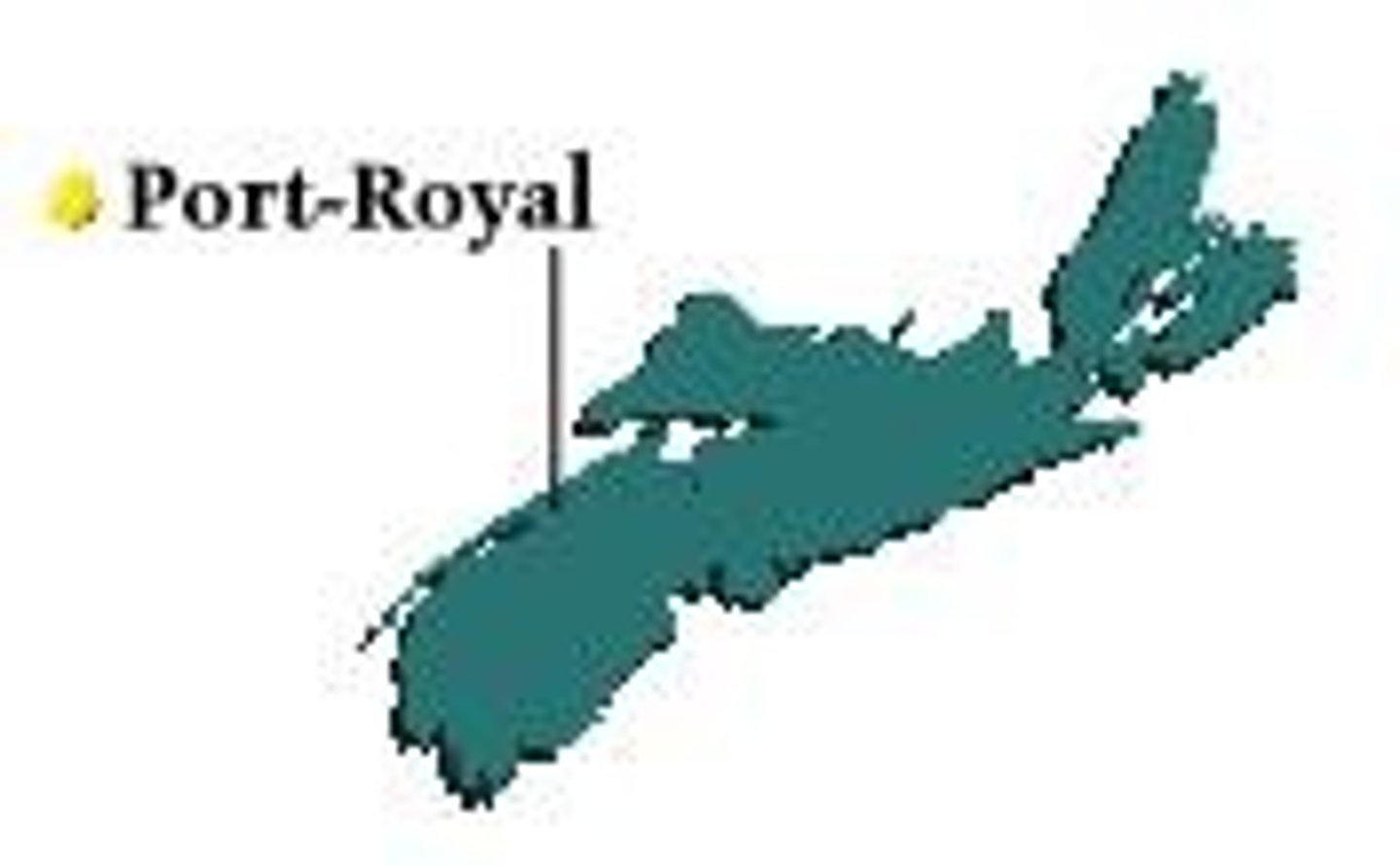
Port Royal
Established in 1605, it was the first European permanent settlement in Canada.
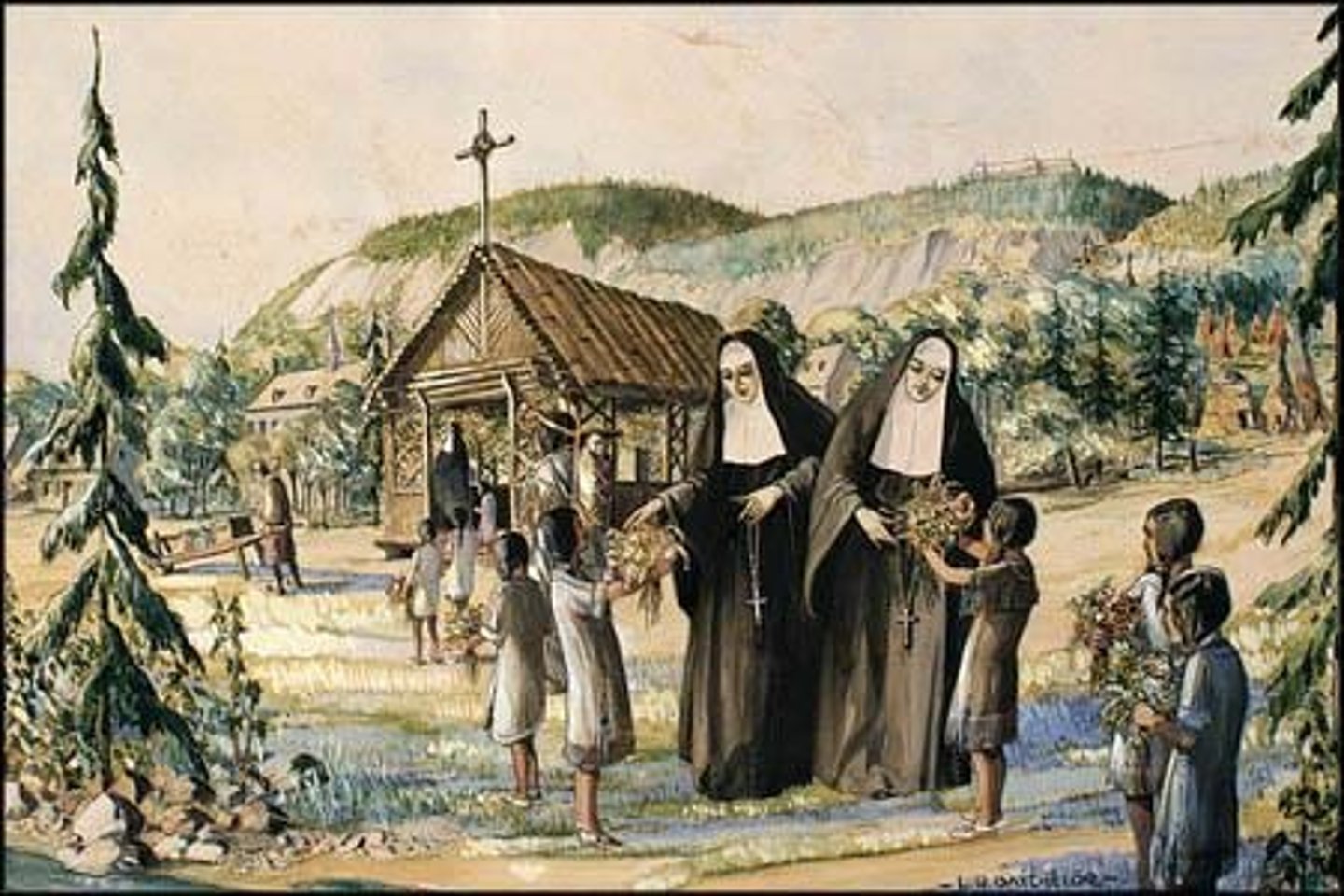
Ursulines
Nuns who arrived at Quebec in 1639 and served as professional teachers in New France.
Indentured Labour
Paid for transportation and free animals; worked for 3-5 years before receiving their own land.
King's Daughters
700 single women, aged between 15 and 30, brought to marry and produce children.
Goods Received by King's Daughters
After marriage, they received 1 Ox, 1 cow, 2 pigs, 2 chickens, 2 barrels of salted meat, and money.
Loyalists
Faithful to the British Crown; ~16% of American population were loyalists (500,000).
Loyalists' Promises
Promised land in British North America, along with farm equipment, food, clothing, seed, and livestock.
Loyalist Migration
In Spring 1776, the first shipload of Loyalists left for Nova Scotia; by 1783, there were 50,000 Loyalists in Canada.
Industrial Revolution
Period from 1750-1850 marked by big improvements to machines in Europe, causing unemployment and poverty.
Irish Potato Famine
Occurred from 1846-1850, where ~1/2 of Ireland's population depended on potatoes for subsistence.
Potato Crop Disease
Fungus caused disease, resulting in black rot and slimy potatoes, leading to sickness among peasants.
Famine Death Toll
~1 million died from hunger and disease during the Irish Potato Famine.
Population Decline in Ireland
Population dropped from 8 million to 5 million; 2 million left for British North America and the US.
Coffin Ships
Cargo ships that carried up to 240 immigrants, originally meant to carry lumber to Britain.
Coffin Ship Survival Rate
Reached British North America with 33% of passengers alive, dying due to disease and hunger.
The Underground Railroad
Network of people illegally helping slaves reach safety in free states or British North America, peaking from 1830-1865.
Loyalist Land Assignment
Loyalists were assigned land by drawing lot numbers.
Post Confederation Goals
Wanted more people in the Prairies to increase farms, food, and wealth.
Free Land Offer
Offered 160 acres of free land and free transport to encourage settlement.
North-West Mounted Police
Established for the protection of settlers in the Prairies.
Canadian Pacific Railroad
Constructed to facilitate transportation and settlement in Canada.
Reasons for Success after 1896
1. All good USA agricultural land was taken; 2. New wheat types developed for shortened season; 3. Steamships became faster and cheaper.
Clifford Sifton
Minister of the Interior from 1896 to 1905 who organized an ad campaign to attract migrants.
Pamphlet
Most effective tool used by Sifton, with 1 million distributed in 1900 across Europe, translated into more than 12 languages.
Population growth under Sifton
The population of Western Canada increased from 300,000 to 1.5 million during Sifton's tenure.
Free land in Canada
200 million acres of free land available in Canada in 160 acre plots between ~1900-1920.
Chicagoan testimonial
A Chicagoan who moved to Alberta described winter as the most pleasant part of the year due to the dry, cold air.
Oklahoma State Fair Canadian Exhibit
Promoted West Canada in American farm exhibitions in 1913, targeting specific audiences.
Doukhobors
A group from Russia known for preaching pacifism and often protesting.
Population of Canada by Origin (1871 vs 1911)
British: 2,110,502 to 3,999,081; French: 1,082,940 to 2,061,719; German: 202,991 to 403,417.
Immigration trends (1914-1918)
Little immigration occurred during this period due to the hardships of war.
Post-war immigration (1920s)
Approximately 1.5 million immigrants came to Canada during the 1920s.
Great Depression impact
Immigration decreased again from 1929 to 1945 due to the Great Depression and WWII.
1960s immigration sources
Canada began accepting immigrants from new areas such as Asia, Africa, Caribbean, and Latin America.
Top source countries of immigrants (2006)
1. China, 2. India, 3. Philippines, 4. Pakistan, 5. U.S.A., 6. South Korea, 7. Romania, 8. Iran, 9. Great Britain, 10. Columbia.
Ethnic diversity post-Confederation
Manitoba, Saskatchewan, and Alberta became the most ethnically diverse provinces.
Transportation information in pamphlets
Pamphlets included practical information on transportation, soil, and climate but omitted details about cold winters.
Publicity wagons
Used after Sifton's tenure to reach rural farming communities.
Emigration offices
Established in downtown London to promote immigration to Canada.
Essay writing contest
A contest for school children where the grand prize was a free trip to Canada and a homestead.
Population statistics (1871)
Total population was 3,485,761.
Population statistics (1911)
Total population was 7,206,643.
Scandinavian immigration (1871 vs 1911)
Scandinavian population increased from 1,623 to 112,682.
Jewish immigration (1871 vs 1911)
Jewish population increased from 125 to 76,199.
Italian immigration (1871 vs 1911)
Italian population increased from 1,035 to 45,963.
Dutch immigration (1871 vs 1911)
Dutch population increased from 9,662 to 55,961.
Immigration Act
Legislation that set rules for immigration in Canada, first introduced in 1978 and updated in 2002.
Family Class
A category of immigration where Canadian citizens can sponsor close relatives to immigrate, requiring sponsors to support them for 3-10 years.
Refugee Class
A category for people forced to leave their homeland due to war or persecution, including those with a genuine fear of torture or punishment.
Independent/Economic Class
The largest immigration class, admitting individuals based on skills, financial resources, and job availability.
Total Immigrants in 2001
A total of 250,346 immigrants were admitted to Canada.
Independent Immigrants in 2001
152,939 individuals were admitted under the Independent/Economic Class in 2001.
Family Immigrants in 2001
66,644 individuals were admitted under the Family Class in 2001.
Refugee Immigrants in 2001
27,894 individuals were admitted under the Refugee Class in 2001.
Point System
A system used for selecting immigrants in the Independent Class, based on various factors that award points.
 Note
Note  Flashcards (33)