Exam 1 Materials : BIOL 130-01
 Call Kai
 Learn
Learn Practice Test
 Spaced Repetition
 Match
Match Flashcards
 Knowt Play
1/95

There's no tags or description
Looks like no tags are added yet.
Name | Mastery | Learn | Test | Matching | Spaced | Call with Kai | Chat |
|---|
No analytics yet
Send a link to your students to track their progress
96 Terms
Stratigraphy
Fossils are used to age sedimentary
rocks, not radiometric.
• Fossils of similar organisms are found in
widely separated places on Earth.
• Certain fossils are always found in younger
strata, and certain other fossils are always
found in older strata
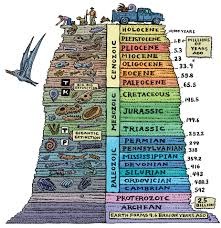
Radiometric Dating
Radioisotopes are used to
determine the actual age of rocks. Need to know the rough age to determine the radioisotope to use.
-rocks decay in a
predictable pattern.

Paleomagnetic Dating
-Alignment of particles
-Relates the ages of rocks to patterns in Earth's magnetism, which changes over time.
Half-life
Time interval over which one half of the remaining radioisotope decays, changing into another element.
What are the 4 Eons?
Oldest ->Youngest
1. Hadean eon—before life evolved
2. Archean eon—early life
3. Proterozoic eon—first eukaryotes
4. Phanerozoic eon—diversification of eukaryotes

What is the precambrian?
Combination of the Hadean, Archean, and Proterozoic eons.
(the first 3)

Date of Earth's formation?
4.5 bya (Hadean)
When does Prokaryotic life on Earth begin?
3.8 bya (Archean Eon)
When does Eukaryotic life begin?
1.5 bya (Proterozoic)
Alfred Wegener's Idea in 1912
Land masses have moved over time
Early Earth's atmosphere
Probably contained little or no free
oxygen (O2).

Earth's atmosphere 2.5 bya?
O2 began to increase when cyanobacteria
evolved the ability to use H2O as a source of H+ ions in
photosynthesis.
-O2 was a waste product.
-As photosynthetic organisms continued to release O2, it
began to accumulate in the atmosphere.
-Enough O2 was liberated to allow evolution of oxidation
reactions as the energy source to synthesize ATP.
Advantages of aerobic metabolism
Faster and more energy is harvested.
(Anaerobes are replaced with aerobic metabolism)
More Oxygen in the atmosphere leads to -?
-Larger, more complex cells
-About 1.5 billion years ago, atmospheric O2
concentrations became high enough for large
eukaryotic cells to flourish.
More about O2 levels you should know:
• O2 increased again during the Carboniferous and
Permian periods because of the evolution of large
vascular plants. (~300 mya)
• The high levels of O2 allowed the evolution of giant
insects and amphibians that could not survive in
today's atmosphere. (~250 mya)
Biota?
The assemblage of all kinds of organisms alive at one time (or in one place)

Flora?
All the plants

Fauna?
All the animals

A large number of fossil species are?
Marine organisms that had hard shells or skeletons that resist decomposition.
-Insects and spiders are also well represented
Major events in Life's History
-Life first appeared about 3.8 bya. For more than 3 billion years, all organisms lived in shallow seas
-The first eukaryotes appeared about 1.5 bya, during the Proterozoic.
-Multicellular eukaryotes began to diversify about 500 mya, as O2 levels increased and "snowball Earth" began to warm up.
By the late Precambrian (630-542 mya) and early Cambrian-
Many kinds of multicellular soft-bodied animals had evolved.
Phanerozoic Eon?
Diversification of life!
-"Cambrian Explosion"
Cambrian Explosion
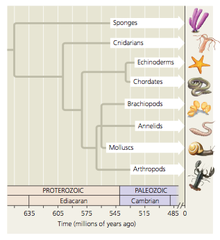
Rapid increase of multicellular organisms
• Marks beginning of the Paleozoic Era (542 mya)
• Oxygen levels approaching current level
• Glaciations of late Proterozoic had ended 40 million years earlier.
• Many of the major animal groups alive first appeared during this time.
• Multicellular life->aquatic
Why do animals become extinct?
-Environmental changes -> Growth/reproduction difficult
-Competition for resources between species
-If a prey goes extinct -> Predators suffer too
-As population size decreases -> chance of extinction increases
-Reproduction rate decreases and chance events have greater impact
Loss of genetic variation due to?
Inbreeding depression and genetic drift
- Could lead to extinction
Allee effect
Small populations can have density-dependent disadvantages
Examples: Difficulty finding mates, Loss of group benefits ( Protection, cooperative hunting), inbreeding and genetic drift.
Density-dependent disadvantages
As a population's size or density drops, the individual survival or reproductive rates worsen.
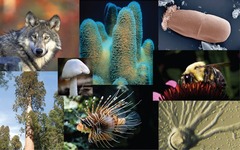
What is evolution?
The change in genetic composition of populations over time.
-observed in lab experiments, natural populations, and the fossil record
-These genetic changes drive the origin and extinction of species and the diversification of life.
What is evolutionary theory?
Understanding of the mechanisms of evolutionary change. Describe "how" evolution works.
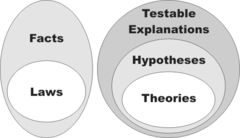
What is scientific theory?
Explanation of some aspect of the natural world, based on a body of facts that have been repeatedly confirmed through observation and experiment.
Charles Darwin (1809 - 1882)
- Jumped on the HMS Beagle to chart coasts & islands 1831-1836(Galapagos Islands)
-"Gentleman naturalist"
-Consensus : natural selection as the mechanism for evolution

Alfred Wallace
-Gathered field data in South America
-Independently came to the idea of natural selection

4 Postulates of Natural Selection
1. There is heritable variation within a population
2. Some variations are advantageous
3. Not all young survive to reproductive age
4. Individuals that will survive and reproduce have favorable variations
Problems with Darwin's Theory
He could not account for how favorable variations got transmitted to later generations
-Mendel's work coming to light in the
early 20th century provided the
missing idea in evolutionary theory.
Modern Synthesis
-Combines Darwinian selection and Mendelian inheritance
-Google Definition: it explains how small-scale genetic changes in populations lead to large-scale evolutionary changes over time
-Came about largely because of Theodosius Dobzhansky's 1937 book

Population Genetics
The study of genetic variation within a population.
Microevolution
-Population changing over time
-The change in allele frequencies within a gene pool
Ex: peppered moths and a sooty environment

Population
Members of a species that live in one place and can interbreed.
Gene Pool
-As a result of mutation, different forms of a gene (alleles) may exist
- The sum of all copies of all alleles at all loci in a population.
The gene pool = genetic variation in the population.

What's a locus?
One position on a chromosome, one section of DNA that codes for a particular trait.
Homozygous dom:
Heterozygous:
Homozygous recessive:
BB (brown)
Bb (brown)
bb (blue)
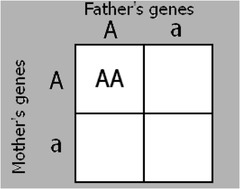
Phenotype:
Physical expression of a gene, how it appears(morphology,
physiology, behavior).
• what we observe
Genotype:
The inheritable material, order of nucleotides, DNA.

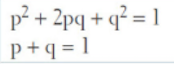
Hardy-Weinberg equilibrium
Measures microevolution
Other mechanisms of evolution (five in total)
Natural Selection, mutation, gene flow, genetic drift, and nonrandom mating
Mutation
The random change in the nucleotide sequences. Most are harmful or neutral, a few are beneficial for the current conditions.
-Codon (3 DNA base pairs) => amino acid => proteins
-substitution, insertion, deletion, inverson
Gene Flow
The movement of alleles into another population.
-Geographically isolated populations have the tendency to drift toward speciation, especially if there is no gene flow
Genetic drift
The random loss of alleles in a population. More impact in small populations.
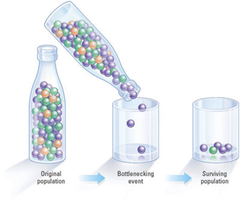
Population bottleneck
Environmental conditions result in the survival of only a few individuals. Genetic drift can reduce genetic variation in the population
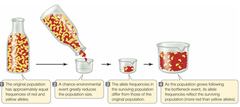
Founder Effect
Google definition: Biological process in which a small group of individuals separates from a larger population to establish a new, isolated colony.
-Specific type of genetic drift
PowerPoint: Colonizing populations are unlikely to have all the alleles present in the whole population.

Nonrandom mating
Such as sexual selection, can also change allelic frequencies.
-Occurs when the probability that two individuals in a population will mate is not the same for all possible pairs of individuals.
-Two types of mating, assortative and disassortative

Assortative mating
Choose phenotypically similar mate => increase in homozygous
individuals

Disassortative mating
choose phenotypically different mate => increase heterozygotes
individuals

Sexual Selection
A process of non-random mating: pick mates based on preference of a characteristic
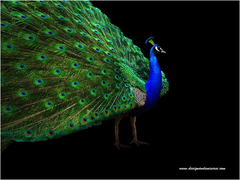
Natural selection can act on quantitative traits in three ways:
• Stabilizing selection preserves the average phenotype
• Directional selection favors individuals that vary in one direction from the mean.
• Disruptive selection favors individuals that vary in both directions.
Stabilizing selection
Reduces variation but does not change the mean.
Directional selection
When individuals at one extreme are more successful
Disruptive selection
Individuals at either extreme are more successful than average individuals
How can selection maintain variation within and among populations?
-Different alleles of a gene may be advantageous under different environmental conditions.
Heterozygote advantage: in changing conditions, heterozygous individuals are likely to outperform homozygotes.
Ex:
AA (homozygous dominant) is susceptible to malaria but has no sickle cell disease.
aa (homozygous recessive) is resistant to malaria but has the fatal sickle cell.
Aa (heterozygote) is resistant to malaria and has only mild sickle cell (Has the advantages)
Evolution is constrained in what ways?
-Lack of genetic variation can prevent the evolution of potentially favorable traits.
-If the allele for a given trait does not exist in a population, that trait cannot evolve, even if it would be favored by natural selection.
-Must work within universal constraints: cell size
-Protein folding
-Laws of thermodynamics that constrain energy transfers
-Adaptations can impose costs and benefits
Microevolutionary changes
- Short-term changes
-Observed directly
-Manipulated experimentally
-Demonstrate the actual processes by which evolution occurs
Macroevolutionary changes
-Long-term patterns
-Influenced by events that occur infrequently or slowly
-Can't be observed in short-term studies
What is the neutral theory of molecular evolution?
That at the molecular level, most evolutionary changes and polymorphisms within species are not caused by natural selection but by random genetic drift.
Epigenetics "above the genome"
- is the study of how your behaviors and environment can cause changes that affect the way your genes work.
-Epigenetic changes are reversible and do not change your DNA
sequence, but they can change how your body reads a DNA sequence.
Phylogeny
The evolutionary history of relationships among organisms.
-Help organize life into a coherent classification system
-It is portrayed in a diagram called a phylogenetic tree.
• Each branching point or node represents a point at which lineages
diverged.
• The common ancestor of all organisms in the tree is the root
Phylogenetic tree
a diagrammatic reconstruction of the evolutionary history of species, populations, and genes.
-Genome sequencing allows biologists to reconstruct the history in ever greaater detail

Taxon
Any group of species that we designate or name
Ex: mammals, vertebrates, amniotes
Why Latin?
- Confusion using other languages
-Language of scholars
-Dead language so its harder to change
Naming
Genus begins with capital letter
- specific epithet begins with lower-case letter
- italicized or underlined (broken line, not continuous)
- endings usually match
- for common names capitalize first letter of each part of name:
• Families end in
• -idae for animals (Charadriidae)
• - aceae for plants (Bromeliaceae)
Ancestral trait
Trait that was present in the ancestor of a group. - The old model (i.e.
ectothermy in vertebrates)
Derived trait
A trait in a descendant that differs from the ancestral trait. (i.e. endothermy - has evolved at least twice
Outgroup
Closely related, but not a member of the "focus" group
Clade
A taxon that consists of all the descendants of a common ancestor

Sister species
Two species that are each other's closest relatives.

Sister clades
Two clades that are each other's closest relatives.
Homologous structures
-Same evolutionary origins
-Features shared by two or more species that were inherited from a common ancestor
-Descent with modification
Ex: The bones of the forelimb are homologous in all mammals
Human arm bone, whale fin bone, car arm bone
Analogous structures
-Independent origins
- Similarity due to similar ecological pressures
-Same type of trait adaptive in given enviornment
-Similarity NOT due to common ancestry
Ex: Shark fin, penguin fin, dolphin fin
Synapomorphies
Derived traits shared among a group; they are viewed as evidence of the common ancestry of the group.
Syn-together
apo-derived
morph-form
Example: The vertebral column is a synapomorphy of all vertebrates
Convergent evolution
Independently evolved traits subjected to similar selection pressures may become superficially similar.
Ex: The bones in bats and birds are homologous; the wings are not. The wings of bats, birds, and dragonflies are analogous
Evolutionary reversal
A character reverts from a derived state back to the ancestral state.
• Ancestors of whales and dolphins went back to the ocean; cetacean limbs evolved to resemble the ancestral fins.
• Similar traits generated by convergent evolution and evolutionary reversals are called homoplasies.

Parsimony Principle
The simplest explanation of observed data is the preferred explanation
Occam's razor: the best explanation is the one that best fits the data with the fewest assumptions.
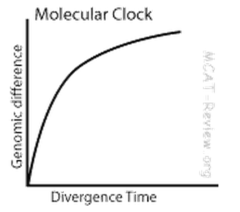
Molecular clock
The average rate at which a gene or protein accumulates changes.
Classification: Taxa should be?
Monophyletic: contains an ancestor and all descendants of that ancestor, and no other organisms
- A true monophyletic group can be removed from a tree by a single "cut"
Classification: Polyphyletic
A group that does not include its common ancestor
Classification: Paraphyletic
A group that does not include all descendants of a common ancestor
Species
"Groups of organisms that share a suite of genetic and morphological attributes and are reproductively isolated from other
groups."
• Species are the result of speciation: the divergence of biological lineages and emergence of reproductive isolation.

Morphological Species Concept
- How we teach young children
-Species comprised of individuals that "look alike"
Biological Species Concept
-Emphasizes reproductive isolation
Lineage Species Concept
-Species are branches on a tree of life- one species splits into two descendant species -> evolve as distinct lineages
Reproductive isolation
-When groups can no longer exchange genes, it is a key factor in the
divergence of sexually reproducing organisms.
-Necessary for lineages to remain distinct over evolutionary time.
-Mechanisms: barriers to successful reproduction, prevents genetic exchange b/w species
Two types of reproductive isolation:
Prezygotic barrier- the mechanism that prevents the fertilization of eggs, NO fertilization
Ex: habitat isolation, temporal isolation, behavioral isolation, mechanical isolation, gametic isolation
Postzygotic barriers- The mechanism that prevents the formation of fertile offspring, fertilization
-Low hybrid zygote viability, low hybrid adult viability, hybrid infertility

Dobzhansky-Muller model:
An ancestral population is divided by a barrier to gene flow, and the two groups evolve independently.
• In each lineage, new alleles become fixed at different loci. The new alleles at the two loci are incompatible with one another.
If the two populations come back together, they may still be able to
interbreed. But the hybrid offspring will have a new combination of genes that may be functionally inferior, or even lethal.
-Thus, genetic incompatibility will develop over time

How do new species arise?
Allopatric speciation and sympatric speciation
Allopatric (more in animals): Occurs when populations are separated by a physical barrier. For aquatic animals, this could be depths, currents, temp zones, land masses, and salinity differences. For terrestrial critters, this could be glaciers, rivers, oceans, and mountains. Thought to be the dominant mode of speciation. Many SISTER SPECIES exist on either side of the geographic barrier.
Sympatric ( more in plants): A new species arises in an existing species, without physical isolation. Most commonly occurs by polyploidy duplication of whole sets of chromosomes.
Chromosome duplication:
Autopolyploidy: Duplication in a single species ( in plants)
-Can occur accidentally
-If two diploid gametes combine a tetraploid will be created
-Tetraploids can self-fertilize
Allopolyploidy: Combination of chromosomes from two species
Factors of a lineage splitting-
Diet specialization, pollination, sexual selection, dispersal ability
Diet: Populations of species that have specialized diets may be more likely to diverge because they don't want to compete for food.
Pollination: Speciation rates are higher in animal-pollinated than wind-pollinated plants. Due to a formed relationship between the animal and the plant. Ex: A bee might only like a specific flower. Wind is general and will pollinate all nearby plants.
Sexual: animals with sexually selected behaviors are likely to form new species because of the high degree of discrimination in mate selection. Discrimination based on size, shape, appearance, and behavior.
Dispersal ability: Speciation rates are likely to be faster in species with poor dispersal abilities because they can be separated by even narrow barriers.
Adaptive Radiation
Rapid speciation can lead to an evolutionary radiation—the proliferation of a large number of species from a single ancestor.
• If the resulting species live in a wide array of environments, it is called an adaptive radiation.