Lab 1 bio 111 Anatomy and Physiology Lab Basics bio 111
 Call Kai
 Learn
Learn Practice Test
 Spaced Repetition
 Match
Match Flashcards
 Knowt Play
1/177

Earn XP
Description and Tags
lab one quiz bio 111
Name | Mastery | Learn | Test | Matching | Spaced | Call with Kai | Chat |
|---|
No analytics yet
Send a link to your students to track their progress
178 Terms
What is anatomical position?
The body is erect and facing forward, with the arms at the sides, palms facing forward, and toes pointing forward.
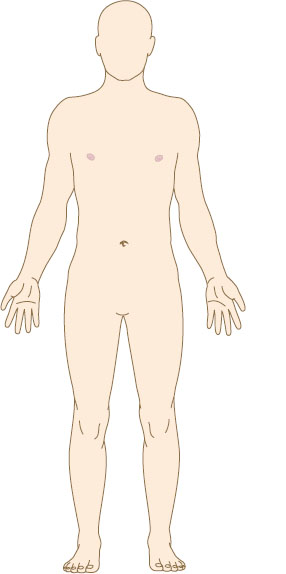
Why is anatomical position important?
Anatomical terms and directional descriptions are based on the body being in anatomical position.
When looking at an anatomical drawing, which side of the body appears on the left side of the drawing?
The person's right side.
Why does the right side of the body appear on the left side of an anatomical drawing?
The drawing is viewed as if the person is facing you.
Why are directional terms used in anatomy?
To precisely describe the location of one body part or structure relative to another.
What does anterior mean?
Toward the front of the body.
What is another term for anterior?
Ventral.
What does posterior mean?
Toward the back of the body.
What is another term for posterior?
Dorsal.
What does superior mean?
Toward the head end of the body.
What are other terms for superior?
Cranial or cephalic.
What does inferior mean?
Toward the feet end of the body.
What is another term for inferior?
Caudal.
What does medial mean?
Nearer to the midline of the body.
What does lateral mean?
Farther from the midline of the body, toward the side.
What does intermediate mean?
Between two structures.
What does internal mean?
Deeper within the body, away from the surface.
What is another term for internal?
Deep.
What does external mean?
Nearer to the surface of the body.
What is another term for external?
Superficial.
What does proximal mean?
Toward or nearer to the point of attachment or closer to the trunk.
What does distal mean?
Away from or farther from the point of attachment or trunk.
What is the opposite of anterior?
Posterior.
What is the opposite of superior?
Inferior.
What is the opposite of medial?
Lateral.
What is the opposite of proximal?
Distal.
What is the opposite of deep?
Superficial.
The heart is anterior to what structure?
The spine.
The thumb is lateral to which finger?
The little finger.
The little finger is distal to what?
The elbow.
The little finger is more distal to the shoulder than what?
The elbow.
Why are anatomical planes used?
To analyze the position and relationships of structures within the body.
What is a sagittal plane?
A plane that runs anterior to posterior and divides the body into right and left portions.
What does a sagittal plane divide the body into?
Right and left portions.
What is a frontal plane?
A plane the runs vertical and splits the body into anterior and posterior
What is another name for the frontal plane?
Coronal plane.
What does a frontal/coronal plane divide the body into?
Anterior and posterior portions.
What is a transverse plane?
A plane that runs parallel to the ground and divides the body into superior and inferior portions.
What is another name for a transverse plane?
Horizontal plane.
What does a transverse plane divide the body into?
Superior and inferior portions.
What type of section do sagittal and coronal planes produce?
Longitudinal sections.
What is a cross-section?
A section made across a structure, generally corresponding to a transverse section.
What is an oblique plane?
A plane that cuts the body at an angle.
Which plane divides the body into right and left portions?
Sagittal.
Which plane divides the body into anterior and posterior portions?
Frontal/coronal.
Which plane divides the body into superior and inferior portions?
Transverse/horizontal.
Which plane is angled through the body?
Oblique.
What is a body cavity?
A space within the body that houses internal organs.
What are the three major body cavities listed in the lab?
Cranial, vertebral, and ventral.
What is the cranial cavity?
The space within the skull that houses the brain.
What is the vertebral cavity?
The cavity formed by the vertebrae that houses the spinal cord.
What is another name for the vertebral cavity?
Spinal cavity or spinal canal.
What are the cranial and vertebral cavities collectively called?
The dorsal body cavity.
What is the ventral body cavity?
The large cavity formed by the space enclosed by the ribs, sternum, muscles, and pelvic bone.
What two major cavities are included within the ventral body cavity?
Thoracic and abdominopelvic cavities.
What separates the thoracic and abdominopelvic cavities?
The diaphragm.
What is the thoracic cavity?
The cavity located above the diaphragm that contains the thoracic viscera.
What is the abdominopelvic cavity?
The cavity located below the diaphragm that houses the abdominal and pelvic viscera.
What is the dorsal body cavity made of?
Cranial and vertebral cavities.
What is the ventral body cavity made of?
Thoracic and abdominopelvic cavities.
Where is the thoracic cavity located?
Above the diaphragm.
What does the thoracic cavity contain?
Thoracic viscera.
What three smaller cavities/spaces are associated with the thoracic cavity?
Pleural cavities, pericardial cavity, and mediastinum.
What is the pleural cavity?
The space between the visceral and parietal pleural membranes.
What surrounds the lungs?
Visceral and parietal pleural membranes.
What is the pericardial cavity?
The space between the visceral and parietal pericardial membranes around the heart.
What surrounds the heart?
Visceral and parietal pericardial membranes.
What is the mediastinum?
The space between the lungs.
Where is the mediastinum located?
Between the lungs within the thoracic cavity.
Where is the abdominopelvic cavity located?
Below the diaphragm.
What does the abdominopelvic cavity house?
Abdominal and pelvic viscera.
What are the three smaller cavities associated with the abdominopelvic cavity?
Abdominal cavity, pelvic cavity, and peritoneal cavity.
What is the abdominal cavity?
The cavity containing the abdominal viscera.
Where are the kidneys located in relation to the peritoneal lining?
Behind the peritoneal lining.
What does retroperitoneal mean?
Located behind the peritoneal lining.
Which organs are specifically identified as retroperitoneal in the lab?
Kidneys, ureters, and adrenal glands.
What is the pelvic cavity?
A cavity enclosed by the pelvic bones.
What is the peritoneal cavity?
The space between the visceral and parietal peritoneal membranes.
What is a serous membrane?
A membrane lining body cavities and covering organs that provides protection and lubrication for organ movement.
What is the purpose of serous membranes?
They provide protection and lubrication for organ movement.
What are the two layers of a serous membrane?
Visceral and parietal layers.
What does the visceral layer cover?
The organ.
What does the parietal layer line?
The wall of the body cavity.
What is the pleura?
The serous membranes associated with the lungs.
What is the pericardium?
The serous membranes associated with the heart.
What is the peritoneum?
The serous membranes associated with the abdominopelvic organs and cavity.
What are the three major serous membranes?
Pleural, pericardial, and peritoneal.
Which serous membrane surrounds the lungs?
Pleural membrane.
Which serous membrane surrounds the heart?
Pericardial membrane.
Which serous membrane surrounds/lines the abdominopelvic organs and cavity?
Peritoneal membrane.
What is the difference between visceral and parietal?
Visceral covers the organ; parietal lines the cavity wall.
What does "viscera" refer to?
Internal organs.
What is the axial portion of the body?
The head, neck, and trunk.
What is the appendicular portion of the body?
The upper and lower limbs.
What is another anatomical term for the arms and legs?
Appendages/appendicular portion.
What is the difference between axial and appendicular?
Axial = head, neck, and trunk; appendicular = upper and lower limbs.
What does cephalic refer to?
Head.
What does cervical refer to?
Neck.
What does frontal refer to?
Forehead.
What does orbital refer to?
Eye/orbit.