Physical Education - Chronic Adaptations
 Call Kai
 Learn
Learn Practice Test
 Spaced Repetition
 Match
Match Flashcards
 Knowt Play
1/23

There's no tags or description
Looks like no tags are added yet.
Name | Mastery | Learn | Test | Matching | Spaced | Call with Kai | Chat |
|---|
No analytics yet
Send a link to your students to track their progress
24 Terms
Chronic adaptations
Refers to the long-term physiological changes that occur in response to consistent exercise training (aerobic, anaerobic and/or resistance) over extended periods
Minimum period for aerobic training
6 weeks (evident in the 12th week)
Cardiovascular and respiratory system adaptations are designed to
bring about the more efficient delivery of larger quantities of oxygen to working muscles
Respiratory system improvements in aerobic training
Better oxygen uptake
Cardiovascular system improvements in aerobic training
Increase blood flow an the transportation of oxygen
Muscular system improvements in aerobic training
Enhance the utilisation of oxygen

Chronic adaptations to aerobic training: respiratory system
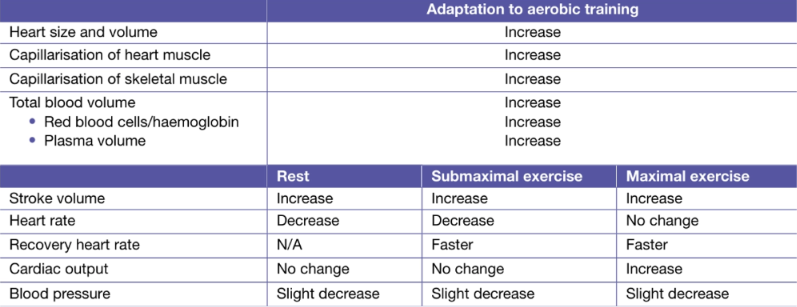
Chronic adaptations to aerobic training: cardiovascular system
Cardio
The heart
Vascular
Blood and blood vessels
Cardiac output formula
Q = SV x HR
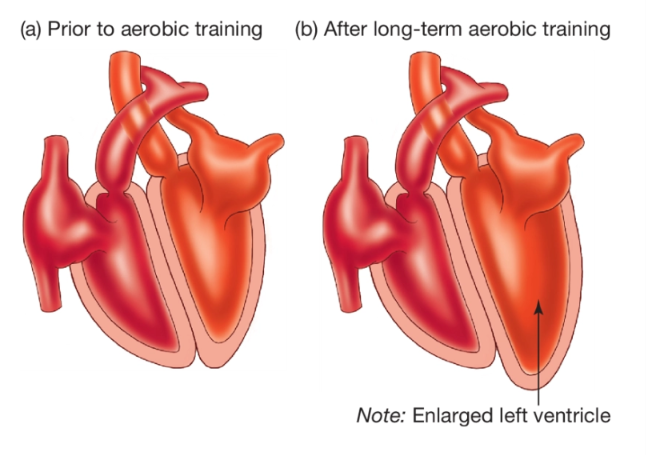
Cardiac hypertrophy
Fast twitch fibres for the muscular system (aerobic training)
Takes the characteristics of slow twitch fibres (does not become them)
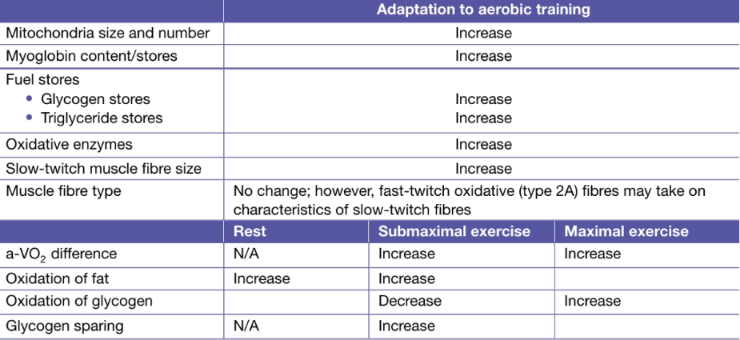
Chronic adaptations to aerobic training: muscular system
VO 2 max
The maximum amount of oxygen per minute that can be taken in, transported and utilised by the body for energy production. It can be improved by aerobic training
VO 2 max formula
VO 2 max = cardiac output x a-vO 2 diff
Absolute VO 2 max
The total amount of oxygen consumed, regardless of weight, age of gender, measured in L/min
Relative VO 2 max
Considers body weight and is expressed as mL/kg/min (how much oxygen is taken in per kilogram of body weight per minute, measured in millilitres)
Lactate Inflection Point (LIP)
The final point where lactate production and lactate removal are equal
Minimum period for anaerobic training
6 weeks
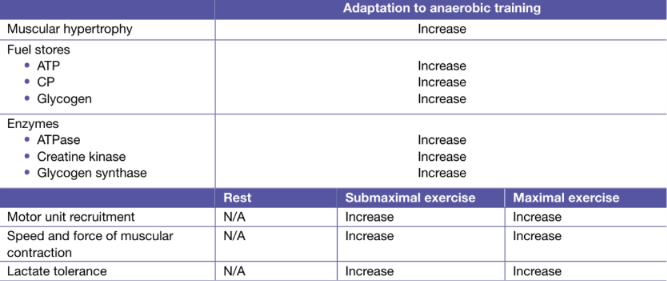
Chronic adaptations to anaerobic training: muscular system
Increased muscular hypertrophy
Increase size of myofibrils, contractile protein, size and strength of connective tissue
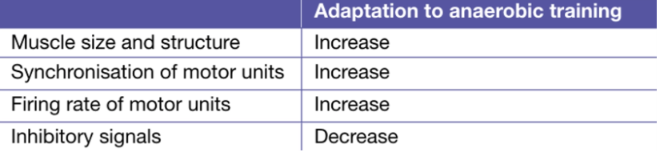
Chronic adaptation to resistance training: neuromuscular
Lactate tolerance
The ability of an athlete to continue to exercise at high intensities, despite the accumulation of lactate. It can be improved by anaerobic training above LIP