Bio Exam 2
 Call Kai
 Learn
Learn Practice Test
 Spaced Repetition
 Match
Match Flashcards
 Knowt Play
1/67

There's no tags or description
Looks like no tags are added yet.
Name | Mastery | Learn | Test | Matching | Spaced | Call with Kai | Chat |
|---|
No analytics yet
Send a link to your students to track their progress
68 Terms
Robert hooke
coined cells in 1600s
cell
smallest self-sustaining unit of life, exhibits all tenets of life
Zacharias Janssen and Sons
first compound microscope Holland, 1595, most microscopes we look at
Anthony Van Leeuwenhoek
built single lens microscope (magnifications -200x), first to observe blood cells, bacteria, sperm cells, protozoa
evidence refuted spontaneous generation
cell theory
cells are the smallest unit of life
all life is composed of cells
all cells arise from other cells
does not address complexity of cells
cell theory scientists
Dr. Matthias Schleiden, Dr. Theodore Schwann, Rudolph Virchow
Dr. Matthias Schleiden
botanist, 1838, suggested plants are composed of cells
Dr. Theodore Schwann
zoologist, 1839, suggested all animals come from cells
Rudolph Virchow
physician, 1855, all cells come from other cells
prokaryotic
bacteria, archaea, 3.5 billion years ago, no nucleus or organelles, smaller
eukaryotic
protists, fungi, plants, animals, 2.1 billion years ago, nucleus and organelles, larger
plasma membrane
all cells are bounded by a membrane of phospholipids
cytosol
polar, thick, jelly-like fluid that cell components are suspended in
cytoskeleton
protein based filaments in cytoplasm that maintain structure of cell
genome
all cells have one or more chromosomes carrying genes made of DNA
ribosomes
tiny structures that build proteins according to the instructions from the genes
prokaryotic layer structure

prokaryotic layer structure
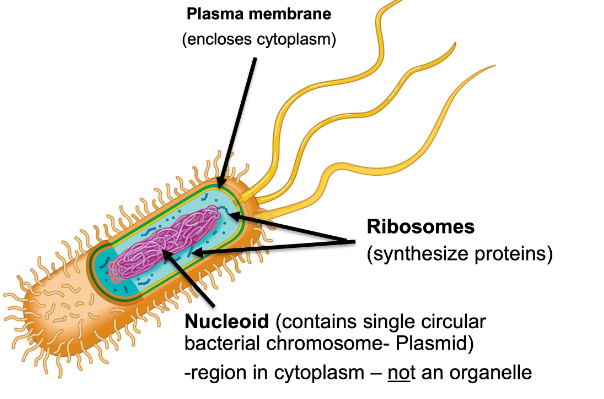
capsule
sticky coating for protection
fibriae
attachment structures
flagella
help cell move
cell wall
protects and keeps shape
plasma membrane
surrounds cytoplasm and cell machinery
nucleoid
contains single circular bacterial chromosome
ribosomes
synthesize proteins
Eukaryotic plant cell
specialty- chloroplasts, cell walls (composed of cellulose), vacuoles

Eukaryotic animal cell
specialty- lysosomes (bubbles of digestive enzymes surrounded by membranes)

organelles
membrane-bound structures that perform a specific function, double membrane bound nucleus
plasma membranes
physically separate the cell interior from the extracellular environment, define organelles in eukaryotes, very thin and see through
amphipathic macromolecule
hydrophobic and hydrophilic regions (phospholipids)
phospholipid bilayer
two layer sheet of phospholipids that make up cell membranes, Hydrogen bonds hold heads of phospholipids together
fluid mosaic
flexible, self-sealing, and can fuse with other membranes, not static rigid sheets
plasma membrane is a fluid mosaic
fluid because molecules can move freely past one another
mosaic because of diversity of proteins in membrane
surface proteins
pumps, receptors, help regulate traffic across membrane, perform other functions
plasma membranes
define compartments and organelles of eukaryotes, regulates passage of materials, participates in biochemical reactions, receives info about environment, communicate with other cells, act as part of energy transfer and storage
cytosol
cellular filling liquid, life sustaining chemical reactions, storage, suspends organelles in eukaryotes
Central Dogma of Biology
true of all cells
chromosomes are pieces of DNA with set sequence of genes
genes are copied from DNA to mRNA
ribosome moves along mRNA, translating genetic message into a protein with a specific Animo acid sequence
relationship with DNA
DNA is wound around histones, translating genetic message into a protein with a specific amino acid sequence
an entire linear strand of DNA coiled into chromatin is a chromosome
cytoskeleton
network of protein fibers extending throughout cytoplasm
helps a cell maintain shape, both skeleton and muscles for cell, endocytosis, lysosome transport
cytoskeleton is static, not dynamic
can be quickly dismantled and reformed in new location
removing protein subunits/reattaching them
rearrangement can provide rigidity, change shape of cell, cause whole cell or parts to move
microtubules
composed of pairs of different polypeptides in a helical arrangement

intermediate filaments
composed of ropelike bundles of various proteins

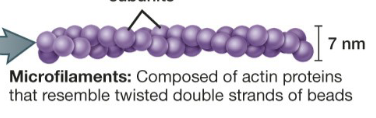
microfilaments
composed of actin proteins that resemble twisted double strands of beads
functions of cytoskeleton
involved with transport of materials in cell, pushing/pulling chromosomes during mitosis, protist crawling movement
ribosomes
small complexes of protein and RNA that translate genetic info into amino acid sequence of a protein, part of central dogma, free floating in cytoplasm
ribosome subunit
sandwich mRNA, pulls mRNA through it and matches to corresponding amino acid
endomembrane system
nucleus, ER, Golgi apparatus, lysosomes
nucleus
home of genomic DNA and nucleus
nucleolus
inside nucleus, makes pieces of ribosomes
nuclear envelope (double membrane), pores in envelope regulate entry and exit of materials
ER
produces proteins (lipids primarily), physically connected to nuclear envelope
rough ER
protein synthesis, studded with ribosomes
a ribosome links amino acid
proteins are modified in ER
secretory proteins depart
vesicles bud off from ER
smooth ER
lacks ribosomes, produces phospholipids and steroids, important in liver to detoxify and drug metabolism
golgi apparatus
receives vesicles of proteins and lipids from ER, stores, packages and distributes them to their final cellular destination
golgi apparatus movement
transport vesicles from ER, products (polypeptides), reach the golgi and fuse with golgi membrane
polypeptides dumped from vesicle into folded cavity of golgi body
modified by other enzymes in golgi, repackaged in vesicles and shipped to cytoplasm
mitochondria
powerhouse of cell, key role in making ATP, extract energy from food and store it in bonds of ATP
mitochondria structure
double membrane- outer and inner layer

cristae
folded inner membrane studded with respiratory complexes (essential energy hubs)
intermembrane compartment
between cristae and outer membrane
matrix
gel that fills space within cristae, citric acid cycle
chloroplasts
plants only, converts solar energy into chemical energy, makes glucose needed for mitochondrial function, makes own ATP
chloroplast structure
double membrane
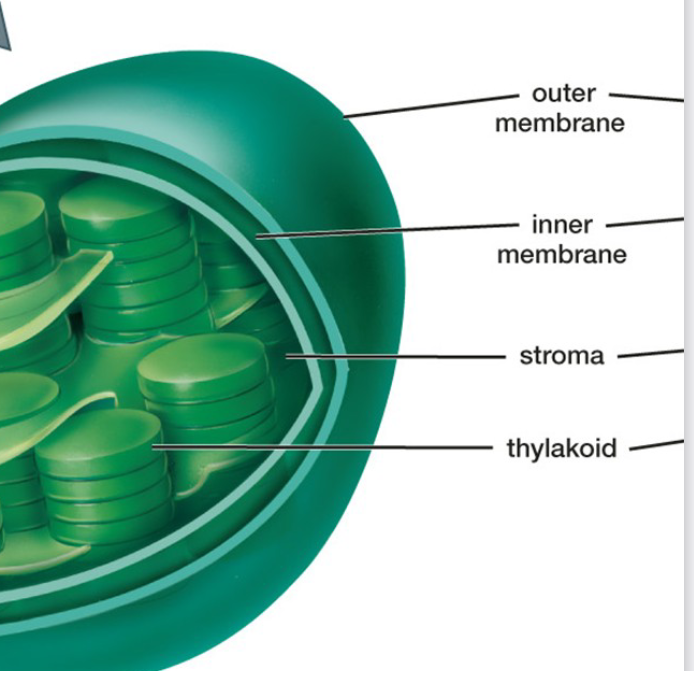
stroma
fluid inside (important enzymes suspended)
thylakoid
stacks of continuous membranes studded with photosystems
chlorophyll starts photosynthesis here
endosymbiont theory
chloroplasts and mitochondria were once individual distinct prokaryotes and over time became interdependent evolving into a single organism with inseparable parts
endosymbiosis
Dr. Lynn Margulis, mitochondria and chloroplasts were once individual prokaryotic cells
endocytosis
cells engulfing a thing by wrapping around it (cytoskeleton is responsible)
symbiogenesis
“becoming by living together” coexisting species evolve into new organism
evidence
mitochondria and chloroplasts are similar to bacteria
their replication occurs through binary fission, have their own DNA and ribosomes, circular plasmid DNA, sensitive to same antibiotics that kill prokaryotic pathogens