Camera & Kinetic Movement

0.0(0)
Studied by 0 people
call kaiCall Kai
learnLearn
examPractice Test
spaced repetitionSpaced Repetition
heart puzzleMatch
flashcardsFlashcards
Card Sorting

1/15

flashcard set

Earn XP

Description and Tags

This lecture discusses the seven basic moving camera shots and the art of the moving camera within time and space.

Last updated 5:27 AM on 7/30/26
Name
Mastery
Learn
Test
Matching
Spaced
Call with Kai
Chat

No analytics yet

Send a link to your students to track their progress

16 Terms
1
New cards
<p>Pan</p>

Pan

When a camera is mounted on a tripod and moved to the left or right to scan the environment while keeping the subject inside the frame of the camera. It can be used to establish an environment and shift attention from one subject to another.
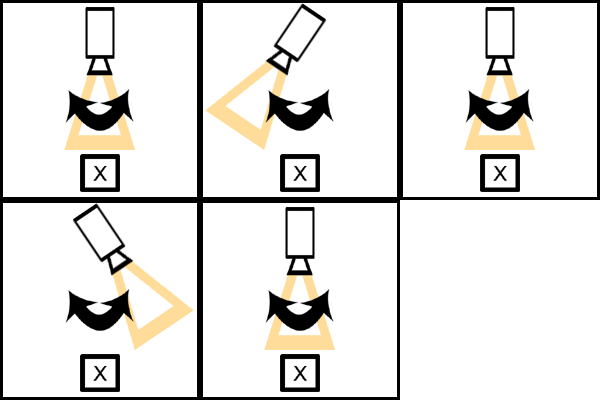
<p>When a camera is mounted on a tripod and moved to the <strong>left or right</strong> to scan the environment while keeping the subject inside the frame of the camera. It can be used to <strong>establish an environment</strong> and <strong>shift attention</strong> from one subject to another.</p>
2
New cards
<p>Tilt</p>

Tilt

When a camera is moved up or down, for the same purposes as the pan shot and pov shots. Tilting the camera up can make someone seem more powerful, whereas tilting the camera down can make someone seem more vulnerable.
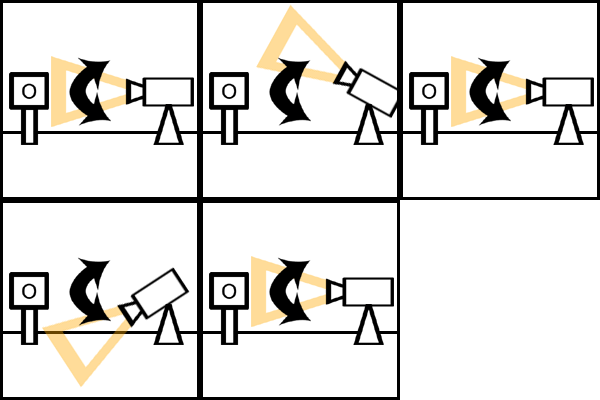
<p>When a camera is moved <strong>up or down</strong>, for the same purposes as the pan shot and pov shots. Tilting the camera up can make someone <strong>seem more powerful</strong>, whereas tilting the camera down can make someone <strong>seem more vulnerable</strong>.</p>
3
New cards
<p>Dolly Push-In</p>

Dolly Push-In

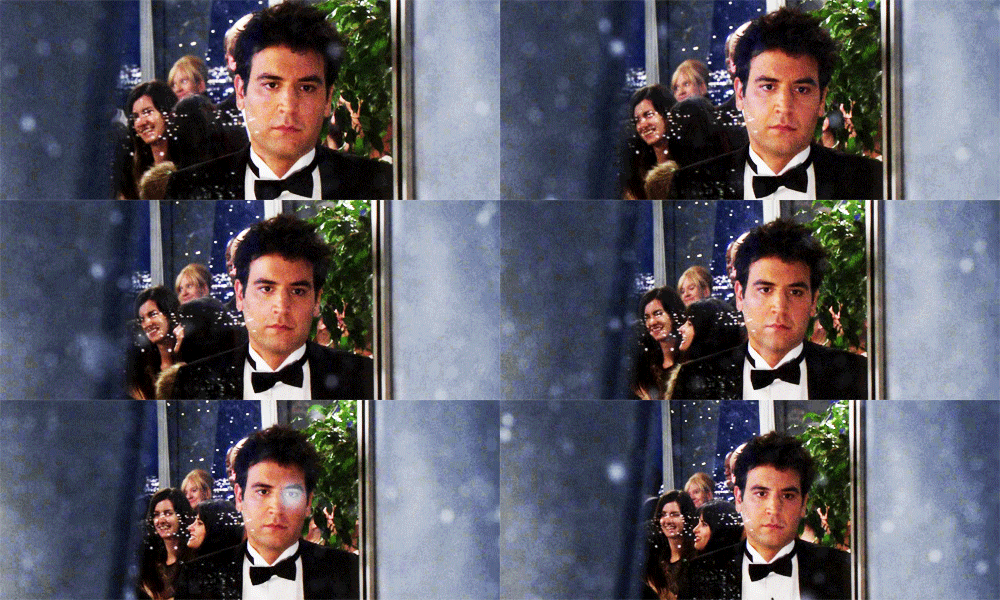
Moves the camera into the subject to emphasize the importance of the moment, revelation, and internal conflict.

<p>Moves the camera <strong>into the subject</strong> to emphasize the importance of the moment, revelation, and internal conflict.</p>
4
New cards
<p>Dolly Pull-Out</p>

Dolly Pull-Out

Moves the camera away from the subject to deemphasize said subject, reveal the setting or characters, and detach the viewer from the scene.
<p>Moves the camera <strong>away from the subject</strong> to deemphasize said subject, reveal the setting or characters, and detach the viewer from the scene.</p>
5
New cards
<p>Dolly Tracking-Shot</p>

Dolly Tracking-Shot

Moves the camera alongside the subject to generate questions such as “where is the character going, and what will happen?” Immersing the viewer in a long take

<p>Moves the camera <strong>alongside the subject</strong> to generate questions such as “where is the character going, and what will happen?” Immersing the viewer in a long take</p>
6
New cards
<p>Dolly Trucking-Shot</p>

Dolly Trucking-Shot

Follows the subject, laterally (side to side).
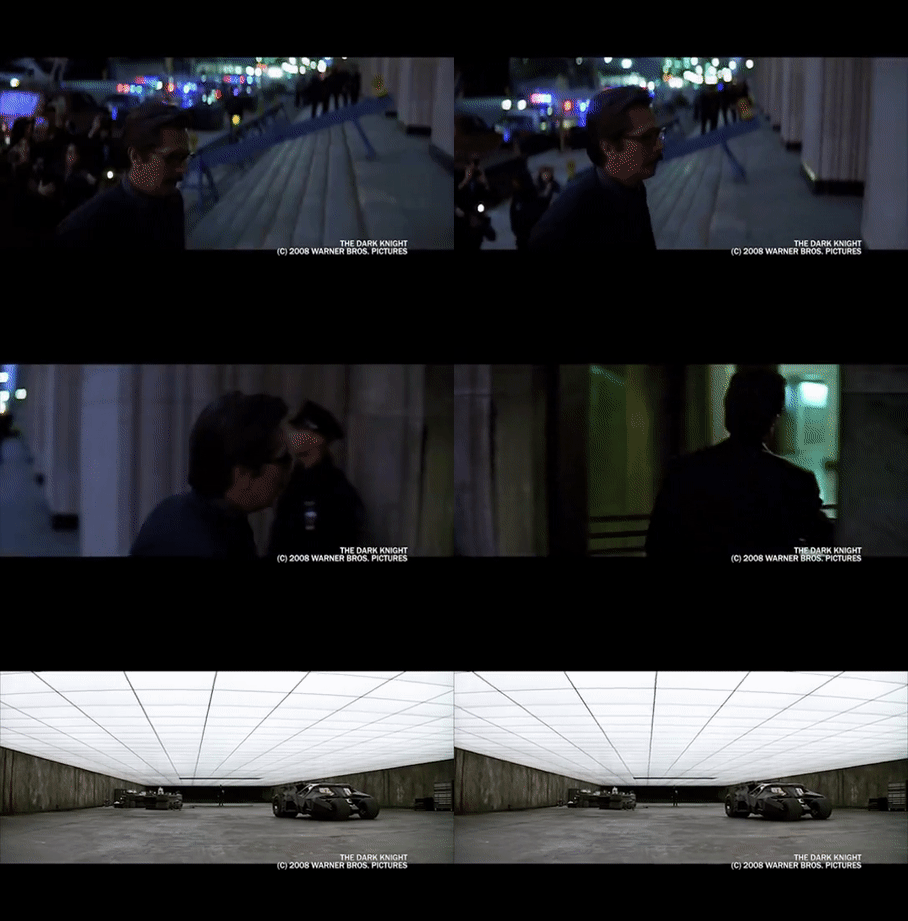
<p><strong>Follows the subject</strong>, laterally (side to side).</p>
7
New cards
<p>Zoom In &amp; Zoom Out</p>

Zoom In & Zoom Out

Moves the lens rather than the physical camera, serving a similar purpose as the push-in/pull-out. Seems less natural than dolly shots.

<p><strong>Moves the lens rather</strong> than the physical camera, serving a similar purpose as the push-in/pull-out. Seems less natural than dolly shots.</p>
8
New cards
<p>Handheld</p>

Handheld

Camera is usually mounted on the camera operator’s shoulder, causing a jumpy and ragged effect that is hard to ignore.
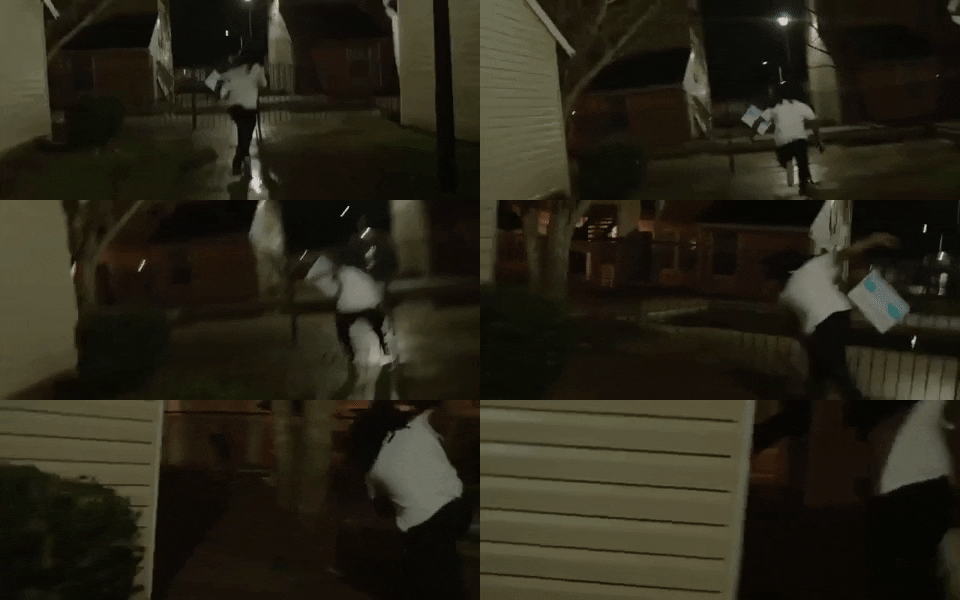
<p>Camera is usually mounted on the camera operator’s shoulder, causing a <strong>jumpy and ragged effect</strong> that is hard to ignore.</p>
9
New cards
<p>Crane Shot</p>

Crane Shot

An airborne dolly shot that can move the cinematographer and camera in and out of the scene, from any direction.
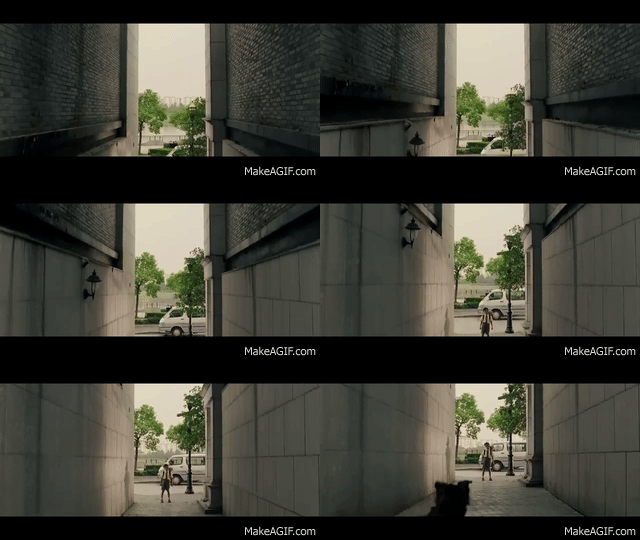
<p>An <strong>airborne dolly shot</strong> that can move the cinematographer and camera in and out of the scene, from any direction.</p>
10
New cards
<p>Aerial Shot</p>

Aerial Shot

Taken from a helicopter or drone, emphasizing freedom, space, and isolation. Used when a crane shot is impractical.
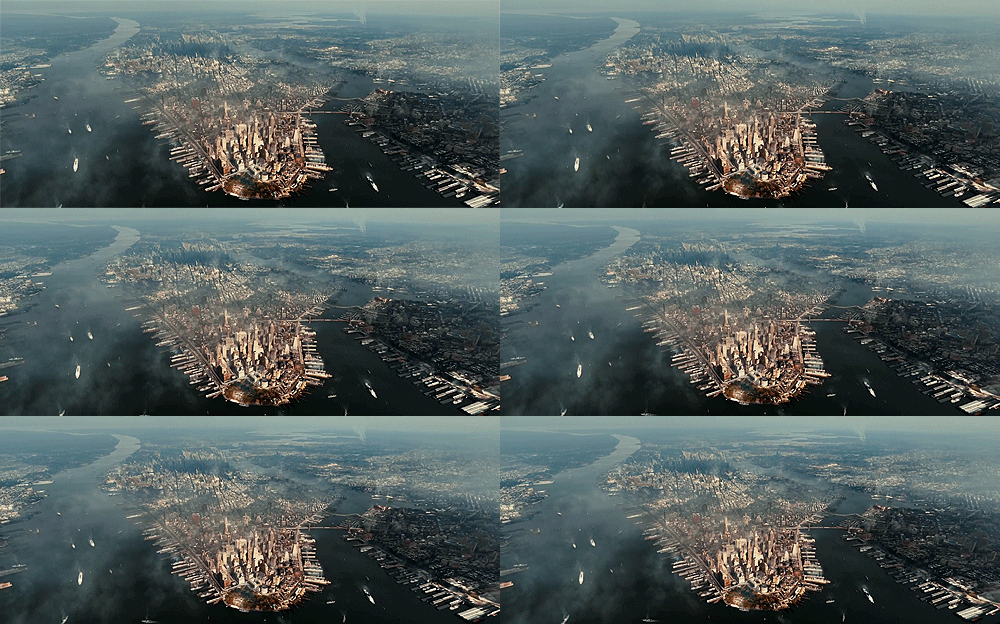

<p>Taken from a <strong>helicopter or drone, emphasizing freedom, space, and isolation</strong>. Used when a crane shot is impractical.</p>
11
New cards
<p>Vertical (Up)</p>

Vertical (Up)

Soaring and free, suggesting aspiration, joy, power, and authority, such as running up stairs, a bird flying.

12
New cards
<p>Vertical (Down)</p>

Vertical (Down)

Suggests grief, death, insignificance, depression, and weakness. Like climbing down a set of stairs to the basement or falling off the ground.
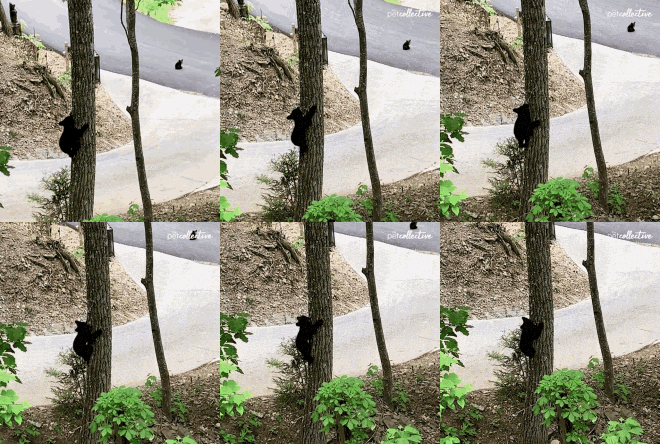

<p>Suggests <strong>grief</strong>, death, <strong>insignificance</strong>, depression, and weakness. Like climbing down a set of stairs to the basement or falling off the ground.</p>
13
New cards
<p>Lateral (Left to Right)</p>

Lateral (Left to Right)

Seems psychologically natural, like the human eye.
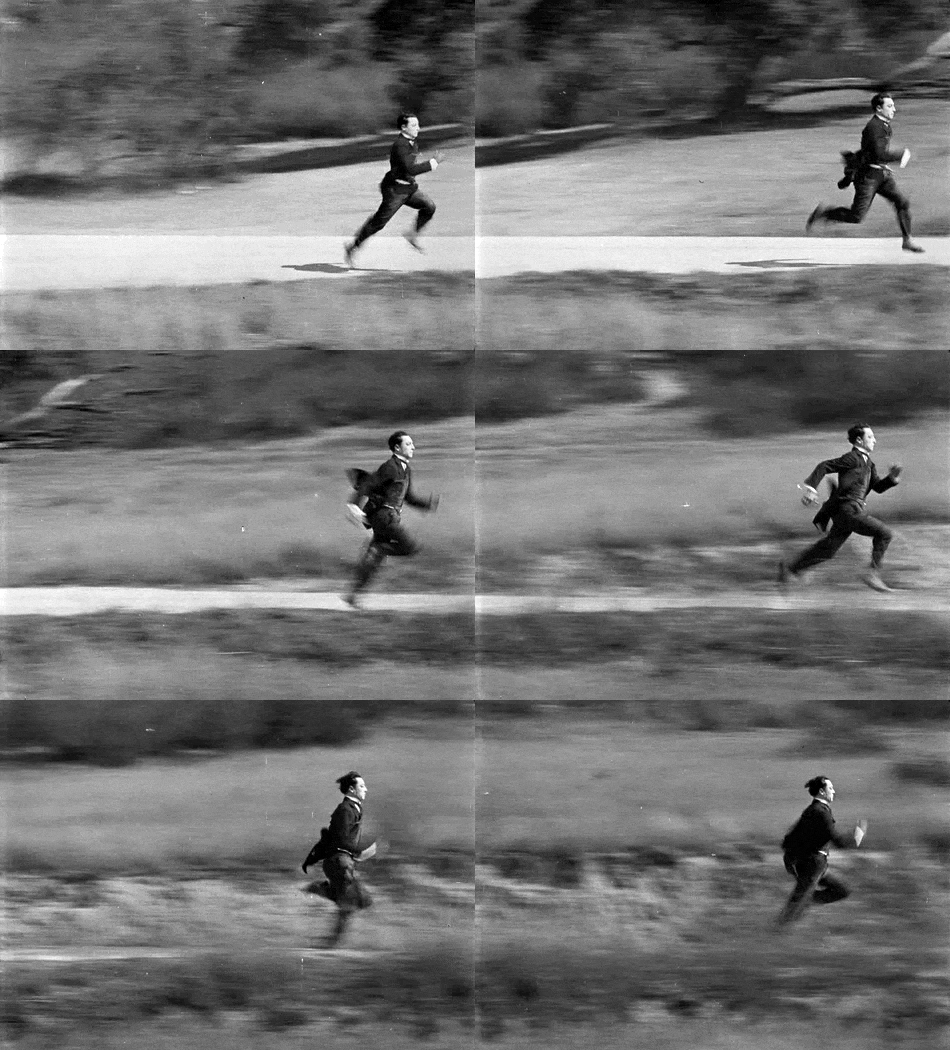
<p>Seems <strong>psychologically natural</strong>, like the human eye.</p>
14
New cards
<p>Lateral (Right to Left)</p>

Lateral (Right to Left)

Seems tense and uncomfortable because it’s the opposite of our natural eye movement.
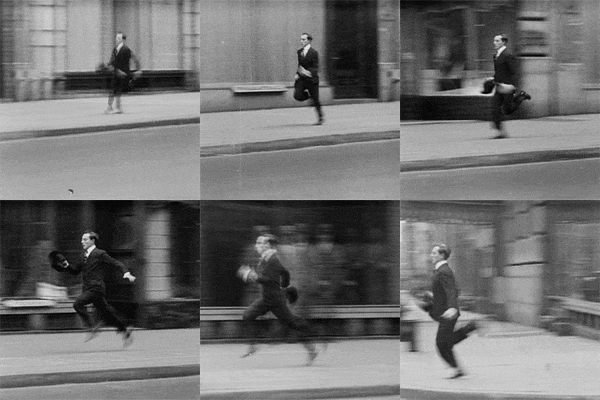
<p>Seems <strong>tense and uncomfortable</strong> because it’s the opposite of our natural eye movement.</p>
15
New cards
<p>Depth (Towards Camera)</p>

Depth (Towards Camera)

Can seem purposeful and assertive when coming from a likeable character, and hostile and aggressive if coming from a villain.
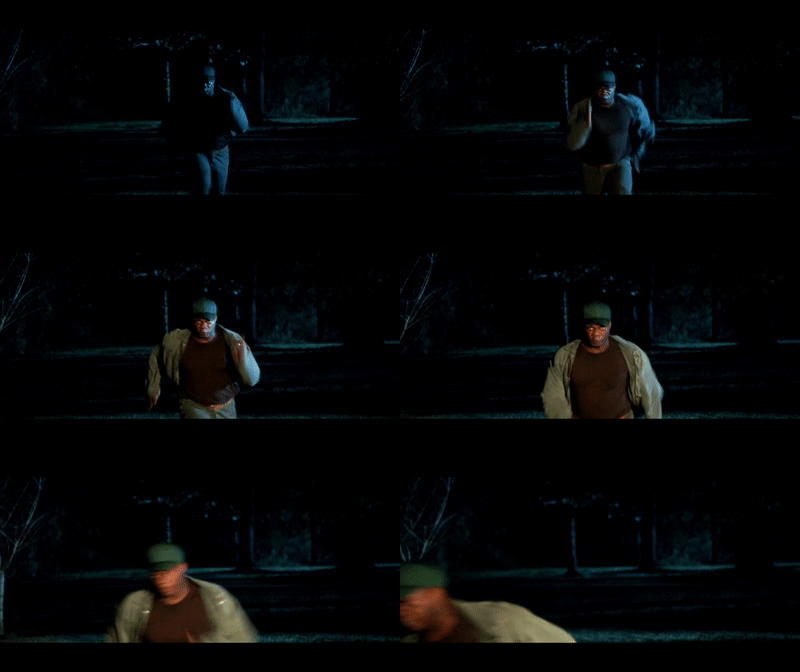

<p>Can seem <strong>purposeful and assertive</strong> when coming from a likeable character, and hostile and aggressive if coming from a villain.</p>
16
New cards
<p>Depth (Away From Camera)</p>

Depth (Away From Camera)

Character becomes less significant and remote, making them seem weak, fearful, and suspicious.
<p>Character becomes less significant and remote, making them seem weak<strong>, fearful</strong>, <strong>and suspicious</strong>.</p>