Study Guide - Geology Quiz 1 (12/22)
 Studied by 0 people
 Call Kai
 Learn
Learn Practice Test
 Spaced Repetition
 Match
Match Flashcards
 Knowt Play
1/11

Earn XP
Description and Tags
Gotta work hard on this :D
Name | Mastery | Learn | Test | Matching | Spaced | Call with Kai |
|---|
No study sessions yet.
12 Terms
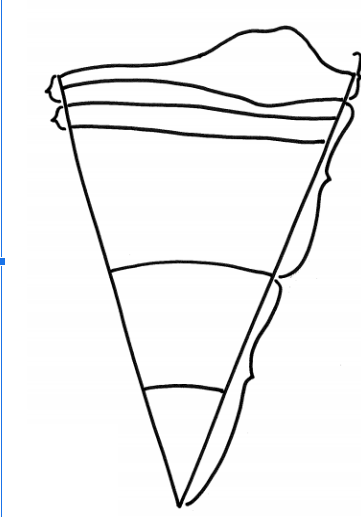
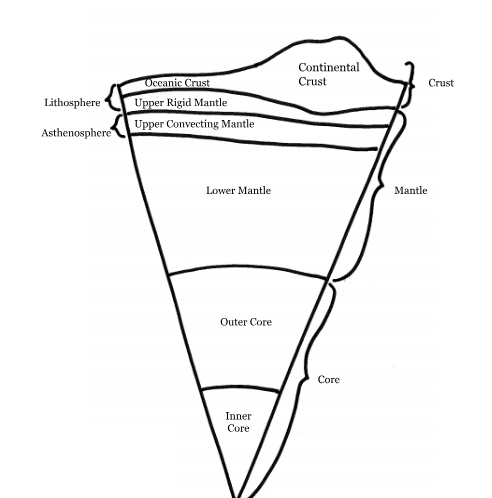
What are the layers of the Earth?
be able to label:
continental crust
oceanic crust
upper rigid mantle
upper convecting mantle
lower mantle
outer core
inner core
core
mantle
crust
lithosphere
asthenosphere
2) How do temperature, pressure, and density change as you move from the crust to the core?
Temperature:
Temperature increases as you go from the crust to the core.
Pressure:
Pressure increases as you go from the crust to the core.
Density:
Density increases as you go from the crust to the core
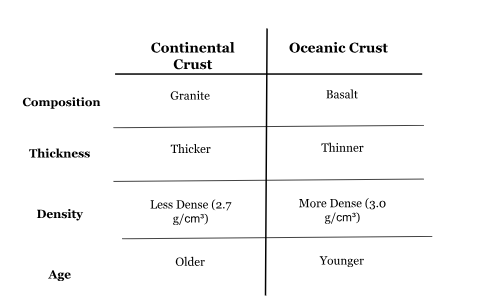
3) What are the differences between the continental crust and oceanic crust?
What happened during the Iron Catastrophe?
The Earth started to cool and separate into layers based on density. This is also when the magnetic field formed.
Why is the Earth’s magnetic field important?
The magnetic field protects the Earth from the Sun’s solar winds. If there was no magnetic field, the Earth’s atmosphere would be stripped and life on Earth (as we know it today) would not exist.
What do seismic waves tell scientists about the inside of Earth?
P-Waves → Can travel through liquids AND solids
S-Waves → Can only travel through solids
This is important because it tells us that the Earth is made up of different materials and different consistencies (liquids and solids).
This also tells us that the Earth has layers!
What are convection currents?
The rising and falling of a gas or liquid that is caused by the change in temperature AND density.
Convection currents occur in the asthenosphere
Where do convection currents take place inside of Earth?
Convection currents occur (happen) in the asthenosphere.
How do convection currents affect the surface of Earth?
Convection currents cause the lithosphere above it to move! This makes the tectonic plates shift and move, and can cause events like earthquakes, volcanoes, and mountains to form.
What causes convection currents? (Hint: think about the lava lamp)
The change in temperature of a material (based on how close or far away from the heat source the material is) causes a change in the density of the material.
This change in density makes the material rise (float) or fall (sink).
High Temperature = Material is Less Dense = Rises
Low Temperature = Material is More Dense = Sinks
What is happening to the material in the lava lamp as it travels from the bottom to the top?
From the top to the bottom?
Bottom of Lava Lamp (Point A): The material is close to the heat source (light bulb). The temperature of the material is increasing. This causes the particles/molecules in the material to move faster, spread out, and gain energy. The material becomes less dense.
Point A to Point B: The material is now less dense than all the other material around it. This causes the material to rise.
Top of Lava Lamp (Point B): The material is far away from the heat source (light bulb). The temperature of the material is decreasing. This causes the particles/molecules in the material to move slower, come closer together, and lose energy. The material becomes more dense.
Point B to Point A: The material is now more dense than all the other material around it. This causes the material to sink back to the bottom.
**The cycle now begins again with the material being back at the bottom of the lava lamp and near the heat source again.
Explain in writing (complete sentences)
What is happening to the material in the mantle as it travels from point A → B → C → D?
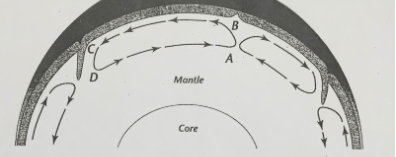
**I am starting at Point D, since it is the actual beginning of the cycle as we’ve been talking about in class
Point D to Point A: The material in the mantle is closer to the heat source, and the temperature is increasing. This causes th
e particles in the material to gain energy, move faster, and spread out (become less dense).
Point A to Point B: The material is now less dense than the material around it, so it rises.
Point B to Point C: The material in the mantle is far away from the heat source, and the temperature is decreasing. This causes the particles in the material to lose energy, slow down, and come closer together (become more dense).
Point C to Point D: The material is now more dense than the material around it, so it sinks (back to the heat source).