Pharm Exam 1
 Call Kai
 Learn
Learn Practice Test
 Spaced Repetition
 Match
Match Flashcards
 Knowt Play
1/211

Earn XP
Description and Tags
Lectures 1-3
Name | Mastery | Learn | Test | Matching | Spaced | Call with Kai | Chat |
|---|
No analytics yet
Send a link to your students to track their progress
212 Terms
Absorption
How the drug gets in
Route/bioavailability
IV, IM (slower), transcutaneous, subcutaneous (less reliable), oral/rectal, SL, intrathecal, epidural, perineurial, inhalationals
Distribution of CO
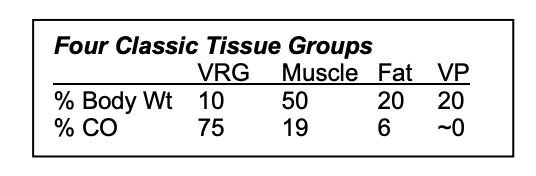
VRG Components
Brain, heart, kidneys, liver, endocrine glands
Lipophilic or hydrophilic rapidly equilibrate into CNS tissue
Lipophilic
Lipophilic redistribution single vs. multiple doses
Single: short duration because of redistribution to peripheral tissues
Multiple: Increase in peripheral tissue concentrations, longer duration of action
After multiple doses of a lipophilic drug depend on?
Elimination
Protein that binds to acidic/neutral drugs
Albumin + binds to benzos and SSRIs
Protein that binds to basic drugs
Alpha-1-acid glycoprotein
What causes low protein levels? What does this do?
Malnutrition/chronic illness
Increases level of free drugs
What is the central compartment composed of?
Plasma and VRG
Alpha phase of compartment model
Quick decline
Distribution phase
Beta phase of compartment model
Slower decline
Elimination phase
How do hydrophilic drugs get into the CNS
Active transport
Acid equation
H+ + A- (ionized) ←→ HA (nonionized)
Base equation
H+ + B (nonionized) ←→ HB+ (ionized)
Etomidate (base): pKa = 4.2 (pH blood = 7.4)
99% non-ionized in the blood
Propofol (acid): pKa = 11 (pH blood = 7.4)
99% non-ionized in the blood
Biotransformation
Alteration of the drug via a metabolic process (usually in liver)
Phase I of biotransformation
Oxidation, reduction, and hydrolysis
Increases polarity so the drug is water soluble and can be excreted in urine
What catalyzes most Phase I reactions?
Cytochrome P-450 (CYP) enzyme system
Induction of CYP
Increase in CYP activity with ongoing drug exposure
Can alter metabolism of other medications that are metabolized by the same CYP subtype
St. John’s Wort effect
Induces CYP3A4
Causes decreased drug effect due to greater Phase I activity
CYP inhibition
Drugs compete for the same CYP subtype
Cimetidine inhibits metabolism of meperidine, propranolol, diazepam
Grapefruit juice inhibits CYP3A4 causing exaggerated drug effects because a lower percentage of the drug undergoes Phase I biotransformation
Phase II biotransformation
Conjugation with a polar substance to make it more water soluble
Glucuronate, acetate, glutthione group
What is unique about neonates-1y/o biotransformation?
Diminished Phase I and Phase II activities
Hepatic drug clearance (definition)
Volume of blood that the liver can cleanse of a drug in a given amount of time
Hepatic drug clearance (equation)
=hepatic blood flow x extraction ratio
Volume of blood that the liver can cleanse of a drug in a given amount of time
Hepatic drug clearance
What does hepatic blood flow depend on?
CO and BP
Hepatic extraction ratio
Fraction of drug that is removed from the blood as it passes through the liver
High extraction ratio
Flow limited
Ex. Propofol and etomidate
What causes diminished clearance in drugs with high extraction ratios?
Metabolic capacity (Vm) is severely compromised
Decreased blood flow
Low extraction ratio
Capacity limited
Ex. Rocuronium
What is low extraction ratio limited by?
The liver can only handle a fraction of drug it sees, even under ideal conditions
Changes in metabolic capacity (Vm) will produce a nearly proportional effect on clearance
Renal clearance is a small fraction of renal blood flow because of
Protein binding
Only unbound drugs will be filtered into the kidneys for excretion
Renal tubular active transporters
Allow renal clearance to approach RBF
Drugs with significant renal excretion (6)
Pancuronium
Penicillins
Digoxin
Rocuronium
Sugammadex
Neostigmine
Zero order kinetics - which drugs are they found in?
Phenytoin and alcohol
Saturation kinetics
Occur when excess amounts of drug saturate the capacity of metabolic enzymes or transport systems
ex. digoxin
Half-life
Time for serum concentration to change by a factor of 2
Volume of distribution (Vd)
Extent of drug distribution
Capacity of tissues for absorbing a drug
What determines Vd
Depends on tissue mass and affinity of drug for tissue
Do hydrophilic or lipophilic drugs have larger Vd?
Lipophilic
Vd (equation)
Vd = Amount of drug given/serum concentration
Loading dose (equation)
Loading dose = Vd x target concentration
Elimination clearance (ClE)
Theoretical volume of blood from which drug is completely and irreversibly removed in a unit of time
Clearance equation
Clearance = dose given/area under concentration vs. time curve
Elimination half life
Amount of time it takes for the amount of drug int he body to decrease by a factor of 2
= ln 2 x (Vd/Cle)
Why does midazolam have increased elimination half time in elderly?
Vd is increased
NOT due to metabolism
What does termination of effect depend on?
Serum concentration
Therapeutic Index
LD50/ED50
Low and high toxicities to avoid
Low - awareness
High - overdose
Partial agonists
Have lower efficacy
Competitively inhibits the response produced by a full agonist
Redundancy at the neuromuscular junction
Only needs 25% of receptors to be bound to ACh for clinical strength
Why we need more than 75% blocked for clinical weakness
Tolerance (and mechanisms)
Diminished response to a drug due to chronic exposure
Cellular tolerance (adaptation)
Enzyme induction (change in metabolism)
Depletion of neurotransmitters
Tachyphylaxis
Acute tolerance after only a few doses
Competitive antagonists
Decreases potency, efficacy is not changed
Non-competitive antagonists
Decreases potency and efficacy
Ideal IV anesthetic
Water-soluble and stable
Lack of pain on injection; no tissue damage with extravasation
Low incidence of histamine release or hypersensitivity
Rapid smooth onset
Rapid metabolism to inactive metabolites
Steep dose-response curve
Minimal cardiac/respiratory depression
Decreases ICP/CMRO2
Rapid smooth recovery
Minimal side effects: PONV, amnesia, HA, dizziness
Propofol - mechanism of action
Inhibitory transmission through GABA
Propofol - emulsion
Intralipid
Soybean oil, glycerol, egg lecithin
Why use aseptic technique for Propofol?
Supports bacterial and fungal growth
Discard after 12 (6?) hours
Fospropofol (Aquavan)
Prodrug, water soluble
Perineal burning
Propofol absorption
IV
Propofol distribution
Highly lipid soluble
Very fast redistribution (less than 8 minutes)
Propofol - biotransformation
Exceeds HBF - some degree of extra-hepatic metabolism (lungs)
Propofol excretion
Renal
Not effected by chronic renal failure
Propofol dosing
Induction - 1.5-2.5 mg/kg in adults
Sedation - 25-75 mcg/kg/min
General infusion - 100-200 mcg/kg/min
Target plasma concentration for propofol
4-6 mcg/mK
Propofol - CV effects
Decrease in SVR, contractility, preload
Hypotension
Potential for bradycardia but normally tachycardia with induction
What causes worsening CV effects from Propofol?
LV failure, old age, rapid injeciton
Propofol Resp effects
Resp depression, apnea, depress hypoxic/hypercapnic drive
Depression of upper airway reflexes
Propofol Neuro effects
Decrease CBF, ICP, CMRO2
Antiemetic
Anti-epileptic
Myoclonic twitches, hiccough
How to prevent burning on injection of Propofol
Bier block
Pretreat with IV opioid
Mixing propofol w/ lidocaine (acidifies emulsion)
Lidocaine bolus doesn’t do much to prevent burning
Acute Hypertriglyceridemia (cause and treatment)
Caused by high fat content and inhibition of fatty acid oxidation by propofol
Treatment - stop propofol infusion, give insulin/dextrose to promote lipoprotein lipase activity
Propofol infusion syndrome
Hyperlipidemia, rhabdomyolysis, metabolic acidosis, refractory bradycardia, circulatory collapse, death
Prolonged high dose infusions (>75 mcg/kg/min, <24 hours)
Seen in critically ill patients (esp. with vasopressors)
Barbiturates (drugs)
Phenobarbital, methohexital, thiopental, thiamylal, secobarbital
Barbiturates - mechanism of action
Depress reticular activating system
Suppress excitatory neurotransmitters (ACh), enhance inhibitory (GABA)
Barbiturates - acidity and solubility (including preparation)
Water soluble
Preparation is alkaline (pH>10) and unstable (2-6 wks in fridge)
Weak acid with pKa close to 7.4
Barbiturates - Extravasation
Pain
BUT painless on injection
Barbiturates - intra-arterial injection of thiobarbiturate (and treatment)
Crystals → thrombosis, necrosis
Treatment - papaverine, lidocaine, stellate ganglion block, heparin
Thiobarbiturate (thiopental, thioamylal) - lipid solubility, potency, onset, duration
High lipid solubility
Greater potency
Rapid onset
Shorter duration
thiopental no longer available due to objections from manufacturer due to lethal injection use
Oxybarbiturates (phenobarbital, methohexital) - lipid solubility, potency, onset, duration
Lower lipid solubility
Less potency
Slower onset
Longer duration
Except methohexital, more potent and shorter duration than thiopental
Barbiturates - absorption (GA and premedication)
IV for GA
Rectal/IM for premedication
Barbiturates - Distribution (solubility and redistribution)
Lipid soluble → fast onset (30 seconds) and rapid redistribution (10-20 minutes) after single dose
Higher plasma levels in hypovolemia, hypoalbuminemia, acidosis, elderly
Multiple doses: saturate peripheral compartments, slower redistribution - poor choice for maintenance
Barbiturates - Biotransformation
Almost completely hepatic oxidation
Methohexital extarction
High hepatic extraction
Shorter elimination half life
Thiopental extraction
Low hepatic extraction
Longer elimination half life
Liver disease unlikely to cause prolonged effect from a single dose
Barbiturates speed excretion and why
Protein bound, lipid soluble
Difficult renal clearance until biotransformation
Barbiturates - elimination half life
3-12 hours
Methohexital - 3.9 hours
Thiopental - 11.6 hours
Dose of thiopental and methohexital
Thiopental
3-5 mg/kg, 6-8 mg/kg for infants
2-4 mg/kg/hr for treatment of intracranial HTN or intractable seizures
Methohexital
1-1.5 mg/kg (half of thiopental)
Barbiturates - CV effects
Decrease BP, Increase HR (central vagolytic effect)
Venous pooling
CO maintained except in hypovolemia, CHF, beta blockade = decrease in CO and BP
Barbiturates - Respiratory effects
Decrease hypoxic/hypercapnic drive
Airway obstruction
Bronchospasm/laryngospasm
Barbiturates - Neuro effects
Decrease CBF, ICP
Mega decrease in CMRO2 to burst suppression on EEG
Anti-epileptic
Methohexital - neuroexcitation (myoclonus, hiccups, seizures)
Common drug for electroconvulsive therapy (ECT)
methohexital
Barbiturates - renal
Decrease RBF (due to hypotension)
Barbiturates - hepatic effects (2)
Decrease HBF
Induction of enzymes (CYP);
Do barbiturates evoke histamine release?
Yes. Sulfur-containing (thio-) evoke histamine release
Etomidate - Mechanism of Action
Depress reticular activating system - mimics GABA