Intro to Inflammation
 Call Kai
 Learn
Learn Practice Test
 Spaced Repetition
 Match
Match Flashcards
 Knowt Play
1/40

There's no tags or description
Looks like no tags are added yet.
Name | Mastery | Learn | Test | Matching | Spaced | Call with Kai | Chat |
|---|
No analytics yet
Send a link to your students to track their progress
41 Terms
What is inflammation?
The reaction of living, vascularized tissues to injury
For a tissue to be inflamed, it MUST be:
alive
What are the 5 cardinal signs of inflammation?
heat, redness, swelling, pain, loss of function
What are examples of exogenous inflammatory stimuli?
infections (bacterial, viral, etc), trauma, physical agents (radiation, thermal, etc), foreign bodies
What are examples of endogenous inflammatory stimuli?
tissue necrosis (DAMPs) and auto-antibodies
What are the sequential events of inflammation?
recognition, recruitment, removal, regulation, repair
What is a morphologic diagnostic (MDx)?
a concise interpretative summary of findings described during examination of a lesion
What is minimal severity?
barely discernable histologically
What is mild severity?
little to no tissue destruction and little cellular exudate; grossly detectable if reddened or swollen
What is moderate severity?
some tissue damage, usually grossly visible; cellular exudation and vascular reaction easily detectable histologically
What is marked (severe) severity?
considerable tissue damage and extensive cellular exudation; easily detected grossly
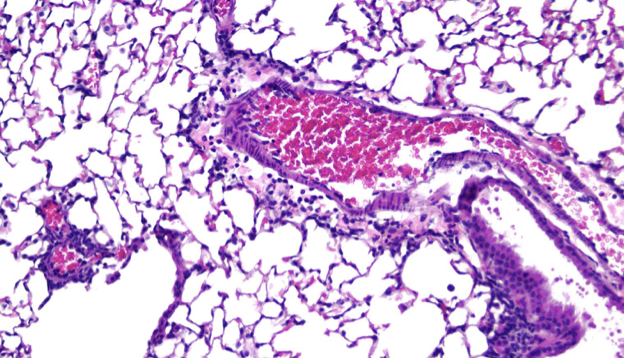
What level of severity is shown?
minimal
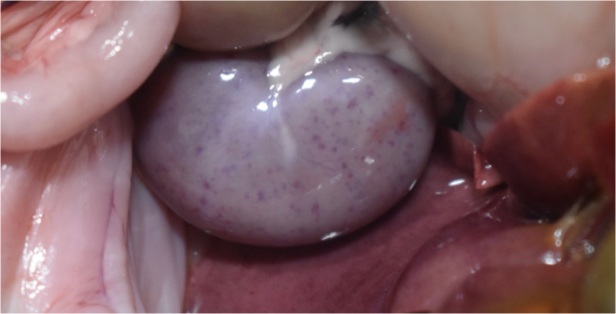
What level of severity is shown?
mild
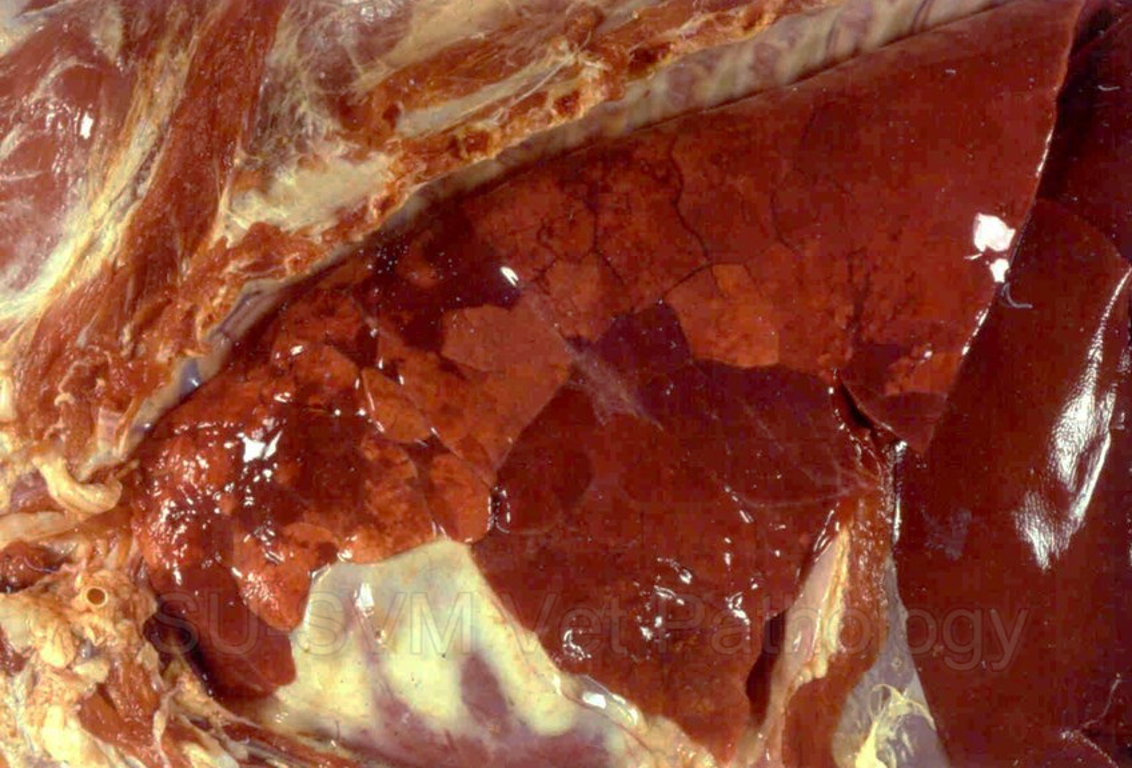
What level of severity is shown?
moderate
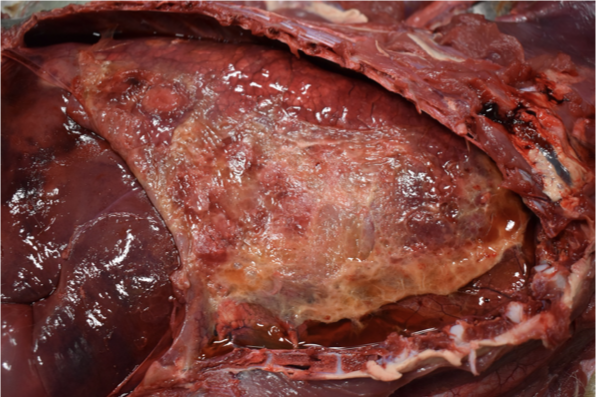
What level of severity is shown?
marked (severe)
How long is peracute?
first few hours
How long is acute?
hours to 3-5 days
How long is subacute?
~3-14 days
What is chronic?
7-14 days to resolution
What is focal distribution?
single, discrete lesion surrounded by normal tissue
What is multifocal distribution?
multiple, scattered to numerous focal lesions - may coalesce
What is locally extensive distribution?
large portion, but not entire organ is involved
What is segmental distribution?
lengthwise portion of tubular organ is involved, flanked by normal
What is diffuse distribution?
the entire organ is involved
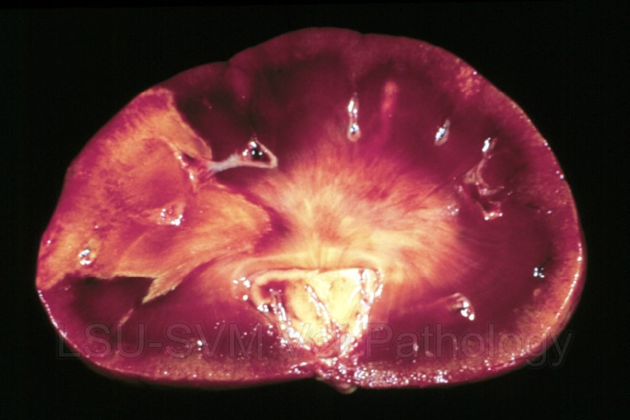
What type of distribution is shown?
focal
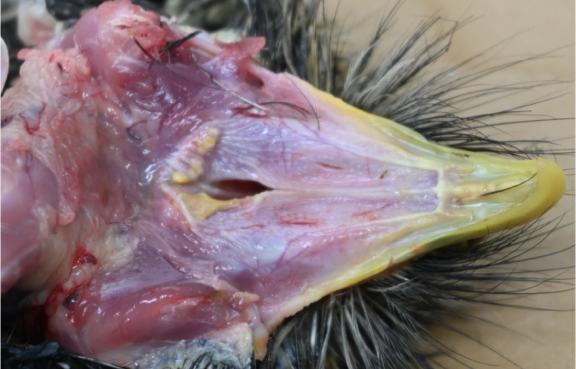
What type of distribution is shown?
multifocal
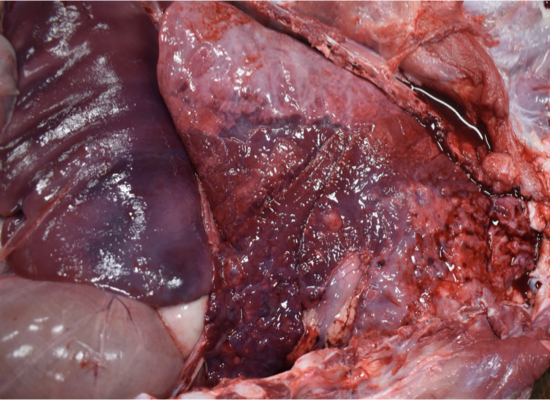
What type of distribution is shown?
locally extensive
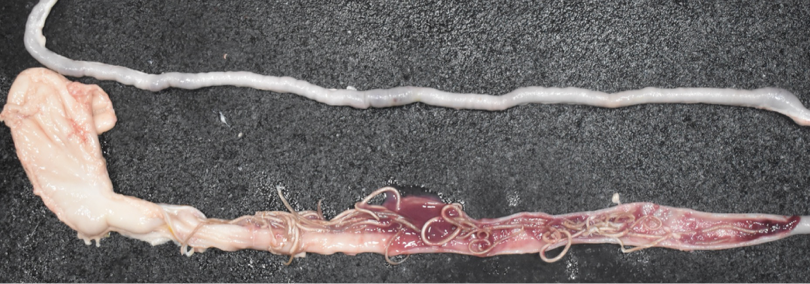
What type of distribution is shown?
segmental
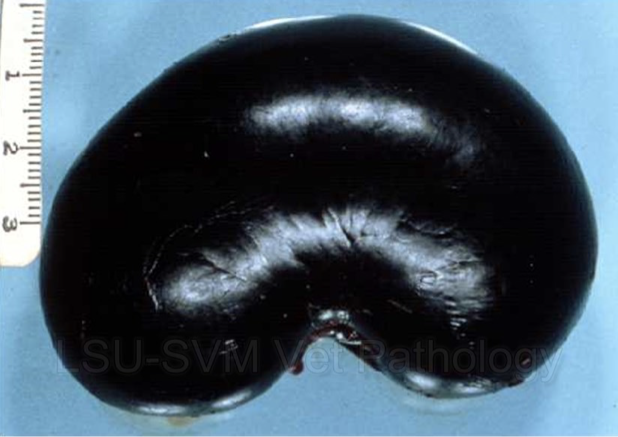
What type of distribution is shown?
diffuse
What are the types of acute inflammation?
serous, fibrinous, suppurative
What are the types of subacute inflammation?
lymphocytic
What are the types of chronic inflammation?
granulomatous
What is exudate?
fluid with cells, proteins, debris, that leaks from blood vessels
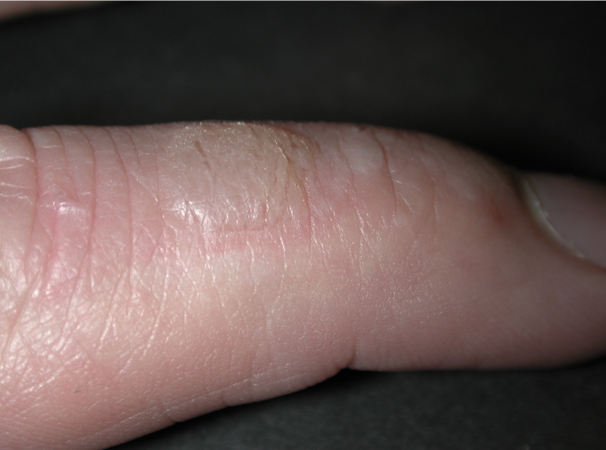
What type of exudate is shown?
serous
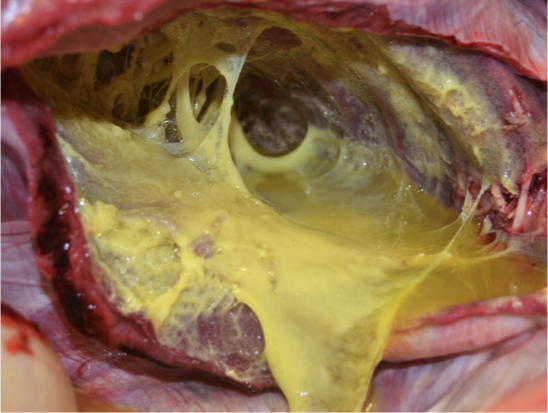
What type of exudate is shown?
fibrinous
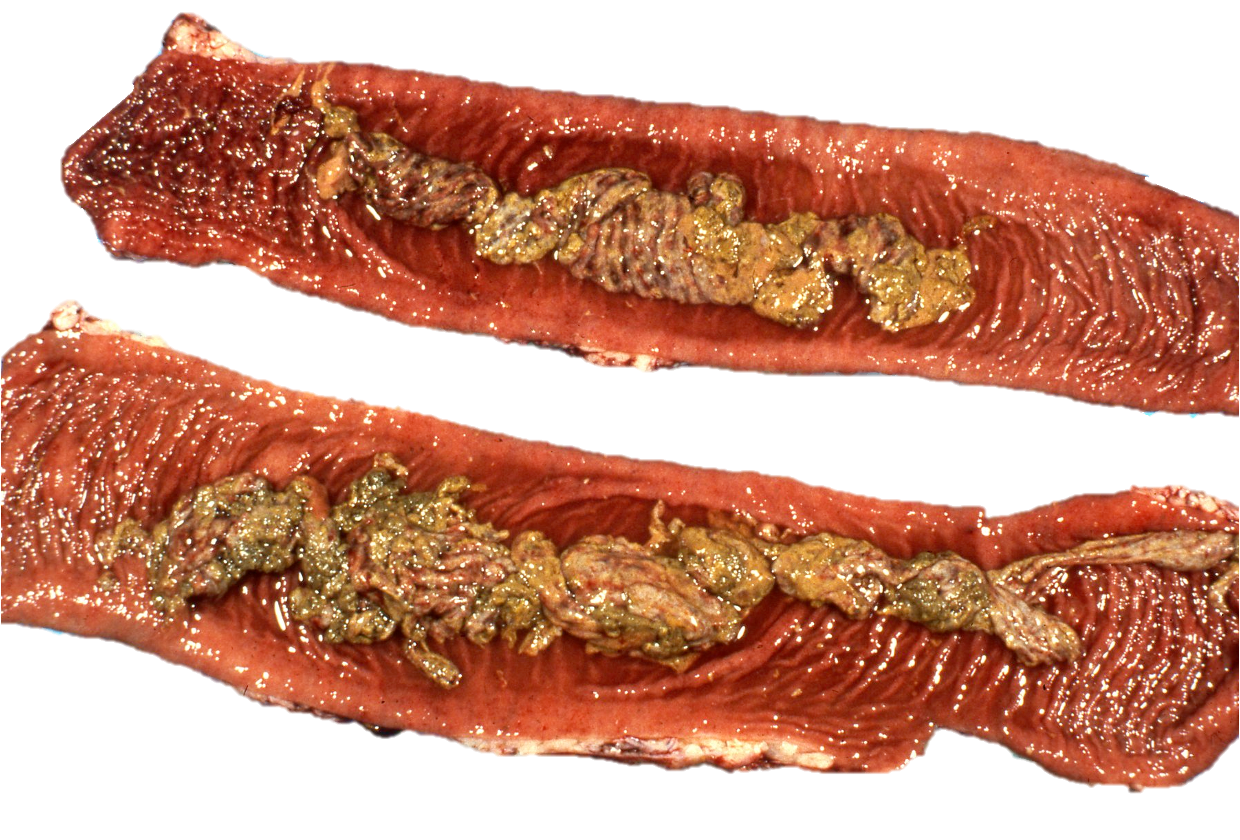
What type of exudate is shown?
necrotizing/pseudomembranous
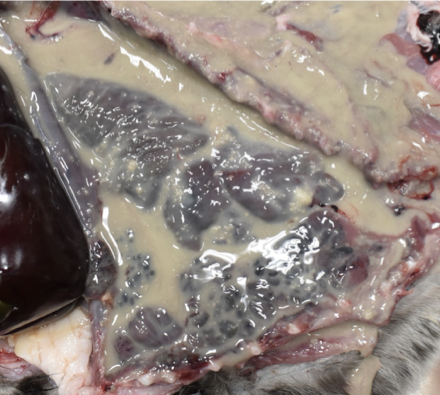
What type of exudate is shown?
suppurative (purulent)
What is the predominant cell type in suppurative inflammation?
neutrophils
What is the predominant cell type in granulomatous inflammation?
histiocytes → macrophages
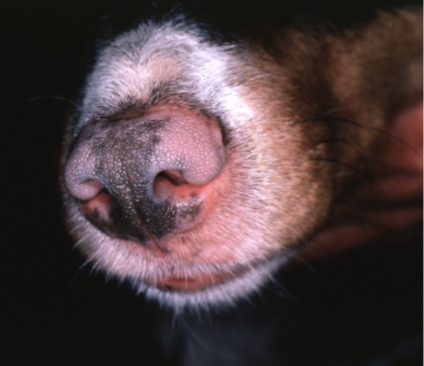
What is lymphocytic inflammation?
pigment is killed by lymphocytes

What is granulomatous inflammation?
clustered immune cells form nodules called granulomas