NCEA level 3 Bio: Biological Evolution
 Call Kai
 Learn
Learn Practice Test
 Spaced Repetition
 Match
Match Flashcards
 Knowt Play
1/24

There's no tags or description
Looks like no tags are added yet.
Name | Mastery | Learn | Test | Matching | Spaced | Call with Kai |
|---|
No analytics yet
Send a link to your students to track their progress
25 Terms
H. sapiens
160,000 ya to present, 1200-1700cc brainsize, used upper Palaeolithic tools, buried dead
Hominins
The group consisting of all modern humans, extinct human species, and all immediate human ancestors
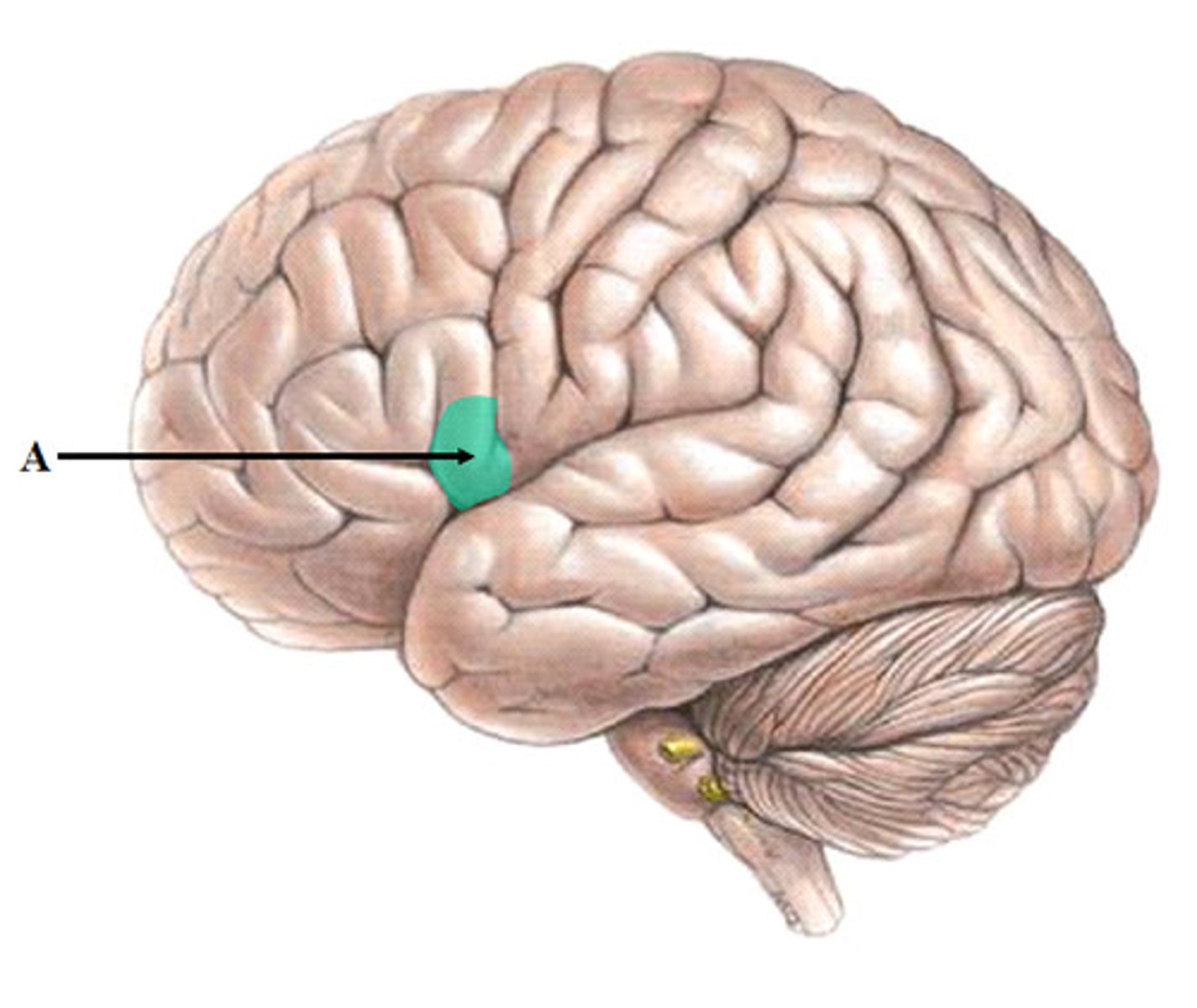
Broca's area
Brain area for speech development
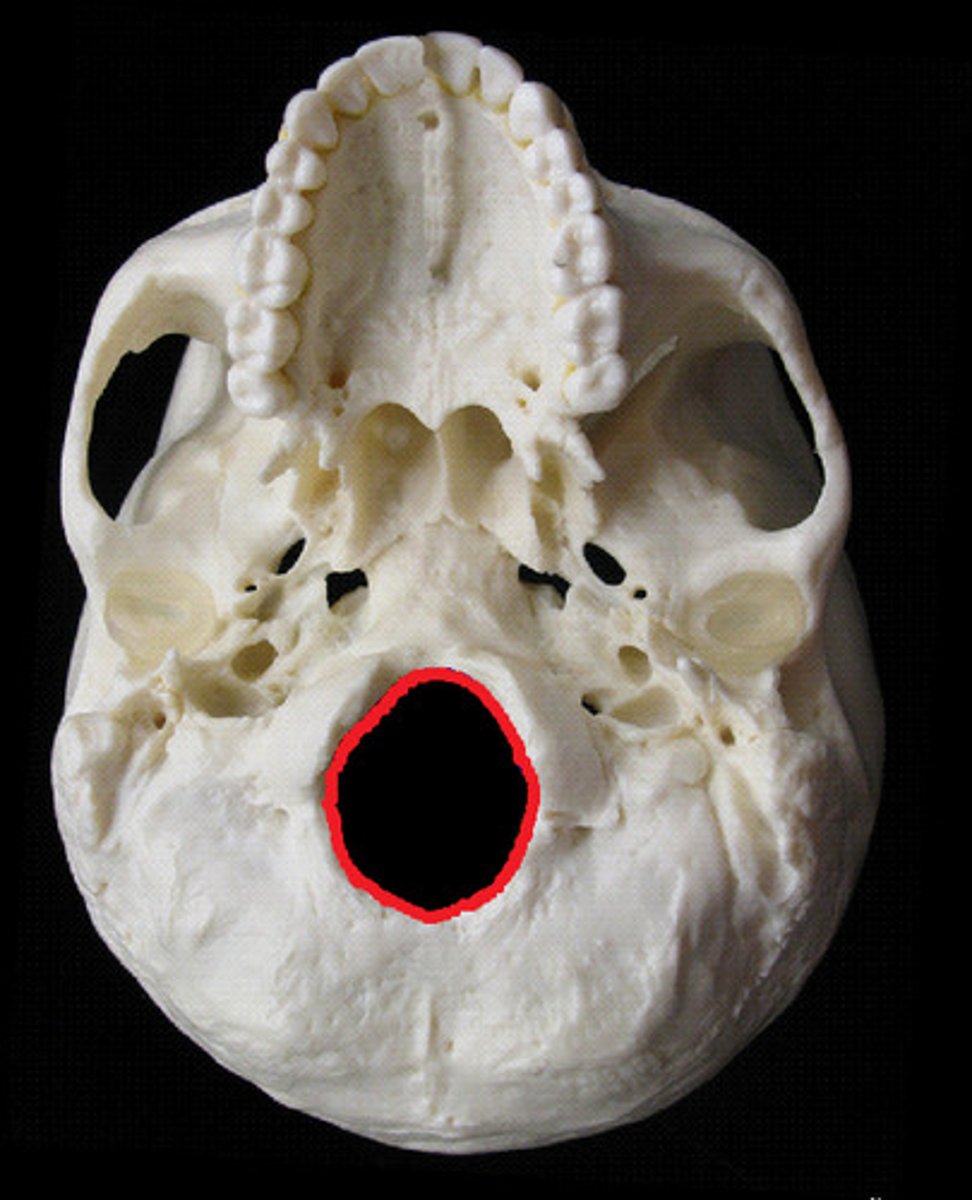
Foramen magnum
Opening of skull where spinal cord passes through
S-shaped
Spine shape in bipeds
C-shaped
Spine shape in quadrupeds
Valgus angle
Angle formed by the femur with pelvis allowing knees to be closer than hip joints
Arched foot
Shock absorbing property for bipedal motion
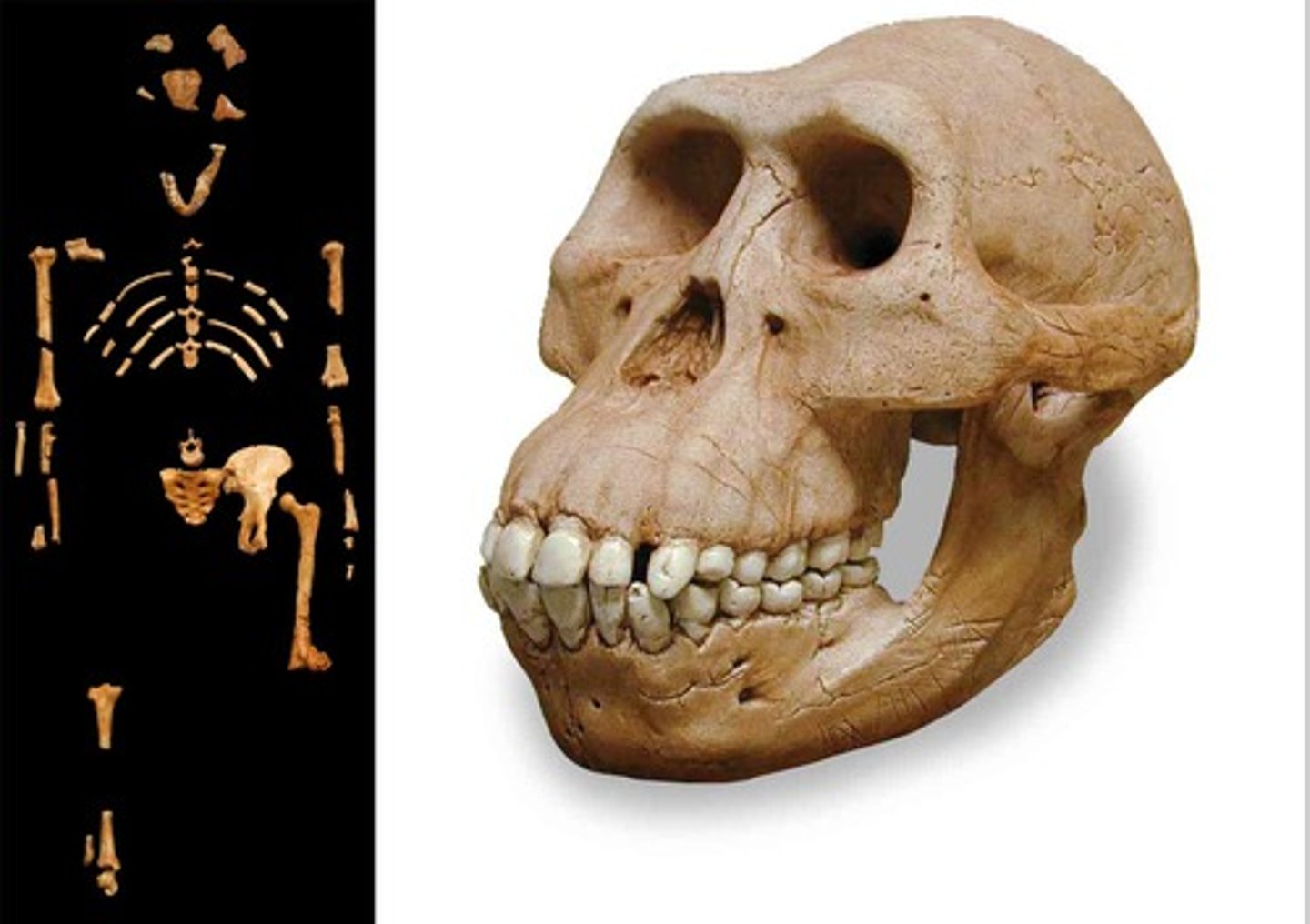
A. afarensis
3.9-3.0 mya Chimpanzee-like skull, more human-like teeth, human-like pelvis and thigh bones, stood 1.5m
Biological evolution
Passing down of genetic information
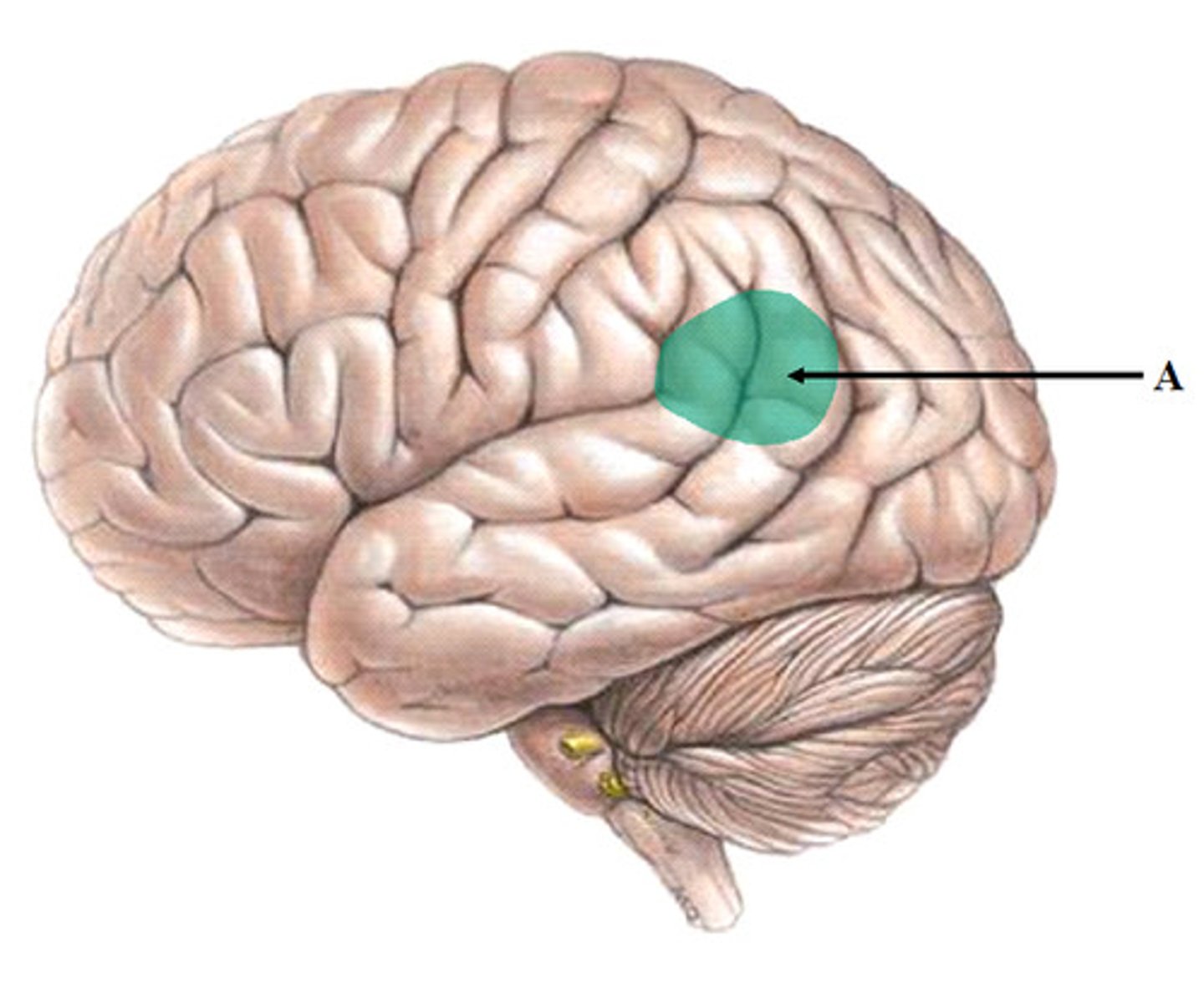
Wernicke's area
Brain area for langauge comprehension
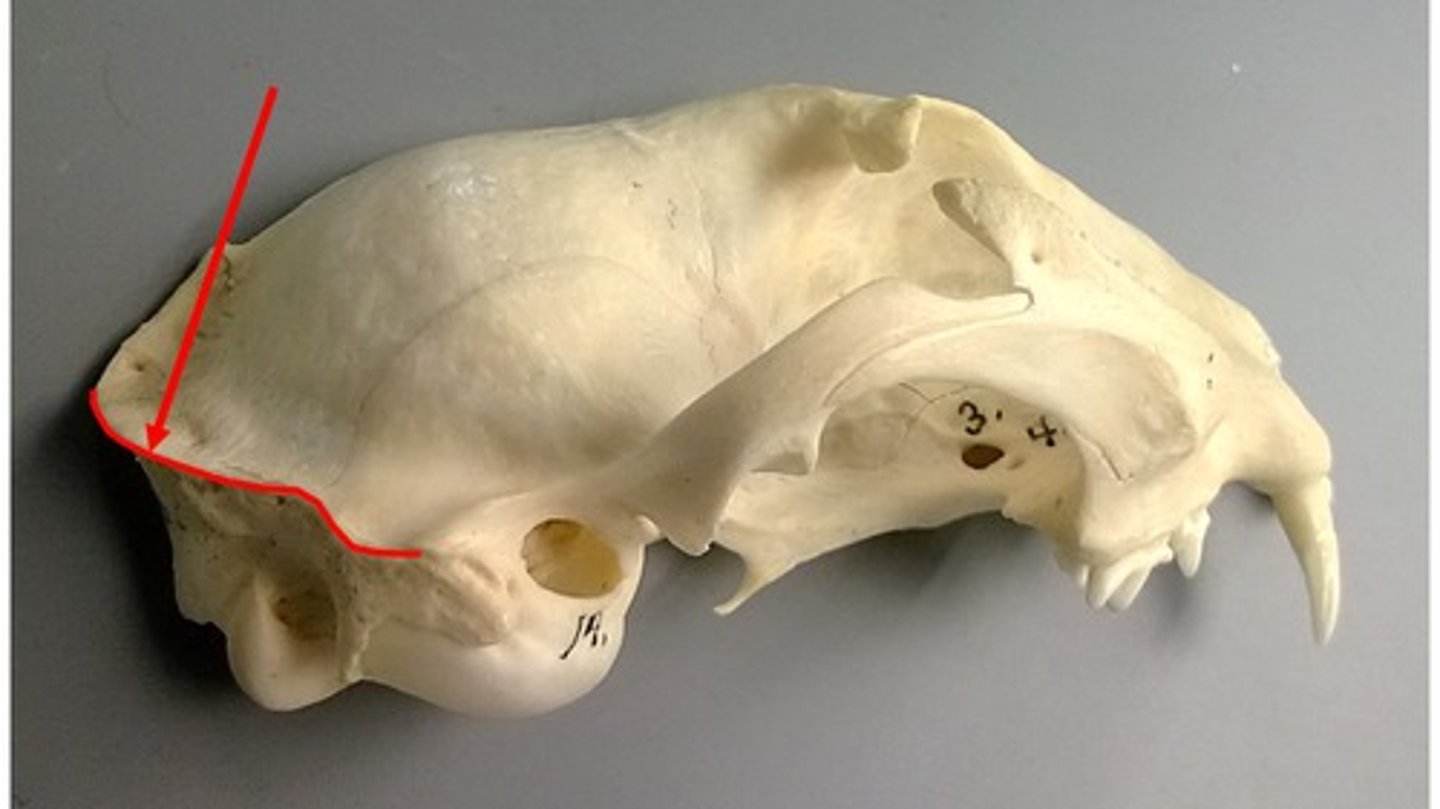
Nuchal crest
Bony ridge across back of skull where muscles supporting head are attached
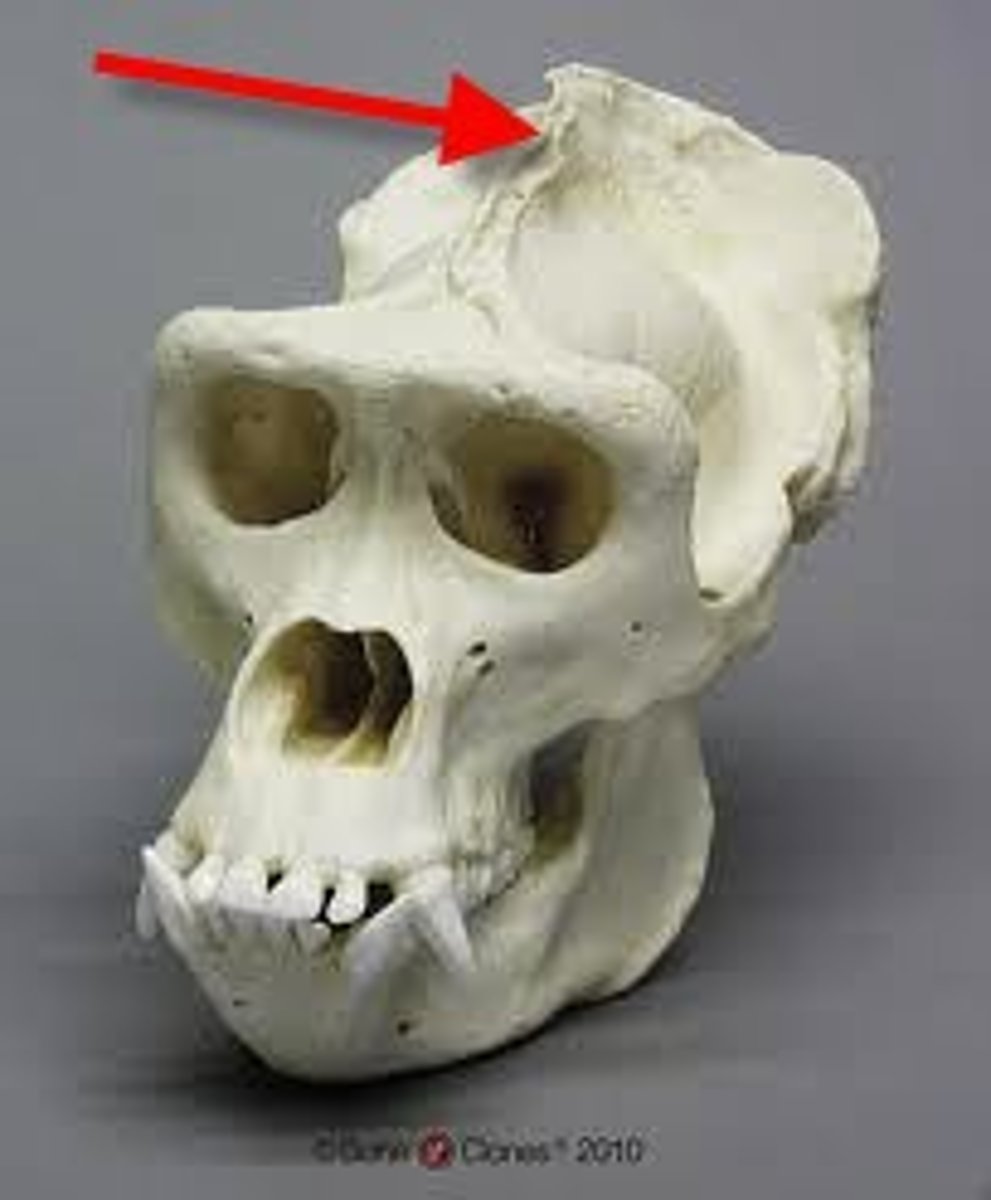
Sagittal crest
Ridge running lengthwise along top of skull where jaw muscles are attached
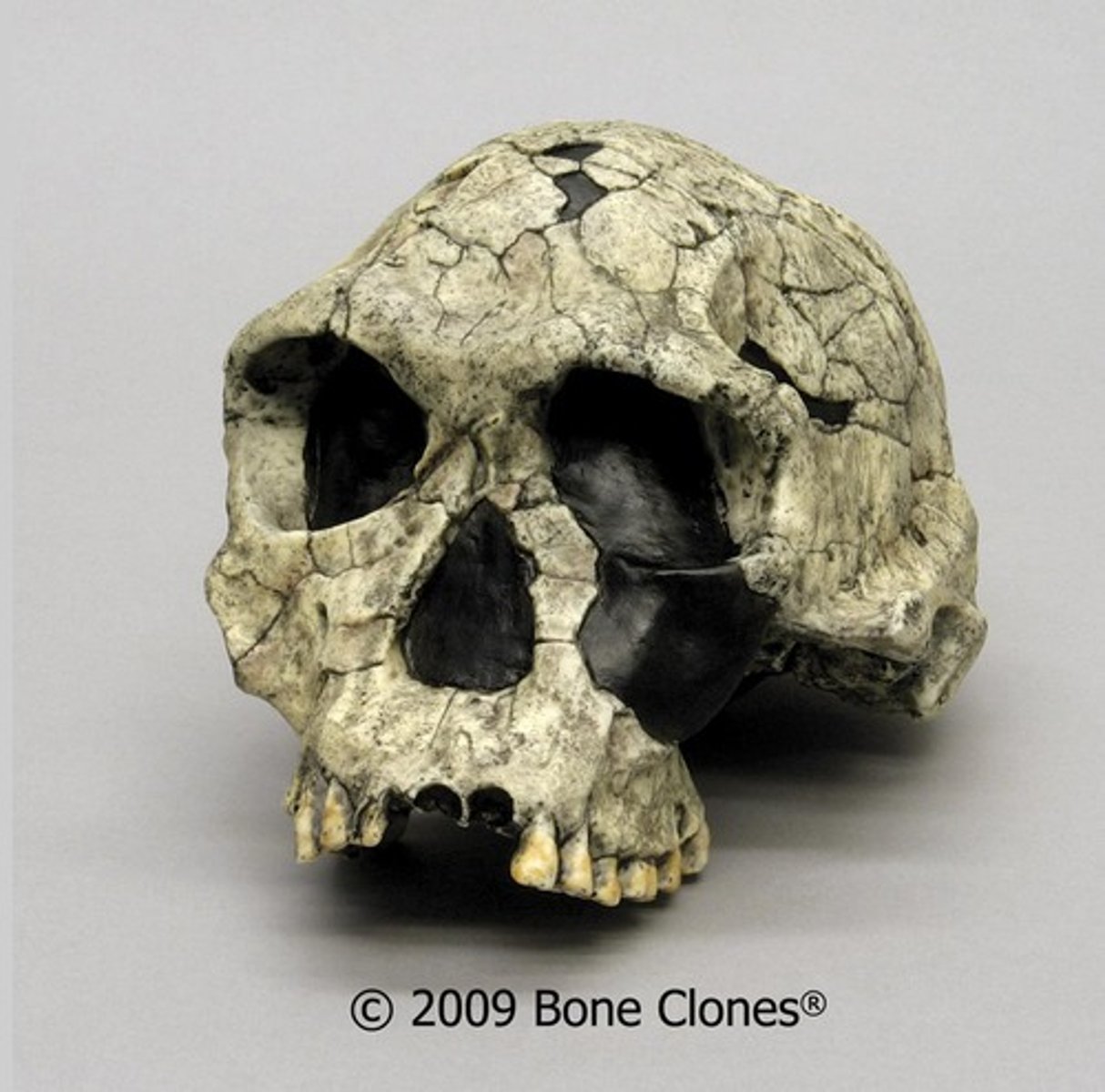
H. habilis
2.4-1.5 mya first stone tool users (Oldowan), 500-800cc brain size, some indication of Broca's area development, small incisors and canines and small molars
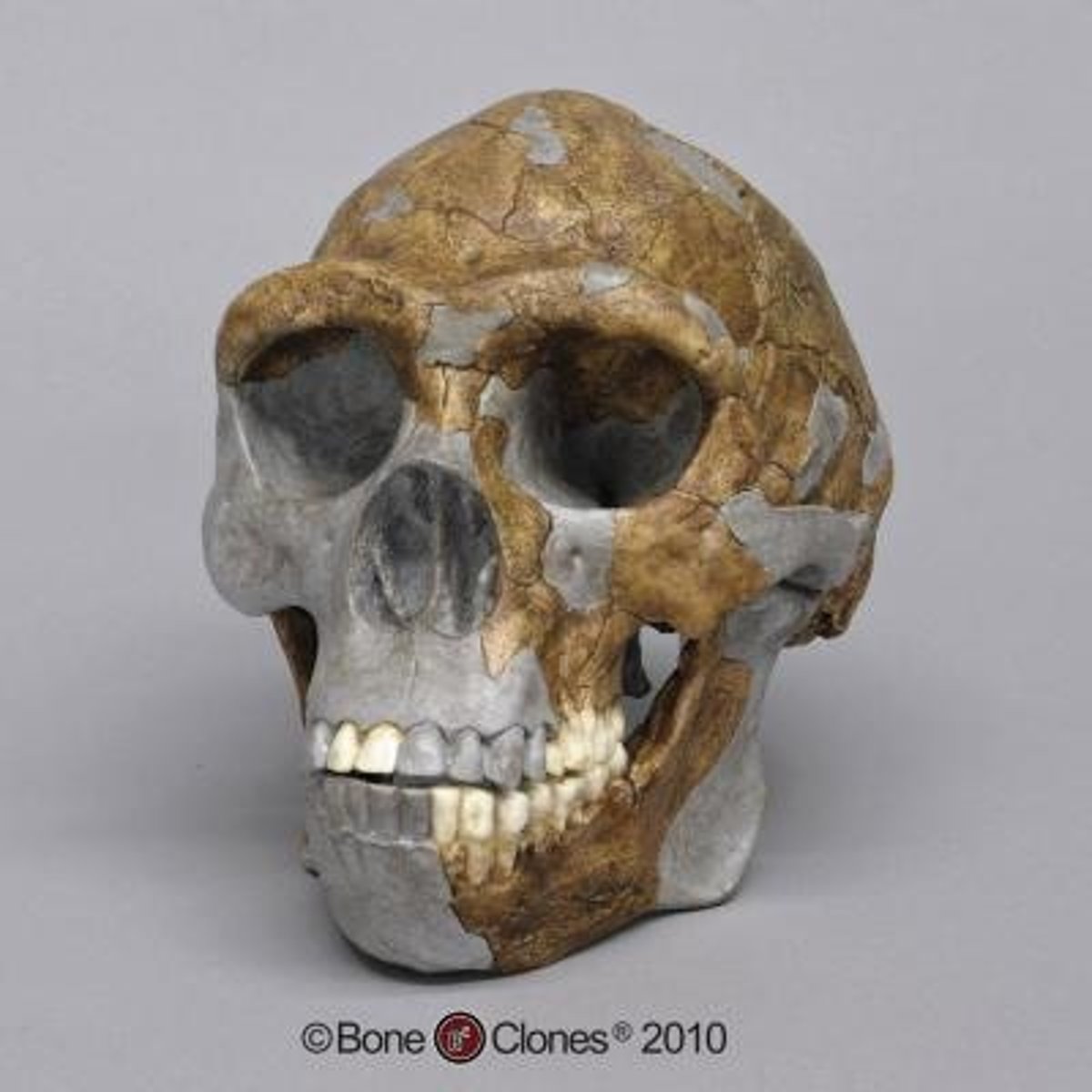
H. erectus
1.8mya - 300,000 ya 750-1250cc brainsize, prominent brow ridges, no sagittal crest, used Acheulean tools (choppers, hand-axes, scrapers) used fire, improvement of communication
H. neanderthalensis
200,000-28,000 ya Mousterian tools, 1200-1750cc brainsize, occipital bun, brow ridges, lived in cold conditions, buried dead, cared for injured
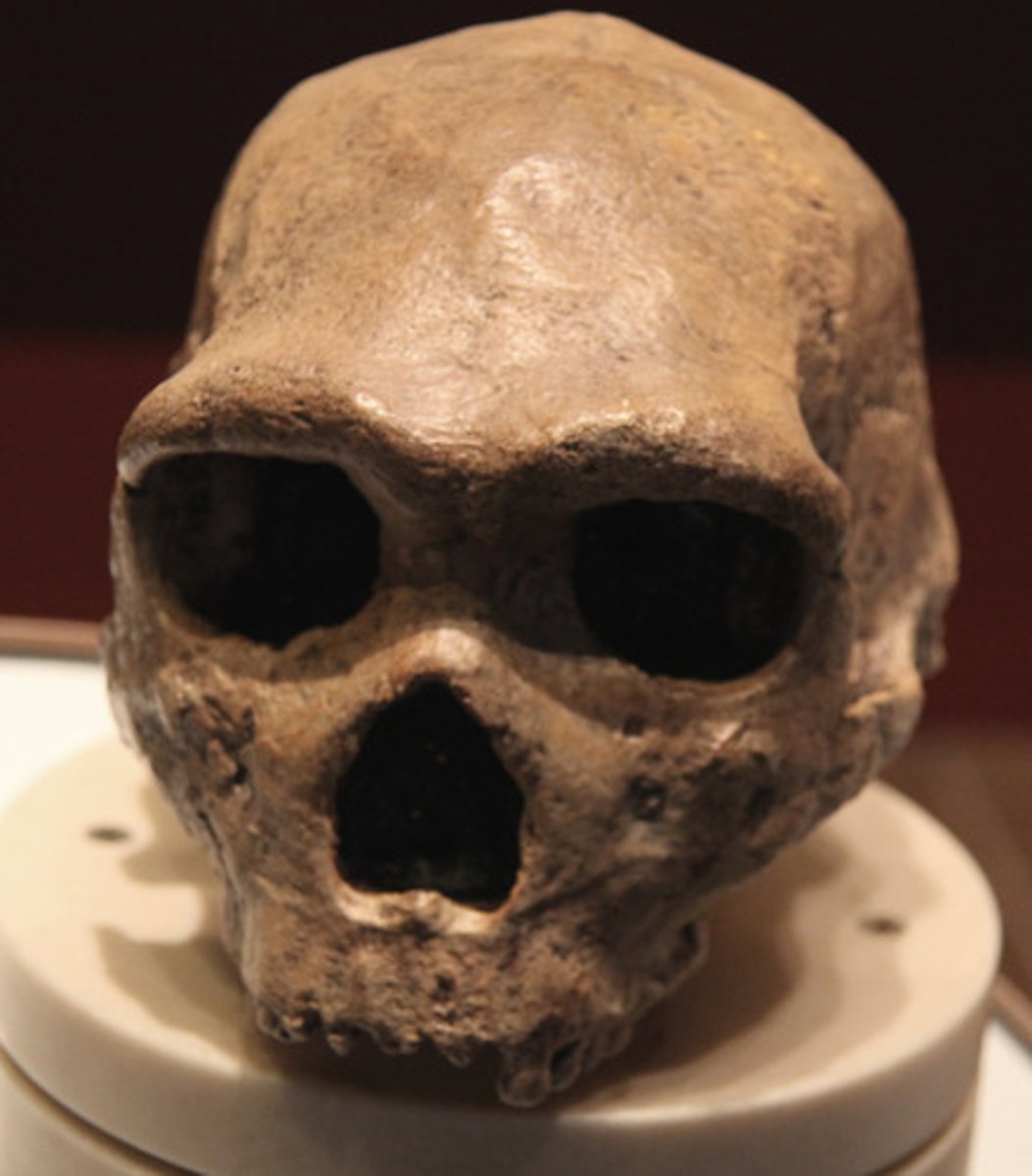
Cultural evolution
Passing down of knowledge from generation to generation through communication and learning from others
Hominid
The family that contains all modern great apes, extinct great apes, and modern humans
Quadrupedal
Habitually walks on four limbs
Bipedalism
Habitually walking upright, on two legs
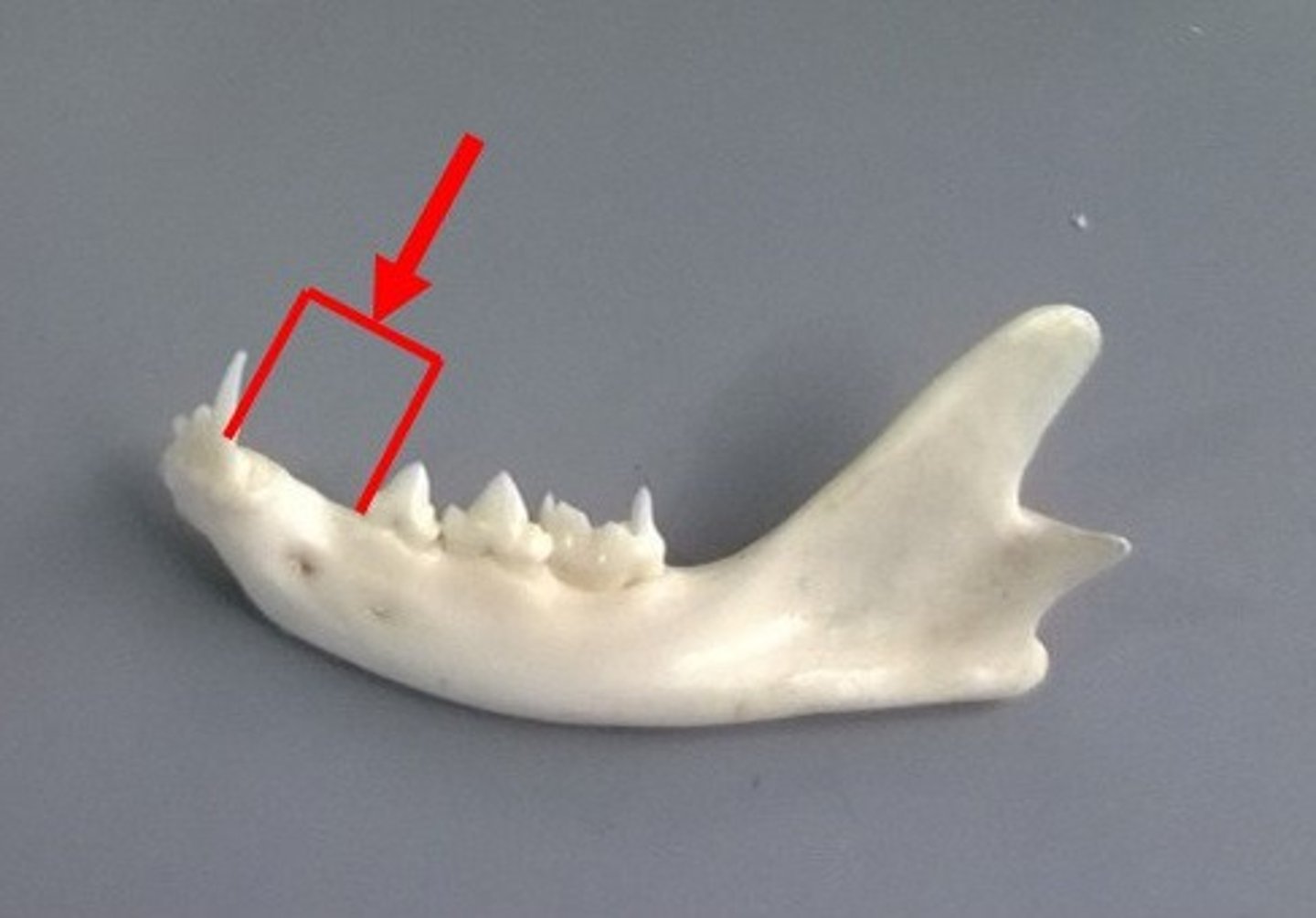
Diastema
Space on upper tooth row in apes for larger lower canine tooth to fit into
Short and wide pelvis
Supports organs and provides better muscle attachment and balance
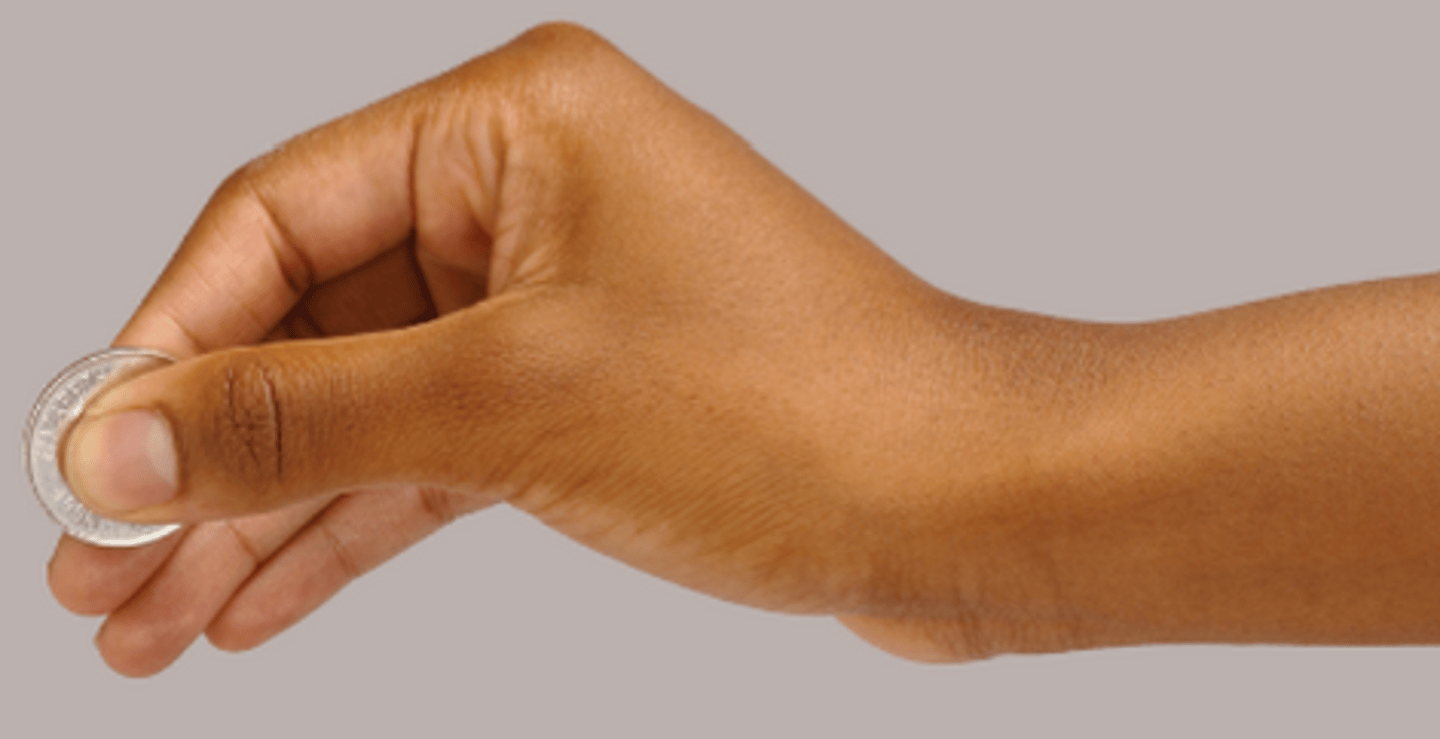
Precision grip
Important for making tools and having dexterity
Advantages of bipedalism
Free hands, heat regulation, efficient over distance, see further
Still learning (10)
You've begun learning these terms. Keep up the good work!