Central Neuraxial Blocks
 Call Kai
 Learn
Learn Practice Test
 Spaced Repetition
 Match
Match Flashcards
 Knowt Play
1/43

There's no tags or description
Looks like no tags are added yet.
Name | Mastery | Learn | Test | Matching | Spaced | Call with Kai | Chat |
|---|
No analytics yet
Send a link to your students to track their progress
44 Terms
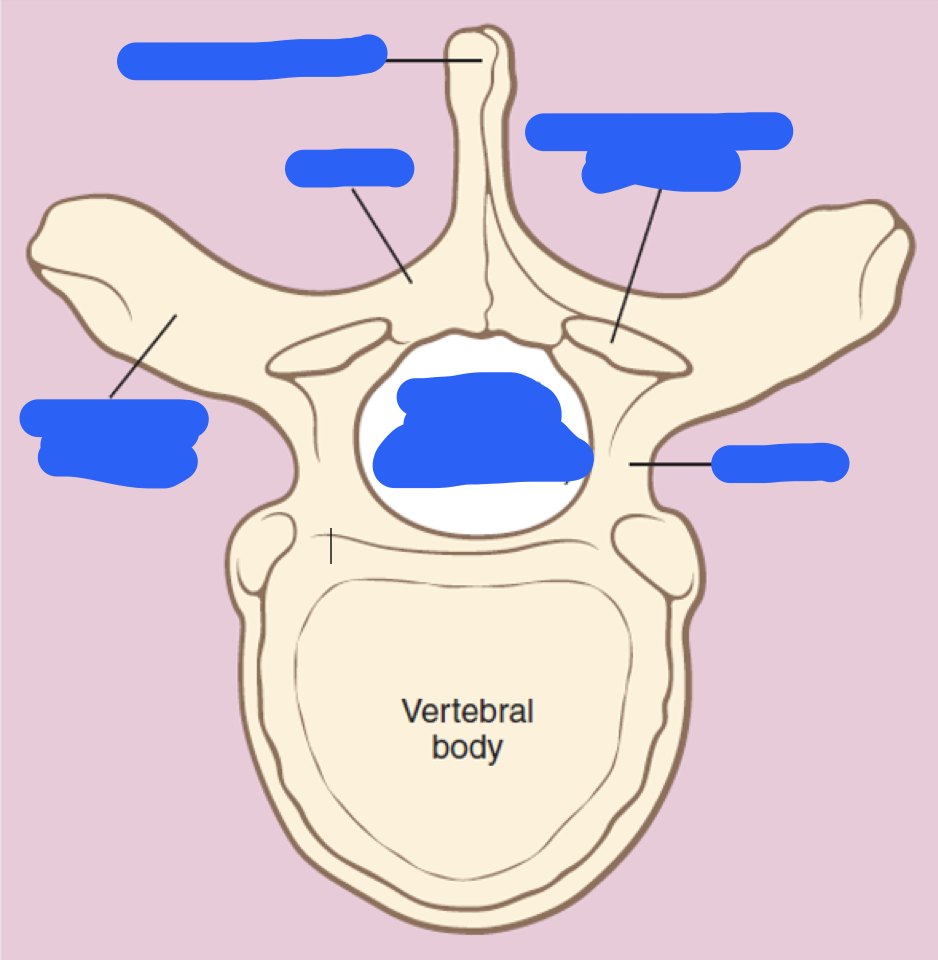
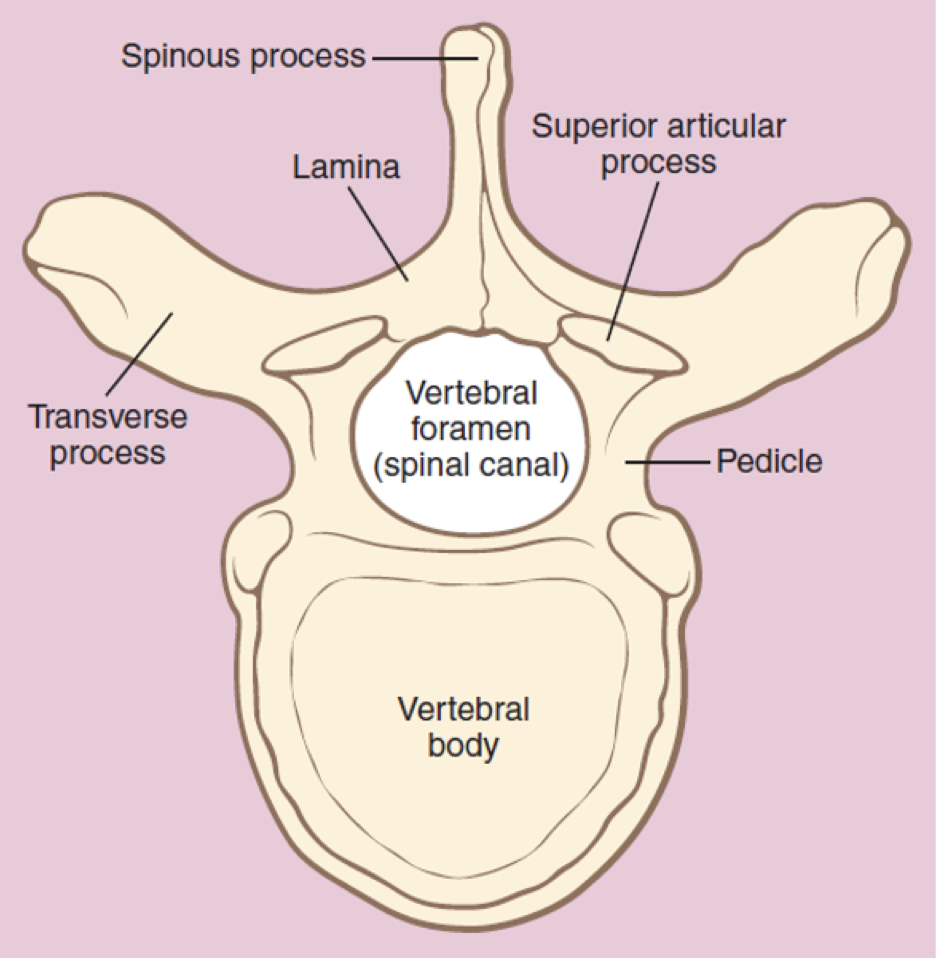
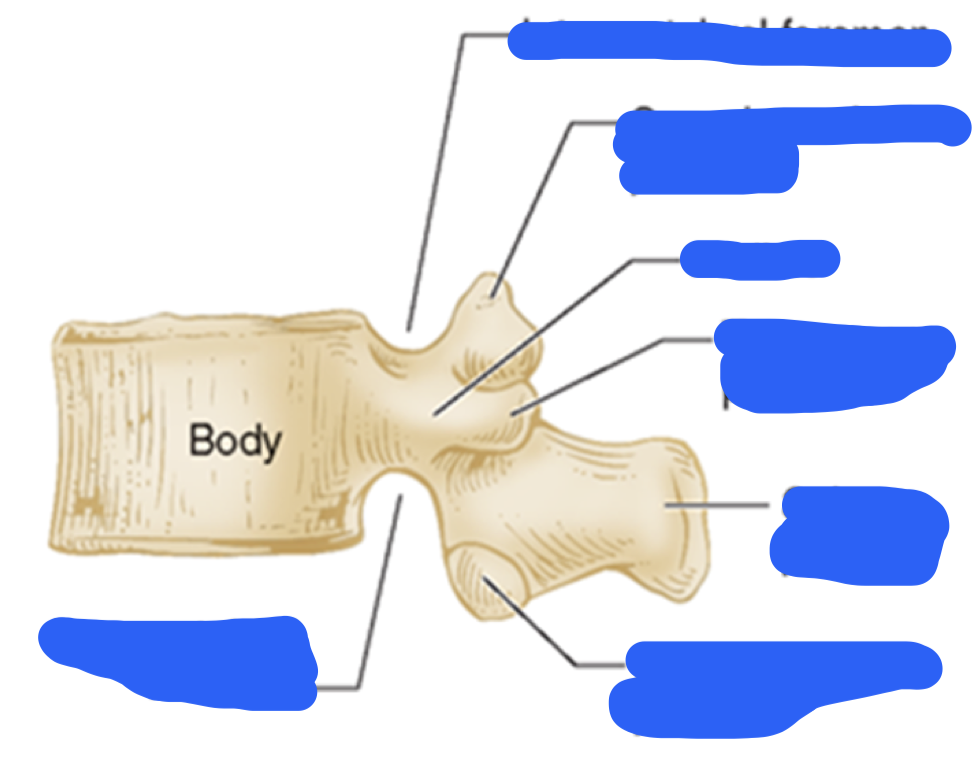
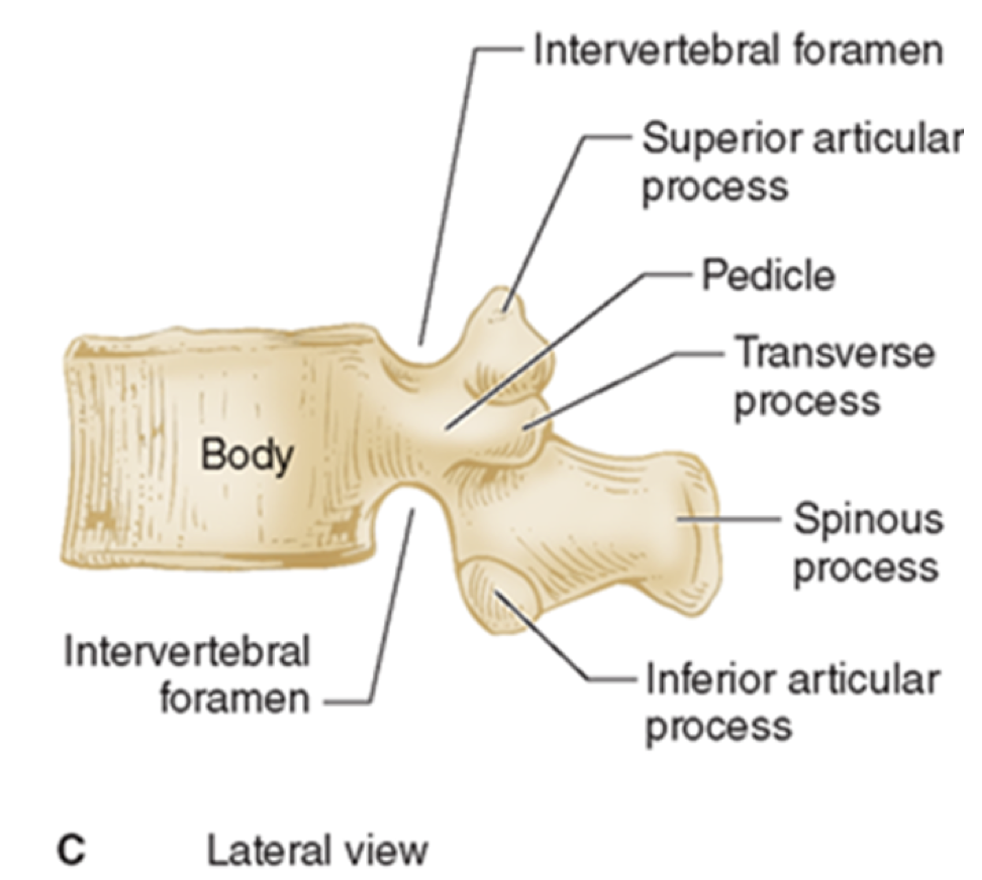
How many vertebrae are in the spine? WHat is the configuration?
33
7 cervical- smallest
12 thoracic
5 lumbar- largest
5 fused sacral
4 fused coccygeal
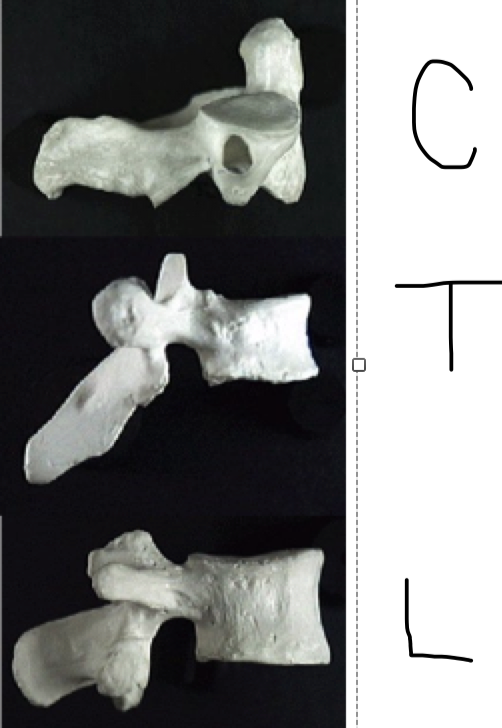
How do the angles of apinous processes vary?
Horizontal: Cervical, Low Thoracic, Lumbar
Caudad angulation: Thoracic
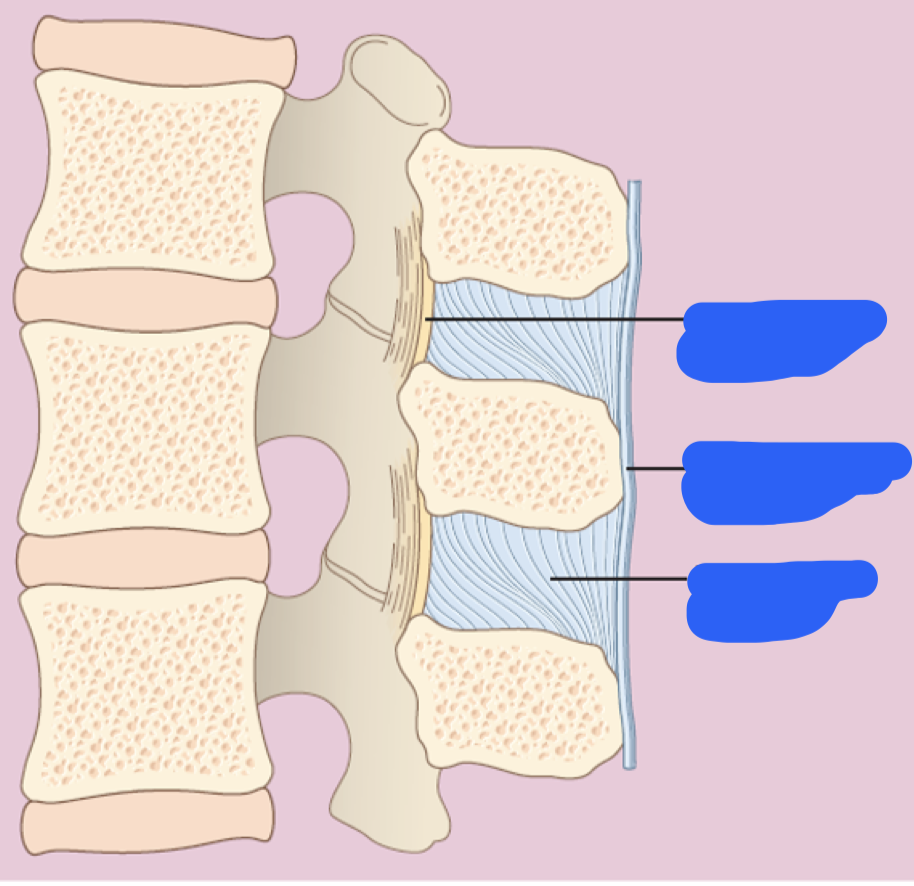
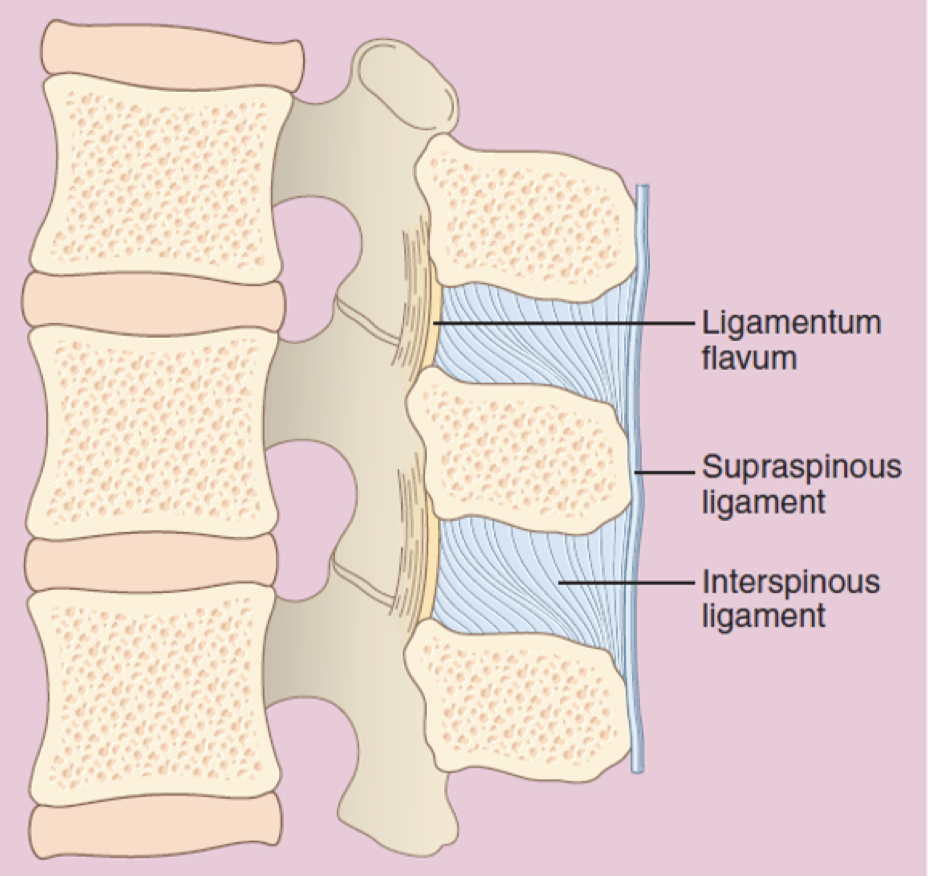
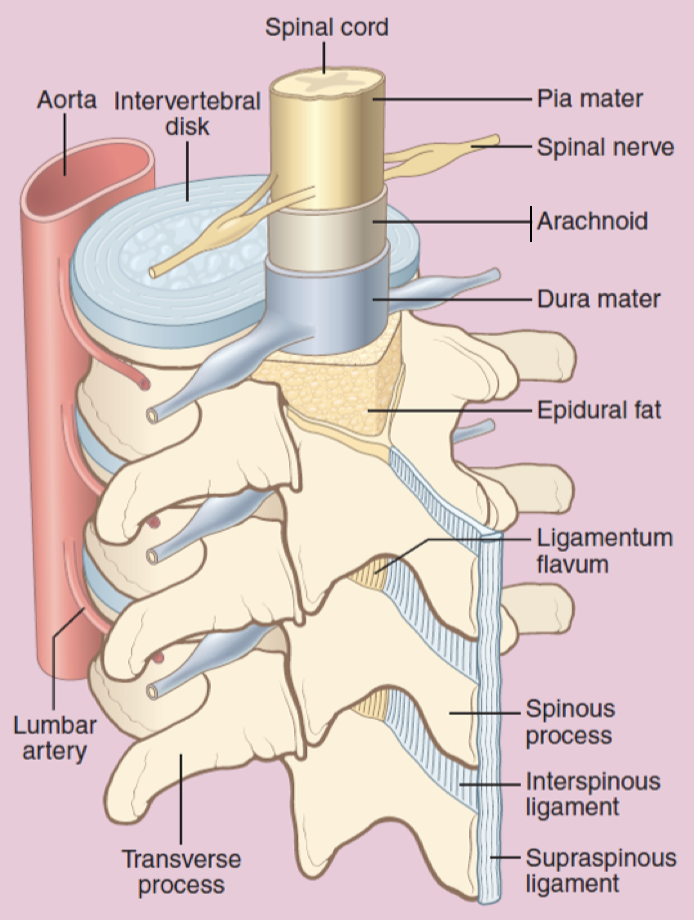
Name the 4 ligaments of the spinal column and their connections?
Supraspinous
Connects the tips of the spinous processes from sacrum to T7
Interspinous
Connects the posterior spinous processes & fills gap
Ligamentum flavum
Connects the lamina of the adjacent vertebrae
Ant/Post Longitudinal
Primary supportive ligaments of the vertebral column
Binds vertebral bodies and provides stability
Which vetebral landmarks starts at the vertebral prominens and can be felt or seen on most people and can be useful in identifying the midline of the body?
C7-T1
WHich vertebrae lines up with the inferior scapula?
T7
What is Touffier’s line?
line that spans across the iliac crests *superior/posterior) and indicates the target area for spinals (crosses at L4)
Where does the foramen magnum end and the conus medullaris starts?
L1-2
Where does the dural sac terminate AKA filum terminale?
S2
Where does the epidural space run?
foramen magnum to the sacral hiatus (S4-5)
How does a child’s spinal anatomy differ from adults? Why is this important?
the spinal cord terminates at L1-2 in adults
L3 in children- will need to puncture lower to avoid spinal cord (often will utilize a caudal block)
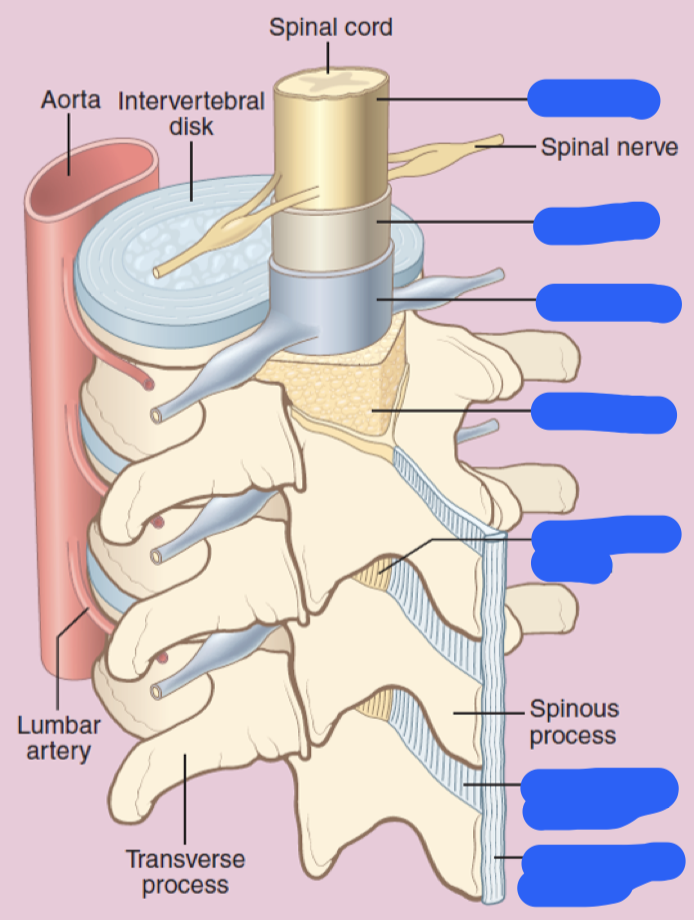
Name the different levels of the spinal cord coverings?
Pia mater - adherent to the spinal cord & nerves
Arachnoid - between the pia & dura mater
Subarachnoid - between the arachnoid & pia mater; Contains CSF
Dura mater - toughest outer membrane
Epidural space - potential space between dura mater & ligamentum flavum
how many spinal nerve roots are there and what are the different classes?
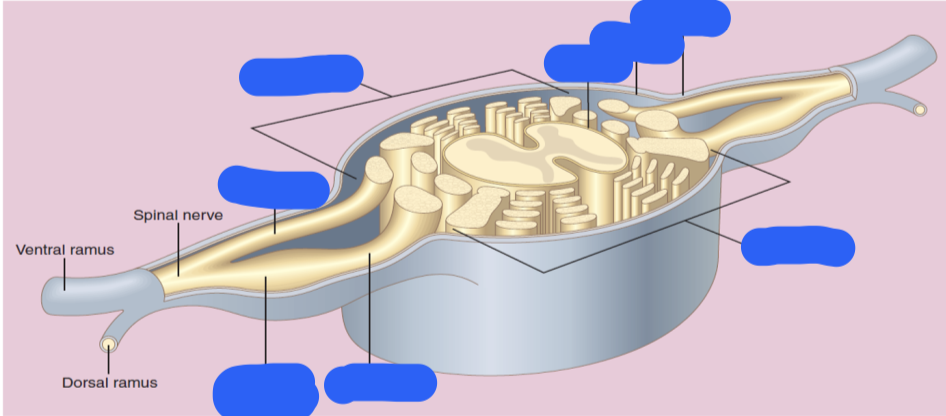
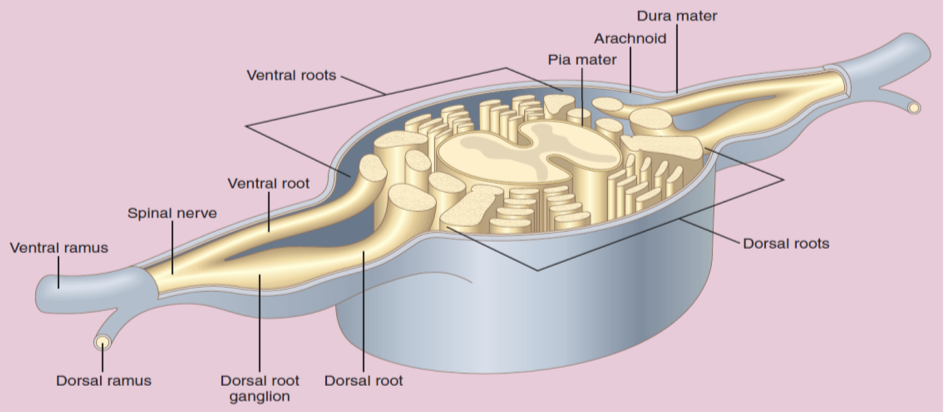
31 pairs (62 total)
anterior/vental (motor)
posterior/dorsal (sensory)
explain the supply of blood to the gray and white matter of the brain? Spinal cord?
gray: 80cc/100gm/min
white: 20cc/100gm/min
Avg 50cc/100 gm/min
spinal cord- slightly lower (still similar)
Which vessels supply the spinal cord with blood?
1 anterior spinal artery and 2 posterior spinal arteries
CSF is ______ secreted and requires an intact _______
actively; BBB
composition of CSF: Specific gravity, pH, pCO2, normal electrolytes, color, consistency
Specific Gravity = 1.003-1.008
pH = 7.3
pCO2 = 51
Lytes:
↑ NA+
↓ K+, CA+, HCO3-, Glucose
Normal color and consistency is the same as water
****Key: for a spinal- clear, colorless, water-like solution should return
Commonly seen abnormalities of CSF
Yellow: xanthochromia
caused by bilirubin
5 hr to 1 week post SAH
Hazy or turbid:
Leukocytes or protein
Bloody: does it clear?
May be minimal blood at first, but it should clear
If it doesn't clear, assume you are in a vessel
ICP, AKA __________ follow the __________ doctrine which states: ____________
AKA supratentorial pressure
monroe Kellie Doctrine- Blood+ Brain +CSF= ICP
increase in any will lead to decrease of the others
Normal ICP
5-15 mmHg
Can a subarachnoid block be done if ICP is increased?
No
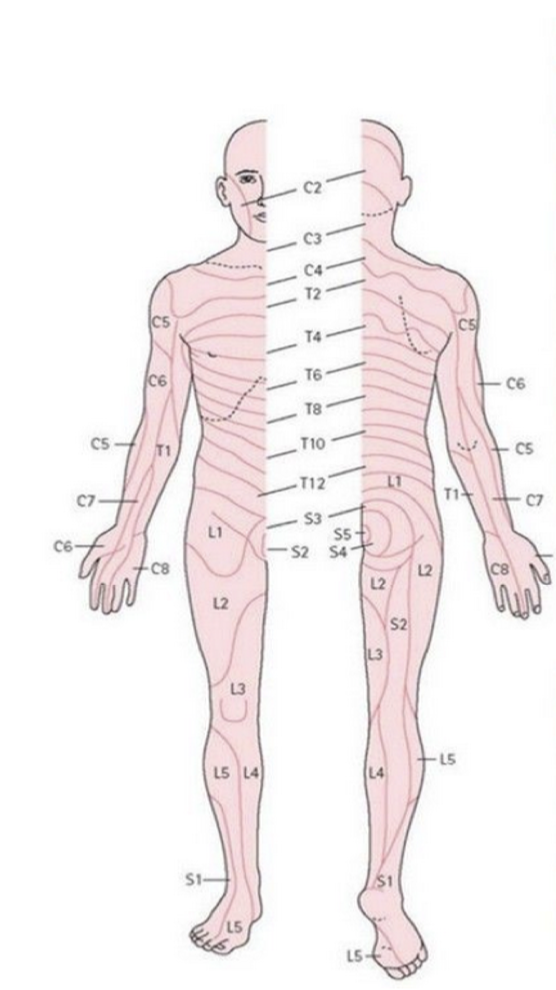
specific area of skin innervated by a spinal nerve
Dermatomes
Name the key dermatome for each landmark:
Above collarbone to shoulder
Skin over the shoulder
Thumb and lateral forearm
Middle fingers
Small finger and medial forearm
nipple line
Xiphoid process
Umbilicus
Area above groin
Anterior knee
Medial malleolus, thigh
Outside part of the calf, foot, big toe
Lateral foot, back of leg
Above collarbone to shoulder-C4
Skin over the shoulder- C5
Thumb and lateral forearm- C6
Middle fingers- C7
Small finger and medial forearm- C8
nipple line- T4
Xiphoid process-T6
Umbilicus- T10
Area above groin- L1
Anterior knee- L3
Medial malleolus, thigh- L4
Outside part of the calf, foot, big toe- L5
Lateral foot, back of leg- S1
specific muscle or muscle group innervated by a single spinal nerve, importnat for US guided blocks with nerve stimulation
myotomes
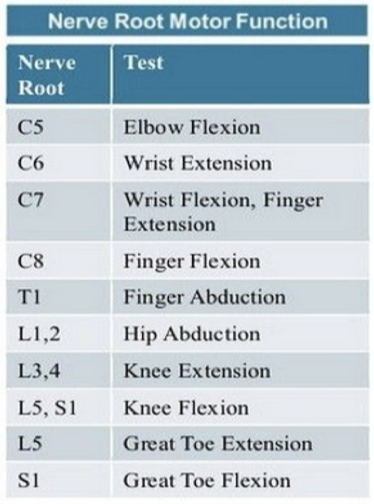
Name the test for each myotome:
C5
C6
C7
C8
T1
L1-2
L3-4
L5-S1
L5
S1
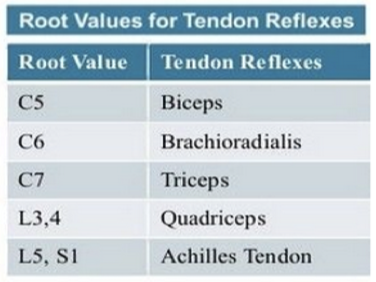
Name the nerve root responsible for each DTR:
biceps
brachioradialus
triceps
quadriceps
achilles tendon
Explain the main differences between a spinal and an epidural
spinal- a single injection into the CSF used for the lower half of the body
epidural- stays outside in the dural space (just past the ligamentum flavum), where no CSF is present and can be used for labor, lower half surgery, or abd surgery
a central neuraxial block is a ________ block that causes peripheral _______ and skin temp _________
sympathetic, vasodilation, elevation
What are the 4 steps of a neuraxial block in order of block onset/ loss of function? (Returned in reverse order)
pain and temp sensation (most important)
temp is a cousin to pain
proprioception
touch and pressure sensation
usually not lost completely (can feel touch/ pressure but no pain)
motor
usually not fully blocked
What determines the sequence of loss during a block?
arrangement of nerve fibers in the root (loss of fibers closest to the surface
B fibers
C and A delta fibers
A beta
A alpha
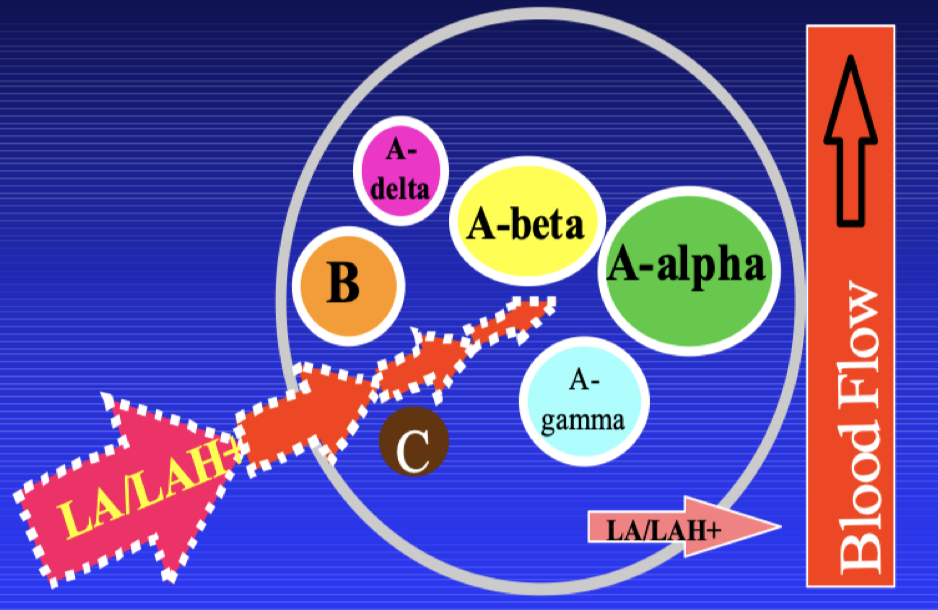
Explain the different dermatome levels of a differential blockade
ANS>Sensory>motor
ANS- 2 dermatomes above sensory (estimated)
Sensory- 2 dermatomes above motor (loss of sensation to pinprick or cold)
motor- hardest to achieve (movement/ muscle tone)
What could be an issue if your sensory block is at T3?
Your ANS block can be as high as T1 (HR control center) can result in bradycardia
What is a normal pre-procedure fluid management plan for a spinal?
½- 1 liter or ~ 15cc/kg is sometimes given
Probably not effective
Dependent on your location and their preferences
Which positions are often used for a spinal? Which is better?
sitting vs lateral
sitting- usually done cross legged, but legs can dangle with stool if needed and arms rest on the knees with chin to chest
more common because no torque
What are the 3 approached to a spinal/ epidural?
midline
paramedian
1.5 cm lateral to inferior border of spinal process
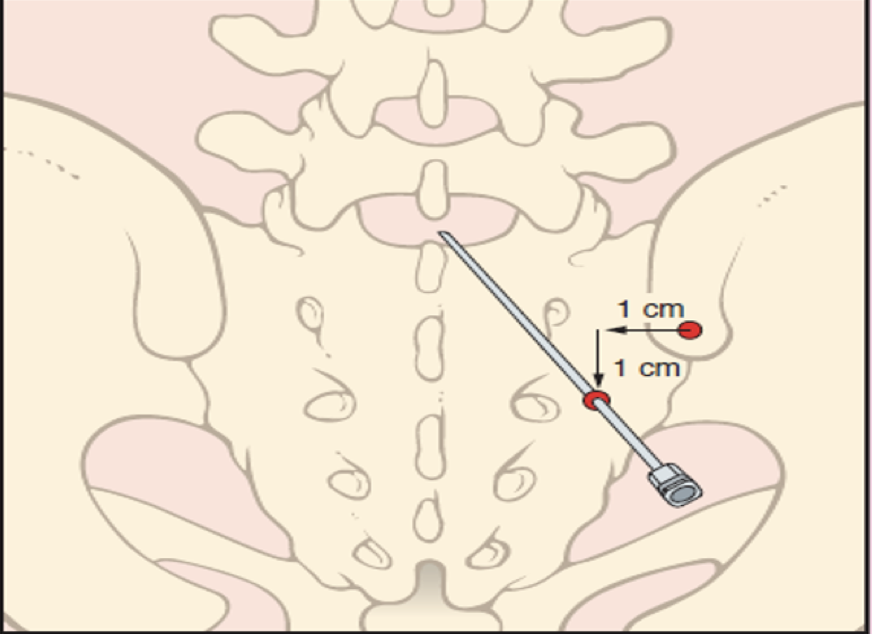
Lumbo-sacral/ Taylor’s approach
paramedian approach through L5-S1
When is the lumbo sacral/ Taylor’s approach utilized?
usually in elderly arthritic males bc the ligaments at this level do not calcify
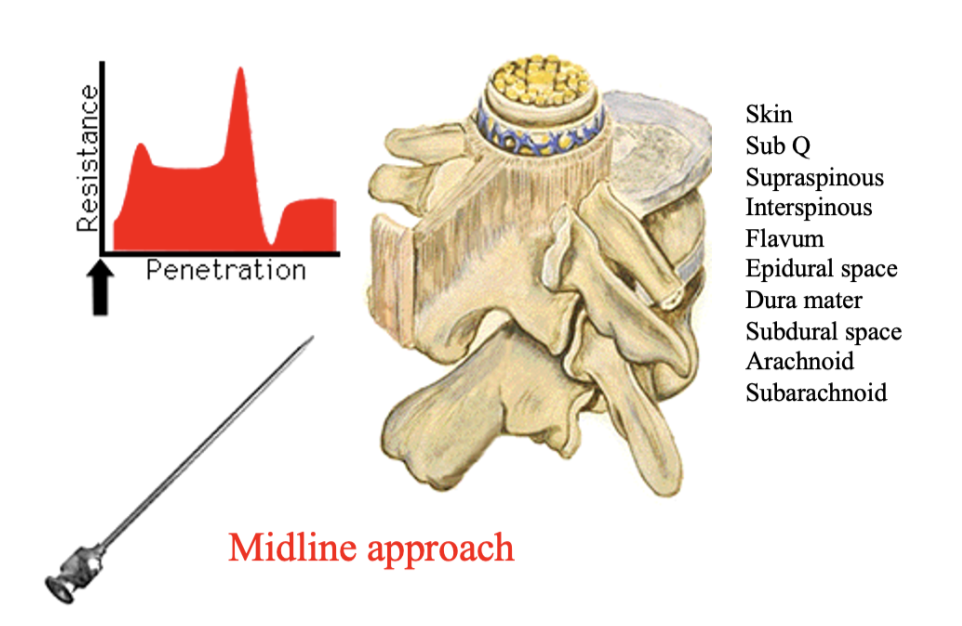
Name the layers punctured during a midline approach from external to internal
Skin
Sub-Q
Supraspinous ligament
Interspinous ligament
Ligamentum Flavum
Epidural space (~4-6 cm depth)
Dura mater
Subdural space
Block in this area lead to a weird patchy block
Arachnoid
Sub-arachnoid space= CSF
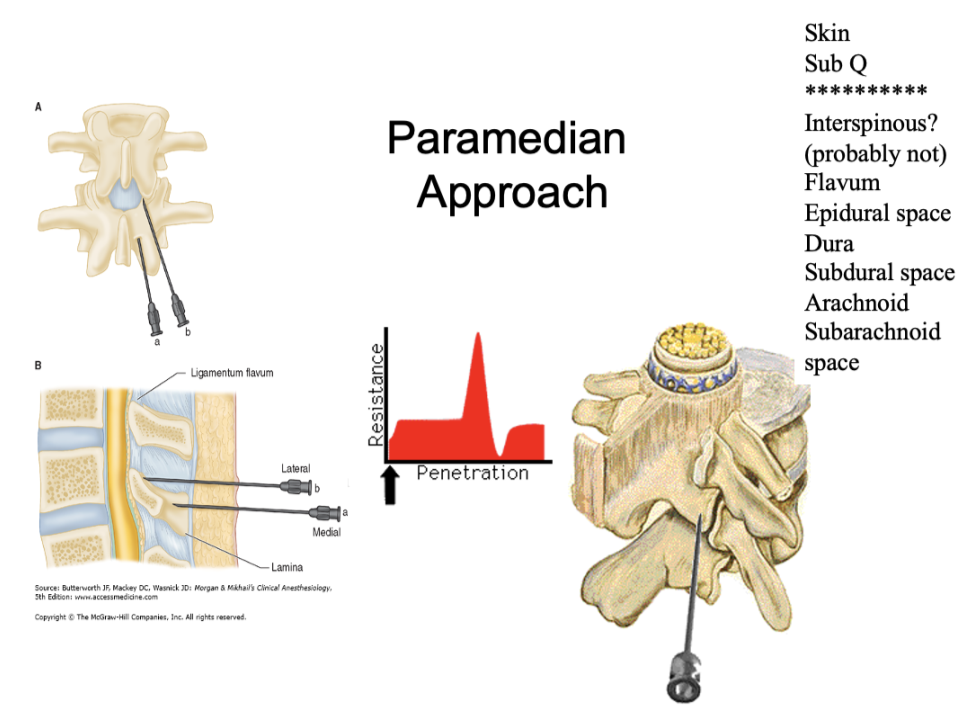
Name the layers punctured during a Paramedian approach from external to internal
skin
sub Q
interspinous??? maybe, but probably not
flavum
epidural space
dura
subdural
arachnoid
subarachnoid
Name the layers punctured during a epidural approach from external to internal
skin
sub-Q
supraspinous
Interspinous
Flavum
Epidrual space
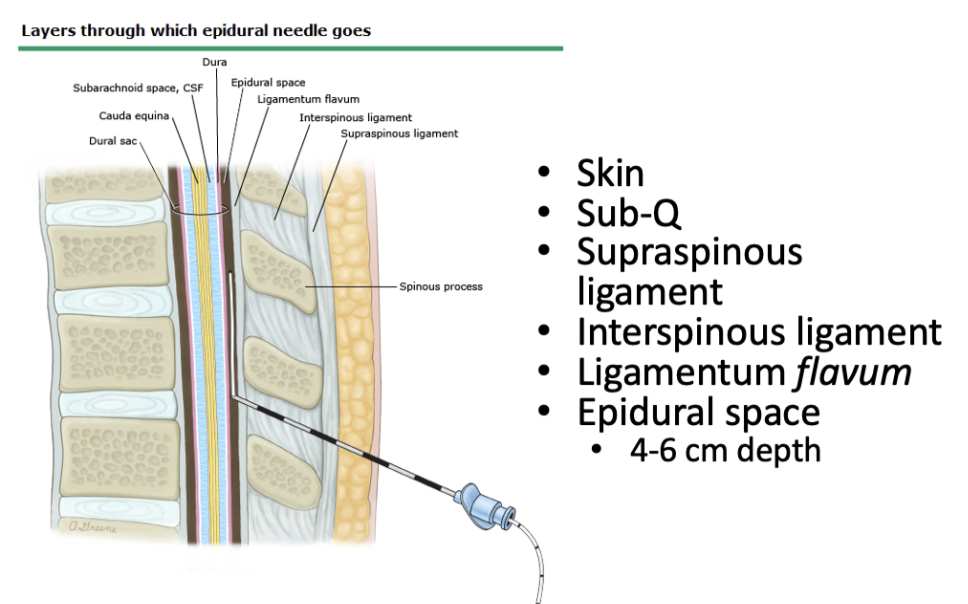
whats the normal depth of an epidural?
4-6 cm