24/24: Stress, Anxiety, OCD, Addiction
 Call Kai
 Learn
Learn Practice Test
 Spaced Repetition
 Match
Match Flashcards
 Knowt Play
1/14

There's no tags or description
Looks like no tags are added yet.
Name | Mastery | Learn | Test | Matching | Spaced | Call with Kai | Chat |
|---|
No analytics yet
Send a link to your students to track their progress
15 Terms
stress
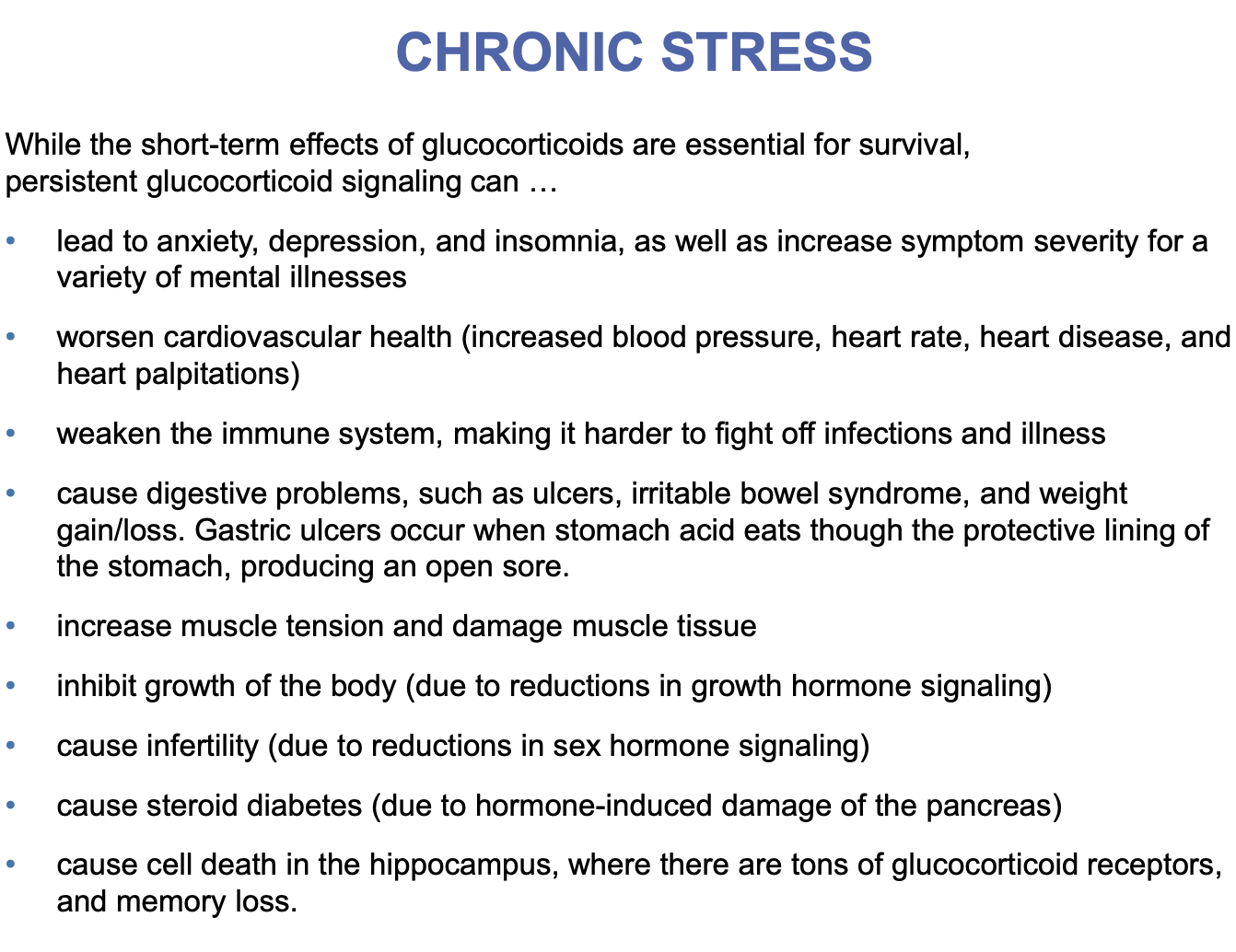
→ physiological reactions to aversive or threatening situations and/or stimuli (stressors) that notably mobilize the body’s autonomic nervous system (ANS) and endocrine system
Usually adaptive to short-term responses, but chronic vulnerability can cause adverse health effects, including the onset of anxiety (see photo attached)
anxiety
→ excessive feelings of fear, worry, or unease
Apprehension or dread can persist in situations that aren’t actually too threatening
Ofter triggered by some stressors, but also manifests independently
Often feels more intense than stress
stress response
Physiological process:
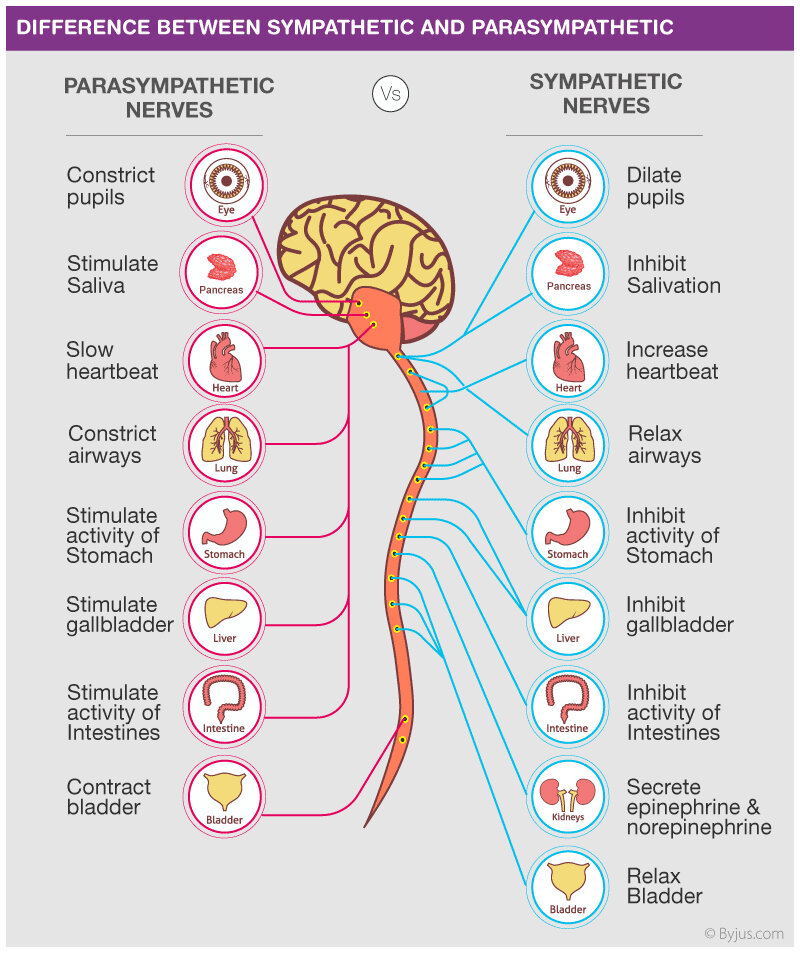
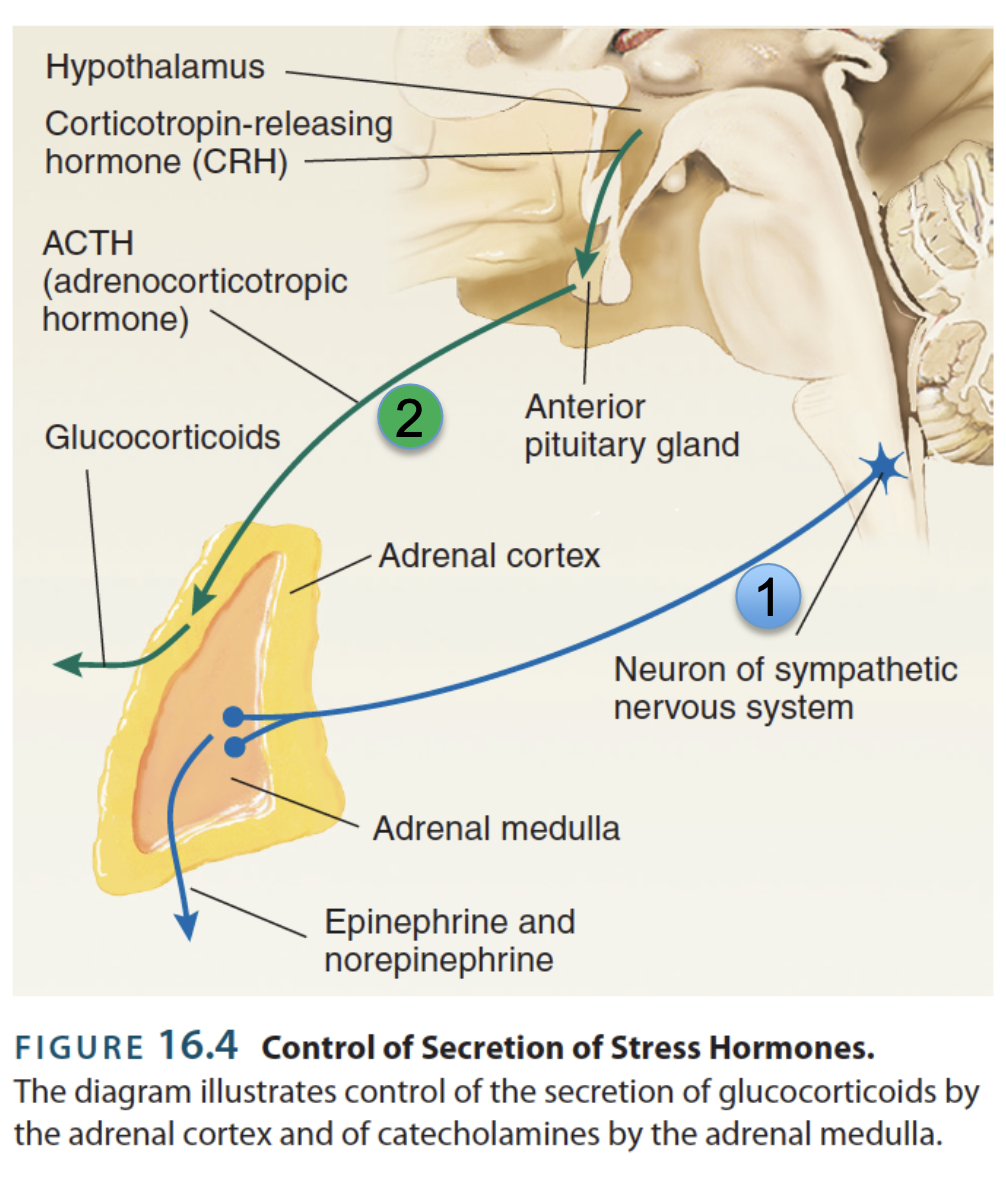
Activation of sympathetic branch (fight or flight) of the ANS
Adrenal glands above kidneys release epinephrine and norepinephrine
Activation of the hypothalamus-pituitary adrenal gland (HPA axis)
Hypothalamus releases corticotropin-releasing hormone (CRH) →
Pituitary gland releases adrenocorticotropic hormone (ACTH) →
Adrenal gland releases glucocorticoids (primarily cortisol)
Physiological consequences:
See symptoms of the sympathetic NS
glucocorticoids
→ group of hormones that function to maintain homeostasis in response to normal circadian changes in metabolism as well as in response to stress
Very essential for immediate survival
Prepares the body for imminent action by making glucose and fat available for immediate use and ↑ blood flow for arousal
Regulates many physiological processes
Simultaneously deprioritizes non-urgent functions, which may include ↓ signalling for hormones related to growth, sex, and immune processes
Signalling is usually proportionate to the level of stress (which is both a function of frequency and intensity)
↑ stressors in life = chronic signalling, which isn’t healthy
↓ stressors in life = occasional signalling, which is manageable
anxiety disorders
→ variety of psychiatric disorders characterized by unrealistic and unfounded anxieties producing expectations of impending disaster, muscle tensions, paranoia, and a generally hyperactive ANS
Etiology:
Genetic - 30% heritable variance
Biological - abnormalities in the HPA axis, which coordinates hormonal remediation of stress
Environmental - traumatic experiences, ACEs (risk ↑ with frequency and severity)
Prevalence: x2 as often in females over males
Incidence:
12% of people every year
10% social anxiety disorder (SAD), at some point in life
10% specific phobia, at some point in life
Prognosis (associated symptoms): Symptoms usually present before age 25
Treatment:
Cognitive-behavioural therapy (CBT) - first-line treatment
Medication - SSRI antidepressants (for general use), benzodiazepines (for urgent use)
Lifestyle changes - improving discipline concerning diet, exercise, sleep hygiene, indulgences, substance abuse, etc.
common anxiety disorders
Generalized anxiety disorder (GAD) → disorder characterized by excessive anxiety serious enough to cause disruption of daily life
Social anxiety disorder (SAD) → characterized by excessive fear of being exposed to the scrutiny of other people, leading to avoidance of social situations that may demand performance
Agoraphobia → fear of being away from protected places (ex. home) + being in situations where help or escape could be unavailable (ex. crowds)
Panic disorder (PD) → characterized by episodic periods of severe and unremitting terror known as panic attacks (which often involve distinctly acute autonomic symptoms)
Anticipatory anxiety → future-oriented fear of having panic attacks
post-traumatic stress disorder
PTSD → psychiatric disorder that can develop after exposure to at least 1 severely traumatizing event (abuse, assault, war, accidents, etc.); characterized by vivid and intrusive flashbacks (re-living the trauma) or recurrent dreams, active avoidance and pronounced distress of trauma-associated stimuli or environments, hyperarousal (constant unease), and hypervigilance (paranoia)
Etiology:
Genetic - 30% heritable variance
Environmental - traumatic experiences (risk ↑ with frequency and severity)
Biological - abnormalities in the HPA axis, which coordinates hormonal remediation of stress
Incidence: 5% men, 10% women, both at some point in their life
Prognosis (associated symptoms): Negatively correlate with size of hippocampus and prefrontal cortex, though it’s unclear which is cause or effect
Persistent negative mood
No longer classified as an anxiety disorder because emotions and behaviour exit the scope (ex. hopelessness, guilt, shame, anger, etc.)
Interference with social activities
↑ Risk for suicide
Treatment:
CBT
Support groups, group therapy
Antidepressant medications (most commonly SSRIs), which benefit about 50% of people
obsessive-compulsive disorder
OCD → psychiatric disorder characterized by obsessions (recurrent and more often intrusive thoughts, emotions, and behaviours that function as some trigger) that generally drive corresponding compulsions (ritualistic actions that function as some relief) — a combination that causes severe distress if not fulfilled and tends to impair general functioning
Significant types:
Cleaning- → concern for contamination (germs, bodily fluids, etc.)
Order- → concern for geometrical or logical orientations and arrangements (symmetry, congruence, etc.)
Hoarding- → concern as the name suggests (not being able to throw things out)
Forbidden thoughts- → concern for harmfulness or taboos (violence, faith, sex, etc.)
Etiology:
Genetic - 50% heritable variance
Environmental - ACEs (risk ↑ with frequency and severity)
Biological - infections, brain damage (particularly to the basal ganglia, cingulate gyrus, or prefrontal cortex)
fMRI studies reveal ↑ activation in frontal lobes and striatum
Prevalence:
2% of the population
x2 in females, later onset (early adulthood) than males (adolescence)
Prognosis (associated symptoms): Symptoms usually start before age 25
Most people are aware of their obsession-related anxiety and their skewed view of reality, but genuinely feel a justified need to act
It can become incredibly difficult to control obsessions and compulsions for extended periods time
Treatment: Without it, the condition can last decade
Counselling, often involving CBT with exposure and response prevention (which clarifies obsessions and eliminates repetitive compulsions, especially if they’re maladaptive)
Antidepressant medications (also commonly SSRIs)
Cingulotomy → brain lesion procedure involving cutting a fiber bundle between the prefrontal cortex and anterior cingulate; only for severe OCD cases
alcoholism
alcohol abuse → substance abuse disorder characterized by an addiction to alcohol
Etiology:
Genetic - 40-60% heritable variance
Environmental - led by example, maladaptive coping to trauma
Prevalence:
10% of US population accounts for 50% of alcohol consumptions
Prognosis (associated symptoms): ↑ Risk…
P (involvement with automobile accidents)
Liver diseases (cirrhosis)
Heart diseases (strokes)
Pancreal diseases (pancreatitis, diabetes)
Neurodevelopmental diseases (fetal alcohol syndrome, Korsakoff’s)
reinforcement learning
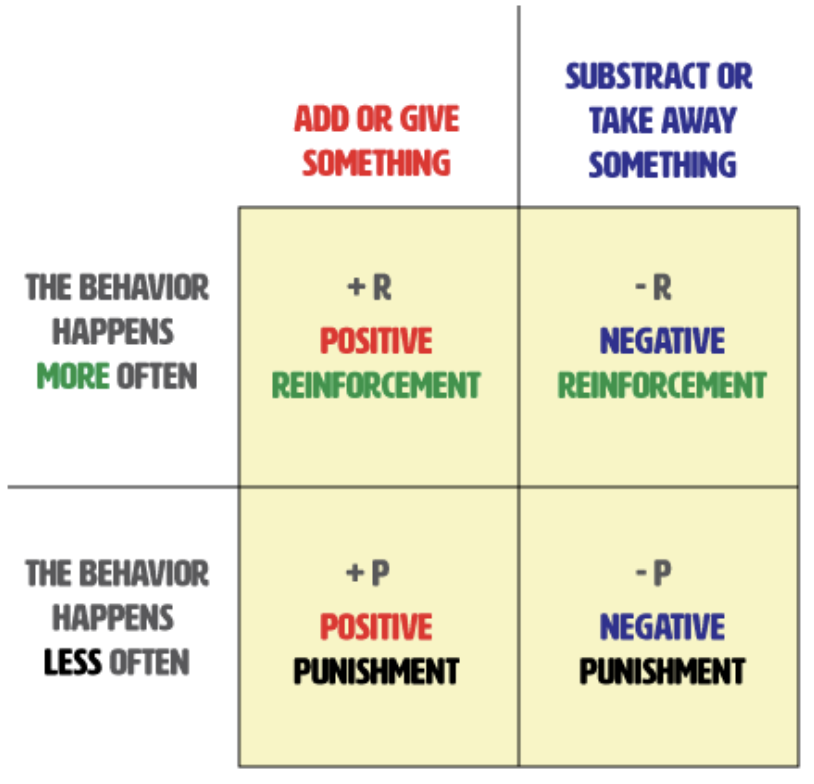
→ process driven by the (+/-) consequences of one’s behaviour (operant conditioning!!!)
Most effective when an action’s consequences are immediate (rather than delayed)
Neurobiology of addiction:
Reinforcers, organic or artificial, elicit dopamine release in the nucleus accumbens of the striatum
↑ Rapid dopamine release = ↑ Addictive power of drugs
Speed by which the brain discovers reinforcement is thought to explain the relative addictive potential of different substances
(-) Reinforcement maintains addiction:
No drug / tolerance for drugs (removal / reduction of stimulus) → causes withdrawal (unfavourable consequence) → reason to continue seeking drug (reinforcement of behaviour)
physical dependence
(NOT the same as addiction; these effects can occur independently)
Tolerance → when the effect of a drug gets smaller with repeated administration (desensitization), such that increasingly larger doses are needed to achieve the desired effect
Caused by compensatory mechanisms that oppose the effect of the drug
Withdrawal → appearance of symptoms opposite to those produced by a drug’s effect that occurs when the drug is suddenly no longer taken
Caused by compensatory mechanisms that relate to drug tolerance
notable comorbidity
Substance-abuse (drugs, smoking) + schizophrenia + ADHD
Abnormalities in the prefrontal cortex + its interactions with the striatum mess with dopamine neurons
Addicts are found to show deficits with the prefrontal cortex similar to those with legitimate brain damage to that area
↑ Substance consumption correlates with ↓ prefrontal functionality
7% of mentally-ill population accounts for 1/3 of all smokers
block-the-receptor approach (drug addiction treatment)
Opioid receptor antagonists:
Naltrexone → reduces opiate highs (drugs’ euphoric effect)
High-affinity (outcompete opiates to receptor binding sites), slow onset, long-acting
Seems to reduce general cravings in some
Naloxone (Narcan) → reverses the effects of an opiate overdose (which causes a loss of consciousness and breath)
Extremely rapid onset, short-acting
Injections are so immediate that they can elicit withdrawal symptoms (though they clear away within an hour)
maintenance approach (drug addiction treatment)
Methadone → potent opiate that is a popular substitute for heroin since it allows people to live more functional lives
Slower onset and offset than heroin
Buprenorphine → partial opioid receptor agonist that is commonly prescribed to treat opiate addiction
High-affinity (strongly binds to receptor sites), but produces only a weak psychological effect while blocking the effects of other opiate
Often paired with naloxone (narcan) to control highs and reduce potential for abuse
Varenicline → partial nicotinic (acetylcholine) receptor agonist that is prescribed to treat nicotine addictions
Often paired with other nicotine addiction treatments (patches, gum, vaping, etc.)
transcranial magnetic stimulation
TMS → non-invasive procedure that uses magnetic pulses to stimulate areas of the cerebral cortex
Relatively simple, minimal risk (little side effects), but its overall efficacy is widely debated (tons of studies still ongoing for optimization)
However, it has be approved for addressing notable mental illnesses like MDD and OCD, commonplace struggles like smoking, and even symptoms like migraines
Often paired with deep brain stimulation (DBS) to treat drug addiction