EEMB Week 2
 Call Kai
 Learn
Learn Practice Test
 Spaced Repetition
 Match
Match Flashcards
 Knowt Play
1/37

There's no tags or description
Looks like no tags are added yet.
Name | Mastery | Learn | Test | Matching | Spaced | Call with Kai | Chat |
|---|
No analytics yet
Send a link to your students to track their progress
38 Terms
______: process by which one species splits into two species
speciation
Speciation is a bridge between ________ and _________
microevolution and macroevolution
speciation bridge is mechanism why which new species originate from existing ones
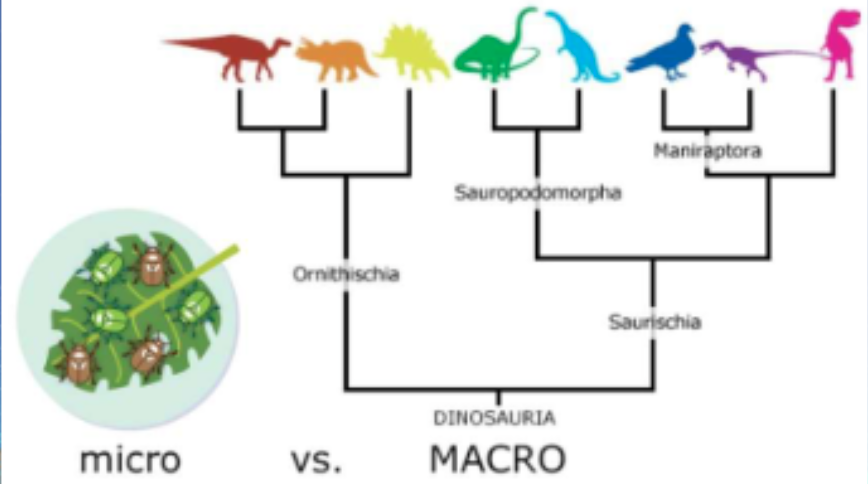
_______ species concept: defines species as set of organism adapted to a particular set of resources (niche) in environment
ecological
_______ species concept: classifying organisms into species based on morphology
morphological
linnaean system of classification uses MSC
______ species: group of actually or potentially interbreeding natural populations that are reproductively isolated
biological
biological species concept: uses breeding behavior as basis for demarcating species
biological species parameters
Species are:
populations of organisms that interbreed with each other
or could possibly breed, under natural conditions
and reproductively isolated from other groups
Reproductive isolation
existence of biological factors or barriers that impede members of two species from interbreeding and producing viable, fertile offspring
prezygotic
postzygotic
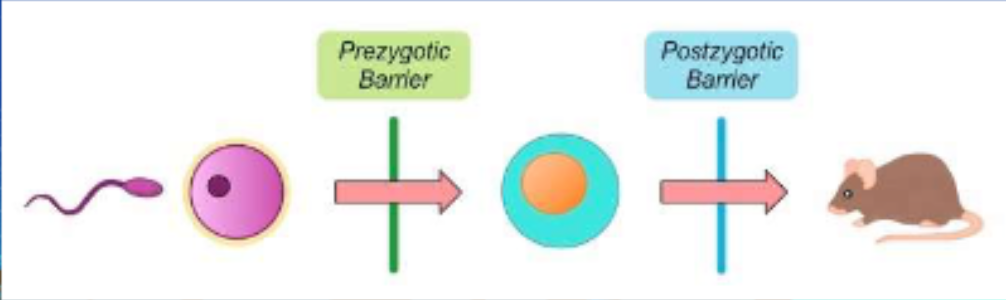
there’s 3 questions on exam about prezygotic and 1 about postzygotic
know examples, the text won’t just be definitions, it’ll have stories
Prezygotic isolating mechanisms
lead to reproductive isolation by preventing formation of hybrid zygotes
habitat isolation
temporal isolation
behavioral isolation
mechanical isolation
gametic isolation
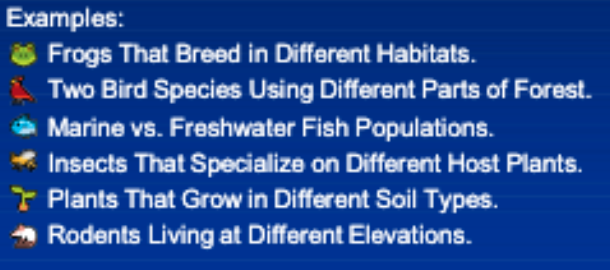
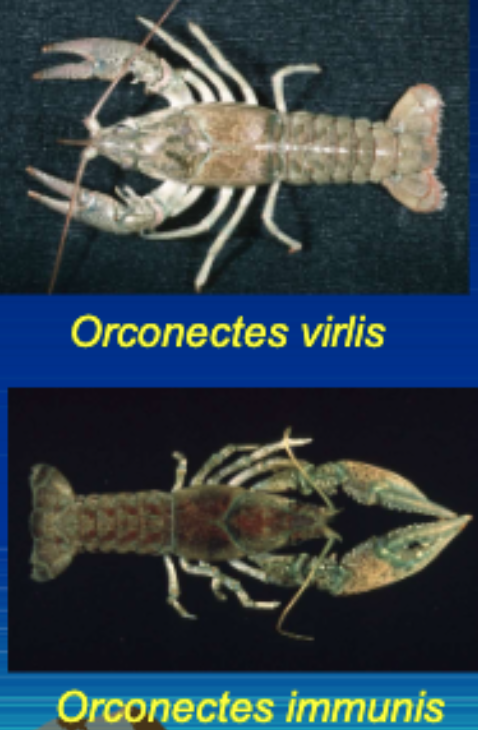
Habitat isolation
gene flow restricted because populations come to occupy different habitats within same area
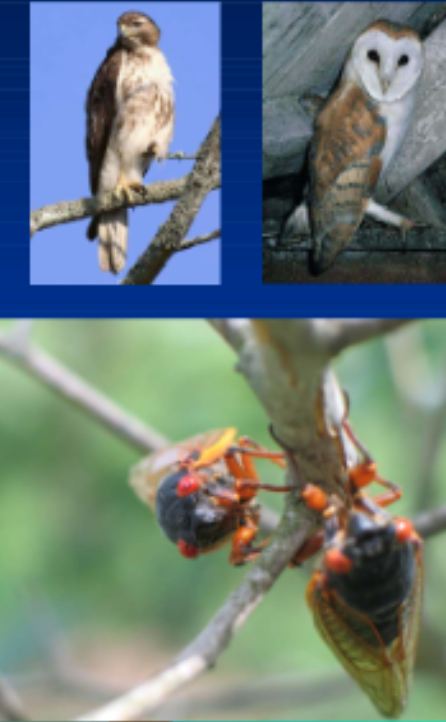
Temporal isolation
individuals from two populations mate at different times
species not reproductive or active at same time
Behavioral isolation
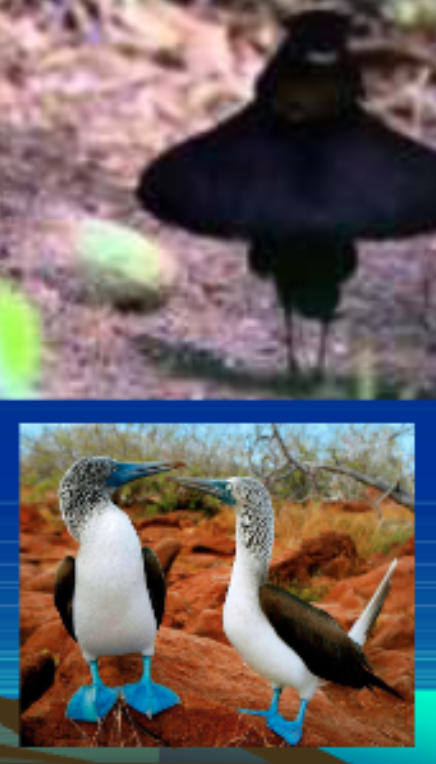
populations develop differences in courtship rituals or response to the, therefore are unable to mate successfully
different behaviors don’t attract mate of other species
Mechanical isolation
morphological or anatomical differences preclude successful mating
species physically incompatible
“lock and key” model
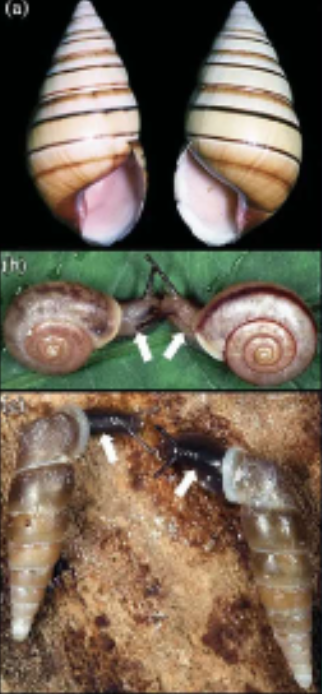
Gametic isolation
biochemical or cellular changes create incompatibility between gametes, so sperm can’t fertilize egg
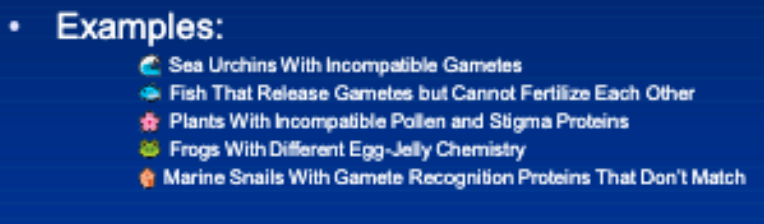
_____________ mechanisms: occur after gametes fuse. They reduce survival or reproductive success of hybrids, preventing gene flow between species
postzygotic isolating mechanisms
there are three major types:
hybrid inviability
hybrid sterility
hybrid breakdown
____________: genes of different parent species may interact in ways that impair hybrid’s development or survival in its environment
reduced hybrid viability
_____________: even if hybrid survives and thrives, they may be sterile
reduced hybrid fertility
_________: some first-generation hybrids are viable and fertile, but when they mate with another or with either parent species, offspring of next generation are weak/and or sterile
hybrid breakdown
Limitations of biological species concept
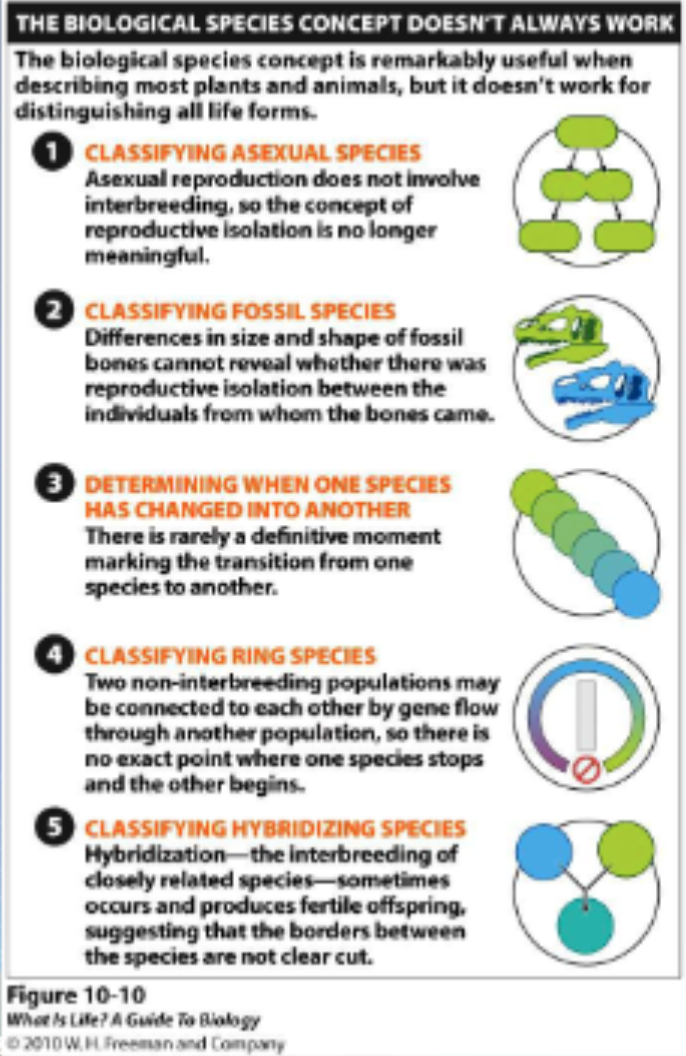
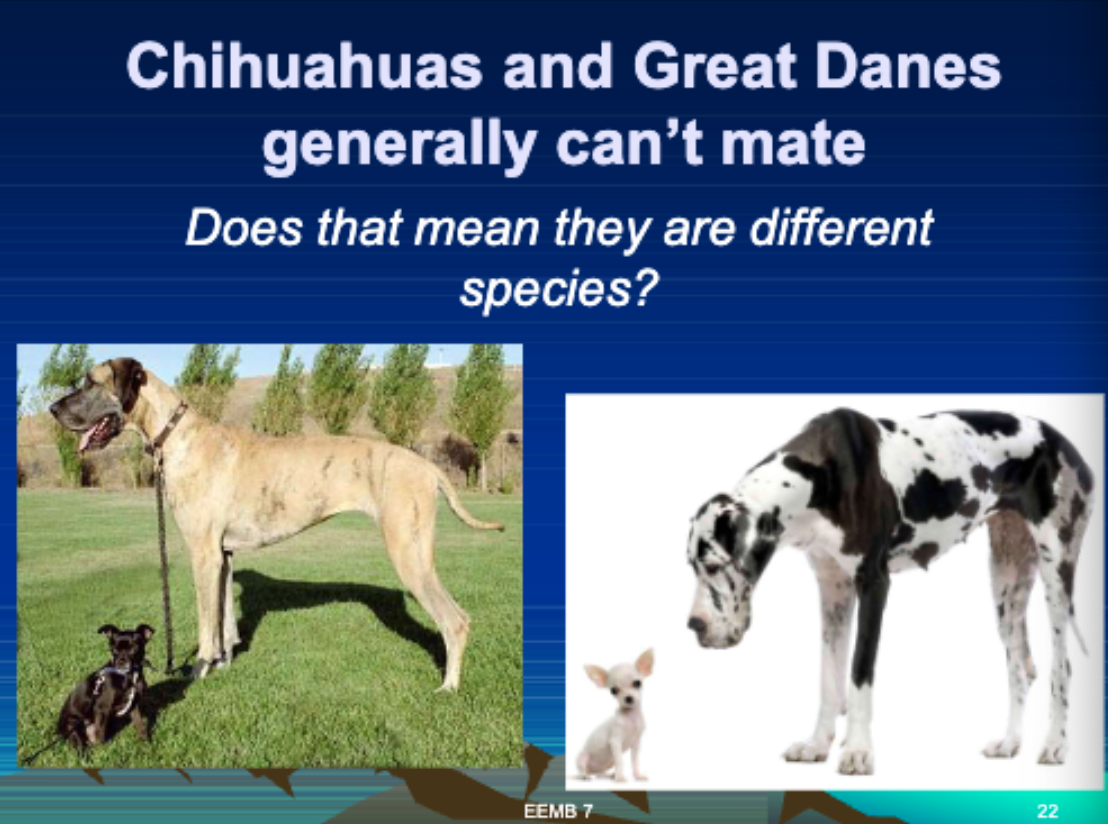
Difficulties in determining when one species has changed into another
it may not be possible to identify an exact point at which change occurred
Types of speciation
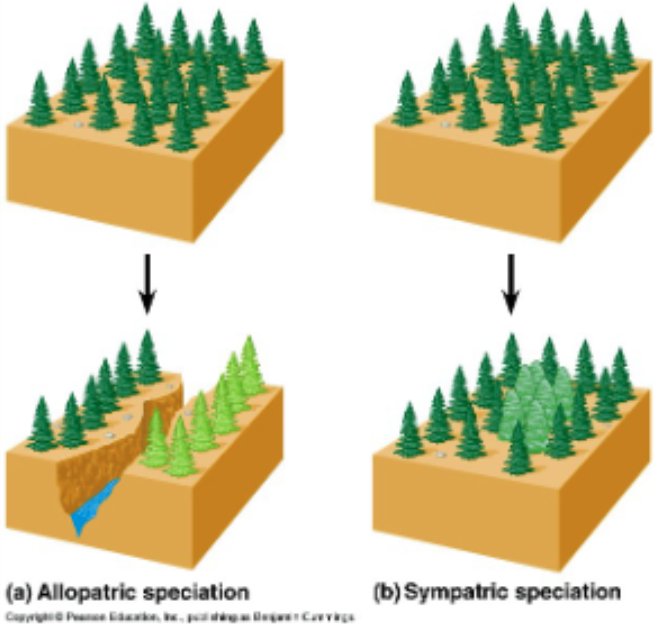
_______ speciation: population first separated by geographical barriers
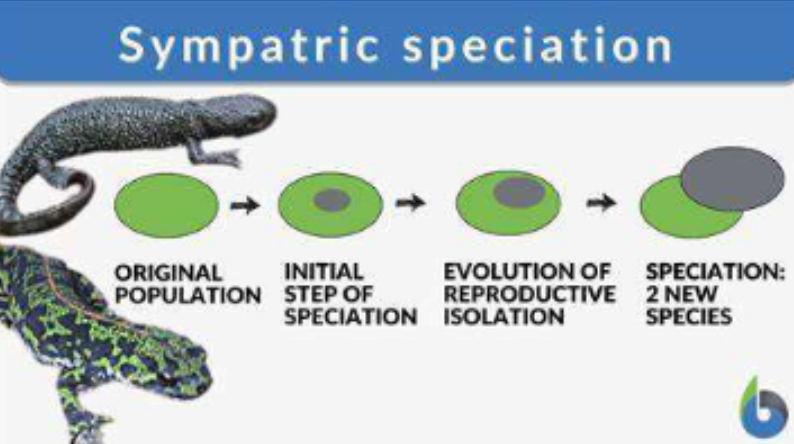
_______ speciation: populations reproductively isolated even though share same geographical area
allopatric
evidence: snapping shrimp divided by isthmus of Panama
more common in nature
sympatric
can occur if gene flow reduced by polyploidy habitat differentiation, and sexual selection
Hybrid zones
region in which members of different species meet and mate, producing at least some offspring of mixed ancestry
patterns within hybrid zones: form narrow bands of land between two habitats
hybrid zones and environment change: changing environmental conditions can alter where habitats of interbreeding species meet
there might be one question on the exam about hybrid zones
Hybrid zones over time
______: reinforcing reproductive barriers (natural selection should strengthen prezygotic barriers to reproduction)
______: two hybrid species fuse into single species
______: hybrids continue to be produced, sometimes because hybrids survive or reproduce better than members of either parent species (at least in certain habitats or years)
reinforcement
fusion
stability
Speciation can be slow or rapid
patterns in fossil record
________: change as they branch and then change very little thereafter
________: slow and steady
punctuated equilibrium
gradualism
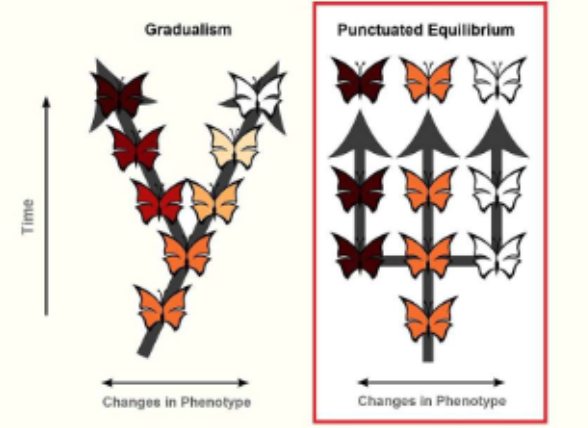
should know this for the exam
From speciation to macroevolution
speciation might begin with small differences
BUT… as this occurs repeatedly, differences accumulate and become more pronounced eventually leading to formation of new groups of organisms that differ greatly from their ancestors
we can see this very clearly in fossil record
on to macroevolution
Macroevolution is evolution ______ species level
above
How do we document life’s history?
Fossil Record
________: forms from sediment, which is made up of pieces of rock, minerals, and organic matter
can preserve remains or remnants of ancient animals and plants
form layers, so older layers further down than newer layers
______: hardened resin
____________: some fossils (like petrified tree trunk) form as minerals and seep into and replace organic matter
_____, ____, _____: can preserve body of larger organisms (rare- but it happens!)
________: fossil record of biological activity by lifeforms but not preserved remains of organism itself
sedimentary rock
amber
mineralized organic matter
frozen soil, ice, acid bog
trace fossils
The Fossil Record
how rocks and fossils are dated:
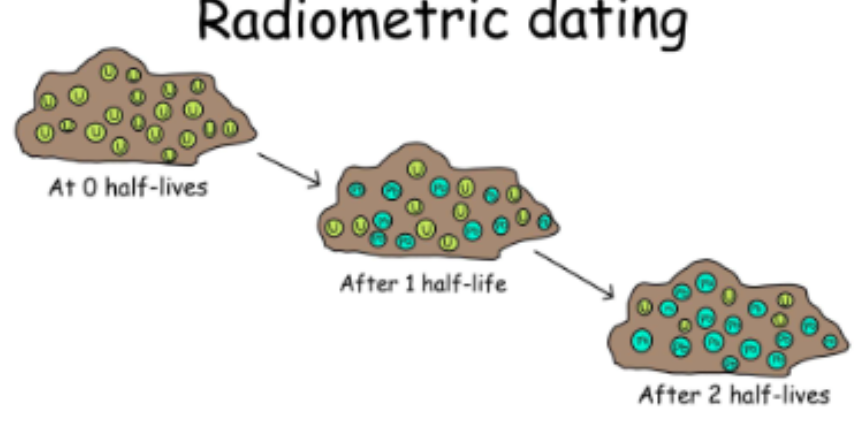
_________: when “parent” isotope decays to “daughter isotope” at characteristic rat
_________: time required for 50% of parent isotope to decay
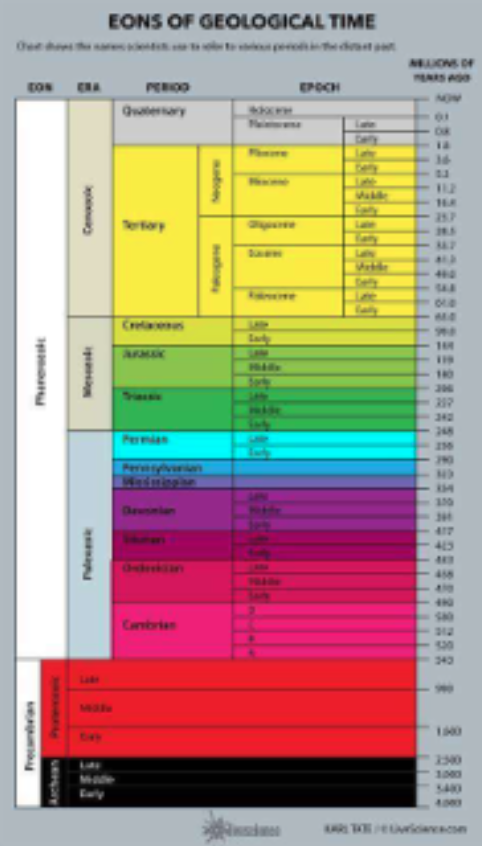
Fossils frame _______: standard time scale that divides Earth’s history into 4 eons and additional subdivisions
_________: layered rocks that form when certain prokaryotes bind thin films of sediment together
earliest evidence of life (3.5 bya)
radiometric dating
half-life
geologic record
stromatolites
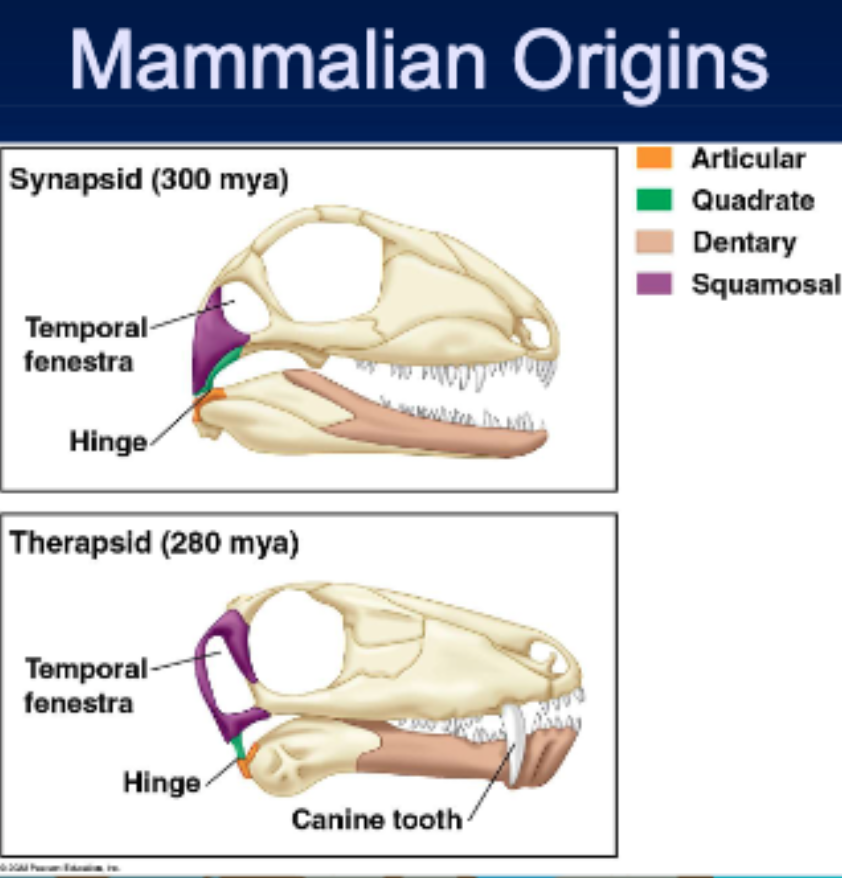
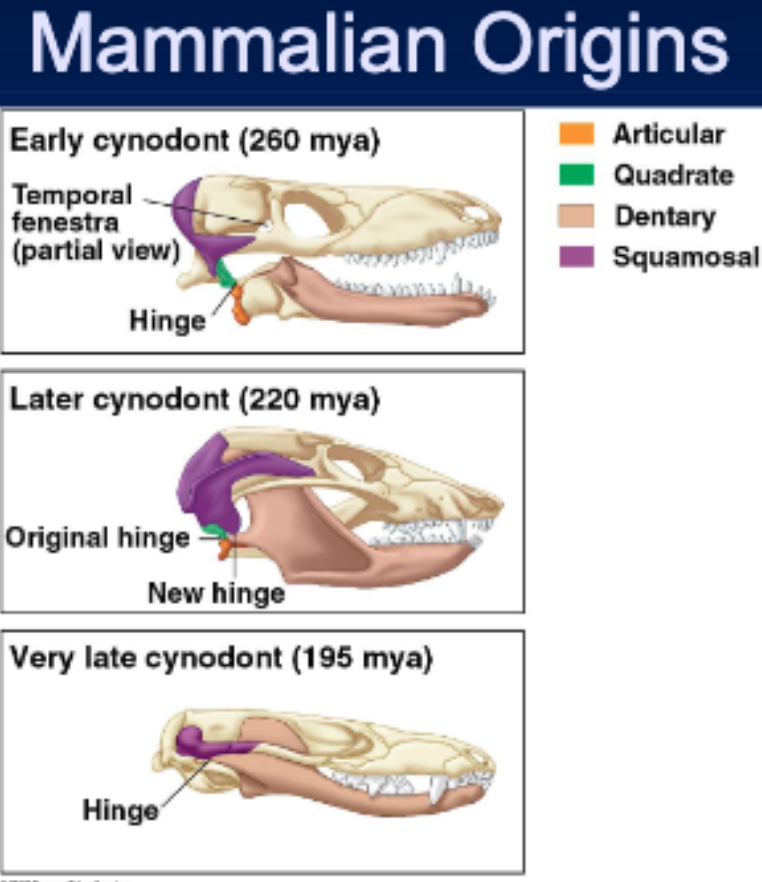
Fossils can provide details about origins of ______ organisms
new
ex. origin of mammals
Rise and fall of groups of organisms
Life on earth filled with rise and fall of groups of organisms
_________ originated, flourished, and then declined as oxygen content of atmosphere rose
first tetrapod emerged from sea, giving rise to multiple groups of organisms
______ dominated terrestrial environment for 100 million years until other tetrapods replaced them as dominant vertebrates
anaerobic prokaryotes
amphibians
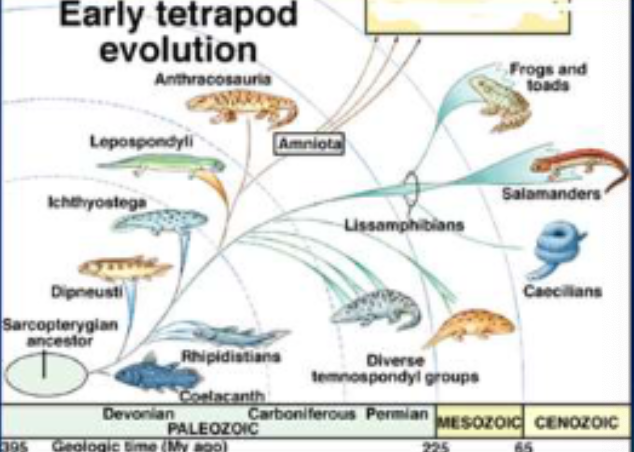
rise and fall of organisms is related to speciation and extinction rates of its member species
occurs when more new species produced than are lost to extinction
Plate tectonics is a scientific theory that explains how major landforms created as result of Earth’s subterranean movements.
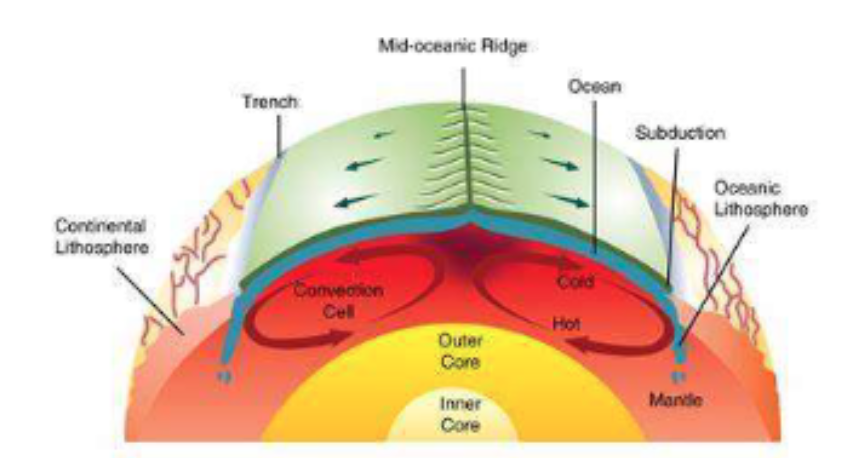
Plate tectonics explains “HOW” behind continental drift theory
main features of plate tectonics:
Earth’s surface covered by series of crustal plates
ocean floors constantly moving; spreading in center and sinking at edges and being regenerated
convection currents beneath plates assist movement
heat from mantle drives these currents
Speciation and Extinction Rates
consequences of _______:
alters habitat in which organisms live
climate change resulting from continents changing locations
promotes allopatric speciation on very large scale
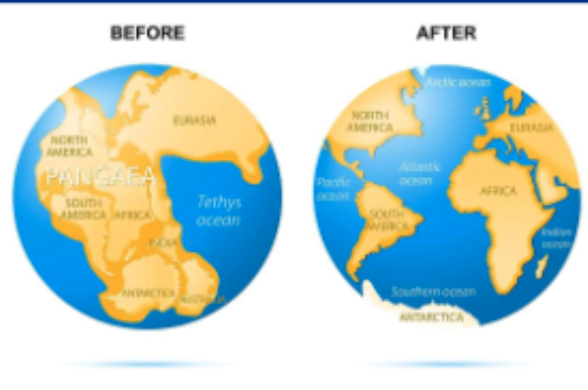
continental drift
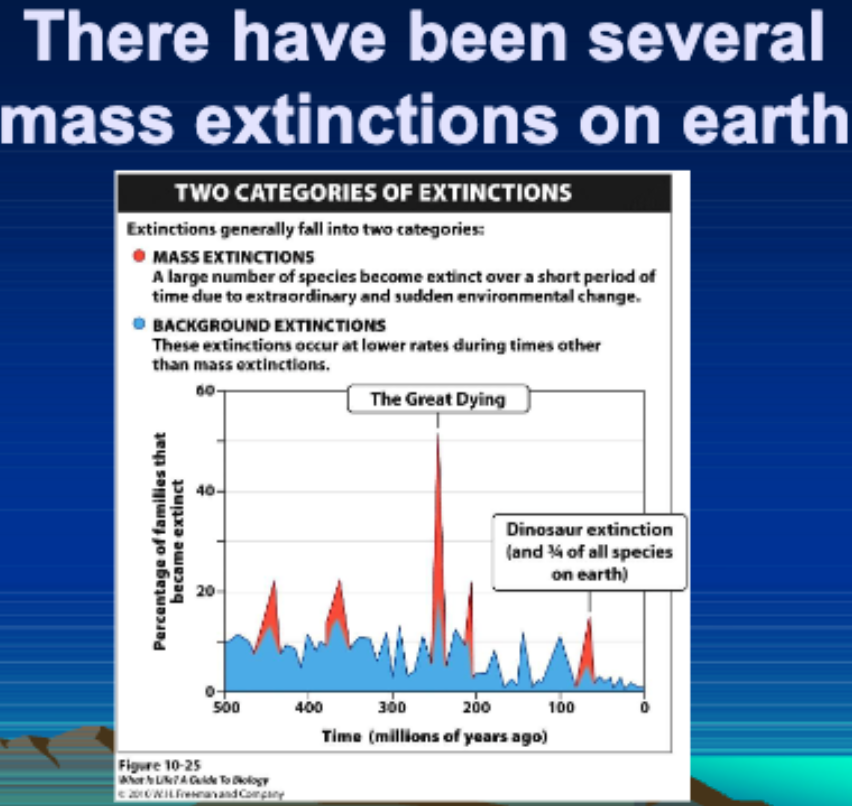
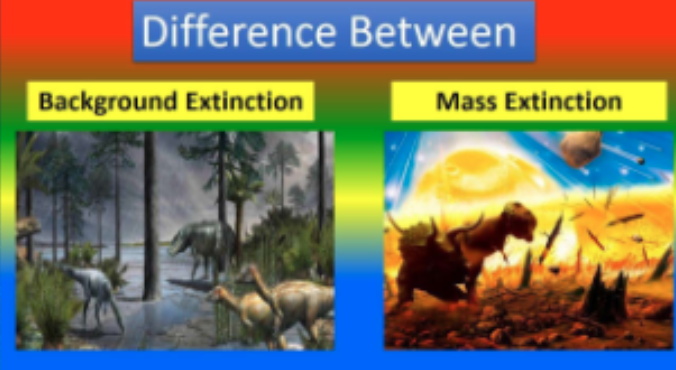
Background and Mass Extinctions have different causes
mass extinctions due to extraordinary and sudden changes to environment
background extinctions occur mostly as result of natural selection
6th mass extinction?
consequences of mass extinctions?
reduce ecological communities to almost nothing
altering ecological communities by changing types of organisms residing there
Are we in midst of 6th mass extinction?
how will we decide?
what evidence do we have?
over last 500 million years, extinction rates have tended to increase when global temperatures were high
Adaptive radiation
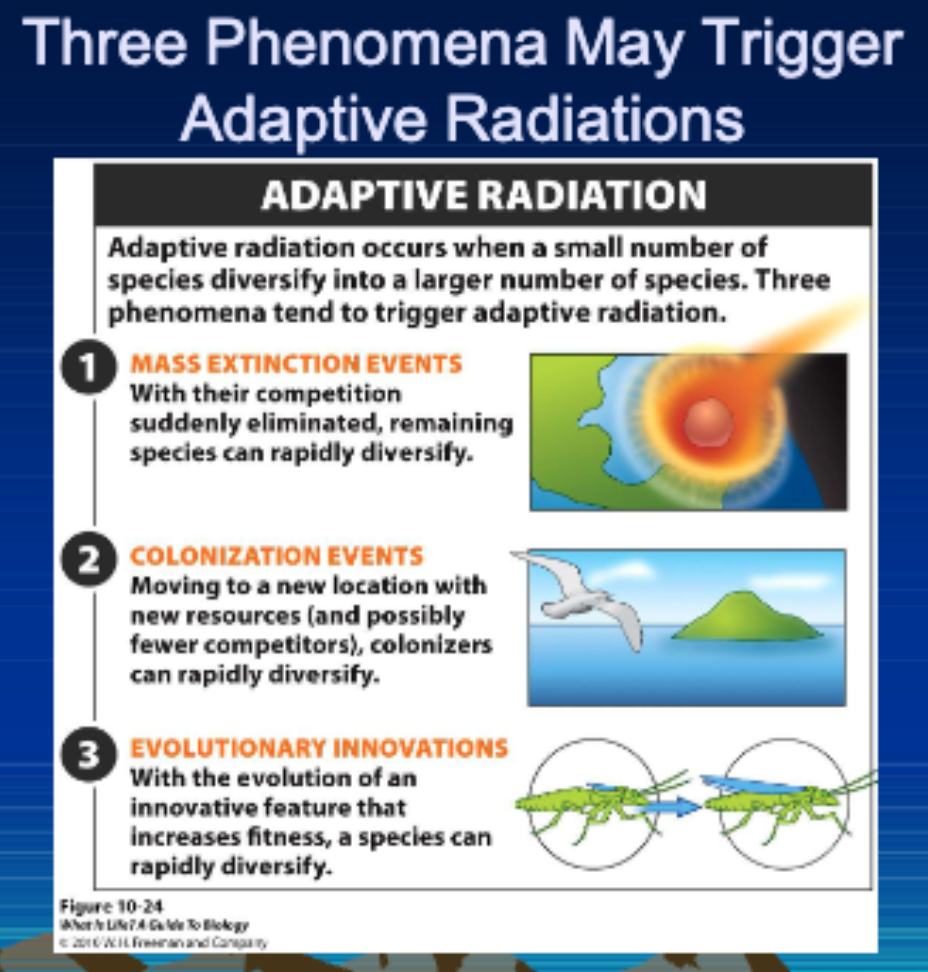
process in which organisms diversify rapidly from ancestral species into new forms, particularly when change in environment makes new resources available, alters biotic interactions, or opens new niches
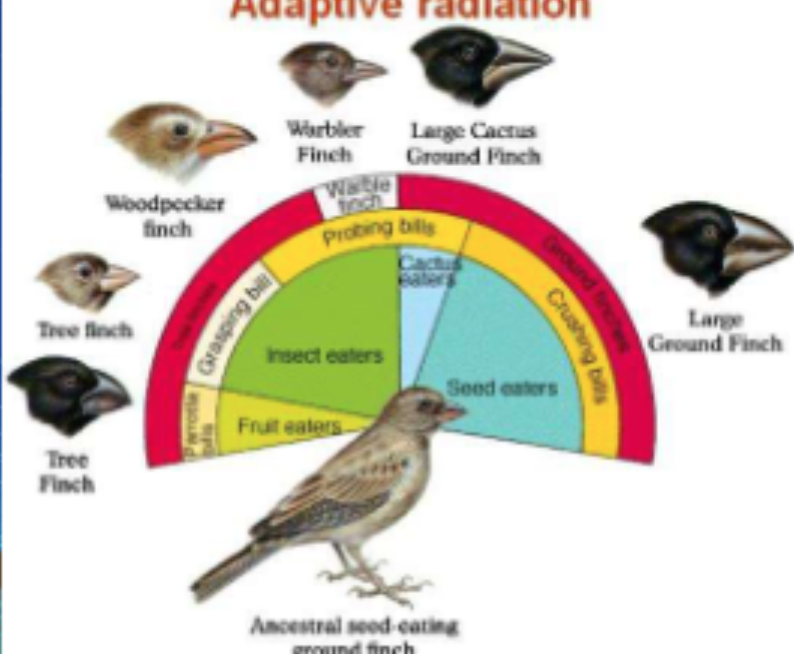
_______ radiations:
mammals undergo AR after extinction of terrestrial dinosaurs 66 mya
with disappearance of dinosaurs, mammals expanded in diversity and size, filling ecological roles once occupied by terrestrial dinosaurs
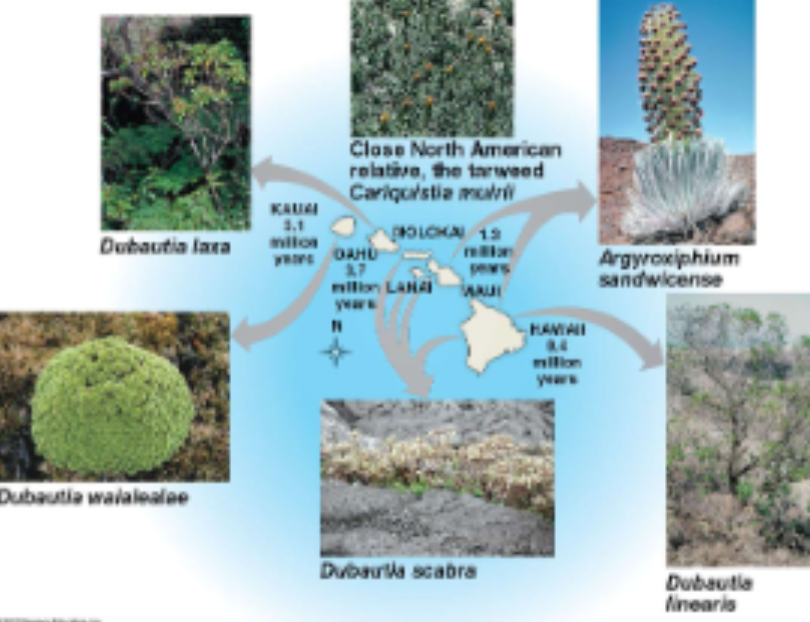
______ radiations: Hawaiian islands
worldwide adaptive radiations
Regional adaptive radiations
Genetic effects
major changes in body form can result from changes in sequences and regulation of developmental genes
evo-devo: research at interface of evolutionary biology and developmental biology
examines how slight genetic differences can produce major morphological differences between species
Genetic mechanisms of change
effects of developmental genes
_________: evolutionary change in rate or timing of developmental events
ex. humans/chimps: genetic mutations in humans slowed growth of jaw relative to other parts of skull
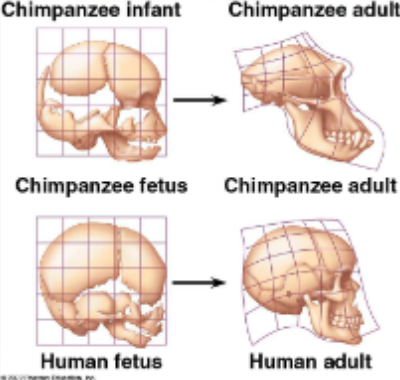
changes in rate and timing
________: condition where sexually mature stage of species may retain body features that were juvenile structures in ancestral species
usually occurs if development of reproductive organs accelerate compared to that of other organs
changes in spatial pattern:
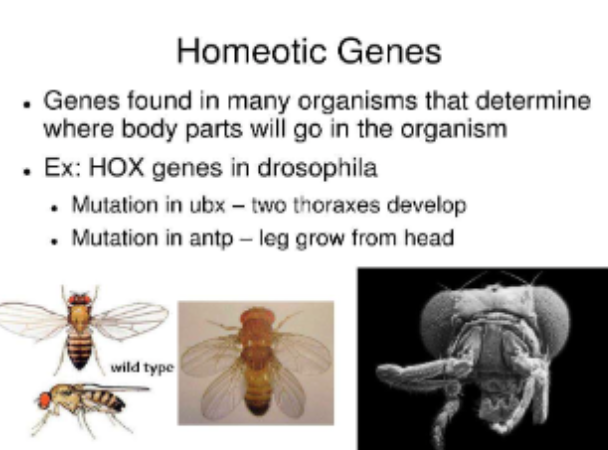
_________: genes that control pattern of body formation during early embryonic development of organisms
heterochrony
paedomorphosis
homeotic genes
Evolution is not goal oriented!
evolutionary trends: does not imply that there is some intrinsic drive toward particular phenotype