Introduction to the Central Nervous System pt.1
 Call Kai
 Learn
Learn Practice Test
 Spaced Repetition
 Match
Match Flashcards
 Knowt Play
1/54

There's no tags or description
Looks like no tags are added yet.
Name | Mastery | Learn | Test | Matching | Spaced | Call with Kai | Chat |
|---|
No analytics yet
Send a link to your students to track their progress
55 Terms
🧠Central Nervous System (CNS)
What is the CNS?
Think of the CNS as the body's control center .
"CNS = Command and Navigation Station"
It controls and coordinates everything your body does, such as:
Thinking
Moving
Feeling
Breathing
Learning
🧠 + 🦴 What makes up the CNS?
The CNS has 2 main parts :
1. Brain 🧠
The boss of the body.
2. Spinal Cord 🦴
The body's information highway.
"Brain is the boss, spinal cord delivers the orders."
Central Nervous System (CNS)
⚡ Nerve Pathways vs more
⚡ Nerve Pathways
Nerve pathways are like roads or highways that carry messages.
They connect different parts of the brain and body so information can travel quickly.
Example:
Touch a hot stove 🔥
Message travels through nerve pathways
Brain says "OUCH!"
Hand pulls away
"Nerve pathways = Body highways."
🔗 Synapses
A synapse is a tiny gap between nerve cells (neurons).
Messages can't jump the gap by themselves.
Two islands with a small bridge between them.
"Synapse = Small Space Sending Signals."
🧪 Neurotransmitters
Neurotransmitters are chemical messengers.
They carry messages across the synapse from one neuron to another.
Without neurotransmitters, the message stops.
"Neurotransmitters = Tiny Text Messengers."
Example:
Neuron A ➡ Neurotransmitter ➡ Synapse ➡ Neuron B
🧠Central Nervous System (CNS)
🌟 Put It All Together
Imagine you touch something hot:
Nerves detect heat 🔥
Message travels on nerve pathways
Reaches the spinal cord
Goes to the brain
Brain decides: "Move your hand!"
Message travels back through nerve pathways
Neurotransmitters carry the message across synapses
Hand moves away
Pathways carry, Synapses separate, Neurotransmitters deliver!
Term | Easy Meaning | Catchy Phrase |
|---|---|---|
CNS | Body's control center | Command and Navigation Station |
Brain | Main boss | Brain is the boss |
Spinal Cord | Message highway | Delivers the orders |
Nerve Pathways | Routes for messages | Body highways |
Synapse | Tiny gap between neurons | Small Space Sending Signals |
Neurotransmitters | Chemical messengers | Tiny Text Messengers |
🧠Central Nervous System (CNS)
🌟 Put It All Together = 2
CNS = Brain + Spinal Cord
Nerve pathways = highways
Synapses = gaps
Neurotransmitters = messengers
📌 Ultimate Catchy Phrase:
"The Brain is the Boss, the Spinal Cord is the Highway, Nerve Pathways are the Roads, Synapses are the Gaps, and Neurotransmitters Deliver the Mail!" 🧠📨⚡
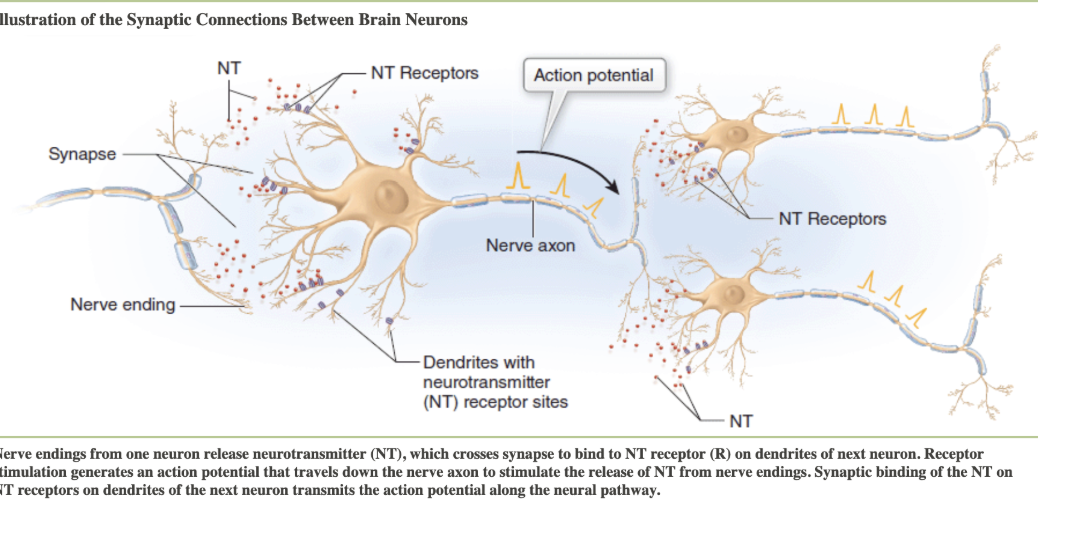
🧠The Story of Synaptic Connections
Think of neurons like people passing a note down a line.
1-3
Step 1: A neuron gets a message 📩
The first neuron receives information.
In the picture, the big star-shaped cell is a neuron .
Step 2: The message travels down the axon ⚡
The message moves down the long tail called the axon .
The yellow spikes labeled Action Potential are the electrical signal.
"Axon = Action highway."
Step 3: The message reaches the nerve ending 🏁
At the end of the axon, the electrical signal can't jump directly to the next neuron.
There's a tiny gap.
This gap is called a synapse .
📌 Memory Trick:
"Synapse = Small Space."
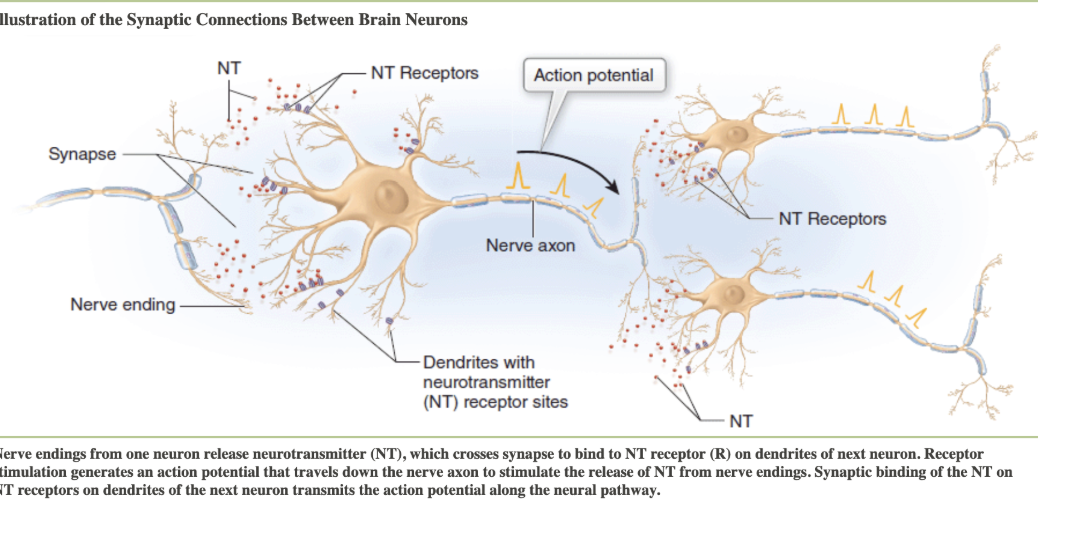
🧠The Story of Synaptic Connections
Think of neurons like people passing a note down a line.
4-7
Step 4: Neurotransmitters are released 🧪
To cross the gap, the neuron releases chemicals called neurotransmitters (NT).
The red dots in the picture are neurotransmitters.
📌 Memory Trick:
"NT = Neuron Text Messages."
Step 5: Neurotransmitters cross the synapse 🚶
The neurotransmitters float across the tiny gap.
Think of them as little mail carriers.
"Neurotransmitters deliver the mail."
Step 6: They attach to receivers 🔑
On the next neuron are receptors .
The neurotransmitters fit into receptors like:
🔑 Key → Lock
NT = Key
Receiver = Lock
Step 7: A new electrical signal starts ⚡
Once enough neurotransmitters bind to receptors, the next neuron starts its own action potential.
Now the message continues.
📌 Memory Trick:
"Key fits lock → Message unlocks."
Electrical signal → Axon → Synapse → Neurotransmitter → Receptor → New electrical signal
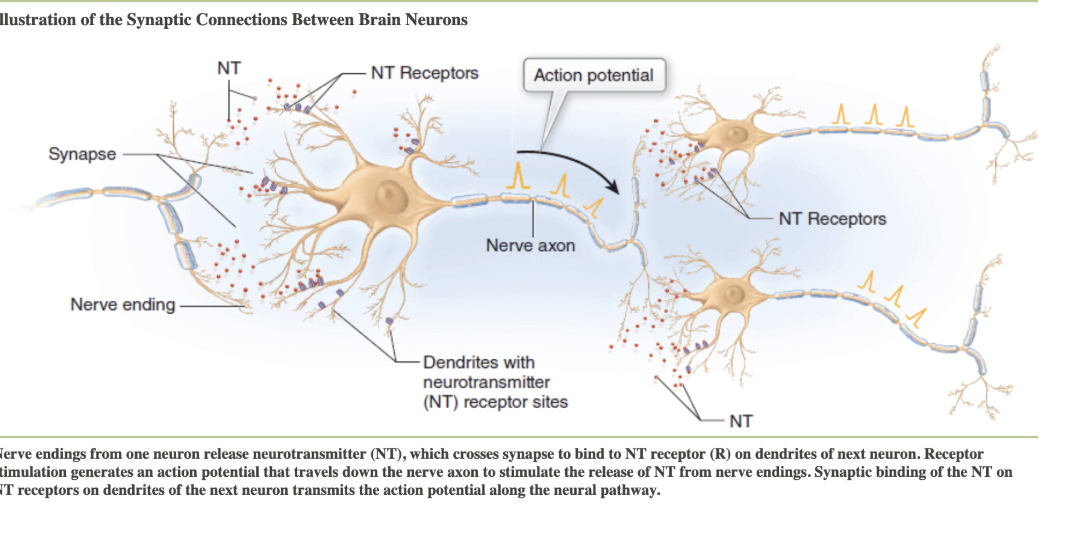
Synaptic Connections
full easy story
Neuron 1
↓
Action Potential ⚡
↓
Axon
↓
Nerve Ending
↓
Synapse (gap)
↓
Neurotransmitters 🧪
↓
Receptors 🔑
↓
Neuron 2
↓
New Action Potential ⚡
Synaptic Connection: The process by which one neuron communicates with another neuron by releasing neurotransmitters across a synapse. The neurotransmitters bind to receptors on the next neuron and trigger a new electrical signal.
🌟 Ultimate Memory Phrase
"Electricity runs, chemicals jump, and the message keeps moving."
Or even shorter:
"Shock → Gap → Chemical → Lock → Shock Again." ⚡➡🧪➡🔑➡⚡
That's literally what the entire picture is showing. 😊
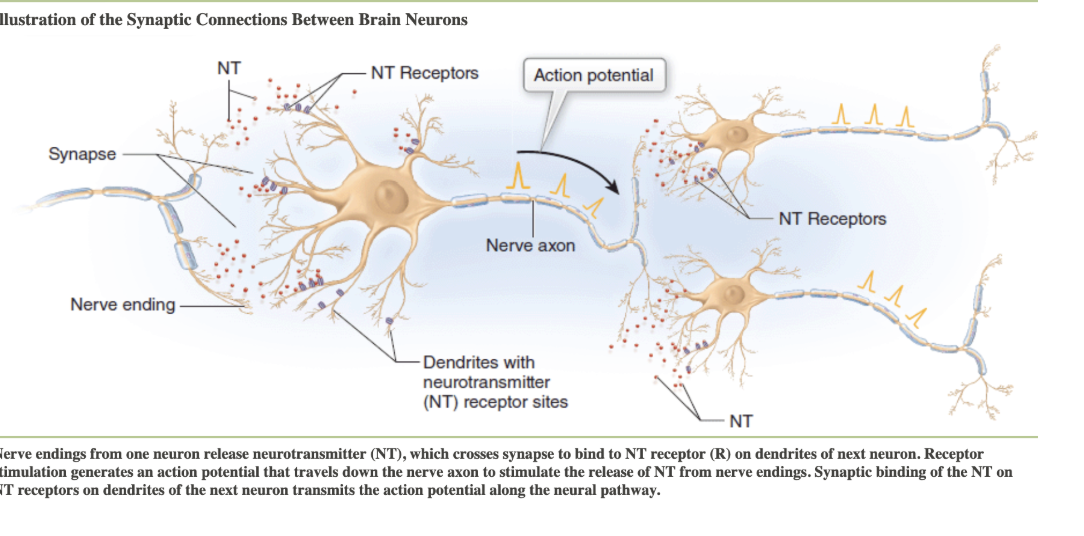
🧠 Neurotransmitters (NT) What are they?
Neurotransmitters are chemical messengers that carry messages from one neuron to another across a synapse.
"Neurotransmitters = Brain Text Messages 📱"
Without neurotransmitters, neurons can't communicate.
🚦 Two Main Types of Neurotransmitters
Think of driving a car.
🟢 Excitatory Neurotransmitters = Gas Pedal
They make neurons MORE likely to fire an action potential.
They speed things up and keep messages moving.
"Excitatory = Excite and Ignite!" 🔥
🔴 Inhibitory Neurotransmitters = Brake Pedal
They make neurons LESS likely to fire.
They calm things down and slow brain activity.
"Inhibitory = Inhibit and Chill." 😴
🧠 Neurotransmitters (NT) What are they?
🟢 Excitatory Neurotransmitters
1. Acetylcholine (ACh)
Helps muscles move and helps with learning and memory.
"ACh = Action Chemical"
Think:
ACh → Action → Movement
2. Norepinephrine (NE)
Helps with alertness, focus, attention, and stress response.
"NE = Notice Everything"
Think:
NE → Alert → Awake
3. Serotonin (5HT)
Helps regulate mood, sleep, and emotions.
"Serotonin = Smile Chemical" 😊
Think: 5HT → Happy → Balanced Mood
4. Dopamine (DA)
Can be excitatory OR inhibitory depending on:
Where is it in the brain?
Which receiver it attaches to
"Dopamine Depends."
The word to remember is:
👉 Dopamine = Dependent
🧠 Neurotransmitters (NT) What are they?
🔴 Inhibitory Neurotransmitters
1. GABA
The brain's main calming neurotransmitter.
Reduces brain activity.
Helps relaxation and sleep.
📌 Memory Trick:
"GABA = Go And Be Asleep" 😴
Think: GABA → Calm → Sleep
2. Dopamine (DA)
Again, dopamine can sometimes slow things down depending on the location and receptor.
📌 Memory Trick:
"Dopamine Depends."
⚖ Balance Is Important
Your brain needs:
✅ Some excitement
And
✅ Some calming
Too much excitement = overstimulation
Too much inhibition = slowing excessively
"Brain balance = Gas and Brakes working together."
Neurotransmitters (NT)
🔄How Does the Brain Stop Messages?
After neurotransmitters send a message, they must be removed.
Otherwise the message would never stop.
The brain does this in 2 ways:
1. Reuptake ♻
The neuron reabsorbs the neurotransmitter.
Think of it as:
📌 "Send it, then take it back."
2. Metabolism 🧹
Enzymes break down the neurotransmitter.
Think of it as:
📌 "Clean-up crew."
Balance-maintained by reuptake system or inactivated by metabolism
Neurotransmitter | Main Job | Easy Memory |
|---|---|---|
ACh | Movement, memory | Action Chemical |
NE | Alertness, focus | Notice Everything |
5HT (Serotonin) | Mood, sleep | Smile Chemical 😊 |
DA (Dopamine) | Reward, motivation | Depends on location |
GABA | Calming, sleep | Go And Be Asleep 😴 |
Neurotransmitters = Chemical messengers.
🟢 Excitatory = Gas pedal
ACh
NE
5HT
DA (sometimes)
🔴 Inhibitory = Brake pedal
GABA
DA (sometimes)
⚖ Balance is maintained by:
Reuptake ♻
Metabolism 🧹
🌟 Ultimate Memory Sentence
"ACh acts, NE notices, Serotonin smiles, Dopamine depends, and GABA goes to sleep." 🧠✨
Neurotransmitters (NT)
excitory vs inhibitory
The neurotransmitter itself is not "released in excitatory" or "released in inhibitory." Instead:
👉 A neuron releases a neurotransmitter into the synapse.
👉 Then that neurotransmitter affects the next neuron.
👉 The effect can be either excitatory (gas pedal) or inhibitory (brake pedal).
Think of it like this:
Neuron 1
↓ releases NT
Neurotransmitter
↓
Neuron 2
↓
Either:
Excites it 🟢
or
Inhibits it 🔴
Example 1: Excitatory
Neuron releases ACh (Acetylcholine)
↓
ACh binds to receptors
↓
Next neuron fires an action potential
↓
Message keeps going
🟢 Excitatory = "GO!"
Example 2: Inhibitory
Neuron releases GABA
↓
GABA binds to receptors
↓
Next neuron becomes less likely to fire
↓
Message slows down
🔴 Inhibitory = "STOP" or "SLOW DOWN!"
Why is Dopamine in BOTH lists?
Neurotransmitters (NT)
Dopamine is special.
Depending on:
where it is in the brain
what receptor it binds to
It can either:
🟢 Excite a neuron
OR
🔴 Inhibit a neuron
That's why your notes say:
"DA (Dopamine) depends on location in the brain and receptor it binds to."
📌 Memory Trick:
"Dopamine = Depends."
Neurotransmitter | Usually Acts Like |
|---|---|
ACh | 🟢 Gas pedal |
NE | 🟢 Gas pedal |
Serotonin (5HT) | 🟢 Usually gas pedal in your notes |
GABA | 🔴 Brake pedal |
Dopamine | 🟢 or 🔴 Depends |
Neurotransmitters are chemicals released into the synapse.
Some neurotransmitters make the next neuron:
more likely to fire → Excitatory 🟢
less likely to fire → Inhibitory 🔴
"Neurotransmitters cross the synapse. Excitatory says GO. Inhibitory says SLOW." 🧠⚡🚦
🧠 The Brain
The brain has many parts, but right now you're learning about the Cerebrum .
📌 Catchy Phrase:
"Cerebrum = Makes You, You."
The cerebrum is the largest part of the brain and is responsible for:
Thinking, Learning, Memory
🧠 Cerebrum = Two Halves
The cerebrum is divided into:
Left Hemisphere Right Hemisphere
Think of them as two teammates working together.
"Two halves, one brain."
The Cerebrum Has 2 Main Layers
Think of a peach 🍑
The outside and inside are different.
Outside = Cortex
Inside = Medulla/Basal Ganglia
Brain
A. Cerebral Cortex
This is the outer layer .
Think of it as the brain's CEO Office .
📌 Catchy Phrase:
"Cortex = Conscious Control Center."
What is it made of?
Gray Matter
Contains lots of neuron cell bodies.
Gray Matter = Thinker Matter
What does the Cortex do?
This is where your conscious thinking happens.
Examples:
👀 Vision,👂 Hearing, 🗣 Speech
📚 Learning, 🧠 Memory🤔 Problem Solving
✋ Voluntary Movements
📌 Easy Memory Phrase:
"The Cortex helps you Think, Talk, Learn, and Move."
Cortex = The Smart Part
When you:
Solve a math problem
Read a book
Remember a birthday
Decide what to eat
You're using the cerebral cortex .
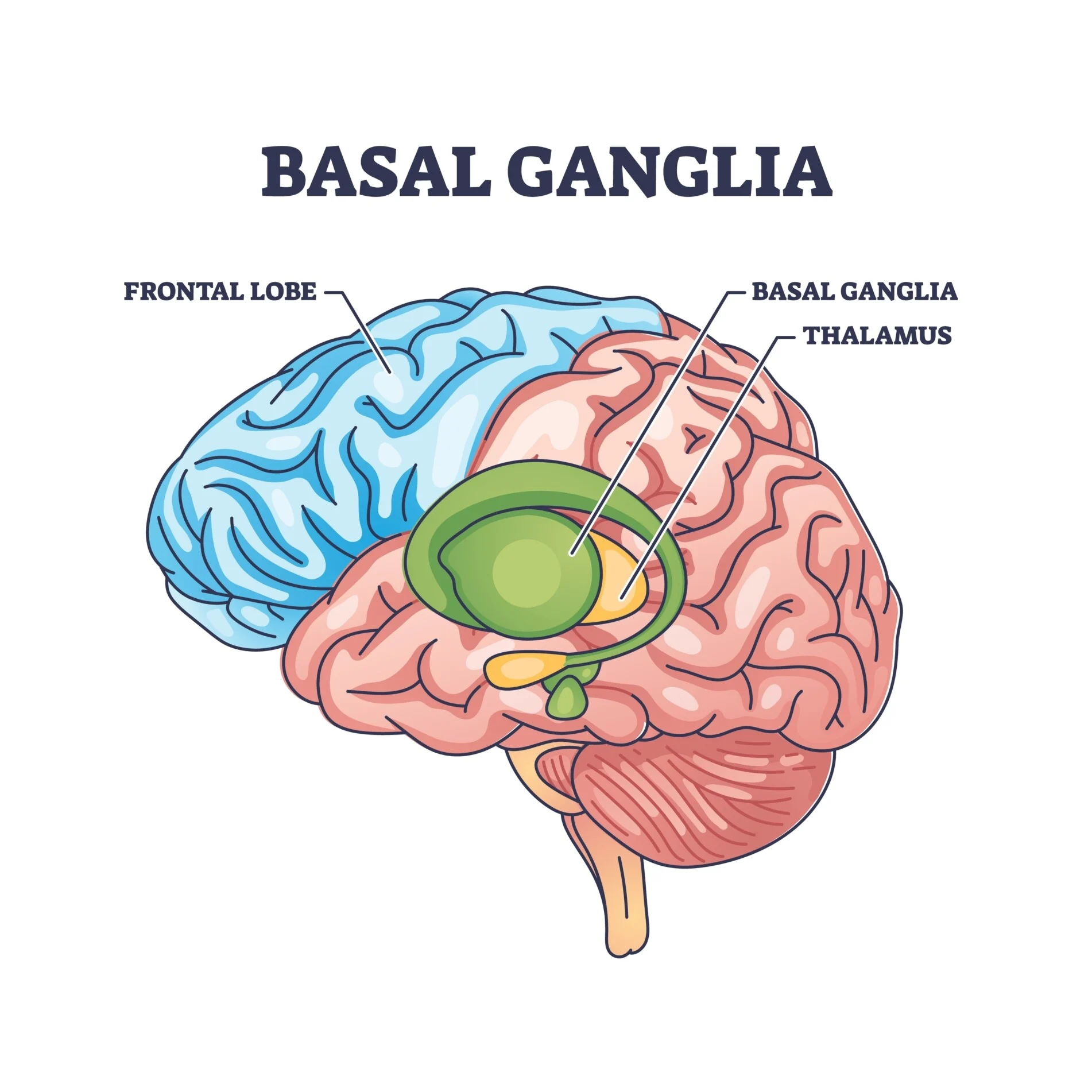
Brain
B. Cerebral Medulla (Basal Ganglia)
This is the inner layer .
Think of it as the brain's movement manager .
📌 Catchy Phrase:
"Basal Ganglia = Motion Manager."
What is it made of?
White Matter
Contains nerve fibers (axons).
📌 Memory:
White Matter = Wiring Matter
Think of electrical wires carrying messages.
What does it do?
It helps:
✅ Control movement
✅ Coordinate movement
✅ Make smooth movements
Example
Imagine picking up a cup.
The cortex says:
🧠 "Pick up the cup."
The basal ganglia says:
🧠 "Let's make that movement smooth and coordinated."
What is EPS?
EPS = Extrapyramidal System
Big scary name. Don't panic.
For now, think:
📌EPS = Smooth Movement System
It helps:
Posture, Balance
Coordination, Smooth muscle movement
Easy Story
Imagine you're drinking water.
Cortex
Says:
🧠 "I want water."
Basal Ganglion
Says:
🧠 "I'll help your arm move smoothly."
Muscles
Move the cup to your mouth.
Brain
🎯 15-Second Exam Review
Part | Location | Made Of | Job |
|---|---|---|---|
Cerebrum | Largest part of brain | — | Thinking and conscious activities |
Cerebral Cortex | Outside | Gray Matter | Thinking, learning, memory, speech, vision, voluntary movement |
Basal Ganglia (Medulla) | Inside | White Matter | Movement control and coordination |
EPS | Movement system | — | Smooth coordinated movements |
Cerebrum = Largest part of brain.
Two hemispheres = Right and Left.
Cerebral Cortex (outside, gray matter)
→ Think, learn, remember, speak, see, move.
Basal Ganglia (inside, white matter)
→ Coordinates and regulates movement.
EPS
→ Helps movements stay smooth.
Ultimate Memory Phrase
🧠 "Cortex Thinks, Basal Ganglia Moves."
Cerebrum
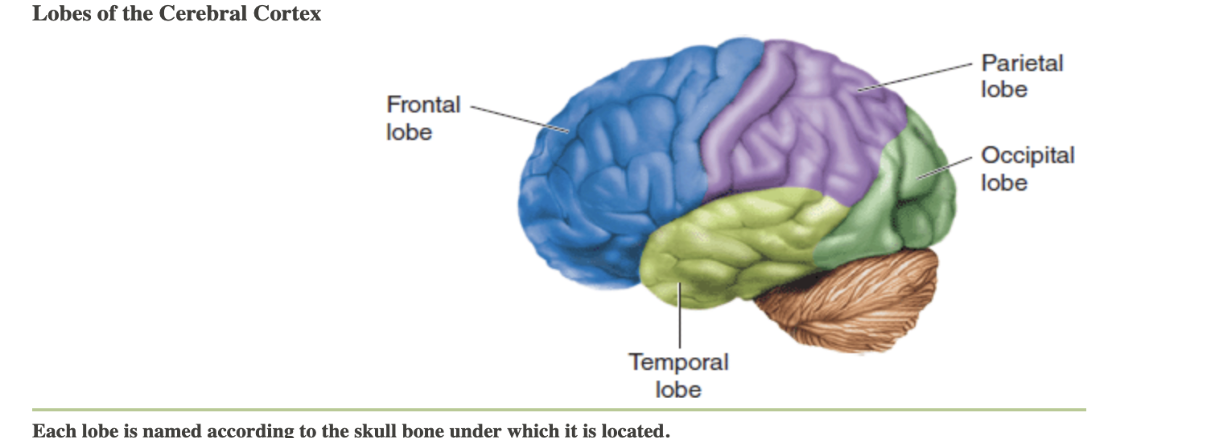
🧠 Brain Parts = Different Jobs
side by side
Part | Job |
|---|---|
Cerebral Cortex | The Thinker 🤔 |
Basal Ganglia | The Movement Manager 🚶 |
Brain Stem | The Life Support Team ❤ |
Cerebellum | The Balance Coach ⚖ |
Thalamus | The Mailroom 📬 |
Hypothalamus | The Body Thermostat 🌡 |
🧠 Brain Parts = Different Jobs
2. Brain Stem =pons and medulla oblongata
Brain Stem =unconscious control
The Brain Stem controls things you don't have to think about.
"Brain Stem = Keeps You Alive Automatically."
Examples:
Breathing
Heartbeat
Blood pressure
You don't have to tell your heart to beat.
The brainstem handles it.
1. Pons
The Pons helps with:
😴 Sleep
🫁 Breathing
📨 Passing messages around the brain
Think of it as a communication bridge.
📌 Catchy Phrase:
"Pons = Passes messages and Promotes sleep."
(Pons = Pass + Sleep)
2. Medulla Oblongata
This is SUPER IMPORTANT.
The medulla controls life-support functions.
Think: ❤ Heart🫁 Lungs🩸 Blood Pressure
"Medulla = Must Have To Live."
Controls:
❤ Cardiac Center
→ Heart rate
🩸 Vasomotor Center
→ Blood pressure
🫁 Respiratory Center
→ Breathing
Also controls reflexes:
🤢 Vomiting 😮💨 Coughing😋 Swallowing😖 Gagging
"Medulla manages life and reflects."
. Cerebellum
Brain
Think of the cerebellum as your balance coach.
📌 Catchy Phrase:
"Cerebellum = Balance Bellum."
What does it do?
🚶 Coordinates movement
⚖ Maintains balance
🧍 Maintains posture
Example
The cortex says:
🧠 "Walk across the room."
The cerebellum says:
🧠 "Don't fall over."
coordinates body movement, posture, maintains equilibrium
Brain
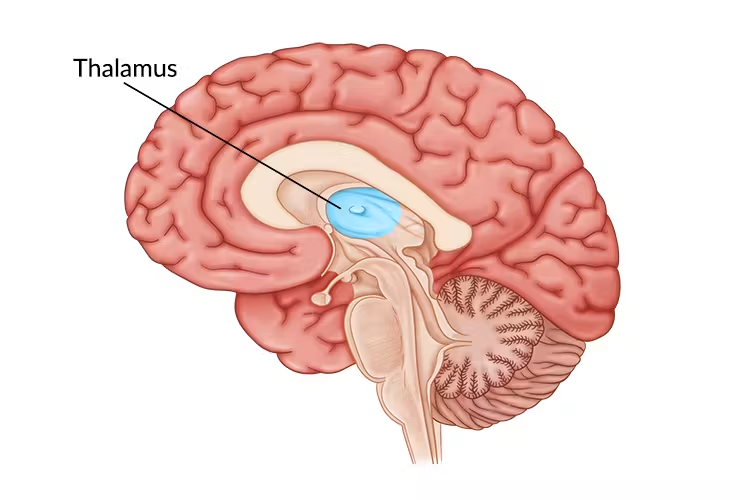
4. Thalamus
The thalamus is the brain's mailroom.
📌 Catchy Phrase:
"Thalamus = The Mail-us." 📬
What does it do?
Receives information about:
🔥 Pain
🌡 Temperature
✋ Touch
Then sends that information to the cerebral cortex.
Example
You touch a hot stove.
✋ Touch receiver
↓
Thalamus
↓
Cortex
↓
"Ouch!"
It also helps with movement.
It receives movement information from:
Cerebellum
Basal Ganglion
Then it passes it on.
"Thalamus = Relay Station."
pain, temp, touch, receives info from peripheral sensory receptors
some motor control, integrates motor info from cerebellum and basal ganglia
relay station-sending info to cerebral cortex
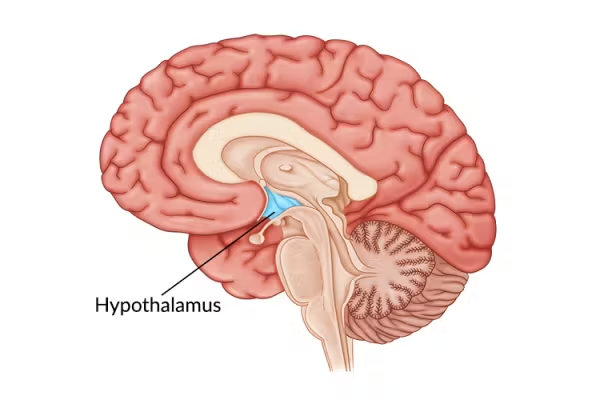
5. Hypothalamus
Brain
The hypothalamus is the body's control center for basic needs.
"Hypothalamus = Homeostasis Boss."
(Homeostasis = keeping the body balanced)
Controls:
🌡 Body temperature
🍔 Hunger
💧 Water balance
😴 Sleep
❤ Emotions
🔥 Sexual desire
⚙ Autonomic nervous system
Example
You're hot.
Hypothalamus says:
🥵 "Turn on sweating."
Example
You're thirsty.
Hypothalamus says:
💧 "Go drink water."\
Example
You're hungry.
Hypothalamus says:
🍕 "Find food."
temp, appetite, sleep, sexual desire, water balance, autonomic nervous system control, emotional and behavioral responses
Brain
summary side by side
Part | Easy Job | Memory Trick |
|---|---|---|
Brain Stem | Automatic life functions | Keeps you alive automatically |
Pons | Sleep and breathing | Passes messages, promotes sleep |
Medulla | Heart, BP, breathing | Must Have To Live |
Cerebellum | Balance and coordination | Don't fall over |
Thalamus | Relay station | Brain Mailroom 📬 |
Hypothalamus | Body balance | Homeostasis Boss 🌡 |
🧠 Pons → Sleep + Breathing
❤ Medulla → Heart rate + BP + Breathing
⚖ Cerebellum → Balance + Coordination
📬 Thalamus → Relay station for sensory information
🌡 Hypothalamus → Hunger, thirst, temperature, sleep, emotions
Imagine you're walking on a hot day:
🌡 Hypothalamus notices you're hot and thirsty.
📬 Thalamus sends touch and temperature information to the brain.
⚖ Cerebellum keeps you balanced while walking.
❤ Medulla keeps your heart beating and lungs breathing.
😴 Pons helps regulate breathing and sleep later that night.
Thinker = Cortex
Mover = Basal Ganglia
Balancer = Cerebellum
Mailroom = Thalamus
Body Boss = Hypothalamus
Life Support = Brain Stem/Medulla 🧠✨
🧠 Spinal Cord
The spinal cord is like a superhighway between your body and your brain.
"Spinal Cord = Brain's Highway." 🛣
It is made of lots of nerve axons (wires) that carry messages.
Two Directions of Traffic
Think of a highway with cars going:
⬆ To the brain
⬇ From the brain
Collection of nerve axons
Travel to (sensory info) and from (motor impulses) the brain
Sensory info-afferent
Motor impulses-efferent
🧠 Spinal Cord
1. Afferent = Arrives at the Brain
Sensory information travels TO the brain.
Examples:
Touch ✋
Pain 😖
Temperature 🌡
Pressure
If you touch something hot:
🔥 Hand
⬆ Spinal Cord
⬆ Brain
"Ouch!"
This is different .
Afferent = Arrives at the brain
A = Arrives
🧠 Spinal Cord
2. Efferent = Exits the Brain
Motor commands travel FROM the brain to the body.
Examples:
Move your arm 💪
Walk 🚶
Pick up a pencil ✏
Brain says:
🧠 "Move your hand."
⬇ Spinal Cord
⬇ Muscles
Hand moves.
This is different .
📌 Memory Trick:
Efferent = Exits the brain
E = Exits
Easy Story
You touch a hot stove.
Step 1: Afferent (Sensory)
🔥 Hot stove
⬆ Message trips to brain
🧠 "That's hot!"
Step 2: Efferent (Motor)
🧠 Brain sends command
⬇ Message travels to muscles
✋ Hand pulls away
Spinal Cord
afferent efferent side by side
Word | Meaning | Direction | Memory Trick |
|---|---|---|---|
Afferent | Sensory | Body ➜ Brain | Arrives |
Efferent | Motor | Brain ➜ Body | Exits |
When you see:
👀 Sensory = Afferent
💪 Motor = Efferent
Remember:
A = ArrivesE = Exits
🧠 "Afferent Arrives, Efferent Exits."
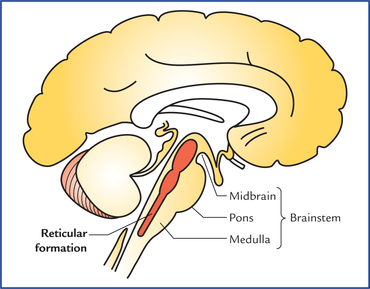
CNS
🧠 Reticular Formation
Think of the reticular formation as your brain's:
🚨 Alarm System
Its job is to control:
Alertness
Wakefulness
Attention
"Reticular Formation = Wake-Up Center"
What is it?
It's a network of nerve fibers that runs through the:
🧠 Brain
and
🦴 Spinal Cord
Think of it like electrical wiring throughout the CNS.
Its main job:
👉 Decide whether you should be awake or asleep .
It has two teams
Think of a light switch.
💡 ON
or
💡 OFF
Network of nerve fibers travelling through brain and spinal cord
Regulates alertness and wakefulness
🧠 Reticular Formation
🟢 Excitatory Fibers = ON Switch
These fibers wake you up and make you more alert.
This is called the:
Reticular Activating System (RAS)
📌 RAS = Rise And Shine! ☀
What activates the RAS?
🔊 Loud noise
💡 Bright light
⚠ Danger
😱 Something unexpected
Example
You're sleeping.
Suddenly:
🚨 FIRE ALARM!
The RAS says:
🧠 "WAKE UP!!"
Your alertness increases.
🟢 RAS = Rise And Shine
🟢 Excitatory = Excites and Ignites
🧠 Reticular Formation
🔴 Inhibitory Fibers = OFF Switch
These fibers calm the brain down.
They decrease alertness.
They help you:
😴 Rest
😴 Relax
😴 Sleep
Example
You're in a quiet room.
No noise.
No bright lights.
No danger.
The inhibitory fibers become more active.
Brain says:
🧠 "Everything is safe. Time to rest."
🔴 Inhibitory = Inhibit and Chill
😴 Promotes Sleep
Reticular formation
CNS
Super Easy Story
Imagine you're asleep.
😴 Sleeping peacefully.
Suddenly:
🔊 BOOM!
The RAS (excitatory fibers) turns ON.
🧠 "Wake up!"
You become alert.
Later:
Everything is quiet.
🌙 Dark room
😌 Safe environment
The inhibitory fibers turn ON.
🧠 "Go back to sleep."
You relax.
Part | What It Does | Memory Trick |
|---|---|---|
Reticular Formation | Controls wakefulness | Wake-Up Center |
Excitatory Fibers (RAS) | Increase alertness | Rise And Shine ☀ |
Inhibitory Fibers | Decrease alertness | Rest And Sleep 😴 |
🎯 10-Second Exam Review
Reticular Formation = controls alertness.
🟢 RAS (Excitatory fibers)
Noise 🔊
Light 💡
Danger ⚠
→ Wake up
→ More alert
🔴 Inhibitory fibers
Quiet environment 🌙
→ Less alert
→ Sleep/rest
🌟 Ultimate Memory Sentence
"RAS wakes you up, inhibitory fibers tuck you in." 🧠☀😴
CNS
🧠 Limbic System
The limbic system is a group of neurons and pathways that work together.
Don't worry about "collections of neurons and brain pathways."
Your teacher really wants you to know:
📌 Limbic System = Emotions + Feelings + Motivation
The limbic system helps decide:
😊 What you like
😡 What makes you angry
😨 What scares you
❤ Who you're attracted to
🎉 What makes you feel rewarded
🧠 "Limbic System = The Emotional Brain"
If the cortex is the thinking brain 🤔
then the limbic system is the feeling brain ❤
What Does It Control?
😃 Reward
Something feels good.
Example:
Eating your favorite food 🍕
Winning a game 🏆
Getting a compliment 😊
Your brain says:
🧠 "That felt good!"
😡 Anger and Rage
Someone cuts in front of you in line.
Your limbic system helps create the emotional response.
😨 Fear and Anxiety
You hear a strange noise at night.
Your limbic system helps create feelings of fear or anxiety.
❤ Sexual Behavior
The limbic system is involved in attraction and sexual feelings.
Limbic system
Reward Center vs Punishment / Unpleasant Feelings
Reward Center
The brain has a reward system.
When something feels good:
😊 Pleasure
😊 Gratification
😊 Happiness
The brain says:
"Do that again!"
Example
You eat ice cream.🍦
Feels good.😊
Brain says:
🧠 "Let's remember that."
You're more likely to eat ice cream again.
Punishment / Unpleasant Feelings
When something feels bad:
😖 Pain
😞 Embarrassment
🤢 Feeling sick
The brain says:
"Avoid that."
Example
You touch a hot stove.🔥
OUCH!😖
Brain says:
🧠 "Don't do that again."
Super Easy Way to Think About It
The limbic system is constantly asking:
Did this feel good?
😊 Yes
→ Repeat it
Did this feel BAD?
😖 Yes
→ Avoid it
Real-Life Examples Good Experience
🍕 Pizza tastes amazing
↓
😊 Reward center activated
↓
"Eat pizza again"
Bad Experience
🔥 Touch hot stove
↓
😖 Pain
↓
"Avoid hot stove"
Super Easy Way to Think About It
side by side
The limbic system is constantly asking:
Limbic System Job | What It Means |
|---|---|
Reward | Feels good |
Punishment | Feels bad |
Fear | Danger response |
Anxiety | Worry response |
Anger | Mad response |
Rage | Extreme anger |
Sexual behavior | Attraction and sexual feelings |
Emotional responses | Creates feelings |
Limbic System = Emotional Brain
Controls:
😊 Reward
😖 Punishment
😨 Fear
😟 Anxiety
😡 Anger
❤ Sexual behavior
"The Limbic System is the brain's Feel-Good or Feel-Bad Judge."
😊 Do you feel good? → Repeat it.
😖 Feeling bad? → Avoid it.
🧠 Mental Health
Mental health deals with conditions that affect:
Thoughts 💭
Feelings ❤
Behaviors 🚶
Examples:
Depression
Anxiety
Bipolar disorder
Schizophrenia
📖 DSM-5
DSM-5 is a big book used by mental health professionals.
It helps doctors:
✅ Diagnose mental disorders
✅ Decide on treatment
Think of it as:
📌 "The Mental Health Diagnosis Guidebook."
DSM-5 = Doctor's Symptom Manual
😔 Stigma
Stigma means negative attitudes or judgment toward people with mental illness.
Example:
Someone says:
❌ "Just get over it."
❌ "You're making it up."
That's a stigma.
📌 Stigma = Shame or Judgment
🤔Why Is Mental Health Hard to Diagnose?
For many physical illnesses, doctors can do tests.
Example:
🩸 Blood test
🩻 X-ray
🧪 Lab test
Mental Health Is Different
Doctors usually can't do a simple blood test and say:
"Yep, you have anxiety."
Instead, they must rely on:
🗣 What the patient says
and
👀 What other people observe
Example
Patient says:
😔 "I've been sad for months."
😴 "I'm sleeping too much."
🍽 "I don't enjoy things anymore."
Doctor uses those symptoms to help make a diagnosis.
👀 Observation Is Important
Sometimes family, friends, or teachers notice changes.
Examples:
Mood changes
Strange behavior
Withdrawal from others
These observations help doctors understand what's happening.
💊Why Is Treatment Challenging?
Mental Health
With some illnesses, there's a clear test and treatment.
Example:
🦠 Infection
↓
Antibiotic
↓
Better
Mental health is often more complicated.
A doctor may need to:
Try a medication
Watch how the patient responds
Adjust the medication if needed
📌 Mental health medications are not "one-size-fits-all."
Different people may respond differently to the same medication.
Mental Health 1
side by side
Term | Easy Meaning |
|---|---|
DSM-5 | Guidebook used to diagnose mental disorders |
Stigma | Shame, judgment, or negative attitudes |
Diagnosis | Based on symptoms and observations |
Challenge | No simple test for many disorders |
Treatment | May take time to find the right medication |
🧠 DSM-5 = Mental health diagnosis guidebook.
😔 Stigma = Negative judgment about mental illness.
👀 Diagnosis is based on:
Patient symptoms
Observations from others
🧪 Mental health is difficult to diagnose because there is often no simple test .
💊 Treatment can be challenging because different people respond differently to medications.
🌟 Ultimate Memory Phrase
"Mental health is diagnosed by symptoms, guided by DSM-5, affected by stigma, and treated through careful observation and medication adjustment." 🧠✨
🧠 Mental illness is very common.
Mental Health 2
1 in 5 adults (about 20%) have a mental illness each year.
That's about 50 million people in the US
1 in 20 adults have a serious mental illness each year.
Serious means it greatly affects daily life.
1 in 6 kids and teens (ages 6–17) experience a mental health disorder each year.
Mental health problems often start young:
50% begin by age 14
75% begin by age 24
🎯 Easy Takeaway
"Mental illness is common, often starts when people are young, and can affect both children and adults."
🌟 Memory Phrase
"1 in 5 adults, 1 in 6 youth, starts early in life." 🧠✨
🧠 Depression (Super Easy Version)
Depression is more than just feeling sad for a day.
It is a mental health condition where a person:
😔 Feels very sad
😕 Loses interest in things they use to enjoy
😴 May have trouble with daily activities (school, work, home)
What's happening?
The brain may have lower levels of certain neurotransmitters :
NE (Norepinephrine) → helps with energy and alertness
5HT (Serotonin) → helps with mood and feelings of well-being
Less NE + Less 5HT = Lower mood and less interest in activities.
Why is it serious?
Some people can feel so overwhelmed and hopeless that they may think about suicide as a way to escape their emotional pain.
🎯 Super Short Summary
Depression = prolonged sadness + loss of interest in things you used to enjoy. It can make daily life difficult and is linked to low levels of serotonin (5HT) and norepinephrine (NE).
"Depression = Sad, No Interest, Low Serotonin & NE." 🧠💙
😔 Symptoms of Depression (Easy Meanings)
🍔 Change in appetite → Eating much more or much less than usual
🌙 Insomnia → Trouble falling asleep or staying asleep
🎉 Loss of interest/pleasure → Things you used to enjoy aren't fun anymore
😴 Fatigue → Feeling tired all the time
💔 Feelings of worthlessness & hopelessness → Feeling like you don't matter or things won't get better
❤ Decreased libido → Less interest in sexual activity
🧠 Decreased ability to concentrate → Harder to focus, study, or remember things
😢 Feeling sad → Feeling down most of the time
🚪 Withdrawn from society → Avoiding friends, family, or social activities
😠 Irritability → Becoming annoyed or angry more easily
⚫ Thoughts of death/suicide → Thinking about death or wanting to escape emotional pain
😔 Symptoms of Depression (Easy Meanings)
What does "Early detection and treatment are key!" mean?
The sooner depression is recognized and treated, the better.
If someone gets help early:
😊 Symptoms may improve faster
🏫 School/work may be less affected
❤ Relationships may be easier to maintain
⚠ The risk of serious problems can be reduced
🎯 Super Short Summary
Depression can cause sadness, tiredness, loss of interest, sleep problems, and difficulty concentrating. The earlier it is noticed and treated, the better the chance of recovery.
🌟 Easy Memory Phrase
"Sad, tired, no interest, can't focus—get help early." 🧠💙
😔 Two Types of Depression
1. Exogenous (Reactive) Depression
What causes it?
Something happens outside the person.
Examples:
Loss of a loved one 💔
Breakup 😢
Losing a job 📉
Stressful life event 😟
What's happening?
The person feels sad or depressed because of that event.
With:
❤ Family support
🤝 Friends
⏳ Time
they usually adjust and start feeling better.
📌 Easy Memory:
Reactive = Reaction to a life event.
Example
Grandparent dies.
↓
The person feels very sad.
↓
Family and friends support them.
↓
Over time they cope and improve.
😔 Two Types of Depression
2. Major Depressive Disorder (MDD)
What causes it?
It's more than just being sad about an event.
There are deeper changes involving:
🧠 Brain chemistry
😔 Thoughts
😟 Emotions
Daily functioning
What's happening?
Symptoms are more severe and last longer.
Lose interest in life
Feel hopeless
Have trouble functioning at school, work, or home
Usually professional treatment is needed.
Examples:
Therapy 🗣
Medication 💊
Both
📌 Easy Memory:
Major Depression = More serious, needs treatment
more serious; psychological disturbances, maladjustments, biochemical alterations occur; need for treatment.
Two types of depression:
side by side
Exogenous/Reactive | Major Depressive Disorder |
|---|---|
Caused by outside event | More serious mental illness |
Reaction to stress/loss | Brain chemistry involved |
Often improves with support and time | Usually needs treatment |
Temporary for many people | Can significantly affect daily life |
Exogenous/Reactive = Reaction to something that happened. Major Depression = Major problem that usually needs treatment.
Or even shorter:
😢 Reactive = Life event → Sad
🧠 Major Depression = Mental illness → Treatment needed 💊🗣
Monoamine Theory of Depression
The theory says:
👉 Mental illness can happen when brain chemicals are out of balance.
These brain chemicals are called neurotransmitters.
The two important ones here are:
NE (Norepinephrine) = Energy & Alertness ⚡
5HT (Serotonin) = Mood & Happiness 😊
😔 Depression
In depression:
⬇ NE decreases
⬇ 5HT decreases
This can lead to:
Sadness 😢
Low energy 😴
Loss of interest 😕
Difficulty concentrating 🧠
📌 Memory Trick:
"Low NE + Low 5HT = Low Mood"
😃 Mania
Mania is the opposite.
In mania:
⬆ NE increases
⬆ 5HT increases
A person may feel:
Extremely energetic ⚡
Overwhelmed with excitement 😃
Very active 🚀
Need less sleep 🌙
📌 Memory Trick:
"High NE + High 5HT = High Mood"
Monoamine Theory of Depression
⚖ Easy Way to Think About It
Imagine a mood elevator:
⬇ Too few neurotransmitters → Depression
⚖ Balanced neurotransmitters → Normal mood
⬆ Too many neurotransmitters → Mania
Monoamine Theory: Mental illness can be caused by a chemical imbalance in the brain.
😔 Depression = ↓ NE and ↓ 5HT
😃 Mania = ↑ NE and ↑ 5HT
🌟 Ultimate Memory Phrase
"Low chemicals = Low mood.
High chemicals = High mood." 🧠😊⬇⬆
Chemical imbalance-cause of mental illness
Drug Therapy for Depression
🧠Why do we use antidepressants?
Remember:
😔 Depression = Low NE + Low 5HT
Antidepressants try to:
⬆ Increase NE (Norepinephrine)
⬆ Increase 5HT (Serotonin)
so the person's mood can improve.
📌 Catchy Phrase:
"Antidepressants help boost brain chemicals."
Drug Therapy for Depression
Think of the 5 Drug Groups as 5 Different Ways to Raise Brain Chemicals
1-2
1. Tricyclic Antidepressants (TCAs)
Older antidepressants.
Help increase:
NE ⚡
5HT 😊
"TCA = Traditional (old-school) antidepressant."
2. Monoamine Oxidase Inhibitors (MAOIs)
These stop an enzyme from breaking down neurotransmitters.
Result:
⬆ More NE
⬆ More 5HT
📌 Memory Trick:
"MAOI = Makes More Of It."
(Stops breakdown so more chemicals stay around.)
Drug Therapy for Depression
Think of the 5 Drug Groups as 5 Different Ways to Raise Brain Chemicals
3-5
3. Selective Serotonin Reuptake Inhibitors (SSRIs)
Most common antidepressants.
They mainly increase:
😊 Serotonin (5HT)
📌 Memory Trick:
"SSRI = Save Serotonin."
4. Serotonin-Norepinephrine Reuptake Inhibitors (SNRIs)
Increase:😊 Serotonin (5HT)
⚡ Norepinephrine (NE)
"SNRI = Serotonin + Norepinephrine Raised Increased."
Think:
SNRI = Two chemicals.
5. Miscellaneous Antidepressants
These don't fit neatly into the other groups.
They still help depression, but work in different ways.
📌 Memory Trick:
"Miscellaneous = Mixed methods."
Drug Therapy for Depression
Think of the 5 Drug Groups as 5 Different Ways to Raise Brain Chemicals
Drug Group | Easy Meaning |
|---|---|
TCA | Older antidepressants |
MAOI | Stops breakdown of neurotransmitters |
SSRI | Increases serotonin (5HT) |
SNRI | Increases serotonin (5HT) and norepinephrine (NE) |
Miscellaneous | Other antidepressants with different actions |
🎯 What Your Professor Really Wants You to Know Depression
⬇ NE
⬇ 5HT
Antidepressants
⬆ NE
⬆ 5HT
Different drug groups just use different methods to increase these brain chemicals.
😔 Depression = Low chemicals
💊 Antidepressants = Raise chemicals
SSRI = Serotonin
SNRI = Serotonin + Norepinephrine
MAOI = Stops breakdown
TCA = Older antidepressant