Physics unit 1
 Call Kai
 Learn
Learn Practice Test
 Spaced Repetition
 Match
Match Flashcards
 Knowt Play
1/45

There's no tags or description
Looks like no tags are added yet.
Name | Mastery | Learn | Test | Matching | Spaced | Call with Kai | Chat |
|---|
No analytics yet
Send a link to your students to track their progress
46 Terms
Vector
A quantity that has both magnitude and direction
Scalar
A quantity that has magnitude only, with no direction
Magnitude
The size or numerical value of a quantity, without regard to direction
Direction
The way a vector points, shown with angles, compass directions, or a positive or negative sign
Position
The location of an object relative to a chosen reference point or origin
Distance
The total length of the path an object travels, a scalar quantity
Displacement
The change in an object's position, a vector quantity measured in a straight line from start to end
Time
The duration over which motion happens, measured in seconds
Average speed
Total distance traveled divided by total time taken, a scalar
Instantaneous speed
The speed of an object at one specific moment, equal to the magnitude of instantaneous velocity at that moment
Constant speed
Speed that stays the same over time, equal distances covered in equal time intervals
Average velocity
Total displacement divided by the time interval it took, a vector
Instantaneous velocity
The velocity of an object at one specific moment, found as the slope of the tangent line on a position time graph at that point
Constant velocity
Velocity that does not change, meaning constant speed in a constant direction, so acceleration is zero
Average acceleration
The change in velocity divided by the time interval over which it happened
Constant acceleration
Acceleration that stays the same over time, velocity changes by equal amounts in equal time intervals
Speed equation
s = d / t, speed equals distance divided by time
Velocity equation
v = change in x divided by change in t, velocity equals displacement divided by time
Velocity with acceleration equation
v = v0 + at, final velocity equals initial velocity plus acceleration times time
Reading a position time graph
The slope at any point gives velocity. A steeper slope means faster motion, a flat slope means the object is at rest, and a negative slope means the object is moving back toward the origin
Reading a velocity time graph
The slope at any point gives acceleration. A flat line means constant velocity, an upward slope means speeding up in the positive direction, and a downward slope means slowing down or speeding up in the negative direction
Area under a velocity time graph
The area between the line and the time axis equals the displacement over that time interval
positive constant velocity
positive direction at initial position at the origin
negative constant velocity
Negative direction from initial position at the origin
positive constant acceleration
speeding up in the positive direction, initial position at origin, initial velocity at zero
negative constant acceleration
speeding up in the negative direction, initial position at origin, initial velocity at zero
right moving constant acceleration
Moving right but slowing down, initial positive velocity, initial position at origin
left moving constant acceleration
moving left but slowing down, initial negative velocity, initial position at the origin
positive constant velocity - position vs time
positive constant velocity line : y=x
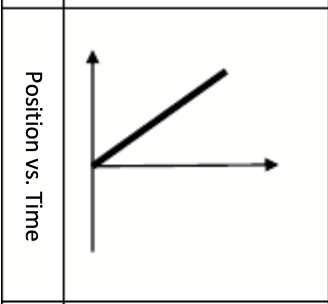
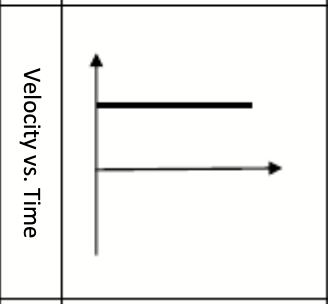
positive constant velocity - velocity vs time
(Positive constant velocity) - Horizantal line, in the top quadrant
positive constant velocity - acceleration vs time
positive constant velocity - horizantal line at origin

negative constant velocity - position vs time
negative constant velocity From the origin going down y=-x

negative constant velocity - velocity vs time
negative constant velocity Horizontal line in the bottom quadrant
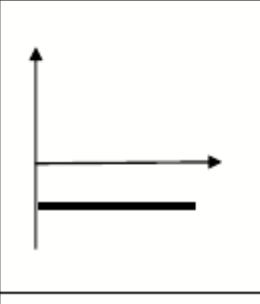
negative constant velocity - acceleration vs time
negative constant velocity horizontol line on origin line
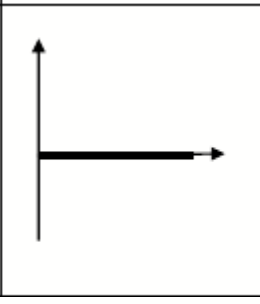
positive constant acceleration - position vs time
positive constant acceleration Curved line going up at origin

positive constant acceleration - velocity vs time
positive constant acceleration y=x line going up

postive constant acceleration - acceleration vs time
positive constant acceleration horizontal line in first quadrant
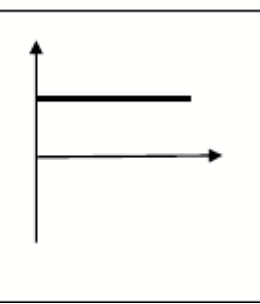
negative constant acceleration- position vs time
negative constant acceleration- curved going down

negative constant acceleration- velocity vs time
negative constant acceleration

negative constant acceleration- acceleration vs time
negative constant acceleration
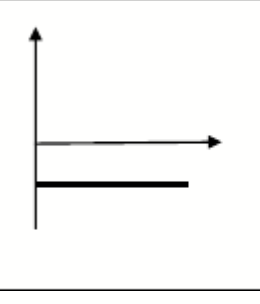
right moving constant acceleration - position vs time
right moving constant acceleration

right moving constant acceleration - velocity vs time
right moving constant acceleration

right moving constant acceleration - acceleration vs time
right moving constant acceleration
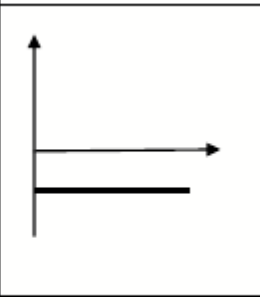
left moving constant acceleration - position vs time
left moving constant acceleration
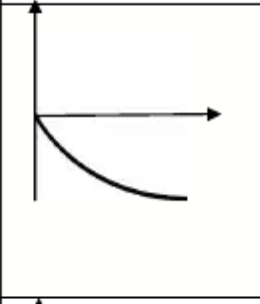
left moving constant acceleration - velocity vs time
left moving constant acceleration
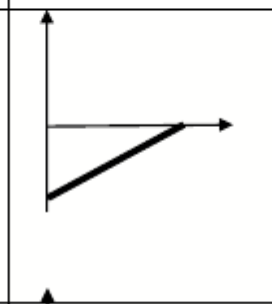
left moving constant acceleration - acceleration vs time
left moving constant acceleration -
