Aquatic Biomes, Ocean Zones, and Marine Conservation Strategies
 Call Kai
 Learn
Learn Practice Test
 Spaced Repetition
 Match
Match Flashcards
 Knowt Play
1/144

There's no tags or description
Looks like no tags are added yet.
Name | Mastery | Learn | Test | Matching | Spaced | Call with Kai |
|---|
No analytics yet
Send a link to your students to track their progress
145 Terms
Freshwater biomes
Streams, rivers, ponds, and lakes; major sources of drinking water.
Marine biomes
Intertidal zones, coral reefs, open ocean, marshes, swamps, and estuaries.
Coral reefs and estuaries
Highest productivity and biodiversity; especially productive and species-rich.
Marine algae/phytoplankton
Supply large amounts of oxygen and absorb carbon.
Wetland categories
Marshes are non-woody, swamps are woody, and bogs are acidic with peat/sphagnum moss.
Coastal nutrients
Near-coast waters are often higher due to runoff flowing to rivers and estuaries.
Key Abiotic Conditions
Depth, light, temperature, velocity (currents), salinity, oxygen, nitrates, and phosphates.
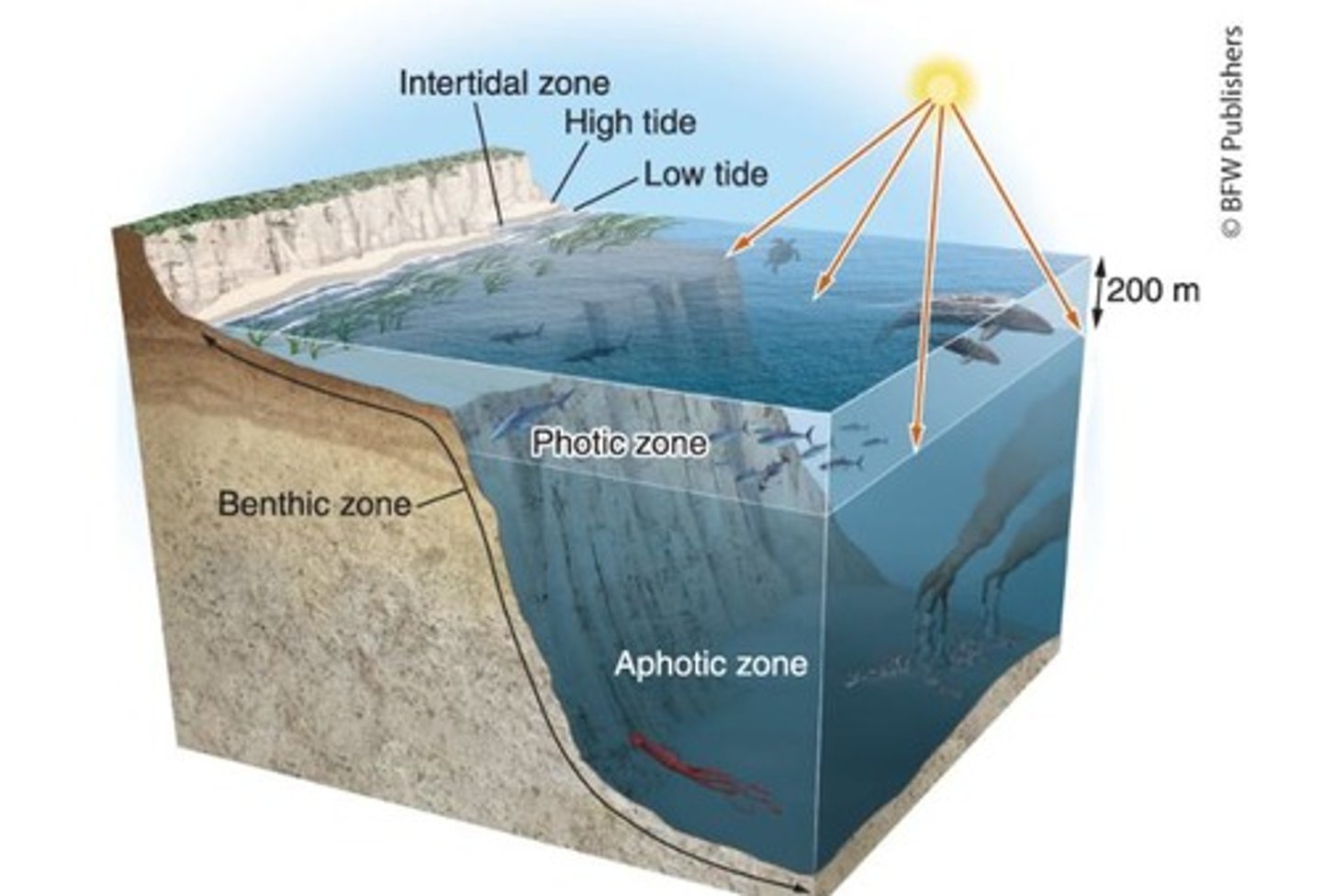
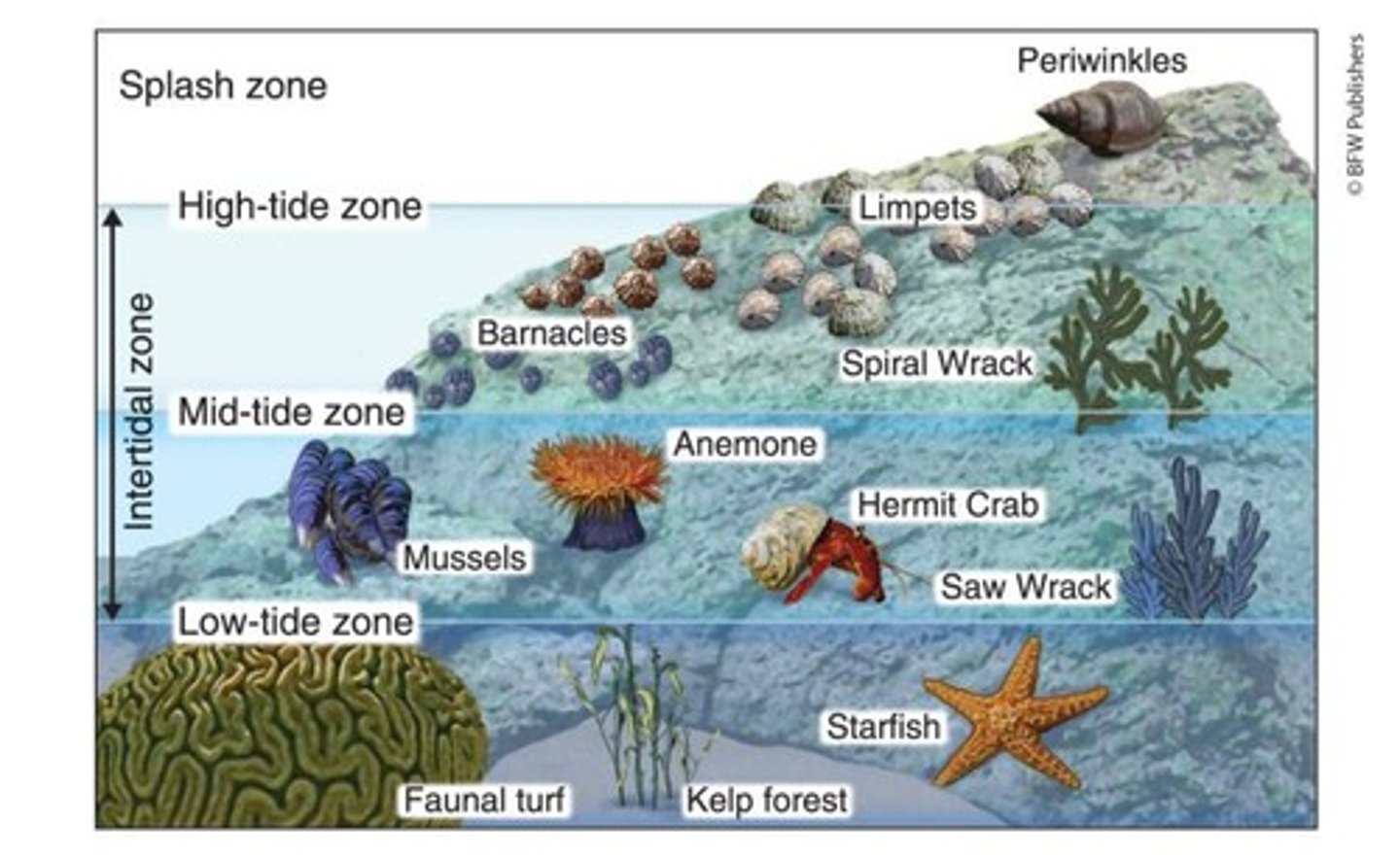
Intertidal zone stressors
Daily shifts in sunlight, temperature, and water exposure require tolerance to desiccation and wave impact.
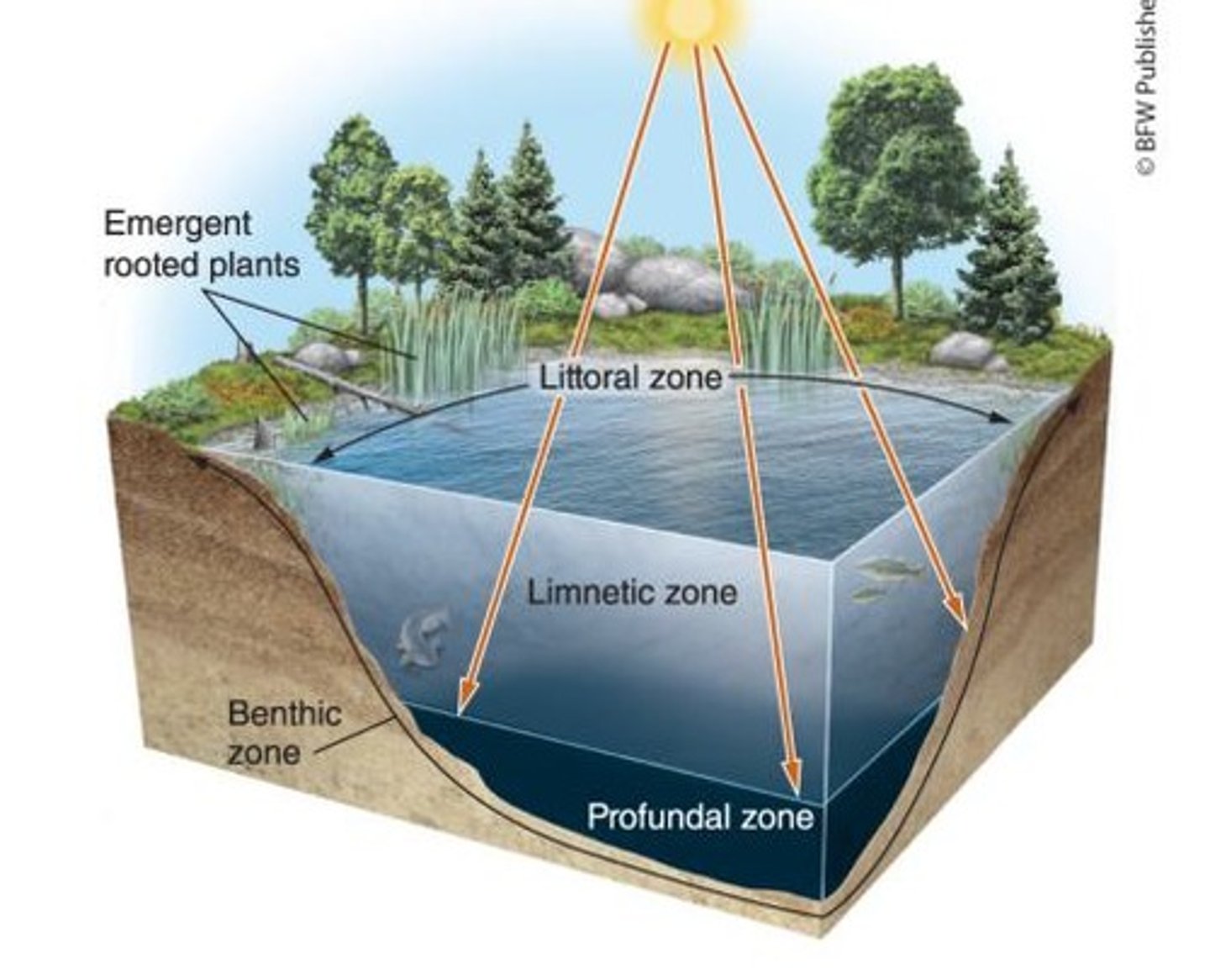
Littoral zone
Shallow nearshore zone; most photosynthesis occurs here.
Limnetic zone
Open water as deep as sunlight penetrates; phytoplankton only.
Profundal zone
Deep water; no sunlight; bacteria decompose; low oxygen.
Benthic zone
Muddy bottom of lake/pond/ocean beneath limnetic and profundal zones.
Oligotrophic
Low phytoplankton; very clear water.
Eutrophic
High fertility; dense algae; turbid water.
Mesotrophic
Moderate fertility.
Estuaries and salt marshes
Nutrient-rich nursery/spawning habitat for about 75% of marine fish.
Mangrove swamps
Salt-tolerant coastal forests that reduce storm damage and erosion.
Coral reefs
Extremely diverse; coral-algae mutualism with zooxanthellae.
Open ocean photic zone
Light penetrates to about 200 meters; phytoplankton form food-web base.
Aphotic zone
No photosynthesis; chemosynthetic bacteria using methane or sulfur can support deep-sea food webs.
Wetlands definition
Areas where soil is covered by or near water for all/most of the year.
Oligotrophic condition
Very low nutrients, stable algae, and high dissolved oxygen.
Flood control function
Wetlands store water and release it slowly, reducing flooding.
Mangrove carbon uptake
Mangroves can absorb about 4 times more carbon than trees in some comparisons.
Development threats
Habitat destruction, altered flow, and increased sedimentation from commercial building.
Fishing techniques
Methods include dredging, long-lining, purse seine, and drift nets.
Bycatch concept
Unintended catch that can kill non-target species.
Fishery collapse definition
Population decline of about 90% or more.
Consumer leverage
Seafood guides categorize choices to reduce pressure on vulnerable stocks.
Aquaculture definition
Farming fish/shellfish/mollusks/crustaceans/aquatic plants for sale.
Production advantages of Aquaculture
Reliable protein and income; typically uses less land, water, and fossil fuels than terrestrial agriculture.
Pollution disadvantages of Aquaculture
Nitrogenous waste and uneaten feed can drive eutrophication and degrade water quality.
Escape and disease risks in Aquaculture
Escaped organisms can compete or interbreed with wild populations; pathogens/parasites can spread.
Medication impacts in Aquaculture
Antibiotics/chemicals can contaminate waterways.
Eutrophication process
Excess nutrients drive algal/plant blooms; commonly linked to runoff and detergents.
Aquaculture scope
Cultivation of aquatic organisms for food; described as rapidly increasing.
Common farmed species
Salmon, shrimp, and oysters.
Advantages of Aquaculture
Reduces fishing pressure on wild stock; increases jobs.
Disadvantages of Aquaculture
Disease in close-proximity conditions; high setup cost.
Growth significance of Aquaculture
Aquaculture is described as the fastest-growing food production method.
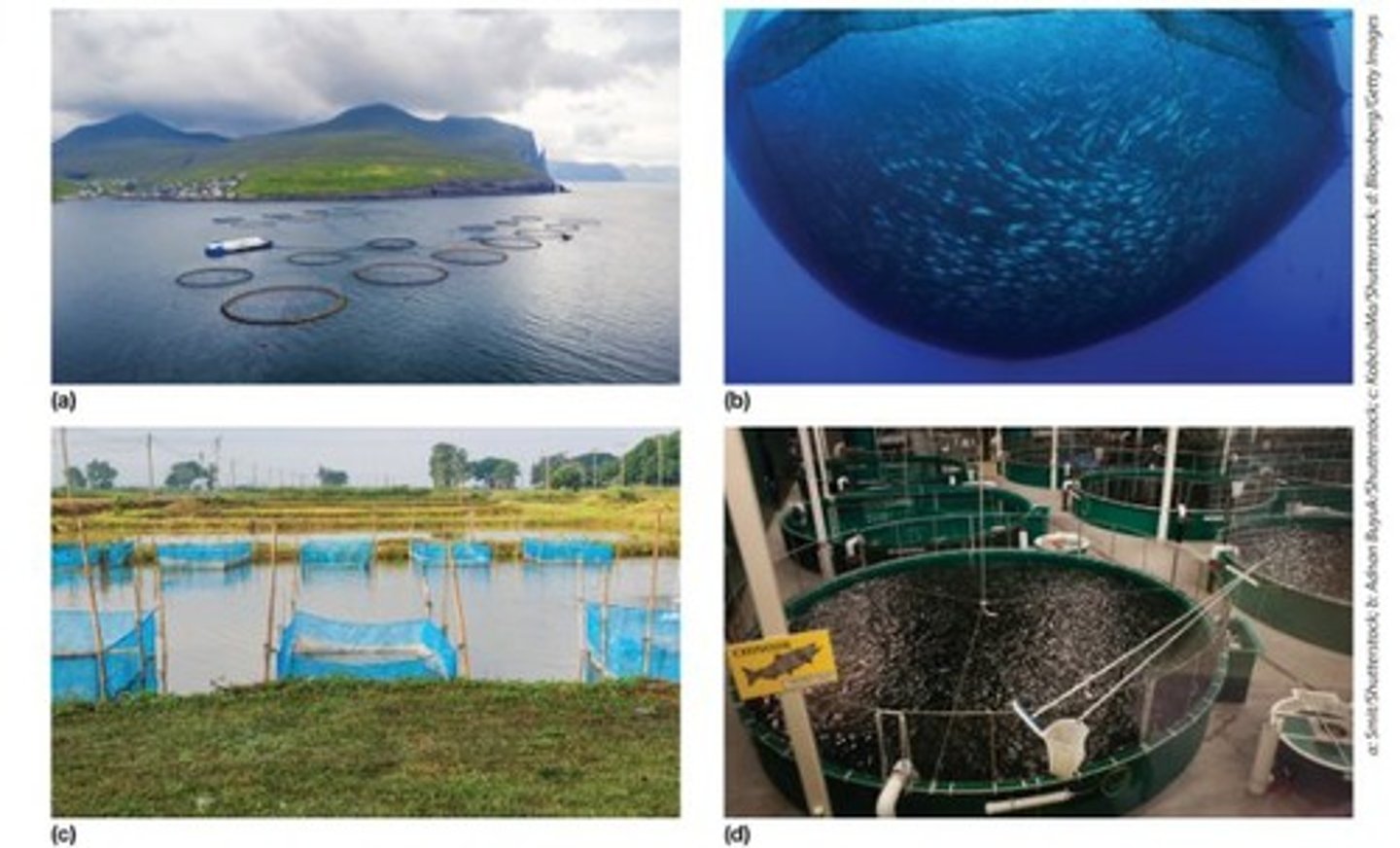
Aquaculture system types
Open-net pens, submerged-net pens, pond farms, and recirculating above-ground tanks.
Food-security benefit of Aquaculture
Can increase protein availability and reduce pressure on wild fisheries.
Wastewater pathway in Aquaculture
Feces, uneaten food, and antibiotics can be released back to waterways.
Pathogen spillover from Aquaculture
Sea lice and diseases can spread from farms to wild fish.
Escape impacts of Aquaculture
Farmed fish can compete with, interbreed with, and transmit disease to wild populations.
Containment innovation in Aquaculture
Above-ground recirculating systems can reuse waste as plant fertilizer; algae can be cycled back as feed.
Range of tolerance concept
Species survive, grow, and reproduce within an optimal abiotic range; outside it causes stress, reproductive failure, or death.
Thermal stress on coral
Increasing ocean temperatures can push coral outside its tolerance range.
Sediment runoff effect
Turbidity reduces light penetration and harms photosynthetic partners/primary production.
Hydrocarbon toxicity
Oil exposure can kill marine organisms and devastate detritivore communities.
Coating mechanism of oil spills
Oil reduces insulation/waterproofing in feathers and fur, raising mortality risk.
Economic consequences of oil spills
Spills can reduce tourism and harm fishing industry income.
Dead zone mechanism
Fertilizer runoff increases algal blooms; decomposition depletes dissolved oxygen, collapsing local fisheries.
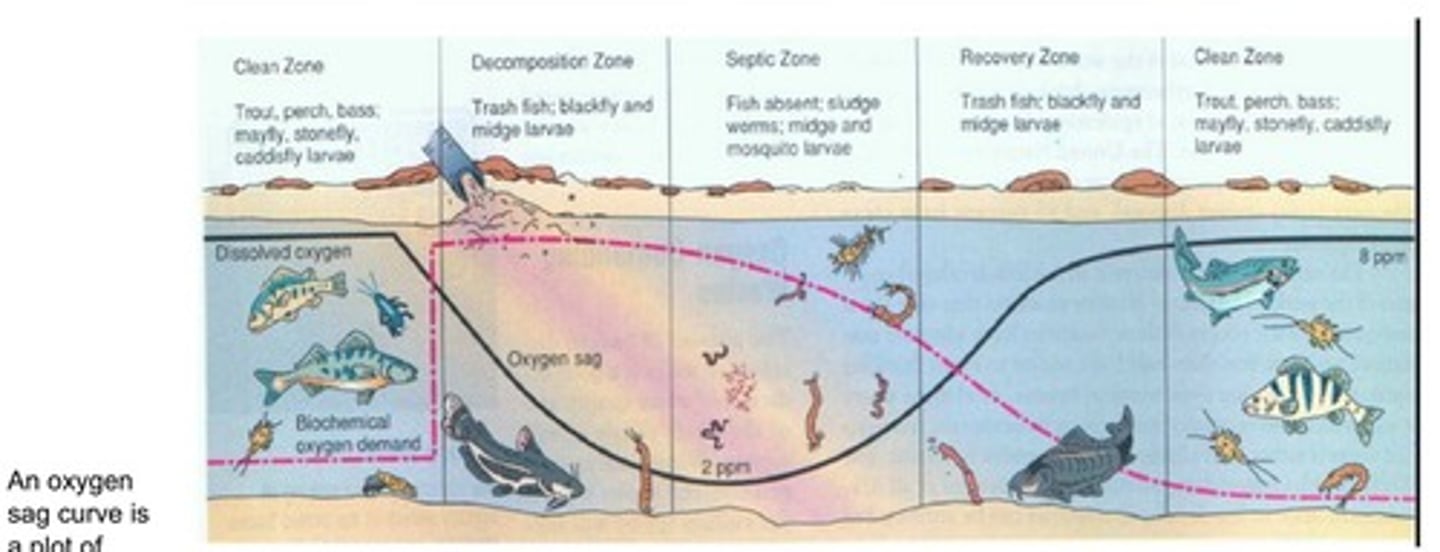
Oxygen sag curve use
Dissolved oxygen is lowest in the decomposition/septic zone downstream of a pollution source.
Mercury bioaccumulation
Elemental mercury can be transformed to methylmercury by bacteria and biomagnify up food chains, harming wildlife and humans.
Plastic/litter hazards
Ingestion and entanglement cause choking/blockage and can introduce toxins into food webs.
Sediment pollution
Turbidity lowers light, harms primary producers and visual predators, and disrupts habitat structure.
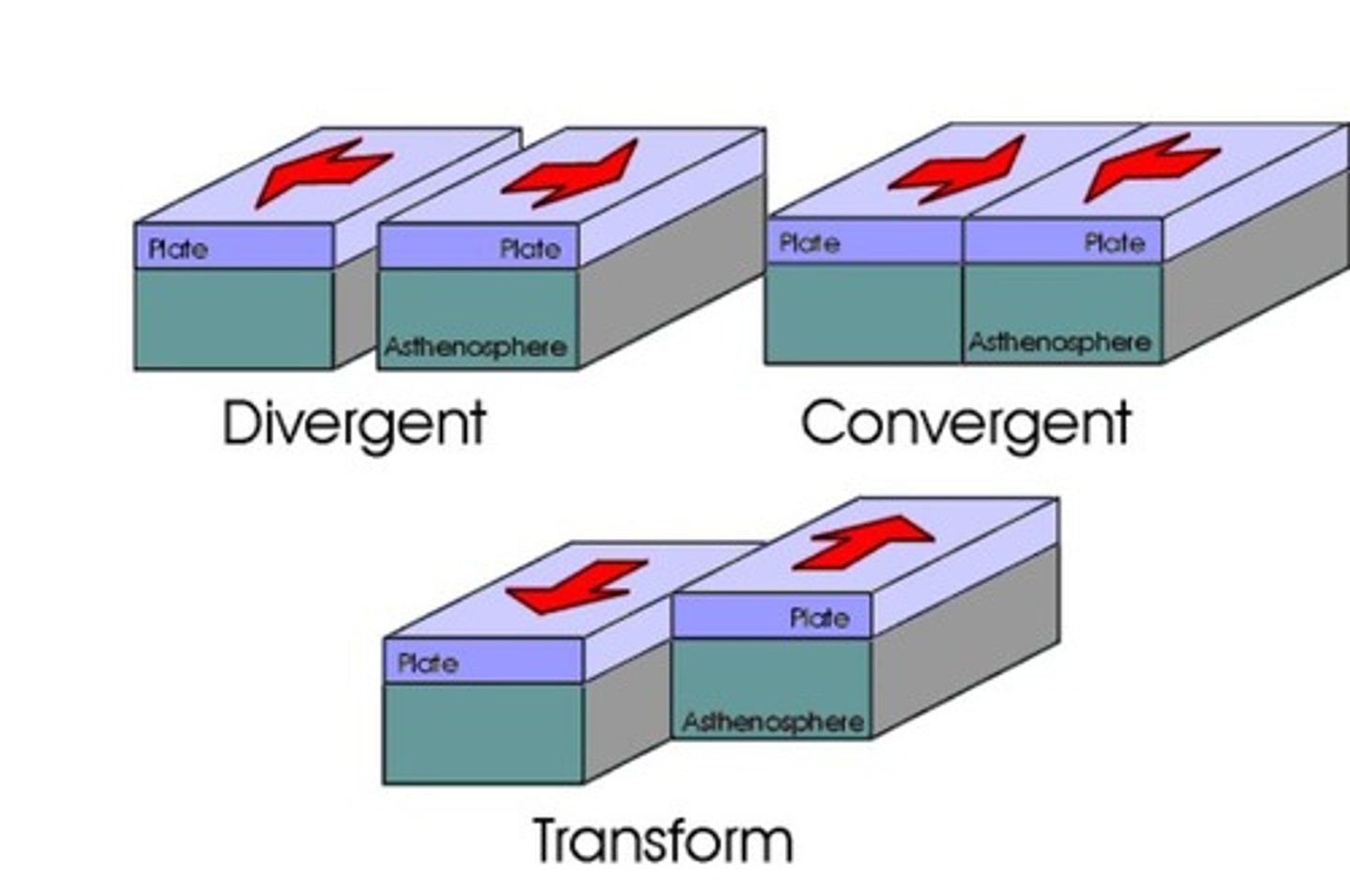
Mid-ocean ridge formation
Divergent boundaries create underwater mountain chains via seafloor spreading.
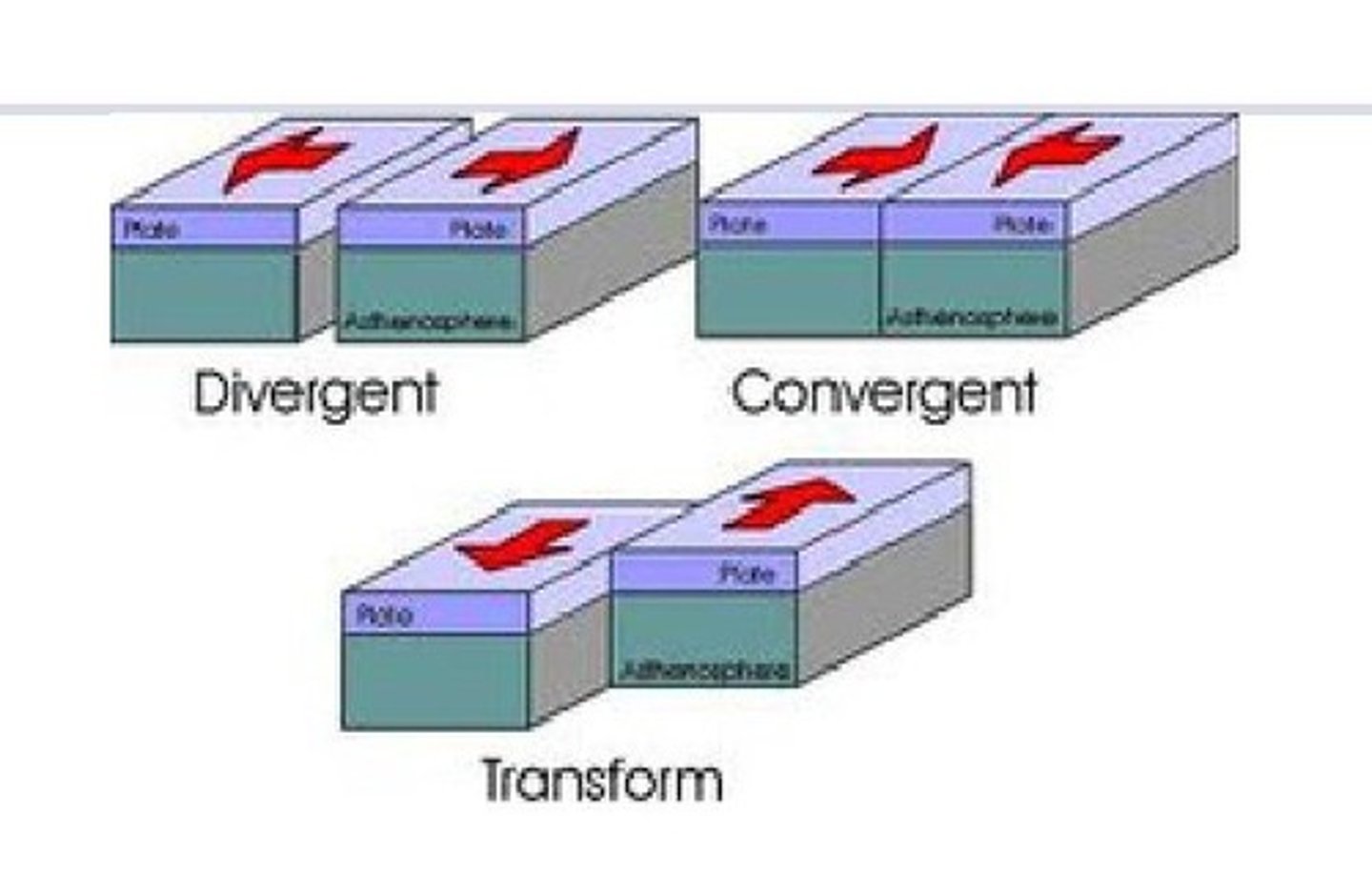
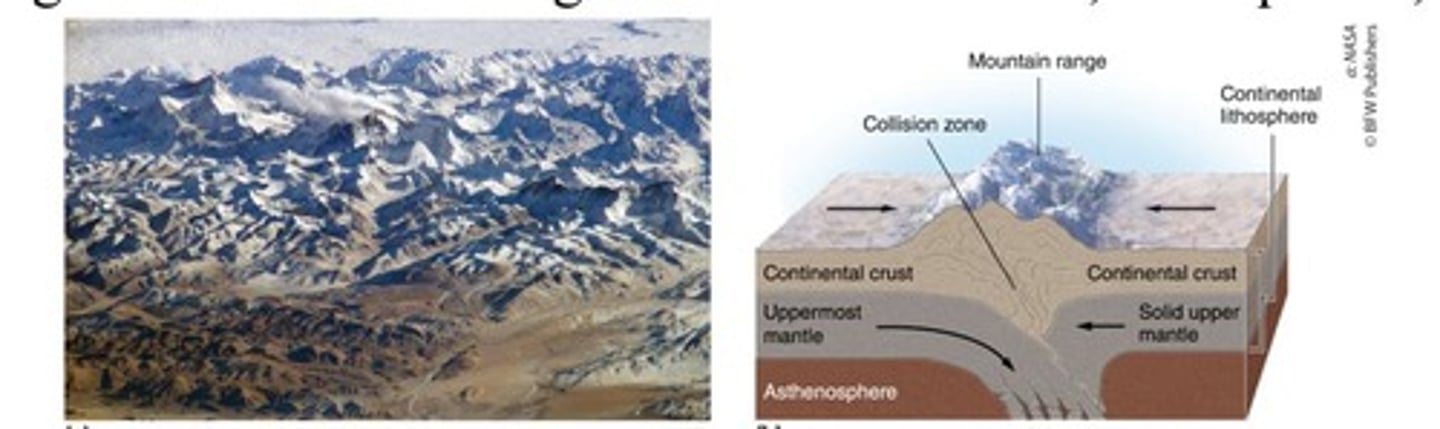
Mountain building
Continental-continental convergence forms large mountain ranges.
Island arc creation
Subduction-related volcanism forms curved island chains.
Trench formation
Subduction bends the denser plate downward, creating deep seafloor trenches.
Core
Innermost; iron/nickel; liquid outer plus solid inner.
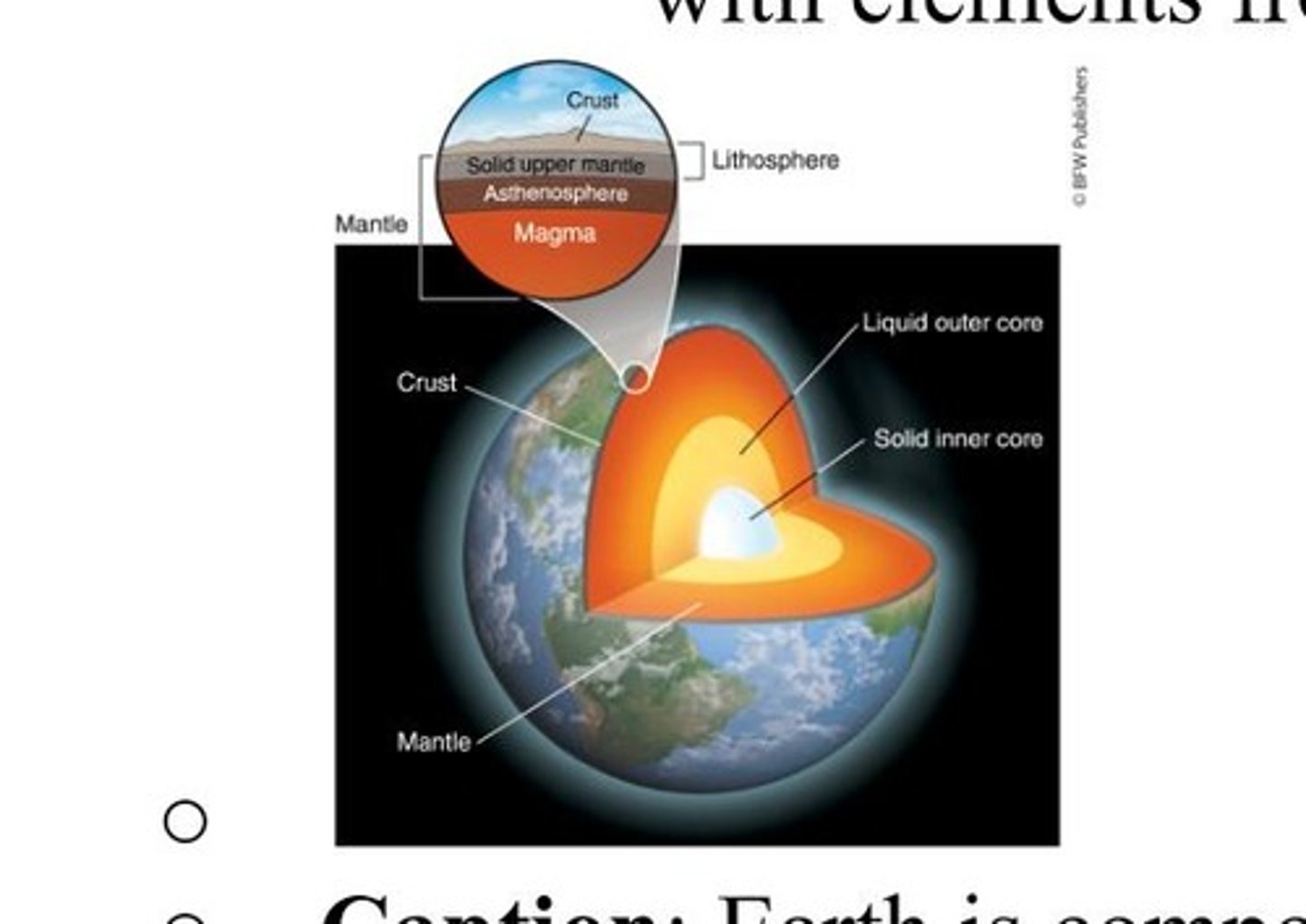
Mantle
Above core; contains magma and asthenosphere (semi-molten).
Lithosphere
Solid upper mantle plus crust; about 100 km thick.
Crust
Chemically distinct outermost layer.
Troposphere
Crust and soil provide most chemical elements for life.
Plate tectonics frame
Lithosphere is divided into plates in constant motion.
Richter scale property
Logarithmic; each unit corresponds to a tenfold increase in earthquake magnitude.
Hot spot concept
Mantle plumes can create volcanic island chains (e.g., Hawaii) as plates move.
Seafloor spreading
New crust forms at mid-ocean ridges and moves outward.
Subduction
One tectonic plate sinks below another; oceanic plates subduct beneath continental plates.
Continental drift evidence
Matching rocks and fossils across the Atlantic supported Wegener's Pangaea hypothesis.
Ring of Fire pattern
Many Pacific-margin volcanoes and earthquakes align with plate boundaries.
Volcano distribution
Most volcanoes occur along boundaries, with additional hot spot volcanism.
Earthquake impacts
Moderate to large earthquakes can collapse structures, contaminate water, and cause fatalities.
Tsunami triggers
Undersea earthquakes or volcanoes can generate tsunamis that amplify near shore.
Volcanic ash hazard
Fine particles can disrupt aviation and damage engines (example discussed: Iceland 2010).
Asthenosphere
Soft, flexible upper mantle layer that allows plate motion.
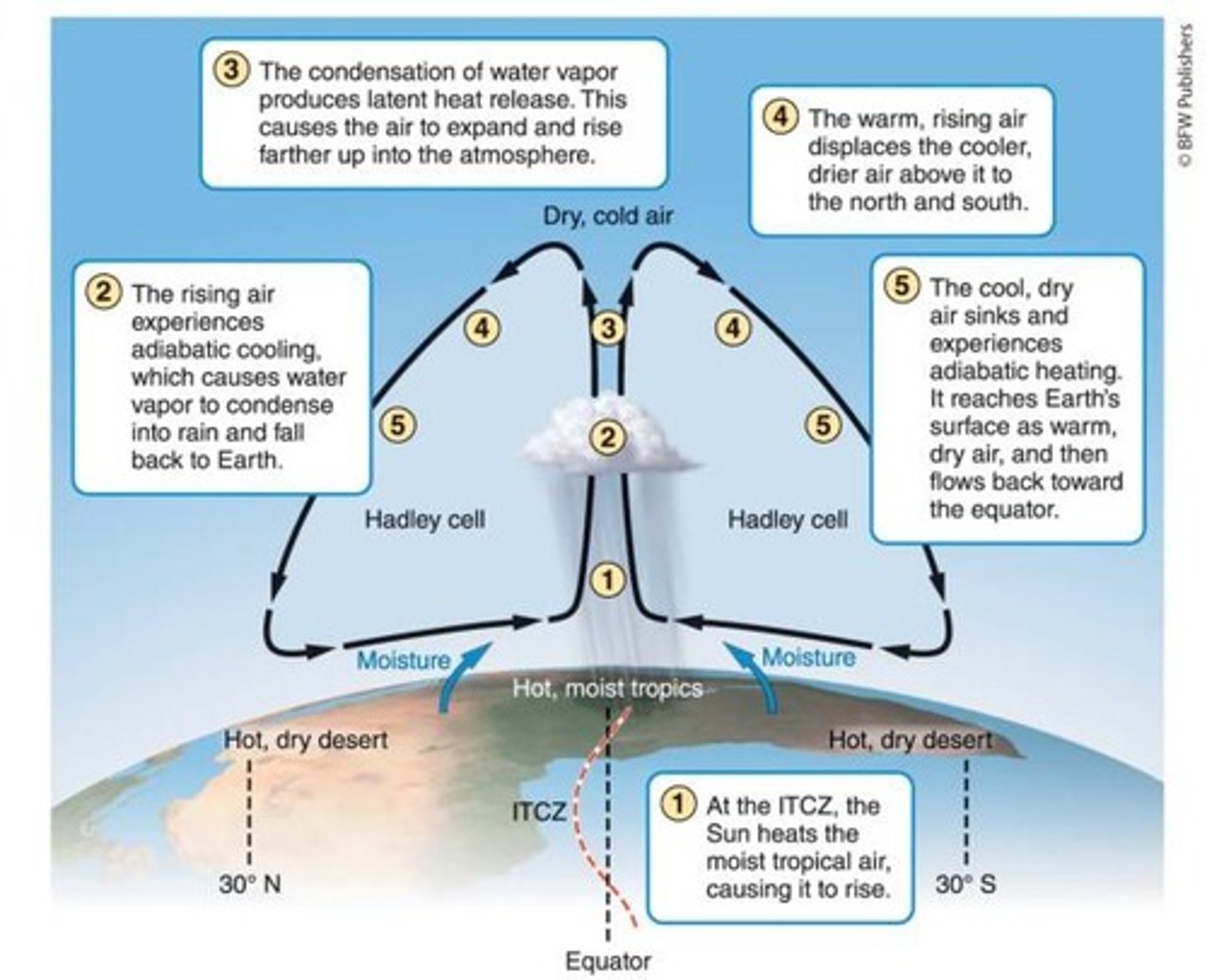
Convection current
Circular motion in heated fluids where warm rises and cool sinks.
Angle of incidence
Angle between incoming sunlight and a line perpendicular to the surface.
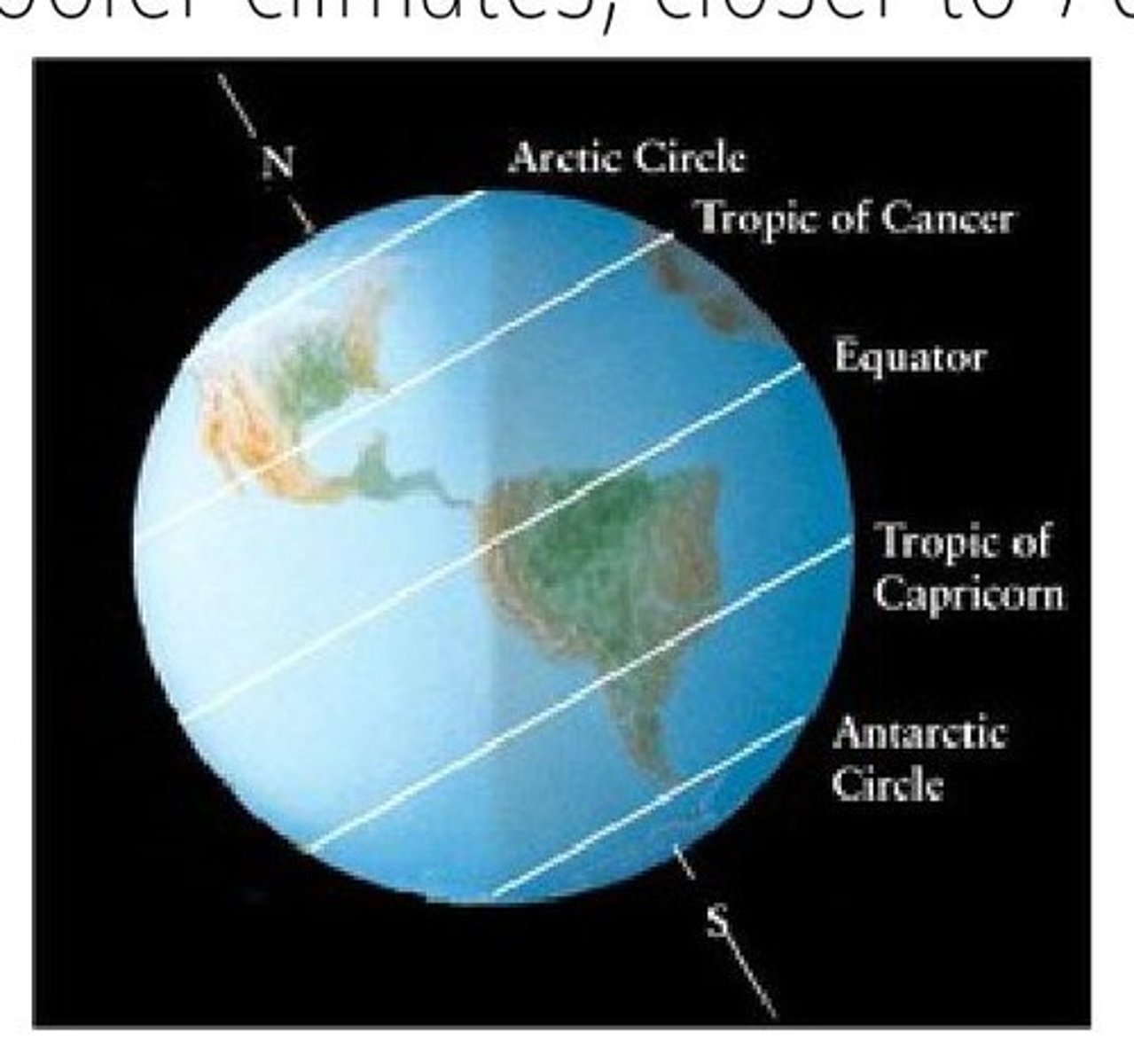
Coriolis effect
Earth's rotation deflects winds and currents, helping predict global patterns.
Albedo contrast
Dark forests have low albedo while snow/ice have very high albedo; Earth's average is about 0.3.
Equinox
Around March 20/21 and September 22/23, all regions receive about 12 hours of daylight.
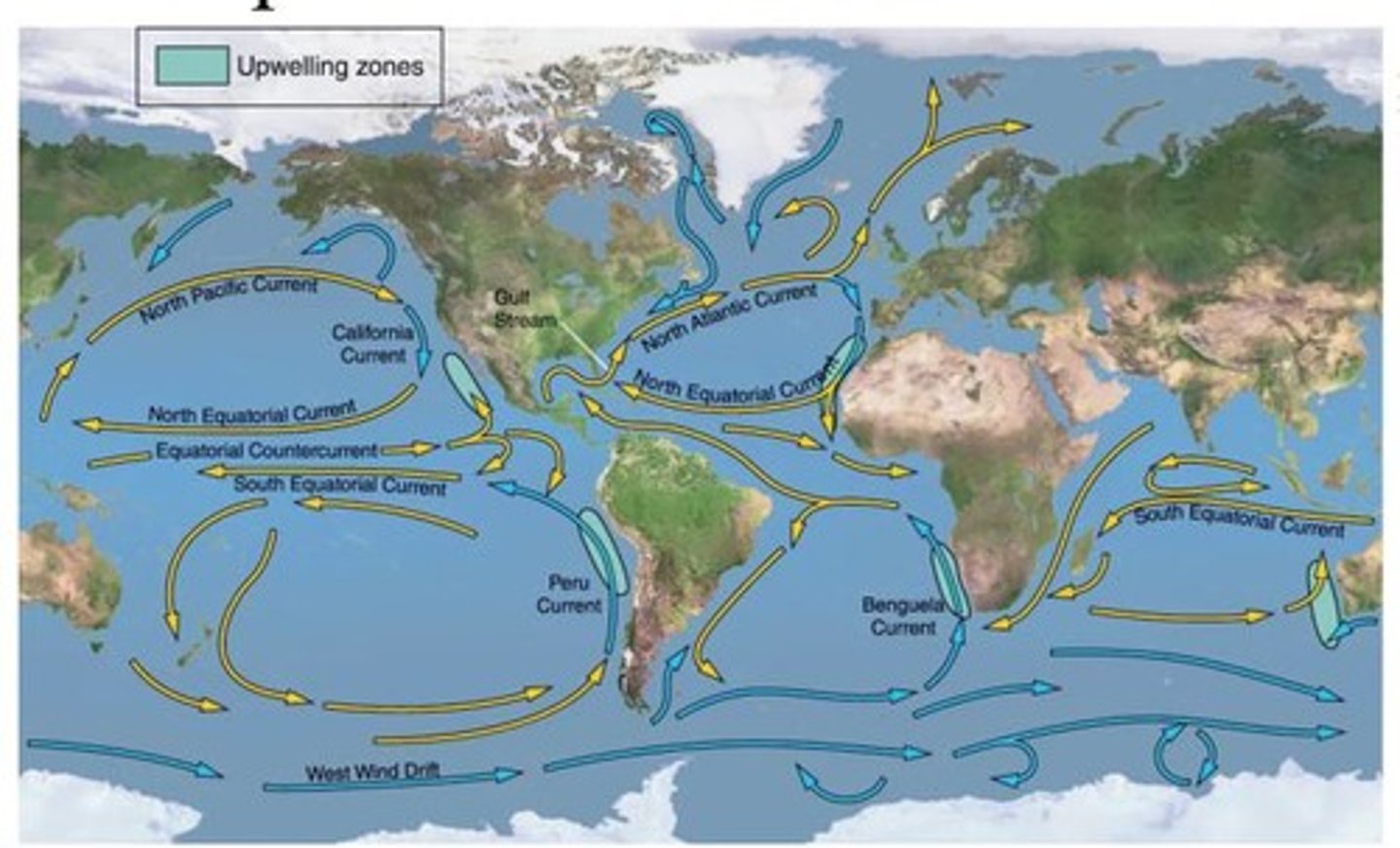
Gyre
Large rotating surface-current loops driven by prevailing winds and the Coriolis effect.
Gulf Stream role
Warm current that moderates climates along eastern North America and western Europe.
Thermohaline circulation
Deep-ocean circulation driven by temperature and salinity; global cycle can take centuries.
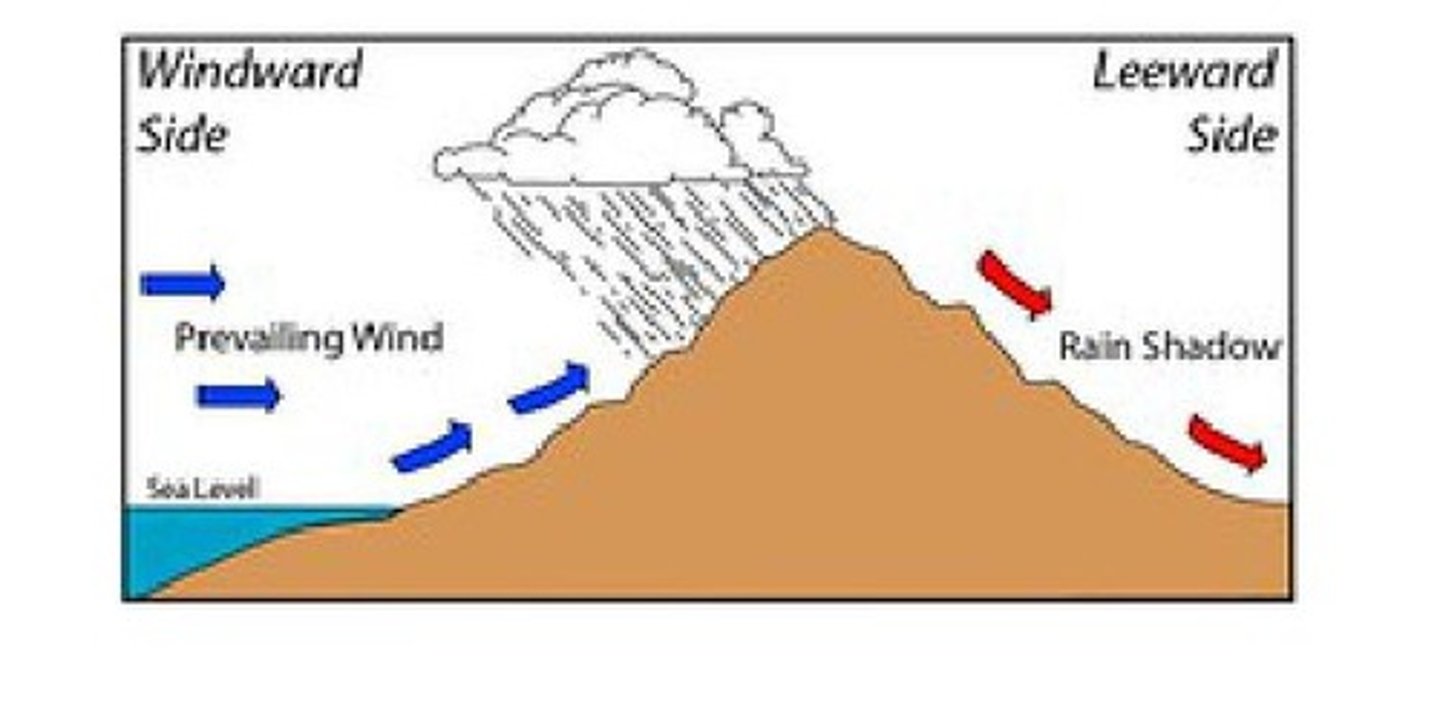
Adiabatic rain shadow mechanism
Windward uplift cools and rains; leeward descent warms and dries.
El Niño
Winds stall/reverse to westerlies; warmer/wetter winter in Canada and N. U.S.
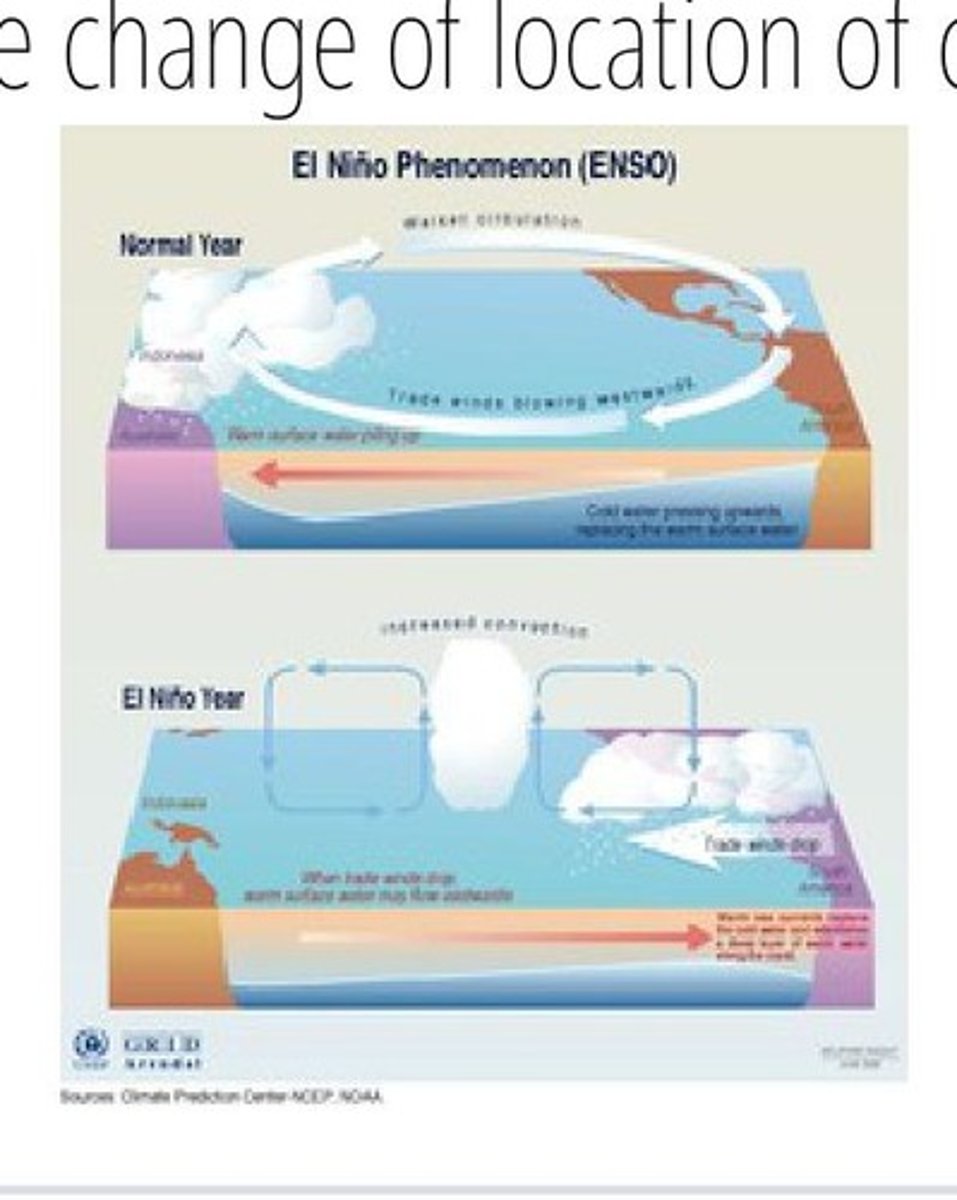
La Niña
Same as normal but more intense; cooler/drier S. America; colder winter in Canada and N. U.S.
ENSO Cycle
Occurs about every 2-7 years and can last from weeks to years.
Greenhouse effect
Greenhouse gases trap outgoing heat and warm Earth's surface.
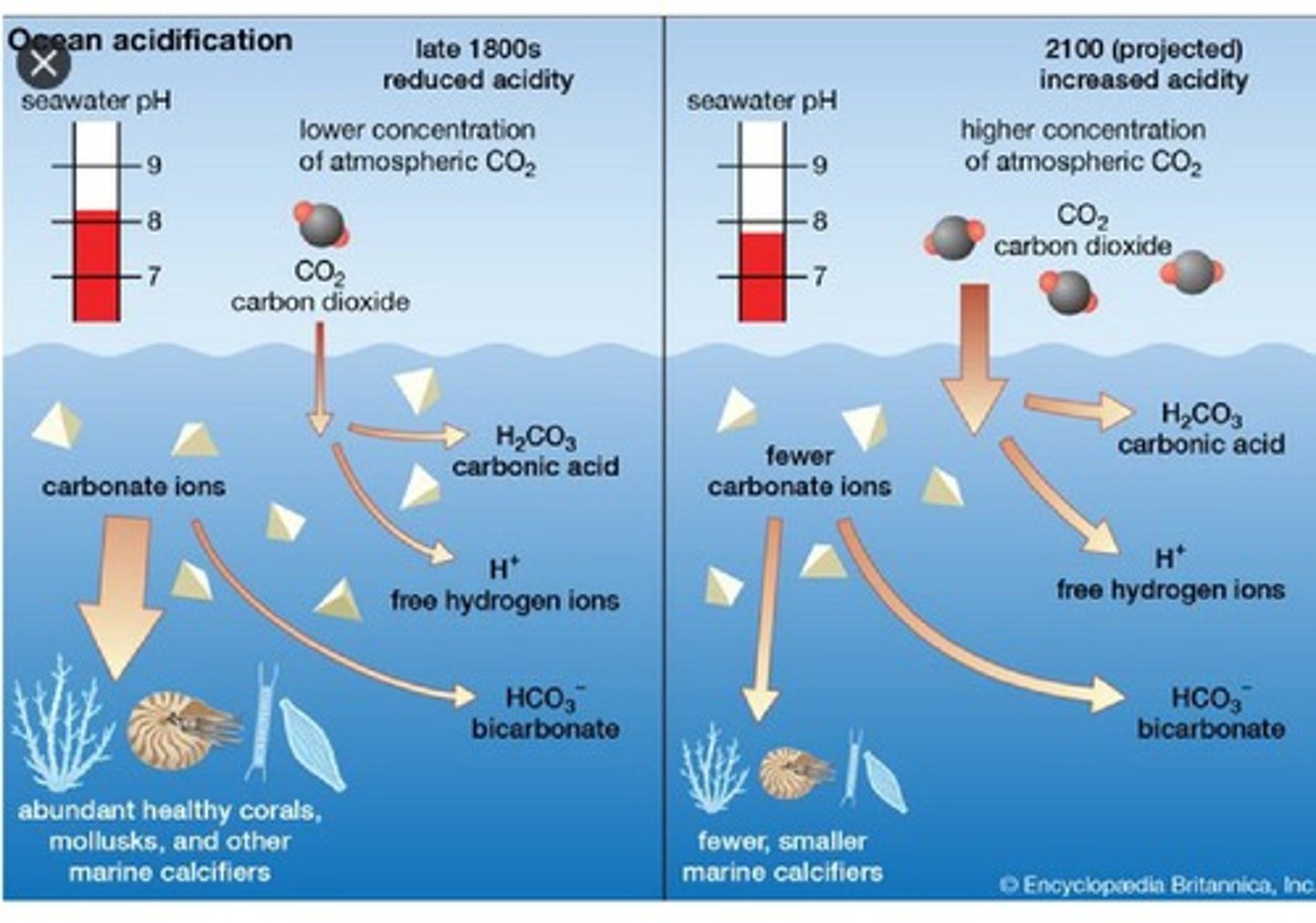
Global warming
Increased greenhouse gases raise average surface temperatures.
Mitigation
Actions that decrease greenhouse gas concentrations or emissions.
Carbon footprint
Total direct and indirect greenhouse gas emissions from a person or organization.
Ozone
In the upper atmosphere protects from UV; near the ground it is a pollutant.
Renewable resource
Replenished as fast as used (unlike fossil fuels).
Resistance
Degree to which a disruption alters energy/matter flows.
Resilience
Speed of return to original ecosystem state after disruption.
Intermediate disturbance hypothesis
Intermediate disturbance can maximize diversity; too rare favors dominance, too frequent favors fast reproducers.
Fragmentation
One continuous habitat is split into separate patches.

