Clinical Aspects of Cancer
 Call Kai
 Learn
Learn Practice Test
 Spaced Repetition
 Match
Match Flashcards
 Knowt Play
1/36

There's no tags or description
Looks like no tags are added yet.
Name | Mastery | Learn | Test | Matching | Spaced | Call with Kai | Chat |
|---|
No analytics yet
Send a link to your students to track their progress
37 Terms
What dog breed is a risk of lymphoma?
Golden Retrievers
What dog breed is at risk of Hemangiosarcoma
German Shepards
What dog breed is at risk of Histiocyticsarcoma?
Saint Bernard
What dog breed is at risk of mast cell tumors?
Boxers
What are some internal risk factors for cancer?
Age
Hormones
Immunity
What are some external risk factor associated with UV?
White cat predisposed
UV radiation → DNA break and ROS production
On ears, above eyes, nasal planums
Squamous cell carcinoma
What are some external risk facters associated with toxins/chemicals?
Aflatoxin b1: fungal toxin in the feed → metabolized in the liver → block DNA polymerase → hepatitis/liver cancers
Pesticides/herbicides
Bracken fern
STUDY THE EXTERNAL RISK FACTORS CHART IN LECTURE
YOU GOT THIS
Papillomavirus risk factors:
viral oncogenes E6 and E7 suppress apoptosis in virus infected cells → immortal growth → wart/papilloma → carcinoma
Horse sarcoid: BPV-1,2 infection, NOT equine PV
Inflammation/trauma risk factors for cats:
injection-site sarcoma, ocular post-traumatic sarcoma
Inflammation/trauma risk factors for dogs:
skin irritation → cancer
Paraneoplastic Syndromes
Systemic clinical signs by the release of tumor cell products
NOT the direct effects of the tumor itself
Via hormones, cytokines, immune reactions
May be first clue of hidden neoplasia
Cachexia
Weight loss and metabolic alterations
Cytokines TNF-a, IL-1, IL-6 → contribute to anorexia → accelerate cachexia
Irreversible (Paraneoplastic syndrome)
Humoral Hypercalcemia of malignancy
PTHrP: parathyroid hormone-related protein (paraneoplastic syndrome
Associated with PU/PD, anorexia, vomiting
renal damage
Humoral hypercalcemia of malignancy in dogs:
T cell lymphoma, AGASACA and many others
Humoral hypercalcemia of malignancy in cats:
Lymphoma, SCC, multiple myeloma
Hypoglycemia
Insulinoma
Other non-endocrine tumors: Hepatocellular carcinoma, leiomyosarcoma, hemangiosarcoma
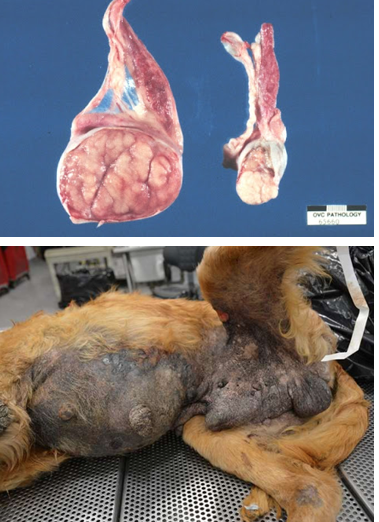
Hyperestrogenism
Testicular tumors of male dog
Feminization
Bilateral symmetrical alopecia/hyperpigmentation
bone marrow suppression → aplastic anemia/pancytopenia
Feline acromegaly
“Big face” cats
Functional adenoma in the pars distalis of the anterior pituritary gland
Excessive GH secretion
GHGH antagonize insulin → cats present with DM hepatomegaly, renomegaly, adrenomegaly, hypertrophic cardiomyopathy, clubbing of the paws and distal extremities
How do you determine Feline acromegaly?
IGF-1 measurements can confirm acromegaly
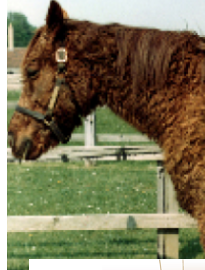
Equine hirsutism
Pituitary Pars Intermedia Adenoma (PPID)
Low ACTH secretion
α-MSH, β-endorphins, corticotrophin-like intermediate peptide (CLIP)
Laminitis, hypertrichosis, hyperglycemia, hyperhidrosis, PU/PD
How to test for anemia related paraneoplastic syndrome?
Blood work
What is paraneoplastic syndrome caused by?
HSA: due to excessive blood loss (regenerative anemia)
What are the signs of anemia caused paraneoplastic syndrome?
Lymphoma/leukemia/multiple myelona: associated with IMHA or decreased erythropoiesis due to effacement by cancer
What are some hematologic paraneoplastic syndromes?
Anemia
Hyperviscosity syndrome
Thrombocytopenia
DIC
Hyperglobulinemia and Bence Jones Proteinuria
Multiple myeloma (Mature plasma cell origin)
High globulin on chemistry (“hyperglobulinemia)
Abundant M component of Ig in blood
Excreted in urine: Bence-Jones proteinuria (casts/nephritis)
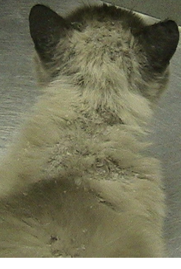
What is this cutaneous manifestation?
Feline thymoma-associated exfoliative dermatitis
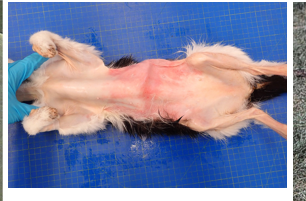
What is this cutaneous manifestation?
Feline paraneoplastic alopecia (pancreatic carcinoma or biliary carcinoma
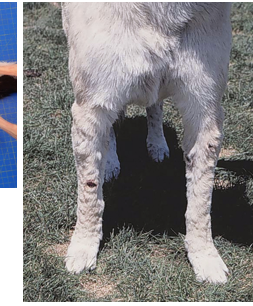
What is this cutaneous manifestation?
Canine nodular dermatofibrosis in GSD-renal cystadenoma/carcinomas
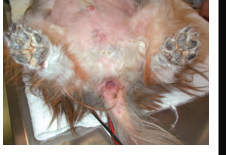
What is this cutaneous manifestation?
Superficial necrolytic dermatitis-glucagonoma
Myasthenia Gravis
associated commonly with thymoma
Osteosarcoma, cholangiocellular carcinoma are reported
Auto-antibodies targeting the Ach receptor within the neuromuscular junctions
Muscle weakness
Esophagus, pharynx, larynx, face
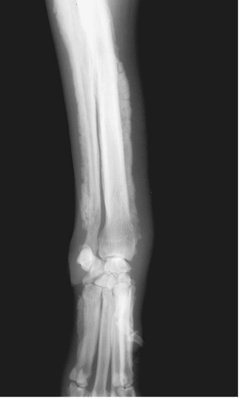
Hypertrophic Osteopathy
Pulmonary carcinoma
space-occupying thoracic mass or urinary bladder rhabdomyosarcoma
Cats, dogs, and horses
Symmetric lameness
Thickening of the periosteum (outmost lay of the bone)
Tumor Grading
given by pathologists
features differentiation, mitoses, and necrosis
grade of I, II, III
Canine mast cell tumor and canine soft tissue sarcoma
Tumor staging
Extent of tumor growth and metastatic spread in a patient
WHO TNM (tumor size, lymph node involvement, extent of metastasis) stage
CBC/Chem/UA/3CXR/AUS ± lymph node and bone marrow aspirates
Guides prognosis and treatment
PCR for antigen receptor rearrangements:
For lymphoma clonality
Helpful when cytology and histopathology are ambiguous
Most commonly used in GI biopsy
Flow cytometry
Immunophenotyping (B/t cells), cell size, granularity
Preferred method for distinguishing B vs T cell lymphoma along with immunohistochemistry
Genomic tests
helpful in confirming cancer diagnosis
BRAF mutation in Urothelial carcinoma
c-KIT tandem duplication in mast cell tumor