Chapter 1 Psychology
 Call Kai
 Learn
Learn Practice Test
 Spaced Repetition
 Match
Match Flashcards
 Knowt Play
1/60

There's no tags or description
Looks like no tags are added yet.
Name | Mastery | Learn | Test | Matching | Spaced | Call with Kai | Chat |
|---|
No analytics yet
Send a link to your students to track their progress
61 Terms
Psychology
The study of the psyche of “soul”, scientific study of behavior and the mind.
Empiricism
Knowledge arises from what we observe and experience.
Behavior
Actions words, response times or even measures of brain activity.
Describe
Painting a picture of what we see. “What is”.
Explain
What’s the motivating behavior? “Why it is?” .
Predicting
What is likely to happen given a situation “what it may be”.
Influencing
Change what people are doing or how they perceive the world.
Structuralism
Breaking down immediate conscious experience to its most basic components.
Introspection
Relies on trained participants' self-reports of their thoughts, feelings, and mental images to understand the components of mental processes.
Systematic Introspection
Method developed to combat introspection accuracy. Standardized method for reporting experiences.
Functionalism
Psychologists must first understand the function of a behavior or a mental process to understand how it works. Heavily influenced by Darwin’s Theory of Evolution.
Behaviorism
Uses behavior analysis to make observations.
Psychoanalysis
A system for understanding the unconscious mind.
Cognitive Revolution
Shift from strict behaviorism to a renewed interest in mental processes and the mind
Freudian Slip
Analysis of minor errors of speech
Free Association
Analysis of letting patients talk about their fantasies freely.
Humanistic Psychology
People have free will and the capacity to realize their own potential. It focuses on positive aspects like creativity, choice, and the potential for growth. People have free will.
Positive Psychology
Studies how humans flourish and how positive outcomes can be achieved.
Darwin’s Theory
Traits that are more advantageous to a species are more likely to be carried over to more generations more quickly than those that are not.
Adaptive Traits
Traits that are advantageous for survival and reproduction. Spread through means of natural selection.
Directional Selection

Stabilizing Selection
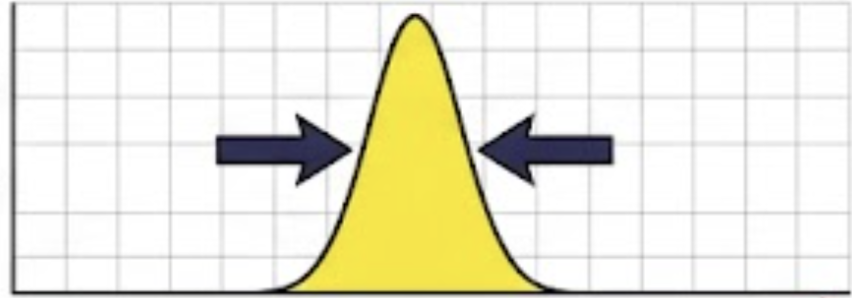
Disruptive Selection
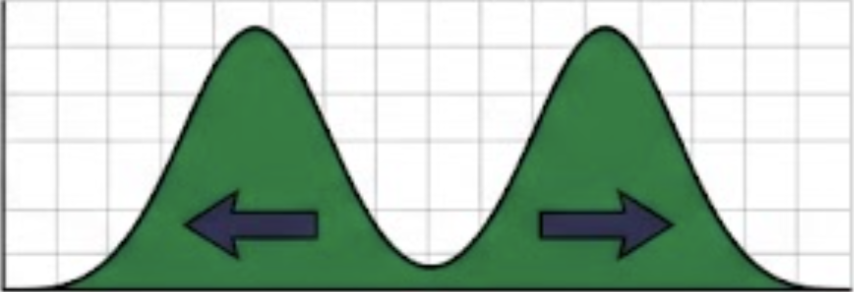
Sexual Selection
Organisms (particularly males) fight over mating rights.
Artificial Selection
Humans dictate what animals mate.
Evolutionary Psychology
Explains how mental processes and behaviors have developed over time.
Classical Conditioning
Two stimuli are repeatedly paired together to create a new response.
Operant Conditioning
Organisms learn from patterns of reward and punishment in their environment.
Culture
A shared set of beliefs, attitudes, behaviors, and customs belonging to a specific group or community. These groups are usually organized around a shared characteristic: race, ethnicity, nationality, etc.
Social Psychology
Studies how social groups affect us as individuals: prejudice, discrimination, leadership, etc.
Intersectional Approach
An individual’s sense of belonging to a specific social or cultural group is often fluid.
Biological Influences
Seeks to examine how the brain, the nervous system, hormones, and genetics influence the way we think, feel, and act.
Cognitive Psychology
Studies process-oriented explanations of our internal mental states. Also studies how people process information.
Nativists
Those who believe in innate knowledge from birth.
Empiricists
Those who believe that the mind begins as a blank slate, completely shaped by our own experiences.
Phrenology
The shape of the skull was the result of the size of the brain structures beneath it. Knowing the shape of an individual’s skull could uncover information regarding the person’s personality.
Conversion Disorder
Individuals suffer from a mental illness that is characterized by the physical manifestation of a condition without an accompanying physical problem.
Free Will
We have the power to dictate our own destiny.
Determinism
Our path is set for us.
Humanists
Believed in individual freedom of choice.
Personal Agency
Ability to make one’s own choices.
Dual Process Model
There is a conscious and an unconscious divide.
System 1 Processes
Processes that are fast, automatic, relatively effortless, and unconscious. Flow state.
System 2 Processes
Slow controlled, effortful, and conscious. Goal directed thinking.
Fixed Mindset
Ability is inborn and not changeable. I CANNOT improve.
Growth Mindset
Optimistic sense of life. I CAN improve.
Desirable Difficulties
Learning conditions that are intentionally difficult to make learning more effortful which results in greater, long term memory retention.
Experimental Research
Attempt to understand the fundamental processes that govern behavior and the mind.
Psychopathology
The study of maladaptive behavior patterns also studies the underlying biology of mental illnesses.
Behavioral Genetics
Research regarding individual differences in behavior patterns in terms of genetic structure and expression.
Comparative Psychology
Study of nonhuman animals to find universal characteristics between species.
Developmental Psychology
Studies how people develop their thoughts and processes as they age.
Behavioral Neuroscience
Studies how different regions of the brain produce behavior, tying physical to psychological.
Personality Psychology
How people behave based on their enduring characteristic traits.
Social Psychology
Studies how people think based on the social environment.
Applied Research
Conducted to discover a new or more effective way to solve a problem.
Applied Research
Refers to the actual application techniques to the problem themselves.
Retrieval Process
Information is better remembered if it repeated tested.
Clinical and Counseling Psychology
Focused on identifying, preventing, and relieving distress or dysfunction that is psychological in origin.
Counseling Psychologist
Focused on helping people with ongoing life situations.
Psychiatrist
Focused on the treatment of mental illnesses. Has an MD.