U8 - Blood Cells and Types
 Call Kai
 Learn
Learn Practice Test
 Spaced Repetition
 Match
Match Flashcards
 Knowt Play
1/28

There's no tags or description
Looks like no tags are added yet.
Name | Mastery | Learn | Test | Matching | Spaced | Call with Kai | Chat |
|---|
No analytics yet
Send a link to your students to track their progress
29 Terms
homeostasis
relatively constant internal physical and chemical conditions that organisms maintain
blood maintains this by...
- transporting vital substances
- maintaining the stability of interstitial fluid (fluid outside cells)
- distributing heat
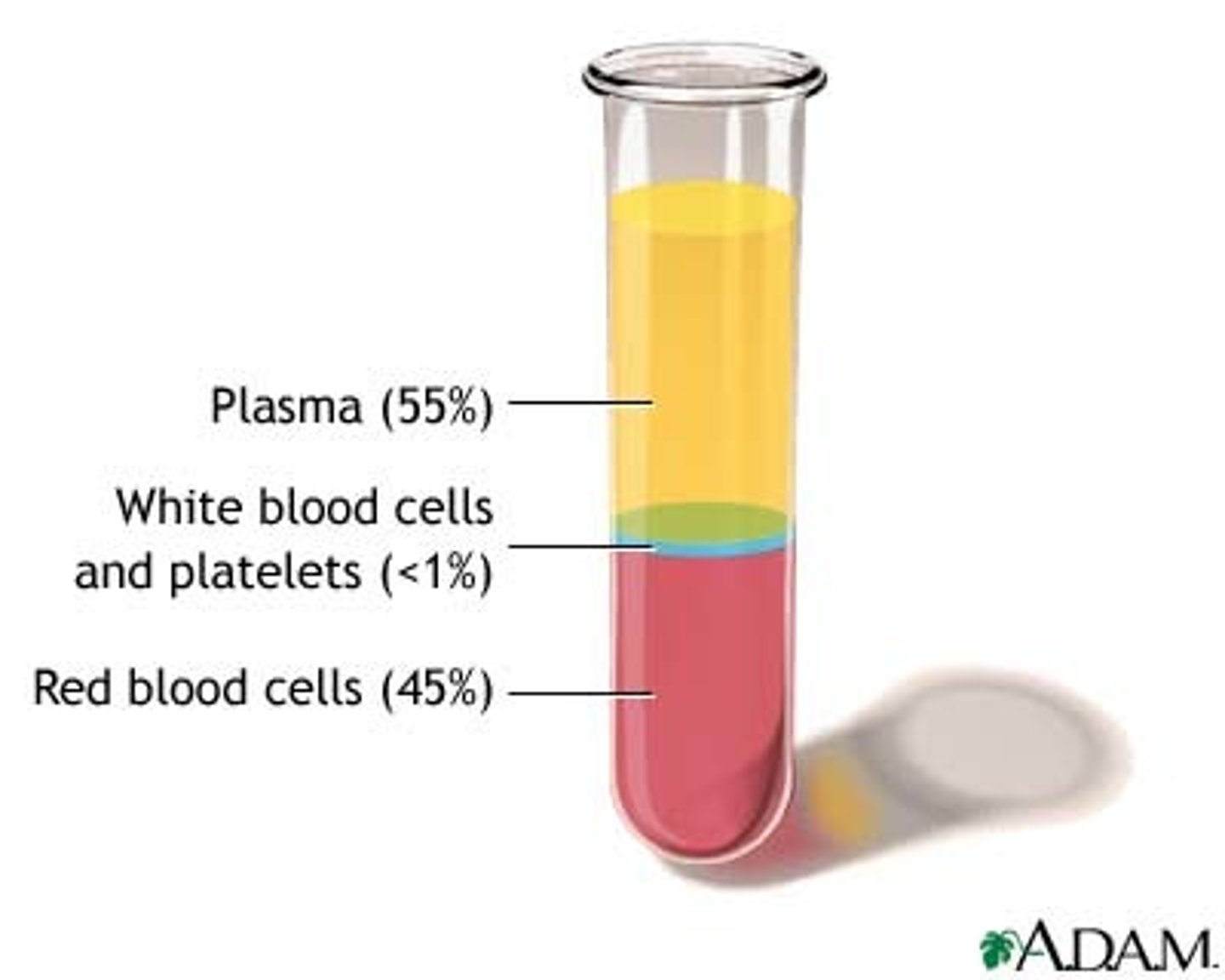
blood
type of connective tissue that has two basic components
- 45% cells such as RBCs, WBCs (leukocytes), platelets
- 55% plasma -> includes water, proteins, amino acids (matrix - ground substance and fibers)
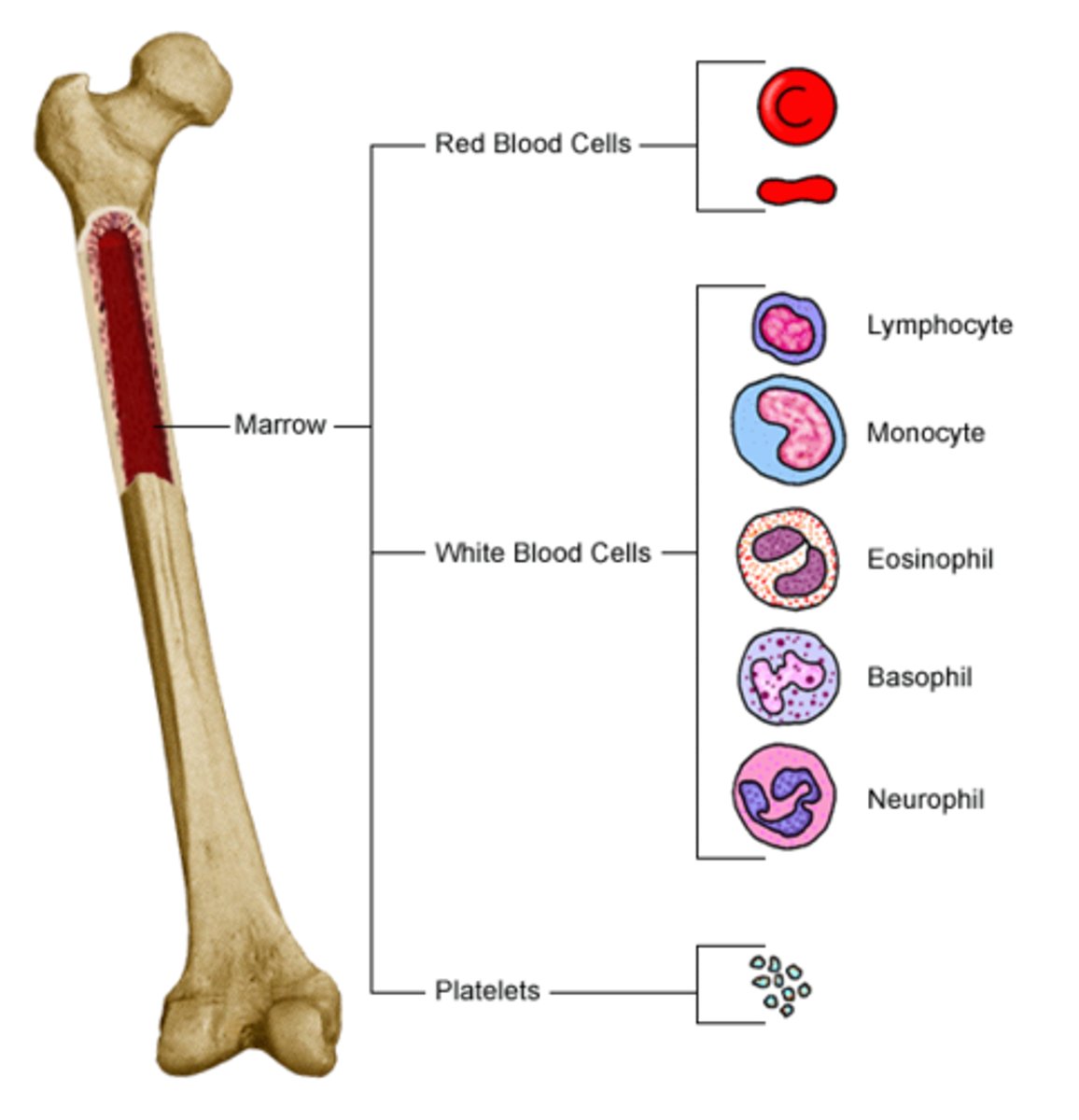
hematopoiesis
formation of blood cells that occurs from the stem cells in red bone marrow
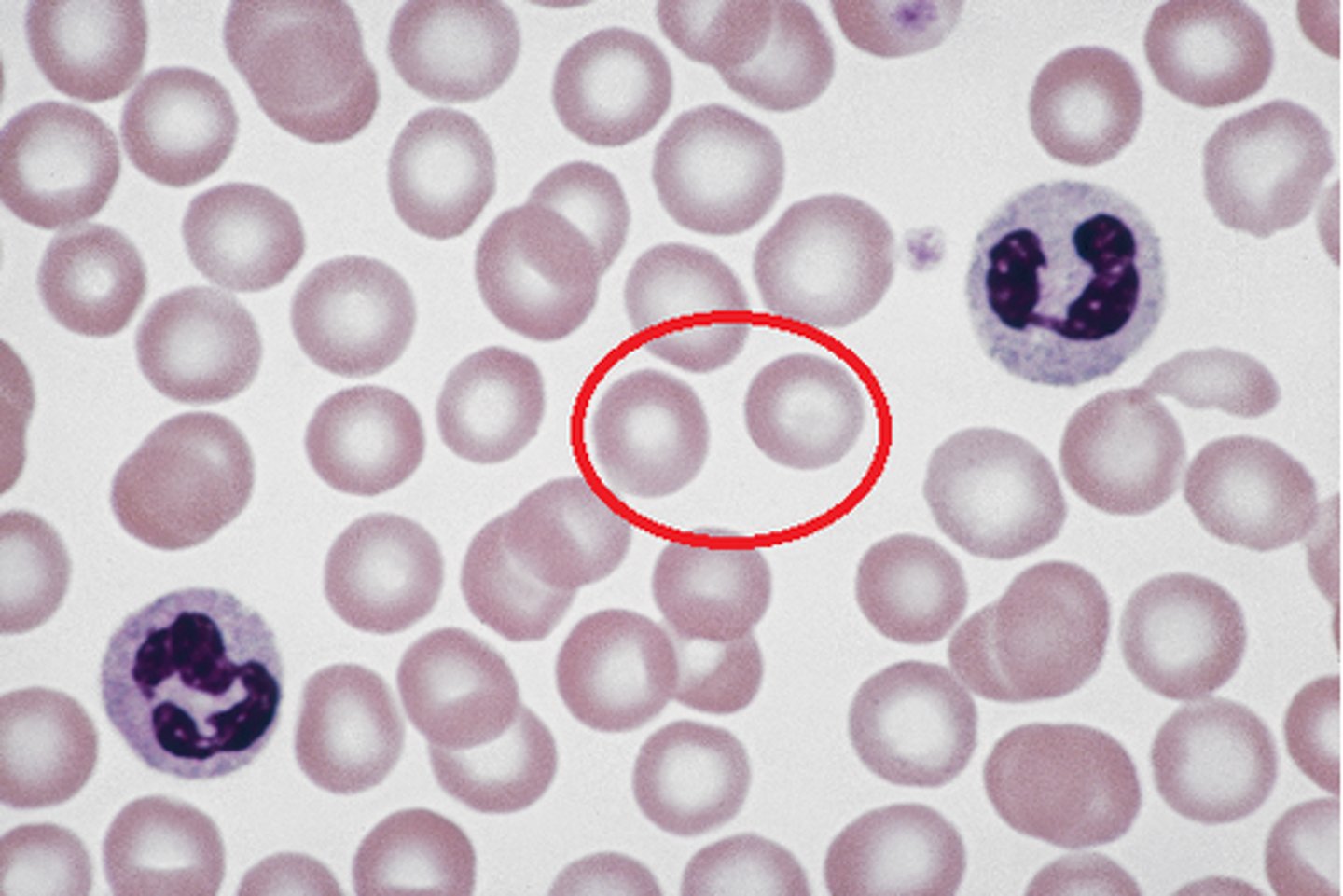
erythrocytes
aka red blood cells
- biconcave discs that lack a nuclei & mitochondria
- short-lived (~120 days)
- destroyed in liver & spleen by phagocytosis
Function: transport oxygen to tissues and carbon dioxide from tissues back to lungs
-> uses HEMOGLOBIN: protein molecule that combines with oxygen, makes up 1/3 of RBC volume and 95% of dry weight
hypoxia
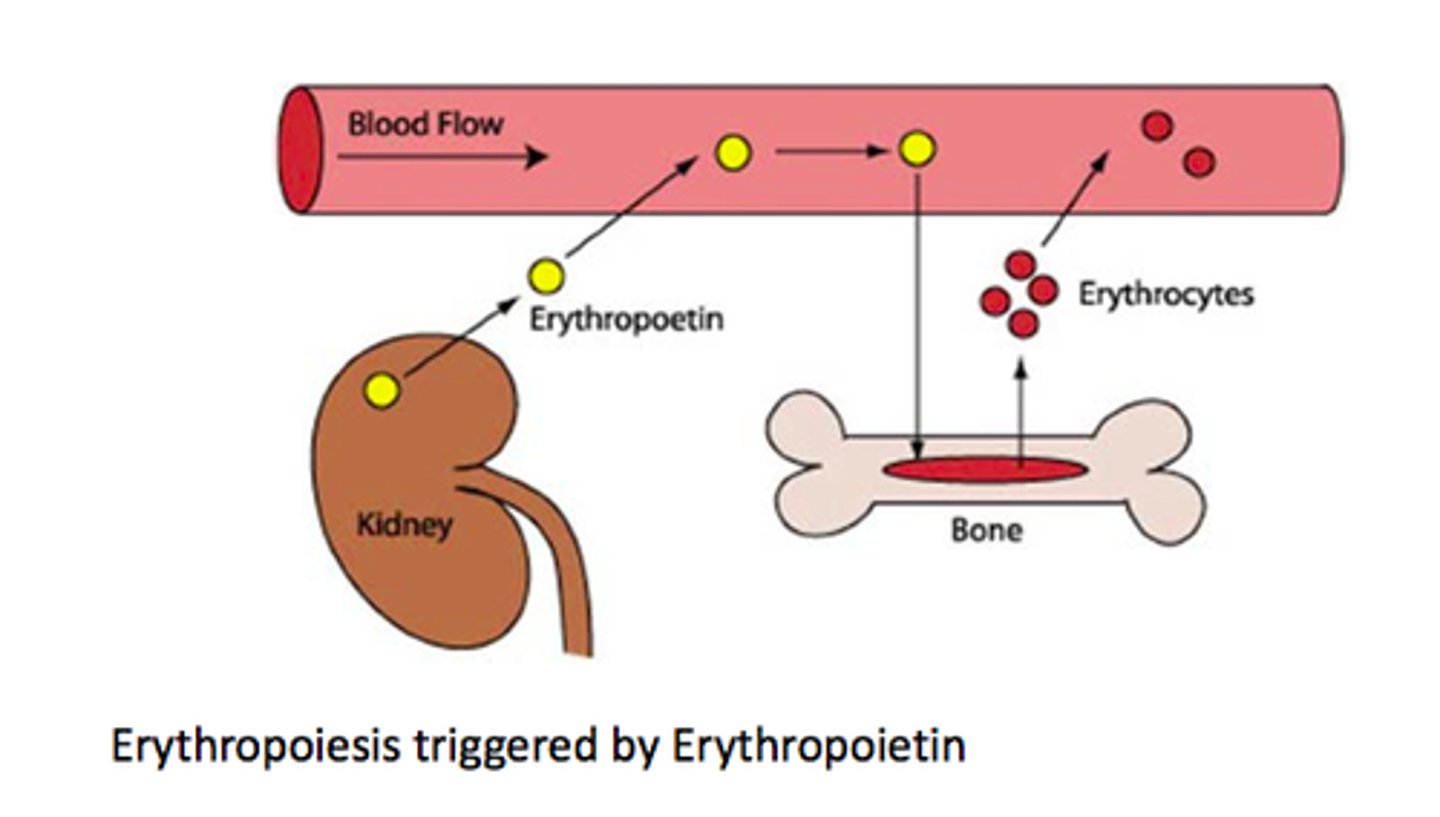
the state of low blood oxygen, which stimulates erythropoiesis (formation of red blood cells)
erythropoietin (EPO)
the hormone secreted by the kidneys and liver in response to decreased blood oxygen (hypoxia); it stimulates RBC production
oxyhemoglobin
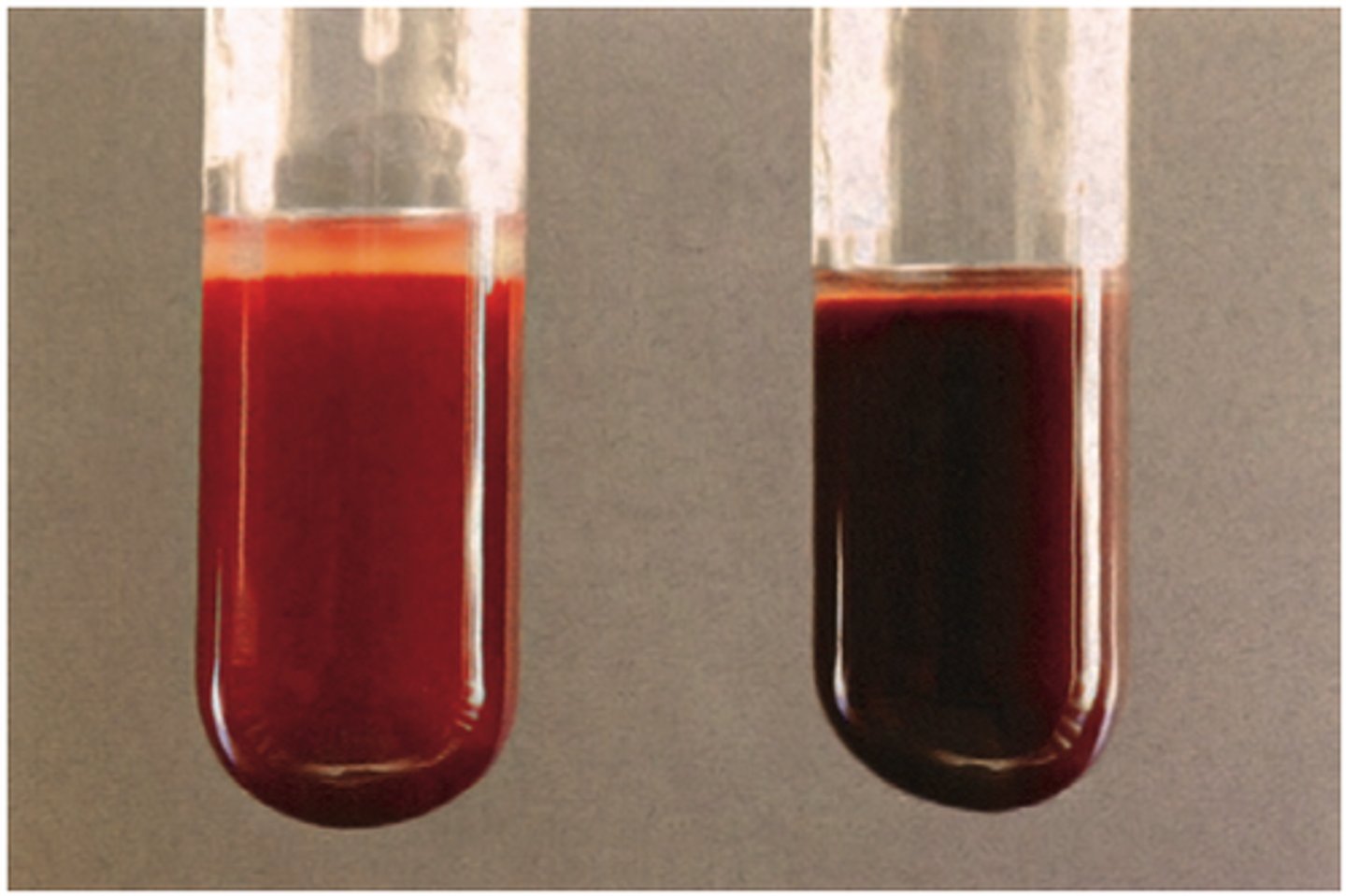
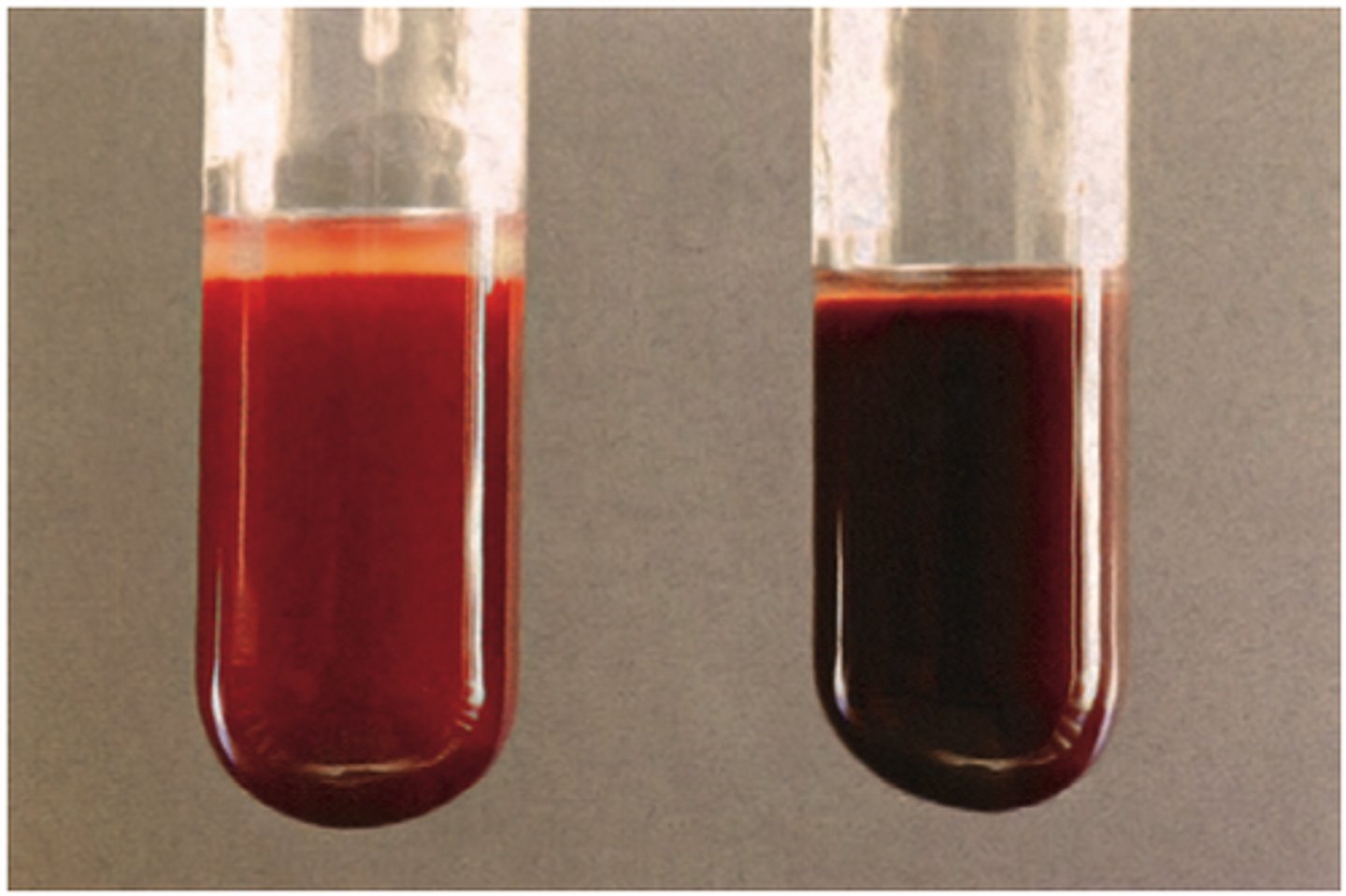
hemoglobin bound to oxygen; bright red
- found in arteries
deoxyhemoglobin
hemoglobin without oxygen; dark red
- found in veins
anemia
too few RBCs/hemoglobin
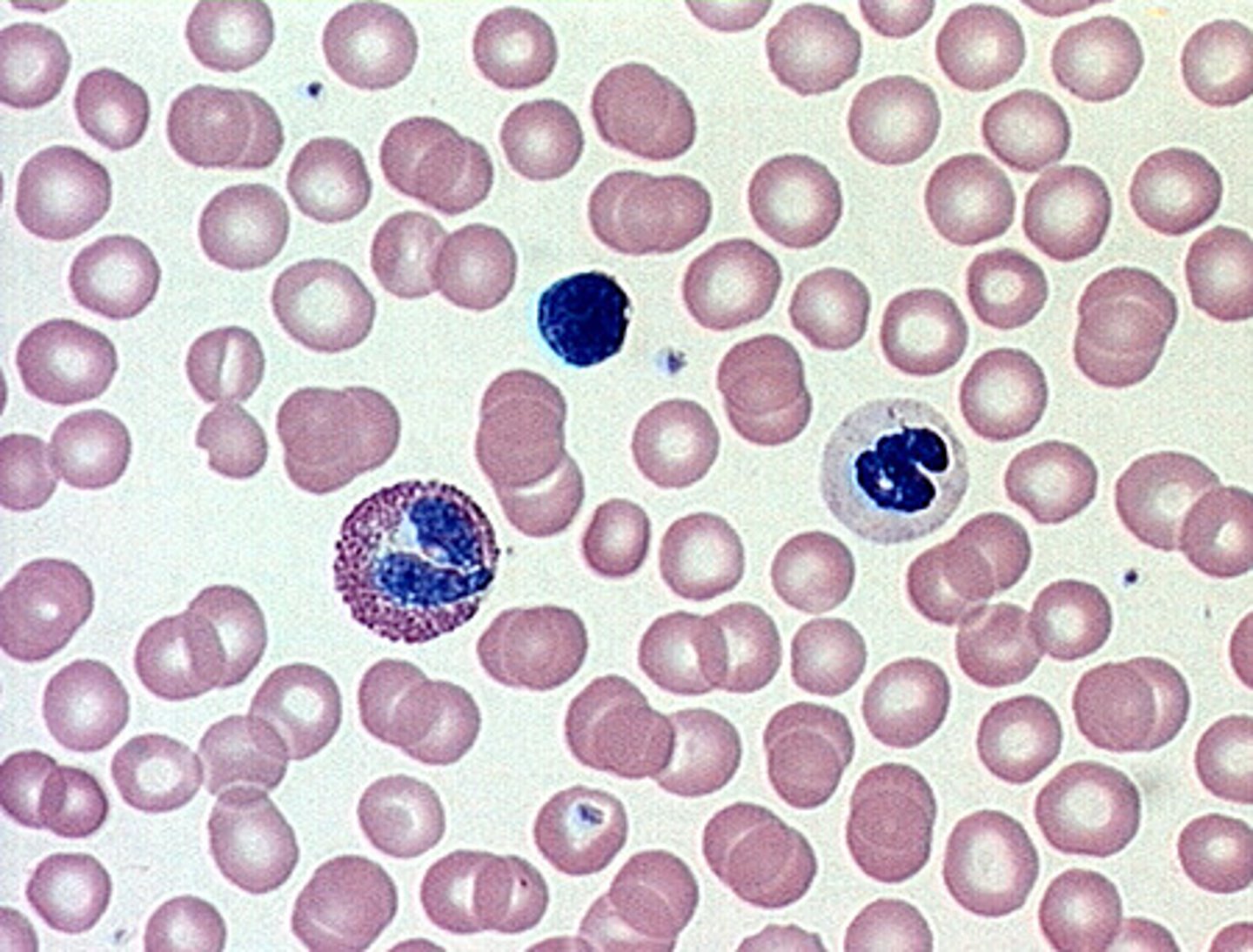
leukocytes
aka white blood cells
Function: defend against infection and foreign invaders
Types: neutrophils, basophils, eosinophils, monocytes, lymphocytes
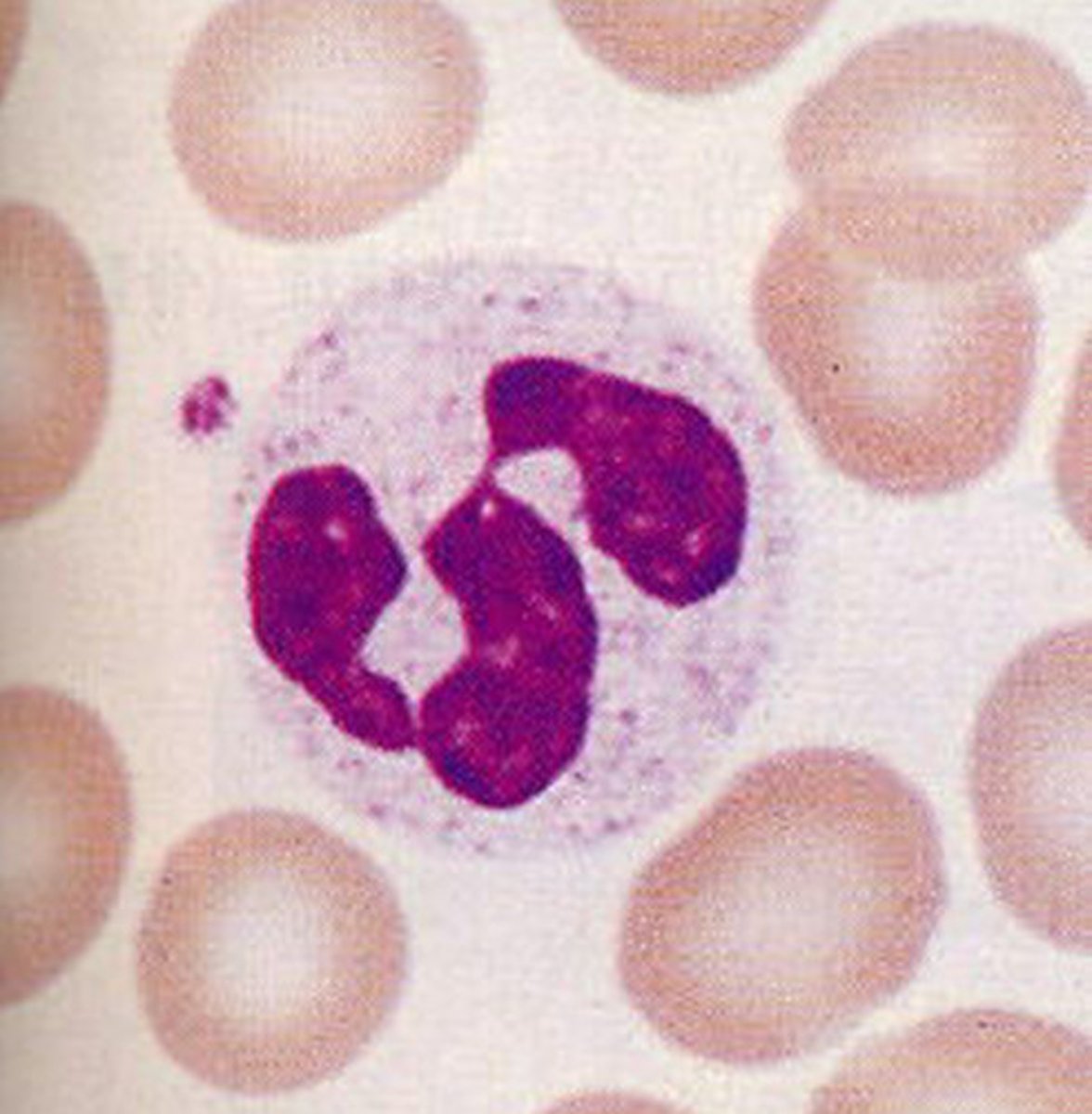
neutrophils
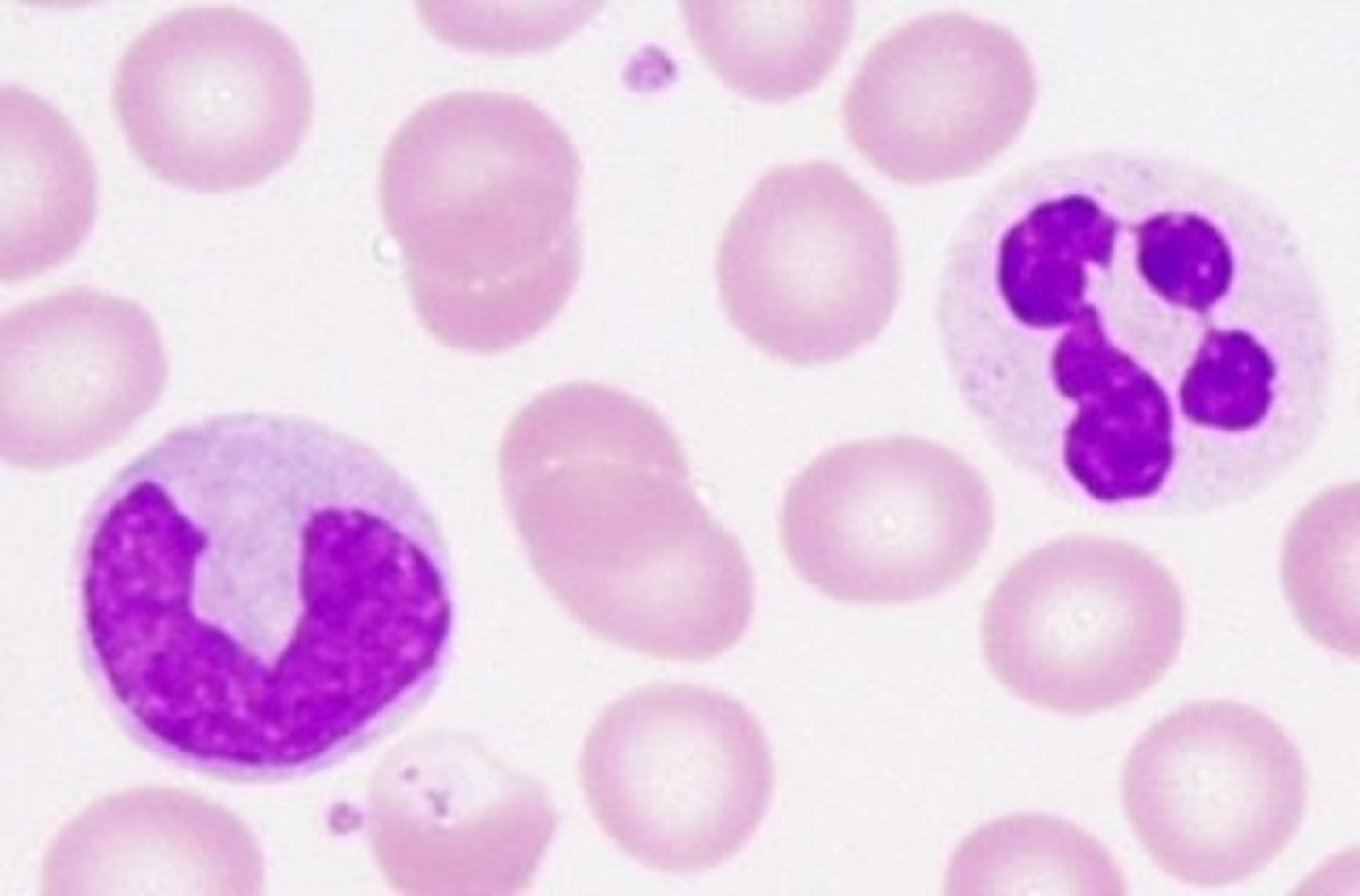
most common type of WBC; 60-70% of WBC
- active phagocytes
- found in the pus of wounds
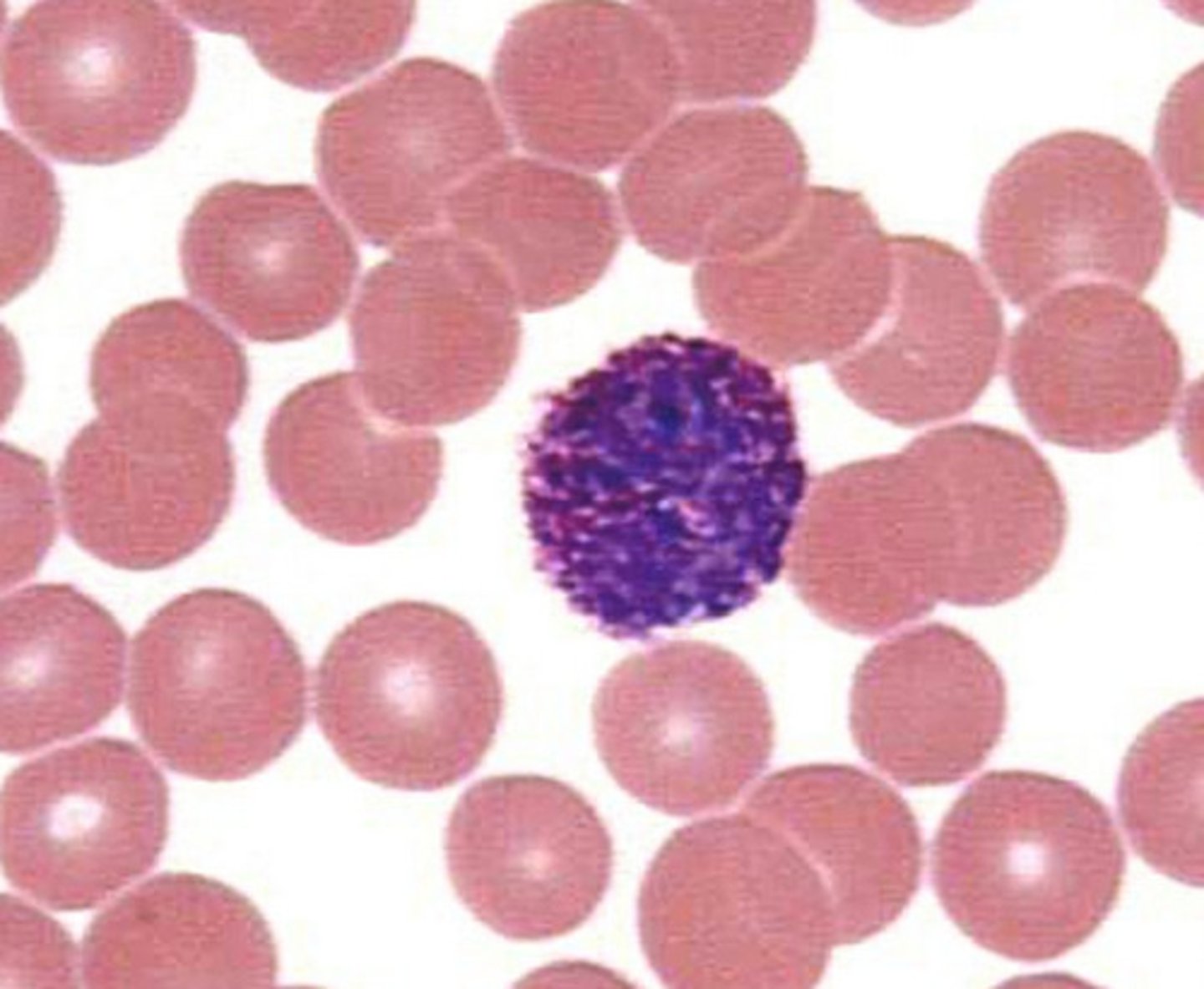
basophils
1% of WBC
produce heparin (blood thinner, less coagulation) and histamines (loosen capillaries); important in inflammatory response
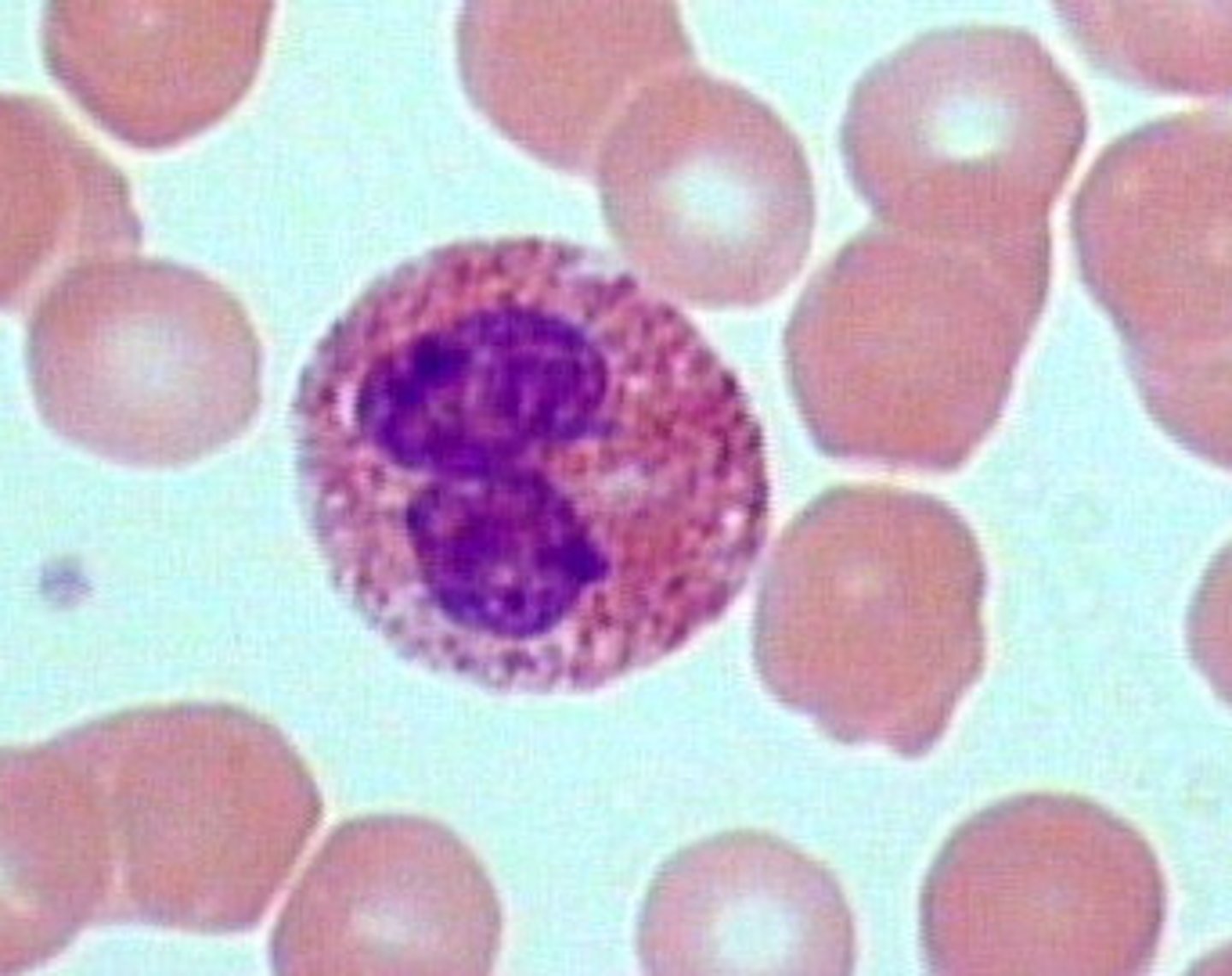
eosinophils
2-4% of WBC
mainly attack parasites, produce antihistamines
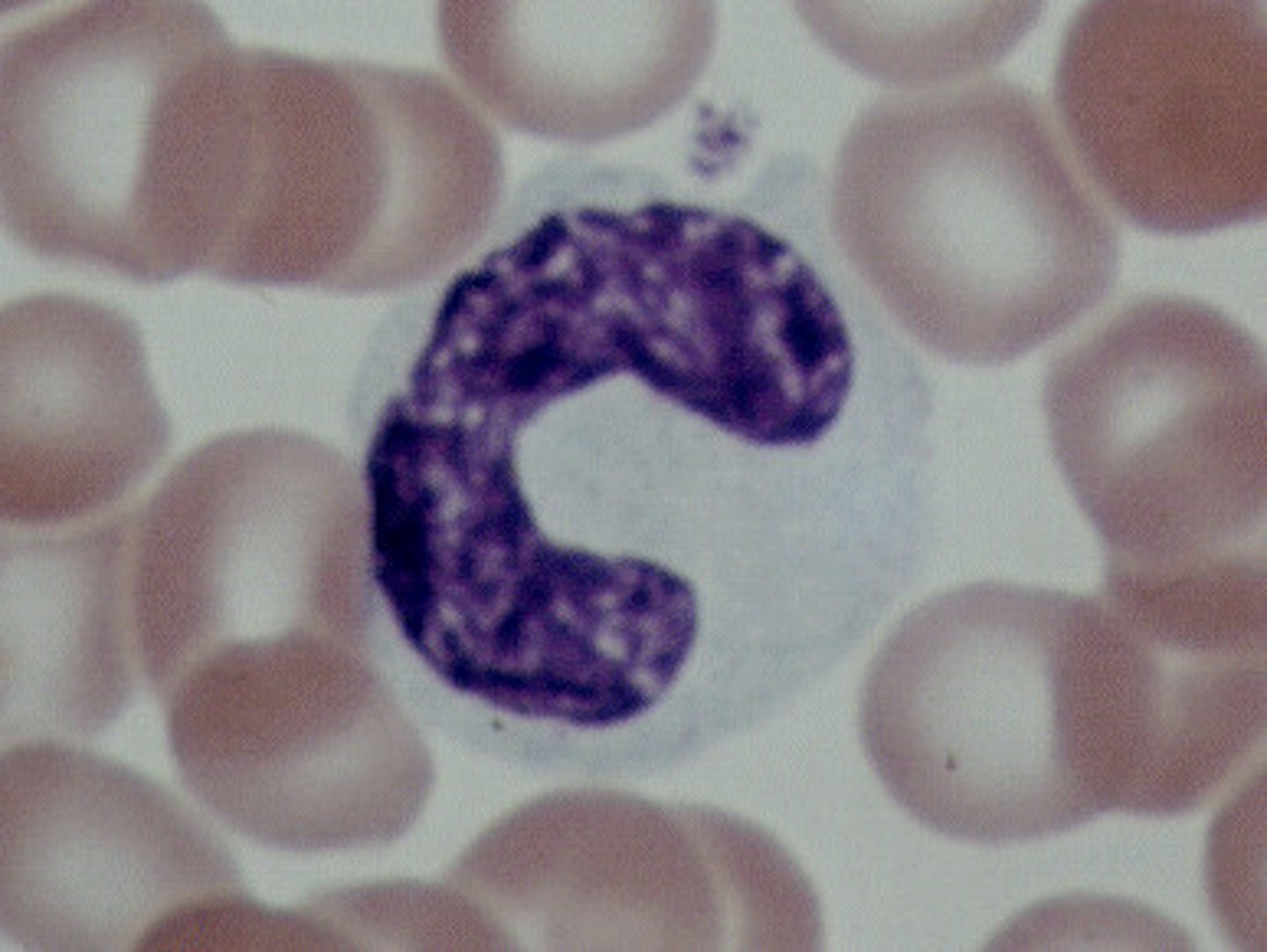
monocytes
2-8% of WBC
largest of all blood cells, leave blood to become macrophages in tissue
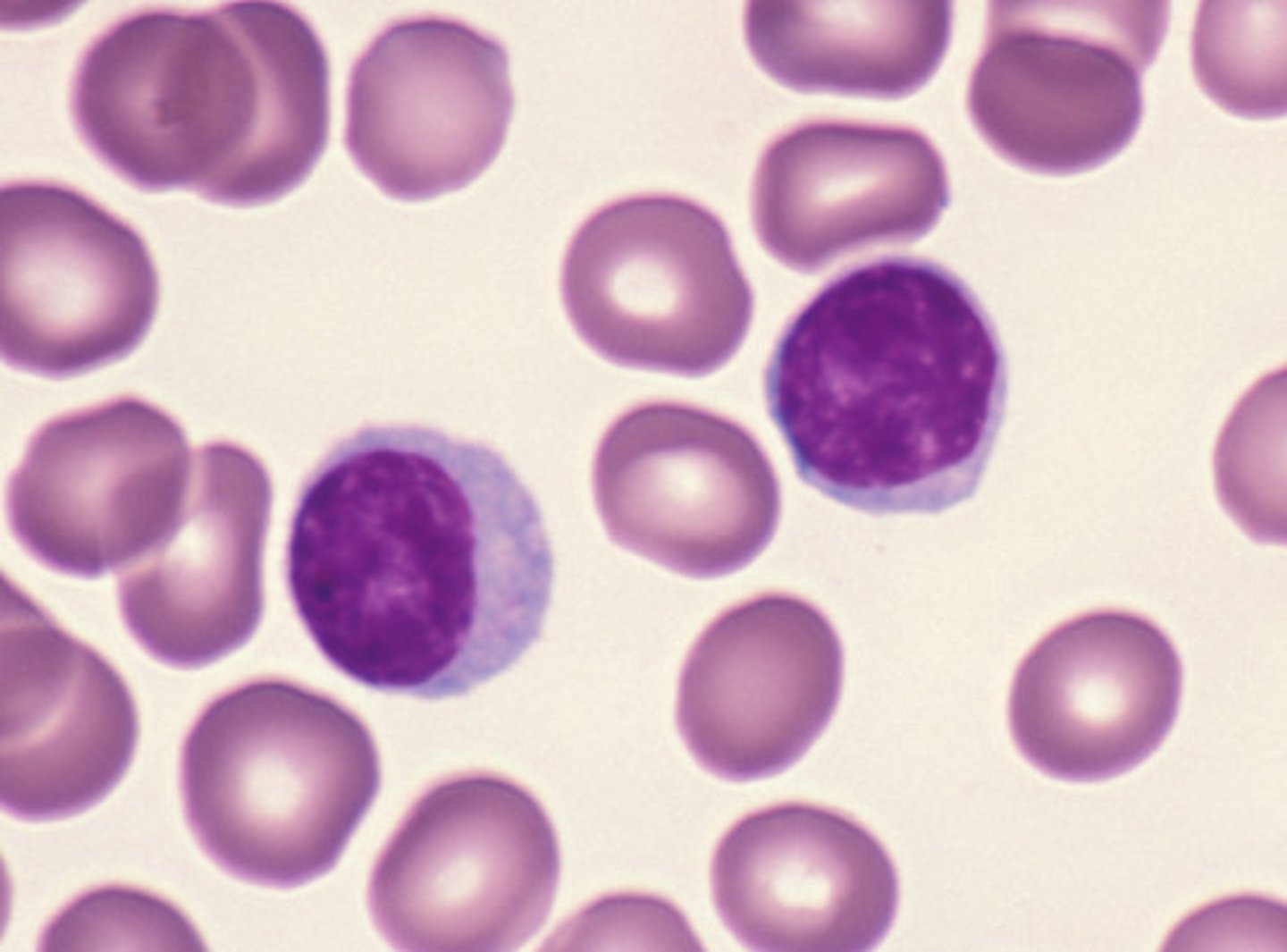
lymphocytes
WBC; two types that are both a part of the immune response
T (thymus) cells: directly attack invaders
B cells: yield antibodies
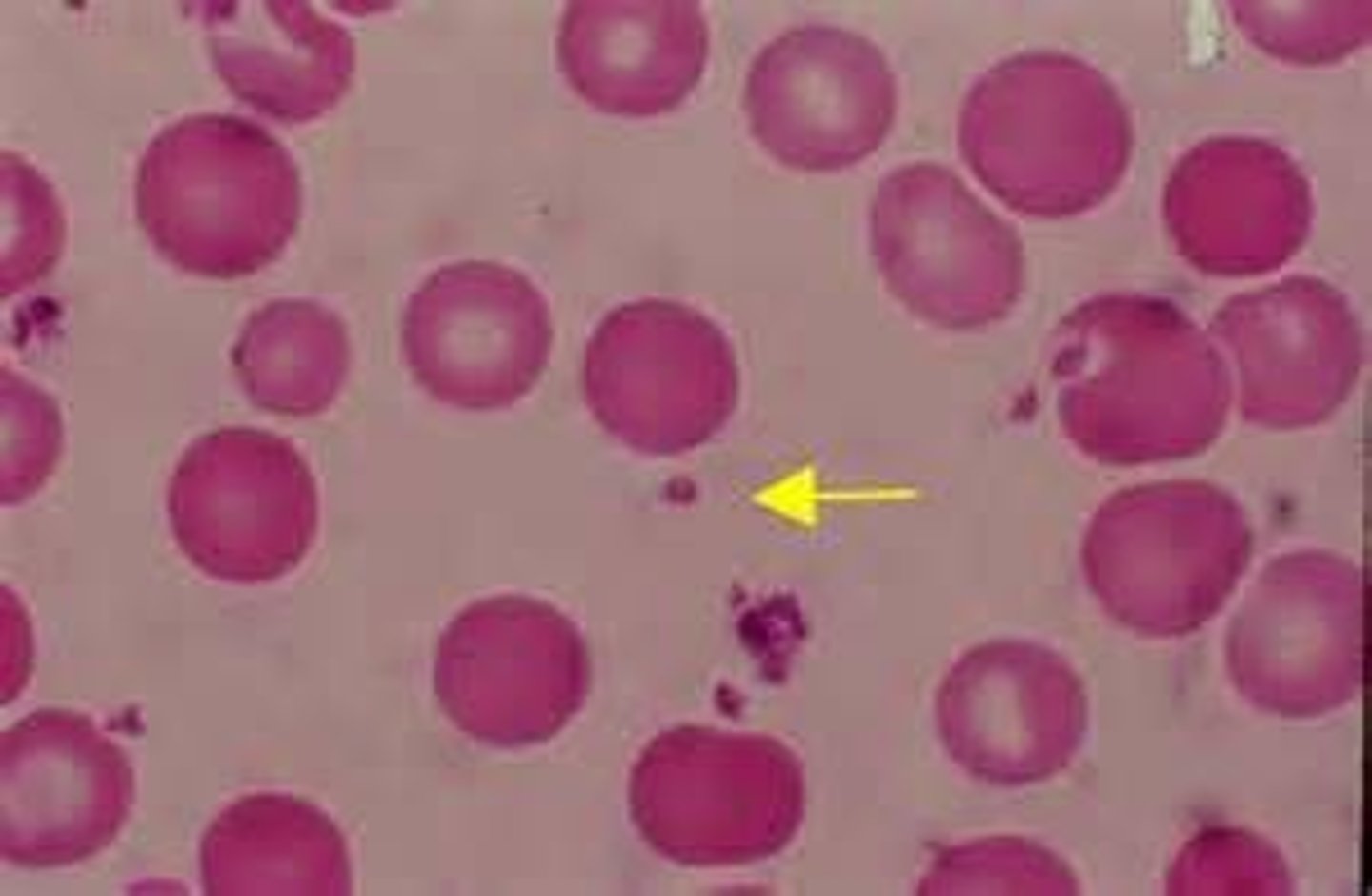
platelets
come from thrombocytes; form blood clots and aid in vessel repair
plasma
liquid portion of blood; made up of 92% water and also other nutrients (amino acids, sugars, nucleotides, lipids), gases (O2, CO2), vitamins, electrolytes (ions), nonprotein nitrogenous substances (urea, uric acid, creatine) and plasma proteins
plasma proteins
albumin: blood pressure and transport
globulins (alpha, beta, gamma): transport lipids and antibodies for immunity
fibrinogen: important for blood clotting, converted to fibrin
blood type
refers to the presence or absence of certain markers on the surface of RBCs
antigens
a chemical/molecule that stimulates cells to produce antibodies (on a cell); identifying markers
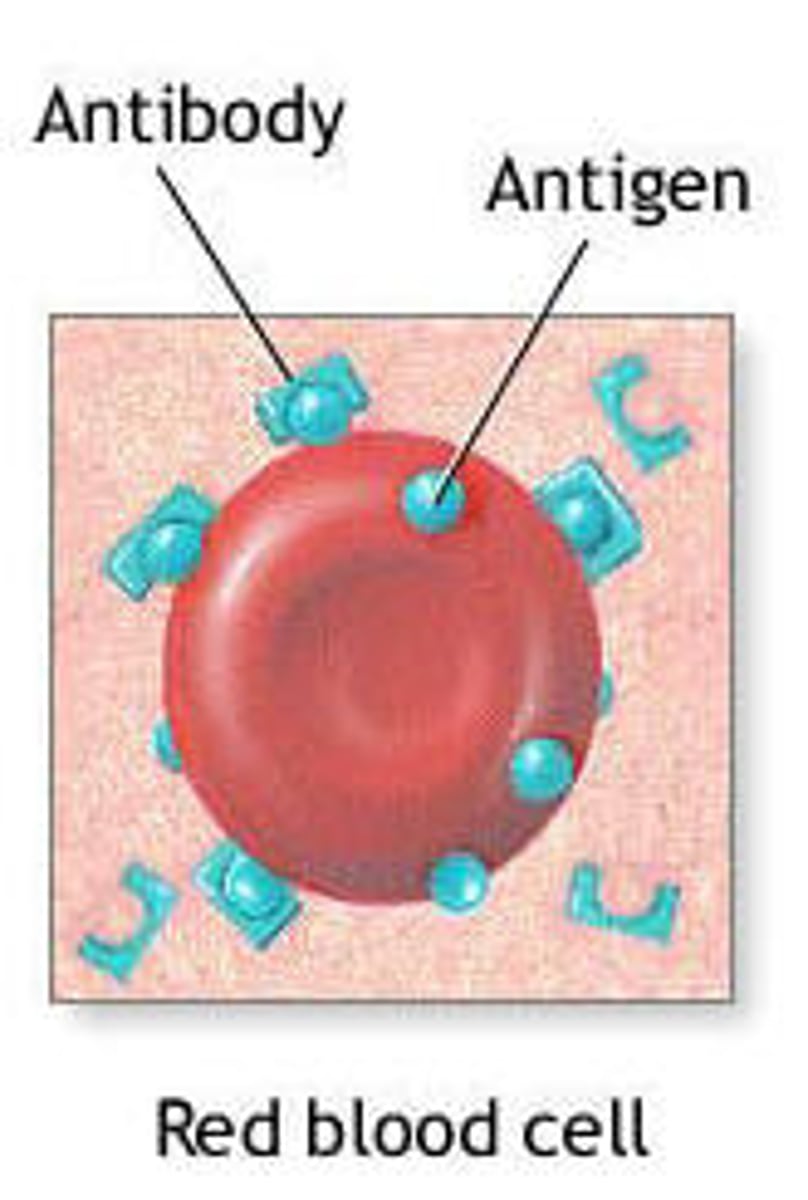
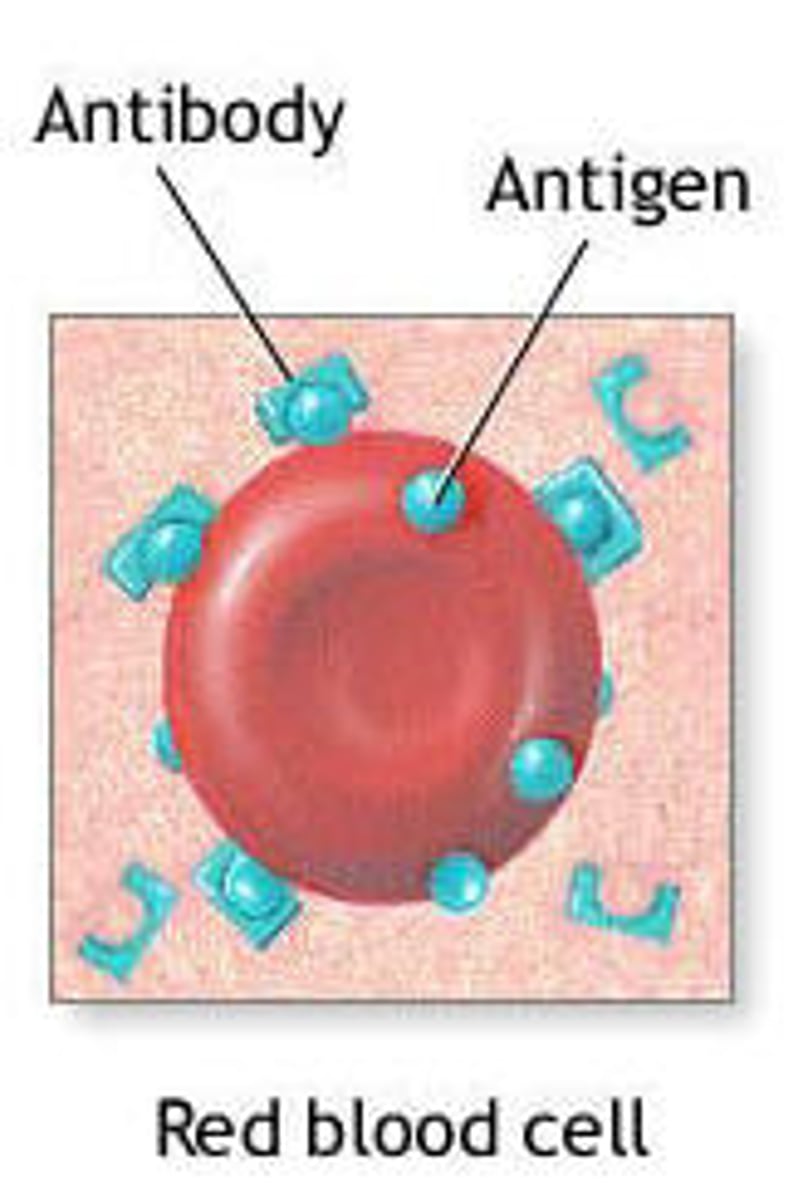
antibodies
a protein that reacts against a specific antigen
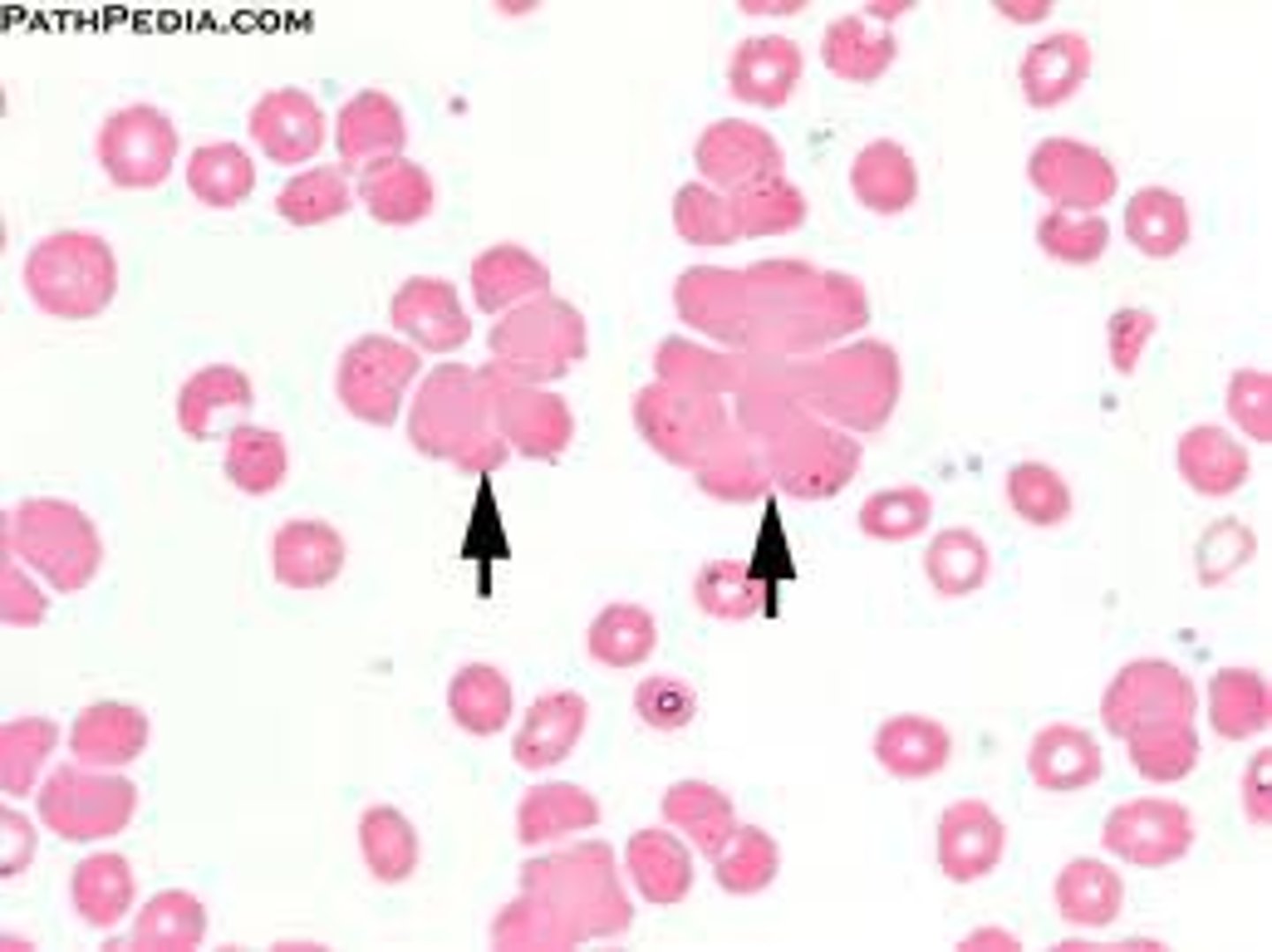
agglutination
clumping of RBCs in response to a reaction between antibody/antigen
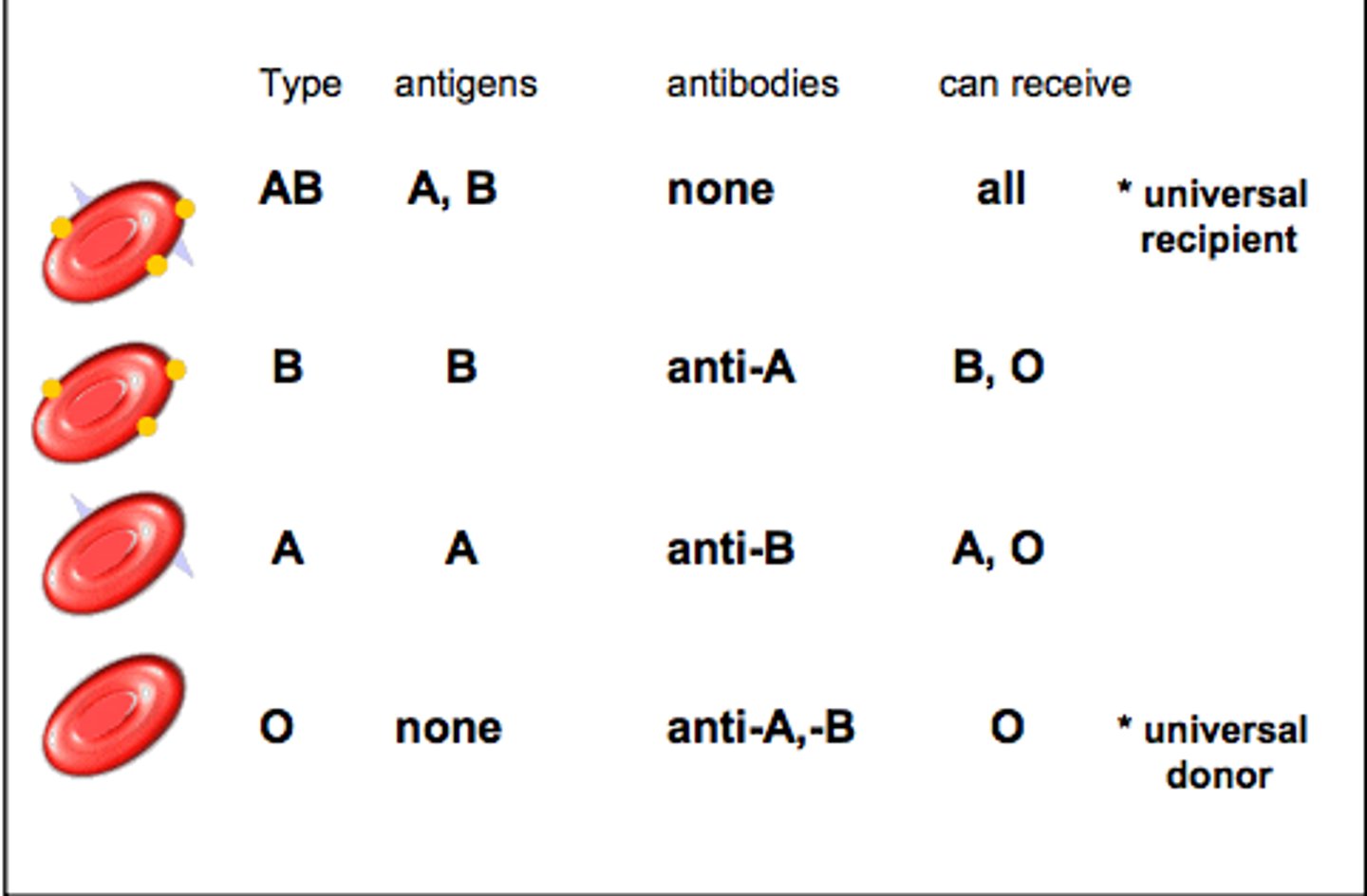
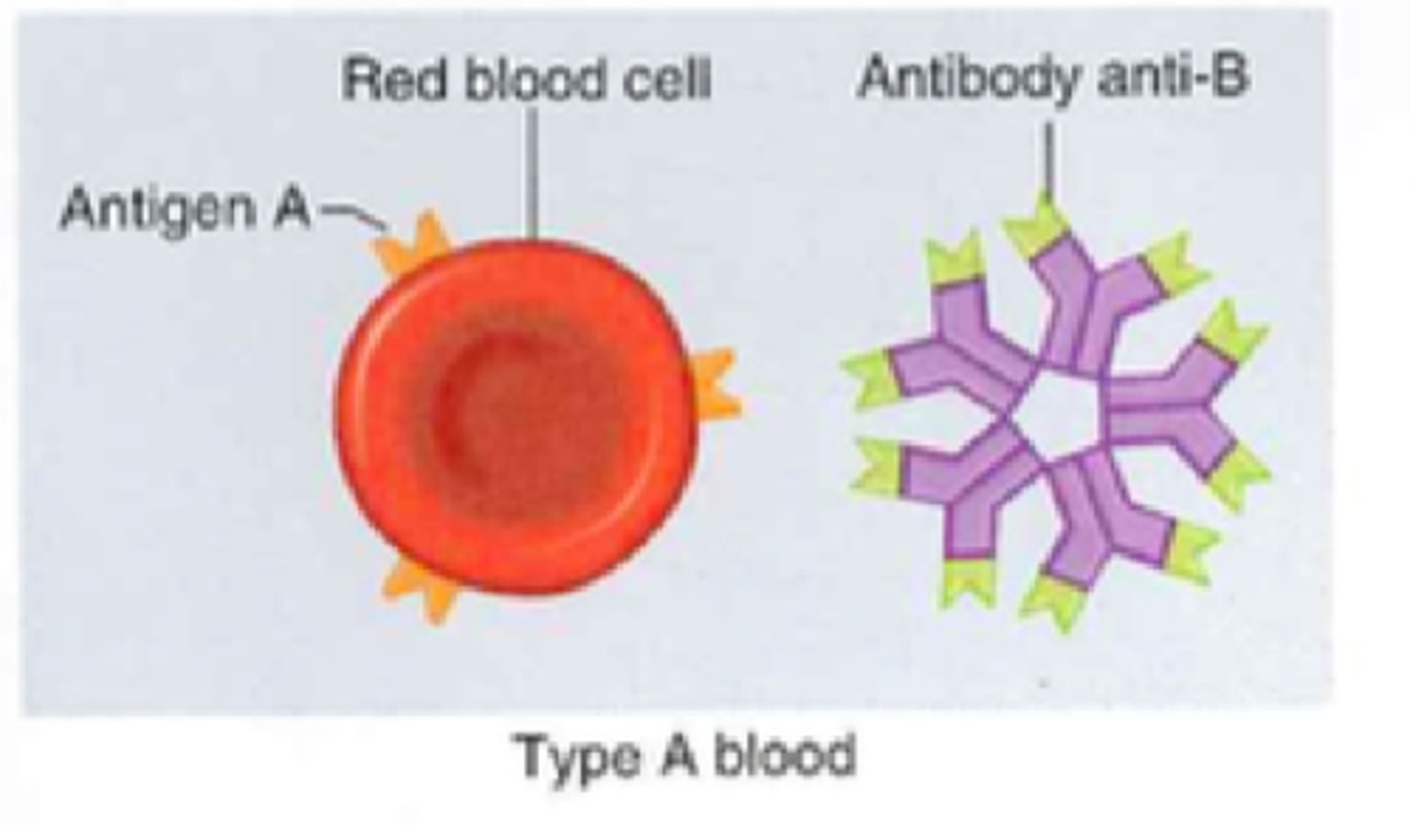
Type A Blood
blood that has the A antigen and anti-B antibodies
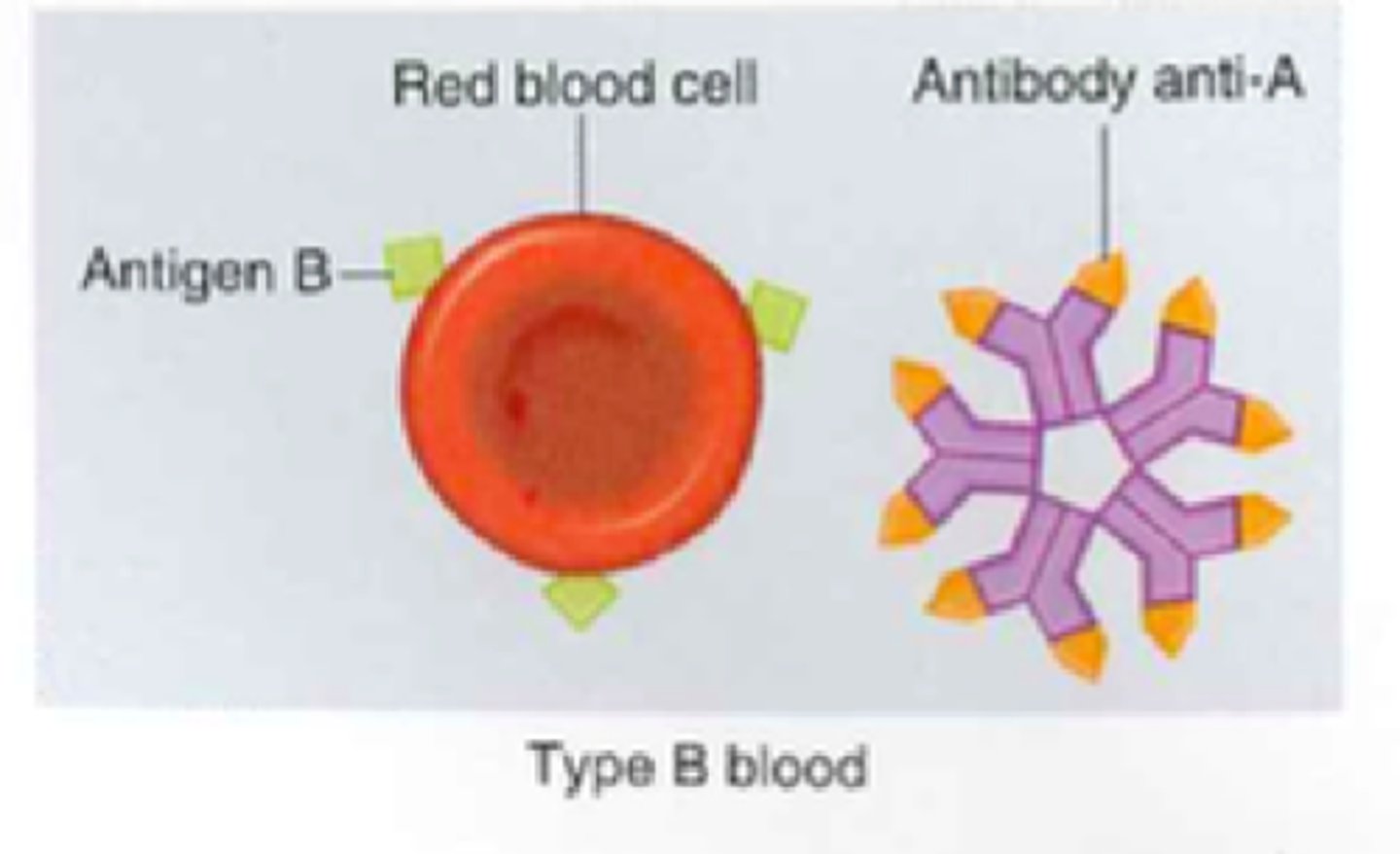
Type B Blood
blood that has the B antigen and anti-A antibodies
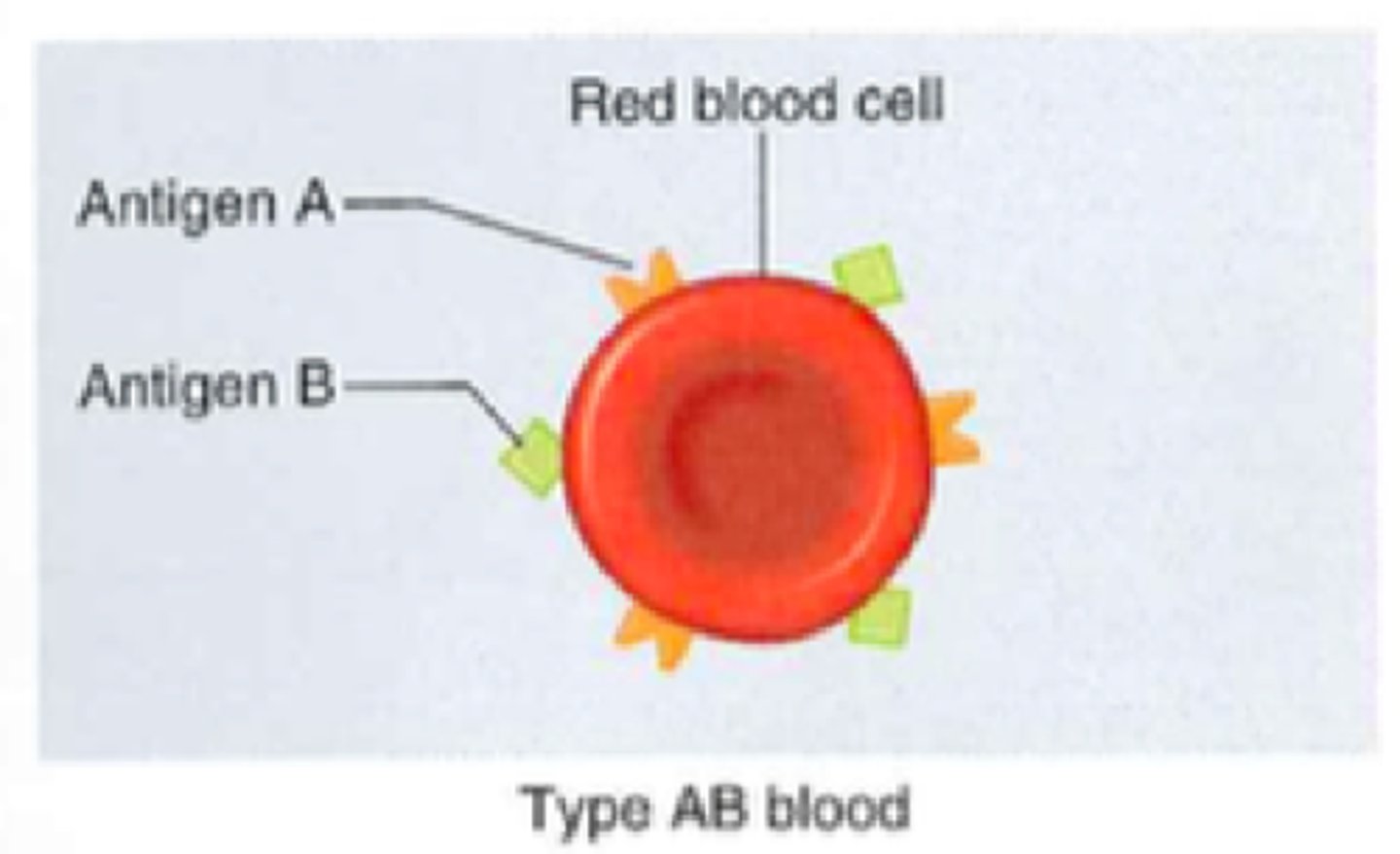
Type AB Blood
blood that has both the A and B antigens and no antibodies; considered universal recipient
Type O Blood
blood that has no antigens and both anti-A and anti-B antibodies; considered universal donors
Rh positive blood
the presence of antigen D and/or other Rh antigens on the RBC membrane; have no Rh antibodies
Rh negative blood
the lack of Rh antigens; has Rh antibodies
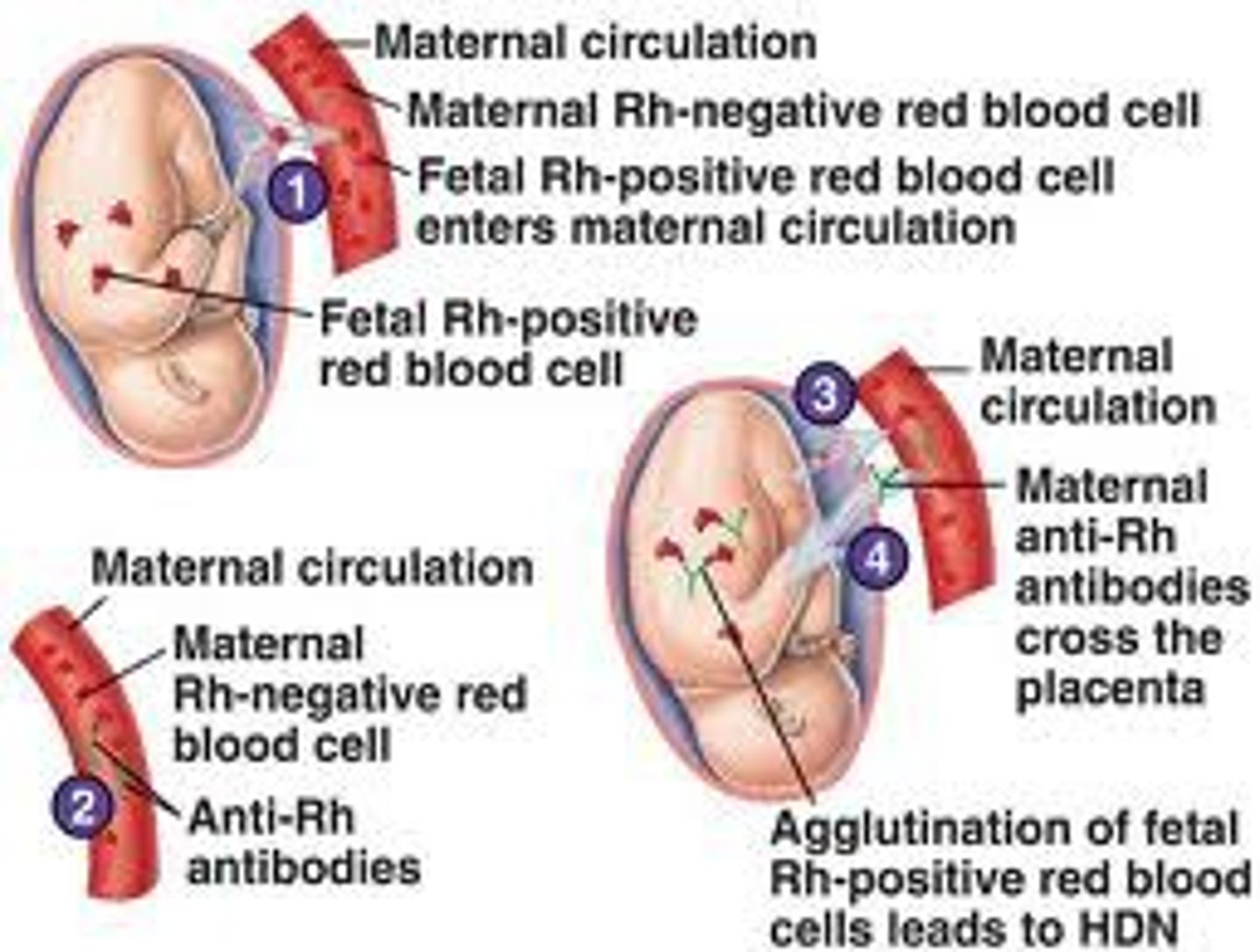
erythroblastosis fetalis
a disorder that results from the incompatibility of a fetus with Rh-positive blood and a mother with Rh-negative blood, causing red blood cell destruction in the fetus; a blood transfusion is necessary to save the fetus, occurs after the mom first gives birth to an Rh+ baby (problem with subsequent pregnancies)