Anatomy II - Lecture Exam 1 - Endocrine system
 Call Kai
 Learn
Learn Practice Test
 Spaced Repetition
 Match
Match Flashcards
 Knowt Play
1/122

There's no tags or description
Looks like no tags are added yet.
Name | Mastery | Learn | Test | Matching | Spaced | Call with Kai | Chat |
|---|
No analytics yet
Send a link to your students to track their progress
123 Terms
nervous system vs endocrine system

nervous system
Electrical impulses (action potentials) and chemical neurotransmitters
Axons and synaptic clefts (nerve fibers)
Rapid—typically milliseconds
Specific, localized, and targeted (muscles, glands, other neurons)
Short-lived (stops quickly when signals cease)
endocrine system characteristics
Hormones (chemical messengers)
The cardiovascular system (bloodstream)
Slow—seconds, hours, or days
Widespread and generalized (any cell with appropriate hormone receptors)
Long-lasting (sustained effects over minutes, days, or weeks)
Anterior Pituitary

Pineal Gland
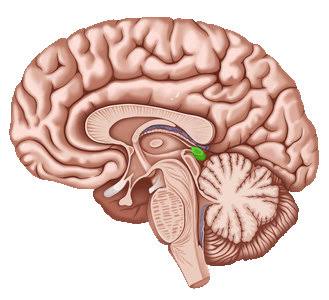
Thyroid Gland

Parathyroid Glands

thymus

Adrenal Glands

Pancreas

Ovaries (Female Gonads

Testes (Male Gonads)

ductless glands
Endocrine glands are all ________________
they secrete hormones directly into the blood
NOT EXOCRINE
exocrine
produce nonhormonal products (sweat or saliva) that are
excreted via ducts to a membrane surface
Strictly endocrine
Pituitary, thyroid,
pineal, parathyroid, adrenal
Endocrine + exocrine
pancreas, gonads, thymus
Endocrine + neural
hypothalamus
endocrine system
a ductless network of glands that secretes chemical messengers called hormones directly into the bloodstream to regulate slow, long-lasting metabolic activities and maintain homeostasis. [1, 2, 3]
blood
hormones diffuse into
Up-regulation
: Target cells form more receptors in response to prolonged low levels of a specific hormone, making the cells more sensitive and responsive to that messenger. [1, 2
Down-regulation
Target cells lose receptors (desensitize) in response to persistently high blood levels of a specific hormone, which prevents the target cells from overreacting to an excess of the hormone. [1]
hormone/endocrine signaling
Secreted by endocrine glands or specialized cells directly into the extracellular fluid, where they enter blood vessels.
They act over long distances to regulate systemic metabolic functions, growth, and balance. [1, 2, 3]
Paracrines
Local chemical messengers that affect different cell types close to the releasing cell.
They do not rely on the bloodstream for delivery (though they can leak into it in negligible amounts). [1, 2, 3]
Autocrines
Chemical signals that feed back to influence the very same cell that released them.
Often utilized in the immune system or localized tissue responses to regulate self-activation or proliferation. [1, 2, 3]
Permissiveness
Definition: The first hormone needs the second "permission" (presence) to work fully, even if the second hormone does not do much or anything on its own. [1]
Classic Example: Reproductive hormones need the thyroid hormone to timely develop and mature the reproductive system. Without enough thyroid hormone, reproductive development is delayed or incomplete. [1, 2]
synergism
two or more hormones produce a combined effect that is greater than the sum of their individual effects acting alone. [1]
ex:
Glucose Regulation / Metabolic Drive: Both glucagon and epinephrine (adrenaline) raise blood glucose levels.
Antagonism
occurs when one hormone opposes or counteracts the action of another hormone to help maintain bodily balance and homeostasis. [1, 2]
ex:
Insulin vs. Glucagon (Blood Glucose):
Insulin (from the pancreas) lowers blood sugar by driving glucose into body cells.
Glucagon (also from the pancreas) raises blood sugar by releasing stored glucose from the liver. [1, 2]
hormones’ effect on cells
Regardless of the pathway, hormone binding typically results in one or more of the following cellular changes:
Changing plasma membrane permeability or electrical state.
Stimulating the synthesis of proteins or regulatory molecules.
Activating or deactivating enzymes.
Inducing secretory activity.
Stimulating mitosis (cell division). [1]
Amino acid-based and steroid-based hormones
differ primarily in their chemical structure, solubility, receptor location, and cellular mechanism of action. [1]
Amino Acid-Based Hormones
Structure: Consist of simple amino acid derivatives, peptides, and large proteins.
Solubility: Water-soluble (hydrophilic) and cannot cross the lipid cell membrane.
Receptor Location: Bind to receptors on the outer surface of the target cell's plasma membrane.
Mechanism of Action: Use second messenger systems (such as cAMP) to trigger an intracellular signaling cascade.
Examples: Insulin, glucagon, growth hormone, and epinephrine.
Special Exception: Thyroid hormone is amino acid-based, but it is lipid-soluble and acts intracellularly like a steroid. [1, 2, 3, 4, 5, 6]
Steroid-Based Hormones
Structure: Synthesized from lipid molecules derived from cholesterol.
Solubility: Lipid-soluble (hydrophobic) and can easily pass directly through the cell's phospholipid bilayer.
Receptor Location: Bind to intracellular receptors located inside the cytoplasm or nucleus.
Mechanism of Action: Directly bind to DNA to alter gene transcription and prompt new protein synthesis.
Examples: Cortisol, aldosterone, testosterone, and estrogen
thyroid hormone as an exception
thyroid hormone is derived from the amino acid tyrosine. Normally, this classification would mean it is water-soluble and acts via cell-surface receptors and second messengers. [1, 2, 3, 4]
However, thyroid hormone possesses a unique chemical modification (the addition of iodine atoms to tyrosine rings) that makes the molecule nonpolar and lipid-soluble. Because of this structural quirk: [1, 2]
Cyclic AMP Second Messenger Mechanism of
amino acid based (water-soluble) hormones
Water-soluble, amino acid-based hormones use the cyclic AMP (cAMP) second messenger mechanism because they cannot cross the lipid bilayer of the target cell's plasma membrane. [1, 2]
The Five Steps of the cAMP Mechanism
Hormone Binding: Water-soluble hormone (first messenger) attaches to an outer membrane receptor.
G Protein Activation: Receptor changes shape, causing the G protein to swap GDP for GTP.
Adenylate Cyclase Activation: Active G protein subunit detaches and activates adenylate cyclase in the membrane.
cAMP Generation: Adenylate cyclase converts ATP into cAMP (second messenger).
Cellular Response: cAMP activates Protein Kinase A (PKA), which phosphorylates intracellular proteins to alter cell function.
direct gene activation
Steroid hormones use ____________
direct gene activation
the mechanism used by lipid-soluble hormones (like steroids and thyroid hormones) to alter a target cell's activity by directly triggering protein synthesis. Because these hormones are lipid-soluble, they can diffuse straight through the plasma membrane, unlike water-soluble hormones which require second-messenger systems.
Diffusion: The hormone passes through the plasma membrane of the target cell.
Binding: The hormone enters the nucleus (or cytoplasm) and binds to a specific intracellular receptor.
Complex Formation: This binding creates a hormone-receptor complex.
DNA Interaction: The complex binds to specific receptor-binding regions on the cell's DNA.
Transcription & Translation: This interaction activates genes to produce messenger RNA (mRNA), which is then translated into new proteins in the cytoplasm
humoral stimulus
a process where endocrine glands secrete hormones in direct response to changing blood levels of critical ions and nutrients. (The term "humor" originates from classical medical terminology referring to body fluids). [1]
ex:
Calcium and Parathyroid Hormone (PTH): When blood calcium (\(Ca^{2+}\)) levels drop too low, the parathyroid glands detect this deficit and release PTH. PTH raises blood calcium back to normal, which then turns off the stimulus. [1, 2]
neural stimulus
a process where nerve fibers directly trigger endocrine glands to release their hormones. [1, 2]
ex:
The Adrenal Medulla: During a crisis or acute stress, sympathetic nerve fibers stimulate the adrenal medulla.
hormonal stimulus
occur when endocrine glands release their hormones in response to signals from other hormones. [1, 2]
ex: Hypothalamic-Pituitary Axis: The hypothalamus releases releasing and inhibiting hormones that control the anterior pituitary gland. [1]
Hypothalamus
the master control center of the endocrine system that links the nervous and endocrine systems. [1, 2]
Receives neural input from the cortex, limbic system,
thalamus, internal organs, special sense organs, and blood
The hypothalamus controls the anterior pituitary by sending releasing or inhibiting hormones through the hypophyseal portal system. These signals tell the anterior pituitary to increase or decrease hormone release, including TSH, ACTH, FSH, LH, and GH.
The posterior pituitary stores and releases two hormones made by the hypothalamus:
Oxytocin: stimulates uterine contractions and milk release.
ADH (vasopressin): helps regulate water balance and blood osmolarity.
These hormones travel down hypothalamic neurons to the posterior pituitary, where they are stored and released into the bloodstream.
Sympathetic nerves directly stimulate the adrenal medulla to rapidly release epinephrine and norepinephrine for the fight-or-flight response.
lipid vs water soluble hormone
basically steroid vs amino acid based hormones yknow

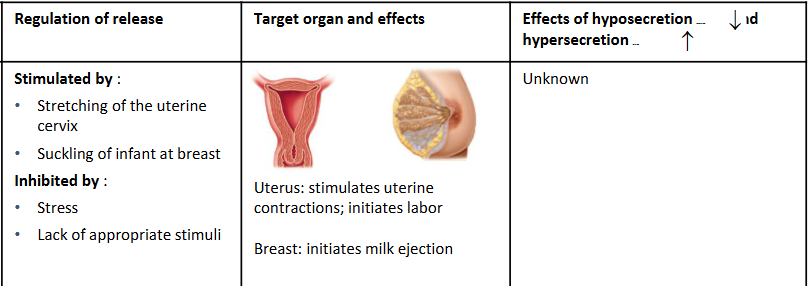
oxytocin
oxytocin chemical structure and cell type
Oxytocin is a 9-amino-acid, water-soluble hormone made in the hypothalamus and stored/released by the posterior pituitary.
oxytocin regulation
uses positive feedback: labor and breastfeeding trigger its release, which stops when the stimulus ends.
oxytocin target organs
Oxytocin causes uterine contractions and milk letdown, and also promotes bonding and nurturing.
oxytocin hyposecretion
Inability to eject milk during breastfeeding, making nursing difficult.
• Uterine inertia (weak, prolonged labor contractions), making natural childbirth difficult.
• (Clinical note: Synthetic oxytocin, or Pitocin, is routinely administered to correct this during labor).
antidiuertic hormone

posterior pituitary hormones
(Made by Hypothalamic Neurons and Stored in Posterior Pituitary
oxytocin and antidiuretic hormone (ADH)
anterior pituitary hormones
growth hormone (GH)
thyroid-stimulating hormone (TSH)
adrenocorticotropic hormone (ACTH)
follicle-stimulating hormone (FSH)
luteinizing hormone (LH)
prolactin (PRL)
growth hormone (GH)
a major metabolic and growth-promoting hormone produced by the anterior pituitary gland. [1, 2]
![<p><mark>a major metabolic and growth-promoting hormone produced by the anterior pituitary gland</mark>. [1, 2]</p>](https://assets.knowt.com/user-attachments/1f68fc17-591d-4882-9462-25fddd8bc399.png)
growth hormone chemical structure
A protein hormone made and released by acidophilic somatotrophs in the anterior pituitary.
growth hormone regulation
Controlled by GHRH (stimulates) and somatostatin/GHIH (inhibits) from the hypothalamus, with GH/IGFs providing negative feedback.
growth hormone target organs and effects
Acts on liver, muscle, bone, and cartilage. It promotes growth mainly through IGFs, increasing protein synthesis, muscle mass, and bone length. Metabolically, it increases fat use and blood glucose while reducing glucose uptake (anti-insulin effect).
growth hormone hyposecretion in children
Pituitary Dwarfism: Slowed long bone growth leads to a maximum height of about 4 feet. Body proportions and mental development are typically normal, but sexual maturation may be delayed if other anterior pituitary hormones are affected.
growth hormone hyposecretion in adults
Adult GH Deficiency: Results in subtle metabolic changes, including decreased muscle mass, increased subcutaneous/visceral fat, decreased bone density, and low energy levels.
growth hormone hypersecretion in children
Gigantism: Occurs before the epiphyseal (growth) plates of long bones close. The person becomes abnormally tall (often 8 feet or more) but maintains relatively normal body proportions.
growth hormone hypersecretion in adults
Acromegaly: Occurs after epiphyseal plates close. Because long bones cannot lengthen, excess GH causes overgrowth of bony and soft tissues in the face, hands, and feet. Enlarged organs and glucose intolerance are common secondary symptoms.
Thyroid-stimulating hormone (TSH)
a tropic hormone synthesized and released by the anterior pituitary gland to control the metabolic activity of the thyroid gland. [1, 2]
![<p><mark>a tropic hormone synthesized and released by the anterior pituitary gland to control the metabolic activity of the thyroid gland</mark>. [1, 2]</p>](https://assets.knowt.com/user-attachments/7f1a098a-ae31-458f-8acc-e124d27e3aef.png)
thyroid stimulating hormone chemical structure
A glycoprotein hormone made and secreted by basophilic thyrotrophs in the anterior pituitary.
thyroid stimulating hormone regulation
TRH stimulates TSH, while T₃/T₄ and somatostatin inhibit it through negative feedback.
thyroid stimulating hormone target organs and effects
Acts on the thyroid gland to promote growth, iodine uptake, and T₃/T₄ production, which regulate metabolic rate.
thyroid stimulating hyposecretion
In Adults (Myxedema): Causes a low basal metabolic rate, constant feeling of cold, constipation, thick/dry skin, puffy eyes, mental sluggishness, and lethargy.
In Infants (Cretinism / Congenital Hypothyroidism): Causes severe mental retardation and a short, disproportionately sized body frame if left untreated. [1]
thyroid stimulating hormone hypersecretion
Effects: Leads to an abnormally elevated metabolic rate, excessive body heat and sweating, rapid or irregular heartbeat, nervousness, weight loss despite increased appetite, and a goiter (enlargement of the thyroid gland due to overstimulation).
Note: It can mimic the symptoms of Graves' disease (which is primary hyperthyroidism caused by antibodies mimicking TSH). [1, 2]
adrenocorticotropic hormone (ACTH)
a peptide tropic hormone secreted by the anterior pituitary gland that stimulates the adrenal cortex to release glucocorticoids. [1, 2]
![<p><span>a peptide tropic hormone secreted by the anterior pituitary gland that </span><mark>stimulates the adrenal cortex to release glucocorticoids</mark>. [1, 2]</p>](https://assets.knowt.com/user-attachments/fcbcf1ab-2a65-45a8-8013-cd3c7f765b23.png)
adrenocorticotropic hormone (ACTH)
A 39-amino-acid peptide hormone produced by corticotropes in the anterior pituitary.
adrenocorticotropic hormone (ACTH) regulation
CRH stimulates ACTH, especially during stress and in the morning; cortisol inhibits ACTH and CRH through negative feedback.
adrenocorticotropic hormone (ACTH) target organs and effects
Targets the adrenal cortex to stimulate cortisol release, which raises blood glucose, mobilizes fat, and suppresses inflammation.
adrenocorticotropic hormone (ACTH) Hyposecretion (Underproduction)
Leads to generalized adrenal insufficiency (such as Addison's disease if primary to the adrenal, or secondary insufficiency due to low ACTH), resulting in low blood glucose and sodium levels, dehydration, low blood pressure, and extreme fatigue/weight loss.
adrenocorticotropic hormone (ACTH) hypersecretion
Results in excess cortisol production, known clinically as Cushing's disease (when pituitary-driven), leading to classic signs like hyperglycemia ("pituitary diabetes"), muscle loss, redistribution of fat (buffalo hump, moon face), high blood pressure, and weakened immunity. [1, 2]
follicle stimulating hormone
a major gonadotropin that regulates reproductive function. [1, 2]
![<p><mark>a major gonadotropin that regulates reproductive function</mark>. [1, 2]</p>](https://assets.knowt.com/user-attachments/8220984b-f22d-438f-a82d-e4590106f8e3.png)
follicle stimulating hormone chemical structure
A glycoprotein hormone made by gonadotrophs in the anterior pituitary, with shared α and unique β subunits.
follicule stimulating hormone regulation
GnRH stimulates FSH secretion, while sex hormones (estrogen/testosterone) provide negative feedback.
follicle stimulating hormone (FSH) target organs effects
FSH effects: Stimulates gamete production—follicle maturation & estrogen production in females and spermatogenesis & ABP release in males.
follicle stimulating hyposecretion in adults
Leads to gonadal atrophy and infertility or sterility due to a lack of sperm development in males and a failure of follicular maturation/ovulation in females.
follicle stimulating hormone hyposecretion in children
Results in a failure to undergo normal sexual maturation (delayed puberty). [1, 2]
luteinizing hormone (LH)
drives reproductive functions by regulating gonadal hormone production and gamete maturation. [1, 2]
![<p><mark>drives reproductive functions by regulating gonadal hormone production and gamete maturation</mark>. [1, 2]</p>](https://assets.knowt.com/user-attachments/0f8174c5-0037-474f-becb-888d6340054f.png)
luteinizing hormone structure
: A glycoprotein hormone made by gonadotrophs in the anterior pituitary, with α and β subunits.
luteinizing hormone regulation
GnRH stimulates LH; gonadal hormones inhibit it via negative feedback. In females, high estrogen briefly causes positive feedback → LH surge → ovulation.
luteinizing hormone target organs
Targets the gonads—causes ovulation and estrogen/progesterone production in females, and testosterone production in males.
luteinizing hormone hyposecretion in adults
Causes infertility in both sexes. Females experience a lack of ovulation and amenorrhea (absence of menstrual cycles). Males display low testosterone, resulting in low sperm count and decreased libido.
luteinzing hormone hyposecretion in children
Prevents the normal onset of puberty and halts the development of secondary sexual characteristics. [1, 2, 3, 4, 5]
luteinizing hormone hypersecretion
Often indicates gonadal failure or PCOS; may cause irregular ovulation, hormonal imbalance, or precocious puberty.
Addison’s Disease
Hormonal Imbalance: Hyposecretion of adrenal cortex hormones (cortisol and aldosterone).
Symptoms: Fatigue, muscle weakness, hyperpigmentation (darkening of skin), low blood pressure, weight loss, salt cravings.
Cushing's Syndrome
Hormonal Imbalance: Hypersecretion of cortisol (adrenal cortex).
Symptoms: "Moon face," "buffalo hump" (fat deposition on the upper back), high blood pressure, hyperglycemia, weight gain, purple stretch marks.
SAD (Seasonal Affective Disorder)
Hormonal Imbalance: Hypersecretion of melatonin (pineal gland) due to reduced daylight.
Symptoms: Seasonal depression, sluggishness, sleepiness, overeating, carbohydrate cravings.
Diabetes Mellitus Type I
Hormonal Imbalance: Absolute deficiency of insulin due to autoimmune destruction of pancreatic beta cells.
Symptoms: Polyuria (excess urination), polydipsia (excess thirst), polyphagia (excess hunger), rapid weight loss, fatigue.
Diabetes Mellitus Type II
Hormonal Imbalance: Insulin resistance (cells do not respond properly to insulin) combined with eventual relative insulin deficiency.
Symptoms: Same classic symptoms (polyuria, polydipsia, polyphagia), slow-healing sores, frequent infections, fatigue.
Goiter
Hormonal Imbalance: Associated with thyroid dysfunction (often hypothyroidism caused by iodine deficiency, or hyperthyroidism like Graves' disease).
Symptoms: Enlarged thyroid gland (swelling at the base of the neck), difficulty coughing, swallowing, or breathing.
Hashimoto's Thyroiditis
Hormonal Imbalance: Hypothyroidism (underactive thyroid) caused by an autoimmune reaction against the thyroid gland.
Symptoms: Fatigue, weight gain, cold intolerance, dry skin, constipation, depression, joint pain.
Diabetes Insipidus
Hormonal Imbalance: Deficiency/hyposecretion of Antidiuretic Hormone (ADH / vasopressin) from the posterior pituitary, or kidney insensitivity to ADH.
Symptoms: Extreme thirst (polydipsia) and excessive excretion of dilute urine (polyuria), leading to dehydration.
Graves' Disease
Hormonal Imbalance: Hyperthyroidism (overactive thyroid) caused by autoimmune antibodies stimulating the thyroid gland.
Symptoms: Exophthalmos (bulging eyes), heat intolerance, weight loss despite increased appetite, rapid heart rate (tachycardia), anxiety, tremors.
Acromegaly
Hormonal Imbalance: Hypersecretion of Growth Hormone (GH) in adulthood (after epiphyseal plates have closed).
Symptoms: Enlargement of hands, feet, jaw, facial bones, brow, and internal organs.
Myxedema
Hormonal Imbalance: Severe, chronic hypothyroidism in adults.
Symptoms: Severe facial/body swelling (edema), extreme lethargy, low body temperature, dry and coarse skin/hair, memory problems.
Gigantism
Hormonal Imbalance: Hypersecretion of Growth Hormone (GH) during childhood (before epiphyseal plates fuse).
Symptoms: Excessive height and abnormally rapid growth.
Pituitary Dwarfism:
Hormonal Imbalance: Hyposecretion of Growth Hormone (GH) during childhood.
Symptoms: Short stature with proportional body structure, delayed growth and development.
Connection between hypothalamus & anterior pituitary
Anterior pituitary (adenohypophysis): Connected to the hypothalamus by blood vessels through the hypophyseal portal system.
Pathway:
Hypothalamus → Primary capillary plexus → Hypophyseal portal veins → Secondary capillary plexus → Anterior pituitaryFunction: Hypothalamic releasing and inhibiting hormones travel directly through this portal system to regulate anterior pituitary cells.
Advantage: The hormones reach the anterior pituitary in small, concentrated amounts without being diluted in general circulation.
Posterior pituitary: Connected to the hypothalamus neuronally through the hypothalamic-hypophyseal tract.
Easy way to remember:
👉 Anterior = Vascular (blood)
👉 Posterior = Neural (nerves)
Connection between hypothalamus & posterior pituitary:
Posterior pituitary (neurohypophysis): Connected to the hypothalamus by nerves through the hypothalamic-hypophyseal tract.
Hormone-producing neurons: Their cell bodies are in the hypothalamus:
Paraventricular nucleus → mainly oxytocin
Supraoptic nucleus → mainly ADH (vasopressin)
Pathway:
Hypothalamic neurons → Axons through infundibulum → Posterior pituitary → CapillariesHormone release: Oxytocin and ADH are made in the hypothalamus, transported down the axons, and stored/released from nerve terminals in the posterior pituitary.
Trigger: Action potentials in the hypothalamic neurons cause the hormones to be released into nearby blood capillaries for systemic circulation.
Zona Glomerulosa
Hormone Class: Mineralocorticoids (Main hormone: Aldosterone).
Effects: Regulates electrolyte balance and fluid homeostasis. It causes the kidneys to reabsorb sodium (Na+) and water while excreting potassium (K+), which increases blood volume and blood pressure.
Zona Fasciculata
Hormone Class: Glucocorticoids (Main hormone: Cortisol).
Effects: Helps the body manage long-term stress and metabolic fuel. It promotes gluconeogenesis (formation of glucose from non-carbohydrates), increases blood glucose levels, breaks down fats and proteins for energy, and suppresses inflammation and immune responses.
Zona Reticularis
Hormone Class: Gonadocorticoids / Adrenal Androgens (Main hormone: Dehydroepiandrosterone / DHEA).
Effects: Contributes to sex drive (libido) in adult females and serves as a secondary source of estrogen after menopause. In both sexes, these weak male hormones contribute to the onset of puberty and the development of axillary and pubic hair.
Adrenal Medulla
consists of modified postganglionic sympathetic neurons (chromaffin cells) and functions as part of the autonomic nervous system.
Hormone Class: Catecholamines
Two Examples:
Epinephrine (Adrenaline)
Norepinephrine (Noradrenaline)
Effects: Triggers the short-term "fight-or-flight" response during acute stress. This causes increased heart rate and blood pressure, bronchodilation (opening airways), increased metabolic rate, increased blood glucose levels, and redirection of blood flow toward cardiac and skeletal muscles.