Intro to Modern Bio 1: Chapter 3 Re (Biological Molecules)
 Call Kai
 Learn
Learn Practice Test
 Spaced Repetition
 Match
Match Flashcards
 Knowt Play
1/126

There's no tags or description
Looks like no tags are added yet.
Name | Mastery | Learn | Test | Matching | Spaced | Call with Kai | Chat |
|---|
No analytics yet
Send a link to your students to track their progress
127 Terms
A Molecule consisting of carbo linked to only hydrogen atoms are called?
Hydrocarbons
The simplest hydrocarbon, CH4 consists of a single carbon atom bonded to four hydrogen atoms
Functional groups are small reactive groups of atoms which give what? With the most frequent and essential being?
Larger molecules specific chemical properties
Hydroxly, Carbonyl, Carboxyl, Amino, Phosphate, and Sulfhydryl groups
What makes a Hydroxyl-Alcohol?
It contains an -OH
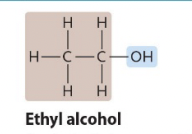
What makes a Carbonyl-Aldehydes-Ketones
It contains a C double bonded to an O

What makes a Carboxyl-Carboxylic acids
A C double bonded to an O, and bonded to an -OH

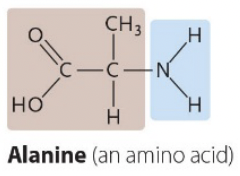
What makes a Amino-Amines
An N bonded to two H’s
What makes a Phosphate- Organic Phosphates
A Phosphorus (P), linked to 4 O’s, with one being Double Bonded

For a Phosphate group, it has the ability to bridge two organic building blocks to form a large structure, for example?
DNA
What makes a Sulfhydryl- Thiols
A Sulfur (S) linked to an H
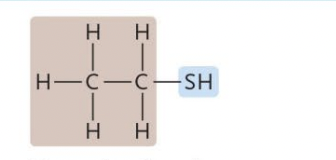
In many linking reactions, when two sulfhydryl groups come together it forms a?
Disulfide linkage


What Chemical is this?
Aspartame
What are Isomers?
Molecules with the same molecular or empirical formula but different molecular structures
Structural Isomers are the same chemical formula but?
The arrangement of atoms are different
Stereoisomers are molecules that differ in how?
Groups attached

Look at these Stereoisomers, what makes L and D different?
-If an Isomer polarizes light to the right it is a D Isomer (dextrorotatory)
-If an Isomer polarizes light to the left it is a L isomer (levorotatory)
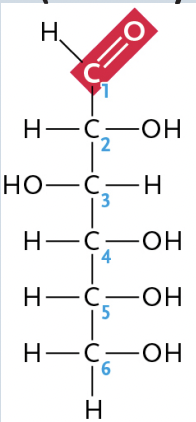
Which Molecule is this?
Glucose (An aldehyde)

Which Molecule is this?
Fructose (a ketone)

Which Molecule is this?
Galactose

Which Ring Form is this?
Galactose
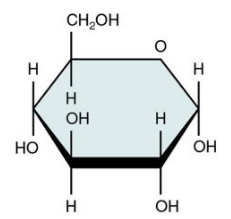
Which Ring Form is this?
Glucose Alpha

Which Ring Form is this?
Glucose Beta

Which Ring Form is this?
Fructose

Image of Glucose, with a Structural Isomer and Stereo-Isomer
Glucose & Galactose, both have the same C double Bond with O, but have an OH and H on opposite directions.
Glucose and Fructose both have the same OH and H, but a different location for the C double bond with O
What is the Polymer
Built by linking monomers
What is the Monomer
Small, similar chemical subunits
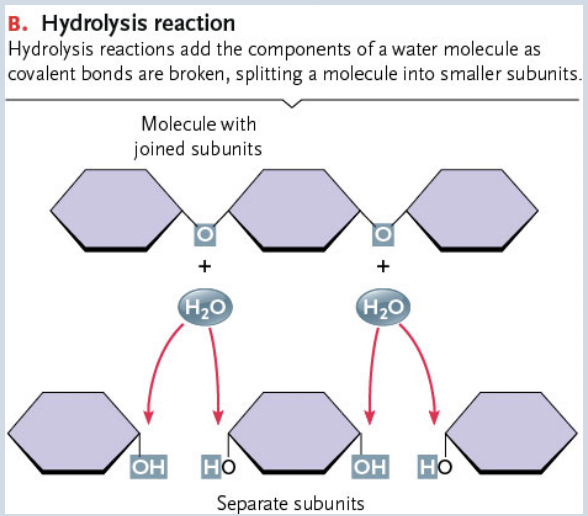
What is Dehydration Synthesis?
Formation of large molecules by the removal of water
(Monomers are joined to form polymers)
Will get rid of an H2O for each molecule

What is Hydrolysis?
Breakdown of Large molecules by adding water
(Polymers are broken down to monomers)
The next few slides go over Carbohydrates molecules with a 1:2:1 ratio of carbo, hydrogen, oxygen
Monosaccharides contain about?
Three to seven carbon atoms
Two monosaccharides will polymerize to form a?
Disaccharide
A polysaccharides oocur when?
Carbohydrate polymers made of more than 10 linked monosaccharide monomers
The Monosaccharide is the simplest carbohydrate with examples of common hexoses being?
Glucose (C6H12O6)
Fructose
Galactose
(All monosaccharides occur in linear form)

Which molecule is this?
Glyceraldehyde

Which molecule is this?
Ribose

Which molecule is this?
Mannose
Monosaccharides with five or more carbons have the ability to do what?
Fold back on themselves through a reaction between two functional groups to form a ring form
Glucose can exist as two enantiomers being?
alpha-glucose, and beta glucose
The main difference being the the OH for alpha will be below the plane, and the beta being above
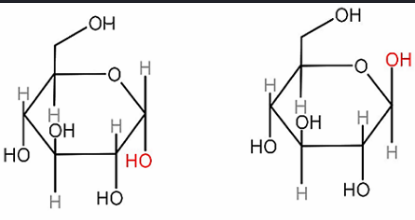
Which is which?
Alpha is on the Left, Beta is on the Right
Disaccharides are assembled from?, and joined by what reaction?
Two monosaccharides covalently joined by a dehydration synthesis reaction
What is a Glycosidic Bond?
A type of covalent chemical bond that connects a carbohydrate molecule/group with another carbohydrate molecule/group
(Monosaccharide with another Monosaccharide)

What do we see from this Maltose Image?
Maltose is formed by the glycosidic bond linking of two Alpha Glucose Molecules, with the bridge occurring between the 1 carbon of the first glucose and the 4 carbon of the second glucose
a(1→4) linkage
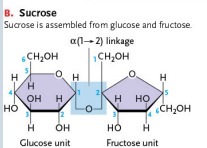
Sucrose is made from the? (what’s the linkage as well)
Linkage of the Alpha-Glucose and Fructose
a(1→2) linkage
Lactose is made from the? (what’s the linkage as well)
Linkage of Glucose and the Beta Galactose Unit
B(1→4) linkage
Polysaccharides is a long chain of monosaccharides with what main characteristics?
Linked through dehydration synthesis
Polysaccharides may be linear, unbranched molecules, or they may contain one or more branches in which side chains of sugar units are attached to a main chain
Plants and Animals will use Polysaccharides as an energy storage, with those molecules being?
Plants use Starch
Animals use glycogen
Polysaccharides may also be used as structural support, for Plants they will use?, while Arthropods and fungi use?
Plants use Cellulose
Arthropods and Fungi use Chitin
For Amylose, what is the main monomer, linkage type, and is it branched or linear?
Amylose is formed from Alpha Glucose Monomer, with linkage type Alpha (1→4), and is formed in a linear way
For Glycogen, what is the main monomer, linkage type, and is it branched or linear?
Glycogen is formed from Alpha Glucose Monomer, with linkage type Alpha (1→4) for main chain, and Alpha (1→6) for branched
For Cellulose, what is the main monomer, linkage type, and is it branched or linear?
Cellulose is formed from Beta Glucose Monomer, with linkage type Beta (1→4), and is formed in a linear way
CHITIN, a reinforcing fiber in the external skeleton of arthropods and cell walls of some fungi
More of a fun fact
For CHITIN, what is the main monomer, linkage type, and is it branched or linear?
The main Monomer is Glucose, but it contains Amino Functional Groups attached to it, making it N‑acetylglucosamine. The Linkage type is Beta (1→4), and is Linear
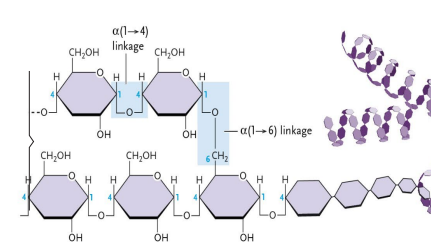
Which Polysaccharide is this?
Glycogen

Which Polysaccharide is this?
CHITIN
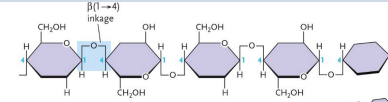
Which Polysaccharide is this?
Cellulose
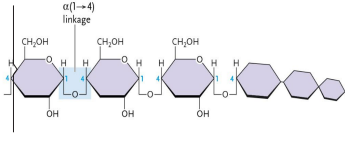
Which Polysaccharide is this?
Amylose
Lipids are water-insoluble, primarily nonpolar biological molecules composed mostly of hydrocarbons.
What are three common types of lipid molecules?:
Neutral lipids are stored and used as energy
Phospholipids form cell membranes
Steroids serve as hormones that regulate cellular activites
Neutral Lipids, are found in cells as?
Energy-storage molecules, having no charged groups (nonpolar)
What are the two types of neutral lipids?
Oils are liquid
Fats are semisolid
A fatty acid contains a?
Single hydrocarbon chain with a carboxyl group (-COOH) at one end
A Triglyceride is formed by
Dehydration synthesis between three-carbon glycerol (an alcohol) and three fatty acid side chains
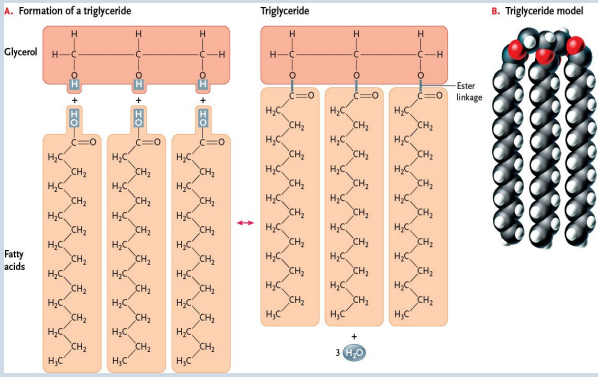
Triglycerides have many functions, what are the main 3 to note?
Serve as energy reserves in animals
Layer of fatty tissue just under the skin (acts as insulation)
Makes bird feathers waterproof
The most common fatty acid will have chains of?
14 to 22 carbons
(As chain length increase, fatty acid become less soluble and more oily)
A saturated fatty acid binds the?
Maximum number of Hydrogen Atoms
-Only single bonds exist between carbon atoms
Fatty acids with one double bond are called?, while those with more than one are called?
One double bond=Monosaturated, More than one double bond=Polyunsaturated
What is the bond between the -COOH group of fatty acid and the -OH group of glycerol?
A covalent bond called ester linkage
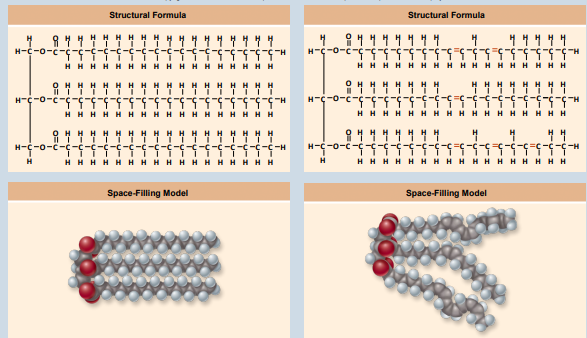
What do we see from this image?
The Left Diagram representing a Saturated Fat, and the Right representing a Unsaturated Fat
How does the Unsaturated Structure Differ from Saturated?
While the Saturated is Straight, the Unsaturated is Bent. While all of the C are single bonds in Saturated, the C in unsaturated are sometimes double bonded with eachother
Trans fats are very unhealthy fats that can cause things like?
Atherosclerosis from buildup of plaque in coronary arteries, formed by buildup of excess cholesterol
Phospholipids are formed by?
Glycerol
2 fatty acids -nonpolar tails
A phosphate group- polar head
What are the four types of Phospholipids?
Phosphatidyl Serine
Phosphatidyl Ethanolamine
Phosphatidyl Choline
Phosphatidyl Inositol

Phospholipids structure diagram
In Water environments, only what are exposed to water?
The Polar Ends of the Phospholipid molecules are exposed to water
Where does the nonpolar ends go to?
They collect together in a region excluded from water
The Phospholipid Bilayer is a film of?
Phospholipids two molecules thick
Contains a polar group facing the water molecules at the surface of the bilayer
The Hydrocarbon chains form a nonpolar, hydrophobic region in the interior

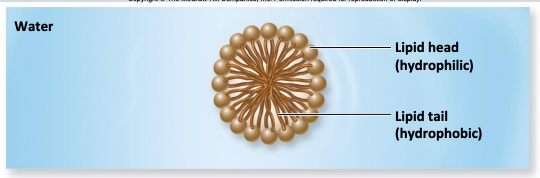
Micelles are when?
Lipid molecules orient with polar (hydrophilic) head toward water, and nonpolar (hydrophobic) tails away from water
How do Waxes form?
Fatty acids combine with long-chain alcohols or hydrocarbon
How does Wax help Plants and Animals
Waxy coatings help animals keep skin, hair, or feathers protected and lubricated
They help plants secrete a waxy protective exterior layer to reduce water loss and resists infective agents
Steroids are lipids with structures based on a framework of?
Four carbon rings
Come back to 42-45
Nucleic Acids are Polymers, in which they have what Monomer, and are connected/linked by what bond?
Monomer is Nucleotides
Bonded by phosphodiester
What are two Nucleic Acids?
DNA and RNA
How does a Nucleotide and Nucleosides differ?
Nucleotides are made of a Sugar, Phosphate, and a Nitrogenous Base
Nucleosides are made of a Sugar, and Nitrogenous Base
So…Nucleosides differ because?
They don’t contain a Phosphate
Sugar is what in DNA and RNA?
Deoxyribose in DNA
Ribose in RNA
Nitrogenous Bases include?
Purines: adenine and guanine
Pyrimidines: thymine, cytosine, uracil

Overall structural plan of a nucleotide
What makes a Pyrimidines?
A Nitrogenous base with one carbon-nitrogen ring
Uracil, Thymine, Cytosine
What makes a Purines?
A Nitrogenous base with two carbon-nitrogen rings
Adenine and Guanine

Diagram of the Nitrogenous Bases of Uracil, Thymine, Cytosine, Adenine, and Guanine
How do you differentiate between a Deoxyribose and a ribose nucleotide if they have the same (Phosphate, Glucose, and Nitrogenous Base)
In the 2’ spot of the Sugar, their will be an OH in RNA and a H in DNA
DNA will encode information for?
Amino acid sequence of proteins
A DNA strand is a Double Helix, which is what?
2 polynucleotide strands connected by hydrogen bonds
What are the Base-Paring Rules for the hydrogen bonds?
A with T, or A with U in RNA
C with G always

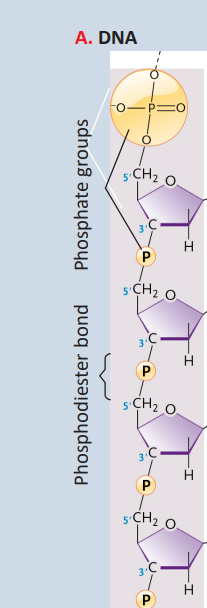
DNA and RNA will consist of polynucleotide chains, with one nucleotide linked to the next by?
Phosphodiester bond
Phosphate of one bond connects with the 3’ of one, and the 5’ of the other

DNA Base Pairs
Concept | What you should know |
|---|---|
Base pairs | A–T (2 H‑bonds), C–G (3 H‑bonds) |
Base types | Purines: A, G; Pyrimidines: T, C |
Bond type | Hydrogen bonds between bases |
Attachment | Bases connect to deoxyribose sugar |
Purpose | Complementary pairing → double helix stability |

RNA molecules exist mainly as single polynucleotide chains (singlestranded) – however, RNA molecules can?
Fold back on themselves to form double-helical regions
In RNA, the uracil (U) base takes the place of thymine (T), forming?
A–U base pairs
“Hybrid” double helices (an RNA chain paired with a DNA chain) are formed temporarily when
RNA copies DNA
What are some other examples of Nucleotides?
• ATP adenosine triphosphate – Primary energy currency of the cell
• NAD+ and FAD+ – Electron carriers for many cellular reactions