Avascular necrosis (Smarty PANCE)
 Call Kai
 Learn
Learn Practice Test
 Spaced Repetition
 Match
Match Flashcards
 Knowt Play
1/9

There's no tags or description
Looks like no tags are added yet.
Name | Mastery | Learn | Test | Matching | Spaced | Call with Kai | Chat |
|---|
No analytics yet
Send a link to your students to track their progress
10 Terms
What is avascular necrosis?
Avascular necrosis is a disease that results from the temporary or permanent loss of blood supply to the bone. When blood supply is cut off, the bone tissue dies and the bone collapses. If avascular necrosis happens near a joint, the joint surface may collapse.
What are the symptoms of avascular necrosis?
Many people have no symptoms in the early stages of avascular necrosis. Pain associated with avascular necrosis of the hip might center on the groin, thigh or buttock. Besides the hip, the areas likely to be affected are the shoulder, knee, hand and foot.
Osteonecrosis vs avascular necrosis
Osteonecrosis is a more general and inclusive term often used interchangeably with avascular necrosis, and is now preferable
Causes of avascular necrosis
Trauma/fracture (most common), steroids, sickle cell anemia, Fatty deposits in blood vessels can block small blood vessels, reducing the blood flow that feeds bones. For about 25 percent of people with avascular necrosis, the cause of interrupted blood flow is unknown.
Risk factors for developing avascular necrosis?
Risk factors for developing avascular necrosis include:
● Trauma - injuries, such as hip dislocation or fracture, can damage nearby blood vessels and reduce blood flow to bones.
● Steroid use - corticosteroids can increase lipid levels in your blood, reducing blood flow.
● Excessive alcohol use - consuming several alcoholic drinks a day for several years also can cause fatty deposits to form in your blood vessels.
● Bisphosphonate use - long-term use of medications to increase bone density might contribute to developing osteonecrosis of the jaw
● Cigarette smoking - cigarette smoking has been implicated as a risk factor for osteonecrosis of the femoral head in a dose-dependent manner
● Certain medical treatments - radiation therapy for cancer can weaken bone. Organ transplantation, especially kidney transplant, also is associated with avascular necrosis.
Medical conditions associated with avascular necrosis?
Medical conditions associated with avascular necrosis include:
● Pancreatitis
● Diabetes
● Gaucher's disease
● HIV/AIDS
● Systemic lupus erythematosus
● Sickle cell anemia
The "gold standard" for diagnosis in symptomatic and asymptomatic patients with avascular necrosis?
MRI without a contrast agent continues to be the "gold standard" for diagnosis in symptomatic and asymptomatic patients, especially in early-stage disease. Bone scintigraphy is also quite sensitive (~85%) and is the second option after MRI. It is a choice when multiple sites of involvement must be assessed in patients with risk factors, such as sickle cell disease.
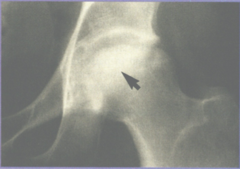
What is seen on x-ray of patients with osteonecrosis?
The plain radiograph of any site affected by osteonecrosis can remain normal for months after symptoms begin; the earliest findings are mild density changes followed by sclerosis and cysts as the disease progresses.
Treatment of avascular necrosis?
The goal of treatment is to reduce the load on the affected part and to promote revascularization. Treatment varies by location and includes:
● conservative: anti-inflammatory, analgesia, and reduced/non-weight bearing
● core decompression
● joint replacement for end-stage disease
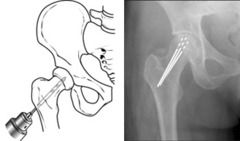
What is core decompression?
Core decompression is a surgical procedure that involves surgical drilling into the area of dead bone near the joint. This reduces pressure, allows for increased blood flow, and slows or stops bone and/or joint destruction. Core decompression is commonly performed to treat osteonecrosis.