Temple University Anatomy & Physiology Unit 1 Lab Exam
 Call Kai
 Learn
Learn Practice Test
 Spaced Repetition
 Match
Match Flashcards
 Knowt Play
1/211

There's no tags or description
Looks like no tags are added yet.
Name | Mastery | Learn | Test | Matching | Spaced | Call with Kai | Chat |
|---|
No analytics yet
Send a link to your students to track their progress
212 Terms
Anatomical Position
Body is upright, acing forward, arms and legs straight, palms facing forward, feet flat on the ground, eyes open
Ventral
toward the front or belly
Dorsal
toward the back
Anterior
front of the body
Posterior
back of body
Superior
above
Inferior
below
Medial
Toward the midline of the body
Lateral
Away from the midline of the body
Proximal
Closer to the point of attachment
Distal
farther from the point of attachment
Superficial
near the surface
deep
away from the surface of the body
Frontal/Coronal Plane
vertical plane dividing the body or structure into anterior and posterior portions
Sagittal Plane
vertical division of the body into right and left portions
Transverse/Horizontal Plane
runs horizontally from right to left, dividing the body into superior and inferior parts
Axial Skeleton
portion of the skeletal system system including the skull, hyoid bone, vertebral column, and thoracic cage

Appendicular Skeleton
portion of the skeletal system including the pectoral girdle, upper limb, pelvis girdle, and lower limb

Condyle
Rounded process that usually articulates with another bone
Facet
smooth, flat, slightly concave or convex articular surface
Head
the prominent expanded end of a bone, sometimes rounded
Crest
a narrow ridge
epicondle
a projection superior to a condyle
Line
Narrow ridge of bone; less prominent than a crest
Process
any bony prominence
Protuberance
a bony outgrowth or protruding part
Spine
sharp, slender, often pointed projection
Trochanter
a massive process unique to the femur
Tubercle
a small, rounded process
Tuberosity
a rough surface
Alveolus
a pit or sockt
Fossa
a shallow, broad, or elongated basin
Fovea
a small pit
Sulcus
groove for a tendon, nerve, or blood vessel
Canal
a tubular passage or tunnel in a bone
Fissure
a slit through a bone
Foramen
a hole through a bone
Meatus
an opening into a canal
Skull

Thoracic Cage
ribs and sternum

Vertebral Column
spine
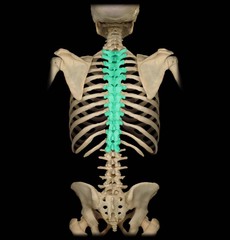
Hyoid
a U-shaped bone in the neck that supports the tongue; floating bone

Occipital Bone
back of head

Frontal Bone
bone that forms the forehead

Parietal Bones (2)
Bones that form the sides and top of the cranium.

Ethmoid Bone
forms part of the posterior portion of the nose, the orbit, and the floor of the cranium

Temporal Bones (2)
Bones that form the sides of the head in the ear region.

Sphenoid Bone
forms part of the base of the skull and parts of the floor and sides of the orbit
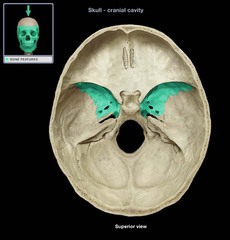
Vomer
nasal septum

Inferior Nasal Concha
located on each side of the nasal septum, attached to the lateral wall of the nasal cavity; increase epithelial surface area and create turbulence in the inspired air

Nasal Bone
forms the bridge of the nose

Maxilla
upper jaw bone

Mandible
lower jaw bone

Palatine
roof of the mouth
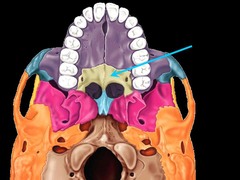
Zygomatic bone
cheek bone

Lacrimal Bone
small fragile bone making up part of the front inner walls of each eye socket and providing room for the passage of the lacrimal ducts

Virgil Can Not Make My Pet Zebra Laugh
Vomer
Conchae
Nasal
Maxilla
Mandible
Palatine
Zygomatic
Lacrimal
Coronal Suture
the suture between the parietal and frontal bones of the skull

Lambdoid Suture
between parietal bones and occipital bone

Squamous Suture
Between parietal and temporal bones

Sagittal Suture
between parietal bones

Zygomatic Process
a projection of the temporal bone that forms part of the zygoma

External Acoustic Meatus
Canal leading to eardrum and middle ear

Mastoid Process
round projection on the temporal bone behind the ear

Styloid Process
pole-like process extending downward from the temporal bone on each side of the skull

Foramen Magnum
the hole in the base of the skull through which the spinal cord passes.

Sella Turcica
depression in the sphenoid bone where the pituitary gland is located

Cribiform Plate
superior surface of the ethmoid; perforated by a foramina which allows passage of the olfactory nerves, which provide sense of smell

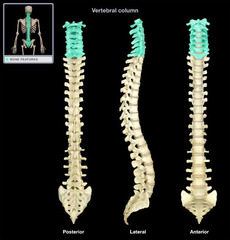
Cervical Vertebrae
C1-C7 (neck); C1=atlas, C2=axis
Thoracic Vertebrae
T1-T12; connects to thoracic cage
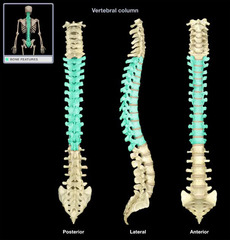
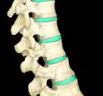
Lumbar Vertebrae
L1-L5

Sacrum Vertebrae
fused S1-S5

Coccyx
four vertebrae fused together to form the tailbone

Vertebral Body
main portion of the vertebra, separate from the arches of the vertebra

Vertebral Foramen
canal through which spinal cord passes

Spinous Process
sharp, slender projection

Transverse process
two lateral projections from the vertebral arch

Vertebral Arch
composed of pedicles, laminae, and a spinous process, it represents the junction of all posterior extensions from the vertebral body

Superior Articular Facet
What is the highlighted structure?

Inferior Articular Facet
What is the highlighted structure?

Intervertebral Foramen
opening located between adjacent vertebrae for exit of a spinal nerve

Intervertebral Disc
mass of fibrocartilage between adjacent vertebrae
Bifid Spinous Process
cervical vertebrae

Transverse Foramen
only found in the cervical vertebrae and allow passage of the vertabral artery, vein, and nerve

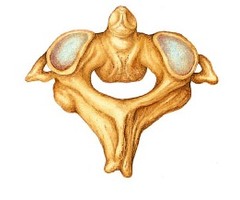
Atlas
first cervical vertebrae (C1), only vertebrae without a body, articulates with the skull,facilitates 'yes' motion

Axis
second cervical vertebrae (C2), dens (odontoid process), facilitates 'no' movement
Costal Facets
gliding joints where ribs meet thoracic vertebrae

Spinous Process
Name this specific part of the thoracic vertebra; angled in an inferior direction

True Ribs
Ribs 1-7 articulate directly (via their own costal cartilage) with the sternum.

False Ribs
Ribs 8-12 do not directly attach to the sternum. Some connect to other costal cartilages while others do not connect to the sternum at all.

Floating Ribs
Ribs 11 and 12 that do not connect to the sternum at all.

Sternum
the breastbone, forms the middle of the front of the rib cage and is divided into three parts

Mandubrium
the superior portion of the sternum

Body of Sternum
the bony structure that forms the middle portion of the sternum

Xiphoid Process of Sternum
most inferior tip of sternum

Rib Angle
where the rib curves

rib head
portion of rib that connects to the vertebrae

rib tubercle
articulates with transverse process

Pectoral Girdle
clavicle and scapula

Scapula
shoulder blade (anterior view)
