GCSE OCR A Physics: Chapter 3-Electricity
 Call Kai
 Learn
Learn Practice Test
 Spaced Repetition
 Match
Match Flashcards
 Knowt Play
1/32

There's no tags or description
Looks like no tags are added yet.
Name | Mastery | Learn | Test | Matching | Spaced | Call with Kai | Chat |
|---|
No analytics yet
Send a link to your students to track their progress
33 Terms
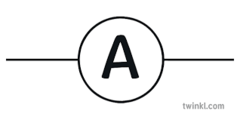
What is an ammeter?
A device connected in series with a component to measure the current that flows through it.
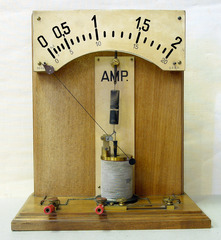
What are amperes (amps)?
The unit of current.
What is charge?
A property of all matter. Charges can be positive or negative.

What is a coulomb?
The unit of charge.

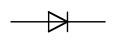
What is a diode?
A component that only allows current to flow through in the forward direction. They have very large resistances in the reverse direction.
What is direct current?
Current flow consisting of charges flowing in a single direction only. Batteries and cells provide direct current.

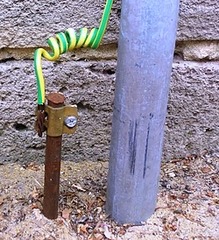
What is earthing?
The removal of excess charge by providing a low resistance path for electrons to flow through.
What is electric current?
The rate of flow of electrical charge. Its value is the same at any position in a single closed loop. In metals, the charges that flow are electrons.
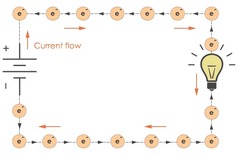
What are electric field lines?
Lines representing an electric field, that point in the direction in which a positive charge would experience an electric force. The closer they are, the stronger the field.
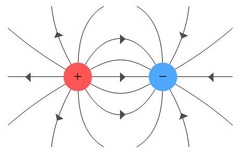
What is an electric field?
A region in which a charge will experience a non-contact, electric force. All charged objects have an electric field around them, and this field is stronger the closer you are to the charge.
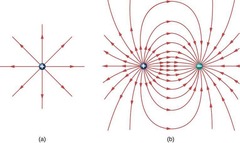
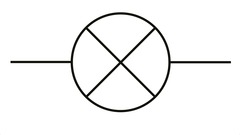
What is a filament lamp?
A light emitting component consisting of an enclosed metal filament. Its resistance increases as the filament's temperature increases.
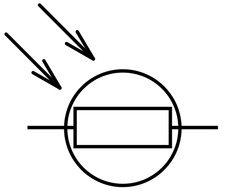
What is a light dependent resistor (LDR)?
A light sensitive component whose resistance decreases as its temperature increases.
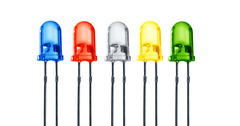
What is a light emitting diode (LED)?
A device that gives out light when a current flows through it. Current
can only flow through it in one direction, and a minimum voltage must be applied across it before it illuminates.
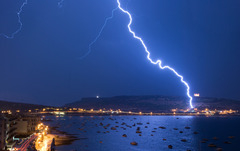
What is lightning?
A consequence of static charge building up in the clouds. Lightning strikes are caused by the discharge of this charge.
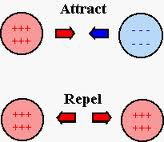
What are like charges?
When two charges of the same polarity meet, they will repel.
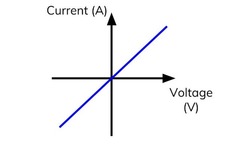
What is an ohmic conductor?
A conductor whose current flow is directly proportional to the potential difference across it, when held at a constant temperature.
What are Ohms?
The unit of resistance.

What is Ohm's law?
The current flowing through an Ohmic conductor at constant temperature is directly proportional to the potential difference across it.

What are parallel plates?
The electric field between two charged plates is uniform. The field lines are parallel, equally spaced and point from the positive plate to the negative plate.

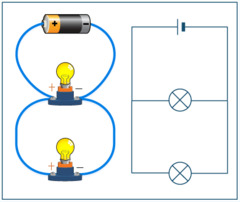
What is a parallel circuit?
Components connected in parallel have the same potential difference across each component. The total current is equal to the sum of the currents flowing through each component.
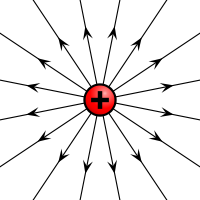
What is a point charge?
The electric field around a point charge becomes weaker the further away you are. The field lines for a positive charge point radially outwards, whereas the field lines for a negative charge point radially inwards.
What is potential difference?
The energy that is transferred per unit charge between two points in a
circuit. It is often also called a voltage.

What is power?
The rate at which an appliance transfers energy. For a circuit component, it is equal to the product of the current passing through it and the potential difference across it.
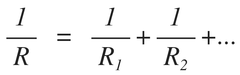
What are resistors in parallel?
The total resistance is less than the lowest individual resistance.
What are resistors in series?
The total resistance is equal to the sum of the resistances of the
individual resistors.
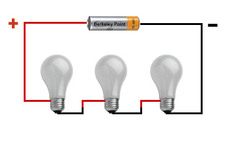
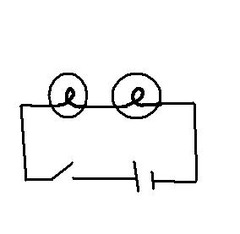
What is a series circuit?
Components connected in series have the same current passing through each component but share the total potential difference of the power supply.
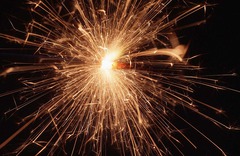
What is sparking?
The transfer of electrons between two surfaces that have an imbalance of charges. Sparking can be particularly dangerous in locations such as petrol pumps, and so the pumps must be earthed.
What is static charge?
The charge caused by an imbalance of positive and negative charges in, or on, an object's surface. It is often caused by electrons being rubbed from one surface onto another.
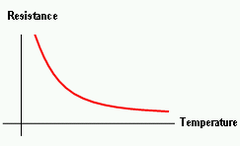
What is a thermistor?
A temperature dependent component, whose resistance increases as its temperature decreases.
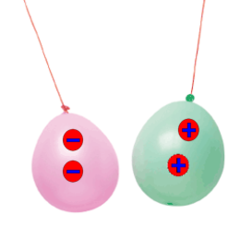
What are unlike charges?
When two charges of opposite polarities meet, they will attract.
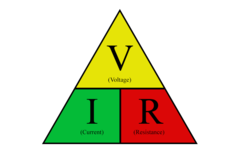
What are volts?
The unit of potential difference. One volt is equal to one joule per coulomb.
What is a voltmeter?
A device that is connected in parallel with a component to measure the potential difference across it.

What are Watts?
The unit of power.
