EXAM 1 CONTENT
 Call Kai
 Learn
Learn Practice Test
 Spaced Repetition
 Match
Match Flashcards
 Knowt Play
1/80

There's no tags or description
Looks like no tags are added yet.
Name | Mastery | Learn | Test | Matching | Spaced | Call with Kai | Chat |
|---|
No analytics yet
Send a link to your students to track their progress
81 Terms
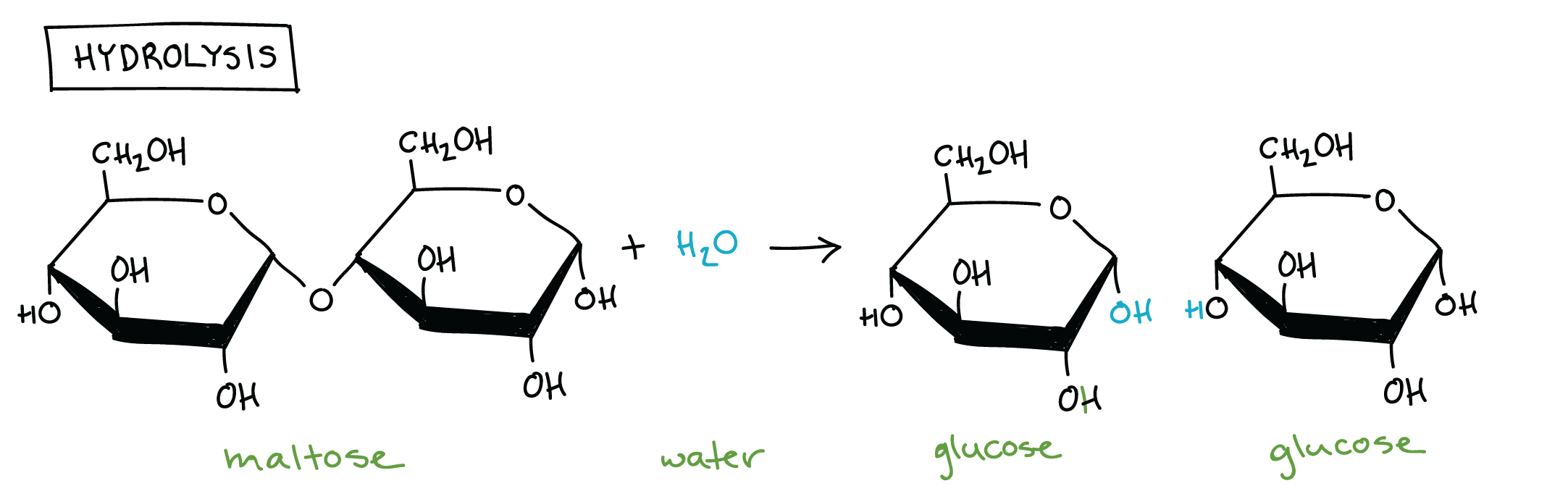
dehydration synthesis
when monomers combine to form polymers and release water as a byproduct
monomer → polymer

hydrolysis
when polymers (w/ water) break down into monomers
polymer → monomer
What is denaturation, and what causes it?
Changes to the protein’s shape, leading to a loss of function caused by:
Exposure to chemicals
Changes in temp & pH
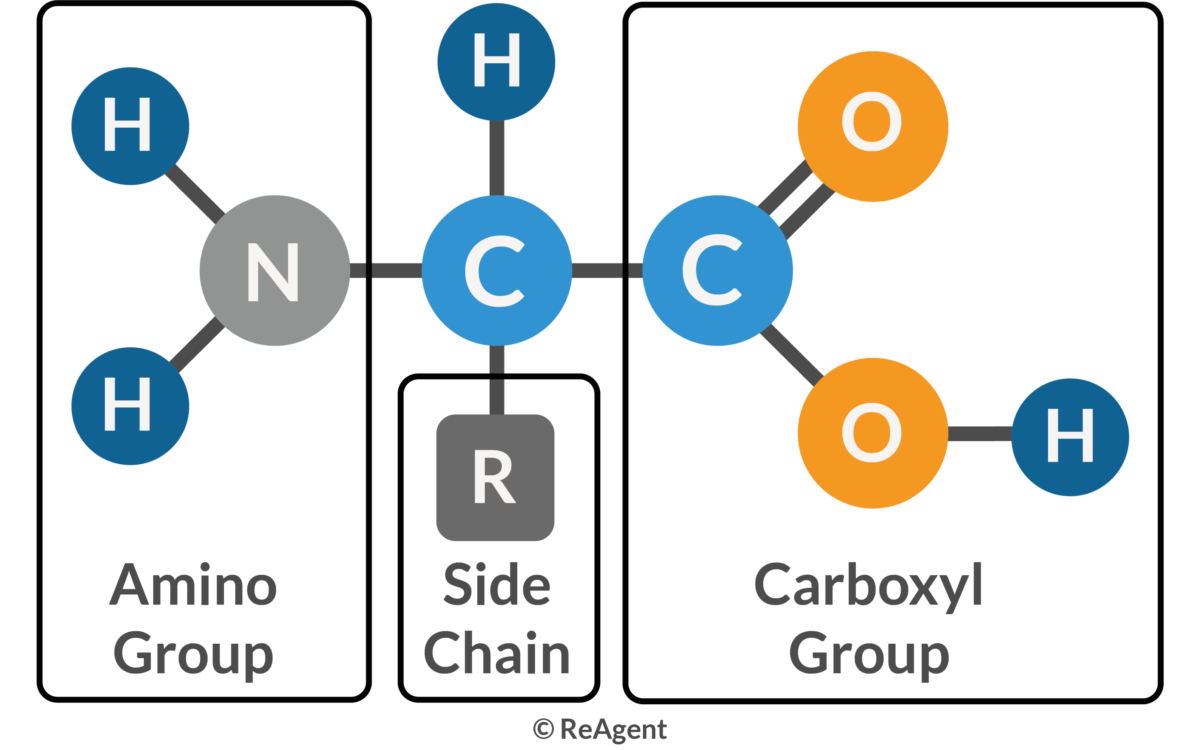
amino acid (draw it too)
monomers that comprise proteins
amino group (NH2)
carboxyl group (COOH)
H atom
R group / side chain (determines nature of amino acid; whether its acidic)
primary structure
sequence of amino acids; held by peptide bonds
secondary structure
how amino acids fold (alpha helix or beta pleated sheet); held by backbone H-bonds
tertiary structure
3D shape of a polypeptide; held by ionic bonds, H-bonds, hydrophobic effect, & van der waals
quaternary structure
3D of MULTIPLE polypeptides; held by ionic bonds, H-bonds, hydrophobic effect, van der waals, & disulfide bonds
α-carbon
central carbon of amino acid

What are the different terminals of a polypeptide?
amino group end → (amino) N terminal
carboxyl ground end → (carboxyl) C terminal

heroin vs. fentanyl
heroin: semi-synthetic
fentanyl: synthetic & more deadly due to how it changes the shape of the receptor
opioid receptors
receptors on the surface of nerve cells that heroin, fentanyl, & narcan bind to
antagonist
can block agonists from binding to receptors & binds to the receptors w/o changing shape
agonist
activates a cell receptor to produce a response
How does narcan save lives?
it doesn’t change the shape of the receptor AND blocks heroin & fentanyl from binding
Water is special because it has…
resistance to rapid temperature change
ability to extract & dissolve many molecules
ability to exclude other molecules
cohesiveness that allows pushing & pulling it in columns
all bc of molecular stickiness (has + & - partial charge)
What is crucial to H bonds and why?
angle & distance bc “wiggling” (caused by thermal motion) makes them loose
monomer of proteins
amino acids
amino acid polymer
peptide
what drives a protein’s shape?
the order and composition of the side chains
hydrophilic
on the OUTSIDE of protein so it can interact w/ water
ionic, polar = hydrophilic (charged side chains can form ionic bonds)
hydrophobic
on the INSIDE of protein to avoid water interactions
Two general rules of proteins
hydrophobic amino acids will avoid water interactions
the number of H bonds in proteins in maximized
Cystic Fibrosis
caused by missing CFTR protein; most common variant when 1 amino acid is missing, causing it to fold incorrectly; CFTR is located in ER
incorrect folding = peptide never leaves ER = degraded by quality control enzymes
phospholipids
amphiphillic
polar head (hydrophilic)
nonpolar tails (hydrophobic)
saturated fatty acids
hydrocarbons saturated w/ H
solid @ room temp (ex. butter)
unsaturated fatty acids
hydrocarbons not saturated w/ H
liquid @ room temp (ex. oil)
@ warm temps, sterols (ex. cholesterol) keep the membrane from…
getting too fluid
@ cold temps, sterols (ex. cholesterol) keep the membrane from…
getting too rigid
FRAP
cell absorbs fluorescent molecules → high intensity laser concentrated on one part of cell (photobleaching) → decreases fluorescence → fluorescent molecules diffuse back
used to study rate of diffusion
proves bilayer is fluid & can move laterally
↑ double bonds in the membrane =
↑ fluidity (bc the kinked effect creates more space)
↑ tail length of phospholipids in membrane =
↓ fluidity (bc more hydrophobic effect so they hold together more)
↑ temp of membrane =
↑ fluidity (bc ↓ van der waals & space)
lipid rafts
membrane microdomains enriched in cholesterol, sphingolipids, & glycosphingolipids
more ordered than the surroundings = more rigid & less fluid
diffuses slower in FRAP
transmembrane proteins
span the bilayer & conduct transport
Transport is affected by:
property of the molecule
small, nonpolar → moves across easily
small, uncharged polar → moves across a lil harder but still easy
large, uncharged polar → much harder but possible
Ions → not possible w/o help
concentration gradient
high → low
hypotonic
more solute INSIDE; water rushes in (swells up)
isotonic
solute even on both sides
hypertonic
more solute OUTSIDE; water rushes out (shrivels)
passive transport
moves across concentration gradient
simple - no channel needed
facilitated - channel needed
active transport
helps move AGAINST concentration gradient (requires energy); maintains imbalance of ion concentrations across the membranes (acts as a biological battery)
aquaporin
channels that allow water to diffuse freely (still passive, just facilitated)
kinase
enzymes that do phosphorylation
phosphorylation
addition of phosphate group (PO4)
proton pumps
uses energy from ATP hydrolysis to move protons against gradient
Na+/K+ ATPase
moves Na+ and K+ AGAINST their concentration gradients
uses ATP to fuel this process
-ase: enzyme that breaks something down
shape driven by cycle of phosphorylation
endomembrane system
collection of interconnected, membrane-bound organelles in eukaryotic cells
nuclear envelope
connected to ER
separates the nucleus from the cytoplasm
nuclear pores
channel for RNA & proteins to travel from nucleus → cytocol & vice versa
lamina
provides structural support to the nuclear envelope & provides a place for chromatin to attach during interphase of cell division
Rough ER functions
covered in ribosomes
extra cytoplasmic protein synthesis (proteins located in endomembrane or secreted from the cell)
protein modifications
membrane assembly
Smooth ER functions
no ribosomes
synthesizes lipids (steroid)
metabolizes carbs (gylcogen metabolism)
stores calcium
detoxifies poison & drugs
Golgi body (appartus) function
receiving, shipping, & modification center
lysosome function
can digest food (phagocytosis)
break down damaged organelles (autophagy)
uses enzymes & acidic pH
vesicles
vessels for transporting, storing, & recycling materials in eukaryotic cells; NOT unidirectional
secretory pathway
secreting or releasing things out of the cell
ER synthesizes lipids & proteins
Transport vesicle moves it to cis golgi body
Golgi modifies, stores, & secretes cargo
Transport vesicles move it to trans golgi bosy → early/late endosomes & sends some out
retrival pathway
brings something into the cell; opposite of secretory
Bring something to golgi to figure out what it does
Send back to ER
Endocytic
when things come in the cell and get digested immediately
endosome
special early vesicles that form when you bring something into the cell & will fuse w/ another vesicle to turn into a lysosome
constitutive secretion
constant, unregulated release of the same molecule
regulated secretion
receives a signal to make a molecule (ex. hormones & neurotransmitters)
pancreas secretes…
insulin
insulin “cycle”
insulin released to insulin receptors → tells GLUT4 (carrier protein) to allow glucose in the cell
what happens in type 1 diabetes?
don’t make insulin so glucose levels can’t be naturally regulated
stomach cells secrete…
ghrelin (hunger hormone)
topologically equivalent
organelles that share the same internal environment, allowing molecules to move between them w/o crossing a membrane
ex. ER, golgi, lysosomes, & endosomes
COP l
protein coat that directs vesicles from golgi → ER (retrograde); recycling
COP ll
protein coat that directs vesicles from ER → golgi (anterograde); new proteins & lipids
endocytosis & the different types
process of bringing something into the cell
phagocytosis: cell eating (solids)
pinocytosis: cell drinking (fluids)
receptor-mediated endocytosis: bind proteins in membrane to tell it to take it in the molecule
receptor-mediated endocytosis examples
Covid binds to ACE2
transport of cholesterol into cells using LDL receptors (ApoB binds to LDL receptors → cholesterol taken in)
uniport
moves a single molecule down the concentration gradient (facilitated)
symport
two different substances move in the same direction at the same time; one molecule moves down its gradient, which provides the energy to pull the other molecule against its gradient (ex. Na+/glucose symporter)
antiport
two different substances move in opposite directions; the movement of one ion down its gradient powers the transport of the other substance
Which transport/diffusion for each one?
1. Requires a transmembrane protein
2. Involves ATP hydrolysis
3. Moves molecules from lower to higher concentration
4. Applies mainly to small, nonpolar molecules
5. Transports ions across the membrane
6. Applies to water molecules
7. Transport can go in either direction across the membrane, depending on concentration gradient
8. Applies to ion channels
1. Requires a transmembrane protein : F, A
2. Involves ATP hydrolysis: A
3. Moves molecules from lower to higher concentration: A
4. Applies mainly to small, nonpolar molecules: S
5. Transports ions across the membrane: F, A
6. Applies to water molecules: S, F
7. Transport can go in either direction across the membrane, depending on concentration gradient: S, F
8. Applies to ion channels: F
familial hypercholesterolemia (FH)
no uptake of LDL which leaves excess LDL in the bloodstream
normal cells vs FH cells (cell culture)
normal: most LDL surface bound @ first → decreases as more becomes internalized & degraded
FH: more LCL stays surface-bound → less gets internalized & degraded
LDL receptors are likely mutated
carrier protein vs channel protein
carrier proteins can be passive or active while channel proteins are ONLY passive
carrier proteins undergo conformational (shape) change
carrier protein example: GLUT1 & Na/K pump
channel protein example: aquaporins
Voltage-Gated Channels
Open and close in response to changes in the electric voltage
Transports ions like Na+, Cl-
Ligand-Gated Channels
Open when a specific chemical molecule (the ligand), such as a neurotransmitter, binds to the receptor protein
Mechanically-Gated Channel
Open or close in response to physical stress, stretching, or mechanical pressure on the cell membrane