BIOL 351 - Microbiology Lab Exam 1
 Call Kai
 Learn
Learn Practice Test
 Spaced Repetition
 Match
Match Flashcards
 Knowt Play
1/122

There's no tags or description
Looks like no tags are added yet.
Name | Mastery | Learn | Test | Matching | Spaced | Call with Kai | Chat |
|---|
No analytics yet
Send a link to your students to track their progress
123 Terms
Ubiquitous Nature of Organism
Can come from basically anywhere including soil, water, plants, animals and even from hot acid pools and uninhabitable sites
Free living microorganisms
Do not reside on or in a specific plant or animal host
Nonpathogenic
Not known to cause disease
Symbiotic microorganisms
Organisms that reside on or in a host
Symbiotic examples AND definition ( 3 examples)
Pathogens (cause damage to host)
Mutualism (both host and microbe benefit)
Commensals (microbe benefits but no effect on host)
Opportunistic Pathogens
Inhabit our bodies and are capable of producing a disease state if introduced into a suitable part of the body
Reservoir
Any area where a microbe with the potential to cause infection resides
Saprophytes
Organisms that decompose organic matter
Purpose of blood agar
Differentiate bacteria based on their hemolytic characteristics
Blood agar composition
Includes 5% sheep blood in a Tryptic Soy Agar base
Hemolysins
exotoxin in gram (+) that can destroy RBC/s and hemoglobin
β – hemolysis
Complete destruction; results in clearing of the medium
α – hemolysis
Partial destruction; results in greenish discoloration of the medium
γ – hemolysis
no hemolysis
β – hemolysis IMAGE

α – hemolysis IMAGE
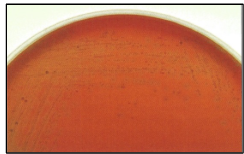
γ – hemolysis IMAGE
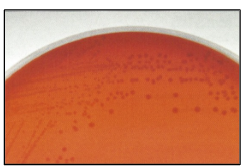
Germicides AND what are three categories
Substances or systems, both chemical and physical, that prevent the spread of pathogens:
Decontamination
Disinfection
Sterilization
Decontamination
Reduction of pathogenic microorganisms to a level at which items are safe to handle without protective attire
Lowest level of control
EX: physical cleaning with soaps or detergents
Disinfection
Kill most, if not all, of the targeted pathogens but typically do not kill large numbers of spore
Next level of control
Typically liquid - can include dry heat, moist heat, ultraviolet light
EX:
Chemical sterilant:
High-level disinfectants that have the ability to kill all vegetative cell and some spores
Antiseptics:
Disinfectants designed to reduce or eliminate pathogens on or in living tissue
Sterilization
Complete elimination of viable organisms including spores
Highest level of pathogen control
Through chemicals, gases, incineration, oxide gas, low temp plasma, etc
Steam sterilization
Most effective and most common method
Temp: 121-127 C for 15 minutes
EX: autoclave
Superheated steam under pressure to kill heat-resistant organisms
Steam sterilization - Biological indicators
only way, with certainty, to determine that sterilization has been achieved.
Indicator vial includes:
Small ampule containing fermentation broth with pH indicator
Strip of filter paper containing bacterial spores
Test:
Vial is autoclaved at 121°C for 15 minutes
Ampule is crushed
Allows fermentation broth to come into contact with bacterial spores
Vials are incubated at 55°C for 48 hours

Since microorganisms are ubiquitous, do you expect growth on all the plates?
No, this is because the environment must be perfect for the microorganism, so even though it could be exposed to contaminants, growth may not be present if environment is not ideal.
Would growth occur on control plate?
No, this is because it was not exposed to any contaminants and was in a sterile environment for the experiment.
Would you expect the same number and type of organisms to be obtained from different environments?
No, this is because the conditions for each microorganism to grow vary. Therefore, specific environments would inhibit or facilities growth in certain organisms.
Why is morphological characterization useful?
first indication one organism is different from another
What exotoxins do streptococci produce and what do they do?
streptolysins -- damage RBC
Different bacterial colony shapes
round, circular, irregular, punctiform, filamentous, rhizoid
punctiform
tiny, pinpoint
filamentous colony
long strands of bacteria growing end to end, resembling hair strands
rhizoid colony
thin, branching projections
types of margins
smooth, lobate, undulate, filamentous, rhizoid
lobate margin
marked indentations
undulate margin
wavy
filamentous margin
threadlike, spreading edge
types of elevations
flat, raised, convex, umbonate, crateriform
umbonate elevation
raised in the center
crateriform
cup-shaped
convex elevation
dome-shaped elevation
what is aseptic technique?
A procedure performed under sterile conditions, going from pure culture to pure medium
Small Slant or a Stab
used when you want to grow an organism in anaerobic conditions
Streaking slanted portion of media (aerobic)
A liquid culture
When you want to increase the number of cells of a particular microorganism
exponential growth
A slant
Simultaneously grow an orgnaism in anaerobic conditions (stab media) and also aerobic conditions (streak across top of slanted media)
advantage: better contains liquids bc in tube
Agar plate
Take mixed culture and spread it thin “streaking the plate” so individual bacteria is separated from one another
USED TO ISOLATE SPECIES
Aseptic Transfer
Transfer living microbes from one place to another without contamination of:
the culture
the sterile medium
or the surroundings
A culture
any medium that contains living microorganisms
pure culture: one organism
mixed culture: multiple organisms
Tips for maintaining a pure culture
clean hands and surface
take time and be organized
Have test tube rack
Use incinerator on loop before and after transferring culture
Do not talk or be distracted
How to hold inoculating tube?
I. Hold like pencil in dominant hand at a slant and hold cap in dominant pinkie
II. Lid is not taken off plate
What NOT to do when holding inoculating tube?
I. Do NOT take lid off agar plate and place on counter
II. Do NOT forget to slant tube —> prevent dust from contaminating
Writing Organism Names
While typing
Escherichia coli
E. coli
While writing
Escherichia coli
E. coli
To prevent contamination - inoculation
wire loops are sterilized immediately before use in incinerator
cool loop in agar before transfer
mouths of tube with culture is incinerated
instruments that can not be incinerated are sterilized inside wrappers or containers by autoclaving
Broth Use
grow microbes when fresh culture or large number of cells are required
USE TO GROW CULTURES
Agar slants
grow stock cultures that can be refrigerated after incubation and maintained for several weeks
WHEN YOU WANT TO GROW A CULTURE TO STORE IN THE FRIDGE
Plated media
obtaining isolations of species differential testing and quantifying bacterial densities
Methods of Isolation
bacterial sample assumed to be mixed culture - ALWAYS
streak plate
pour plate
spread plate
Purpose of streaking for isolation
Obtain isolated colonies —> composed of a million identical cells
can obtian pure culture from this —> single colony
Quadrant streak method
bacterial sample streaked over surface of agar medium
cell density decreases —> individual cells deposited separately on agar surface
results in colony only of original cell type
used for samples with high cell density
Properly streaked plate

Not sterilizing loop between quadrants

Improperly streaked quadrants

result of not rotating plate properly

Loop was not cooled or loop did not pass through previous quadrant

Growth Characteristics are Influenced By:
Nutrient Availability
Temperature
Incubation Time
Categories of Texture
mosit, mucoid, butyrous, dry, shiny, dull
Organisms cultured on slat - growth characteristics
filiform, friable, spreading edge, pigmented or translucent
Filiform
dense and opaque with a smooth edge
Friable
crusty
Spreading edge
produced by motile organisms
Microorganisms culture in a broth - growth characteristics
pellicle, sediment, uniform fine turbidity, flocculent
Pellicle
growth floats on top of medium
Sediment
Growth sinks to the bottom
Flocculent
clumped growth
Where would you expect to find a saprophyte?
In soil
What would result in pure culture?
A completely isolated colony growing on a plate
Microorganisms are ubiquitous. This means they would be found in which of the following places?
How hot can your inoculating loop get if you leave it in the incinerator for a really long time?
close to 800 degrees
How would you identify the only lens in which you would use immersion oil?
It has a black and white ring around it
Which of the following is the reason a simple stain will stick to a bacteria?
They are positively charged and the bacteria are negatively charged
How much water would you use on a slide when doing a bacterial smear procedure?
A very small amount
What is the correct term for a chemical that helps to fix another chemical in place by complexing with it?
mordant
After which of the following steps in the Gram stain process could you detect a difference between Gram + and Gram- bacteria if you looked really hard?
After de-colorization with alcohol
Which of the following is NOT a source of getting a poor/ inconsistent Gram stain?
Making sure to air dry the smear before heat fixing
Which of the following explanations is correct as to how a negative stain works?
They are negatively charged and therefore are repelled by the bacteria, and surround it so that it stands out.
Under which circumstances would you choose a negative stain protocol over a Gram stain?
If the bacteria would lose their delicate shape or shrink when heat fixing
Micropipette
Used for transfer of small amount of liquid
Micropipette tip color
Clear: P1000
Yellow: P20 P200
P1000 Range IMAGE

P200 Range IMAGE
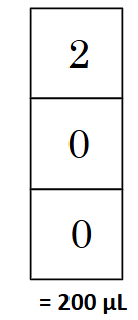
P20 Range IMAGE

Pour Plate Technique
Yields isolated colonies of bacteria and fungi
Spread Plate Technique
method of isolation in which diluted microbial sample is deposited on agar plate
SERIAL DILUTION CALCULATIONS
yes
Know Microscope Anatomy
yes!
Image Formation
light source
light pass through condenser
light pass through objective lens —> refracted —> real image
Image is magnified —> virtual image
Brightfield IMAGE

Darkfield IMAGE

Phase-contrast IMAGE

Flourescence IMAGE

Darkfield microscopy
light travels in a path past the objective unless scattered into it