Mesopotamia - The Akkadians
 Studied by 0 people
 Call Kai
 Learn
Learn Practice Test
 Spaced Repetition
 Match
Match Flashcards
 Knowt Play
1/3

There's no tags or description
Looks like no tags are added yet.
Name | Mastery | Learn | Test | Matching | Spaced |
|---|
No study sessions yet.
4 Terms
Akkad (c. 2300 BCE)
first true empire that ruled over the plains of Mesopotamia.
united the fragmented city-states of Sumer,
the empire was established by Sargon I (“True King”)
The empire successfully united Sumerian and Akkadian speakers
Cylinder seals
were stamps invented by ancient Mesopotamian peoples as a way to affix their personal signatures to legalize documents or transactions.

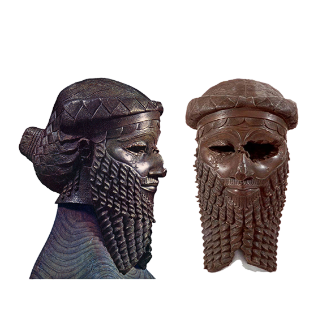
Head of an Akkadian Ruler
An image of an unidentified Akkadian ruler (some say it is Sargon I, but no one knows) is one of the most beautiful and terrifying images in all of Ancient Near Eastern art and evidence of the use of the lost-wax method in bronze casting (Cire-Pirdue).
The life-sized bronze head shows in sharp geometric clarity, locks of hair, curled lips, and a wrinkled brow. Perhaps more awesome than the powerful and somber face of this ruler is the violent attack that mutilated it in antiquity.
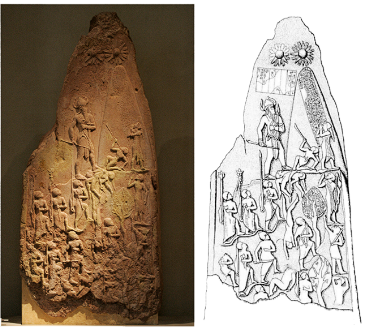
Victory Stele of Naram-Sin
A pink limestone relief sculpture depicting King Naram-Sin of Akkad leading the Akkadian army to victory over the Lullubi, a mountain people from the Zagros Mountains.
Naram-Sin was considered the greatest among the Akkadian kings, having expanded the empire beyond its borders and increased the empire's wealth through trade. His reign also saw Akkadian becoming the lingua franca of the Middle East, replacing Sumerian.