Intro-Personal Transformation
 Call Kai
 Learn
Learn Practice Test
 Spaced Repetition
 Match
Match Flashcards
 Knowt Play
1/6

There's no tags or description
Looks like no tags are added yet.
Name | Mastery | Learn | Test | Matching | Spaced | Call with Kai | Chat |
|---|
No analytics yet
Send a link to your students to track their progress
7 Terms
Personal Transformation: from self to systems change
5 essential domains; self
Leading others
Driving systems change to create a positive impact
-Personal transformation: how change/evolve
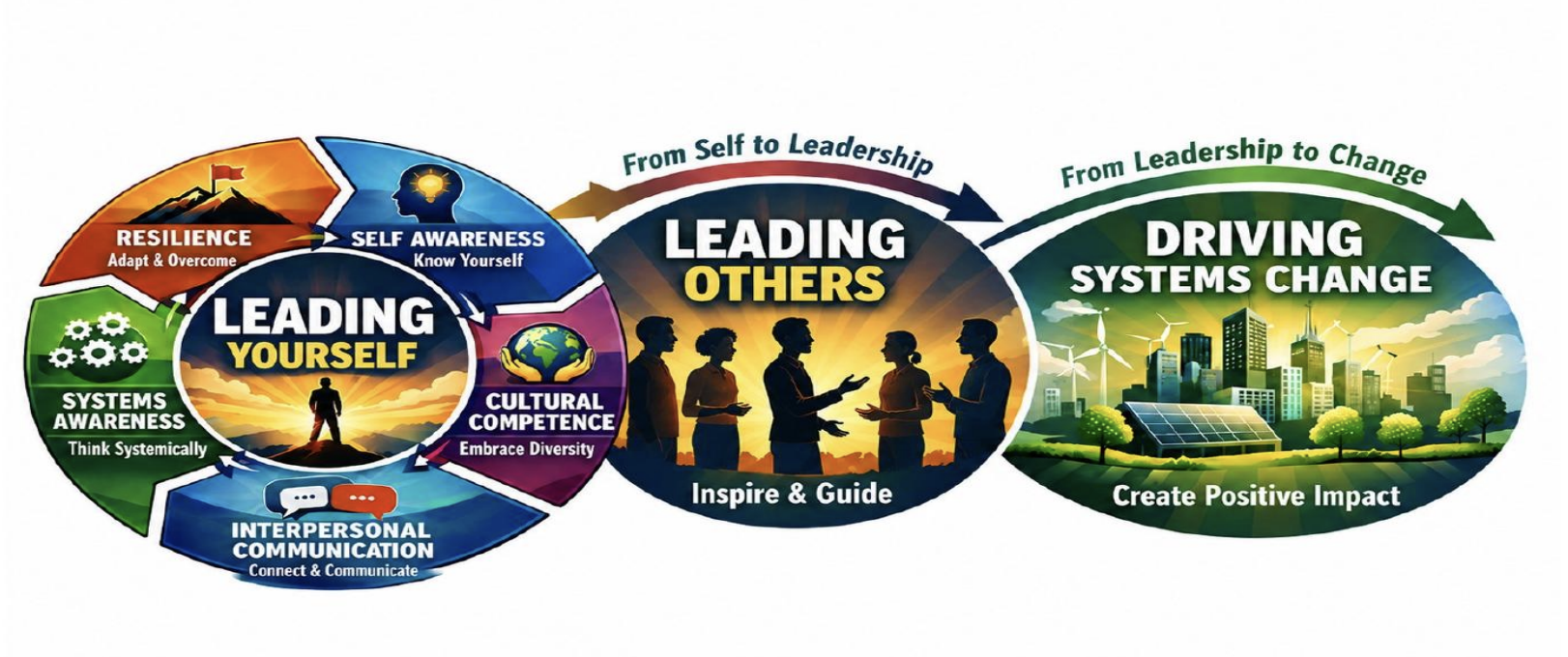
5 intrinsic dimensions of personal transformation
-Mission: Purpose — what you are called to do
personal compass; experiences that guide you
-Vision: The future you imagine and pursue
picture paint for self; more specific
ex: what next 4-5 years look like
-Values: What matters most and guides conduct
sum of your beliefs; dictate/clarity about what meaningful, drives you
-Beliefs: Ideas and assumptions you hold to be true
subjective bc what you hold to be true; get from multiple experiences that generate same idea pattern
-Identity: The story and characteristics you hold about yourself
can be hard to let go → friction; inside and outside us; also how others see you
ex: parents take care of you, not other way around
5 extrinsic dimensions of personal transformation
*all relate/influence each others
-Experience: What you encounter, live through, and learn from
background
-Preferences: What you naturally lean toward or away from
-Behaviors: Observable actions and reactions
actions from other 4
-Competences: Knowledge, cognitive skills, and attributes integrated in practice
-Personality: Patterns of thinking, feeling, and behaving.
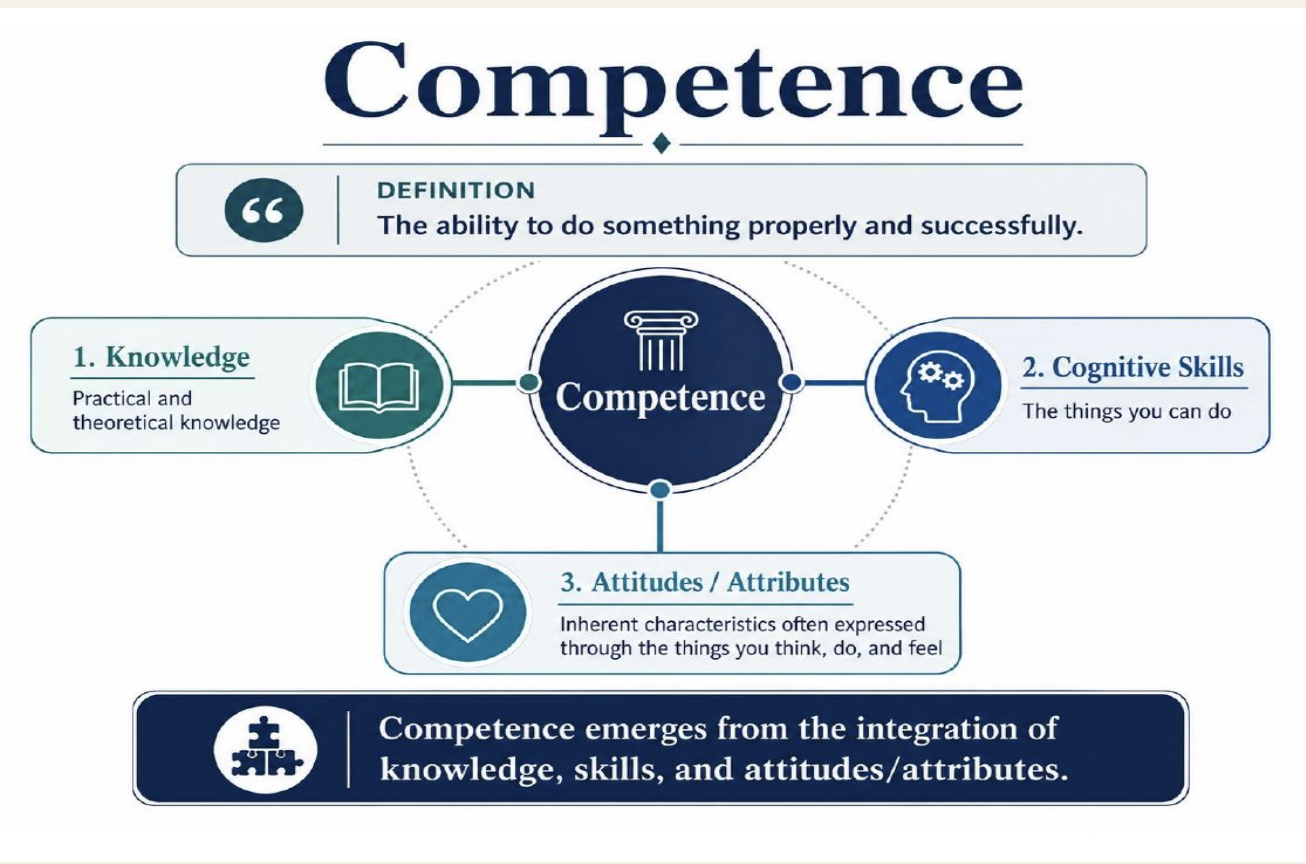
Competence + components
-the ability to do something properly and successfully; emerges from integration of the following to influence our behavior…
Knowledge: practical and theoretical knowledge
Cognitive skills: the things you can do
reason and apply knwoledge; ex=clinical decision making
Attitudes/Attributes: Inherent charactertics often expressed through the things you think, do, and feel
influence behavior; ex=clam vs anxious in scenario changes way you go about
*^”KSA”
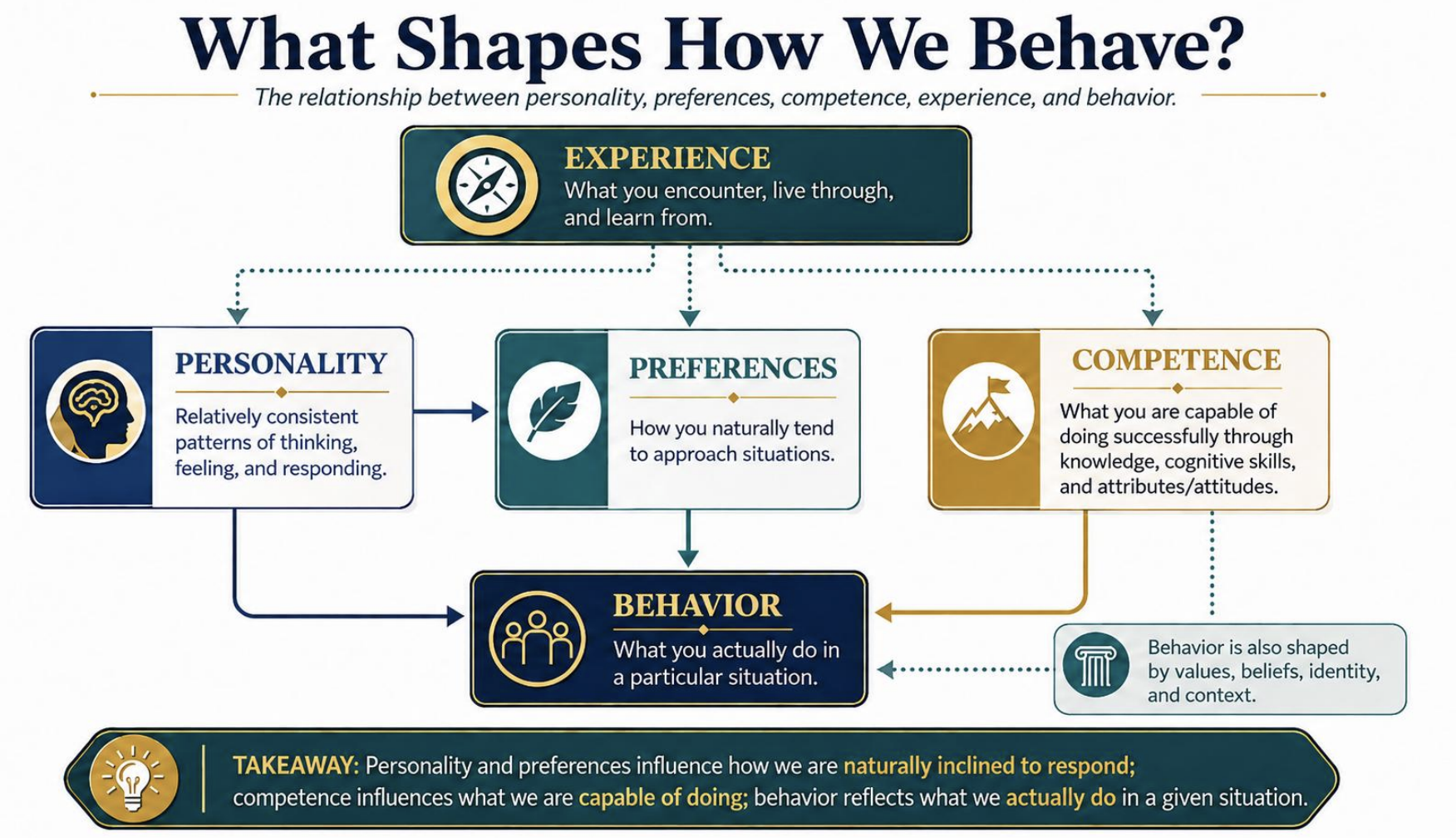
what shapes how we behave?
Experience → 1. Personality 2. Preferences 3. Competence → Behavior
-Experience: what you encounter, live through, and learn from
-Personality: relatively consistent patterns of thinking, feeling, and responding
broad; how show up on day-to-day in multiple scenarios
-Preferences: how you naturally tend to approach situations
-Competence: what you are capable of doing successfully through knowledge, cognitive skills, and attributes/attitudes
-Behavior: what you actually do in a particular situation
true colors assessment
-The goal is not to label students. It is to build shared language for reflection, communication, and teamwork
patterns/themes in individuals, how collaborate better and avoid friction
can change overtime (fluid), but primary color=defult
Why do?
-Personality differences can trigger conflict when behavior is interpreted through personal preferences
-Understanding your own style helps you notice tendencies and reactions
-Understanding other styles supports perspective-taking and stronger working relationships
Use colors as a lens, not a box
-Use results to support growth, not limit it. ✓ Do not excuse unprofessional behavior with a color label. ✓ Do not infer someone’s color from appearance, culture, major, or career interest. ✓ Ask better questions about clarity and what others may value. ✓ Treat your brightest color as a starting point, not a fixed identity.
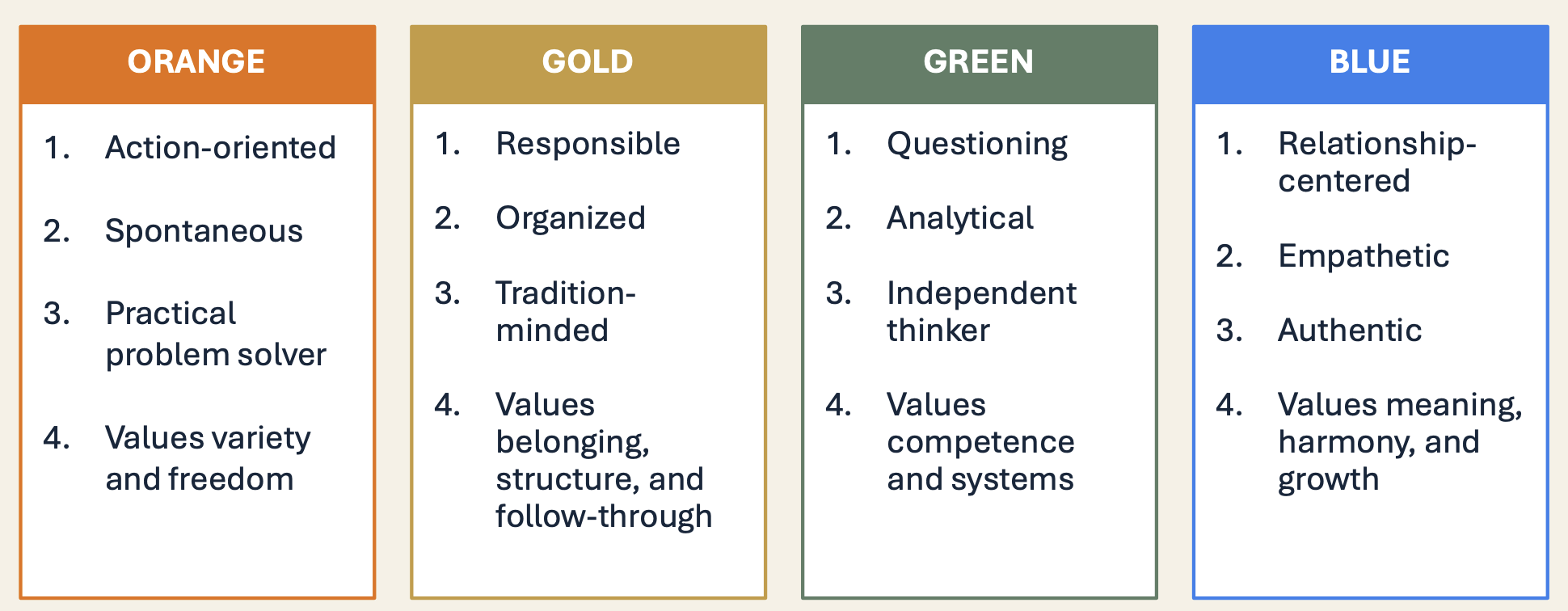
takeaways colors assessment
-Know yourself: Recognize tendencies, reactions, stressors, and strengths
-Read the room: Notice how others may prefer to receive information
-Adapt respectfully: Adjust communication without losing your own voice
-Collaborate better: Use different traits to strengthen team functioning.