PSYC1101 - Emotions & Motivation
 Call Kai
 Learn
Learn Practice Test
 Spaced Repetition
 Match
Match Flashcards
 Knowt Play
1/60

There's no tags or description
Looks like no tags are added yet.
Name | Mastery | Learn | Test | Matching | Spaced | Call with Kai | Chat |
|---|
No analytics yet
Send a link to your students to track their progress
61 Terms
emotion definition
states characterised by physiological arousal and changes in emotional expressions and internal feelings
motivated behaviour definition
goal directed & persistant actions that changes over time depending on our needs / desires
liking
something we expect to increase our happiness
association between emotion and behaviour
There is always an emotional goal behind our motivated behaviours (e.g. I want a girlfriend because I want to be happy)
Discrete Emotion Theory - overview
everyone experiences a small range of emotions that combines in complex ways
Discrete Emotion Theory - ideas
basic emotions:
have a unique biological basis (e.g. fear → amygdala)
has an evolutionary function
emerge early in life (not dependent on experiences)
have a distinct and universal set of physiological responses
are cross-cultural
Paul Ekman’s research
travelled to isolated tribes in New Guinea
showed emotional facial expressions to people from different cultures
found universal recognition of several emotions
6 Universal Basic Emotions: Happiness, Sadness, Fear, Surprise, Disgust, Anger
association between emotion and communication
facial expressions help us communicate
emotional expressions occur more in the presence of others
expressions are the best indicators of one’s emotional states
duchenne smile
genuine happiness involves mouth smiling and eye wrinkles ("crow's feet")
fake smile usually involves only the mouth
cerebral cortex
thinking, decision making, interpreting situations
limbic system
group of brain structures heavily involved in emotions
amygdala
detects and responds to threats / fear related stimuli
prefrontal cortex
helps regulate emotions and make rational decisions; avoid impulses
sympathetic ns
activates the body during times when high arousal is required
parasympathetic ns
consists of neurons with axons extending out from the medulla and the lower spinal cord
calms the body after stress & promotes rest and digestion
polygraphs
attempt to detect lying through measuring sympathetic nervous system physiological arousal (heart rate, blood pressure, etc)
Attribution theory
assigning causes to events; attributing arousal to a certain source
James-Lange Theory
emotional feelings follow bodily arousal and come from awareness of such arousal
e.g. See snake → heart races → feel fear
Cannon-Bard Theory
the thalamus causes emotional feelings and arousal at the same time.
Schachter’s Cognitive Theory
emotions occur when a label is applied to general physical arousal
Seeing something unclear in the bush:
If interpreted as snake → fear
If interpreted as stick → calm
the mere exposure effect
when you see something (or someone) again and again, you are more prune to like it
we prefer familiarity
personal space
humans maintain different physical distances from others depending on familiarity, comfort and relationship
levels of personal space
intimate → personal → social → public
hedonic
short term happiness
eudemonic
long term happiness
how does money affect happiness
moving from below-average income to above average income can increase happiness
correlation only exists to a specific threshold of money
after you have “enough” money - having more doesn’t create more happiness
the hedonic treadmill
people adapt to positive changes over time
things that were previously seen as happy returns to normal
association between happiness and age
older people tend to be more happy
happiness decreases during midlife and increases again later in life
affective forecasting
predicting how a future event will make us feel & how long that feeling will last
e.g. if i get a girlfriend i will be happy
miswanting
thinking something makes us feel happy, then getting it and realising it doesn’t
e.g. my girlfriend makes me stressed, not happy!
durability bias
people tend to overestimate the duration of our emotional reactions in the future
e.g. i just broke up with her, i’m gonna be sad and my life is over!!
why does durability bias occur?
we overthink little events
we don’t know what really makes us happy/sad
expecting happiness motivates our behaviour
we forget that we usually adapt to changes in our life
self esteem
the extent to which we like ourselves; associated with the no. of positive experiences in our life
Lorenz’s theory
action specific energy builds up inside an animal over time
an external stimulus triggers this stored energy to release, causing a fixed action pattern (FAP) behaviour
Perceive > Act theory
Humans are better at inhibiting our motivated responses and taking account of complex cues
Examples of biological needs in humans
hunger, thirst, sex, temperature, sleep and rest
Examples of social needs in humans
achievement, autonomy, affiliation, nurturance
Drive Reduction Theory
need -> drive -> response -> goal -> need reduction
Yerkes-Dodson Law
arousal can improve performance up to a set point, after which it declines
moderate arousal tends to produce the best results.
the ideal arousal level depends on task difficulty (simple tasks = higher arousal, complex tasks = low arousal
Homeostasis theory
it is necessary to use energy to maintain homeostasis
e.g. if we’re cold, we are motivated to get a jumper
Maslow’s theory
humans are motivated to satisfy needs in order
once a need is satisfied, it ceases to be a motivator and you seek the next one up
Maslow’s needs hierarchy
physiological -> safety -> love & belongingness -> esteem needs -> self actualisation
feeling of hunger is caused by….
release of ghrelin hormone when the stomach feels hungry & travels to the hypothalamus
as you eat, CCK (cholecystokinin) is released → reduces hunger and increase feelings of fullness
why do we eat a lot?
to conserve more energy
leptin
signals fullness, reduces our appetite and increases energy use
obese people are genetically resistant to leptin
the stanford marshmallow study
children can eat 1 marshmallow immediately or wait and get 2
found that older children = more self control
sugar & self control
self control is regulated by the pre-frontal cortex and requires energy
energy comes from glucose
when blood glucose levels are higher, we have more more self control
what the hell effect
after breaking a diet once, people may completely abandon their diet and overeat excessively
hedonic license
people believing they were taking a multi-vitamin engaged in less exercise and made unhealthier food choices
soup bowl study
researchers fed people a soup bowl that automatically refilled from the bottom
found that people ate more because they relied on visual cues to know when they’re full
portion size effect
larger portions increase food intake
set point theory
people often "settle into" a weight in adulthood
when our weight drops below this set point, regulatory mechanisms increase our appetite and decrease metabolism
libido
our crave for sexual activity and pleasure, strongly influenced by genetics
Buss (1989)
sexual motivation comes from natural selection / the need to pass on our genes
men are more horny
reproductive health
we are attracted to partners with signs of reproductive health & disease resistant
partners w/ different immune system genes = produce more disease resistant children
major histocompatibility complex (MHC) - the gene that lets us detects diseases
men vs women preferences
men prefer:
women at fertile points of their menstrual cycle
facially attractive
women prefer:
men w/ more masculine faces
indicators of good reproductive success
factors of attraction
same interests / values / personality
not long distance
are physically attractive
reciprocate us
give us nice things
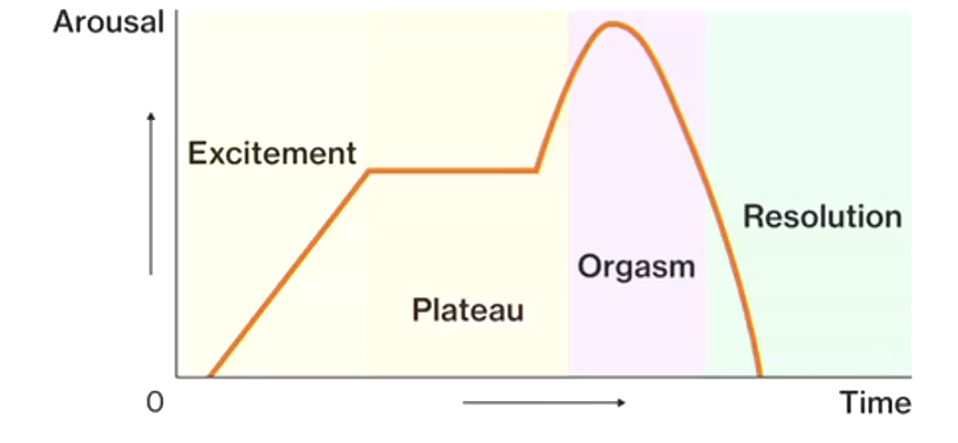
sexual response
excitement → plateau → orgasm → resolution
sternber’s theory of love
love = intimacy + passion + commitment
Intimacy: emotional closeness, sharing stories, "trauma bonding"
Passion: sexual attraction, infatuation, wanting to be around her all the time
Commitment: the decision to remain together long term