Art History lectures 1-3
 Call Kai
 Learn
Learn Practice Test
 Spaced Repetition
 Match
Match Flashcards
 Knowt Play
1/116

There's no tags or description
Looks like no tags are added yet.
Name | Mastery | Learn | Test | Matching | Spaced | Call with Kai | Chat |
|---|
No analytics yet
Send a link to your students to track their progress
117 Terms
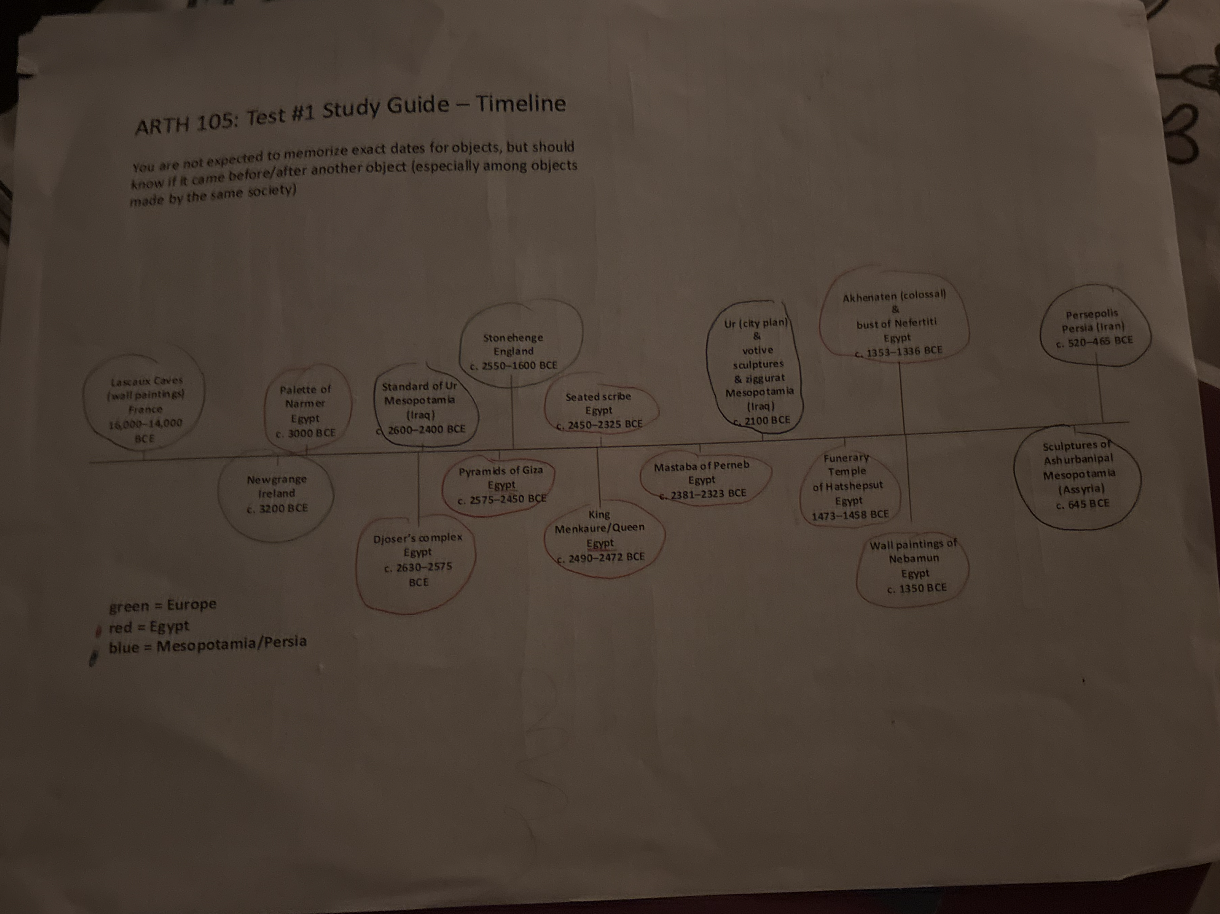
Time line
Tools for Art History include
1) Formal Analysis
2) Vocab
3) Iconography
4) Contexulization
Formal Analysis
Close looking at objects in art. Helps slows down and ask why or what questions of the object.
Vocabulary
Words that describe a particular thing, such as an object or an idea. Helps better convey observations.
Iconography
The way to interpret an object within the subject matter and identify it. Helps if an image/object is telling a story within a particular time period when it was made.
Contexulaiztion in Situ
The context behind the time period and place where the object/image was made helps us better understand it and the people who created it.
In situ
Orignal positon (where they first started)
Prehistoric
Time period before any written language. This is where tools of history is helpful
Lascaux Caves, France 16,000-14,00BCE
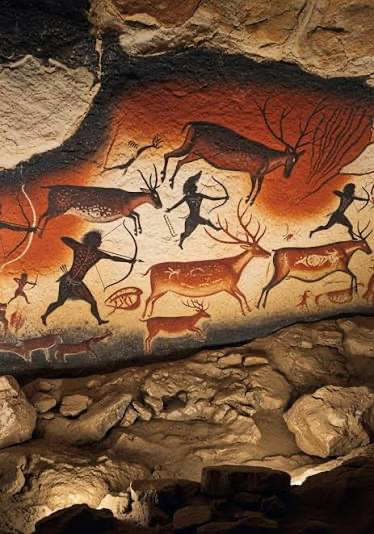
Network of caves with images in France
Not only type of prehistoric and nor the earliest
Around 350 miles south of France and northern Spain, there are others like this. Like the Bhimbetka caves, which are from 40,000 BCE, the oldest in India.
Lascaux is the most studied, though
770 ft underground
nonporus rocks : dry = hold pigment
some walls had no painting
Discovery of Lascaux Caves
1940: When discovered, at the beginning of a war on sept 5th
Marcek Ravidat (convict) discovered the entrance by accident running after his dog. Kicked a rock that dropped in a whole that eco into the place.
After Ravidant dug with a knifr and a torch with guys he met on the way, Jacques Marsal, Georges Angie, and Simon Coencas.
All explored the cave with the 1st painting they saw (a red cow with black head). Many images of the walls were bull horeses, deers etc.
Abbe Brevil ( expert prehistory) and Leon Laval (teacher) on sept 22nd made the cave authenticated
1948: open to the public
1963: closed to the public because paintings degraded then they had before because bodies + air + new bacteria = bad. The cave had nonporus rocks : dry = hold pigment
Today there is a state of the Art mesume replicating
Techniques of Lascaux Caves
Some were engraved into a wall (with some over one another) by blades of stone, wood, bone, or deer antlers.
Canvases are covered on some of the walls to apply pigment. Pigment came from charcoal and ochre
Charcoal was crushed and mixed with talc or other pulverized minerals, then water downed or diluted with water or blood.
Vegetable oil and animal blood kept pigment together or combined for other colors
Moss or fingers allowed pigment on the wall
Curves of spaces helped with suggesting space, showing images viewed differently when viewed in a particular place.
Spray technique: used by mouth with charcoal and some water that is spat on the wall repeatedly. Used dry mouth with a fine spray spit
Ochre
Clay, Silica, iron oxide mixed with water
Lascaus iconography: Representational
Shows real-world items/living things can be found in the real world, such as a human bull
In the cave, there is the Hall of Bulls: the largest space of the cave that has four large bulls; stags are arranged like a herd; horses
One bull is pushing the other towards the end of the painting
The stag is in the opposite direction, like a static image
Images are brief, show imagination, show movement

Lascaus iconography: Geometric signs
Double of representational. An image that doesn’t represent anything in the real world. Like circles, signs, dots, lines
From ancient geometric signs
Only 32 signs across a continent and 30,000 yr period.
Patterns of shapes through the year included hands and tectiform
Hands: were a thing between 25-40,00 yrs. They faded and then vanished at the end of the Ice Age
Tectiform is a roof shape. 13,000-17,00 yrs ago in the Dordogne region (France). Expect one site 250 miles south across pyrenees mt.
Penniform: Geometric sign (“teacher shape” in Latin) - some say it’s a tree
There was a 16,000-year-old necklace with 45 different geometric space from France
Abstract
Images that convey ideas, concepts or anything else by color, shapes, or form rather than physical items in the real world.
Lascaus context
100 small stone lamp found in the cave

The lamp tells us used for light because of the small depressions. This helps animals see in the cave since light couldn’t seep through so deeply.
Geometric signs on the handle that were on the wall
Because there are no soot marks, they used stone lamps instead of torches for paintings, so there were no fires in the caves = painters didn’t live in the caves
likely left after painting or visited for occasions
People who built the caves: Terra Amata (earliest settlement). Built caves like structures or housing where the people lived. Used spears and sticks often multiple times, but lightweight = suggests nomadic
What can we know for sure about the paintings in the Lascaux cave?
Images are complex, depending on animals for references and the conditions of the surface; representational = audience who saw the painting is important
Took time, effort, and different techniques
Part of a system of communication: representional an non representional (geometric signs)
A space outside of daily living space for nomadic people as well as daily activities
How can we interpret the iconography in the Lascaux caves?
Detail/animal subject matter = teach people how to hunt?
The painting goes deep into the caves = privileged for a few:
Lack of huma npaintings / mrepresentation = view humans as powerless in the face of nature
Uninhabited / too deep of caves = spaces for rituals
Depth and layers of cave = more about process of paintings than what was finished
Monumental Architecture
A type of Architecture that is huge and takes a lot of effort, time, and cooperation among others. Can take generations usually to make something meaningful and last long.
Megalithic architecture
Composed of large stones
Dolmen
A cave created by humans for burials. Throughout the dolmens in Newgrange, there is detailed / decoration on the megaliths, but either abstract or representational.
Post and Lintel

Simplest form of architecture. Two upright posts and a lintel over them that create a door and the start of a roof.
Cairn
Small rock and dirt that creates an artificial hill
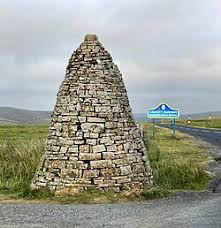
Newsgrange, Ireland c. 3200 BCE
Dolmen took about 70yrs 44ft 280 in diameter

Kerbstones
Giant limestone. Newsgrange has 97 that feature patterns that are nonrepresentational. Initially, there were another 48 around the dolmen; only 12 remain standing.
Refer to the rings of giant megalithic stones that encircle the base

Axis
A path that directs movement and attention from outside, going into the dolmen, deep into the center. During a certain time of the year, the axis directs light directly to the entrance during the winter solstice. Aligns with the sun.

Why did people make the Newgrange dolmen?
Human remains: place of burial and commemoration for the deceased
Construction was complicated and took time = they were organized in a hierarchy because they were able to get it done while hunting and gathering
Because the structure took decades, they lived in more permanent housing, typically using agriculture = not nomadic
To connect to the sun = clock and helped track the changing of seasons for agriculture; relates to the heavens
Henge
A monument out of earthwork or a ditch that is usually arranged in a circle with embankments (raised wall or stone) surrounded by other things in a circle.

At Stonehenge: The henge is a circular ditch with a innercircle out of megaliths, over 1500yrs. England, 2550-1600 BCE

What are the 3 stages of Stonehenge?
1) 328ft wide circular ditch with an embankment (man-made ridge/wall of stone) forming the outer edge (56 pits in the ditch). Heel stones are placed
2) 56 pits wood post are removed. Replaced by Megalithic stones in a circle, with an open horseshoe of stones in the center
3) Stones are placed around the horseshoe to form an outer circle and inner oval. An axis is formed (avenue)
Heel Stone at Stonehenge
The 1st megalith on the site is located outside of the ditch. Sort of like an entrance

The Avenune at Stonehenge
1.7-mile corridor that goes from the Avon River into the hedge. Precisely with the movement of the sun’s solstices and the sunrise solstice
Axis of the sun = Axis of the Avenue

Sarsens
sandstones that came 20 miles from the site, 25 tons at stonehenge
Bluestones
Smaller sandstones that are 2-5 tons from coast of whales at stonehenge
Altar stones
Largest sandstone from Scotland (430 miles) at stonehenge
Dressed
A stone carved into a particualr shapes
Mortise
pocket for a tenon to fit into at stonehenge

Tenon
Little bumps on a stone at stonehenge
Entasis
A stone shaped to be thinner at the top then Botton. It removes the illusion that a parallel-sided stone is leaning forward and makes them seem straight
What can we know about the people who built Stonehenge
Sun mattered to them because the Axis (the Avenue alignment)
The specific types of rocks and shapes mattered because they made the effort to bring rocks to far-away places
Communicated with people far away and organized; brought altar stone from Scotland
Burials and animal bones at the pits = place of gathering and burials for the afterlife (38,000 animal bones)
Woodhenge, England 2500 BCE

Same people who built Stonehenge, and at the same time
6 circles of post holes filed with timber sticks (now concert)
similar parthworl as Stonehenge
center 3yrs old child buried
Material Culture
Stuff. Has Two basic ideas,
1) Stuff reflects the society/people who built it
2) Stuff shapes society
Standard of Ur
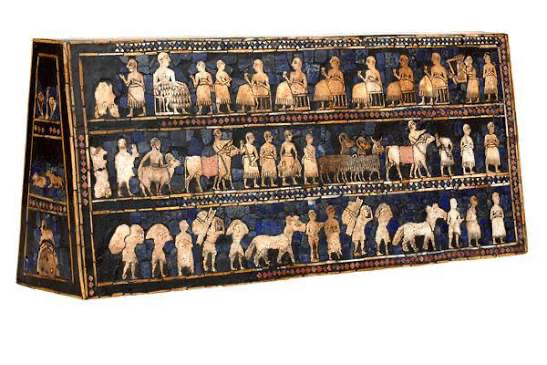

Made of limestone and lazuil
Could be mounted on a pole for a flag in wars/parades/ceremonies as a regular standard
A small hollow artifact made mostly of wood
From Ur
Ur
a city that is now Modern Iraq located between Tigris and Euphrates river
Mesopotamia
Means: river and middle
It is the land that was between the Tigris and Euphrates rivers; Ur was one of the major cities there.

City States
The world’s first cities that alomst ran as independent nations
Sumerians
(blackheads)
The people in the Mesopotamian city-states
Bitumen
Black mixture of hydrocarbons naturally from oil, naturally occuring asphalt
The primary material in the Standard of Ur
Lapis Lazuli
Blue semi-gemstone from Afghanistan (Tell us Sumerians connected to people far away)
In the standard of ur, the people are made of them.
Registers
Horizontal bands (like a comic book)
The standard Ur is in registers, organized in a story to communicate an idea
One side of the Ur is war, and the other side is peace
On the side of peace, a leader is at one end at the top, who breaks out of the frame in the 1st register. The 2nd and 3rd = farmers and animals = extract bounty of land
On the side of war, it shows how the leader kept is power, which is through war
Hierachical
Levels to society are based on economic status; one part of society has power over the other
The Standard of Ur shows this. The leader of Ur used violence and war, as shown in the Ur. The leader is taller / bigger / out of the frame than the rest to show that power.
The Bronze Age
where metal developed, including weapons and bronze (a mixture of tin + copper)
Alloy
Tin and copper that are heated or melted and then combined.
Or metal + another element combined
Ur (city plan)
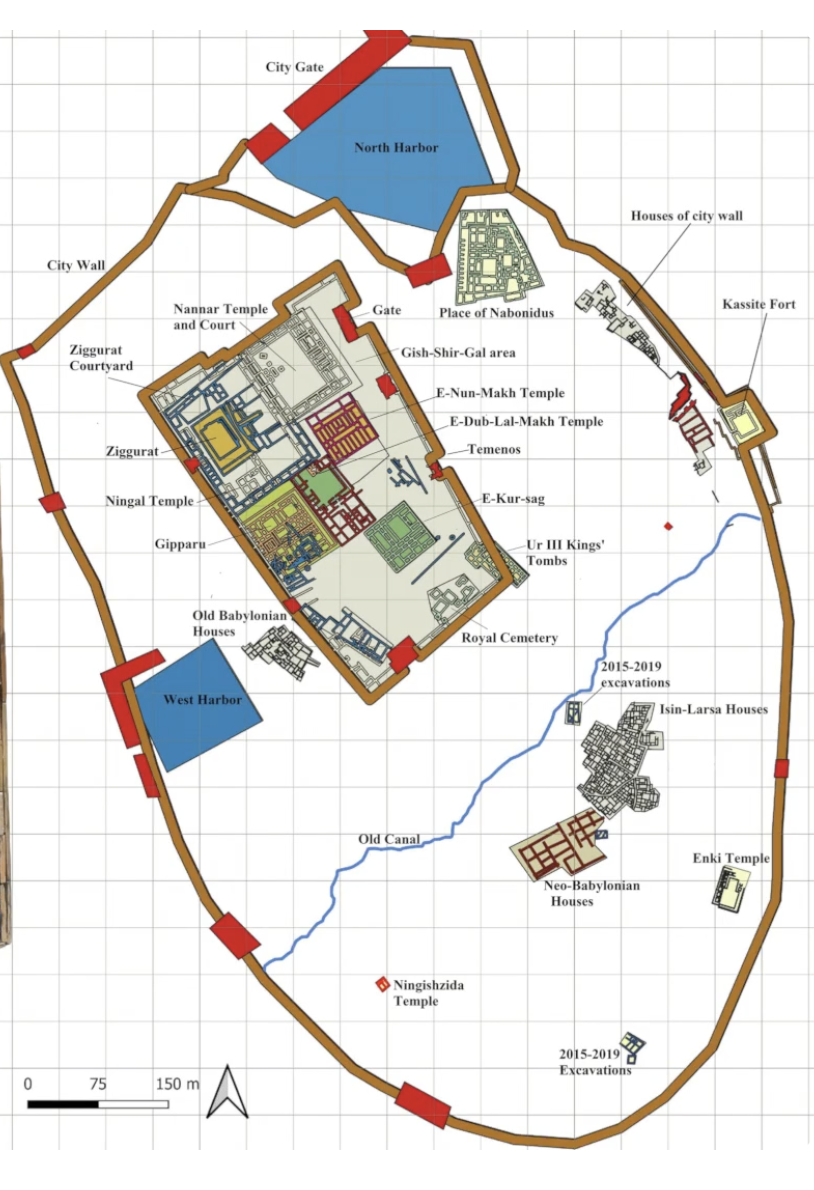
The same city Ur was found
In the Euphrates River
10,000-20,000 people and Agriculture society = a lot of organization
Sunbaked mud (32pounds) surrounded the city-state all around to define boundaries
Small houses; people lived in tight streets with courtyards made of mud bricks
The high point of the city is another set of walls = a series of offices, temples, buildings, a wide courtyard, and organized streets. This is where the higher-up people lived; it also included the Ziggurat
Ziggurat

A stepped Man-made Mountain that is the biggest in Mesopotamia city states
Excavated in 1923 1924 by the British and Americans
3 terraces positioned at true north out of mud bricks sealed with Bitumen
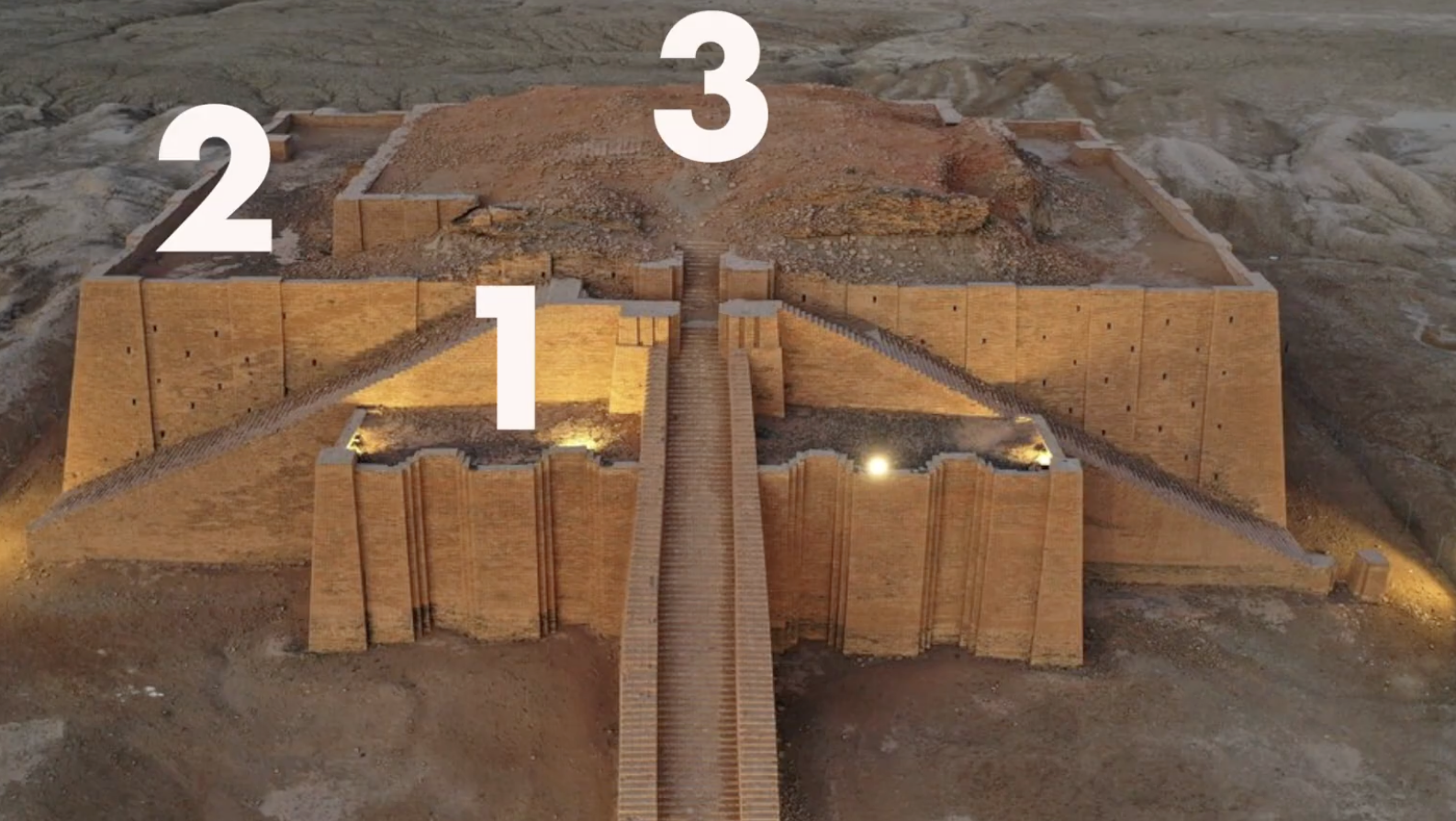
Was a platform for temples to Nanna (Moon goddess) made by the king
In the courtyards in front of the Ziggurat were sculpted slabs. The king was an intermediary between gods and humans.
Might have had female priestesses that oversaw temples at the top. Such as Enheduanna (daughter of the king who was also a poet we had the earliest writing)
Elite society allowed in only in the Ziggurat = Priest / Priestesses and king at the top because it was believed Nanna (goddess) lived there.
Votive sculptures
Small statues that offered by people to the gods as a stand in for their presence to prayer forever
Different sizes by gypsum or limestone or lapis lazuli

Theocracy
Gov’t that the power went to the gods and people who talked to them like king
gods= poltical
leaders= intermediaties between gods and people
Empire
Dominate city state that take over others
Overtime become larger and larger
complex bureaycratic entities, network of citites that got taken over
Assyrian
largest empire in ancient world around 600BC
Persian
2nd largest empire, that even got bigger than the Assyrian
covered most mesopotamia into Asia, Turkey, Egypt
Medium
A type of material culture
Relief sculpture

Carved sculpture that project a image from a flat background
usually was painted back then
sometimes inscribed their power into the stone
not fully 3d but gives dimension
Asssyrian Empire
Laid the groundwork for other empires
When their was a new king = new capital = new palaces
Ashur (god) embodient the emppire
military innvoation for cruel punishment
7th century BCE = across Modern Iraq, syria, lebanon, Israel , turkey, iran and egypt
150yr it extended until 12th century because lost most territory
started in late Bronze Age (Assur- tin and texitle trade center)
Ashurbanipal

A high priest who become the most succesful king in Assyrian Empire king ( city in Nineven modern day Iraq - largest city in 650 BC)
He had a military compagin making citiy state to territories.
Mainted the empire and commissed
his grandfather = sennacherib changed Nineveh in to vast Metropolis, two walls around the city and his palace. Then created another palace, Ashurbanipal’s palace.
lamassu
Human headed winged bulls that was carved by stone that was infront of the 18 gates around the wall of Nineveh
Acted as guardians

Assyrain Releif Sculpture
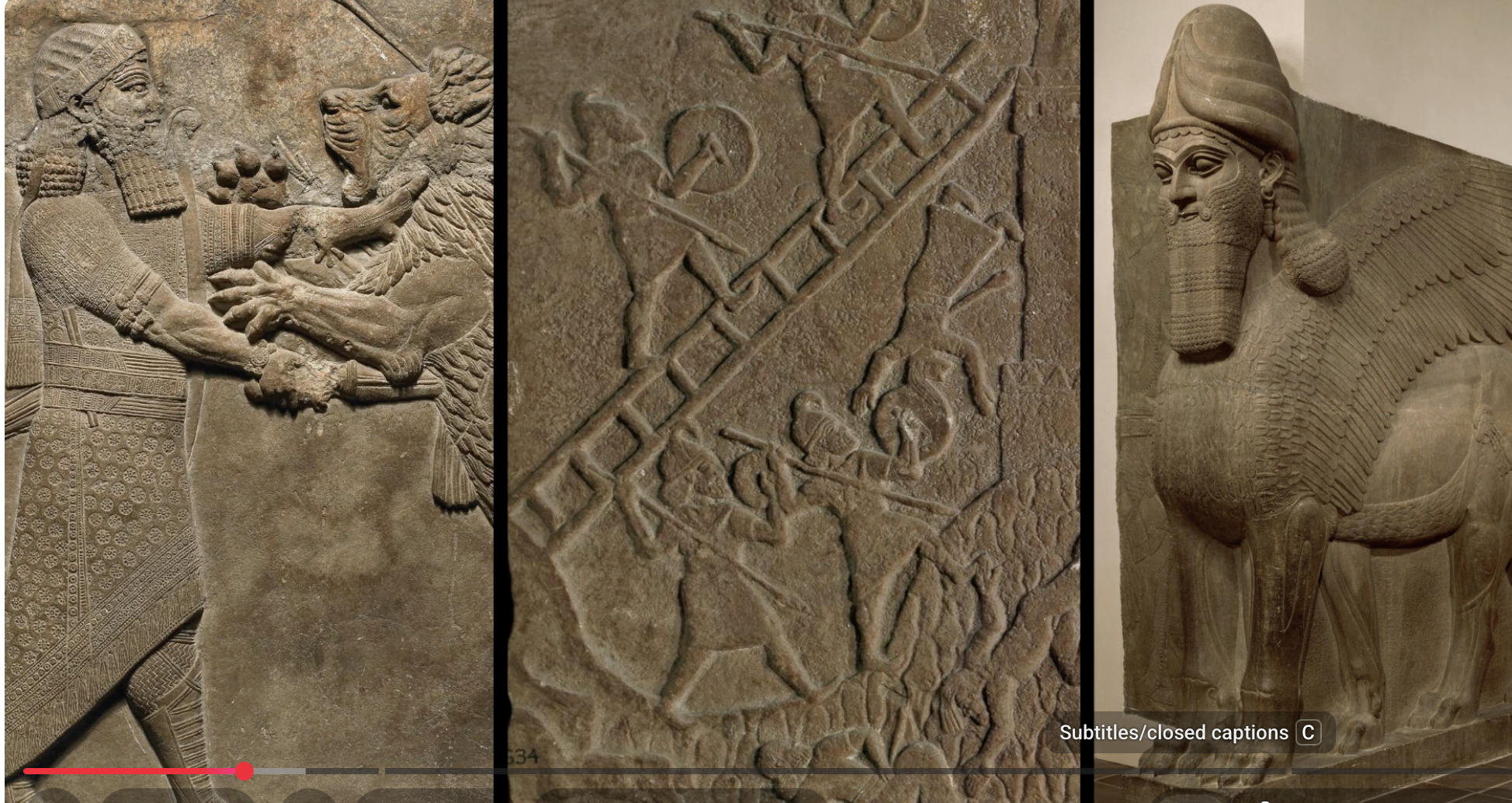


Lined the walls and larger than life size, was painted
usually in 3 categories = 1) scenes with lions and the king defeating 2) Assurian victories and 3) images of gods and geneis
usally propaganda
showed the power of the king and indimiate people showing violence
Propaganda
selective use of informatuon to manupulate particular ideas for people to believe in
Hierachy of scale
When relative size of element is shown larger in order to emphasize that elements important, usually in society.
In the reliefs Ashurbanipal is larger than everyone surrounding, Similar style in standard of ur
One of the scenes the king is larger on the left side compared to other 3 figuers who are helping him . Horses are at the frot but represent below the scene with king. Another row of solders with dogs. At the end= soilder realsing a lion into the hunt
Human figueres = formality
Lions dying
middle of it - figured much smaller = distance
In situ
original place
Darius I
Persian king that proclaimed himself
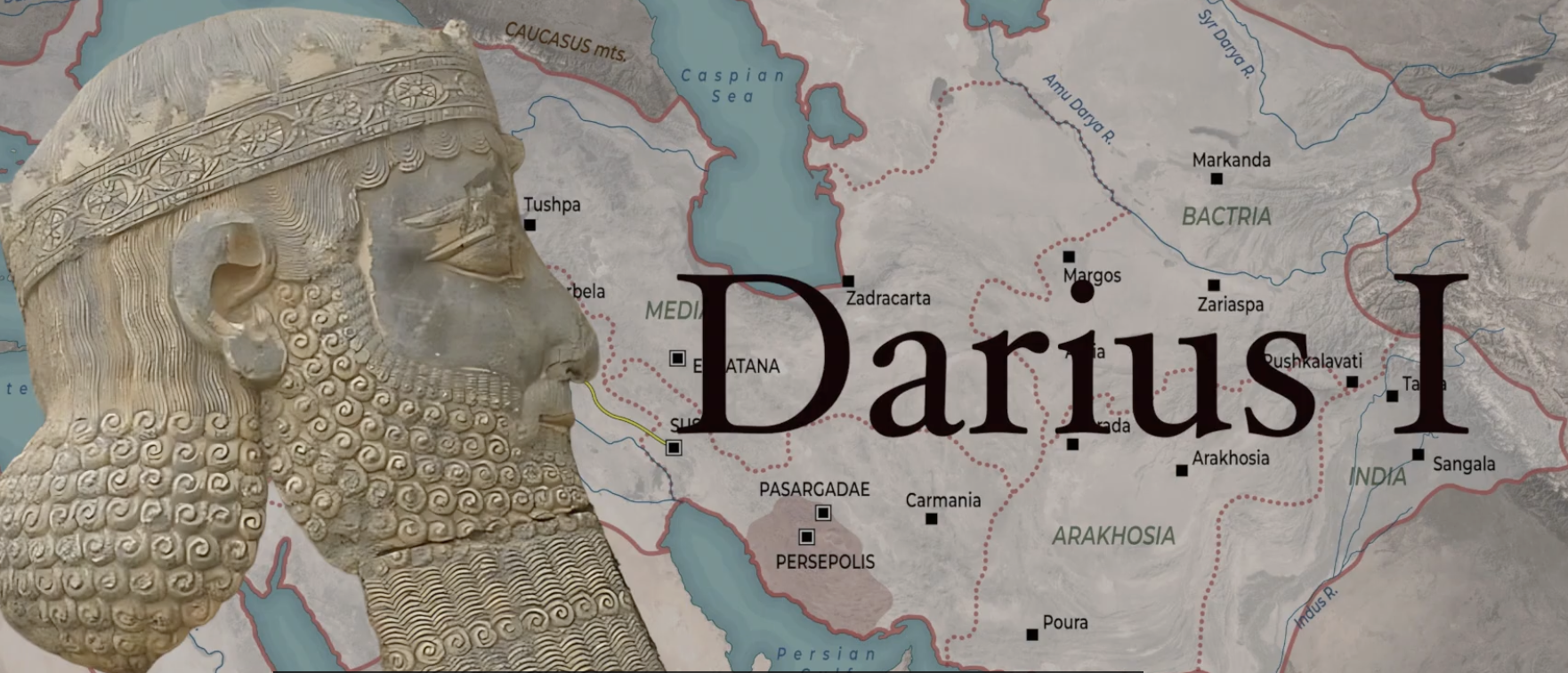
He built a new captial city to legitmaiz himself as ruler in Persepolis (modern day Iran)
Persepolis , city plan(including apandanna)
Capital city that Darius 1 built

Used architectural techniques including platform where main complex raised
Included Apandana (Darius palace), treasury for riches, religious / terminal and fatiticartioo

Apandana allow appriacg by one gigantic stairs even horses can fit = message that the king is in control

Apandana even higher than the rest of the complex, Audience hall = make pleas to Darius, stair leading to it = sculpltures
The sculpture in registers like the standard of Ur (painted and detailed) , people coming to present gifts, including groups of people and guardins
one relief Drius has a audience and his son behind the audience leaning down

Hypostyle
A place supported by many columns in rows
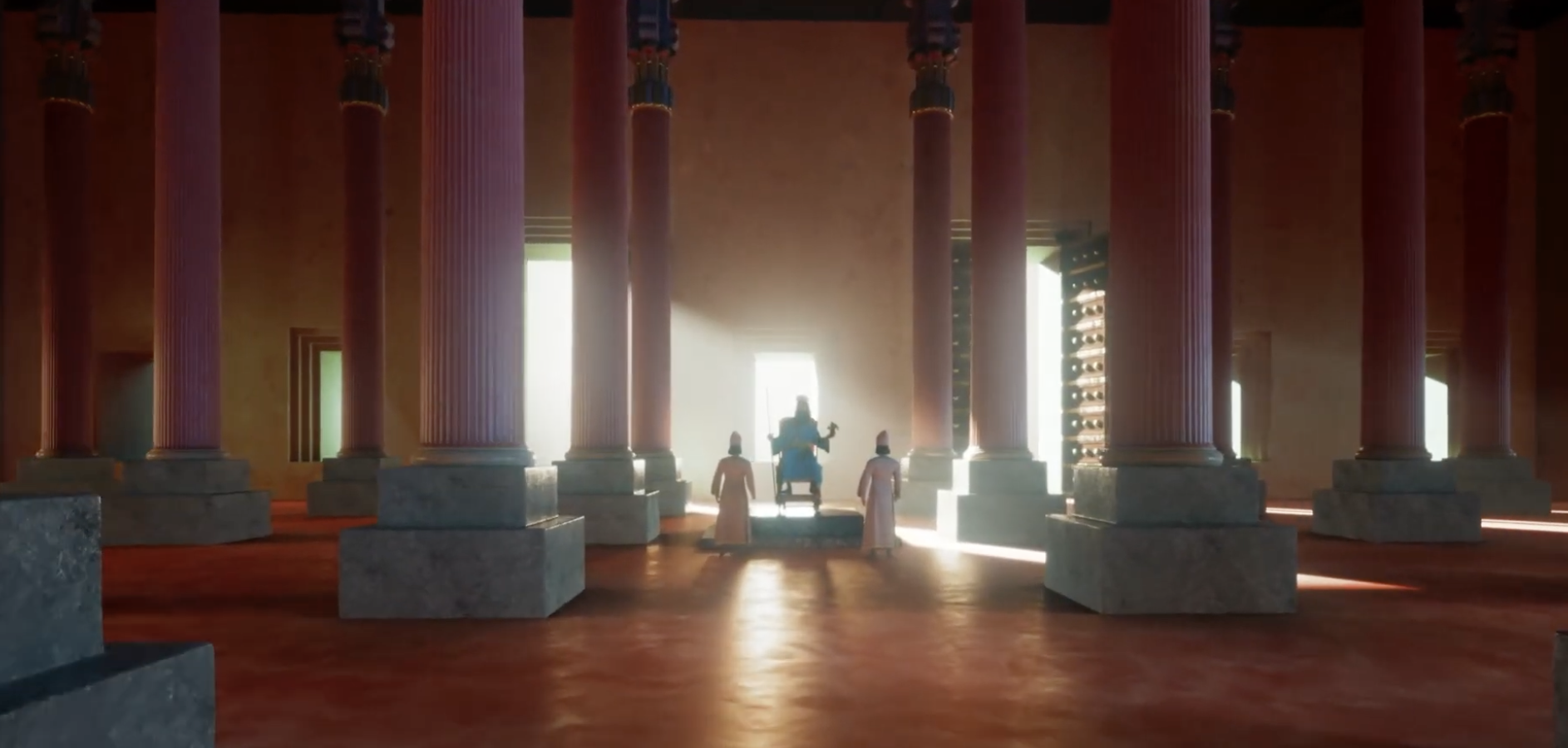
In Persepolis there was 36 columns , 7 times human size at Apandana
Plastered and painted, was used for intimidiation each had a capital
Capital
Top section of a column , usaully shaped as double headed bulls (Roofs of the beams sat through their centers)
Carved in stone and expressive

Periods of Ancient Egyptian History
Predynastic- 5000-3000 BCE
Old kingdom- 2686-2150 BCE
Middle Kingdom- 2030-1640 BCE
New Kingdom- 1550-1070
Palette of Narmer: predynastic
Made around the 1st period of stonehenge
In cario Egyptain meseum
laid out how Egyptains made art for the next 3,000yrs
Hierarchy of scale
Arrow shape with relief sculpture

Palette
A plate used for mixing makeup
covered both sides relie sculpture organized in registers like standard of ur
Kohl
Lead ore or crushed lapis lazul
Put around the eyes to protect from the sun
Kohl was out in indentations well to mix kohl, well was a intertwind lopards with snake necks

the indentations
Conventions
Tradtions for making things
Palette of Narmer was one of the 1st
Composite pose
A body position that can not be replicated or done in real life
For example narmer (King of predynasty Egypt)
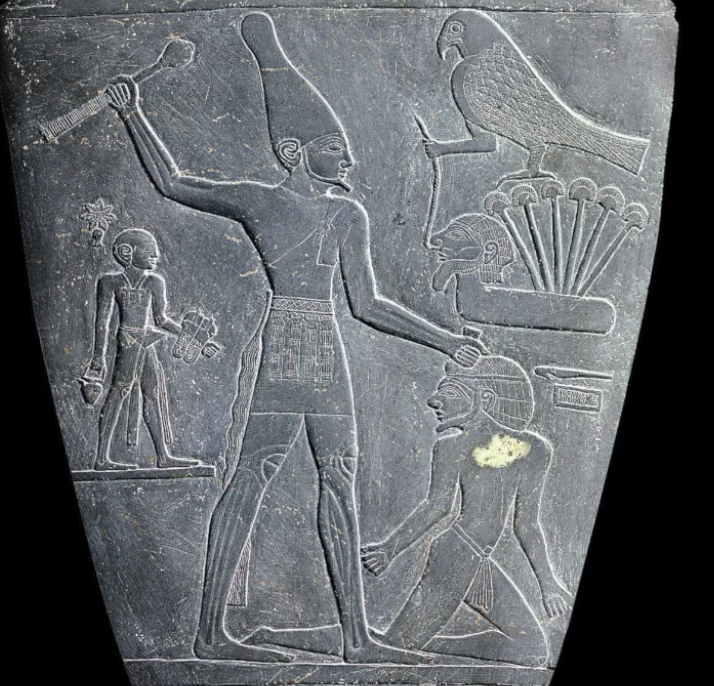
Head in profile on the side, eyes shown from the front, Torso facing head on, lower body is in side view like walking
Combination represetning human bidy in different ways and sides which allowed rulers to look pyhsically powerful and in control
Show in painting and relief
Polytheistic
Worship / belief of many gods or deities
The paletter depicted two gods, bat ( bullheaded goddess of sky on both sides) and Horous (fallengod of sky and heaven)

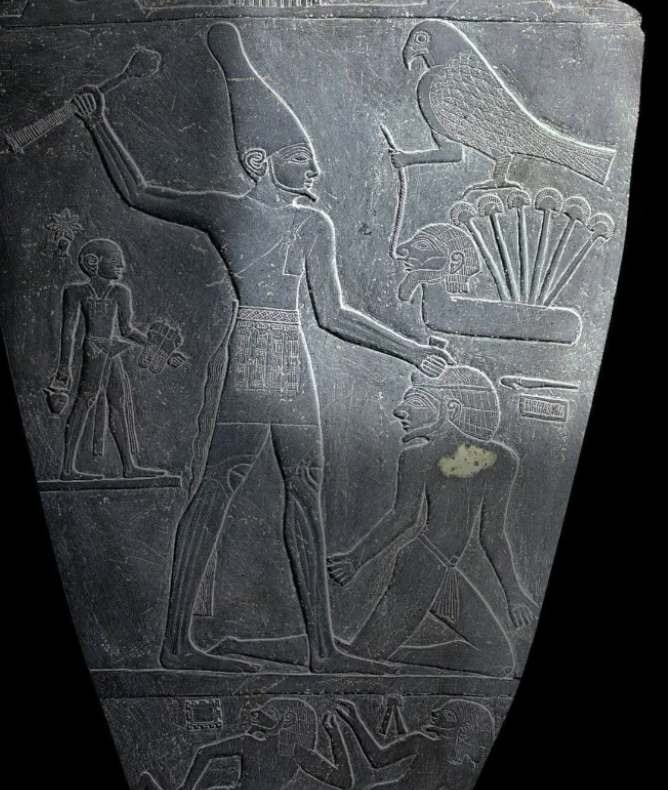
Hieroglyphs
Pictorial writing
In the palette of Namar is a hieroglyphs of Narmer’s name

King Menkaure and Queen (relief sculpture), Egypt (old kingdom)

Found in Menkaure tomb (smallest of 3 major suriving one)
Khafre (his dad) and Khufu his brother

They are standing up to represent king ship for eternity = idea of power
The queen is the same size which is unsual
more dimenoional than relief but not fully 3d , not freestanding because still attached out of stone
It is idealized
Composition
Overall design of the sculpture
Freestanding
3d, not attaced to a wall for support
Niche
A pocket in a wall of the temple

Naturalism
Making something look realistic or close to object in nature
Stylized
Designed to fit a convetion (traditonal way of society) or stylistic pattern than naturalism
King Menkaure and queen are stylized
Idealized
Represented as perfect humnas, something to be perfect rather than flaws
In Egypt the males have high cheekbones, pouty lips, muscualrm zero sign of age
In the Egypt the female have flesh face, a tummy, legs, reast, under a tight garment
Nemes
Headress of Egpyt rulers
In kings Menkaure its not like orginal headress, not incised with horizontal lines or mini cobra sticky out, never was finished

Modeled
A shape in particualr way
In queen’s sculpture its modeled to emphazises roundes and each part of body more visible such as hair under the wig
What was the role of conventions in Egyptain Society
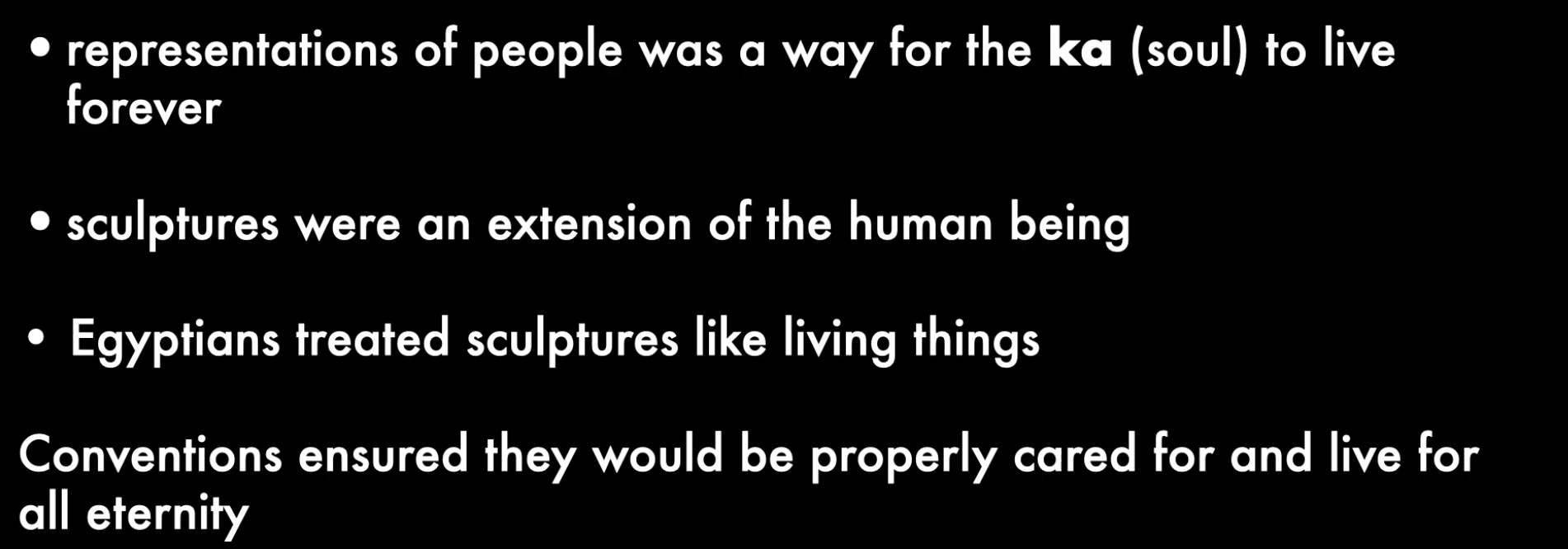
Followed to represent kings- kingship was divine, same cobention over kings.

Theocratic Monarchy
King rules with the blessing of the gods and his successors. Having their kids inherite the throne one after the other
Very hierarchical- king - officals, priests, military then regular people
Seated scribe (freestanding) scultpure (old kingdom)
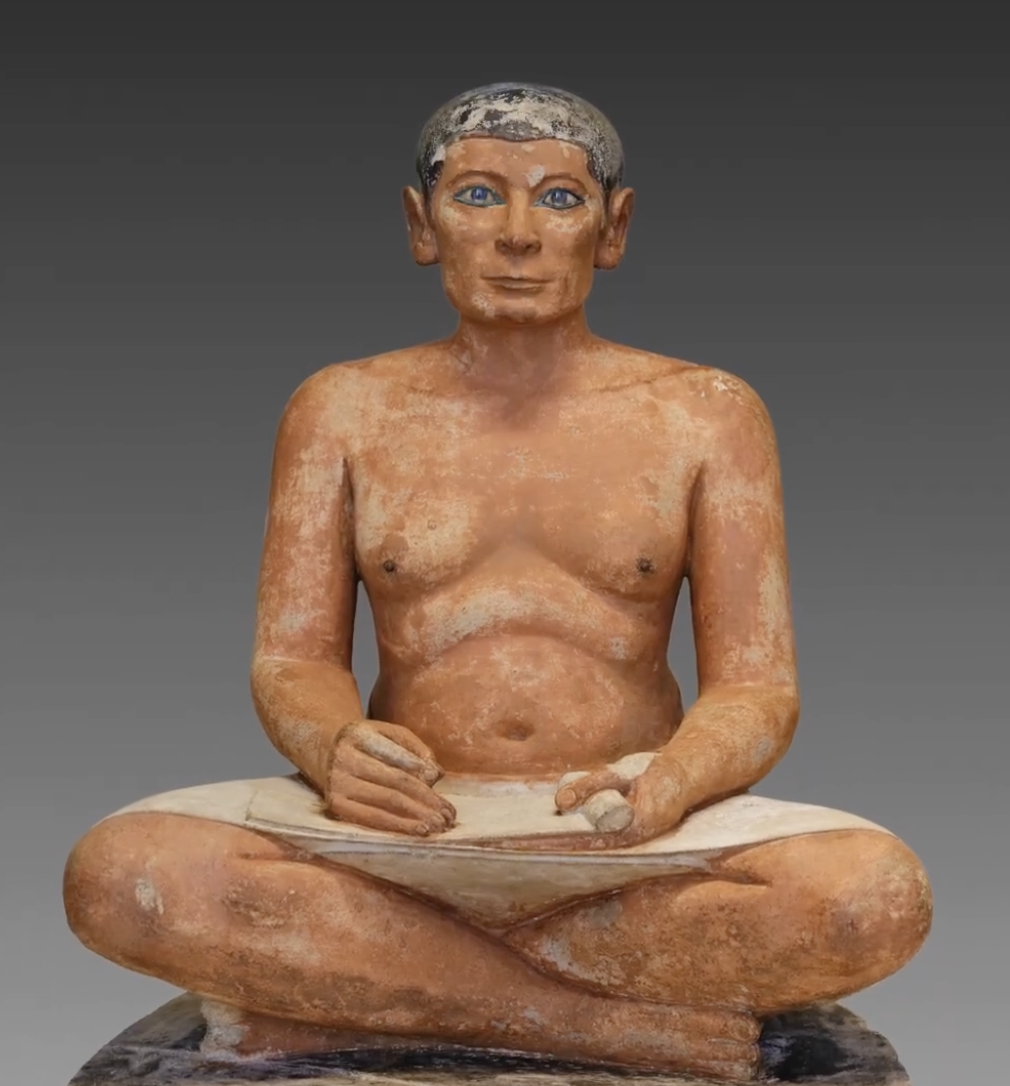
Not the same level of idealized because wasnt the king so it was not important it looked perfect forever
Was a scribe which was important in the hierarchy because it kept track of the money in society
More realistic (naturalistically) - relaxed body, flabby, painted, eye color
free standing - 3d with no attachement for support
made of limestone
Akhenaten colossal sculpture , Egypt (new kingdom)
The new king of Egypt in the new kingdom: Turn Egypt to monotheistic
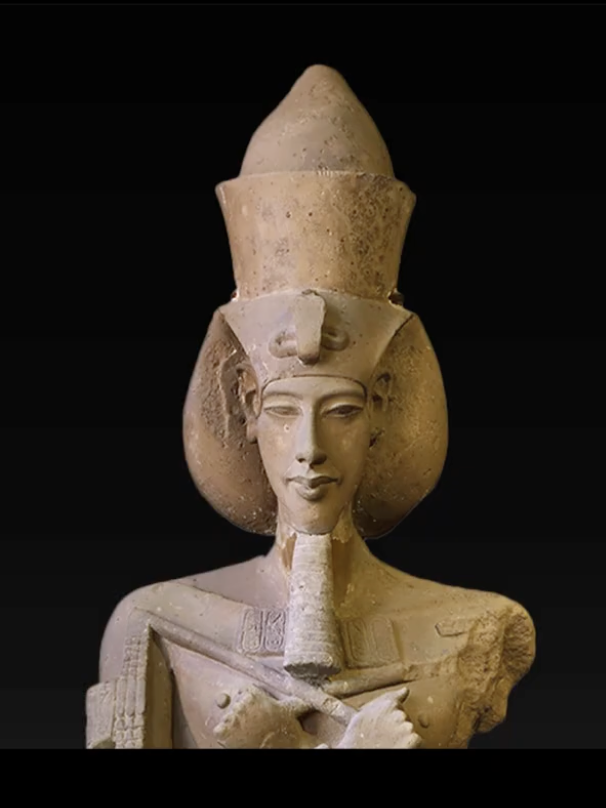
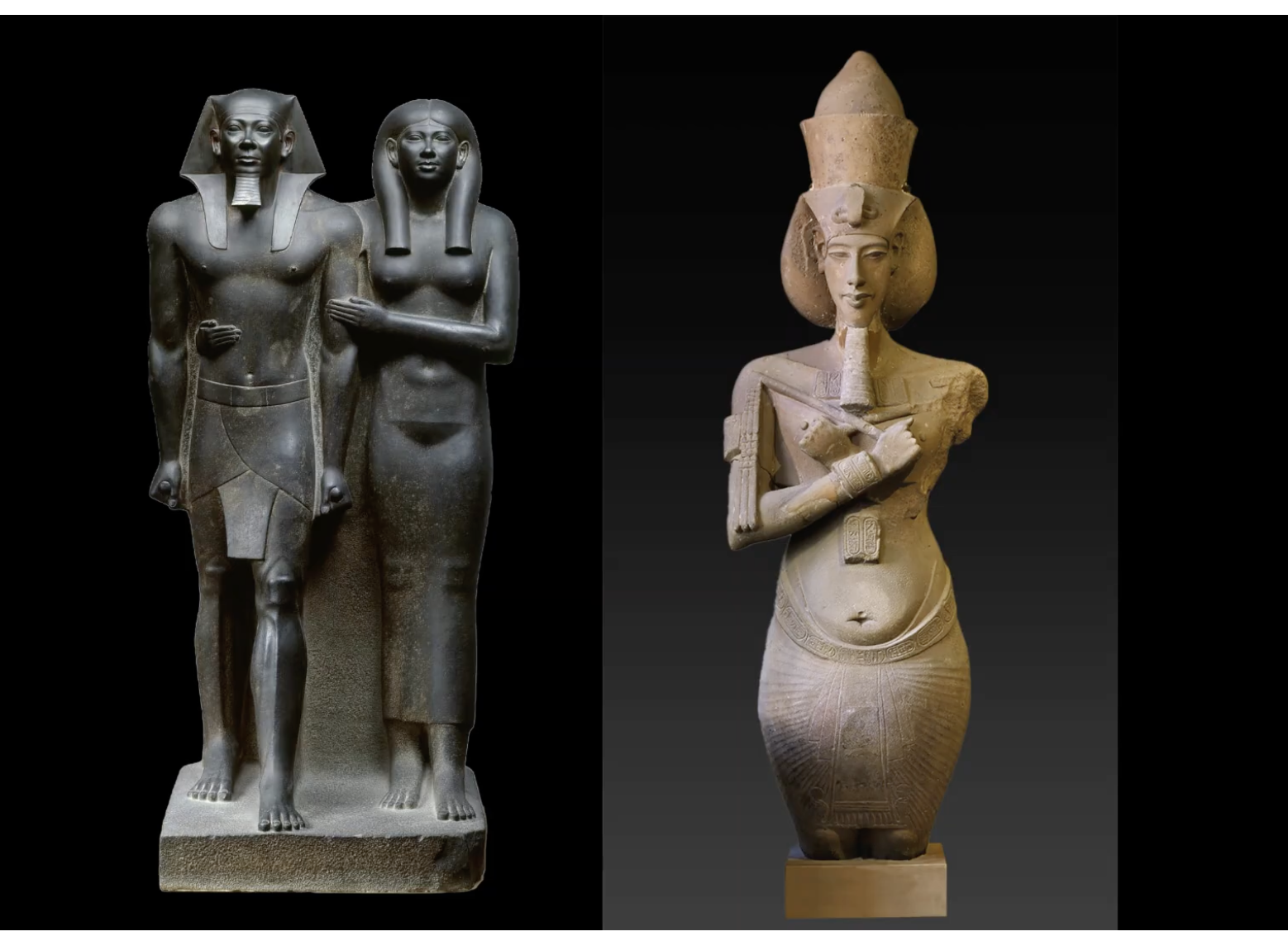
Is more elongated= long / thin limbs with hips being roundedm angularity shoulders, elbows
exaggerated face features and has flail and shepherds crook = king symbol of power
Monothesistic
Kingdom worshiping one god
Akhenaten made Egypt monothesistic to Aten (life-giving sun god)
Akhenate means in service of god Aten
He centralized his power, one representive rather than mortal serving of gods
Bust of Nefertiti (new kingdom)


Akhenaten’s wife, wearing red crown of lower Egypt = shared power
Found in ruins of a studio who created it (Tutmost), was use for a model for other sculptures
Not complete
Core is kimestone with plaster on top = allowed easier manuolliation of surface = (sense of bone beneath skin)
Idealized = line oifes compostion creating a traingle fro top of crown to neck = elongatong
preresenting beauty and power
Repatriation
Return to the place of origin
Nefertiti been a debate because was doscovered by germans so now it stays i germany mesume even though was in Egypt.
Well painting of Nebamun (new kingdom)
dcd

Shows Nebamun and his family and wife and daughter
shows him doing what he want to after death- hunting, parties, work insepcting farmers, animlas and crops
Was a scribe for states grain supply
Alot of moeny to d othis so burial in big tombs for the rich
Necropolis
Citites of the dead
tombs gather together facing setting sun (like Stonehenge)
edge of desert in Egypt
Mastaba
The fiirst tombs from predynastic and old kingdoms
Around 300 bc like pallets of Narmer
1 story building with slanted walls and flat roofs built over underground chamber
below was the actually burried tomb in a chamber, a shaft led to this and lowed the mummy and then blocked,
flase doors to drink robbers

Faced
Thin pieces of stone were cut from quarriers ro cover brick stone
illusitoned srone buiding and smooth hand surface