Anatomy Unit 5B Test Prep
 Studied by 0 people
 Call Kai
 Learn
Learn Practice Test
 Spaced Repetition
 Match
Match Flashcards
 Knowt Play
1/76

There's no tags or description
Looks like no tags are added yet.
Name | Mastery | Learn | Test | Matching | Spaced |
|---|
No study sessions yet.
77 Terms
How many conditions can affect the skin?
Over 1,000 different conditions and ailments
Why is skin important for detecting internal disease?
Many internal diseases reveal themselves on the skin
What are the most common skin disorders?
Infections
Which skin disorders are less common but more damaging?
skin cancer and burns
Are most skin tumors cancerous?
No - most are benign and do not metastasize
what does metastasize mean?
To spread to other parts of the body
Two main risk factors for skin cancer
Overexposure to UV radiation
Frequent irritation of skin
How can some skin lotions help prevent skin cancer?
they contain enzymes that repair damaged DNA
Three major types of skin cancer
Basal cell carcinoma
Squamous cell carcinoma
Melanoma
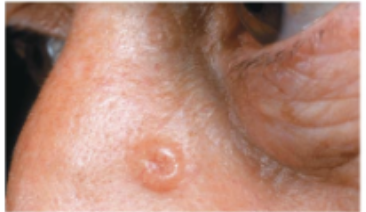
Most common and least malignant skin cancer
Basal cell carcinoma
what cells are involved in basal cell carcinoma
stratum basale cells
how does basal cell carcinoma spread
slowly invades dermis and hypodermis
treatment success rate for basal cell carcinoma
99% cured by surgical excision
second most common skin cancer
squamous cell cercinoma
which cells are affected in squamous cell carcinoma
keratinocytes of the stratum spinosum
can squamous cell carcinoma metastasize
yes
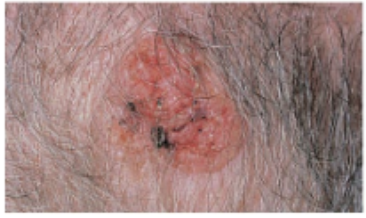
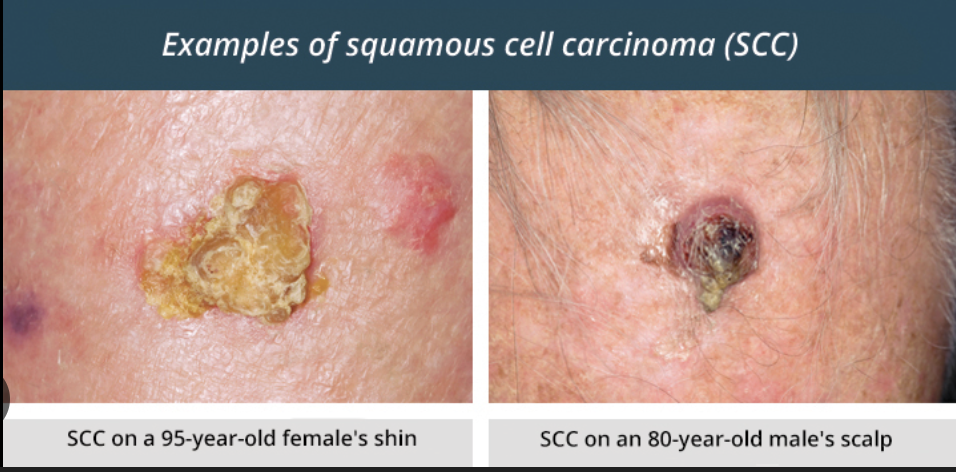
typical appearance of squamous cell carcinoma
scaly, reddened papule
common locations for squamous cell carcinoma
scalp
ears
lower lip
hands
prognosis and treatment for squamous cell carcinoma
good prognosis if treated with radiation or surgery
most dangerous type of skin cancer
melanoma
what cells does melanoma affect
melanocytes
why is melanoma so dangerous
highly metastatic
resistant to chemotherapy
treatment for melanoma
wide surgical excision
immunotherapy
key to survival from melanoma
early detection
what does the ABCD rule help detect
Melanoma
ABCD - A
asymmetry (two sides do not match)
ABCD - B
Border irregularity (indentations)
ABCD - C
Color variation (black, brown, tan, red, or blue)
ABCD - D
Diameter > 6 mm (pencil eraser size)
what causes burns
heat, electricity, radiation, or chemicals
how do burns damage tissue
denaturation of proteins, destroying cells
immediate life-threatening concern with burns
dehydration and electrolyte imbalance
why are dehydration and electrolyte imbalance dangerous
can cause renal shutdown and circulatory shock
purpose of the rule of nines
estimates fluid loss from burns
how is the body divided in the rule of nines
11 sections 9% each
genitals 1%
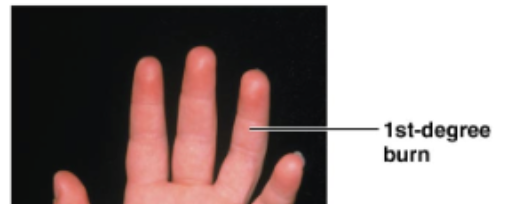
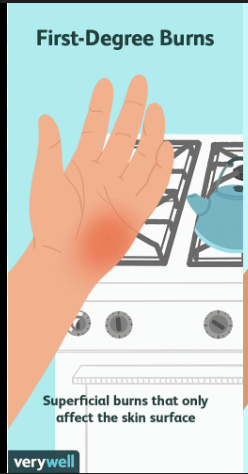
first degree burns affect which layer
epidermis only
symptoms of first degree burns
redness, swelling, pain
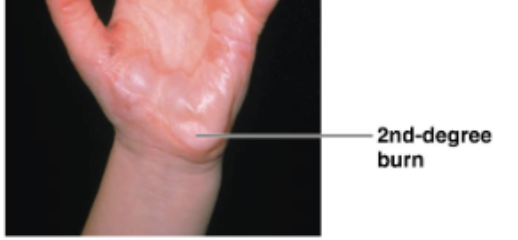
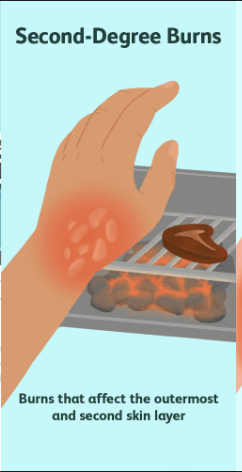
second degree burns affect which layers
epidermis and upper dermis
key sign of second degree burns
blisters
what are partial thickness burns
first and second degree burns
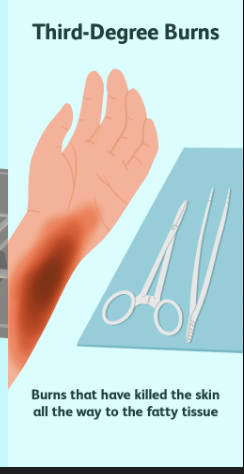
third degree burns involve what depth
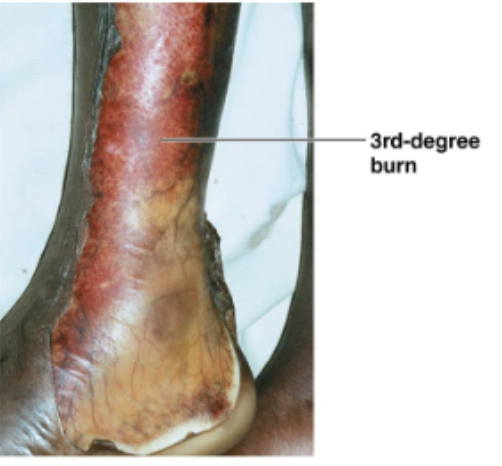
entire thickness of skin
other name for third degree
full thickness burns
skin appearance of third degree burns
gray white, cherry red, or blackened/charred
why are third degree burns not painful
nerve endings destroyed
common treatment for third degree bruns
skin grafting
when are burns considered critical
>25% second degree
>10% third degree
third degree on face, hands, or feet
burn treatment step: removal of damaged skin
debridement
other burn treatments
antibiotics
temporary coverings
skin grafts
what happens when body barriers are compromised
inflammatory and immune responses activate
how quickly does tissue repair begin
very quickly
what process is responsible for repair
inflammation
two major ways tissue repair occurs
regeneration and fibrosis
regeration
same tissue replaces damaged tissue (function restored)
fibrosis
connective tissue replaces tissue (function lost)
step one of tissue repair
inflammation sets the stage
effects of inflammatory chemical
blood vessel dilation
increased permeability
what happens to blood during step 1
clotting occurs
step two of tissue repair
organization restores blood supply
what replaces the blood clot
granulation tissue
what is granulation tissue
new tissue rich in capillaries
role of fibroblasts
produce collagen fibers to bridge the gap
what happens to debris
it is phagocytized
step three of tissue repair
regeneration and fibrosis
what happens to the scab in step 3
it detaches
what happens to fibrous tissue in step 3
it matures
final result of tissue repair
regenerated epithelium with underlying scar tissue
what is the order of pain for burns
3rd, 1st, 2nd
why are second degree burns the most painful
burn is very deep but the nerve ending are still in tact
why would you not want to fully suture closed a wound
if it is a bite because the bacteria from the teeth would get stuck inside and cause infection (just cover it)
what does it mean to be phagocytized
for a cell (a phagocyte) to engulf, ingest, and digest solid particles like bacteria, dead cells, or debris
1st degree burn visual
2nd degree burn visual
3rd degree burn visual
basal cell carcinoma visual
squamous cell carcinoma visual
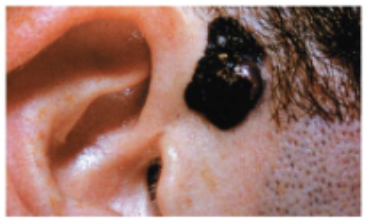
melanoma visual
What is the rule of nines used for
measures the volume of fluid loss