4D- Alcohols
 Call Kai
 Learn
Learn Practice Test
 Spaced Repetition
 Match
Match Flashcards
 Knowt Play
1/60

There's no tags or description
Looks like no tags are added yet.
Name | Mastery | Learn | Test | Matching | Spaced | Call with Kai | Chat |
|---|
No analytics yet
Send a link to your students to track their progress
61 Terms
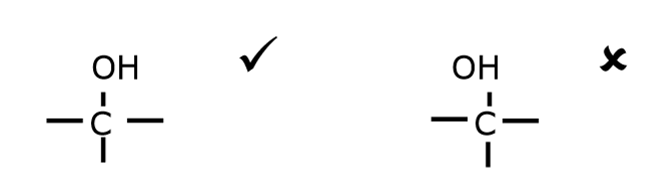
important thing to remember when drawing structure of alcohol to do with bonds
bond from the carbon connects to the oxygen atom no the hydrogen atom
what is the prefix used for alcohol when there is a higher priority group
hydroxy
how do you name a molecule with more than one OH group
suffix -diol and ‘e’ is added to the parent chain name e.g. butane-2,3-diol
how can you classify alcohols
primary, secondary and tertiary
what is a primary alcohol
-OH group is attached to a carbon attached to two hydrogen atoms
what is a secondary alcohol
-OH group is attached to a carbon that is attached to one hydrogen atom
what is a tertiary alcohol
-OH group is attached to a carbon that is attached to no hydrogen atoms
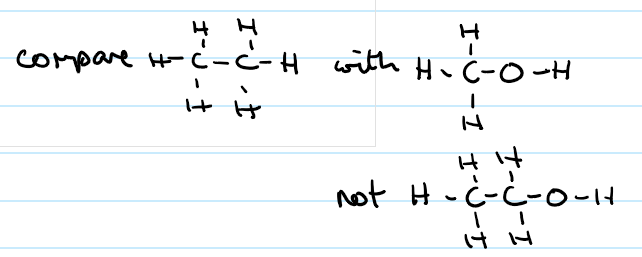
how do you compare alcohols to alkanes (relating to chain length)
include the oxygen atom as a carbon e.g. compare ethane with methanol not ethanol
what is the difference between melting and boiling points of alcohols with alkanes and why
alcohol have higher melting and boiling points, polar molecules so have hydrogen bonds which are stronger than London Forces
how does solubility in alcohol compare to alkanes and why
alcohols soluble, -OH group can hydrogen bond with water, hydroxyl group is hydrophilic
why is it appropriate to compare alkanes with alcohols that have one less carbon
so they have similar molecular masses and numbers of electrons so London Forces will be comparable and of similar strengths
how does solubility change with length of chain in alcohols and why
water solubility decreases as chain length increases, proportion of the molecule that is polar (only the -OH part that interacts with water) and can hydrogen bond with the water decreases, the effect of the -OH decreases
what is a solvent that the large alcohols will dissolve in
any non-polar solvent e.g. hexane
what are the possible reaction of alcohols
combustion
elimination
oxidation
substitution
what is a (complete) combustion reaction
reaction of a substance in a plentiful supply of oxygen to form carbon dioxide and water
what is an elimination reaction
removal of a molecule from a saturated molecule to form an unsaturated molecule
what is an oxidation reaction
increase in oxidation number/loss of electrons
what is a substitution reaction
reaction where an atom or group of atoms is replaced by a different atom or group of atoms
what can elimination reactions also be known as in alcohols
dehydration reaction
what conditions are needed in an elimination reaction of an alcohol
concentrated acid catalyst in excess (e.g. H2SO4 or H3PO4)
heated under reflux
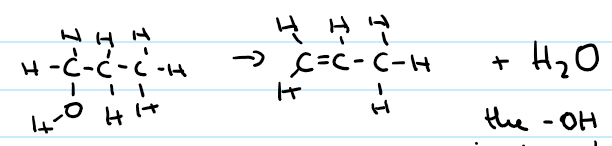
what happens in an elimination reaction of an alcohol
the -OH group is lost together with a H atom from the next carbon atom to form water
which alcohols can produce multiple products in an elimination reaction
secondary and tertiary
what are three advantages of using ethanol as a fuel
quite soluble in water
releases lots of energy in complete combustion
helps reduce emissions of air toxins
how can you recognise an elimination reaction
water is formed, 1 molecule to 2 molecules, increase in the number of double bonds
what are the conditions required to produce an ether
an excess of alcohol, two alcohol molecules are then more likely to join together to form an ether
what does a substitution reaction with alcohols produce
a haloalkane
what reactants and conditions are needed for a substitution reaction of an alcohol
sodium halide e.g. NaBr and sulfuric acid, heated under reflux
what happens in a substitution reaction of an alcohol
the sodium halide and sulfuric acid react together to produce a hydrogen halide in situ, this hydrogen halide then reacts with the alcohol to form a haloalkane
what are the equations for the steps in a substitution reaction of an alcohol
Step 1: NaX + H2SO4 → HX + NaHSO4
Step 2: HX + alcohol → H2O + haloalkane
overall reaction: alcohol + NaX + H2SO4 → haloalkane + NaHSO4 H2O
what is the oxidising agent for alcohols in an oxidation reaction
acidified potassium dichromate solution- K2Cr2O7 mixed with H2SO4
what observations can be made if a successful oxidation reaction occurs
reaction mixture turns from orange to green (or blue)
what are the types of oxidation for a primary alcohol
mild oxidation and stronger oxidation
how do you show oxygen as a reactant in oxidation reactions of alcohols
[O]
![<p>[O]</p>](https://knowt-user-attachments.s3.amazonaws.com/142716d3-1772-4c22-aa0c-fa15e7e9b66c.png)
what does a mild oxidation of a primary alcohol form
an aldehyde
what is the equation of a mild oxidation of a primary alcohol- ethanol
CH3CH2OH + [O] → CH3CHO + H2O
what is the functional group of an aldehyde
C=OH
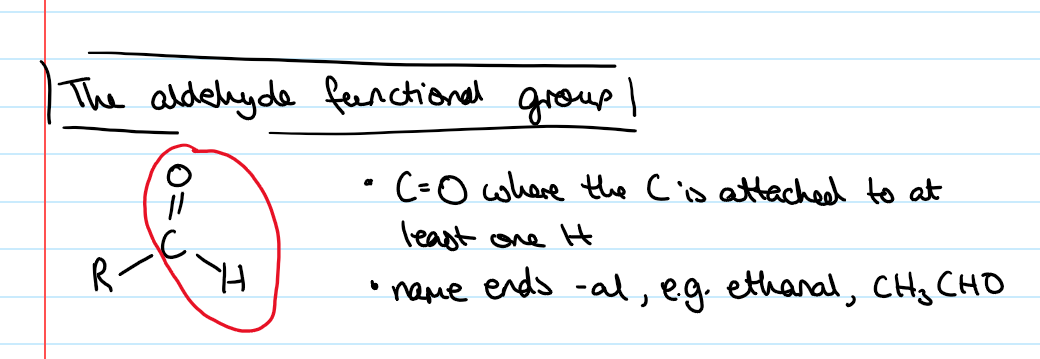
what is the suffix for an aldehyde
-al e.g. ethanal
what does a strong oxidation of a primary alcohol form
a carboxylic acid
what is the equation of the 2nd oxidation of a primary alcohol (from an aldehyde)- ethanol initially
CH3CHO + [O] → CH3COOH
what is the overall equation for the full oxidation of a primary alcohol- ethanol
CH3CH2OH + 2[O] → CH3COOH + H2O
what is the functional group of a carboxylic acid
-COOH
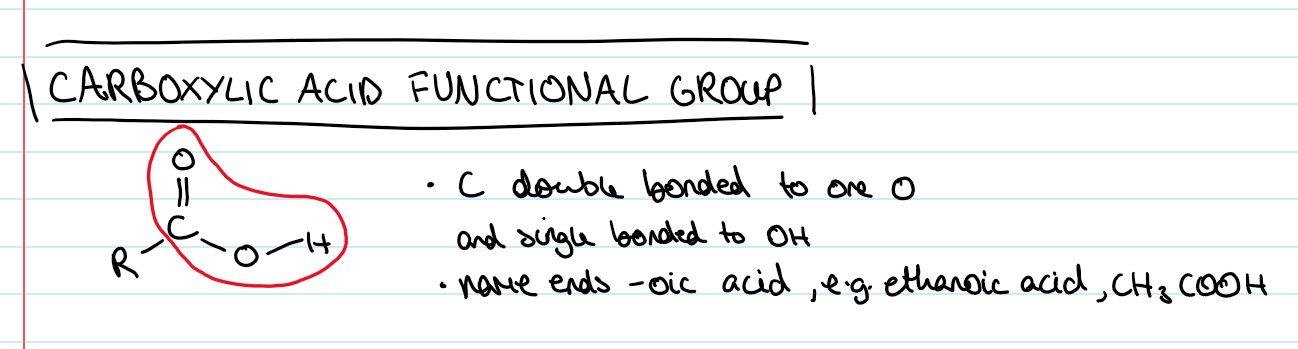
what is the suffix of a carboxylic acid
-oic acid e.g. ethanoic acid
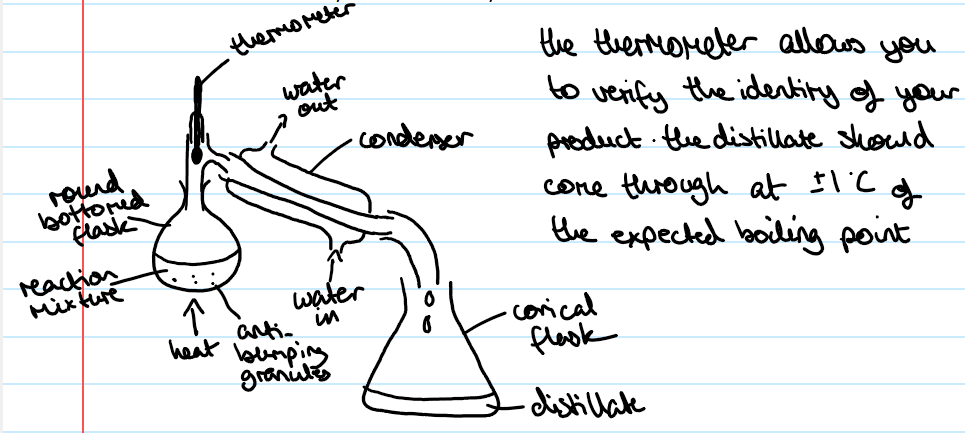
how do you control the oxidation of primary alcohols to only form an aldehyde
remove aldehyde from reaction mixture as soon as it forms by distillation
what is the equipment set up needed to make and aldehyde from a primary alcohol
distillation
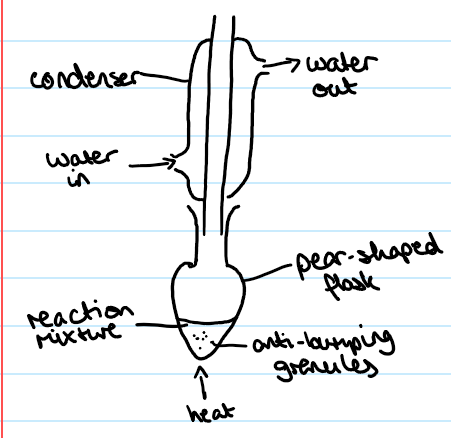
what conditions are needed to make a carboxylic acid from a primary alcohol
heat under reflux with excess acidified potassium dichromate solution
what is the set up of the equipment to make a carboxylic acid from a primary alcohol
heat under reflux
what does the oxidation of secondary alcohols form
a ketone
what is the ketone functional group
C=O
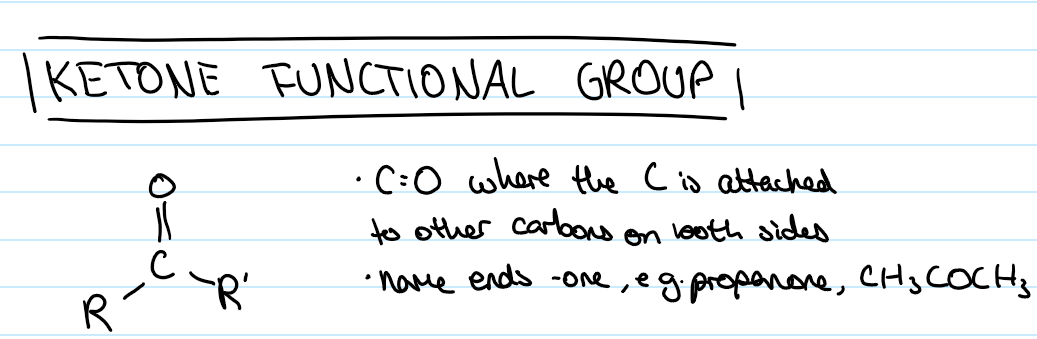
what is the suffix for a ketone
-one e.g. propanone
what is the equation for making a ketone from a secondary alcohol- propan-2-ol
CH3CH(OH)CH3 + [O] → CH3COCH3 + H2O
what are the conditions needed for making a ketone from a secondary alcohol
heat under reflux with excess acidified potassium dichromate solution
what does the oxidation of a tertiary alcohol form
no reaction, do not oxidise- no C-H bonds to break in order to increase the number of bonds to oxygen
define reflux
the continual evaporating and condensing of a reaction mixture to prevent the loss of volatile components
define nucleophilic substitution
a nucleophile is an atom or group of atoms which is attracted to an electron deficient carbon atom where it can donate an electron pair forming a new covalent bond
substitution reaction is where one atom or group of atoms is replaced by a different atom or group of atoms
what are ester made from
a carboxylic acid and an alcohol
what do a carboxylic acid and an alcohol form
an ester and water
what are the conditions needed to make an ester
concentrated H2SO4 catalyst and heating under reflux
what type of reaction is making an ester
a condensation reaction that is also reversible
what are esters commonly used as
perfumes and flavourings as they often smell sweet and fruity
how do you name an ester
side attached to the single bonded O (from the alcohol) is named first
gets suffix -yl
carbon attached to the O is C1 when numbering on this side
side of ester group attached to C=O (from acid) is named second
gets suffix -oate
the C in the C=O counts as part of the chain and is always C1 when numbering on this side
esters can look different in structural formula depending which way around they are drawn
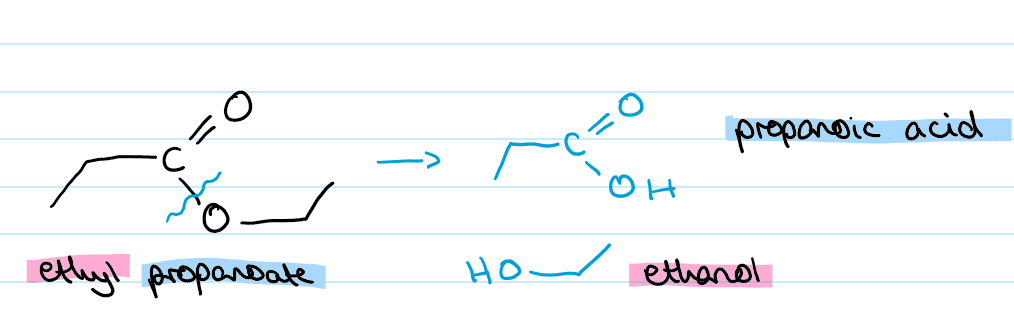
how do you find the alcohol and carboxylic acid used to make an ester
break the bond between the carbon and oxygen