BIOL 203 Exam 1 (Lecture 1-6)
 Call Kai
 Learn
Learn Practice Test
 Spaced Repetition
 Match
Match Flashcards
 Knowt Play
1/390

There's no tags or description
Looks like no tags are added yet.
Name | Mastery | Learn | Test | Matching | Spaced | Call with Kai | Chat |
|---|
No analytics yet
Send a link to your students to track their progress
391 Terms
muscle tissue
contracts to produce movement
nervous tissue
detects changes and communicates information
connective tissue
supports, connects, protects, and fills spaces
epithelial tissue
covers surfaces, lines internal spaces, and forms glands
how do tissue categories fit into the levels of organization
different tissue types combine to form organs, most organs contain multiple tissue types working together
what does epithelium mean
epithelial tissue
gross anatomy
focuses on structures that are visible to the naked eye: organs, bones, muscles, and other large body parts typically through dissection or imaging techniques
microscopic anatomy
explores cellular and subcellular structures (studying tissues at a microscopic level)
physiology
focuses on understanding how body parts function (performance)
developmental anatomy
investigates changes in structures as an organism grows and develops
anatomy
the study of body structures and their relationships (architecture)
form of red blood cells
biconcave, flexible disc shape with no nucleus
function of red blood cells
maximizes surface area for gas exchange and allows cells to squeeze through tiny capillaries
form of alveoli in the lungs
tiny, thin-walled, balloon-like sacs surrounded by capillaries
function of alveoli in the lungs
provide a massive surface area for gas exchange between air and blood
microvilli
thin, comb-like projections on intestinal cells increase their absorptive feature
dendrites and axon
long, slender extensions of the plasma membrane allow neurons to communicate with other cells
myocyte
muscle cell
fascicle
bundle of myocytes
structure of skeletal muscle cells
long muscle cells
job of skeletal muscle cells
contract to produce movement
function of skeletal muscle cells
long fibers can shorten over distance and generate movement
chemical level of organization in a human
atoms combine to form molecules and molecules combine to form the fluid and organelles of a cell
cellular level of organization in a human
individual cells, which are the basic structural and functional units of living organisms
tissue level of organization in a human
groups of similar cells working together to perform a specific function
organ level of organization in a human
multiple tissues organized into a structure (organ) that performs a specific function in the body
organ level system level of organization in a human
multiple organs work together to perform a common, coordinated function
organismal level of organization in a human
the entire living organism as a whole, including sll the organ systems functioning together to maintain life
integumentary system
skin, hair, nails; protects the body and regulates temperature
skeletal system
bones, cartilage, ligaments; provides support, protection, and mineral storage
digestive system
mouth, esophagus, stomach, intestines, liver, pancreas; breaks down food and absorbs nutrients
cardiovascular system
heart, blood, blood vessels; transports nutrients, gases, hormones, and wastes
nervous system
brain, spinal chord, nerves; rapid communication, coordination, and control
respiratory system
lungs, trachea, bronchi; gas exchange
reproductive system
male and female (testes, ovaries, uterus, etc) produces gametes and supports reproduction
muscular system
skeletal, smooth, and cardiac muscles; enables movement and heat production
endocrine system
hormone-producing glands (thyroid, pancreas, adrenal, etc); regulates long-term processes
urinary system
kidneys, ureters, bladder, urethra; eliminates wastes and regulates water/electrolytes
lymphatic/immune system
lymph nodes, lymph vessels, spleen, thymus; defends against pathogens and returns fluid to blood
homeostasis
the tendency of biological systems to maintain relatively constant conditions in the internal environment, it ensures that essential parameters remain within a narrow range suitable for normal function
first homeostatic requirement
are measured in or associated with the blood
second homeostatic requirement
are essential for sustaining life
third homeostatic requirement
have dedicated sensors: specialized cells or receptors that detect changes in the variable
fourth homeostatic requirement
have a defined set point in the integrator: a target value the control center uses as a reference for normal conditions
fifth homeostatic requirement
are controlled through negative feedback: a regulatory mechanism in which the response counteracts the initial change to restore the variable toward its set point
what is the first component of a negative feedback loop
stimulus: external or internal change that disrupts homeostasis
what is the second component of a negative feedback loop
sensor or receptor to detect the stimulus
what is the third component of a negative feedback loop
integrator or control center: compares the detected value with the set point and selects the appropriate corrective response
what is the fourth component of a negative feedback loop
effectors or targets: carry out the response directed by the integrator, working to counteract the stimulus and re-establish homeostasis
waters high specific heat capacity
water resists rapid temperature change
waters high heat of vaporization (sweat cooling)
evaporation requires a large amount of heat
waters heat transfer
heat moves from warmer to cooler objects, water conducts heat away from the skin to make you feel cooler
calcium is essential for what
muscle contraction, neurotransmitter release, blood clotting, and cell signaling
potassium is critical for what
establishing resting membrane potential and action potentials in neurons and muscle cells
what does partial pressure of oxygen do
maintains adequate oxygen delivery to tissues for aerobic metabolism, insufficient PO2 impairs ATP production
what does partial pressure of CO2 do
regulates acid-base balance
why is blood hydrogen important
enzyme activity and protein structure require a narrow pH range
what does blood glucose concentration do
the primary energy source, especially for the brain
why is core body temperature important
temperature determines enzyme reaction rates and protein stability
why is mean arterial pressure important
it ensures that organs receive adequate blood flow
why is blood volume important
it directly influences blood pressure, cardiac output, and tissue perfusion
what is the function of blood osmolarity
it controls the movement of water between compartments and maintains cell volume
when does ATP release energy
when one phosphate group is removed
what happens when ADP gains a phosphate group to form ATP
energy from food is required to add a phosphate group, when ADP gains this phosphate group energy is brought in
what is the plasma membrane primarily composed of
a phospholipid bilayer containing phospholipids, cholesterol, and glycolipids
fluid mosaic model
arrangement of lipids and proteins that move within the membrane
what does each phospholipid contain
a hydrophilic head and hydrophobic fatty acid tail
transmembrane proteins
most membrane proteins that span the membrane
peripheral proteins
proteins that attach temporarily to the membrane surface
ion channels
form pores that allow ions to cross the membrane
transporters
move molecules across membranes
receptors
receive extracellular signals (ligand) initiates intracellular signaling cascade
cell adhesion molecules
help cells stick together to each other or to the extracellular matrix
anchoring proteins
(connexins) which form gap junction channels and link the membrane to the cytoskeleton, maintaining cell structure
signal transduction proteins
G-protein subunits, protein kinase C (PKC), and phospholipase C (PLC)
cytoskeletal and structural proteins
(spectrin) found especially in red blood cells, where it forms a meshwork underneath the plasma membrane and helps maintain cell shape and flexibility
glycosaminoglycans (GAGs)
long, unbranched polysaccharide chains made of repeating disaccharides and are often negatively charged
proteoglycans
consist of a core protein with many long glycosaminoglycan chains attached
glycoproteins
membrane proteins that have relatively short carbohydrate chains attached
glycocalyx
carbohydrate-rich layer that coats the external surface of the plasma membrane, consisting of glycoproteins, glycolipids, and in specialized cells, proteoglycans
main functions of the glycocalyx
cell-to-cell recognition, cell adhesion, protection, and cell signaling
passive transport
no energy, no effort, peaceful, physical, high to low
active transport
energy required, action, physiological, low to high
moves substances down their concentration gradient and does not require ATP
passive
uses the Na⁺/K⁺ pump to move ions against their concentration gradient
active
includes simple diffusion, facilitated diffusion, osmosis, and filtration
passive
requires cellular energy either directly or indirectly
active
includes endocytosis and exocytosis
active
simple diffusion
molecules move directly through the phospholipid bilayer if they are small and nonpolar
facilitated diffusion
uses membrane proteins but remains passive, meaning no ATP is required, since substances are moving from high to low concentration
what transport method always travels down the concentration gradient from high to low
diffusion
what molecule would cross the membrane via simple diffusion
oxygen
what molecule would require facilitated diffusion to cross the plasma membrane
glucose
what substance would most likely cross the membrane via an ion channel
sodium ion (Na+)
during the operation of the Na⁺/K⁺ pump, ATP is converted into ADP, what does this reaction represent
ATP hydrolysis

which type of membrane transport is represented in the image
primary active transport (ATP directly powers the pump
phagocytosis
not selective, engulfs large particles like bacteria and does not rely on specific receptors like receptor-mediated endocytosis
pinocytosis
non-specific process that brings in extracellular fluid and dissolved substances in small vesicles
receptor-mediated endocytosis
highly selective because it uses specific receptors and clathrin-coated vesicles to bring in particular molecules, such as LDL cholesterol
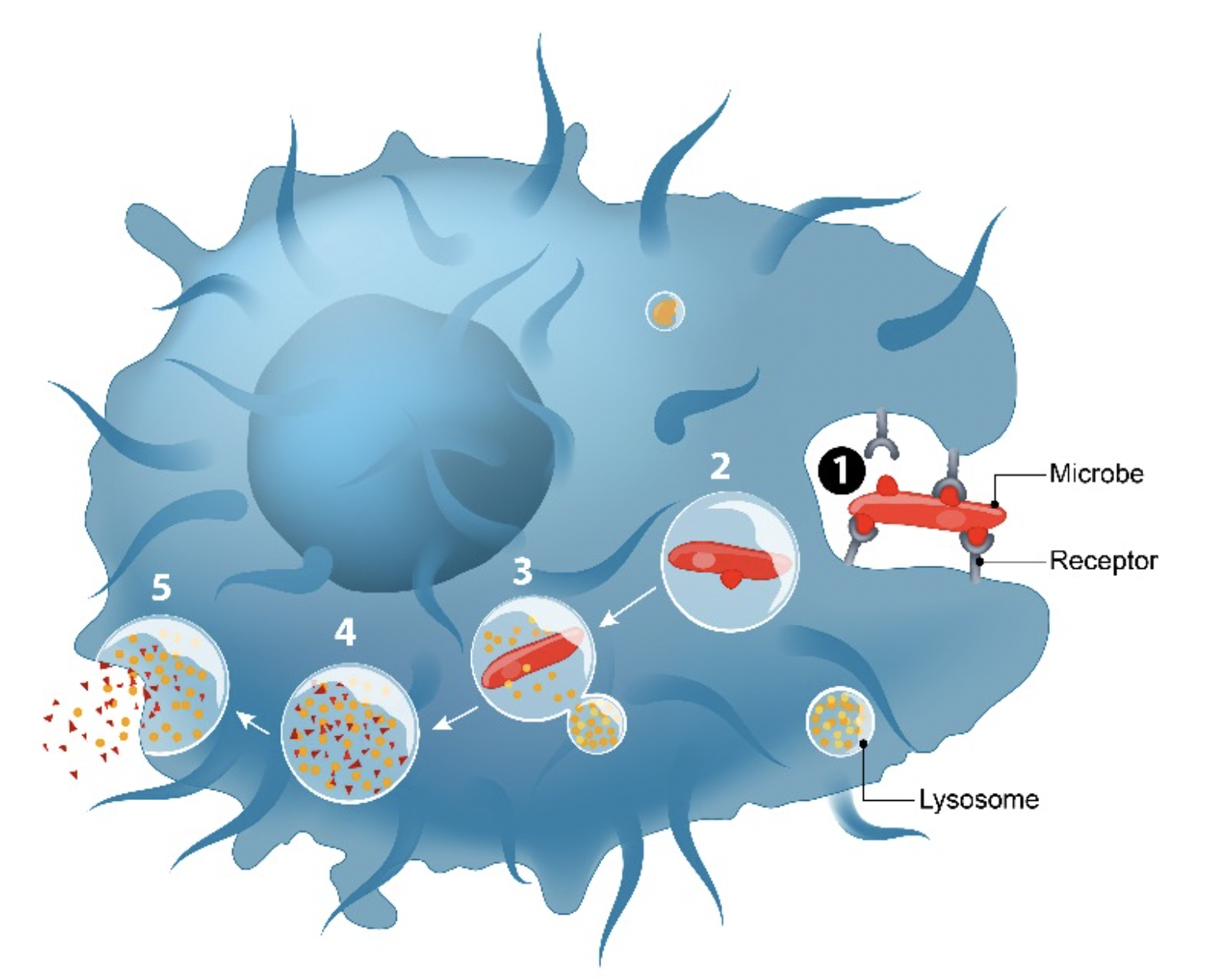
the image shows a cell binding to a microbe, engulfing it into a vesicle, and digesting it after fusion with a lysosome: which type of transport process is described
phagocytosis