Bacterial and Viral Genetic Systems (7)
0.0(0)
Studied by 1 person Call Kai
 Learn
Learn Practice Test
 Spaced Repetition
 Match
Match Flashcards
 Knowt Play
Card Sorting
1/36

Last updated 12:16 PM on 9/22/22
Name | Mastery | Learn | Test | Matching | Spaced | Call with Kai | Chat |
|---|
No analytics yet
Send a link to your students to track their progress
37 Terms
1
New cards
Bacteria and virus model systems contributions to genetics
1. Gene regulation
2. Molecular biology and biochemistry of genetic processes (replication, transcription, translation, recombination)
3. Gene structure and organization in bacteria
4. Workhorse of recombinant DNA
5. Gene mutations
2. Molecular biology and biochemistry of genetic processes (replication, transcription, translation, recombination)
3. Gene structure and organization in bacteria
4. Workhorse of recombinant DNA
5. Gene mutations
2
New cards
Advantages of using bacteria and viruses for genetic studies
1. Reproduction is rapid
2. Many progeny
3. Genomes are small
2. Many progeny
3. Genomes are small
3
New cards
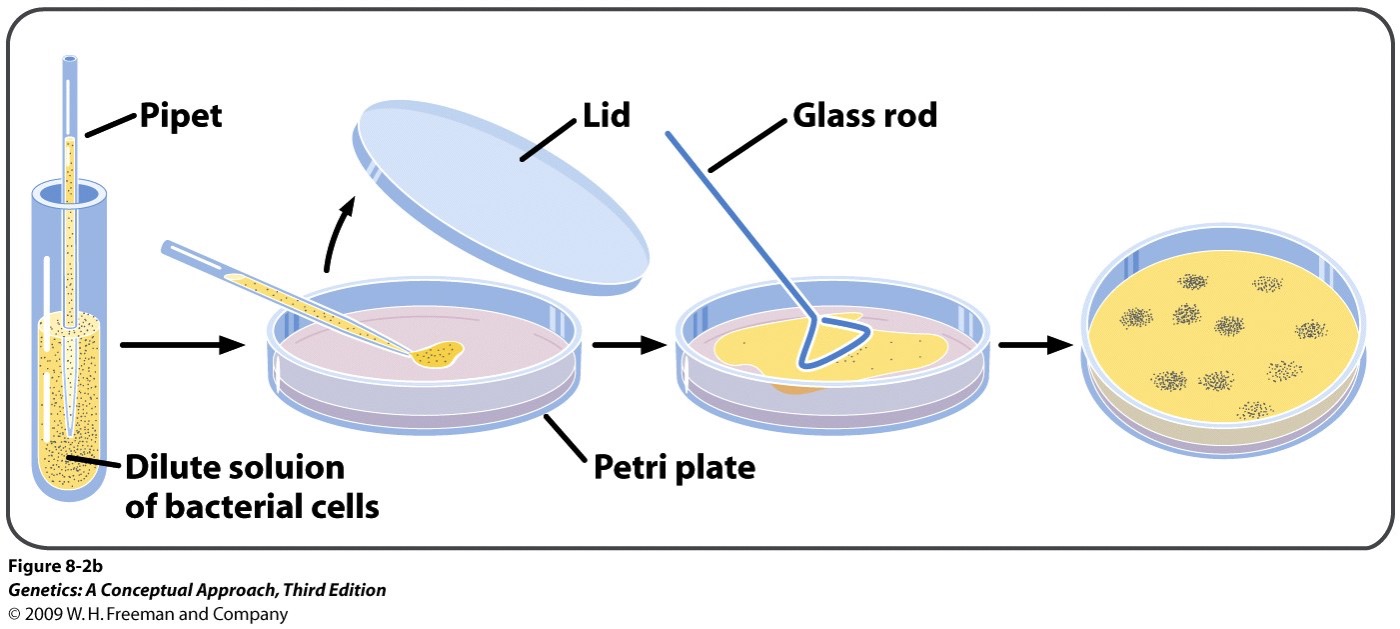
Bacteria growth is ...
Colonal - allows the isolation of clones of cells
4
New cards
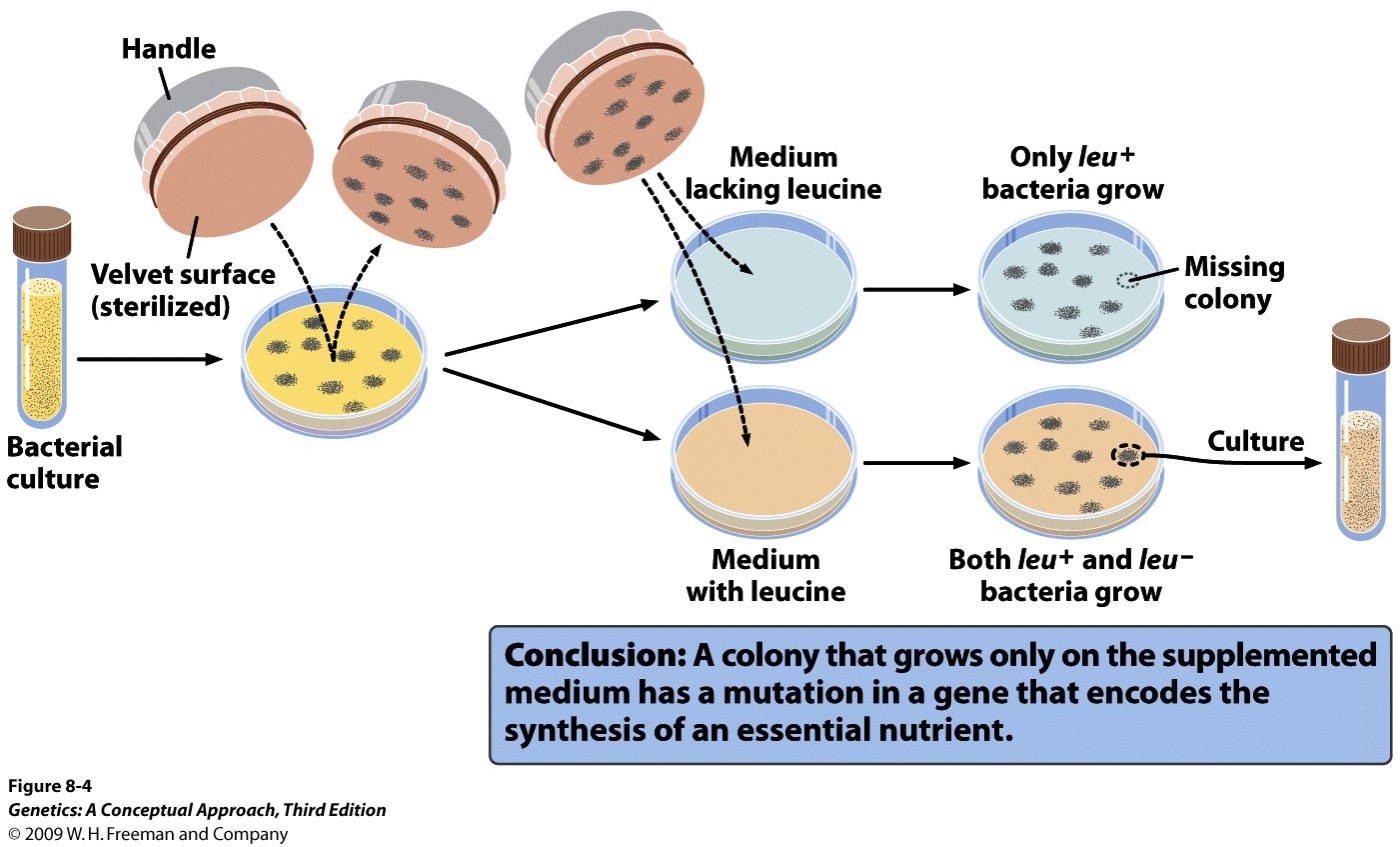
Replica plating
Rubber stamp of petri plate to inoculate plates with different nutrients
5
New cards
Bacteria cells contain ...
A single circular chromosome - some have small, extra chromosomal DNA (plasmids)
6
New cards
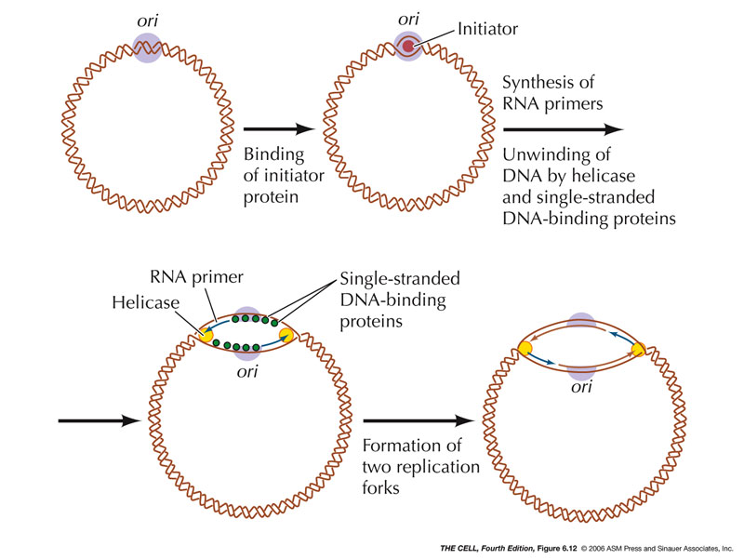
Bacterial genomes typically have ...
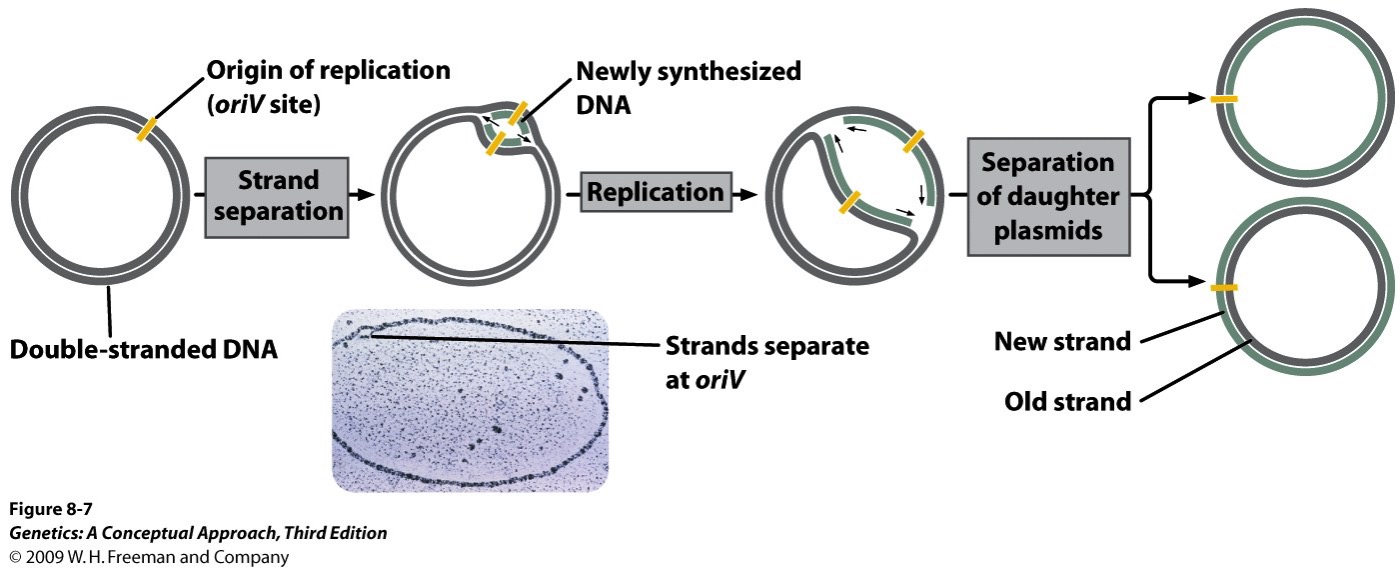
One origin of replication - bidirectional
7
New cards
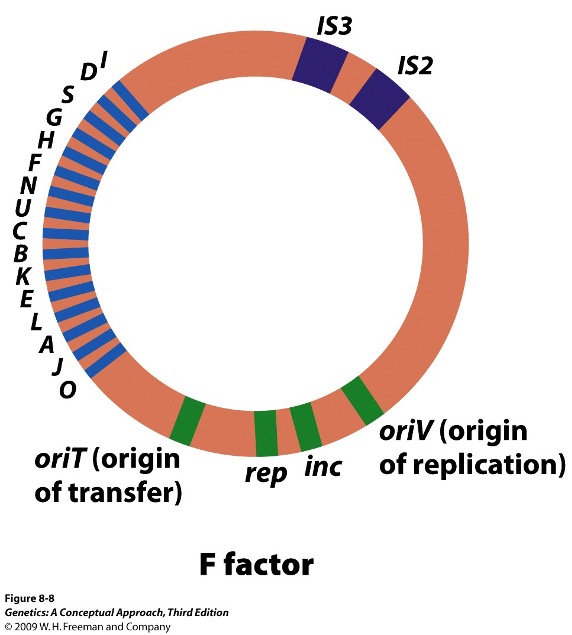
Plasmids can encode ...
A variety of different information
8
New cards
Plasmid genomes typically have ...
Multiple origins of replication + an origin of transfer
9
New cards
Plasmids replicate ...
Independently, but in a fashion similar to that of the bacterial chromosome
10
New cards
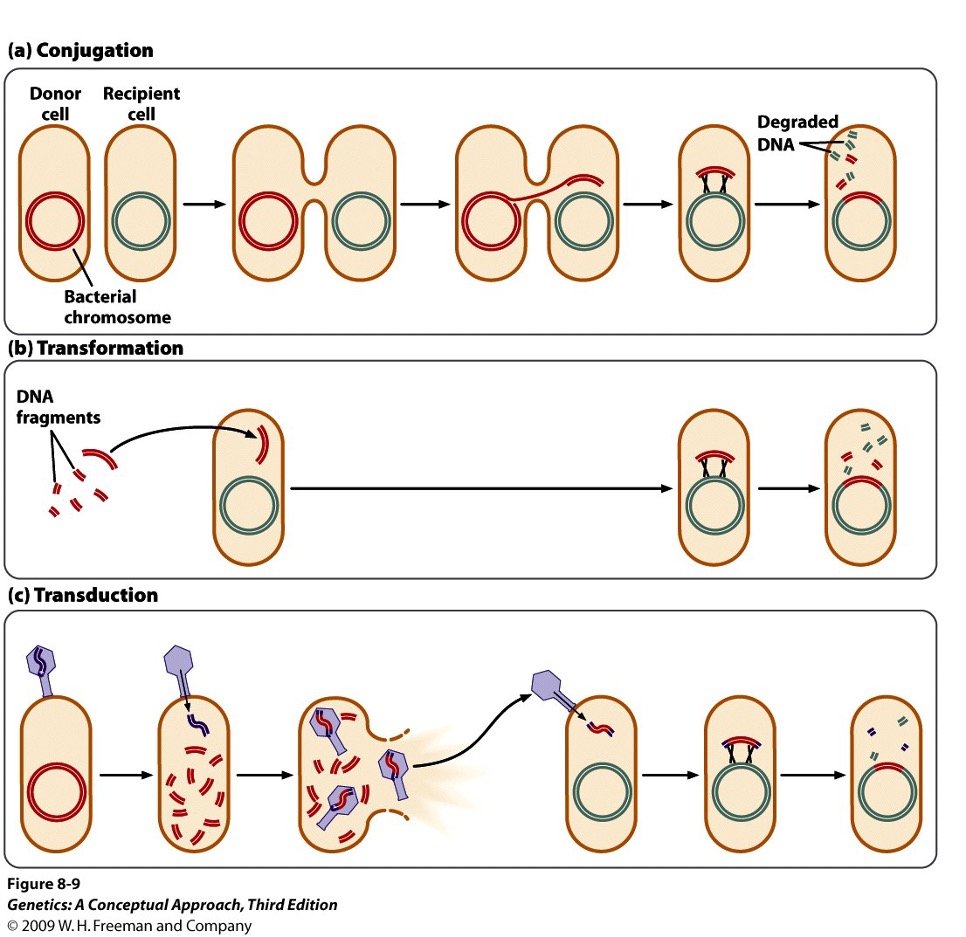
Mechanisms of horizontal transfer of Genetic Traits
1. Transformation - uptake of “naked” DNA directly from the environment
2. Transduction - phage-mediated transfer of DNA
3. Conjugation - transfer via cell-to-cell contact; pilus mediated
2. Transduction - phage-mediated transfer of DNA
3. Conjugation - transfer via cell-to-cell contact; pilus mediated
11
New cards
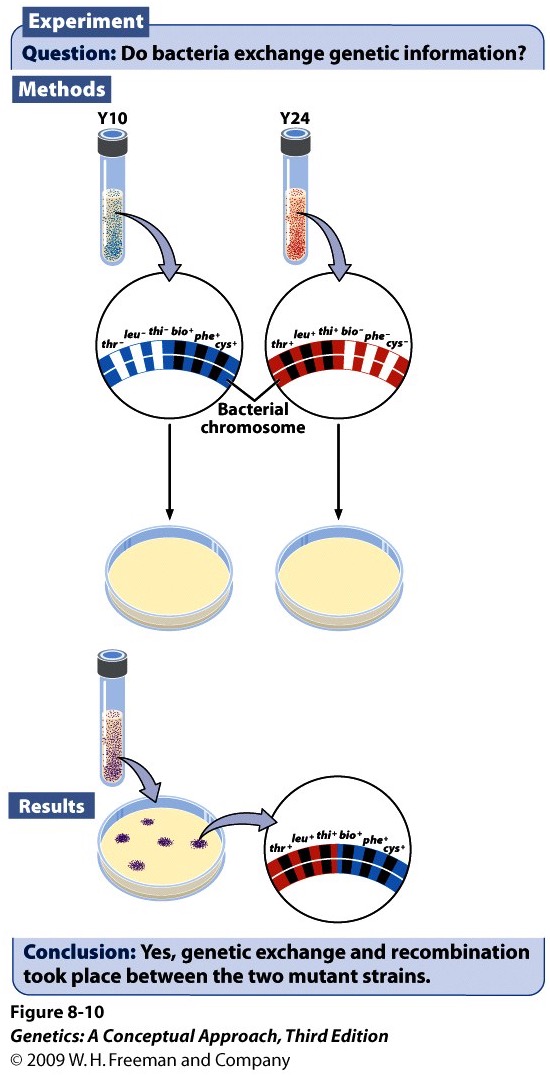
Who demonstrated genetic exchange in 1946?
Joshua Lederberg and Edward Tatum
12
New cards
Prototrophs
Can make essential nutrients they need to survive
13
New cards
Auxotrophs
Can't make essential nutrients they need to survive
14
New cards
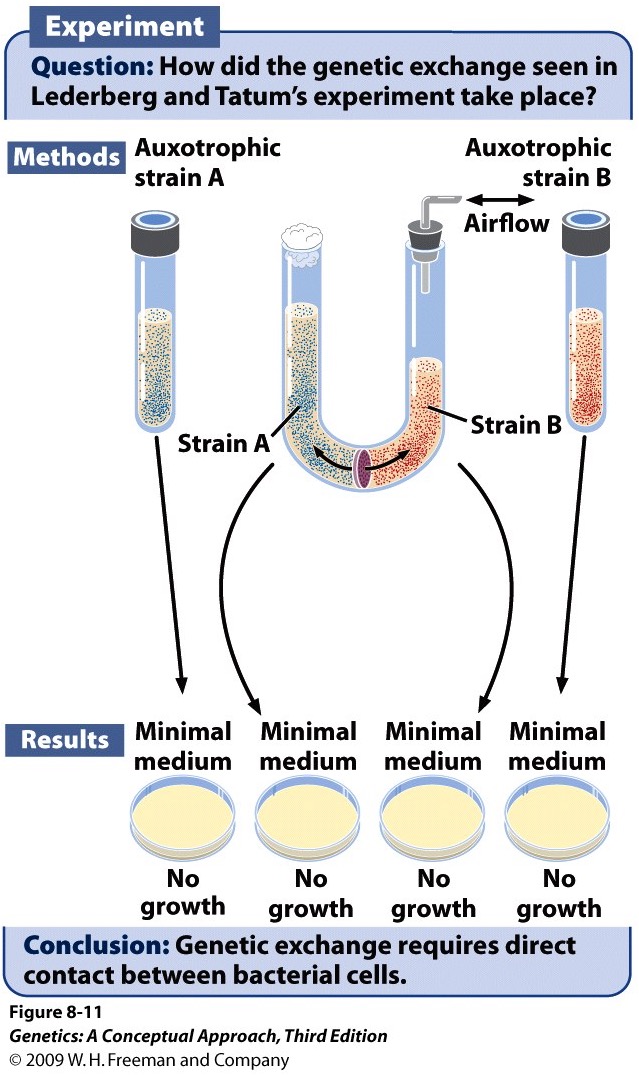
Who shows Lederberg that exchange requires cell-to-cell contact?
Bernard Davis
15
New cards
During bacterial conjugation, what connects the two cells?
Sex pilus
16
New cards
Replication is initiated at...
oriV
17
New cards
What do insertion sequences (IS3 and IS2) do?
Control insertion into the bacterial chromosome and exertion from it
18
New cards
What genes does a cell need to be a donor?
Tra genes
19
New cards
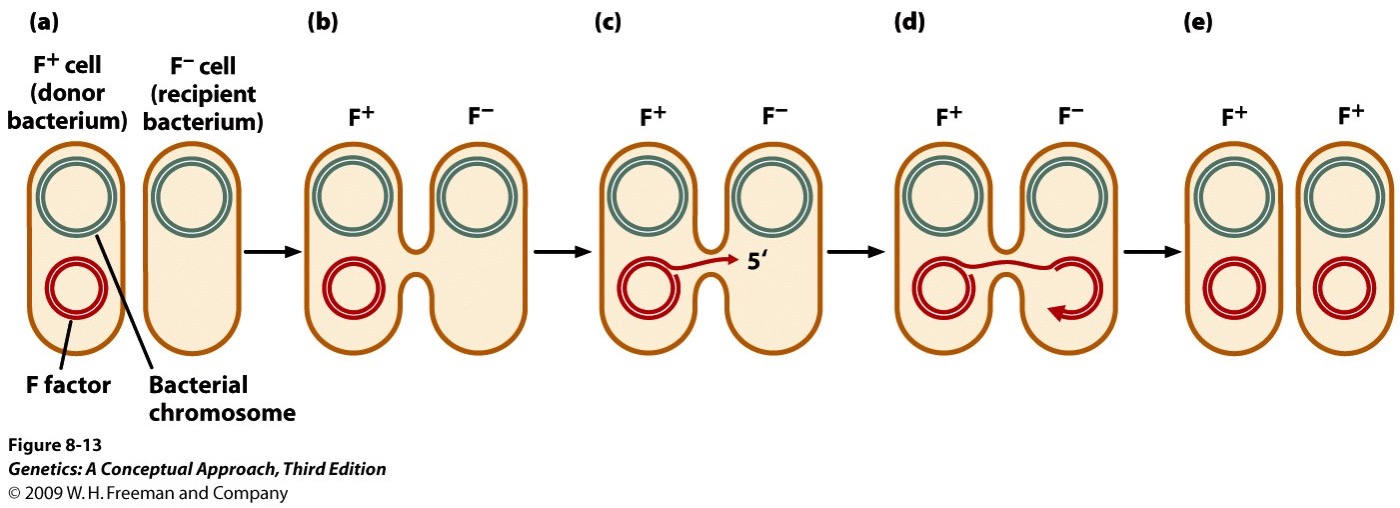
What are the F factor characteristics and role of F+ cells?
Present as separate circular DNA and is a Donor
20
New cards
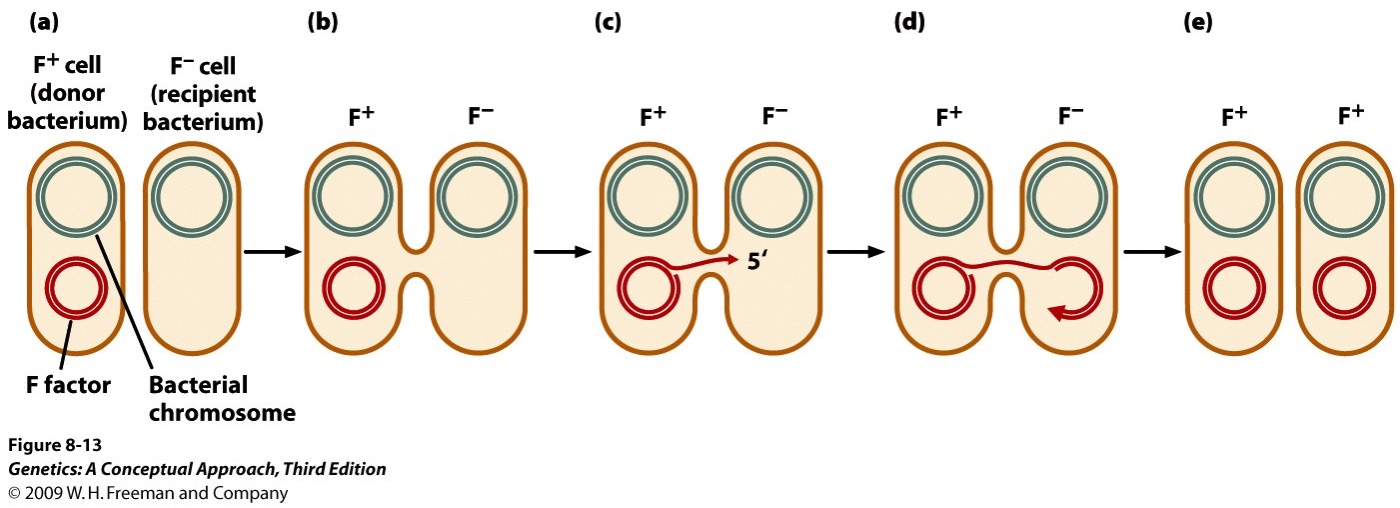
What are the F factor characteristics and role of F- cells?
Absent and Recipient
21
New cards
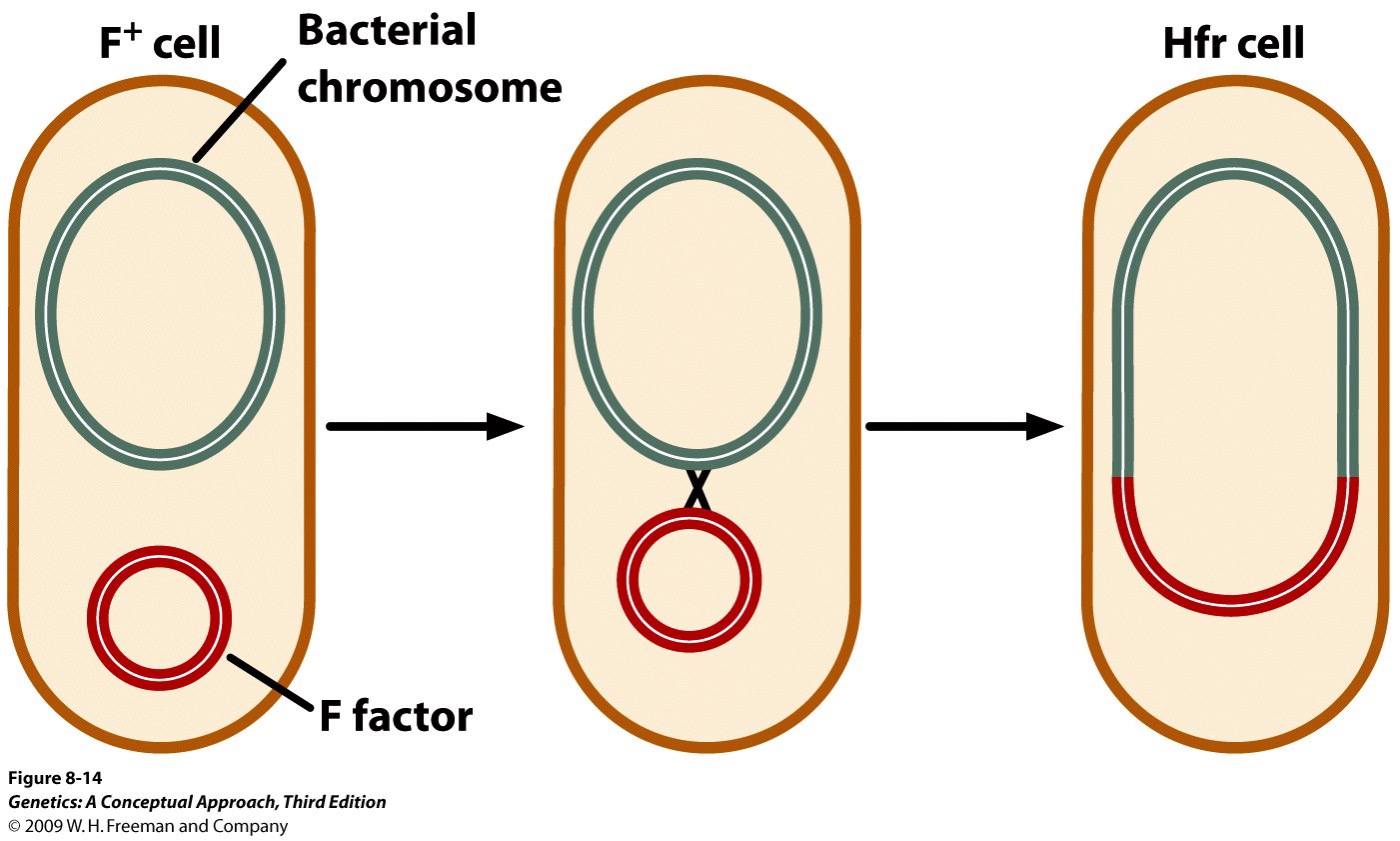
What are the F factor characteristics and role of Hfr cells?
Present, integrated into bacterial chromosome and is a high-frequency donor
22
New cards
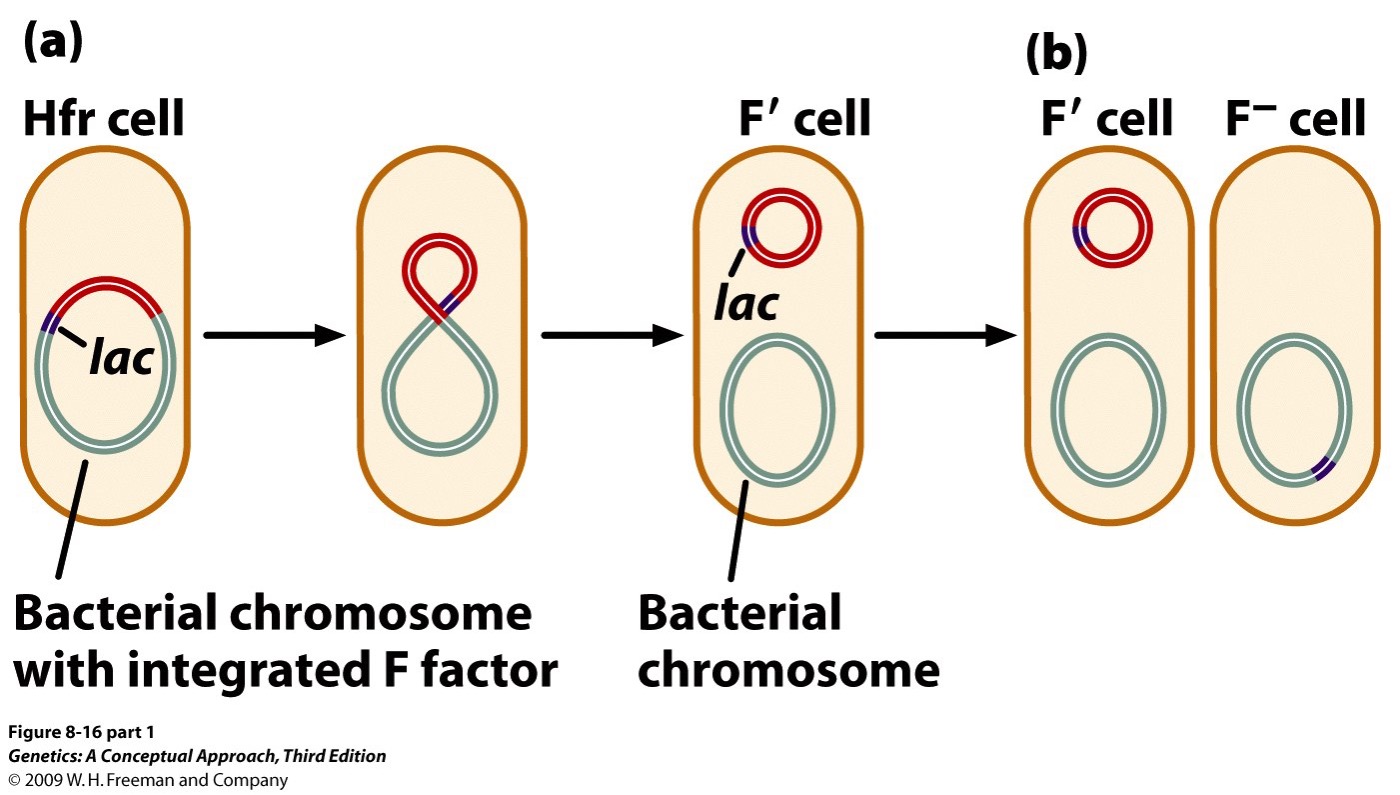
What are the F factor characteristics and role of F' cells?
Present as separate circular DNA, carrying some bacterial cells and is a donor
23
New cards
Conjugation between F+ and F-
Two F+ cells (F- becomes F+)
24
New cards
Conjugation between Hfr and F-
One Hfr cell and one F- (no change)
25
New cards
Conjugation between F' and F-
Two F' cells (F- becomes F')
26
New cards
Who used interrupted conjugation to map bacterial genes?
Jacob and Wollman
27
New cards
Transfer times indicate ...
The order and relative distances between genes (can be used to construct genetic map)
28
New cards
Arrowheads on the plasmid indicate ...
The origin and direction of transfer
29
New cards
R plasmids are ...
Conjugative plasmids that carry antibiotic resistance genes
30
New cards
Transformation occurs via ...
The uptake of naked DNA
31
New cards
The rate of cotransformation is ...
Inversely proportional to the distances between genes
32
New cards
Bacterial viruses (bacteriophage) offer ...
A mechanism for the transfer of DNA between bacterial cells
33
New cards
What are plaques?
Clear patches of lysed cells on a lawn of bacteria
34
New cards
Who showed that not all genetic exchange requires direct contact?
Lederberg and Zinder
35
New cards
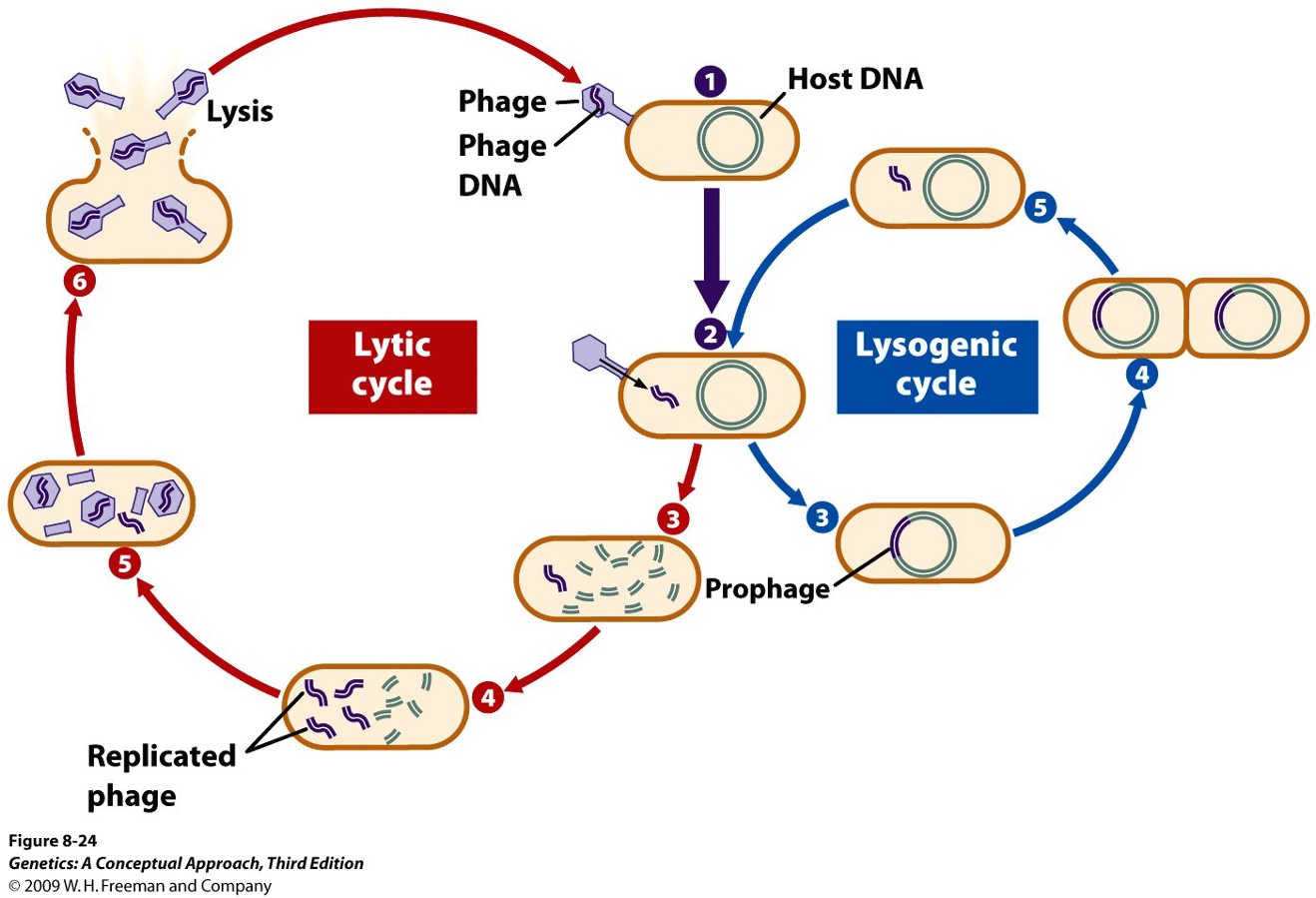
What are the alternative life cycles of bacteriophages?
Lytic and Lysogenic
36
New cards
What is generalized transduction?
Any DNA from the donor can be transferred into to new bacteria
37
New cards
What is specialized transduction?
Only special genes which are nearby the integration type are transferred