Bacteria, Archae, and Algae organisms
 Studied by 0 people
 Call Kai
 Learn
Learn Practice Test
 Spaced Repetition
 Match
Match Flashcards
 Knowt Play
1/22

There's no tags or description
Looks like no tags are added yet.
Name | Mastery | Learn | Test | Matching | Spaced | Call with Kai |
|---|
No analytics yet
Send a link to your students to track their progress
23 Terms
Most protozoa are ___________
heterotrophic
lives in termite intestines
Trichonympha
a pathogen which causes STDs
Trichomonas
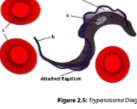
a pathogen, transmitted by an insect vector, causes African Sleeping Sickness
Trypanosoma
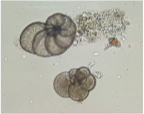
group of mostly marine amoeboid protozoans. Part of
“floating life” called plankton in the ocean. Calcareous shells
Foraminiferans
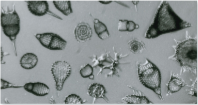
among the oldest protozoa, another
group of mostly marine amoeboid protozoans. Part of “floating life” called plankton in the ocean. Silica shells.
Radiolarians
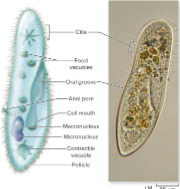
free-living, sweeps nutrients (bacteria, algae etc.) into an oral groove upon which food vacuoles form.
Paramecium
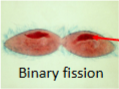
Asexual reproduction
Binary fission

Sx reproduction
Conjugation
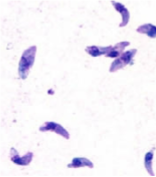
infects cats and other domestic animals. Contact with infected feces may result in transmission to humans, nonmotile
Toxoplasma
Causes malaria
Plasmodium
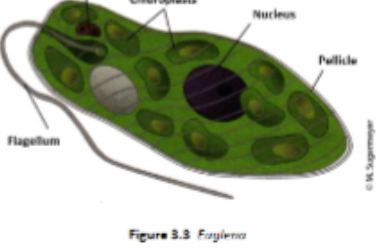
lives in freshwater. The eyespot senses light and the single flagellum helps move the organism
toward it.
Euglena
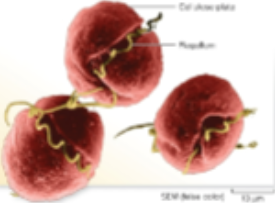
Most species have two flagella that result in a spinning or twirling motion.
Dinoflagellate
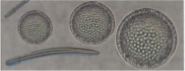
Also known as golden algae, Mostly unicellular (some colonial) marine algae with cell walls arranged as valves made of silica.
Diatoms
Help buoyancy
air bladders
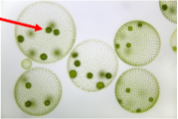
colonial green algae found in freshwater. Colonies are composed of hundreds to thousands of flagellated cells that form a hollow sphere.
Volvox
Vegetative cells carry out asexual reproduction to form _________
daughter colonies
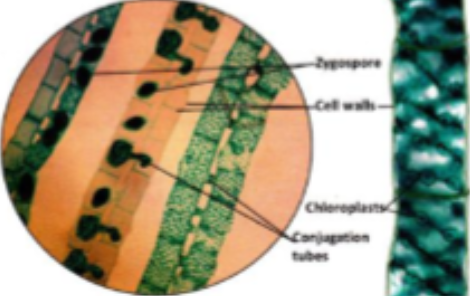
filamentous (colonial) organisms seen in a thread-like line in the water.
Spirogyra
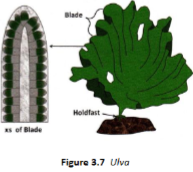
multicelluar green algae found in marine and brackish. Often called “sea lettuce” because of the likeness of the blades to lettuce leaves.
Ulva
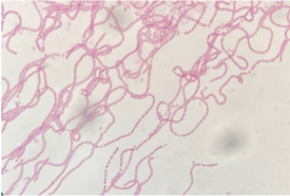
Photoautotrophic (photosynthetic) and able to fix nitrogen in special cells called heterocysts. from the Domain Bacteria, group Cyanobacteria
Nostoc
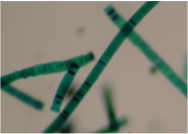
Photoautotrophic (photosynthetic) example from the Domain Bacteria, group Cyanobacteria
Oscillatoria
 Note
Note  Flashcards (68)