Outer Ear Anatomy and Physiology EXAM ONE
 Call Kai
 Learn
Learn Practice Test
 Spaced Repetition
 Match
Match Flashcards
 Knowt Play
1/81

There's no tags or description
Looks like no tags are added yet.
Name | Mastery | Learn | Test | Matching | Spaced | Call with Kai | Chat |
|---|
No analytics yet
Send a link to your students to track their progress
82 Terms
TOPIC ONE
Label Ear Diagram
Pinna, external auditory canal, tympanic membrane, stapes, malleus, incus, oval window, scala vestibuli, round window, scala tympani, basilar membrance, organ of corti, and cochlea
What is hearing mechanism
A sensory system that helps listen and understand speech, hear sounds, and maintain balance.
What is the function of the ear?
Help us hear and perceive sound energy and body movement.
What is the basic classification of the hearing mechanism?
The peripheral auditory system and the central auditory system
Basic functions of the peripheral auditory system?
1. Collect sound
2. Do a basic analysis of sound Ie: the pitch and the loudness.
3. Register and analyze body movements
Basic functions of the central auditory system?
1. Conducts advanced analysis of sound
2. Helps coordinate body movements and maintain balance
The primary form of energy in the outer ear?
Acoustic energy
The primary form of energy in the middle ear?
Mechanical energy
The primary form of energy in the inner ear?
Hydrodynamic energy
The primary form of energy in the VIIIth nerve?
Electrochemical energy
The primary form of energy in the auditory brainstem
Electrochemical energy
The primary form of energy in the brain?
Electrochemical energy
What month of gestation is the INNER ear fully formed?
5 months
TOPIC 2
When is the period of the zygote?
From conception to 2 weeks, rapid cell division
What is the period of the embryo? THIS PERIOD IS THE MOST CRUCIAL FOR EAR DEVELOPMENT
3 weeks to 8 weeks, body forms are formed during this period.
What is the period of the fetus?
9 weeks to after conception/birth
What is the age of viability?
22 to 28 weeks
What are the 3 general risk factors in prenatal development?
Nutrients, stress, and mother's age (not too young and not too old)
What is a teratogen?
A teratogen is a drug or substance that can harm/interfere with the growing babies development
What is anoxia?
Lack of oxygen, typically leads to a c-section.
What is a very low birth rate baby and what are two major causes of this?
A low birth rate baby weighs less than 3 pounds and 4 ounces. Major causes are
1. Pre-mature birth (less than 37 weeks)
2. Intrauterine growth restrictions (placenta problems, poor maternal health, and birth defects
What are the eight problems that low birth rate babies have?
1. Low oxygen levels at birth
2. inability to maintain body temp
3. difficulty feeding and gaining weight
4. infection
5. breathing problems Ie: respiratory distress syndrome (immature lungs)
6. Neurological (brain bleeding)
7. Gastrointestinal problems
8. Sudden Infant Death Syndrome (SIDS)
What are the four long-term problems that low-birth rate babies have?
1. Cerebral palsy
2. Blindness
3. Hearing loss
4. Mental Retardation
What does APGAR testing stand for?
A: Activity (muscle tone)
P: Pulse
G: Grimace (reflex)
A: Appearance (skin color)
R: Respiration
What is the cartilaginous breakdown of the external auditory canal?
Lateral: it makes up 1/3 of the canal. It is cartilage but contains the hair follicles, sebaceous glands, and the ceruminous glands (earwax producer)
What is the bony breakdown of the external auditory canal?
Medial: it makes up 2/3 of the canal, part of the temporal bone.
What is the concha effect?
The concha effect is the deep bowl in the ear and it naturally creates a boost with frequencies of 4000-5000 Hz.
How does the pinna help with localization?
It helps provide directional cues that assist in localization.
What is the external auditory meatus and what is the typical adult diameter?
It is the opening to the external auditory canal and the avg. diameter is 5 to 7 mm.
What is the average diameter of the external auditory canal (EAC) for an adult?
It is 7 mm.
What is the average length of the EAC for an adult?
It is 23 to 30 mm (longer at the bottom and shorter at the top).
What is the resonant frequency of the EAC and how many dB can be boosted?
The resonant frequency is 2,600 to 3,500 Hz.
What does the outer 1/3 of the EAC have in it and what do these things do?
Quasi-independent pieces of cartilage
cerumenous glands (sebaceous fat and apocrine)
hair follicules (lined up and down)
What does the medial 2/3 of the EAC have in it?
Osseous with thin skin covering
cylinder of the temporal lobe at base of skull (tympanic portion forms anterior and inferior walls and lower part of the posterior wall, squamous, and mastoid)
What are the functions of the EAC?
efficient sound transmission to the tympanic membrane
ear canal resonance about 10dB at 3000Hz
protects the tympanic membrane and inner ear from injury, extreme temps, foreign bodies, and self-cleaning
TOPIC 3
What are the general diagnostic procedures for an outer ear exam?
Inspect pinna, surrounding skin, lobe, tragus, and assess pain level.
What equipment can be used for an outer ear exam?
a light source, irrigating microscopes, irrigating devices, cotton wire applicators, curettes and forceps
What are the general procedures for impacted cerumen? When does it cause hearing loss?
If not a significant problem, it can be treated with irrigation, hydrogen peroxide drops, OTC drops, or an irrigator.
If there are tympanic membrane perforations, referral may be needed or careful removal
Partial: No hearing loss
Complete: similar to sudden hearing loss
What are other things that can occlude the ear canal?
Items can be peas, beads, etc in their ears and this can create an inflammatory response in the ear canal.
What is external otitis?
It is ANY infection of the skin of the external ear.
What are the five symptoms of external otitis?
Varies in severity
edema (swelling)
erythema (redness)
heat
desquamation (shedding)
exudation (discharge)
What amount of hearing loss can you expect from external ear infections?
Varies on severity but mild to moderate
Types/stages of acute external otitis (swimmers ear)
Mild: mild edema and starts the itch/scratch cycle
Moderate: increased pruritus, erythema, increasing edema, canal debris, and discharge
Severe: lumen obliteration, purulent otorrhea (discharge)
What are the most common pathogens of AEO?
P. aeruginosa and S. aureus
Four principles of treatment for AEO?
frequent canal cleaning, topical antibiotics, pain control, and instructions for prevention
What type of process is chronic external otitis (COE)?
It is a chronic inflammatory process
What is the time frame needed to qualify as COE?
Persistent symptoms lasting longer than 2 months
What are the three main symptoms of COE?
Unrelenting pruritus
mild discomfort
dryness of canal skin
What type of infection is furunculosis? Is it localized or diffuse?
It is localized
What part of the ear canal is affected by furunculosis?
Lateral 1/3 of posterosuperior canal
What are the symptoms of furunculosis?
localized pain
pruritus
hearing loss (if lesion occludes canal)
What are the treatments for furunculosis?
local heat, analgesics (pain killer), oral anti-staphylococcal antibiotics, incision and drainage reserved for local abscess, and iv antibiotics for soft tissue extension.
What type of infection is otomycosis?
A fungal infection of the external auditory canal skin (bean sprouts)
What are the symptoms and signs of otomycosis?
dull pain, hearing loss, tinnitus, and pruritus deep in ear
What is the treatment for otomycosis?
thorough cleaning and drying of the ear canal
topical antifungals
TOPIC 4
Signs, symptoms, and characteristics of osteomas?
Bony growths
the characteristics are solitary, unilateral, and slow-growing
it is benign unless it interferes with conveyor belt shedding
Signs, symptoms, and characteristics of exostoses?
outgrowths of bone into the ear canal
usually, there are multiple bilateral growths
common in surfers, thought to be linked to frequent exposure to cold water
Common causes of skin carcinomas/cancers and most susceptible groups
causes: exposure to sun and chemicals
groups: fair skin, blonde or red hair, blue/green/gray eyes, and men more than women
What is synotia?
the pinna is fused below the small mouth, ears are fused in neck

What is macrotia?
Abnormally large pinnae
What is microtia? Different grades
Abnormally small pinnae

What are low-set ears?
Lack of appropriate placement
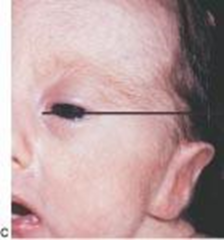
What is congenital aural atresia?
A condition where the external auditory canal is completely closed/absent.
What amount of hearing loss can be expected in case of pinna deformity with normal ear canal, middle, and inner ear
Unless the middle ear and inner ear are involved than there is no hearing loss.
What difficulties can be expected with a sudden loss of pinna?
Difficulties with sound localization may present especially in front-back localization but the brain can adapt over time
What is the expected range of hearing loss for aural atresia?
Depending on the severity it can cause mild to moderately severe hearing loss.
What age-range are the middle and external ear reconstructions mostly considered?
6 to 10 years of age
What are the necessary assessments when deciding candidacy for external and middle ear reconstructive surgery?
1. neurological or developmental milestones (motor, communication etc.,)
2. overall craniofacial development - first and second branchial arches
3. degree of aural development, presence of tympanic membrane, atresiavs. stenosis
4. facial nerve weakness
5. overall hearing status and need for amplification
What are the two conditions that decide someones candidacy with a outer and/or middle ear deformity?
assessments of the temporal bone, if there is normal bone conduction thresholds and good speech discrimination with no inner ear abnormalities
What is resonance frequency?
It provides the natural amplification of sound, the outer ear has a resonance frequency of typically about 2,600 to 3,500 Hz. This is very helpful in getting frequencies of speech sounds.
What is the primary function of the external ear?
To collect and send sound waves through the ear canal. Also helps in the localization and direction of sound.
What does the external ear consist of?
It consists of the pinna and the external auditory canal. It is approx. 2.5 cm.
Where does the external ear canal end at?
It ends at the tympanic membrane.
What is the concha and where is the concha on the pinna?
The concha helps funnel sound waves into the ear canal. It also helps with sound localization. The concha is located in the inside dip within the ear (self I.D) and it has two parts, the cymba (smaller part, close to the anti-helix) and the cavum (large part, right by the ear canal)
What is the helix and where is it located on the pinna?
The helix is the outer rim of the pinna, the part that sticks out the most (self I.D).
What is the anti-helix and where is it located on the pinna?
The anti-helix is the elevated part within the pinna, it runs closer to the center of the pinna (self I.D).
What is the self cleaning conveyor belt?
The self-cleaning conveyor belt is how the ear canal sheds, cleans itself, and keeps it debris-free. It sheds skin and moves cerumen (ear wax).
What is the role of sebaceous fat in relation to the ear?
Sebaceous fat in the ear creates sebum in the ear and helps make cerumen (ear wax)