PHYSICS MOD 5,6,8 COMPLETE
 Call Kai
 Learn
Learn Practice Test
 Spaced Repetition
 Match
Match Flashcards
 Knowt Play
1/188

There's no tags or description
Looks like no tags are added yet.
Name | Mastery | Learn | Test | Matching | Spaced | Call with Kai | Chat |
|---|
No analytics yet
Send a link to your students to track their progress
189 Terms
field
a region in which a body experiences a force due to the effects of another body. The effect can be the mass within the bodies, their charges or magnetic properties
work-energy theorem
the work done on a system is equal to its change in kinetic energy
the net work done by all forces acting on an object is equal to the change in its kinetic energy (if you do work on an object, it will change its energy)
Law of Conservation of Energy
In a closed system when energy is transformed from one form to another, the total amount of energy remains the same
work
displacement of an object moved parallel to a field
emf (electromotive force)
aka. voltage
the amount of energy that the battery gives to each coulomb of charge
electron volt
One electron volt (1eV) is the amount of energy gained (or lost) by the charge of a single electron moving across an electrical potential difference of one volt
magnetic field
a 3D region of space where a magnetic dipole will experience a force
magnetic flux (Φ - phi)
measured in Wb (weber) is a measure of the amount of magnetic field permeating a space
motor effect
where a current-carrying conductor (such as a wire) placed in an external magnetic field experiences a force
aka. Lorentz force
magnetic flux density (B)
the degree of concentration of flux
area vector (A)
a vector perpendicular to the plane of the area of the object in the field
flux linkage
is the total magnetic field lines passing through a multi-turn coil, calculated by multiplying the number of turns (N) in the coil by the magnetic flux (Φ)
galvanometer
a sensitive ammeter that allows measurement of current in two directions with a zero reading at the centre of the dial
Lenz’s Law
“the direction of the current induced in a conductor by a changing magnetic flux is such that the magnetic field created by the induced current opposes the initial changing magnetic flux.”
permeability (μ)
the measure of ease, with which mangetic lines of force pass through a given material — how easy it is for flux lines to pass through it
primary coil
the input coil which has an AC current running into it
secondary coil
the output coil
eddy currents
circular currents set up in the metal object near where the change in flux is occurring
produced in solid sheets or blocks of conductors (metals) and are produced at right angles to the direction of the changing flux → causes transformers to not be 100% efficient as the creation of these currents uses energy
torque
the turning moment of a force
motors
change electrical energy into mechanical, kinetic or potential energy
split-ring commutator
acts as a switching device to change the direction of the current in the coil every half rotation (uses DC)
armature
component of DC motor
the rotating core that converts electrical energy into mechanical energy
rotor coil(s)
component of DC motor
insulated copper wire wrapped around an iron core. When energized, these coils create an electromagnet that interacts with stationary magnets (the stator) to generate rotational force (torque)
brushes
component of DC motor
conductive components (usually made of carbon and copper) that transfer electrical current from the stationary power source to the spinning rotor (armature) through the commutator
axle
component of DC motor
an electric motor that connects directly to, or integrates with, a drive axle to turn wheels or mechanical parts
back emf (curly E)
The emf induced in opposition to the supply emf running the motor
AC generator
a device which converts mechanical energy into electrical energy → outputs power in the form of alternating voltage and current
slip ring commutator
an electromechanical device that allows the transmission of power and electrical signals from a stationary to a rotating structure. A slip ring can be used in any electromechanical system that requires rotation while transmitting power or signals.
USED IN AC MOTORS/GENERATORS
DC generator
can be made from an AC generator by using a split-ring commutator rather than slip rings
can be made by using a bridge rectifier circuit which converts the AC output from the generator into DC output
turning mechanism
allow method/means to mechanically rotate the coil (in a generator)
stator windings
the electrical coils housed inside a stator (the stationary part of a rotary machine) → in an AC generator
AC induction motor advantages (over other types of motor)
simple design (simple and cheap to construct)
reliability - no brushes or commutators, little friction to wear parts down (which would need to be replaced over time)
can be built to suit almost any industrial requirement
are economical and efficient to run (for most purposes)
polyphase induction motors are self-starting → when you turn AC source on, the motor starts (doesn’t require special starting means)
single-phase generator
produces electrical power using a single, continuously alternating voltage
multiphase generator
an electrical machine that converts mechanical energy into multiple alternating current (AC) waveforms
AC induction motor disadvantages (compared to other types of motors)
only work on AC
maximum speed is limited by the supply frequency (a 50Hz supply limits to 3000rpm)
starting torque is low → they can’t get heavy loads moving very quickly
not as efficient as some other AC motors when used in heavy industrial applications
classes of single-phase AC motors
commutator motors
synchronous motors
commutator motors
“Universal motors” can run on AC or DC electricity
the AC series motor - a specialized electric motor that incorporates a mechanical commutator and carbon brushes to operate on alternating current (AC) Unlike standard AC induction motors, these motors provide higher starting torque and operate at high speeds. They are primarily found in household appliances and power tools
synchronous motors
an AC electric motor in which the rotation of the shaft is perfectly locked in step with the frequency of the supply current (fixed frequency = constant speed that’s why they’re used in clocks and other similar devices requiring a constant rate of rotation)
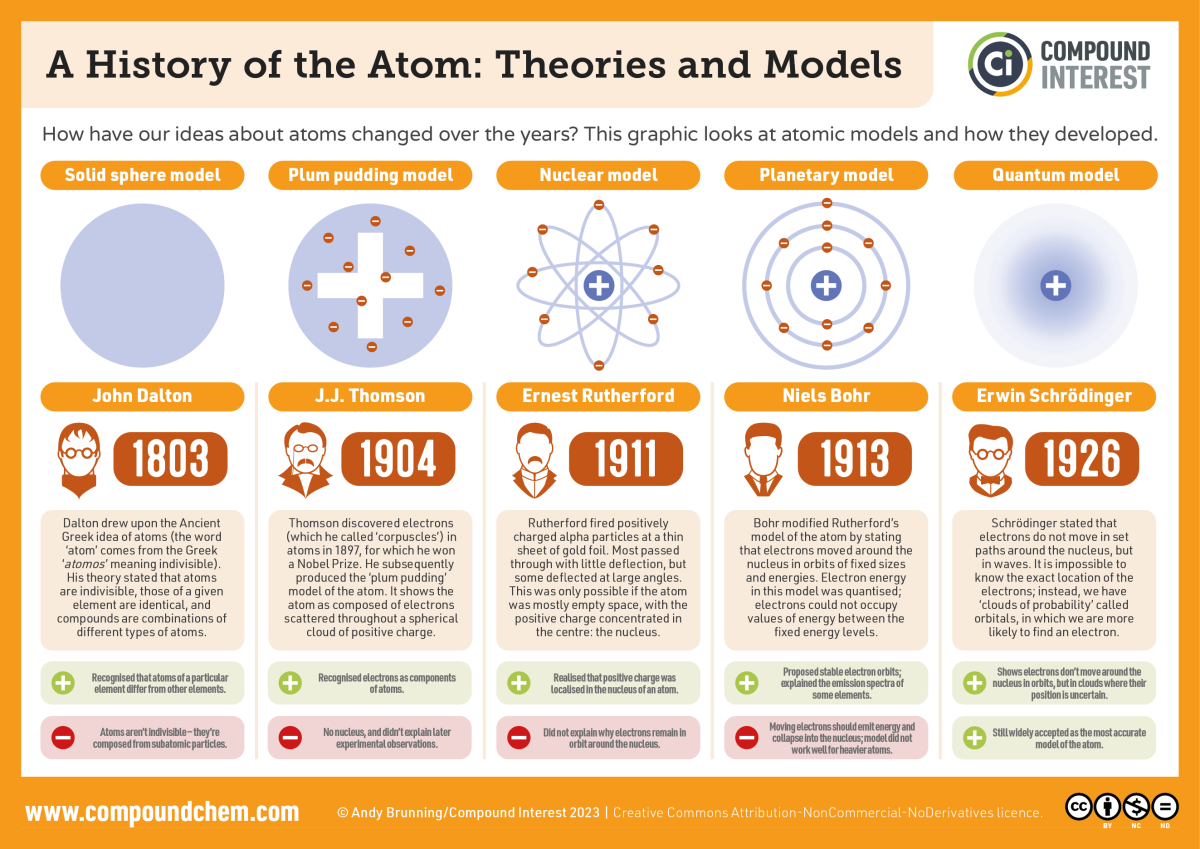
Models of the atom
Dalton - Billiard Ball
J J Thomson - Plum Pudding
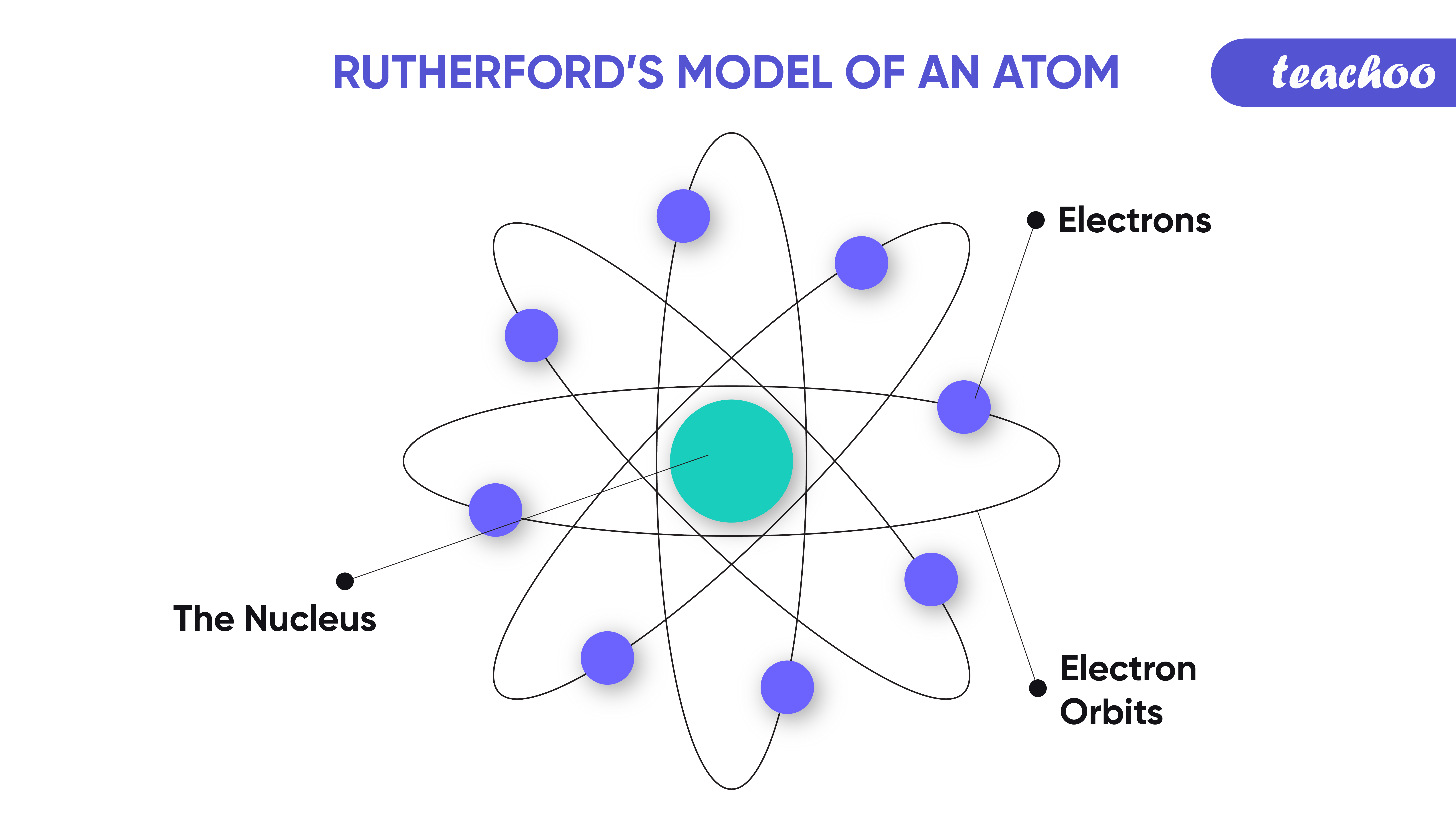
Rutherford - Nuclear model
Bohr - Planetary model
Chadwick - Neutrons in nucleus
cathode rays
beam of electrons
cathode ray experiments
gas discharge tubes
maltese cross
paddle wheel tube
curved fluorescent screen
addition of electric field between parallel plates
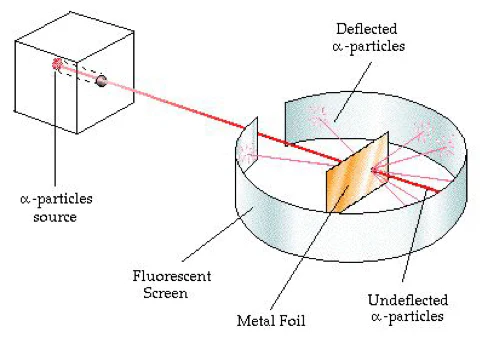
Gold foil experiment (Geiger-Marsden)
Rutherford disproved the "plum pudding" model of the atom
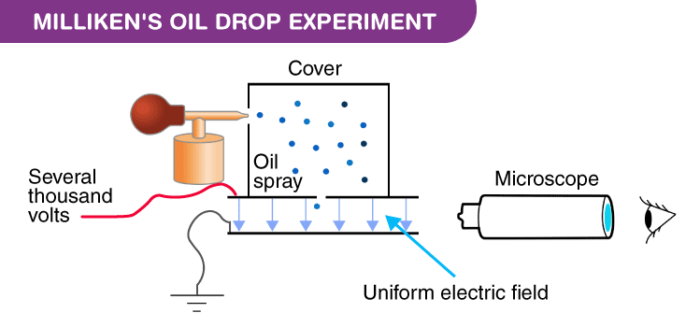
Milikan's oil drop experiment
find charge of e- by measuring stationary oil droplets and equating the magnetic field to the gravitational field to find the charge.
canal ray experiment (Goldstein)
mass of positively charged particles depends upon nature of gas.
q/m ratio of particles depend upon which gas the particles original
alpha particle experiment (Chadwick)
found neutrons in the nucleus
classical physics
physics before the Bohr model (before quantum physics and relativity)
Quantum mechanics
fundamental theory of physics that provides a description of the physical properties of nature at the scale of atoms and subatomic particles
Balmer series
A set of spectral lines that appear in the visible light region when a hydrogen atom undergoes a transition from energy levels n>2 to n=2.
Maxwell’s Theory of Electromagnetism
An accelerating charged particle will produce electromagnetic radiation (EM waves)
Limitations of the Rutherford Model of the Atom
Couldn’t explain spectral lines and why a continous spectra wasn’t produced when excited electrons return to their original energy level
Can’t explain why accelerating electrons don’t produce EM waves (Maxwell’s Theory of Electromagnetism) → atoms should be unstable based on this model but they are not
Spectral lines
dark or bright lines in a spectrum that correspond to specific wavelengths of light, created when atoms, molecules, or ions absorb or emit photons
obseservable spectra
continuous spectrum
emission spectrum
absorption spectrum
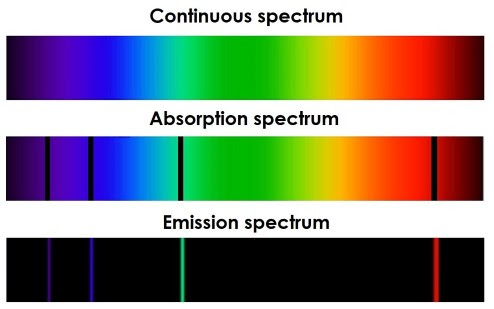
continuous spectrum
produced: when an incadescent light or sunlight is refracted through a prism
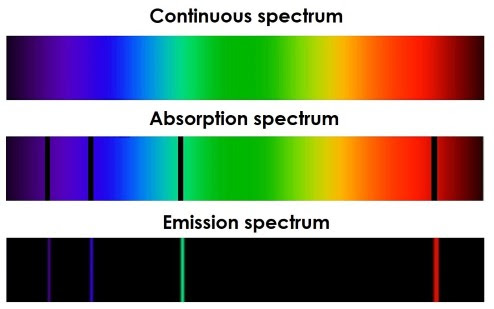
emission spectra
produced: when gas molecules are excited by putting a large DC voltage across them, in a vaccum. Resultant light is refracted through a prism or diffraction grating
result: bright, coloured, distinct lines are produced with a black background
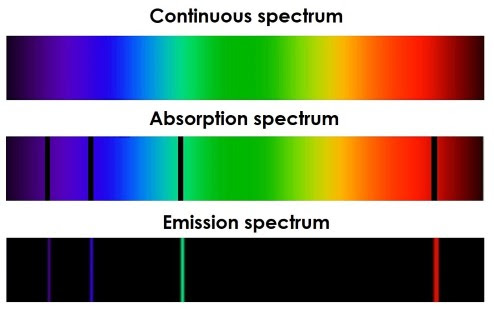
absorption spectra
produced: when white light is passed through a pure gas before passing through diffraction grating or prism
result: spectrum is complete except for the presence of black bands in the same positions (for each gas) as the emission spectrum
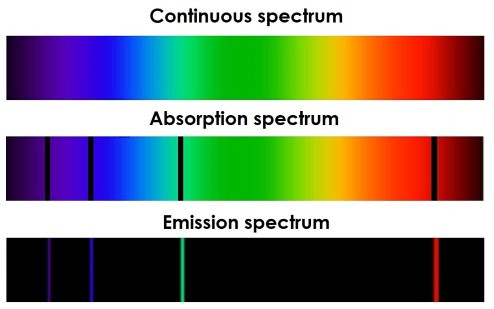
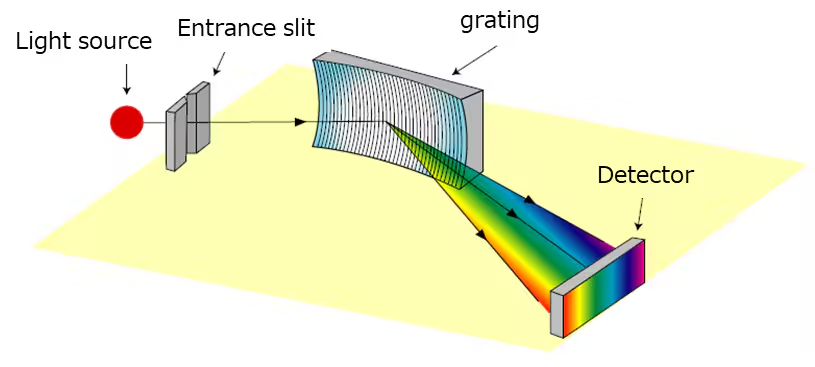
Diffraction grating
we did pracs with this, an optical device with a periodic structure that separates light into its constituent wavelengths
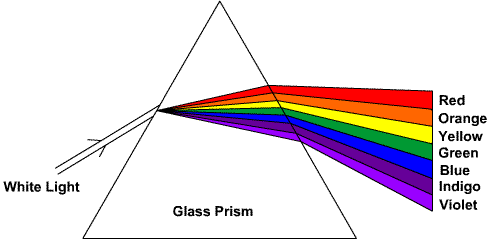
Prism
used to refract light, separates into its constituent wavelengths
Bohr’s postulates
Postulate 1: Electrons in an atom exist in stable, circular orbits and these electrons in stable orbits do NOT emit radiation
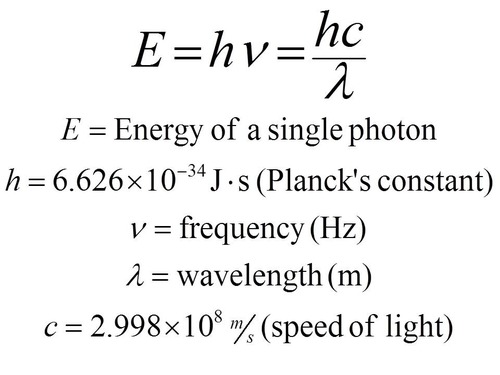
Postulate 2: Electrons absorb or emit specific quanta of energy when they move from one stable energy level to another. E=hf (for EM waves)
Postulate 3: The electron’s angular momentum is quantised (don’t need to know more than this)
Plank’s quanta
energy of EM waves can be quantised and calculated using E=hf
Rydberg’s mathematical model for hydrogen’s spectral lines
1/𝜆 = R(1/nf2 - 1/ni2)
Spectral lines → Law of Conservation of Energy
transition of electrons between orbits follows this Law: if an electron drops from a higher energy level to a lower energy level, the energy must be transformed.
Limitations of Bohr’s Model of the Atom
only predicts hydrogen’s spectrum
doesn’t explain why the lines in the spectrum vary in intensity/thickness and why some are sharp, dull thin and diffuse
Can’t explain the ‘zeeman effect’ or the ‘anomalous zeeman effect’
couldn’t explain why electrons didn’t emit radiation (same as Rutherford) and why they didn’t spiral towards the positive nucleus
The Zeeman Effect
Observed that when the spectrum of a sodium flame burning in a magnetic field was visualised → some lines split into 3 COULDNT BE EXPLAINED BY BOHRS MODEL
The Anomalous Zeeman Effect
Spectral lines could also split into 15 hyperfine lines when observed in a magnetic field. COULDNT BE EXPLAINED BY BOHRS MODEL
Diffraction
the spreading of wavefronts as they pass through a small aperture (small opening) or past an obstacle
Braggs Law
Used for when two reflected x-rays constructively intefere
n𝜆 = 2dsin𝜃
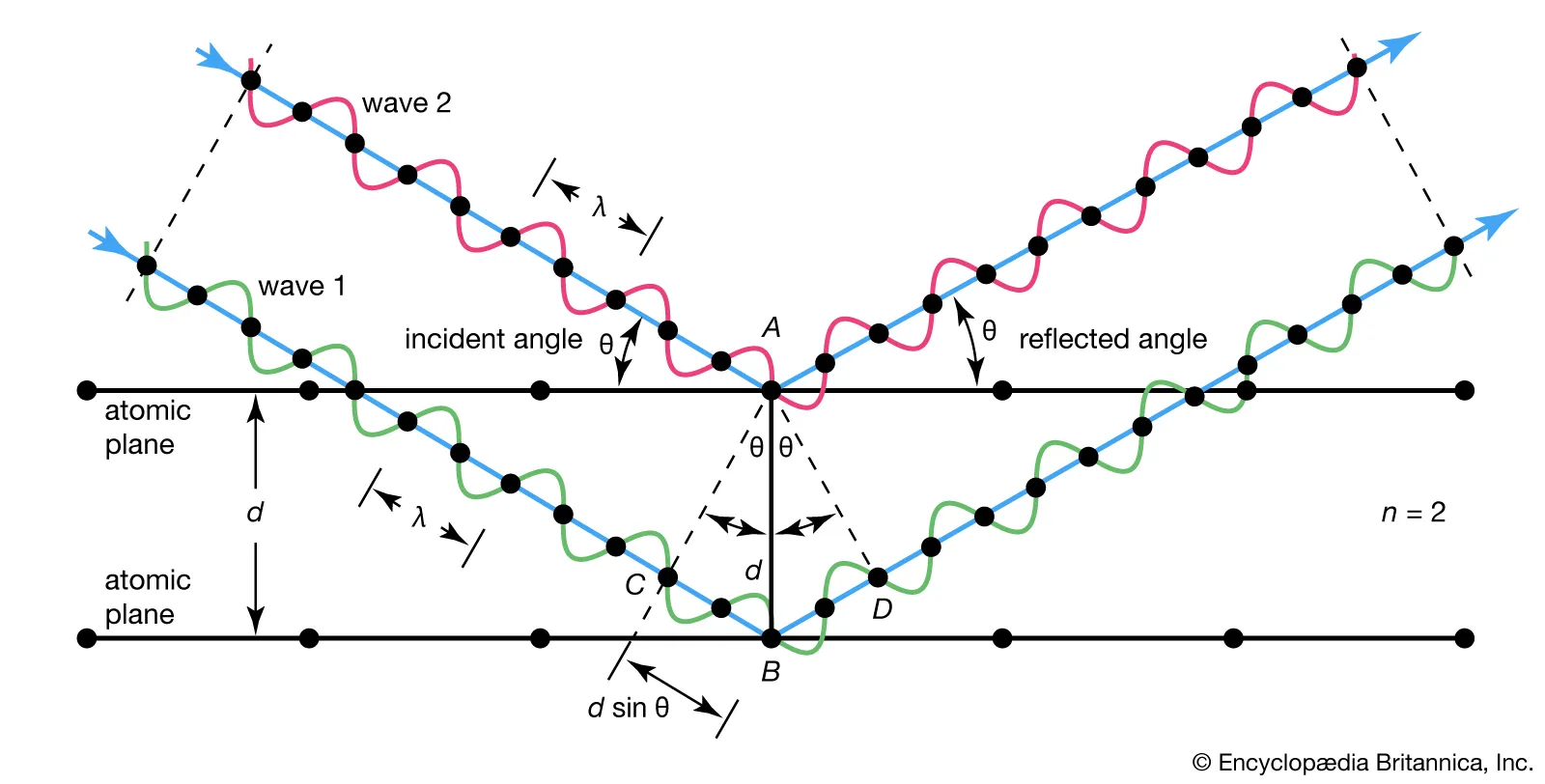
Constructive interference
a phenomenon where two or more waves combine to form a resultant wave with a larger amplitude
Destructive interference
a phenomenon where two waves combine to cancel each other out, resulting in a wave with a reduced or zero amplitude
De Broglie Hypothesis/The Theory of electron waves
“all moving matter exhibits wave-like properties and that the wavelength of this matter wave is inversely proportional to its momentum according to the equation: 𝜆 = h/p = h/mv
includes evidence from wave-particle duality theory of matter, Plank’s work and Einstein’s work on light (mod 7) → as quanta were now accepted and the dual theory of light
standing waves
a wave pattern that oscillates in place without moving through space, appearing to "stand still” → De Broglie waves were this type
nodes
the points of the wave that do not vibrate
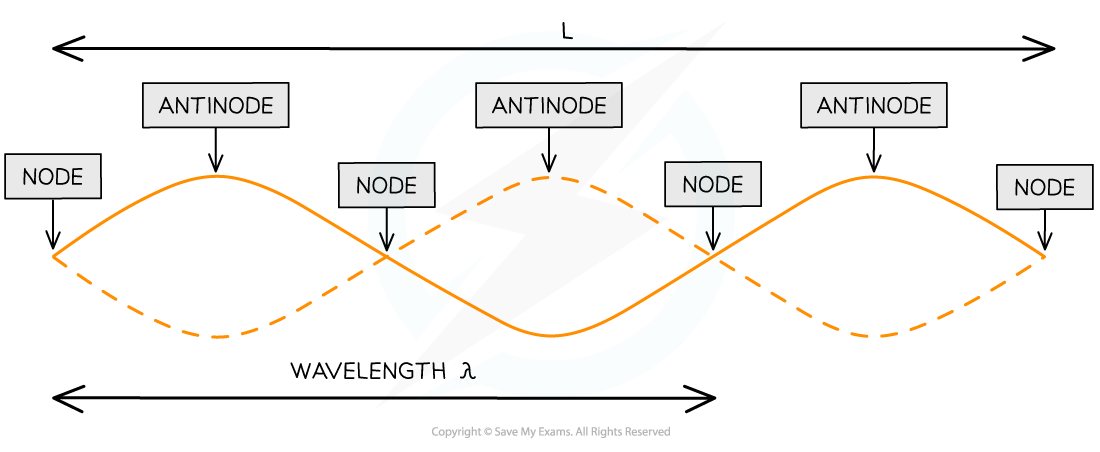
antinodes
the points that vibrate between maximum and minimum positions
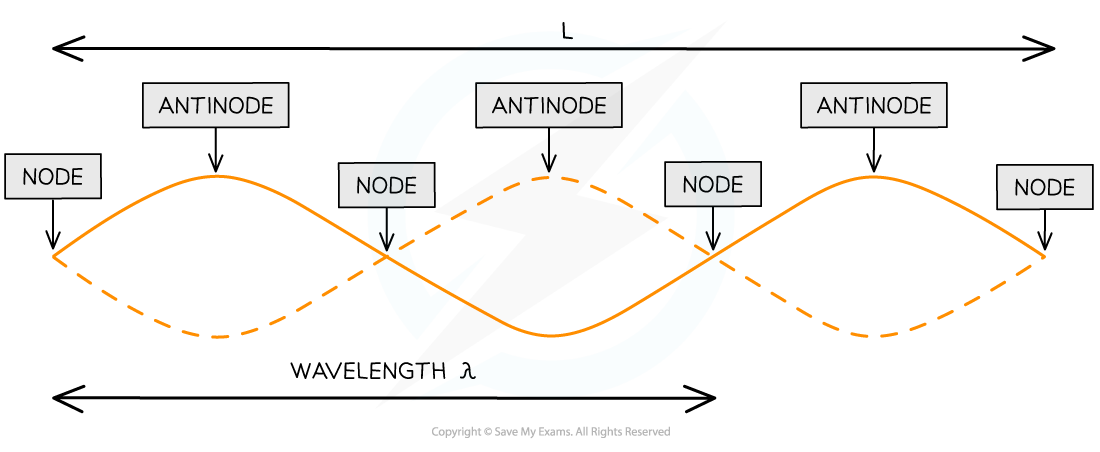
de Broglian wavelengths
standing waves that allowed electron quantum states (shells) circumferences would always contain a multiple of these wavelengths (integer)
-→ used incrememnts to explain why certain energy levels were stable, ie. the ones that has an integer multiple of de Broglian wavelengths
equation: C = n𝜆
— The stable orbits of the hydrogen atom are those where the circumference is exactly equal to a whole number of electron wavelengths
Electron spin
Pauli Exclusion principle
any atomic orbital (or other quantum state) can contain at most two electrons, and they must have opposite spin directions
This means that no two electrons can have all four quantum numbers the same
No two electrons in a single atom can have the same set of four quantum numbers (applies to electrons, and all fermions)
Quantum numbers
Proposed in order to distinguish electrons in an atom from one another by considering 4 quantum numbers:
The energy level
Shape of the orbital
Orientation of the sub-orbital
Spin of the electron
NO TWO ELECTRONS COULD BE IDENTICAL
Heisenberg’s uncertainty principle
The more exactly we know a particle’s position, the less certain we become of its velocity (and momentum) and vice versa
“electron cloud” model of the atom (The Quantum mechanical model of the atom)
Schrodinger’s model of the atom → currently accepted model of atom
nucleon
the collective name for the two main subatomic particles in the nucleus; protons and neutrons
atomic number (Z)
number of protons in an atom
standard atomic weight
average weight of an element (considers that many elements have isotopes
mass number (A)
number of protons and neutrons
charge on an atom
results from a loss or gain of electrons
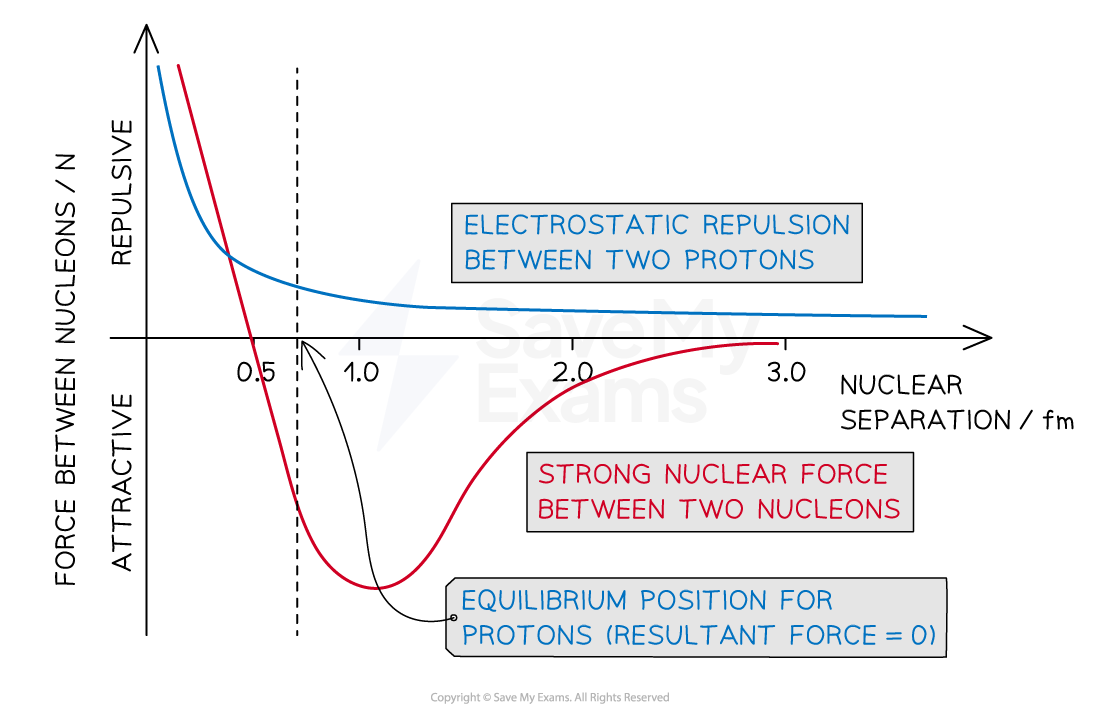
Strong nuclear force
the force that holds the nucleus together. it has properties of:
acts only over small distances
force is between nucleons (p→p, p→n etc.)
at very close distances, nucleons repel each other (not a linear relation)
at around 3×10-15 m the strong nuclear force drops to zero
radioactive
way to describe a nuclide that emits some kind of radiation (if it is unstable)
radioactive decay
an unstable nuclide emits radioactive particles in process to become stable
nuclide
a specific type of atom defined by the exact number of protons and neutrons in its nucleus, and its energy state
3 ideas to predict nuclear stability
Neutron to proton ratio
The band of stability
Magic numbers
Transmutation
the change of one chemical element into another by nuclear decay or radioactive bombardment
spontaneous radioactivity
decay/emission of radioactive particles which is NOT caused by human intervention or accelerators
ionisation
removal of a bound electron from an atom to produce a free electron and a positive ion - THIS IS NOT RADIOACTIVE DECAY
radioisotopes
unstable atoms that emit particles that undergo nuclear reactions (decay) to become more stable
daughter products have a greater binding energy per nucleon than the original parent nuclide
Decay series
It is called a ______ _____ when one radioactive isotope decays into another, and the daughter is also unstable and further decays occur until a stable nucleus is created
half life
the time it takes for half of a sample of a radioactive substance to undergo radioactive decay or the time required for the number of unstable atomic nuclei in a sample to decrease by half
hadrons
heavy, composite (made up of multiple quarks) that are affected by the strong nuclear force
e.g. protons
leptons
fundamental particles (not made up of other particles) which are NOT affected by the strong nuclear force
e.g. the electron, the muon
fundamental particles
particles which are not made up of other particles
elementary particles
fundamental particle that is not made up of any other particles
e.g. quarks, electrons
composite particles
a particle that is composed of two or more elementary particles
quarks
an elementary particle that are the building blocks of hadrons and have a fractional charge , interact with the strong force and obey the Pauli Exclusion Principle