Lithuania: Political History and Notable Figures
 Call Kai
 Learn
 Practice Test
 Spaced Repetition
 Match
 Flashcards
 Knowt Play
1/20

There's no tags or description
Looks like no tags are added yet.
21 Terms

1377 - 1434 - Jagello (All Facts)
First Supreme Duke of Lithuania
He had diplomatically maneuvered to lay the foundations for the union, with the namesake out to save his own position as well as Lithuania’s future
He did this having long wanted to enter the sphere of western civilization
During his reign, he laid down the foundations for the Polish-Lithuanian Commonwealth via marriage to Jadwiga, Queen of Poland
Initially a polytheist, he converted to Catholicism and was baptized after marriage
The marriage allowed the rivalry between the two kingdoms to end
Their unification allowed them to unite against the Teutonic Order, their common enemy
Under his reign,
Lithuanian nobbles proceeded to adopt the manners and traditions of the Polish aristocracy

1434 - 1444 - Wladyslaw III (All Facts)
2nd Supreme Duke of Lithuania

1440 - 1492 - Casimir IV (All Facts)
Grand Duke of Lithuania

1492 - 1506 - Alexander Jagiellon (All Facts)
Grand Duke of Lithuania
He issued an Edict of Expulsion against the Jews in Lithuania, forcing them to leave or be baptized

1506 - 1529 / 1548 - Sigismund (All Facts)
Grand Duke of Lithuania
He eventually co-ruled with his successor
He ruled for more than 40 years
He was Catholic and kept Lithuania a Catholic state in the midst of the Protestant Reformation
He was considered blessed with a strong character and considerable political perception
During his reign,
He established serfdom in Poland
He implemented a series of financial reforms
He enforced strong measures against Lutherans, anxious to unite his realm of Poland to the Catholic Church in Rome
He introduced death at the stake for anyone who imported heretical books
He ordered all his subjects attending heretical universities abroad to return home
He brought in a similar penalty to burning at the stake for subjects who disobeyed his order to return home from heretical universities
These edicts of his, however, were widely ignored
He attended the First Congress of Vienna, where he
forged an alliance with Holy Roman Emperor Maximilian and King Vladislaus II of Bohemia and King of Hungary
He and his Polish-Lithuanian forces were defeated by Vasily III and his Muscovite forces in the Fourth Muscovite-Lithuanian War / Ten Years’ War
He was forced to sign an armistice treaty with Vasily III, forced to settle with Vasily III after Vasily III had made a defensive alliance with Holy Roman Emperor Maximilian, creating papal concern about the conflict and having brought pressure from the Catholic Church on the namesake to settle
At one point during this war, however, he and his forces defeated Vasily III and his Russian forces
He imposed his rule on Wallachia
He stamped his authority on East Prussia
Under his reign,
Poland was at its peak
Poland had been (profoundly) influenced by the Italian Renaissance
Nicolas Copernicus proposed the “Heliocentric Theory” of the Universe
He died in Cracow, in which he was buried in his namesake monument / tomb at Wawel Cathedral
1534 - Mikhail Glinsky (All Facts)
He led a revolt of Lithuanian rebels against Duke Sigismund of Lithuania
He and his Lithuanian forces helped Vasily III of Moscow take take Smolensk during the Muscovite-Lithuanian War / Ten Year’s War

1529 / 1548 - 1572 - Sigismund II Augustus (All Facts)
Grand Duke of Lithuania and Final Grand Duke of Lithuania from the House of Jagiellon
He initially co-ruled with his predecessor
During his reign,
The Union of Lublin was established
His lands thus stretched from the Baltic Sea to the Dniester River
He died with no heir
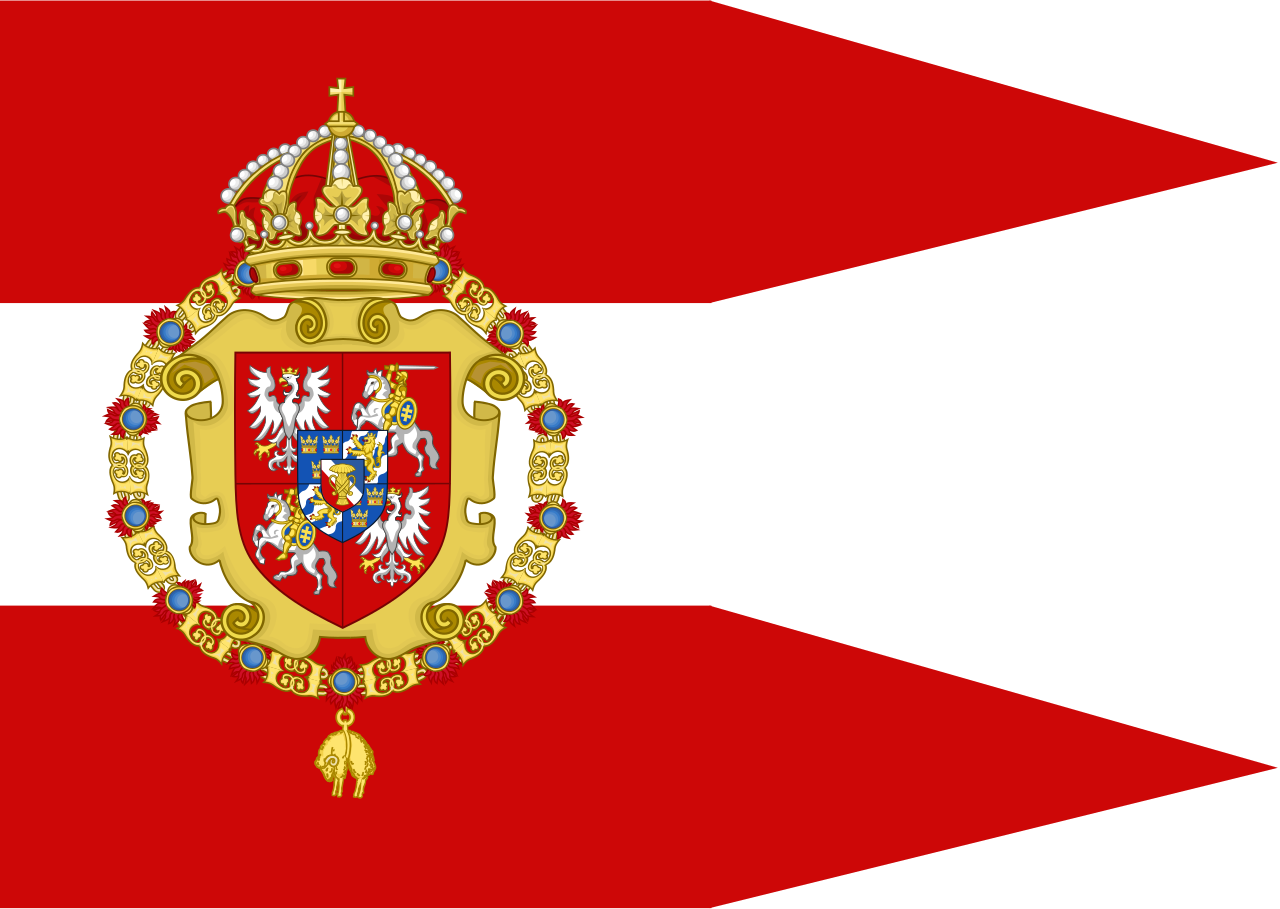
1569 - 1795 - Polish-Lithuanian Commonwealth (All Facts)
State which stretched from the Baltic Sea to the Dniester River
State established via the Union of Lublin, during the reign of Sigismund II Augustus
State which was officially Catholic but which was (initially) tolerant of Orthodox and Protestant Christians as well as Jews
State in which the King had to work through the Polish parliament despite his many various powers and prerogatives

1573 - 1575 - Henry / Henry III of France (All Facts)
Grand Duke of Lithuania
He was from the House of Anjou
He was the brother of King Charles IX of France
His election was secured by Catherine de Medici (his mother)
She by dint of propaganda and persuasion succeeded in building up a pro-French party among the Polish nobles
He became the first “elected” king of the Polish-Lithuanian Commonwealth
He was elected by some 40K Polish nobles and gentry, who assembled for the election on the Warsaw plain
He was considered devious, egotistical, and effeminate
His election by the Polish nobles and coronation was precipitated by the death of his predecessor, who had no heir
During his reign,
He had to face a hostile nobility which wanted to keep effective power
The powers of the Polish-Lithuanian crown were being drastically reduced, as Poland-Lithuania was going to be governed by its Senate, rather than the crown head on
He eventually lost interest in Polish power as a result of the aforementioned developments

1576 - 1586 - Stephen Bathory, of Transylvania (All Facts)
Grand Duke of Lithuania
He was initially the Prince of Transylvania
His rule was supported by the Ottoman Empire
He was “elected” Grand Duke of Lithuania
He ruled for ten years
He had a forceful personality and was an experienced soldier
He created a big Christian empire in eastern Europe which prevented Tsar Ivan IV and Russia from overtaking those territories
However, the Poles did not support the almost limitless personal ambitions he had
He had the same problem as his predecessors, which was failing to banish from his mind the thought of his native country (Transylvania) which had a fear-reaching effect on both his domestic and foreign policy
He died suddenly and was succeeded

1587 - 1632 - Sigismund III Vasa (All Facts)
Grand Duke of Lithuania
He was the son of King John III of Sweden
He was “elected” by some 15K voters who preferred him to Holy Roman Emperor Maximilian II
He and his Polish-Lithuanian forces
defeated
Tsar Vasily IV and his Russian and Swedish forces in the First Russo-Polish War
He had his son Ladislaus IV installed as the succeeding Tsar of Russia
were defeated by
Gustavus Adolphus and his Swedish forces in the Fourth Polish-Swedish War
Gustavus Adolphus and his Swedish forces in the Fifth Polish-Swedish War
Under his reign,
The Confederation of Vilna made it so that various branches of the church in Poland unite against the power of the Roman (Catholic) Church
The Truce of Altmark was made (with Sweden)

1632 - 1648 - Ladislaus IV (All Facts)
Grand Duke of Lithuania
He and his Polish-Lithuanian forces
defeated the Russian forces in the Siege and War of Smolensk
Upon his arrival, the town was relieved
He obtained support of the Dnieper Cossacks, who had been disillusioned by Russia’s failure to come to their aid previously
He offered an armistice to the leader of the Russian forces, which he accepted and permitted the remaining 8K Russian forces to retire

1648 - 1668 - John II Casimir Vasa (All Facts)
Grand Duke of Lithuania
He failed to reach an agreement with the Cossacks (Cossack Hetmanate / Ukraine), who then swore an oath of allegiance to Tsar Alexis of Russia and their armies promptly invaded Poland on two fronts
During his reign,
He oversaw the Counter-Reformation triumph, and thus excluded Protestants from office
He led Poland in the Northern War
He and his Polish forces were defeated by Tsar Alexis and the Russian forces and Bohdan Khmelnytsky and his Cossack forces in the Second Russo-Polish War
He renounced his claim to Smolensk, Kiev, and a large part of the Ukraine on the left bank of the Dneiper River
Ukraine was thus handed over to Russia
Under his reign,
The “Deluge” took place throughout Poland-Lithuania
During this period he was in continual conflict with the Sejm over money and constitutional issues
During this period his reign covered one of the darkest periods in Poland’s history, with multiple foreign powers threatening partition and internal strife amongst aristocratic factions
The Treaty of Oliva was signed, which ended the Northern War
He eventually renounced his claim to the Swedish throne via this treaty
He abdicated the throne

1615 - 1672 - Władysław Siciński (All Facts)
He was a deputy of the General Sejm (Polish-Lithuanian Parliament) who exercised his veto power for the first time, voicing his disagreement with the prolongation to Sejm
after a vote on increased taxes
because he wanted to go home

1669 - 1673 - Michał Korybut Wiśniowiecki (All Facts)
Grand Duke of Lithuania
He defeated Louis II de Bourbon of France in the bid for the Polish throne
He was Lithuanian
He was forced to sign the Treaty of Buchach by Sultan Mehmed IV and the Ottoman Empire during the Fourth Polish-Ottoman War
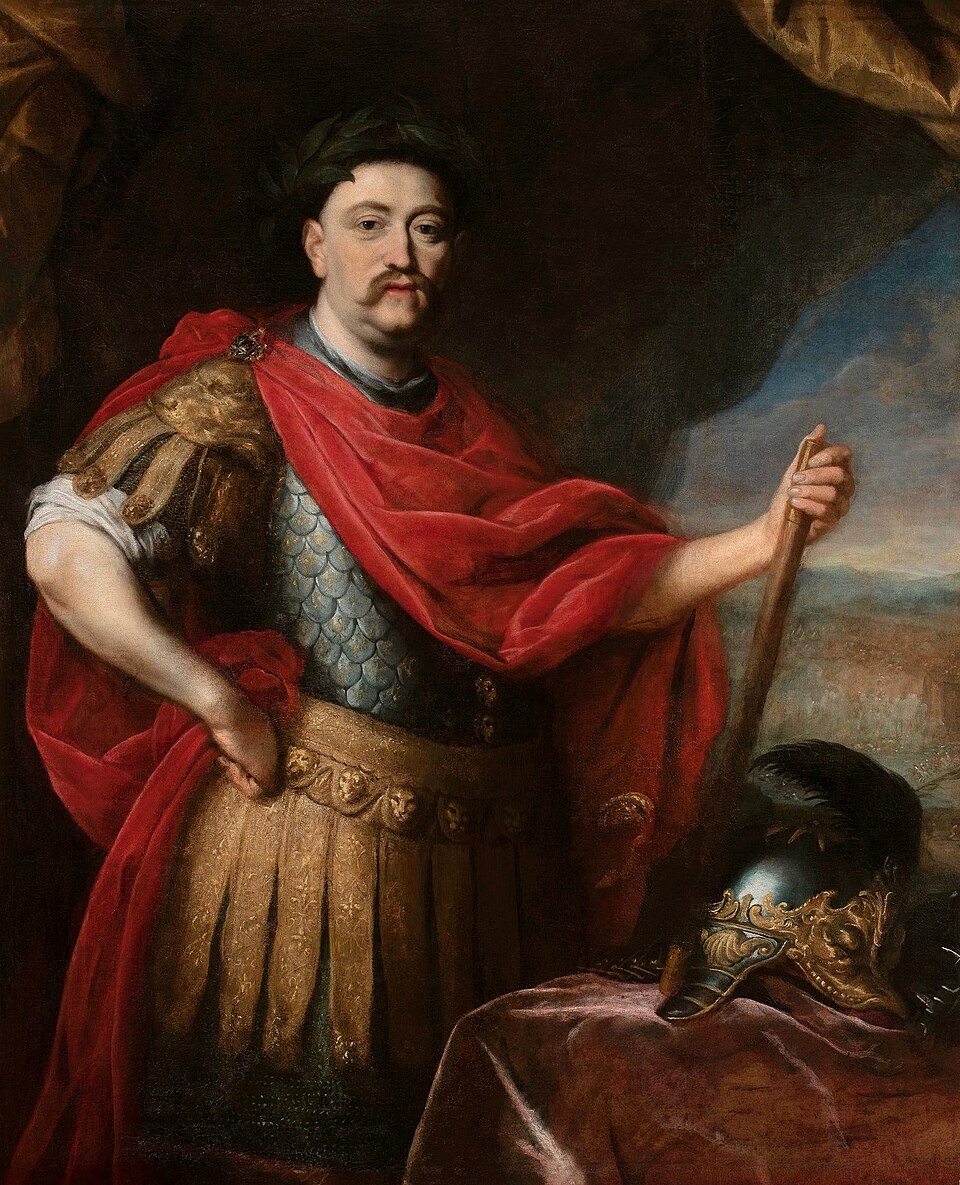
1674 - 1696 - John III Sobeiski (All Facts)
Grand Duke of Lithuania
Prior to his rule, he
helped Poland-Lithuania fight off Sweden during “The Deluge”
and his Polish-Lithuanian forces defeated Petro Doroshenko and his Cossack forces and Sultan Mehmed IV and his Ottoman forces and their combined Crimean forces in the Polish-Cossack-Tatar War
and his Polish-Lithuanian forces defeated the Ottoman forces in the Battle of Khotyn during the Fourth Polish-Ottoman War
This made him a Polish war hero, and, as a result, he was bestowed the title of “Defender of the Faith” by the Papacy, which catapulted him into winning the election to the Polish-Lithuanian throne
He was “elected”
He had to defeat three other candidates for the Polish-Lithuanian throne, none of whom were Poles (Polish) and whom favored either France or Austria
His kingship became a concern for all of the major European powers vying for influence at the time
His kingship, despite being a Pole, had external sponsors include King Louis XIV of France
This was because the namesake married Marie Casimire d'Arquien
This was also because King Louis XIV sought to use Poland for his own purposes in his military campaigns against Austria
He was determined to resist any possibility of selling out Poland-Lithuania
He overtook Poland-Lithuania’s foreign ambassadors, subordinating each of their own country’s interests for that of Poland-Lithuania
He and his Polish-Lithuanian forces and Charles V of Lorraine and his Holy Roman and Austrian forces defeated Kara Mustafa Pasha and his Ottoman forces in the Battle of Vienna during the Great Turkish War / Eighth Ottoman-Habsburg War

1674 - 1696 - Marie Casimire d'Arquien (All Facts)
Grand Duchess of Lithuania and Wife of John III Sobieski
Her marriage to John III of Sobieski increased King Louis XIV and France’s influence over Poland and allowed the king and France to use Poland against Austria

1704 - 1709 - Stanisław Leszczyński (All Facts)
Grand Duke of Lithuania
He led Lithuania in the Great Northern War, where he allied with King Charles XII of Sweden, betraying the anti-Swedish coalition of the war
He was appointed to replace his predecessor by King Charles XII of Sweden
He ruled until the Russians occupied Lithuania during the Great Northern War and deposed him, returning his predecessor to the throne to succeed the namesake
He became the father-in-law of King Louis XV of France when his daughter Marie married the French king
He fought in the War of the Polish Succession
He and his Polish and French forces were defeated by Russian and Holy Roman (Saxon) forces in the Siege of Danzig
Under his reign,
The Poles rose up against him and he fled as a result, making the way for the return of his predecessor
He fled to Danzig following the War of the Polish Succession

1697 - 1706 / 1709 - 1733 - Augustus II (All Facts)
Grand Duke of Lithuania
He was elected
against the interests of France, who preferred François Louis (the Prince of Conti) to rule Poland in place of the namesake
in support of the interests of Germany (the Holy Roman Empire), whose sovereigns backed him
He led Lithuania in the Great Northern War
He and his Lithuanian forces re-joined the anti-Swedish coalition
He showed little to no interest in Poland-Lithuania, spending most of his time at the sumptuous electoral court of Dresden (in Germany / the Holy Roman Empire)
In response to his absence, Sweden forced the election of his namesake successor to rule in his place
During his reign,
He and his Lithuanian forces were defeated by King Charles XII and his Swedish forces in the Swedish invasion of Lithuania and the Duchy of Courland during the Great Northern War
Under his reign,
Lithuanian forces were defeated by King Charles XII and his Swedish forces in the Battle of Putulsk during the Great Northern War
He was deposed by King Charles XII of Sweden, who replaced him with his successor

1733 - 1763 - Augustus III (All Facts)
Grand Duke of Lithuania
He was elected grand duke upon emerging victorious from the War of the Polish Succession