mycology 2
 Call Kai
 Learn
Learn Practice Test
 Spaced Repetition
 Match
Match Flashcards
 Knowt Play
1/184

There's no tags or description
Looks like no tags are added yet.
Name | Mastery | Learn | Test | Matching | Spaced | Call with Kai | Chat |
|---|
No analytics yet
Send a link to your students to track their progress
185 Terms
Trichophyton rubrum best described as
Has become the most common and widely distributed dermatophyte of humans. It frequently causes chronic infections of skin, nails and rarely scalp.
Long filaments that make up molds.
Hyphae.
Blastomycosis best described as
A chronic granulomatous and suppurative disease having a primary pulmonary stage.
Ascomycota best described as
Common molds - asexual reproduction by conidia.
Mycelium concerned with obtaining nutrients.
Vegetative mycelium.
Multicelled condiospores are called
Macroconidia
Unicellular conidiospores are called microconidia.
true
Sporangiospores are formed at the end of an aerial hyphae.
true
Trichophyton mentagrophytes var. mentagrophytes best described as
A wide range of animal hosts including mice, guinea pigs, kangaroos, cats, horses, sheep and rabbits. Produces inflammatory skin or scalp lesions in humans, particularly in rural workers.
What is the most common diagnostic method for Coccidioidomycosis?
Testing for IgM and IgG antibodies
Chlamydospores are
thick walled spores formed within a hyphae.
Grocott's methenamine silver (GMS) stain reacts with fungal cell wall polysaccharides.
true
Conidiospores are
produced in a chain at the end of a conidiophore.
Microsporum nanum best described as
A zoophilic fungus frequently causing chronic non-inflammatory lesions in pigs and a rare cause of tinea in humans.
Zygospores are
large spores enclosed in a thick wall and formed from the fusion of two cells.
Microsporum ferrugineum best described as
An anthropophilic fungus causing epidemic juvenile tinea capitis in humans.
Fungi capable of growing as a yeast or a mold are known as?
Dimorphic.
Which of the following is considered the hallmark diagnostic feature required for the identification of Chromoblastomycosis in a patient sample?
Detection of microscopic sclerotic bodies, also known as copper pennies
Chromoblastomycosis is most commonly associated with which mode of transmission and geographic distribution?
Traumatic implantation of the fungus, frequently in tropical areas
Thrush is an infection of the mouth and throat.
true
Yeast reproduce by?
Budding.
Trichophyton equinum best described as
Causing equine ringworm and rare infections in humans. Most strains require nicotinic acid for growth.
Which characteristic feature is commonly used to identify Cryptococcus neoformans in clinical samples, such as those from patients with cryptococcal meningitis, when using India ink staining?
The formation of a prominent, visible polysaccharide capsule
Aspergillosis - mycotoxicosis best described as
Due to ingestion of contaminated foods. Ingestion of mycotoxin.
Trichophyton mentagrophytes var. quinckeanum best described as
Cause of "mouse favus" seen on mice as thick saucer-shaped yellow crusted lesions called scutula. Infections in humans are usually inflammatory and sometimes produce scutula.
Microsporum gypseum best described as
May cause infections in animals and humans, particularly children and rural workers during warm humid weather. Usually produces a single inflammatory skin or scalp lesion.
Mucormycosis, a type of zygomycosis, and can be best described as:
Caused by Rhizopus or Mucor in patients with ketoacidosis.
Microsporum audouinii best described as
Non-inflammatory infections of scalp and skin especially in children.
Epidermophyton floccosum best described as
Ringworm, athlete's foot and jock itch.
Tinea capitis is a ringworm scalp infection while tinea corporis is a ringworm skin infection.
true
Cutaneous mycoses best described as
Ringworm.
Microsporum canis best described as
A frequent cause of ringworm in humans, especially children. Invades hair, skin and rarely nails.
Trichophyton schoenleinii best described as
Fungus causing favus in humans which is a chronic, scarring form of tinea capitis characterized by saucer-shaped crusted lesions or scutula and permanent hair loss.
Mycelium concerned with reproduction.
Aerial mycelium.
Candidiasis best described as
Caused by Candida albicans.
Which is not a characteristic of subcutaneous mycoses.
Secondary bacterial infectious are required.
Tinea unquium best described as
Infection of the nails.
Which of the following best describes the fungi?
Chemo-heterotrophs.
Dermatophytes all digest keratin.
true
Hyphomycetes best described as
Common molds - asexual reproduction by conidia.
The fungi are most closely related to the
Animals
Any fungal infection is called a mycosis.
true
Arthrospores are.
formed by the fragmentation of septate hyphae.
Tinea pedis best described as
Athlete's foot.
Trichophyton concentricum best described as
Causes chronic widespread non-inflammatory tinea corporis known as tinea imbricata because of the concentric rings of scaling it produces.
All of the following are true of the Zygomycota except?
Have asexual zygospores.
What is the primary mode of transmission for Coccidioidomycosis?
Inhalation of arthroconidia fragments
Trichophyton tonsurans best described as
Anthropophillic fungus causing inflammatory or chronic non-inflammatory finely scaling lesions of skin, nails and scalp.
Which of the following is not normally used to identify molds in the lab?
Requirement for oxygen.
Aspergillosis best described as
Caused by inhalation of Aspergillus spores.
histoplasmosis is
ascomycota dimorphic
t/f histoplasma can exist as a yeast and a mold
true
histoplasmosis is considered to be a BLANK infection
intracellular
histoplasma affect what system
reticuloendothelial system (RES)
RES is part of which body system
circulatory
what is the function of the RES system
to filter pathogens
what percent of histoplasmic infections are benign
95
t/f histoplamic infections are very difficult for the body to eradicate and often take a long tme
false
t/f the body is able to clear histoplasmotic infections very quickly
true
t/f h capsulatum is only endemic to south africa
false
what type of environment does H capsulatum prefer
warm and humid
t/f h capsulatum is world wide
true
which of the following is not a prime region for h capsulatum
southeast europe
t/f h capsulatum comes from contaminated bat and mice feces
true
at what temperature do histoplasmosis infections turn into yeast form
37c
t/f histoplasmosis infections are contagious
false
t/f histoplasmotic infections spread through inhaling filaments
true
what does PML stand for?
polymorphonuclear leukocytes
h capsulatum will trigger all of the following WBC except
neutrophils
who was the researcher who famously got infected iwth h capuslatum
howard carter
who is most at risk to get h capsulaum
aids patients
what percentage of the us population has aids
2-5
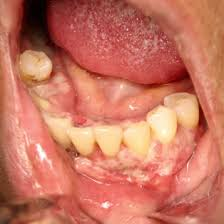
what is this
ulcerated gums from h capsulatum
h capsulatum can look like what other infection
pneumonia
how did howard carter contract h capsulautm?
1992 when examining a tomb
t/f h capsulatum can cause granulomas
true
how is h capsulatum identified?
enzyme immunoassay
who is the target of lobomycosis
dolphins
lobomycosis is a
dimorphic yeast
what is the most common lobomycosis fungi
paracoccidioides loboi
where is the preferred region of p loboi
tropical central/south america
p loboi is known as what
string of pearls
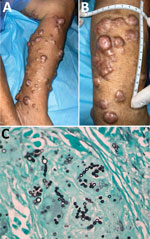
what
p loboi
how can humans contract lobomycoses
aquatic trauma
how long can you ahve lobomycoses
40+ years
t/f lobomycoses lesions are extremely painful with smelly discharge
false
what are not the 3 factors causing dandruff
skin skin contact
malassezia is a
basidiomycota yeast
what is the most common species of malassezia
m globosa
malassezia is identified by all of the following except
color of flakes
t/f malassezia will convert sebum triglycerate into fatty acids
false
t/f malassezia will convert sebum triglyceride into fatty acids
true
how do you treat the malassezia infection
selenium sulfate
how do you treat the excessive malassezia lipids?
sebum suppressions
how do you treat hyperproliferations
coal tar
how to not treat dandruff flakes?
coal tar
t/f malassezia can be opportunistic superficial
true
folliculitis
hair follicle infection
which speices of malassezia cannot cause pityariasis versicolor
m pachydermatis
who is the target of m pachydermatis
dogs