⚜️ Logical Fallacies & Cognitive Biases
 Call Kai
 Learn
Learn Practice Test
 Spaced Repetition
 Match
Match Flashcards
 Knowt Play
1/5

There's no tags or description
Looks like no tags are added yet.
Name | Mastery | Learn | Test | Matching | Spaced | Call with Kai | Chat |
|---|
No analytics yet
Send a link to your students to track their progress
6 Terms
In-Group Bias
We quickly feel loyalty to people we see as part of our group.
We often strengthen our connection to our group by distancing ourselves from people we see as outsiders
favor people in our own group and feel wary or dismissive toward those outside it
Confirmation Bias
confirms the beliefs you already hold and discarding opposing information
Perception Gap
habit of misjudging and exaggerating what people on the other side actually believe. We often assume their views are much more extreme than they really are.
Echo chambers: We’re increasingly surrounded by information that confirms what we already believe, while opposing views are quietly filtered out. Social media algorithms, news feeds, as well as both in-person and online communities reinforce our perspectives, making them feel self-evident and widely shared.
Extreme views are the loudest: When we do hear the “other side,” it’s often the loudest, most extreme version. Outrage drives clicks, shares, and airtime—so radical voices get amplified while more nuanced views are drowned out.
Moral Foundations Theory
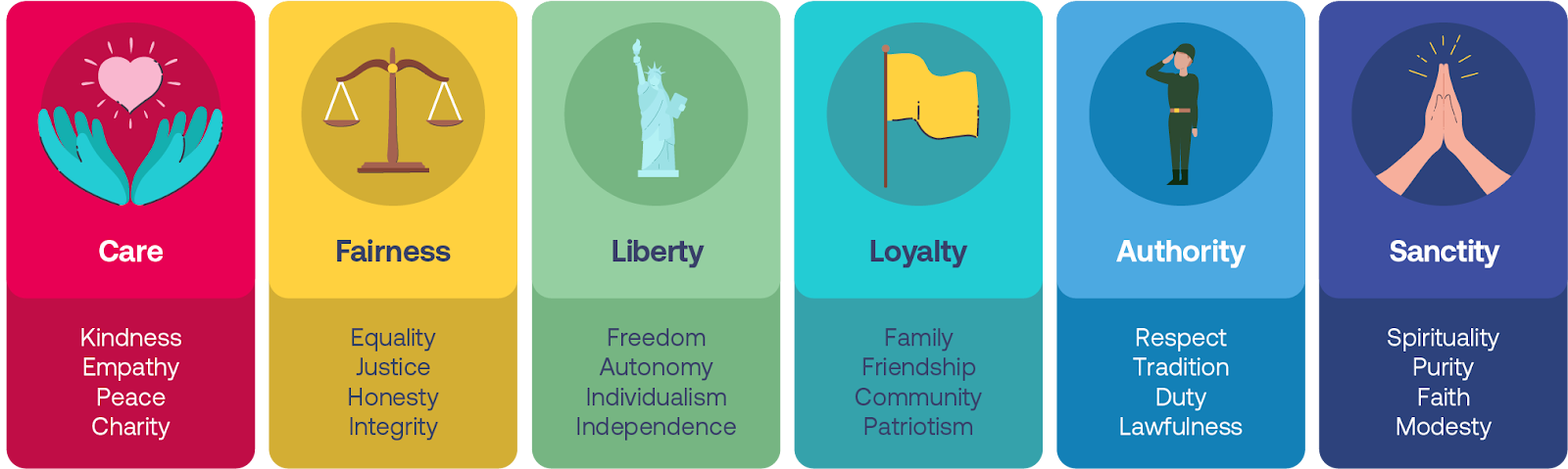
Moral judgements of care (protecting others from harm, compassion for the vulnerable), fairness (justice, equality, reciprocity, honesty, integrity), liberty (authonomy, personal freedom, desire to resist oppression), loyalty (group connections to family, community, nation, patriotism, selflessness, teamwork), authority (respect for traditions, laws, leaders, experts, elders), and sanctity (viewing certain things as pure and sacred and to feel moral concern when violated, including religion, national symbols, nature, human body) are shaped by the culture we’re raised in, our upbringing, our unique life experiences
Moral Empathy Gap
tendency to misunderstand or dismiss the moral values driving someone else’s beliefs, especially when those beliefs conflict with ours
Fundamental Attribution Error
blame others' actions on their character but attribute our own behaviors to situational factors