BIOS 3450 Post Exam 2
 Call Kai
 Learn
Learn Practice Test
 Spaced Repetition
 Match
Match Flashcards
 Knowt Play
1/301

There's no tags or description
Looks like no tags are added yet.
Name | Mastery | Learn | Test | Matching | Spaced | Call with Kai | Chat |
|---|
No analytics yet
Send a link to your students to track their progress
302 Terms
ligand
signaling molecule, binds to receptor
signaling
proteins and second messengers are __ molecules
amplification
binding of signlaing molecules to receptors ___ of signals via downstream processes
downstream process
binding of signaling molecules to receptors amplififcation of signals via ____
contact-dependent
a type of cell signaling requiring a membrane bound signal molecule on a signaling cell binding to a receptor on a target cell (cells are “touching”)
paracrine
a type of cell signaling where 1 cell secretes a molecule (local mediator) that acts on a second cell in close proximity
synaptic
a type of cell signaling that only occurs in neurons, where signal molecules (neurotransmitters) are sent from one nerve cell across the synapse (junction between nerve cells)
endocrine
a type of cell signaling where signal molecules (hormones) are sent to target cells far way via the bloodstream
gap junction signaling
a type of cell signaling where signal molecules are sent from a signaling cell to a target cell via gap junctions that connect the cells
autocrine
a type of cell signaling where the cell targets itself
autocrine
IL1 cytokines produced by monocytes binding to receptors on monocytes is an example of ___ signaling
gap junction
muscle cells sending Ca2+ through gap junctions to other muscle cells is an example of ____ signaling
quorum sensing
how bacteria determine if they have enough numbers to do certain things
high
bacteria’s Al synthase (Lux1) binds to the Lux R receptor leading to the expression of luciferase genes when bacteria are in ___ density
steroids
example of intracellular signal molecules
intracellular receptors
receptors taht are located inside of the cell
survive, grow + divide, differentiate, die
the options of pathways for cell signaling to cause
GPCRs, ICCR, ECRs
types of cell-surface receptors
serine/threonine kinases, tyrosine kinase
the two kinds of intracellular signaling molecules that cell surface receptors relay signals to
GTPase activating protein
negative regulator of GTPase, promotes conversion of active GTPAse-GTP to inactive GTPase-GDP
histadine kindases
intracellular signal molecules in bacteria
G-Protein coupled receptors (GPCRs)
proteins located on the cell surface that recognize extracellular substances and transmit signals across the cell membrane by activating guanine nucleotide-binding proteins (G protein) that are responsible for signal transduction inside the cell.
ion channel coupled receptors (ICCRs)
proteins comprised of a G protein-coupled receptor and a fused ion channel, engineered to couple channel gating to ligand binding
enzyme coupled receptors (ECRs)
a type of single-pass transmembrane protein that contains a ligand-binding site outside the cell and a catalytic unit inside the cell
conformation
ligands binding to receptors result in change in ____
alpha and gamma
proteins in G-protein complex that are membrane anchored
heterodimer
dimer made of two different proteins
homodimer
dimer made of two of the same proteins
adenylyl cyclase
enzymes that catalyze the production of cyclic adenosine monophosphate (cAMP) from adenosine triphosphate (ATP).
cyclic AMP (cAMP)
many GPCRs activate adenylyl cyclase leading to increased ___ productionc
calcium (Ca)
universal eurkaryotic intracellular messenger
activated PKC
controls cellular processes by phosphorylating target proteins to regulate cell proliferation, differentiation, apoptosis, and gene expression + migration
vision and olfaction systems
use GPCRs regulating c-GMP gated ion channels
vision systems
light —> activate G-proteins —> GMP phosphodiesterase activated —> GMP hydrolized —> cation channels close —> altered membrain potential —> brain signal
receptor tyrosine kinases (RTKs)
major class of ECRs
Ras
crucial genetic switch in many growth factor signaling pathways
RTKs, GPCRs
two receptor complexes that can activate overlapping signaling pathways with each other
primary culture
cells taken directly from an organism
cell line
cells that can be cultured indefinitely in vitro
fractionation
used to open up cells to get organelles
french press, sonicator
used to break open cells gently during fractionation, keeps organells in tact
glucose gradient, centrifuge
used to isolate organelles after splitting open cells
column chromatography
used to purify proteins
charge, size, affinity
ways to sort proteins during column chromatography
ion exchange chromatography
chromatography used to sort proteins by charge
gel-filtration chromatography
chromatography used to sort proteins by size
affinity chromatography
chromatography used to sort proteins by affinity to added reagent
primary cultures
require attachment, senescence after limited number of cell division, contact inhibited (grow as monolayers on culture dishes), differentiated cell types may require 3D structure support or “feeder” layer of cells
transformed (stem) cell lines
can grow in liquid suspension, can be cultured indefinitely, not contact-inhibited, form 3D mounds or balls, relatively undifferentiated
SDS (sodiumdodecyl sulfate)
detergent that denatures proteins and coats them with a negative cahrge
southern blot
gel electrophoresis used for sorting DNA treated with restriction enzyme by size
northern blot
gel electropheresis used for sorting single-stranded RNA by size
western blot
gel electrophoresis used to sort denatured proteins by size (happens after SDS PAGE)
immunoprecipitation
used to isolate proteins or specific cell types, a technique in which an antigen is isolated by binding to a specific antibody attached to a sedimentable matrix
mass spectrometry
used to separate ionized samples based on their mass-to-charge ratio and measuring their relative abundance
X-ray crystallography
determines the 3D atomic and molecular structure of crystalline proteins
PCR (polymerase chain reaction)
a laboratory technique for rapidly producing (amplifying) millions to billions of copies of a specific segment of DNA
Taq polymerase
used as DNA polymerase in PCR to synthesize DNA strands
gel electrophoresis (agarose)
used to separate DNA by size (not denatured with SDS)
recombinant DNA
a gene of interest is cloned and “pasted” into plasmid cleaved with restriction enzyme
reverse trasncriptase
an enzyme that converts RNA into DNA, used for making cDNA libraries
cDNA library
a collection of cloned DNA copies derived from the messenger RNAs (mRNAs) of a specific cell type at a particular time
sanger sequencing
a fast, cost-effective way of reading the sequence of small targeted regions of the genome.
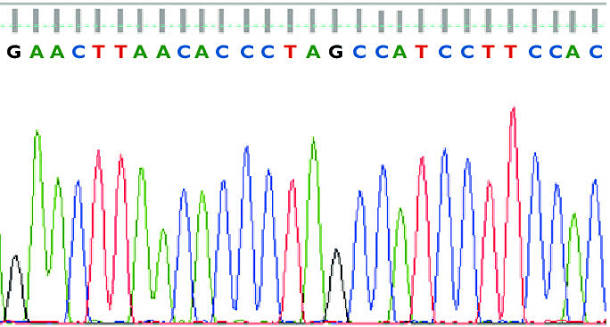
sanger, shotgun, high throughput, pyro
DNA sequencing methods
shotgun, high throughput, pyro
computational DNA sequencing methods
in situ hybridization
use labeled single-stranded DNA or RNA that binds to a complimentary sequences inside of fixed, dead cells to localize a sequence of DNA or RNA
CHIIP
used to look at hte genetic strucutre of DNA, shows DNA-protein interactions
RNA seq
quantifies RNA molecules in a sample, a method for sequencing an entire set of RNA molecules. This method involves isolating RNA molecules in the tissue or cell sample, copying those RNAs into DNA and then sequencing the resulting DNA molecules.
up regulated
toward the right of a volcano plot
down regulated
toward the left of a volcano plot
increased up regulation (significant change in regulation)
toward the top of a volcano plot
ish regulation (insignificant change in regulation)
grey points on volcano plot
DAPI
blue stain used to visualize nucleus
low energy wave
wave with long wavelength and low frequency
high energy wave
wave with short wavelength and high frequency
white light microsocopy
microscope that uses visible light to illuminate and image a specimen
bright field, dark filed, phase contrast(DIC)
types of white light microscopy
inverted microscope
type of microscope used for white light microsocpy on cells in culture dish
microtonne
used to slice tissue to make microscope slide specimens
cryostat
used to slice frozen tissue to make microsocope slide specimens
electron microscopy
electron beams interact with fixed specimen, higher resolution than brightfield
scanning electron microscopy (SEM)
electron beam scans teh surface of specimen, creates 3D sample
transmission electron microscopy (TEM)
electron beam passes directly through specimen, creates an image that reveals the internal structure and organization of the specimen
cryo electron microscopy (cryoEM)
specimen flash frozen in water, uses TEM to create image taht allows proteins and viruses to be visualized “as they exist in real life”, used for TM proteins
immunofluorescence
specific proteins are tagged so they can be seen under a microscope, proteins tagged with secondary antibodies that have fluorescent marker on them
antigen
antibody can be generated against
epitope
exact structure that an antibody recognizes
fluorescent molecules
absorb light when excited at one specific wavelength and emit it at another longer wavelength
fusion protein
fluorescent protein bound to a protein of interest
fluorescence resonance energy transfer (FRET)
tracks interactions between molecules in real time, when two tagged proteins interact they emit a specific light/signal
flow cytometry
allows detection of fluorescent molecules inside a cell, a technology that rapidly analyzes single cells or particles as they flow past single or multiple lasers while suspended in a buffered salt-based solution
actin, microtubels, intermediate filaments
cytoskeleton components
chemoattractants
what neutrophils use to direct movement to specific targets
rapid cytoskeletal rearragnements
allow neutrophils to puruse bacteria
formyl peptide receptors (FRPs)
allow neutrophils to detect bacterial N-formyl peptides
self-assembling subunits
cytoskeleton components are organized polarized epithelial cells made of _____
globular actin (G-actin)
type of actin, binds to ATP —> ATP slowly hydrolizes as it moves along the filament
treadmilling
the process of F-actin polymerizing at the + end and depolymerizing at the - end, which can lead to filament translocation
actin polymerization
ATP bound monomers attach to + end of the filament and ADP bound monomers detach from - end