Humans and the Microbial World - Ch1
 Call Kai
 Learn
Learn Practice Test
 Spaced Repetition
 Match
Match Flashcards
 Knowt Play
1/61

Earn XP
Description and Tags
microbiology, **need to add previous slides based on lecture
Name | Mastery | Learn | Test | Matching | Spaced | Call with Kai | Chat |
|---|
No analytics yet
Send a link to your students to track their progress
62 Terms
What’s microbiology?
study of life (aka the microbial world) too small to be seen by the unaided eye
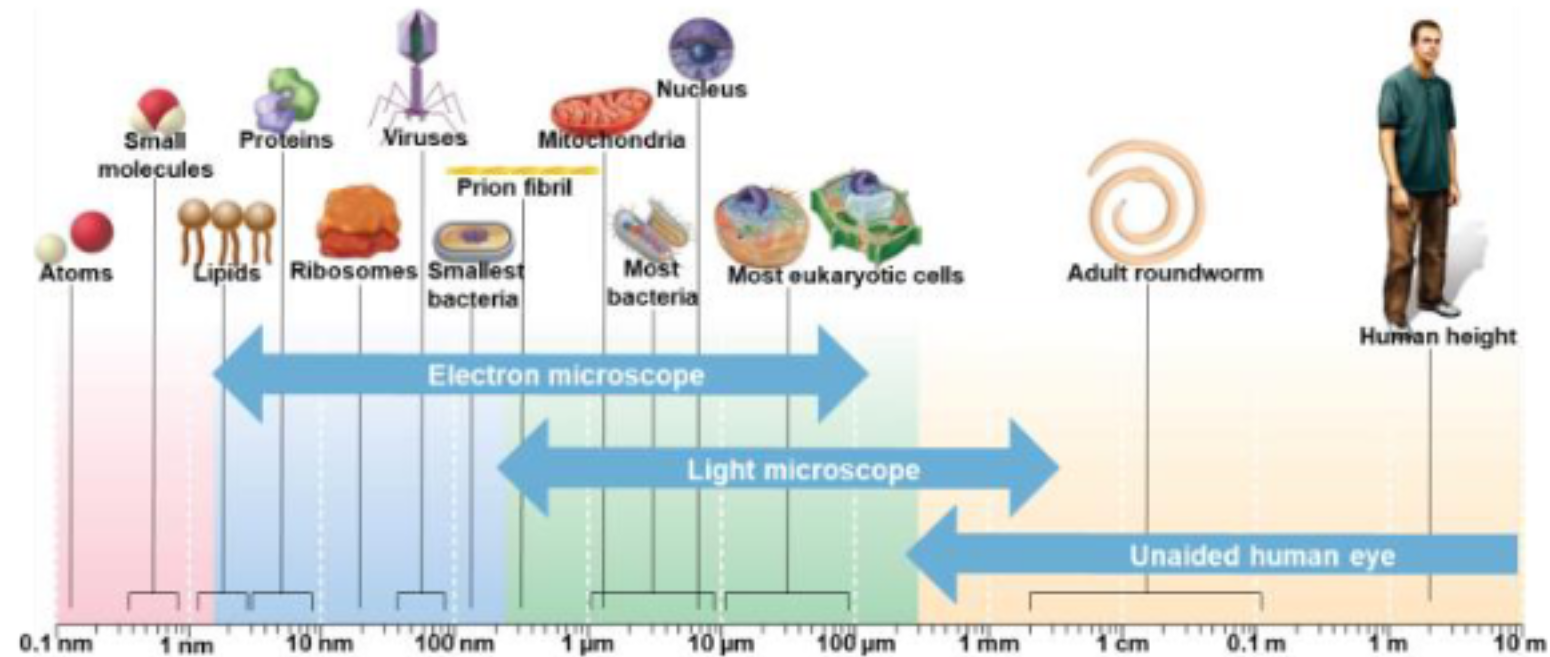
anything < 0.1mm requires microscopes to be seen
microorganisms
living cellular organisms that are a part of the microbial world, organisms too small to be seen with the naked eye
bacteria, archaea, eukarya
Bacteria/bacterium
unicellular prokaryotes
rigid cell wall contains peptidoglycan
moves by flagellum/flagella which are filamentous appendages that extend from the cell
single is bacterium
has many shapes and a specific species has a characteristic shape that it maintains (4 shapes)
utilizes usual sources that humans use for energy AND unusual sources like hydrogen sulfide (H2S) and being photosynthetic
its divided by binary fission: how it reproduces asexually by splitting into 2 identical daughter cells
Archaea/archaeon
unicellular prokaryotes that resemble bacteria, except are unique in that they:
has motile filamentous appendages that are structurally different than bacteria’s
has rigid cell walls that lack peptidoglycan
have characteristic/unique rRNA nucleotide sequences
can grow in extreme environments
similar to bacteria in that it:
shares some shapes and energy sources
divided by binary fission
Eukarya
eukaryotes which include:
fungi: group of eukaryotes that are unicellular (yeasts) or multicellular (molds)
algae: photosynthetic uni/multicellular eukaryotes
protozoa: unicellular eukaryotes that live in both aquatic and terrestrial habitats
helminths: parasitic worms
Microbe
refers to the general members (everything) of the microbial world
anything <0.1 mm
living (cellular): bacteria, protozoa, fungi, algae AND nonliving (acellular): prions, viroid, viruses
What’s a domain?
Highest level of biological classification
3 __ for all living things is: bacteria, archaea, and eukarya
subdivided into 2 groups of microorganisms: P and E depending on the cell they are made of
draw out the division of the microbial world
yep
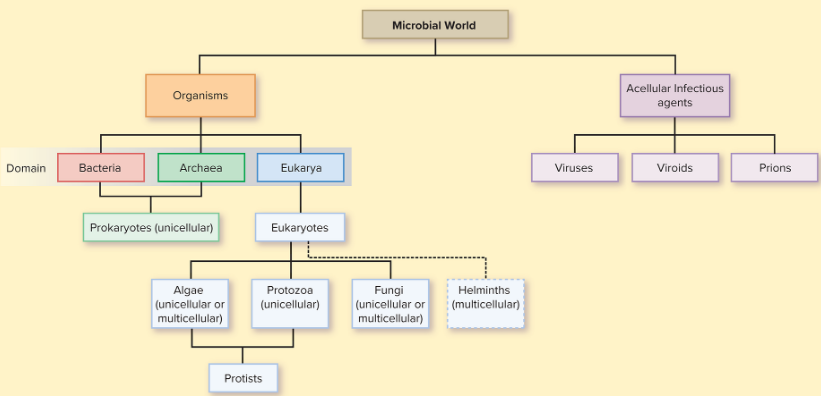
Prokaryote
single celled organism. the single cell is a prokaryotic cell; lacks membrane-bound organelles, no nucleus
pro: “prior to”
karyote: “nucleus”
includes the domains bacteria and archaea
eukaryote
organism composed of one or more eukaryotic cells: cell type known for having membrane-bound nucleus and organelles
eu “true”
karyote “nucleus”
includes the domain: eukarya
Anthoni van Leeuwenhoek
discovered/founder of the microbial world, microbiology born as a science in 1674, Dutch fabric merchant, made simple glass lenses to view fabric, used lens to study a drop of lake water; first glimpses of the microbial world thru a microscope

animalcules
anthoni van leeuwenhoek called microorganisms this, it means small animals because this is what he observed
A: ratchet bacterium
B: drawn out to denote its movement
G: spriochete
F: rods
Spontaneous Generation
abiogenesis, 1st proposed by Aristotle; thought life comes from non-living things, small animals and insects are so simple (simpler than humans) that they come from _ _
supporters: john needhan
detractors: francesco redi, lazarro spallanzani, louis pasteur, john tyndall
John Needham
English scientist and Catholic priest, supporter of SG proposed by Aristotle
what he did: boiled broths and then subsequently sealed with corks, said that it still produced microorganisms
the flaw: he didn’t boil it for long enough, he covered it after letting it cool down which allowed for air microbes to contaminate it, probably didn’t seal it well enough
Francesco Redi
Italian biologist and physician, disproved SG, rotting meat experiment, uncovered jars had maggots/flies on the meat, gauze-covered jars had maggots/flies on the gauze, covered jars had no maggots/flies
despite the evidence it took another 200 years for SG to be convincingly disproved
Lazarro Spallanzani
animal physiology and priest, disproved SG, Liquid Sterile, boiled broths longer, sealed the flasks by melting the necks, broths remained sterile
controversy that caused it to be dismissed: sealing prevented entry of “vital force” in the air necessary for spontaneous generation, the vf is oxygen
Louis Pasteur
father of modern microbiology, French chemist, disproved SG by developing the swan-necked flask, demonstrated that microorganisms are still present in the air, oxygen can go in and out even after many years, but the microbes can’t get in there; dust particles are too heavy and get trapped in the neck area, supported biogenesis; production of living things from existing things
was only contaminated when the flask was tilted allowing the microbes to come in contact with the broth
abiogenesis vs biogenesis
a (without) bio (life) genesis (to create) VS bio (life) genesis (to create)
production of living things from non-living things VS production of living things from other living things
Golden Age of Microbiology
disproving of SG led to this, 1854-1914, time of great interest in the study of microorganisms
discoveries: microorganisms can cause disease, microbes in the air were called contagions (specific ones caused specific diseases → germ theory of disease)
work on viruses began; discovery of electron microscope that let us see them
understanding of microbes led to control efforts to improve human health including vaccines (to prevent diseases), antibiotics (to treat infectious diseases), antimicrobials, modern sanitation
Sub disciplines of microbiology (abt 12)
bacteriology: study of bacteria
virology: study of viruses
mycology: study of fungi
parasitology: study of parasites
forensic microbiology (not fully accepted): utilization of microbiomes during forensic investigations, ex. identical twins, DNA is identical, but the microbes present on the body and in the body are compared → their microbiome
microbiomes reflect environments you interact with and DNA remains constant
epidemiology: study of infectious diseases/how diseases spread
biotechnology: use of microbiological and biochemical techniques to solve practical problems (often thru genetic engineering) EX: using microbes to make food
food microbiology: utilization of microbes to make food (dairy mbio; utilization of microbes to transform milk into different food products)
agricultural mbio: how microbes affect agriculture
environmental mbio: studies microbes in the environment and their effects including using microorganisms to clean up the environment
aquatic mbio: studies microbes in aquatic environments
microbial ecology: looks at how microbes interact with each other and their environment
genetic engineering
intro of genes into microbes → commercial products, before they couldn’t make that product but us inserting the gene with DNA let it make that product, engineering of DNA to give desired qualities which is done by changing DNA of microorganisms by inserting a gene into that microbe that makes them produce…
medically important products: insulin (to treat diabetes), vaccines, antibiotics, dietary amino acids
biological pesticides: bacillus thuringiensis BT toxin
pest/disease-resistant plants
industrial products: ethanol = biofuel (10% of standard gasoline is ethanol), solvents
Bacillus Thuringiensis
bacterium that normally lives in the soil, goes thru a process called endospore and produces the BT toxin protein, its toxic to the larvae form of a pest, these pests will feed on plants and will destroy them, if we produce a lot of this toxin and spray them → them ingesting it will degrade the larvae from inside out, it’s not toxic to any other organism other than the pest, it being a protein allows it to degrade in the environment easily, cooking will also denature/destroy the protein
why study microorganisms?
Impact on humans
Positive: contributions to ecosystem, we could not survive without microorganisms
Negative: can cause disease, disease causing microbes have killed more people than even been killed in war, incidental or used as weapons in bioterrorism attacks…and can spoil food/crops
Good models for study:
simpler organism: simpler than eukaryotes: only have a single copy of any gene, a prokaryote, it changes the trait of the whole organism when we change one gene
same as higher forms of life like:
1. metabolism; glycolysis, pathways of food breakdown
2. genetic properties; DNA, RNA, DNA-replication, transcription and translation
3. building blocks of macromolecules; nucleic acids, proteins, carbohydrates, lipids (fats)
“what is true of elephants is also true of bacteria, and bacteria are much easier to study” - Dr. Jacques Monod
Host-Microbe Interactions
All surfaces of the human body are populated by microorganisms: 500-1000 species of microbes in/on the body; outnumber cells in the body by 3:1
beneficial microbes that help protect us in and on the surface of plants, animals aka the microbiome/normal microbiota/normal flora
prevents diseases by competing with pathogens that are parasites causing damage to body tissues and leading to disease symptoms
pathogens are microbes that can cause disease
development of the immune system response
e coli lives in the colon/gut and aids in digestion
Microorganisms in the environment
microbes found in:
air that we breath (50-100 microbes per cubic foot)
soils (one gram of soil > 10 million microbes)
bodies of water (oceans, lakes)
deep in the earth’s crust → polar ice caps
Important for
nitrogen fixation: only carried out by prokaryotes; take nitrogen from the air and convert it to a form that living organisms can use
oxygen production through photosynthesis
building of proteins, dna
recycling of nutrients
decomposition of certain material
cellulose in the environment and in the digestive tracts of ruminants of cow, sheep, deer
nitrogen fixation
microorganisms participate in the recycling of nutrients
prokaryotes take N2 in the air → ammonia (NH3) → nitrate (NO3), converting them into usable forms that other organisms can use
this is bcuz
N2 is the most common gas in our atmosphere, but unusable by most life forms
nitrogen is important in nucleic acids and proteins
important in DNA/RNA and expression of them
therefore: we can’t survive without microorganisms
Applications of Microbiology: food production
food production (fermentation)
baking bread using yeast
fermentation of grains to produce beer
fermentation of milk by lactobacillus acidophilus (lactic acid bacteria that breaks down milk to create lactic acid → sour taste) → yogurt, cheeses, buttermilk
- probiotics are bacteria added to fermented milk products that are advertised as live organisms providing a health benefit
pickles, sauerkraut, soy sauce, coffee, chocolate, olives
Applications of Microbiology: bio
biodegradation: general breakdown of material by microorganisms, ex. when animals die, they decay and are broken down by microorganisms
bioremediation: use of selected/engineered microbes to degrade environmental pollutants (chemicals toxic to humans), cleaned the following using microbes
pesticides (PCBs, DDT), trichloroethylene, radioactive wastes, heavy metals
oil spills; marine bacteria and the gulf of mexico oil spill → microbes eat oil like food and produce CO2 and H2O which are harmless/not toxic/innocuous products
bacteria that will break it down will feed on that, microbes were already there and used to oil spill as a source of food and increased in numbers, they helped to clean up the gulf
biotechnology: use of microbiological and biochemical (using specific enzymes produced by microorganisms) techniques to solve practical problems
genetic engineering: intro of genes into microbes → commercial products (etc on other slide)
Microbes and Disease
Most microorganisms are not harmful
Some are pathogens; they can cause disease
infectious diseases: important to prevent/treat cuz they can spread
Past deadly diseases:
Influenza: killed more Americans than died in WWI, WWII, Korean, Vietnam, and Iraq wars combined (US population)
Black Plague: killed ~1/3 of population of Europe (~25 million individuals), Today <100 people die worldwide
Smallpox: killed ~10 mil deaths over 4,000 years, IMP: worldwide eradication: no reported cases since 1977
Reduction in diseases due to:
Modern sanitation: water contaminated by sewage does not give us disease BUT some developing countries are still affected by disease cuz they don’t have modern sanitation
Vaccination: great way to prevent infectious diseases, less likely to be affected cuz you’re already immune
Effective antimicrobial treatments
Present and Future challenges
Despite impressive progress, infectious diseases remain a threat
In U.S. ~750 mil infections/year, ~200k deaths, $$ tens of billions on healthcare
Emerging diseases continue to rise: they’re either brand new or have been around for a long time and were under control but they came back because of a change in the pathogens
Emerging Diseases
Newly Recognized
West Encephalitis (still ongoing)
transmitted through mosquitoes
COVID-19 (2019): coronavirus disease 2019. major wake up call
caused by SARS-CoV-2: severe acute respiratory syndrome coronavirus 2
Ebola virus (1970 > 2014-2016)
largest
Zika virus (2015)
Swine Flu (2009): viral disease deadly to pigs
SARS (2003) - originally found in bats and chickens
1990’s
Lyme Disease
Hemolytic Uremic syndrome (E. coli O157:H7)
Hantavirus pulmonary syndrome
1980’s
HIV
Hepatitis C
Mad Cow Disease
Re-emerging Diseases
not new but showing increased occurrence and wider distribution
can’t seem to get rid of in US:
pertussis (whooping cough)
measles (coming back)
multidrug resistant TB
and others around the world:
cholera
malaria
anthrax
Factors for rise of emerging diseases
changing lifestyles increase opportunities to spread
closer contact with animals (ex. hantavirus; smelling mice feces leads to lung infection)
evolution of infectious agents previously unable to infect humans (HIV/AIDS, SARS, Ebola Virus, TB)
they were zoonotic diseases that were formerly in animals and now they affect humans
increased contact with pathogens led to crossing of species barrier to humans
chronic diseases thought to be caused by environmental stressors may be caused by bacteria
ex. gastric/peptic ulcers caused by Helicobacter pylori (only bacteria that can inhabit the stomach, now known to cause GU)
when people have HP, it can destroy the lining of the stomach leading to ulcers and long term is stomach cancer
microbes possibly responsible for indigestion, Crohn’s disease, others
Factors for rise of re-emerging diseases
Re-emerging = resurgence of old diseases though to be defeated
vaccination becomes a victim of its own success
parents relaxed about childhood vaccination; it’s working so well that they stopped vaccinating → can spread more easily among children
lack of firsthand knowledge of dangers of diseases can lead people to fear vaccines more than the diseases
measles, mumps, whooping cough
pathogens have evolved/can become resistant to antimicrobial medications (ex. tuberculosis [disease caused by mycobacterium tuberculosis], malaria)
increased travel and immigration
many diseases eliminated from developed countries still exist in many parts of the world (malaria, cholera, plague, yellow fever)
changes in population
people are living much longer and are older, so they have weakened immune systems and are therefore more vulnerable to infections (ex. elderly, HIV/AIDS)
Members of Microbial World
major groups of the microbial world
present in all environments on earth
<1% of all microbial species can be grown and studied in lab
extra stuff: multicellular helminths; parasitic worms, huge and long, their eggs are microscopic
all living things classified into 3 domains: bacteria, archaea, eukarya; organisms in each domain share certain important properties
Microorganisms
two basic types of microorganisms (microbes)
Prokaryotes: no membrane bound organelles, no nucleus
Eukaryotes: membrane bound organelles, nucleus
Are foundation for all life on Earth - all life depends on their activities
Includes:
Organisms
bacteria, archaea, fungi, protozoa, algae, helminths
Acellular infectious agents
viruses, viroids, prions
Sizes in the microbial world
Tremendous range in size
smallest virus ~1/1milnth size of largest eukaryotic cell
largest bacterium ~600 micrometer x 80 micrometer - visible to the naked eye bcuz its almost 1meter (0.6 micrometer)
Scientific Names
Binomial system of nomenclature
Two word naming system
First = genus
always capitalized (Escherichia → Theodor Escherich, who discovered bacterium)
groups of microbes are often informally referred to by resemblances of their genus, and not italicized (Staphylococcus → staphylococci)
Second - specific epithet/species
not capitalized (coli)
strain: variations that occur in species, but not enough to separate them, and noted of offspring when genetic difference is important; E. coli B, E. coli K12
Abbreviated: E. coli
full name always italicized or underlined
names derived from
discoverer, location, shape/arrangement of bacteria, color of bacterial growth
Staphylococcus Aureus
genus:
staphylo: bunch of grapes → desc. its growth
coccus: berry → desc. its shape (spherical cell)
species:
aureus: golden → desc. its color on nutrient agar plate
shape of bacteria and archaea
Coccus: spherical that may be flattened or slightly oval on one side
Rod or bacillus: rod or cylinder-shaped cell
if short enough to be confused with coccus; “coccobacillus” NOT genus Bacillus even though they’re rod shaped as well
Vibrio: short, curved rod
Spirillum: a curved rod long enough to be spiral-shaped
Spirochete: long, helical-shaped cell with flexible cell wall and unique mechanism of motility

pleomorphic
when a bacterium characteristically varies in their shape, usually in cells that don’t have a cell wall
pleo: many, morphic: shape
binary fission
bacteria and archaea divide by this, how it reproduces asexually by enlarging and by splitting into 2 identical daughter cells, forms characteristic bacterial grouping/arrangements depending on if they divide on:
One Plane
pairs called diplo cocci: cocci that remain in 2’s, characteristic of Neisseria gonorrhoeae
chains called strepto cocci: characteristic of Strepto coccus (twisted chain)
Perpendicular Plane 2-3 planes
packets → cubical, categorized by
Sarcina: packet of 8
tetrad: packet of 4, characteristic of Micrococcus
Random/several planes
clusters called staphylo, characteristic of Staphylo coccus (bunch of grapes)
Rods
rod shaped bacteria can be grouped as well dependent on their attachment
single bacillus: separate
as some bacteria have tendency to separate during binary fission, like E. coli
diplo bacilli: two rods attached to each other
strepto bacilli: a chain of rat shaped cells
genus: Streptobacillus
Fungi/fungus
diverse group of eukaryotes that are unicellular (yeasts) or multicellular (molds)
hyphae/hypha: microscopic filament of mold that branches and twists to form mycelium
mycelium: what is seen on food mold, alongside what’ll become →
conidia: spores, microscopic reproductive forms, spores: reproductive unit capable of giving rise to a new individual without sx fusion
easily airborne; how they spread so easily
some fungi make macroscopic structures known as mushrooms
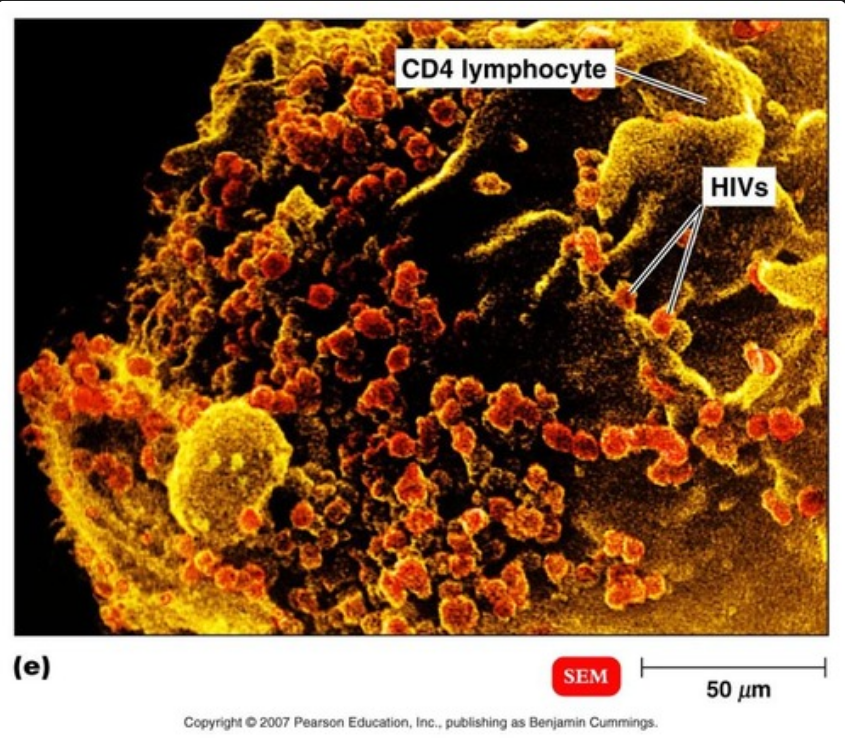
HIV
human immunodeficiency virus type 1; causes AIDs, originally found in chimpanzees and primates, HIV on the surface of a CD4 cell
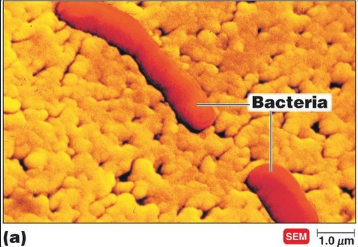
haemophilus influenzae
bacterium
genus: haemo (blood) philus (loving)
requires blood components for growth
species: influenza, as this bacterium was mistakenly thought to cause the disease; actually caused by a virus
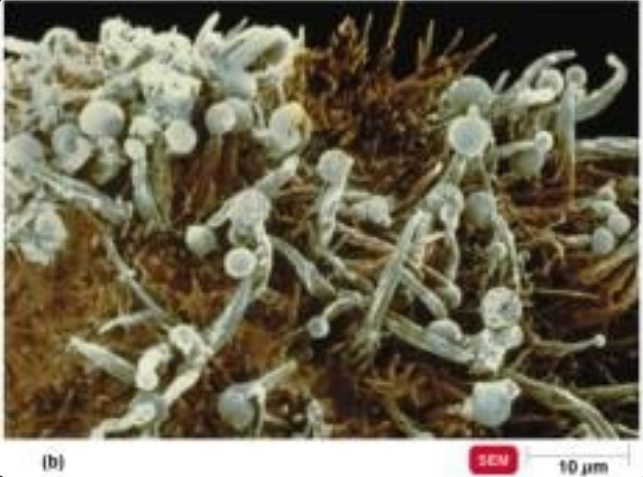
red mold
fungi, mold that grows on bread
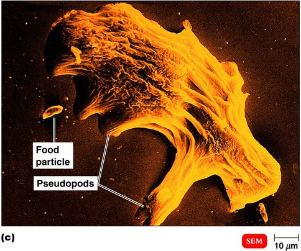
Amoeba
a protozoan
volvox
very common algae

Saccharomyces cereviseae
fungus
genus: saccharo (sugar) myces (fungus)
species: cereviseae (beer)
→ fungi/yeast is used to make beer
Shigella dystenteriae
bacterium
genus: honors Kiyoshi Shiga (one who discovered the bacterium)
species: derived from “dysentery” → mucus/blood diarrhea disease caused by bacterium
Protists
a eukaryotic organism other than a plant, animal, or fungus that can be uni/multicellular; algae and protozoa are referred to as this
Algae/alga
photosynthetic uni/multicellular eukaryotes
photosynthesis occur in chloroplast (chlorophyll-containing organelle)
found near surface of salt/fresh water, or moist terrestrial habitats
rigid cell wall that is chemically different from bacteria and archaea
also move by flagella that is structurally complex and unrelated to prokaryotes
Protozoa/zoan
unicelluar eukaryotes that live in both aquatic and terrestrial habitats
complex organisms that are much larger than prokaryotes
lack rigid cell wall
motile and ingest organic material as food sources
Helminths
parasitic worms that live at the expense of a host
adult worms are macroscopic
considered part of microbial world bcuz of their microscopic larval forms and eggs → diagnosis of diseases
includes roundworms, tapeworms, flukes
Prion
acellular infectious agent consisting only of protein
misfolded version of protein that cause other normal proteins to fold upon contact
bind to form fibrils: thread-life structures that group together/congregate in cells
eventually kills the cells
forms spaces in affected tissue
cause spongiform encephalopathies; named after sponge-like appearance of affected brain tissue
encephalo: brain
patho: disease
most well known: bovine spongiform encephalopathy (BSE) or Mad Cow Disease
Viroid
acellular infectious agent consisting only of RNA
Virus
acellular infectious agent consisting of nucleic acid surrounded by a protein coat
requires a host cell: living cell a __infects, in order to duplicate
all forms of life can be infected by a __
endospores
discovered by Ferdinand Cohn who was a German botanist
a survival form that some bacteria make when conditions become harsh
its heat resistant cuz it has a very tough protective structure, so it can survive things that would normally kill a bacterial cell such as
high heat, drying out, some chemicals, radiation
its not a NEW bacterium; its a bacterial cell that’s broken down leaving an endospore and then when conditions become normal it can germinate and become an active/normal bacterial cell again
microbiome
beneficial microorganisms permanently residing in our body/total genetic content of microbial community
<1% can be grown in lab, 99% identified only through their genetic sequence
aka normal microbiota/normal flora
prevents disease by competing for residency with pathogens
composition of this can affect brain chemistry and behavior alongside weight changes
helps with developing the immune system response
keeps our immune system on alert
early exposure lessens likelihood of allergies, asthma, etc.
helps in digestion; E coli
all human body surfaces populated with microorganisms
500-1000 species of microbes in/out of body
outnumber body cells 3:1
cyanobacteria
microorganism responsible for most of the oxygen production
found in the surfaces of our oceans
cellulose
microorganisms are important as they aid in decomposition of certain material such as __: an important component of plants
humans and other animals cant digest it
microorganisms in both the environment and guts of animals do
why leaves and fallen trees do not pile up in the environments