6.3.1 Ecosystems
 Call Kai
 Learn
Learn Practice Test
 Spaced Repetition
 Match
Match Flashcards
 Knowt Play
1/14

There's no tags or description
Looks like no tags are added yet.
Name | Mastery | Learn | Test | Matching | Spaced | Call with Kai | Chat |
|---|
No analytics yet
Send a link to your students to track their progress
15 Terms
What is an ecosystem
Definition: A relatively self contained system including all the living organisms and the environment, interacting with each other
Ecosystems are dynamic - as they change
3 types of change that affect population size
Cyclic changes
Directional changes
Unpredictable/ Erratic Changes
What are cyclic changes
The changes repeat themselves in a rhythm (e.g. predator-prey)
What are directional changes
Changes go in one direction. Certain variables continue to increase or decrease
What are Unpredictable/Erratic changes
No rhythm and no constant direction (e.g. hurricanes and wildfires)
What are Biotic factors
Factors that involve other living organisms e.g.
Paratism
Mutualism
What are abiotic factors
Factors that involve non-living components of the environment e.g.
Edaphic Factors (factors relating to the soil)
Atmospheric humidity
Availability of inorganic ions
Water supply
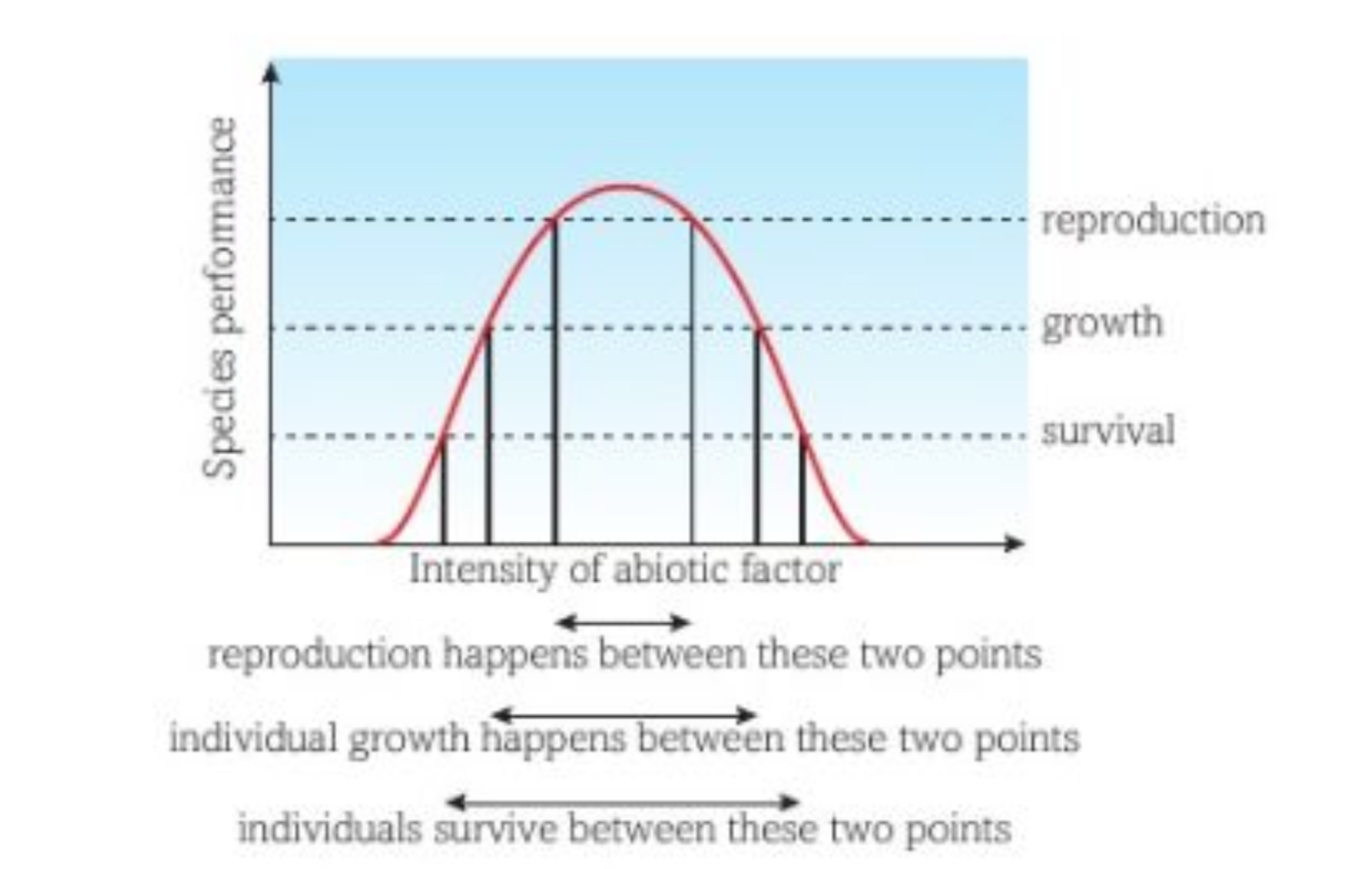
what is a tolerance curve
A graphical representation to show how an organism’s survival, growth or reproductive success is affected by changes in specific environmental factors
Some abiotic factors can be lethal at one extreme (e.g. toxicity and pollutants) which the graph will show
On a tolerance curve, the organisms will survive, grow and reproduce in a much more broad range
What are the components of an ecosystem
Habitats: the place where an organisms lives
Population: all of the organisms of one species, who live in the same place at the same time and breed together
Community: all the populations of different species, who live in the same place, at the same time, and who interact with each other
Niche: the role of each species in an ecosystem
How is biomass transferred
How to calculate dry biomass
Collect all the organisms and put them in an oven at 80 degrees celcius to evaporate all the water
Check the mass periodically. Once the mass stops decreasing all the water had been removed. Record the mass once it stops changing
This method is destructive to the ecosystem, so ecology
How much biomass do organisms take in and why
Organisms convert 10% of biomass in their food to their own organic matter because:
Not eating all of the biomass of an organism
Some energy being transferred to the environment (e.g. metabolic heat from respiration and movement)
Some parts of the organism are eaten but are indigestible
Some energy is lost in excretory materials e.g. urine
How do humans manipulate biomass transfers
Agriculture manipulates the environment in order to increase the efficiency of the biomass transfers at each trophic level
Plants and animals are provided with abiotic factors they need to survive
Competition from other species is removed (e.g. weed killers)
The threat of predators is removed (e.g. pesticides)
Only very short food chains are created (two or three trophic levels)
How is primary productivity increased
Manipulating light levels
Irrigating. Roos and producing drought-resistant strains
Manipulating temperature by growing plans in greenhouses
Crop rotation increases nutrient levels
Use of fertilisers
Use of pesticides and producing pest-resistant strains
Use of fungicides
How is secondary productivity increased
Harvest animals just before adulthood
Selective breeding
Treating animals with antibiotics
Restricting movement by supplying animals directly with food
Control body temperature by keeping them indoors
How can succession be deflected
Deflected succession: When succession is stopped or interfered with (by human activity)
E.g. farmers adding fertilisers and using herbicides
Plagioclimax: The resultant sub climax community that results when an area is held in a particular stage of succession
Deflected succession can make it hard to decide if an area warrants preservation or conservation