neural control of contraction
 Call Kai
 Learn
Learn Practice Test
 Spaced Repetition
 Match
Match Flashcards
 Knowt Play
1/59

There's no tags or description
Looks like no tags are added yet.
Name | Mastery | Learn | Test | Matching | Spaced | Call with Kai | Chat |
|---|
No analytics yet
Send a link to your students to track their progress
60 Terms
where are UMNs located?
CNS
where are LMNs located?
PNS
where do UMNs originate & project to?
originate in the cerebal cortex & project to the brainstem & spinal cord
where do LMNs originate & project to?
originate in the brainstem (cranial nerves) & project to anterior gray matter of the spinal cord (anterior horn cells)
areas that produce fine motor movements have a ___________ (smaller/larger) representation in the primary motor cortex & require a ___________ (lower/higher) level of dexterity
larger representation; require a higher level of dexterity
primary motor cortex (M1) plays a large role in the generation of _________________
motor commands
where do motor cortex neurons project?
motor neurons innervating muscles
interdigitation
neurons to a single muscle are widely distributed & interspersed with neurons supplying other nearby muscles
anterior horn cells
large motor neuron located in the front grey matter of the spinal cord that sends signals to control voluntary skeletal muscles
interneurons
receive information from the brain, process it, & send signals to motor neurons or target regions to regulate body functions & maintain homeostasis
motor unit
a single alpha motor neuron & all the muscle fibers it innervates
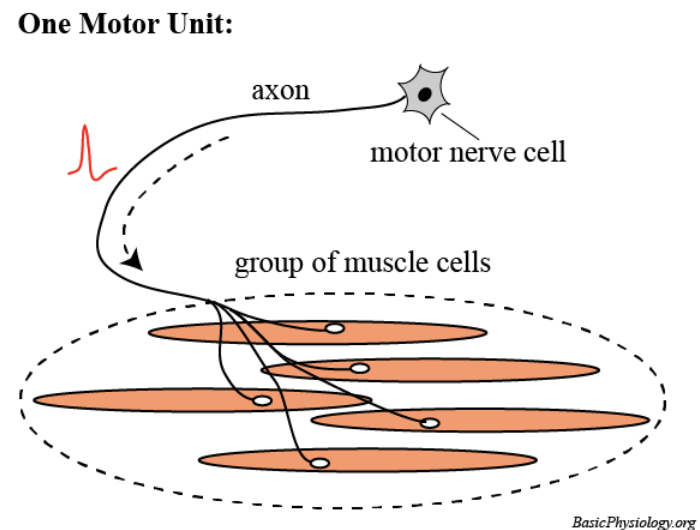
all-or-none principle
an AP generated by a motor neuron affects all the muscle fibers it innervates
innervation ratio
number of muscle fibers innervated by a single motor neuron
innervation ratio
a single motor neuron & the amount of muscle fibers it innervates
what types of muscles have small innervation ratios?
muscles that produce fine motor movements (ie: eye, hand, mouth)
what types of muscles have large innervation ratios?
muscles that produce gross movements / force (ie: quads, gastroc)
small (slow) motor units
contain slow oxidative muscle fibers
what types of events utilize small motor units?
long endurance events (ie marathons)
medium motor units
contain fast fatigue-resistant muscle fibers
what types of events utilize medium motor units?
medium-distance running (ie 800m)
large motor units
contain fast fatiguable muscle fibers
what types of events utilize large motor units?
short distance explosive running (ie: sprinting)
characteristics of small motor units
smaller cell bodies
low IR
lower twitch force
longer time to peak force
slower to fatigue
characteristics of large motor units
larger cell bodies
higher IR
greater twitch force
shorter time to peak force
faster to fatigue
as contraction force increases, firing frequency ____________ (decreases/increases) & # of motor units recruited ____________ (decreases/increases)
firing frequency increases & # of motor units recruited increases
smaller cell bodies have a decreased area & a ____________ resistance (decreased/increased)
↓ area, ↑ resistance; EPSP is larger & reaches threshold sooner, resulting in an AP
larger cell bodies have a increased area & a ____________ resistance (decreased/increased)
↑ area, ↓ resistance; EPSP is smaller & takes longer to reach threshold for an AP
does it take more or less of a stimulus to reach threshold in larger neurons?
more stimulus to reach threshold in larger neurons
sequence of events for force production
UMNs create the drive to increase force
LMNs increase firing rate & recruit motor units (smaller → larger)
what sensation does the DCML control?
pressure & touch
what sensation does the ALS control?
pain & temperature
divergence of sensory signals
information from a single neuron spreads to multiple other neurons
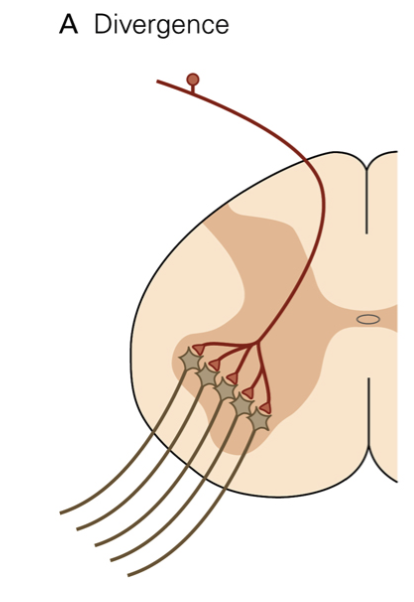
example of neural divergence
touch a hot surface → pain & thermal sensory signals enter the spinal cord & diverge across multiple neural pathways → rather than causing a single muscle twitch, that single stimulus activates multiple muscle groups at once (flexing your elbow to pull away, engaging shoulder muscles, & adjusting posture to lean back)
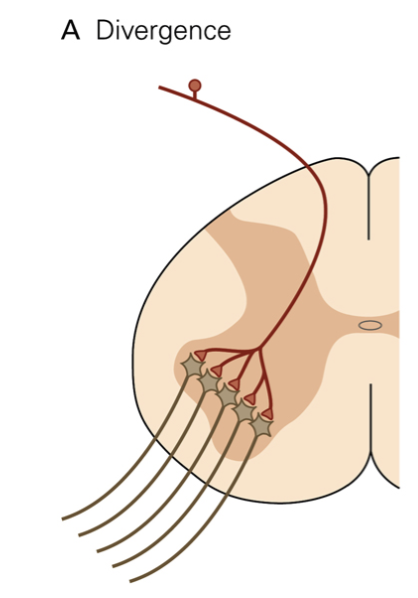
convergence of sensory signals
sensory information from multiple neurons come together to one neuron
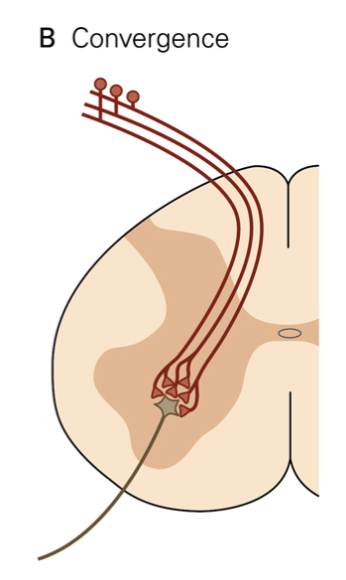
example of neural convergence
to stay upright & stable, the brain combines signals from three distinct sensory systems, the visual system, the vestibular system & the somatosensory/proprioceptive system
what is the main goal of neural convergence?
fine tune movement
what is the role of spinal reflexes?
to protect tissue, maintain posture & improve movement efficiency
segmental stretch reflex
a fast, local reflex confined to a single spinal cord segment that uses muscle spindles to automatically contract a stretched muscle & maintain its length

example of a segmental stretch reflex
knee tapping reflex

multi-segment reflexes
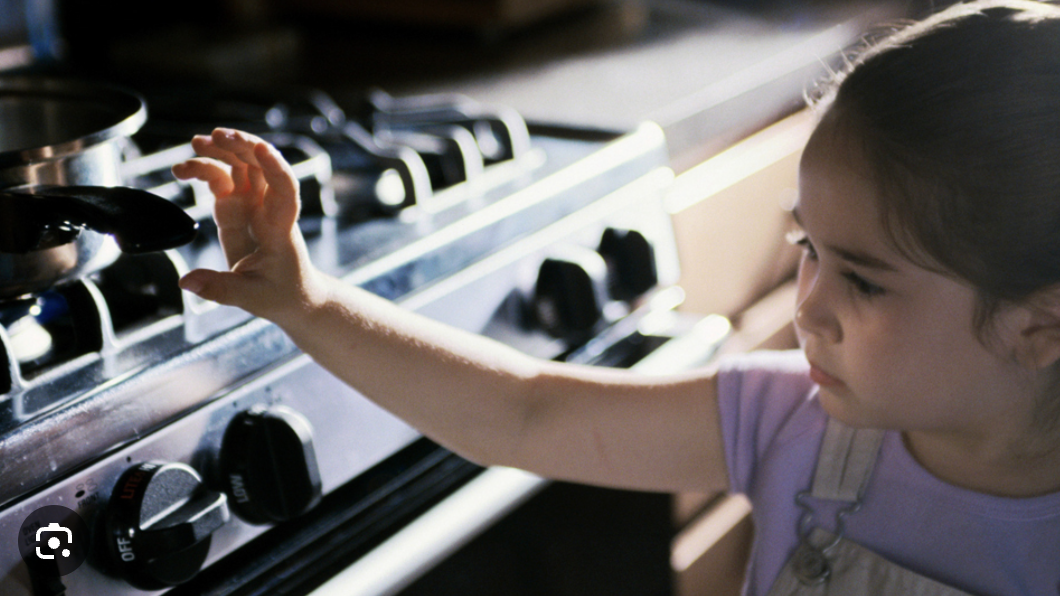
a broader reflex that uses divergent pathways to spread sensory signals across multiple spinal levels, coordinating actions across several muscle groups & joints simultaneously

example of a multi-segment reflex
touching a hot stove
long-loop reflexes
a flexible reflex that loops up through the motor cortex before returning to the spinal cord, allowing for adaptable postural control & real-time load adjustments during movement
where does the sensory input for come from tendon reflexes?
muscle spindles
sensory information from muscle spindles help facilitate muscle force _____________
stabilization
where are muscle spindles located?
embedded within the muscle & arranged parallel to the skeletal muscle fibers
skeletal muscle = extrafusal fiber
spindle = intrafusal fiber
muscle spindles detect _____________ & _____________
muscle length (static)
rate of change of muscle length (dynamic)
what do nuclear chain fibers detect? (muscle spindles)
static length

what do static nuclear bag fibers detect? (muscle spindles)
static length

what do dynamic nuclear bag fibers detect? (muscle spindles)
rate of change of muscle length

Ia afferent nerves of muscle spindles
large primary sensory nerves that receive input from all intrafusal fibers (bag & chain) to provide feedback on static length & dynamic velocity
IIa afferent nerves of muscle spindles
secondary sensory nerves that receive input from static bag & chain fibers to provide feedback strictly on static length (not velocity)
alpha motor neurons
LMNs that synapse directly onto extrafusal skeletal muscle fibers to drive muscle contraction & force generation
gamma motor neurons
motor neurons that innervate the contractile ends of intrafusal spindle fibers, adjusting spindle tension to maintain length sensitivity during active contraction
alpha-gamma coactivation
during physical activation, alpha & gamma motor neurons are activated simultaneously, which facilitates the spindle’s sensitivity to muscle length during activity
static & dynamic activity of the fusimotor system is dependent on what?
the task
GTOs
consist of strands of collagen fibers interwoven with type Ib sensory nerve fibers in serial arrangement
autogenic inhibition
too much force causes the GTO to cause an inhibitory effect
how does autogenic inhibition happen?
↑ muscle tension = GTO activation → Ib afferent signal to spinal cord → Ib afferent synapses on Ib interneuron → Ib interneuron inhibits the motor neuron, reducing tension in the same muscle
physiological basis of stretch reflex

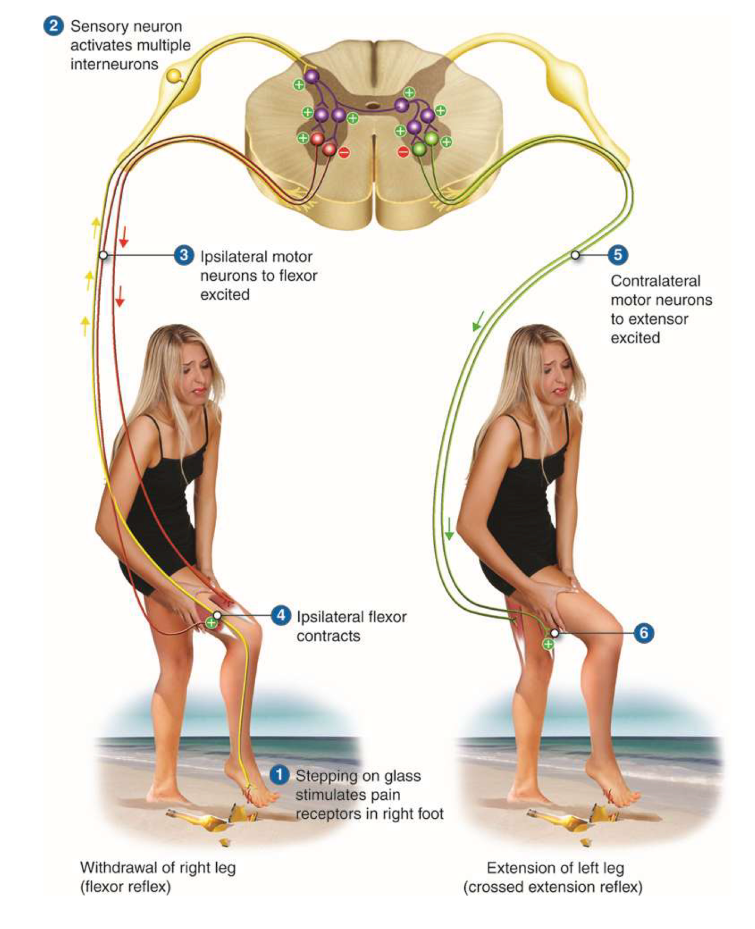
crossed extensor reflex
occurs when a person has a painful stimulus when the foot is on the ground
response: flexion in ipsilateral LE with extension of contralateral LE