PathoPharm Basic Concepts of Pathophysiology
 Call Kai
 Learn
Learn Practice Test
 Spaced Repetition
 Match
Match Flashcards
 Knowt Play
1/18

There's no tags or description
Looks like no tags are added yet.
Name | Mastery | Learn | Test | Matching | Spaced | Call with Kai | Chat |
|---|
No analytics yet
Send a link to your students to track their progress
19 Terms
Physiology vs. Pathophysiology
Physiology
study of the normal functions of the body
Pathophysiology
structural and functional changes in cells, tissue, and organs of the body
We can’t diagnose so why do we study pathophysiology?
clinical manifestations
medications work
side effects
complications
nursing interventions work
how to communicate with the team
Health vs. Disease
Health
WHO “state of physical, mental, and social well-being and not merely the absence of disease and infirmary
varies based on
age, genetics, gender, environment, social factors
Disease
no longer function normally
varies in severity in length
acute or chronic
Language of Disease
Insidious- gradual, less notable onset- easily overlooked
Exacerbation- acute worsening
Remission- signs and symptoms may lessen for period but disease is still present
Prognosis- Likelihood of full recovery or retaining previous function
Mortality rate- death rate from a particular disease
Morbidity- disease rates in a population OR suffering from a disease or medical condition
Comorbidity- Presence of one or more additional disorders cooccuring with a primary disease or disorder. Ex. Coronary Artery Disease+ Diabetes mellitus II
Complication- A pathological process or event occurring during a disease that is not an essential part of the disease; it may result from the disease or from independent causes. Ex. pneumonia after hip surgery
Idiopathic- we don’t know exactly what causes it
IDK- Factors: Risk Factors
Etiology- study of disease causation. disease can be caused by infectious agents, chemicals
Pathogenesis- confused with etiology. step by step of how the disease develops. ex. etiology is a bacteria causes a UTI. Pathogenesis is how bacteria effects epithelial lining of urethra and body’s subsequent inflammatory response causing s/s of a UTI
Language of Disease pt. 2
Congenital- present at birth (deafness)
hereditary- transmitted across generations
genetic- caused by abnormalities in genes (down syndrome)
Inflammatory- triggered by body defenses (lupus erythematosus)
Degenerative- caused by deterioration (osteoarthritis)
metabolic- problem with biochemical processes
neoplastic- uncontrolled proliferation (cancer)
Sign
objective, measurable
blisters, temperature, cough
Symptom
subjective, patient reported
itching, sweating, sore throat, SOB
Cellular Adaptation, Injury and Death
to try and prevent injury and death, developed mechanisms of cellular adaptation
Proliferation
normal: hyperplasia, hypertrophy
can be abnormal: neoplasia (abnormal growth)
should cease when stimulus is removed
MORE GETTING BIGGER
Differentiation
normal process
development of cells to their intended function
Blood cells form from immature cells
STEM CELL
Cellular Adaptation
normal cells
atrophy
hypertrophy
hyperplasia
metaplasia: more cells and layering atop each other
dysplasia: lots of cells and NOT GOOD; skin cancer
Cell Injury
reversible to a point
causes
physical, chemical, biological, deficiencies, free radicals
lack of oxygen, lack of blood flow
Cant repair; cell death
Hypoxia (not enough o2 to tissues), Hypoxemia (not enough o2 in blood stream)- Major causes of cell death
Hypoxemia absence of enough oxygen in blood to sustain bodily function
Ischemia decreased blood supply to an organ
Cell death
Apoptosis
normal, programmed
shrink down, phagocytosis
Necrosis
premature death, Abnormal, Due to Injury
rupture release byproducts of death into interstitial spaces and trigger inflammation
swell and burst
Genetic and Congenital Disorders
Genes
segments of DNA found on chromosomes that carry info for p’rotein production and are responsible for inheritance of specific traits
recipes
set of instructions to produce a protein, say which protein to make and how to make it.
Control protein-making activity by saying when to make it and how
Genetics
study of genes and role in transmitting traits from one gen to next
friends share genes
Genomics
Study of collection of an individual's genes (the genome)
The interaction of those genes with one another and with environmental factors
Single gene trait and disorders
When one gene controls the expression of a specific structure, protein, or function it is referred to as a single-gene trait
Alleles
• Variation of a gene at a specific location
• Two alleles together control how that gene is expressed.
• Alleles are paired with chromosomes
• We inherit one chromosome from each parent.
• The 'specific location' is referred to as the locus.

Genetics Terms
Dominant
Expressed whether 2 gene alleles are identical (homozygous) or different (heterozygous).
Recessive
Expressed only when both gene alleles for the trait are identical (homozygous)
Genotype
The genetic constitution (specific allele makeup) of a cell, an organism, or an individual
A list of inherited instructions that may or may not have an observable effect on the organism
Phenotype
The physical and behavioral characteristics of an organism
In most cases, both genes and environment contribute
More than one genotype may have the same phenotype.
Some brown eyed people are carriers of the code for blue eyes, and other brown-eyed people are not.
•geno typically, these two types of brown-eyed people are the same, but phenotypically they are different
Expressivity and Penetrance
Expressivity
• The degree of trait expression a person has when a dominant gene is present
• Expression affects phenotype and can range from mild to severe.
• Personal issue (rather than a population issue).
• Variable individual expression
• For example: Eye color (amount of melanin), lactose intolerance (amount of lactase)
Penetrance
• How many who have it show it
Represents the ability of a gene to express its function.
• How often, within a population, a gene is expressed when present.
• Calculated by examining a population of people known to have the gene mutation = % of people expressing the gene (penetrant)
• Penetrant/Gene carriers (penetrant as well as normal individuals with the gene)
Sex Linked Inheritance
• If a gene is found on the X or Y chromosome, it is said to be a sex-linked trait
• It is a trait whose presence or absence is linked to an organism's gender
• Because the gene controlling the trait is located on the sex chromosome, sex linkage is responsible for the gender of the individual
Hemophilia
• A medical condition that severely reduces the ability of blood to clot, resulting in severe bleeding even from minor injuries
• This condition is typically caused by a hereditary lack of the coagulation factor VIII
Queen Victoria
Chromosomal & Multifactorial Inheritance
Chromosomal Disorders
• Any change in the normal structure or number of chromosomes, often resulting in physical or mental abnormalities.
• Examples?
• Any change in the normal structure or number of chromosomes, often resulting in physical or mental abnormalities
• Examples:
• Down Syndrome or Trisomy 21
• Turner Syndrome
• Klinefelter Syndrome
Multifactorial Inheritance Disorders
• Associated with effects of multiple genes in combination with lifestyle and environmental factors.
• Associated with effects of multiple genes in combination with lifestyle and environmental factors
• Examples: heart disease & diabetes
Down Syndrome
• 3 Types
• Trisomy 21 (nondisjunction) accounts for 95% of cases
• ~50% of children born have a cardiac defect (Atrial Septal
Defect is most common).
• ~15% of children have hypothyroidism.
• Translocation accounts for about 4%
• Mosaicism accounts for about 1% (NDSS, 2014).
All are associated with:
• Varying levels of intellectual disability (typically mild to moderate)
• Characteristic facies: slanting eyes, small chin, round face, flat nasal bridge, abnormal outer ears
• Hypotonia in infancy

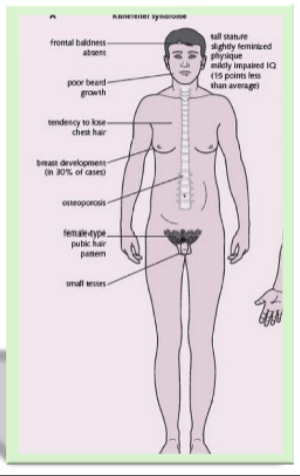
Klinefelter syndrome
• Abnormal testicular development accompanied by the presence of one or more extra X chromosomes more than the normal male XY complement.
• Most males with Klinefelter syndrome have one extra X chromosome, resulting from nondisjunction during meiotic division in one of the parents (a cell division error).
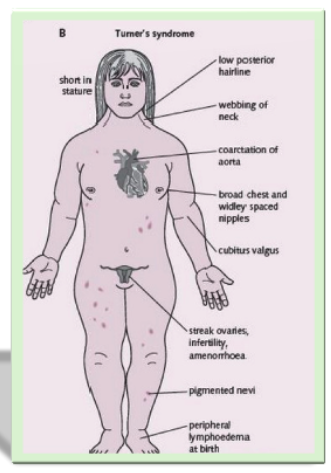
Turner syndrome
• An absence of all or part of the X chromosome.
• Characteristically, the female is short in stature, but her body proportions are normal.
• Variations in syndrome with abnormalities
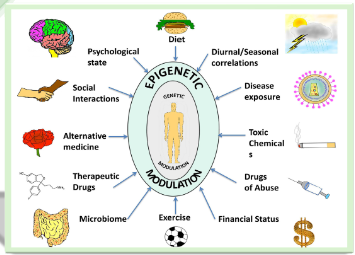
Environmental Factors
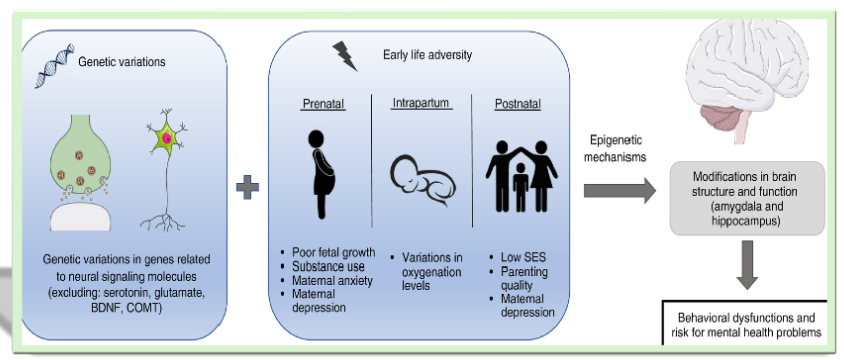
Early Environmental Influences on Children's Brain Structure and Function