Chapter 2.1: Chemical Components of Cells - BMEN 240
 Call Kai
 Learn
Learn Practice Test
 Spaced Repetition
 Match
Match Flashcards
 Knowt Play
1/31

There's no tags or description
Looks like no tags are added yet.
Name | Mastery | Learn | Test | Matching | Spaced | Call with Kai | Chat |
|---|
No analytics yet
Send a link to your students to track their progress
32 Terms
Friedrich Wöhler (1828)
Synthesized urea artificially from inorganic materials, proving organic compounds do not require living organisms.
Four Major Elements of Life
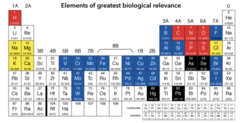
Carbon, hydrogen, nitrogen, and oxygen (CHON), making up 96.5% of an organism's weight.
Characteristics of Life's Chemistry
Carbon-based, occurs in aqueous environments, dominated by polymeric molecules, and tightly regulated.
Atomic Nucleus
Positively charged center of an atom containing protons and neutrons.
Proton
Positively charged subatomic particle whose count defines an element's atomic number.
Neutron
Uncharged subatomic particle that stabilizes the nucleus; mass equals approximately one proton.
Electron
Negatively charged subatomic particle orbiting the nucleus in specific electron shells.
Atomic Number
The total number of protons in an atom's nucleus.
Isotopes
Forms of an element with the same number of protons but different neutron numbers.
Atomic Weight
The mass of an atom relative to hydrogen, equal to protons plus neutrons.
Dalton
An atomic mass unit approximately equal to the mass of one hydrogen atom.
Avogadro's Number
6 × 10²³, the number of atoms or molecules in one mole of a substance.
Mole
An amount of substance in grams equal to its molecular weight, containing 6 × 10²³ molecules.
Naturally Occurring Elements
92 elements found naturally on Earth, ending with uranium.
Biological Role of Electrons
Electrons undergo rearrangements and form bonds that determine chemical reactivity in living tissues.
Electron Shell Capacity
1st shell holds 2 electrons; 2nd and 3rd shells hold up to 8 each.
Inert Gases
Elements with completely filled outer electron shells, making them chemically unreactive.
Valence
The number of electrons an atom must gain or lose to complete its outer shell.
Covalent Bond
A strong chemical bond formed when two atoms share one or more pairs of electrons.
Molecule
A cluster of atoms held together by covalent bonds.
Ionic Bond
A non-covalent bond formed by complete transfer of electrons between atoms, creating ions.
Cation
A positively charged ion formed when an atom loses electrons.
Anion
A negatively charged ion formed when an atom gains electrons.
Bond Strength
The amount of energy required to break a bond, measured in kcal/mol or kJ/mol.
Kilocalorie (kcal)
Energy required to raise the temperature of 1 liter of water by 1°C.
Calorie to Joule Conversion
1 kilocalorie equals 4.2 kilojoules (kJ).
Enzymes
Specific protein catalysts that control the making and breaking of covalent bonds in cells.
Single Bond
A covalent bond formed by sharing two electrons (one pair) between two atoms.
Double Bond
A covalent bond sharing four electrons (two pairs); shorter, stronger, and more rigid.
Polar Covalent Bond
A covalent bond where electrons are shared unequally, creating partial charges.
Nonpolar Covalent Bond
A covalent bond where electrons are shared equally between atoms.
Carbon-14 Dating
Archaeological technique measuring radioactive decay of the unstable isotope carbon-14.