Vaccinations
 Call Kai
 Learn
Learn Practice Test
 Spaced Repetition
 Match
Match Flashcards
 Knowt Play
1/24

There's no tags or description
Looks like no tags are added yet.
Name | Mastery | Learn | Test | Matching | Spaced | Call with Kai | Chat |
|---|
No analytics yet
Send a link to your students to track their progress
25 Terms
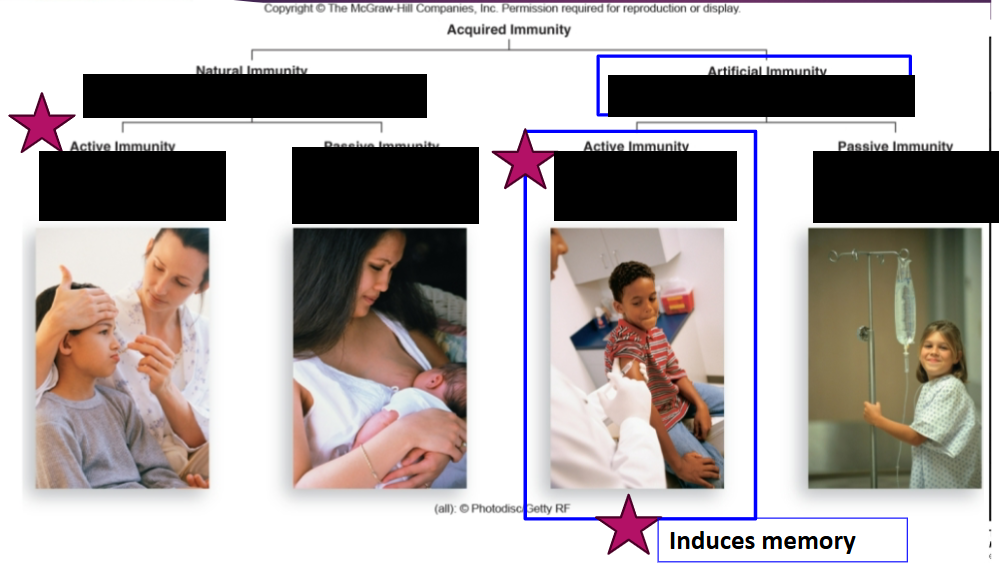
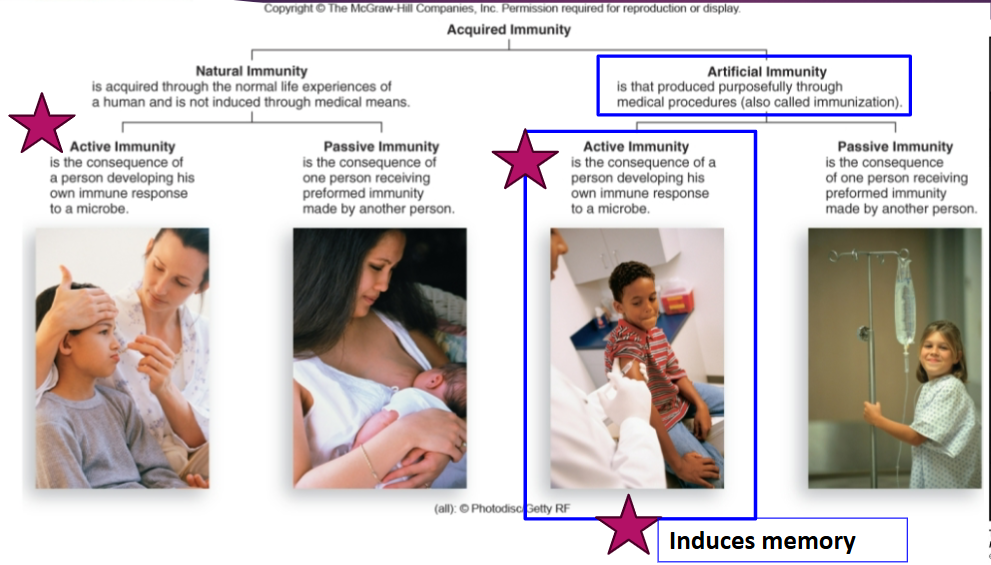
Describe active immunization:
Process
Priming dictates?
Active Immunization: Vaccination
Process:
Deliberate exposure to Antigen that will not produce disease -> stimulate primary immune response
Memory cells produced
Rapid secondary response when pathogen encountered later
Priming:
Dictates spacing of doses + timing
Define
Immunization
Immunogen
Antigen
Difference between Antigen/Immunogen?
What makes an antigen more immunogenic?
Definition:
Immunization
Introduce Antigen -> deliberate induce adaptive immune response
Immunogen
molecule that elicits immune response by an organism’s immune system
Antigen
molecule that can bind to product of immune response
Difference between Antigen/Immunogen?
an immunogen is always an antigen
an antigen does not necessarily have to be an immunogen
What makes an antigen more immunogenic?
Non-self, size, complexity
What are the checklist for an effective vaccine
What is the difference between Live vs Subunit/Killed vaccines
Difference between Preventative vs Therapeutic strategies
Checklist for effective vaccine:
Low levels of side effects/toxicity; does not cause serious harm
Should protect against exposure to natural, wild forms of Pathogens
Stimulate B/T Cell Responses
Should have long term effects (memory)
Should not req. Numerous doses/boosters
Inexpensive, long shelf life, ez to administer
Be seen as non-self (foreign) and has Danger Signals
Difference between Live vs Subunit/Killed vaccines
Live: induce antibodies + effector T cells
Subunit/Killed: induce antibody response
Preventative vs Therapeutic
Preventative:
Given prophylactically to prevent infection
Therapeutic:
given after infection to reduce or arrest disease progression
Describe the common side effects of vaccines?
Describe adjuvant
Definition
Mech
Common Side Effects:
Local rxn @ injection site
Fever
Allergies
NOTE: some experience rxn to medium rather then the antigens
Adjuvant:
Definition:
Any substance that enhances immunogenicity of vaccine antigens mixed w/ it.
Most proteins are poorly immunogenic when administered alone
Mech:
Usually associated w/ T helper cell responses
What is a hapten?
small molecule that can only elicit an immune response if combined w/ a larger carrier
What is Herd Immunity? What is its relationship to RO?
Herd Immunity:
What is it?
Collective immunity via mass immunization -> indirect protection on nonimmune members
Herd immunity and R0 (R-nought; basic reproductive rate)
What is R0
R-nought
Basic Reproductive Rate of a virus
Relationship:
Level of immunity needed for herd immunity = proportional to RO
What are the four types of vaccines?
Four Types:
Live attenuated microorganisms
Killed/inactivated microorganisms
(non-infectious vaccines)
Subunit vaccines
mRNA vaccines
Describe Live attenuated microorganisms
How does it work?
Drawback?
Mech of Creation
Examples
Describe Killed/inactivated microorganisms
How does it work?
Drawback?
Examples
Describe Subunit vaccines
How does it work?
Drawback?
Examples
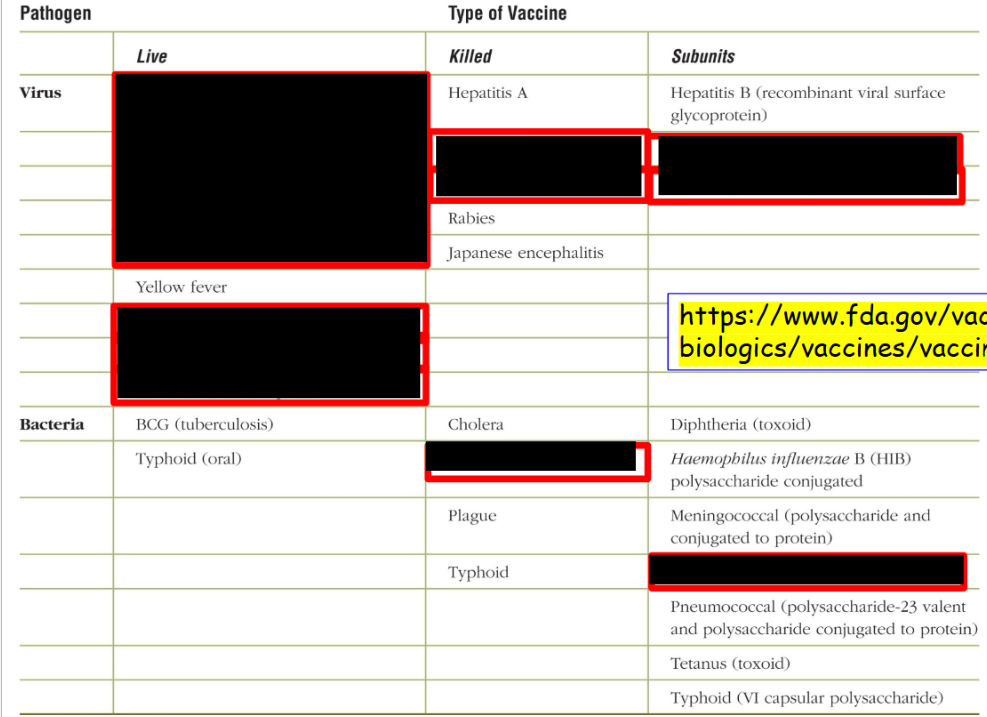
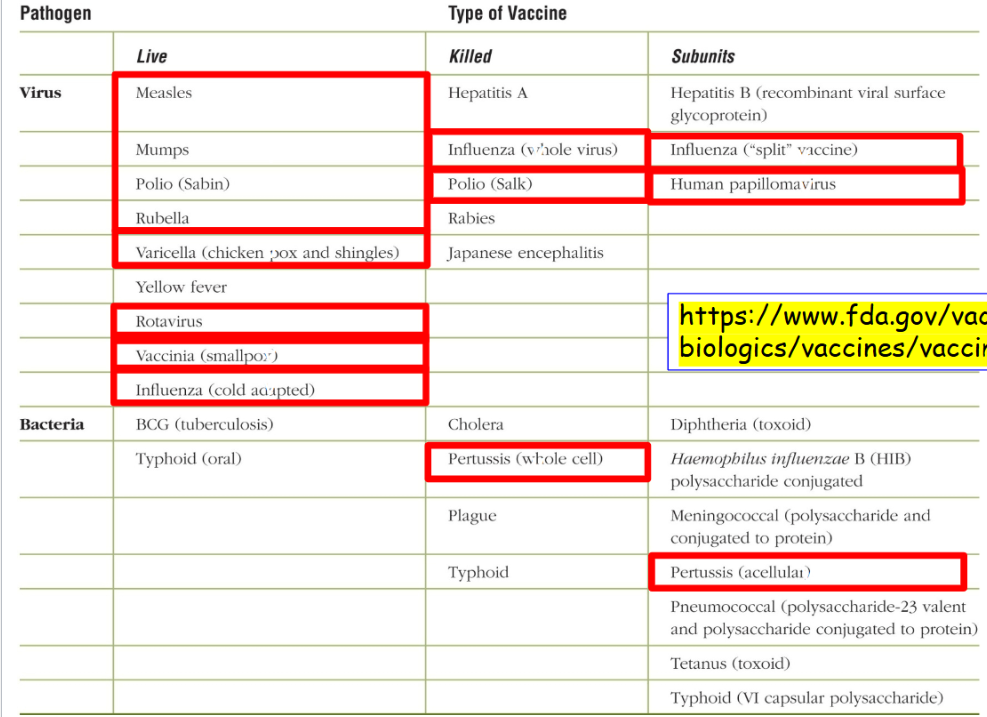
Live attenuated microorganisms
How does it work?
Microbe = rendered avirulent -> replicate in recipient -> immune response
May be stronger then a Killed/inactivated virus
Drawback:
Some safety issues
Possibility of reversal of weakened state -> wildtype
Mech of creation:
Virus isolated from human -> virus is used to infect another species -> virus adapt to new species, loses ability to affect human -> new virus now = attenuated -> vaccine
Ex:
Measles
Mumps
Rubella
Smallpox
BCG
oral polio
Killed/inactivated microorganisms
How does it work?
Org. = Killed -> vaccine
Drawback:
Usually req >1 doses -> strong response
Some needs boosters
Examples:
Whole pertussis
Inactivated polio vaccine
Hepatitis A
Subunit vaccines
What is it?
Contains Purified components of microorganisms
Toxoids
inactivated toxins
recombinant antigens
parts of antigens expressed in different systems
polysaccharides conjugated to carrier proteins
Drawback:
Usually needs repeated doses w/ adjuvant
Examples:
Hepatitis B
Tetanus
Diphtheria
Hib
Acellular
pertussis
Describe Toxoid Vaccines:
What/Why?
Mech?
Ex
Describe CONJUGATE VACCINES:
What/why?
EX
Describe RECOMBINANT VECTOR VACCINES:
What is it?
Describe mRNA VACCINES:
Mech?
Advantage?
Ex
TOXOID VACCINES:
What/why?
Vaccine used w/ inactivated toxins when bacterial toxin = illness’s main cause
Mech:
Toxins inactivated via formalin
formaldehyde + sterilized water
Ex:
Tetanus and Diptheria toxoid.
CONJUGATE VACCINES:
What/why
Surface Polysaccharides -> disguise antigens -> immune can’t recognize
Solution: linking to a protein
Ex:
Hib Vaccine
RECOMBINANT VECTOR VACCINES:
What is it?
Uses attenuated virus/bacteria as vectors -> introduce microbial DNA to cells
mRNA VACCINES:
Mech:
Delivers mRNA into host cells -> foreign protein translated -> trigger immune response
Delivery system: lipid nanoparticles, polymers, polypeptides, and virus replicon particles
Advantage (compared to traditional):
Better speed of design/production
Better effectiveness
EX:
Covid
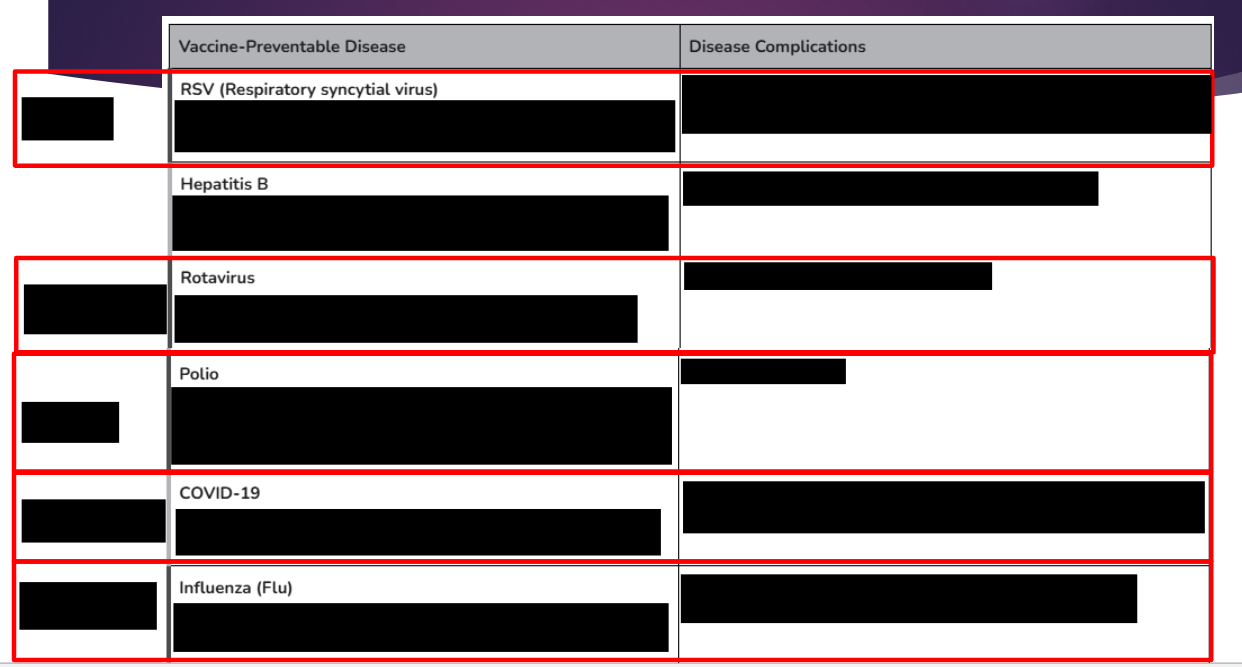
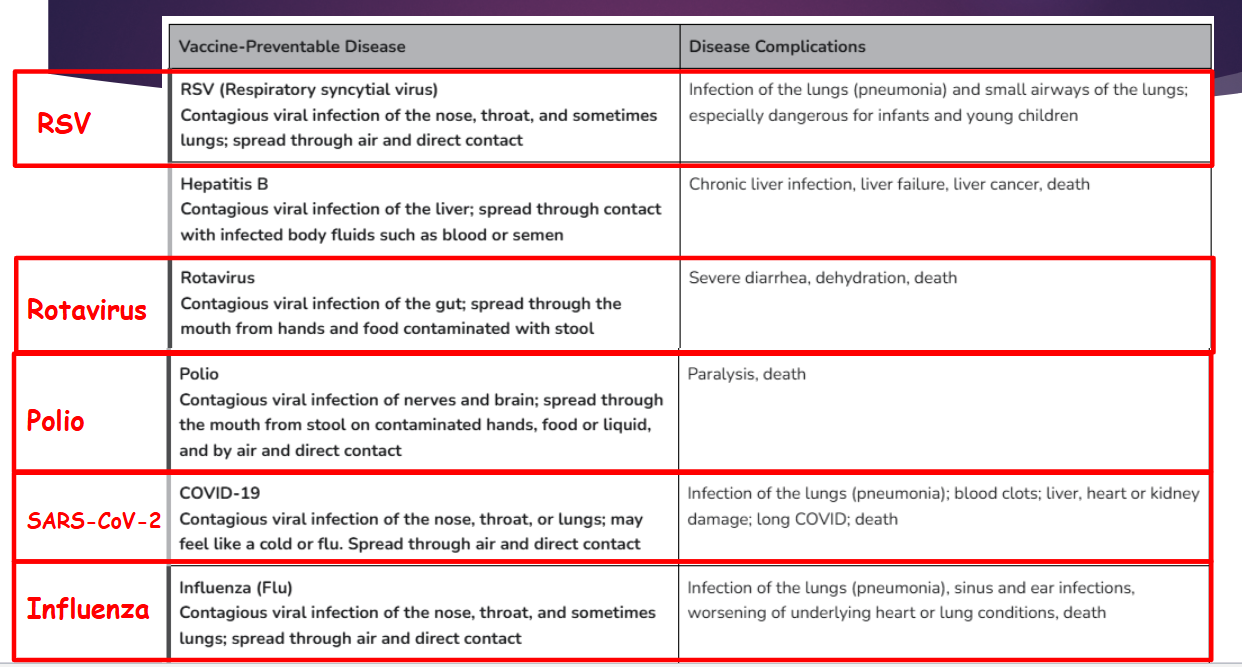
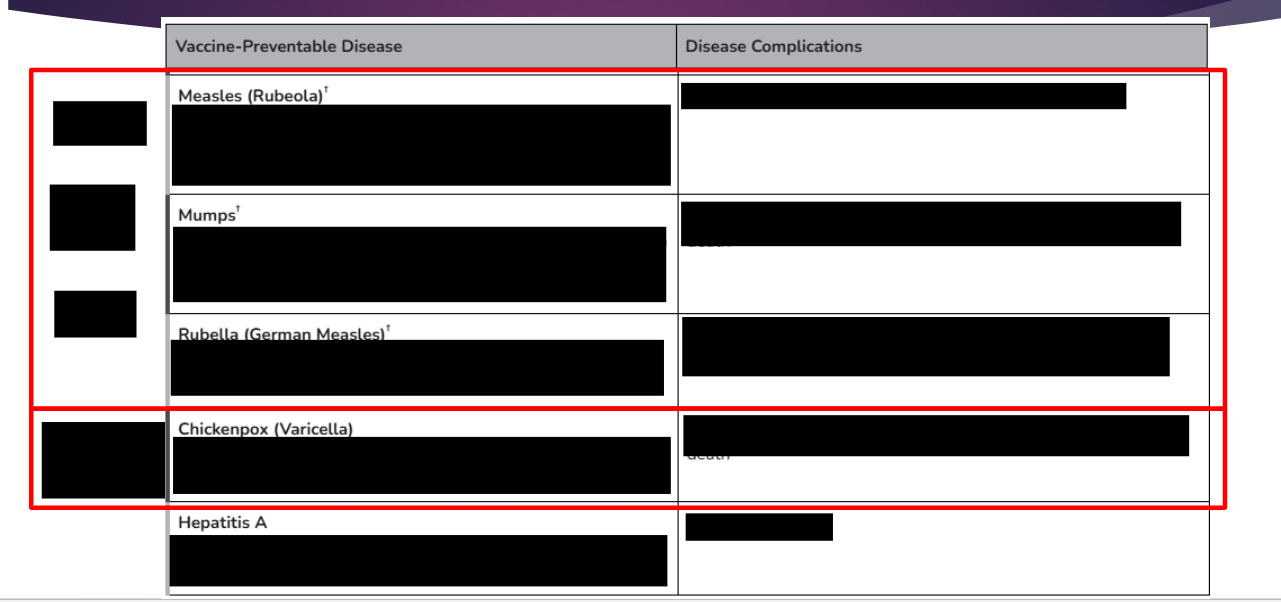
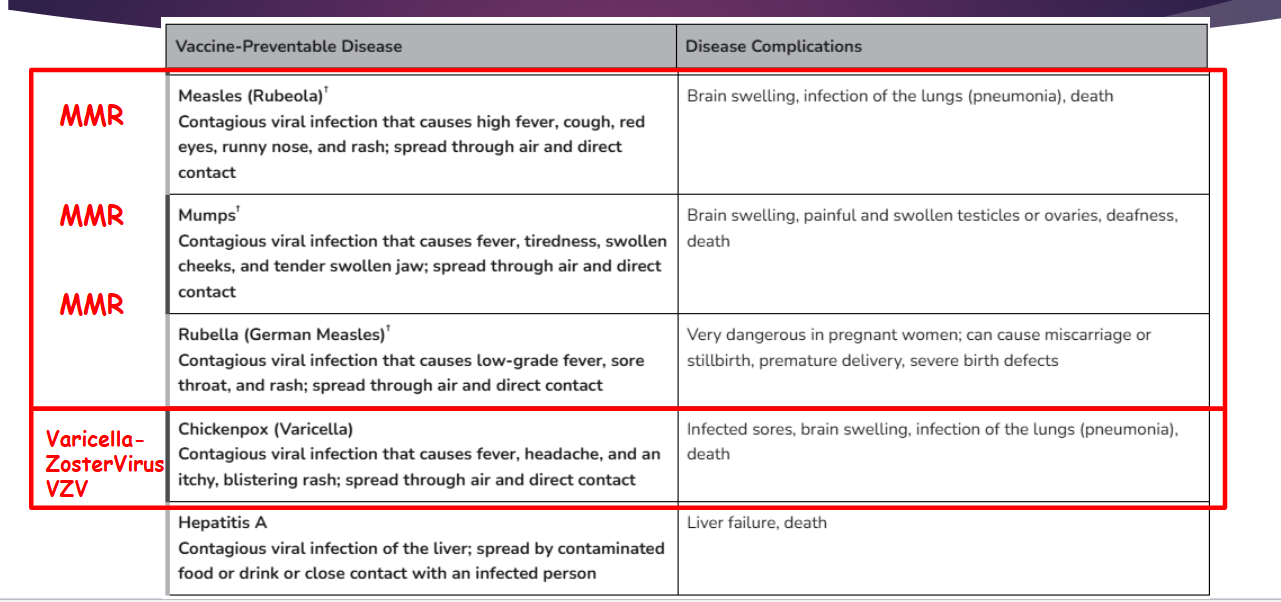
Describe the 2026 epidermiology update for Measles
2026 Epidemiology Update
Measles outbreaks continued in North America during 2025-2026.
Most cases occurred in unvaccinated or under-vaccinated persons.
Measles remains highly contagious (R0 12-18).
Maintaining high MMR coverage is critical for herd immunity
Describe HPV:
Causes?
Different Variants/Effects
Describe the vaccine used:
Name
Type
Contents?
Newer version?
HPV
Causes:
genital warts + Cervical Cancer
Different Varients/Effects:
HPV6, HPV 11: Genital Warts
HPV16, HPV18: 70% of all cervical Cancers
16 = about 50%
Vaccine:
Name: “Gardasil” (Merck)
Type:
Virus like particle (VLP) non-infectious capsid like particle,
no nucleic acids
Contents:
L1 capsids of HPV 6, 11, 16, 18
(produced in yeast -> assumes native conformation)
Alum (adjuvant)
Newer version: Gardasil- 9
Protects against:
HPV 6, 11, 16, 18, 31, 33, 45, 52 and 58
Describe Whooping Couth
Caused by
Symptoms
Mech
Describe the vaccination
Name
Contents
Difference between the two
Describe the 2026 epidemiology
Whooping cough (pertussis)
Caused by:
Bordetella pertussis (gram negative coccobacillus bacteria)
strict aerobe
nutritionally fastidious (need complex media)
Very Sensitive to Env.
Symptoms:
Intense, paroxysmal coughing
Can lead to hemorrhages/vomiting
tracheitis + bronchitis
accumulation of mucus, cells, bacteria in airways
Can be so intense -> need tracheotomy
Impaired mucociliary elevator
Mech:
Toxin -> sensitizes cough receptors -> easily triggered
Vaccination
Name: DtaP and Tdap
Contains:
Pertussis toxoid (inactive)
FHA (filamentous hemagglutin)
pertactin (both adhesin)
fimbriae
Difference between the two:
DTaP – infants and children < 7yo
Tdap – adolescents and adults
NOTE:
Vaccines w/ 3-5 components are better than 1-2 components.
Adverse reactions are much lower with the acellular version
Adult booster recommended b/c major carriers
Pertussis Epidemiology Update
Cases rebounded after the COVID-19 pandemic.
Activity remained elevated through 2024-2025.
Waning immunity contributes to adolescent and adult transmission.
Maternal Tdap vaccination remains important
Describe the Influenza virus
Family
Type/variations
Reservoirs
Describe the clinical features
incubation period
symptoms
complications
Describe the Vaccine:
type
Quad vs Trivalent
Influenza Virus
Family: Orthomyxoviridae
Type/variations:
- strand RNA virus
Type A (humans & other animals)
Type B (humans)
Type C (humans)
Reservoirs
Birds, pigs, horses, humans
Clinical Features
Incubation period:
1 to 4 days
Symptoms:
fever,
chills,
myalgia,
sore throat,
cough,
headache
Usually resolve in 1 week, cough may persist
Complications:
Bronchitis,
ear-ache,
sinusitis,
bacterial pneumonia
Vaccine:
Type:
Seasonal flu vaccines
Modified based on which strands are most prevalent @ the time
Previous: Quadrivalent:
Protects against:
influenza A (H1N1) virus
influenza A (H3N2) virus
two influenza B viruses
Now: Trivalent
Protects against:
A (H1N1)
A(H3N2)
B:
B/ Yamagata
B/Victoria
Describe the Rota Virus
Symptoms
Stats
Outbreaks locations
Death via?
Describe the Biological Characteristics
Describe the Vaccine:
Name
Freq
Timing
Route of admin
Rotavirus
Symptoms:
intense diarrhea,
often preceded by vomiting.
Fever.
Symptoms: several days-week.
Adult symptoms = milder
Stats:
Most common cause of infectious dirrhea <2 years of age
50,000 hospitalizations/year
Outbreaks Location:
hospital nurseries
day-care centers
Death:
Via severe dehydration
In dev. countries
Biological characteristics:
Reovirus family
dsRNA genome
11 segments
Icosahedral capsid
comprised of two layers
No envelope
Acid-resistant
Vaccine:
Name:
RotaTeq and Rotarix
Frequency:
RotaTeq® (RV5)
3 doses @ 2 months, 4 months, and 6 months
Rotarix® (RV1)
2 doses @ 2 months and 4 months
Timing:
first dose of both given before 15 weeks
All doses complete before 8 months old
Route of Admin:
drops in child’s mouth
Describe the CDC Child & Adolescent Immunization Schedule: Key Updates
Routine childhood vaccination remains the foundation of disease prevention.
RSV prevention now includes maternal vaccination during pregnancy an infant monoclonal antibody protection strategies.
MMR, DTaP, IPV, Varicella, HPV, MenACWY, and annual Influenza vaccines remain core recommendations.
Catch-up vaccination should be performed whenever schedules are delayed.
Vaccination decisions should always follow the current CDC child and adolescent schedule.
CDC Adult Immunization Schedule: Key Updates
Annual influenza vaccination recommended for all eligible adults.
RSV vaccination recommended for adults ≥75 years and selected adults 50- 74 years at increased risk.
COVID-19 vaccination continues for eligible adults according to current CDC guidance.
Shingrix remains recommended for prevention of herpes zoster.
Tdap/Td booster recommended every 10 years
Important 2026 Vaccine Schedule Changes
RSV vaccination is now a routine component of adult preventive care.
Maternal RSV vaccination helps protect infants during the first months of life.
Pneumococcal vaccination increasingly utilizes PCV20 and PCV21-based strategies.
Trivalent influenza vaccines have replaced previous quadrivalent formulations.
Risk-based vaccination is increasingly emphasized for immunocompromised and high-risk populations
2026-2027 Vaccine Updates
RSV vaccination programs continue expanding.
PCV20/PCV21 incorporated into adult schedules.
Updated COVID-19 vaccines remain recommended for high-risk groups.
Combination influenza/COVID vaccines are under development
List/Describe the Next-Generation Vaccine Platforms
mRNA technology
expanding beyond COVID-19.
Self-amplifying RNA (saRNA) _ circular RNA (circRNA)
improve durability
reduce dose requirements.
Combination vaccines
Ex: (influenza + COVID-19)
Shows promising phase 3 immunogenicity and safety results
AI-assisted antigen design is emerging as a vaccine-development tool