Integumentary System

0.0(0)
Studied by 0 people
call kaiCall Kai
Locked
learnLearn
examPractice Test
spaced repetitionSpaced Repetition
heart puzzleMatch
flashcardsFlashcards
GameKnowt Play
Card Sorting

1/47

encourage image

There's no tags or description

Looks like no tags are added yet.

Last updated 3:43 PM on 9/27/26
Name
Mastery
Learn
Test
Matching
Spaced
Call with Kai
Chat

No analytics yet

Send a link to your students to track their progress

48 Terms
1
New cards
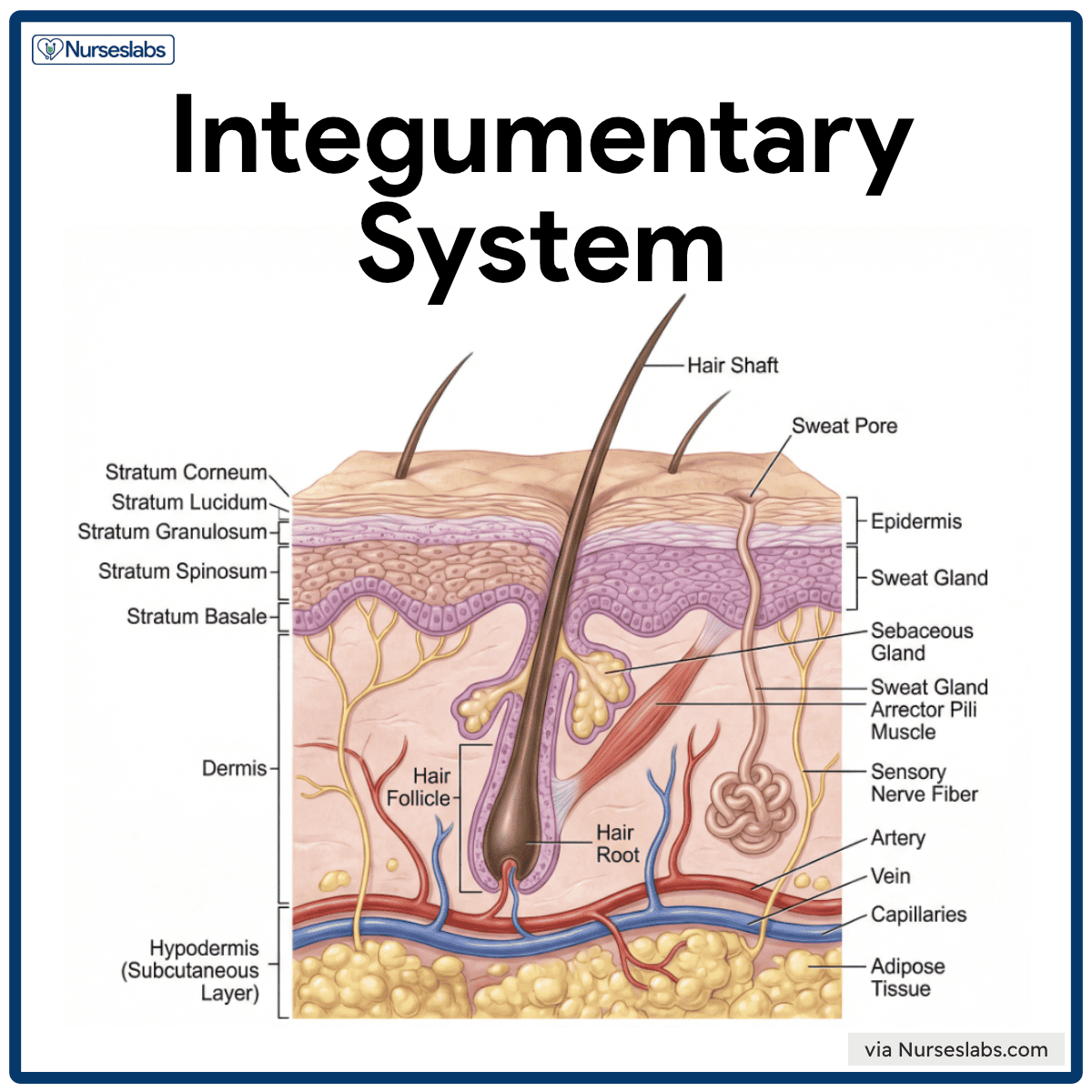
<p>What structures make up the integument?</p>

What structures make up the integument?

The epidermis and dermis, along with skin derivatives such as hair and nails.

2
New cards
<p>What are the two main layers of the skin?</p>

What are the two main layers of the skin?

The epidermis and dermis.

3
New cards
Which layer of the skin is superficial?
The epidermis.
4
New cards
Which layer of the skin is deep?
The dermis.
5
New cards
What are the main functions of the integumentary system?
Protection, regulation of body temperature, secretion, and vitamin D synthesis.
6
New cards
How does the integument provide protection?
It acts as a physical, chemical, and biological barrier.
7
New cards
What type of epithelium makes up the epidermis?
Stratified squamous epithelium.
8
New cards
Is the epidermis vascularized?
No, the epidermis is avascular.
9
New cards
How often does the epidermis regenerate?
Every 35–45 days.
10
New cards
How many layers can the epidermis have?
Four or five layers, depending on whether the skin is thin or thick.
11
New cards
Where are new skin cells generated?
In the stratum basale.
12
New cards
What happens to epidermal cells as they move upward?
They are pushed through the layers and undergo keratinization.
13
New cards
What is keratinization?
The process by which cell contents are replaced with keratin, a protein.
14
New cards
What happens to cells after they become keratinized?
They are dead but physically strong.
15
New cards
What happens to the stratum corneum?
Its top layers are sloughed off and replaced by layers from below.
16
New cards
What are the layers of the epidermis from superficial to deep?
Stratum corneum, stratum lucidum, stratum granulosum, stratum spinosum, and stratum basale.
17
New cards
Which epidermal layer is absent in thin skin?
Stratum lucidum.
18
New cards
What types of connective tissue make up the dermis?
Strong, flexible dense irregular and areolar connective tissue.
19
New cards
Is the dermis vascularized?
Yes, it is highly vascularized.
20
New cards
Is the dermis innervated?
Yes, it is innervated for sensation.
21
New cards
<p>What are the two layers of the dermis?</p>

What are the two layers of the dermis?

The papillary layer and reticular layer.

22
New cards
What percentage of the dermis is the papillary layer?
About 20%.
23
New cards
What type of connective tissue makes up the papillary layer?
Areolar connective tissue.
24
New cards
What is the function of the papillary layer?
It provides nutrients to the epidermis.
25
New cards
What are dermal papillae?
Structures that increase surface area for transport of materials into the epidermis.
26
New cards
What percentage of the dermis is the reticular layer?
About 80%.
27
New cards
What type of connective tissue makes up most of the reticular layer?
Dense irregular connective tissue.
28
New cards
What do the collagen and elastic fibers in the reticular layer provide?
Stretch and strength.
29
New cards
What is the hair shaft made of?
Dead keratinized epithelial cells.
30
New cards
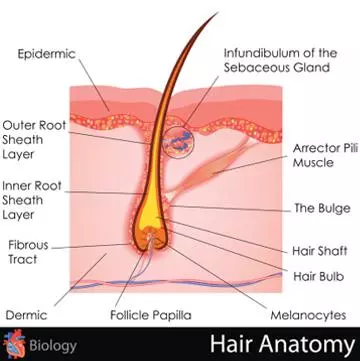
<p>What is the function of the hair follicle?</p>

What is the function of the hair follicle?

It generates the cells that form the hair.
31
New cards
Where is the hair follicle located?
In the dermis.
32
New cards
<p>What is the arrector pili muscle?</p>

What is the arrector pili muscle?

Smooth muscle that raises hair and causes goosebumps.

33
New cards
<p>Where is the arrector pili muscle located?</p>

Where is the arrector pili muscle located?

In the dermis.

34
New cards
<p>What are merocrine (eccrine) sweat glands?</p>

What are merocrine (eccrine) sweat glands?

Sweat glands that produce sweat in response to heat or stress and open onto the skin surface.

35
New cards
<p>What is the product of merocrine sweat glands?</p>

What is the product of merocrine sweat glands?

99% water and 1% salts/wastes.

36
New cards
<p>Where are merocrine sweat glands found?</p>

Where are merocrine sweat glands found?

All over the body.

37
New cards
<p>What do apocrine sweat glands secrete?</p>

What do apocrine sweat glands secrete?

A substance responsible for characteristic body odor.

38
New cards
<p>Where do apocrine sweat glands open?</p>

Where do apocrine sweat glands open?

Onto hair follicles.

39
New cards
<p>What is the product of apocrine sweat glands?</p>

What is the product of apocrine sweat glands?

Proteins and lipids that are odorous.

40
New cards
<p>Where are apocrine sweat glands found?</p>

Where are apocrine sweat glands found?

In the axilla and groin.

41
New cards
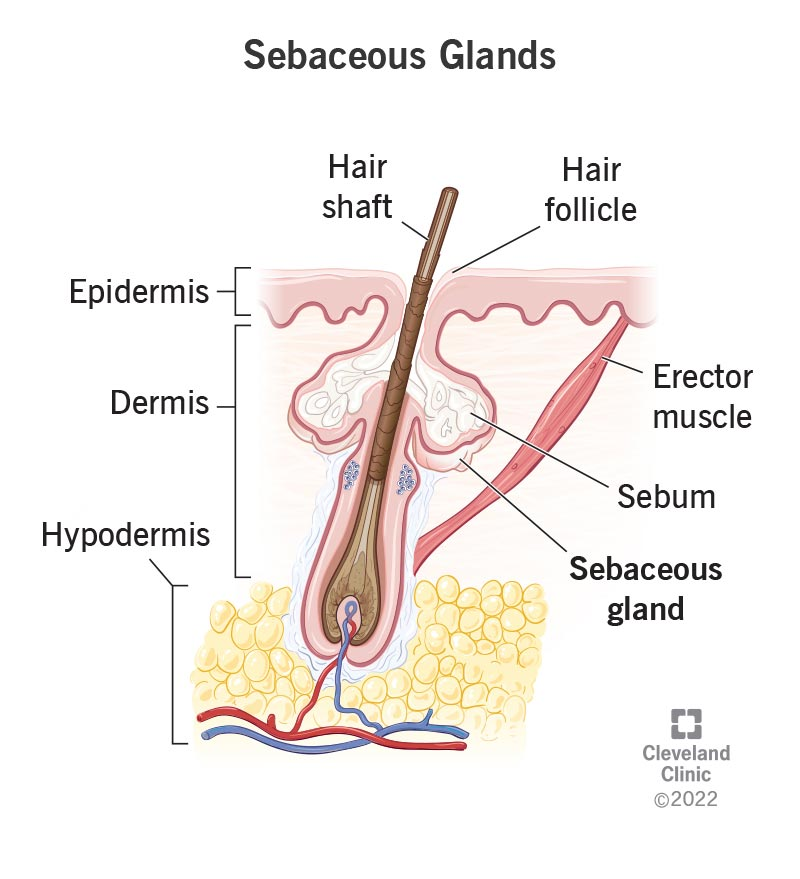
<p>What do sebaceous glands secrete?</p>

What do sebaceous glands secrete?

An oily substance called sebum.
42
New cards
<p>What is the function of sebum?</p>

What is the function of sebum?

It waterproofs the hair and skin and moisturizes the skin.

43
New cards
<p>Where are sebaceous glands found?</p>

Where are sebaceous glands found?

All over the body in association with hair follicles.

44
New cards
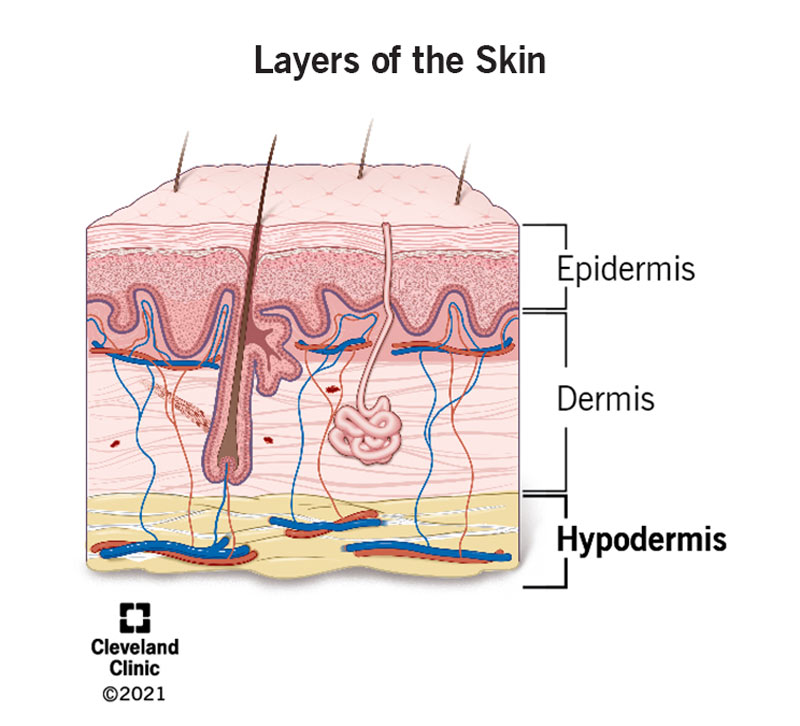
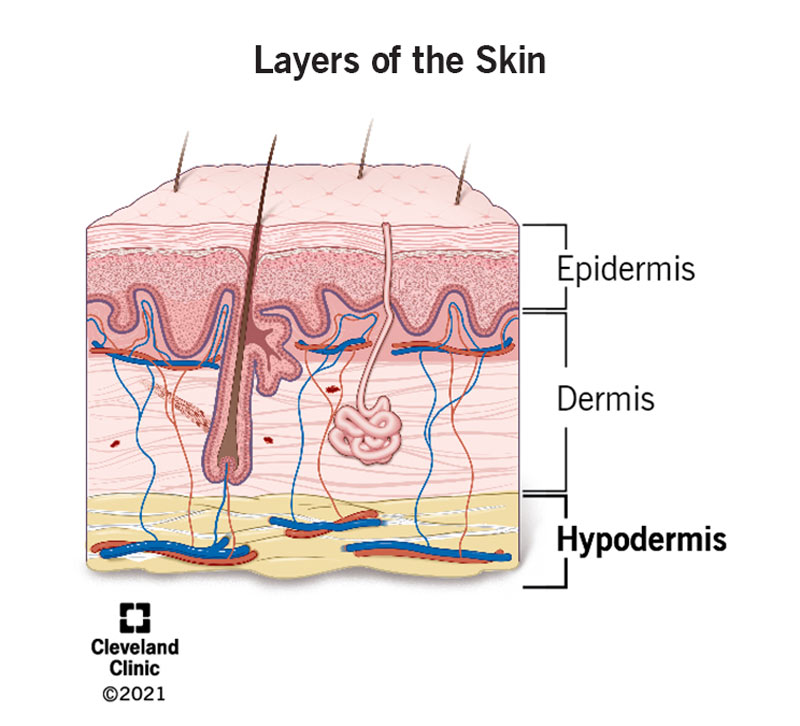
<p>What is the hypodermis?</p>

What is the hypodermis?

Superficial fascia that supports the skin.
45
New cards
<p>What tissues make up the hypodermis?</p>

What tissues make up the hypodermis?

Areolar and adipose connective tissues.

46
New cards
<p>What is one function of the hypodermis?</p>

What is one function of the hypodermis?

It allows movement of the skin over deeper muscles and bones.
47
New cards
<p>What separates the hypodermis from deeper muscle and bones?</p>

What separates the hypodermis from deeper muscle and bones?

Deep fascia.

48
New cards
What is the order of the integumentary layers from superficial to deep?
Epidermis → dermis → hypodermis.



